To save content items to your account,
please confirm that you agree to abide by our usage policies.
If this is the first time you use this feature, you will be asked to authorise Cambridge Core to connect with your account.
Find out more about saving content to .
To save content items to your Kindle, first ensure no-reply@cambridge.org
is added to your Approved Personal Document E-mail List under your Personal Document Settings
on the Manage Your Content and Devices page of your Amazon account. Then enter the ‘name’ part
of your Kindle email address below.
Find out more about saving to your Kindle.
Note you can select to save to either the @free.kindle.com or @kindle.com variations.
‘@free.kindle.com’ emails are free but can only be saved to your device when it is connected to wi-fi.
‘@kindle.com’ emails can be delivered even when you are not connected to wi-fi, but note that service fees apply.
One of the most conspicuous changes in judicial policy toward the end of Xiao Yang's two terms (1999–2008) as president of the Supreme People's Court (SPC) was the retreat from a concerted period of civil justice reform, the origins of which can be traced back to 1979 and which was at its most intense during the decade prior to 2006. The hallmark of this recent change in approach has been a shift of priority from adjudicatory to mediatory justice.
By 2006, the SPC had openly conceded the failure of judicial reform programs aimed at enhancing judicial professionalism. The SPC had also issued a series of judicial interpretations to steer the judiciary toward settlement of disputes through court-based mediation. Because of this policy change, local courts are revising their incentive mechanisms to encourage judges to privilege mediation in resolving disputes and to reward them for doing so. Judges and legal scholars are rediscovering the virtues of court-based mediation, including its efficiency, cost-effectiveness, and humanity.
This chapter, in seven parts, studies this transition by examining the rise, demise, and partial resurgence of court mediation in Chinese justice. Section I details the development of the civil justice system of the People's Republic of China (PRC) and explains how its political marginalization helped create the space for its subsequent reform. Section II analyzes what might be termed phase one of the reform process, including the factors driving the striking shift from mediatory toward adjudicatory justice.
[I]t is in its legal institutions that the characteristics of a civilized society are most clearly reflected, not only, and not so much, in its substantive law as in the practice and procedure of its courts. Legal procedure is a…ritual of extreme social significance.
If how a society decides its disputes is “a ritual of extreme social significance,” then China's thirty years of legal reform can inform our understanding of how the Chinese state relates to its society and how Chinese citizens relate to one another. Since 1978, China has embarked on legal reforms to promote law as a main mode of dispute resolution. But critics argue that China is establishing legal institutions more to promote economic development and coalesce state power and less to empower ordinary citizens. It is said that ordinary citizens shy away from formal legal mechanisms to resolve disputes because of an historical distrust of the law that is reinforced by recent experiences with Chinese courts. At the same time, the state's distrust of civil society institutions renders bottom-up initiatives unpromising.
This volume takes an on-the ground look at how civil disputes of ordinary citizens are being resolved in China today. In identifying what is going on at the ground level, this volume “disaggregates the Chinese state and society” to focus on the hows and whys – that is, the process of “law in action.”
In 2004, the ethnic-minority musician and prominent local artist Xuan Ke brought suit in Lijiang City Intermediate Court in southwestern Yunnan Province, claiming that his right of reputation had been infringed by an article in the Beijing-based Arts Criticism magazine. The author of the article, the scholar Wu Xueyuan, argued that Xuan's music was, in fact, not a product of the local ethnic minority culture and that Xuan's misrepresentation of his music amounted to fraud.
Arts Criticism is a scholarly journal, and Wu's critique was based on academic research. Nonetheless, his language was sharp. Wu claimed that selling Naxi music was the equivalent of “selling dog meat as steak.” He referred to Naxi music as “fake culture” and declared that “these falsehoods are patently absurd, and a fraud on the public.” All of these phrases would later be cited by Xuan Ke as specific examples of personal attack. Wu and the magazine's editors defended against Xuan's charges by both pointing to their constitutional rights to scholarly enquiry and by attempting to demonstrate the factual veracity of the article's assertions, specifically that Naxi music was, indeed, a commercial creation of Xuan Ke.
In a verdict delivered in December 2004, the intermediate court included a reference to Chinese constitutional rights protections; it also concluded that
(t)he criticism of Naxi classical music in this document is a scholarly question in the category of “letting one hundred schools of thought contend,” and scholarly research on these questions, and publishing commentaries on that research is a right of scholars, and should be considered appropriate behavior. […]
Until 1979, China had never been a country with a highly differentiated legal system. From the Law Classics (Fa jing) in the Warring State period (480–221 b.c.) to the Great Qing Criminal Code (Da Qing lü li, effective during 1740–1910), the two-millennium history of codification in imperial China had always been characterized by a strong emphasis on criminal law; most noncriminal disputes were adjudicated according to the Confucian ethics (li) and social customs, without referring to any legal code. Meanwhile, in the Chinese political system there was no separate judiciary from the government, and the local magistrate was both the administrative leader and the judge for crimes and social disputes. Accordingly, no formal legal profession was found in imperial China. In certain periods, there were “litigation masters” (song shi) who provided help to the people in litigation, but they were neither organized into a legal profession in the Western sense nor recognized by the state. Ordinary social order largely was maintained in a harmonious and unified way through non-legal means. However, in the twentieth century, this social order was almost completely broken down because of the incessant revolutions, culminating in the Cultural Revolution during 1966–76.
Since the late 1970s, the Chinese legal system has experienced a series of fundamental changes. Tens of thousands of laws, regulations, judicial interpretations, ministry regulations, and local regulations have been promulgated, starting with the Criminal Law and Criminal Procedure Law in 1979.
This article addresses the need for clarity as regards the sources of public international law, or at least as much clarity as possible. Questions relating to sources lie at the heart of international law. Of particular concern is the lack of rigour shown by some domestic judges when it comes to determining the rules of customary international law.
From a conceptual viewpoint, the legal universe has found its almost perfect configuration in our time. Almost all of the peoples of the world are members of the United Nations and as such are entitled to co-operate in shaping the direction and content of policies at the global level. Before World War II, and even a considerable time after the horrendous events unleashed by that war, many nations had no say in international matters. They were placed under colonial rule, which meant that their voices were not heard—or heard only through the mediation of the powers that acted as their wards and guardians. That situation of structural discrimination has changed dramatically. All the peoples of the world have reached sovereign statehood and have been admitted to the world forum.
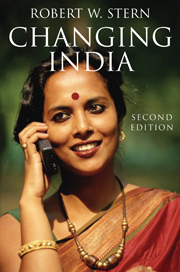
The revised edition of Robert Stern's book brings India's story up to date. Since its original publication in 1993, much has altered and yet central to the author's argument remains his belief in the remarkable continuity and vitality of India's social systems and its resilience in the face of change. This is a colourful, readable and comprehensive introduction to modern India. In a journey through its family households and villages, the author explains its long-lived and little understood caste and class systems, its venerable faiths and extraordinary ethnic diversity, its history as 'the jewel in the crown' of British imperialism and its post-Independence career as a major agricultural and industrial nation. While paradoxes abound in an India which is constantly transforming, Stern demonstrates how and why it remains the largest and most enduring democracy in the developing world.
Opiate of the masses: Why Marxism opposes religion
To abolish religion as the illusory happiness of the people is to demand their real happiness.
Karl Marx, Contribution to the Critique of Hegel's Philosophy of Law, 1844
October 1 is a national holiday in China, one that is increasingly marked by a massive flood of travelers taking to the skies and rails. The reason is that October 1 marks the anniversary of the founding of the People's Republic. On this day in 1949, Mao Zedong stood atop the red walls of what had once been the Forbidden City and, in his thick Hunan accent and unexpectedly squeaky voice, proclaimed to an ecstatic crowd that “the Chinese people have finally stood up!” For decades, pictures of that moment would adorn countless Chinese homes, schools, and workplaces.
There was no mistaking that this was a day of momentous significance. In 1911, the Qing dynasty had fallen not with a bang, but with a whimper. The Qing was not so much overthrown as much as the decaying structure collapsed under its own weight; the decades of chaos that followed occurred precisely because there was no power strong enough to take its place. In contrast, the 1949 Communist Revolution was led by a party that was highly organized, with an unmistakable ideology, decades of experience recruiting peasants and fighting guerrilla wars, and as many as five million tough and highly disciplined members.
As we leave China and move to Japan, it is worth considering some of the reasons why these two close neighbors are so very different.
The best place to begin is by looking at a map. China is a massive piece of territory: the geographic anchor of East Asia. With Taiwan included, China is slightly larger than the United States. The Ming Empire was significantly smaller – just over half the size of the People's Republic of China today – but that is still roughly as large as the entire European Union. It was also exceedingly diverse. Even after the expulsion of the Mongols, Ming dynasty China was still home to a large variety of non-Han peoples. It was also surrounded by all the cultures of Asia: the Indic-influenced kingdoms of mainland Southeast Asia, Buddhist kingdoms in Tibet and modern Mongolia, Central Asian Muslims who traded along the Silk Road, and Chinese-style polities in Korea and Manchuria. Chinese call their country the Middle Kingdom, and for centuries, it very much was the great cultural behemoth that sat squarely at the crossroads of the world.
Japan, in contrast, is an island (or more precisely, an archipelago). In size, Japan is about as large as the state of California, but before the large northern island of Hokkaido was fully incorporated in the late nineteenth century, it was roughly the size of Italy or the Philippines.
Let us especially cease calling the Emperor of China, and the souban of the Deccan idolaters.… I must repeat, the religion of their learned is admirable, and free from superstitions, from absurd legends, from dogmas insulting both to reason and to nature.
Voltaire, A Philosophical Dictionary, 269–70
It would be hard to point to a precise moment when the world became “global.” After all, people have been communicating on a global scale for tens of thousands of years – the fact that early humans managed to travel from Africa through Eurasia and settle the Americas and Australia represents globalization of a rather profound sort. Of course, the pace of communication started out very slow indeed. Even a very good idea, such as the domestication of the horse, probably took a thousand years to reach all corners of Europe and Asia. Political integration advanced the flow of ideas. When the Roman Empire connected much of Europe and the Mediterranean, it also created a cultural world that was linked by technologies, language, and eventually Christianity. The last great frontiers were the oceans: the New World did not have horses or Christianity (or smallpox, for that matter) until the Spanish introduced them in the late fifteenth century. Over the past century, however, the rate of global communication has advanced exponentially. New communications technologies are one obvious reason. To appreciate the pace of change, try taking the big innovations and working backward.
One morning early in 1551, a Spanish priest with Portuguese sponsors gazed out upon the great and ancient city of Kyoto. He had traveled from India to Japan to spread the Catholic faith, and to the capital in hope of receiving an audience with the emperor. We may never know why the priest was not granted his interview: was it the ridiculous cape that people said made him look like a flying bat, his ignorance of court protocol, or possibly just his horrible smell? But others were certainly happy to talk to him: access to the priests also meant access to lucrative trade routes, Western science, and, most importantly, European firearms. Before long, the missionaries had proven such a disruption that Japan would eventually ban Christianity and “seal the country,” closing its door to nearly all foreigners for over two centuries.
Three centuries later, a few thousand people calling themselves God Worshippers gathered in a remote village in China's misty southern mountains to witness a solemn ceremony. That morning, Hong Xiuquan, a thirty-seven-year-old failed scholar who claimed to be the younger brother of Jesus Christ, was to be crowned monarch of the Heavenly Kingdom of Great Peace. Within four years, his kingdom covered nearly half of China. The financial cost of crushing its long-haired army dealt a deathblow to the mighty Qing Empire. The human cost was twenty million lives: more than twice the number killed on both sides of the First World War.
Looking back over the incredible transformation of Asia during the past few centuries, it is easy to see only the big themes of political, military, and technological change and assume that religion was either a historical footnote, or else a relic that the modern world left behind. This book will show the many ways that religious organizations and conflicts, not to mention individual beliefs and convictions, shaped many of the big and small transformations of history, and how they continue to influence policy and society today.
I first taught the content of this book as an undergraduate course at the National University of Singapore, and I should begin by thanking my students for helping me to make connections between places and events that I would not have seen on my own. More than that, they helped me always to keep sight of how interesting this history is, not to mention how relevant it is to problems and events that continue to surface in the news.
I have many people to thank for bringing this book into the world. Marigold Acland at Cambridge University Press read the first proposal (and many subsequent ones) and encouraged me to discover the potential in my as-yet half-cooked ideas. A number of libraries, museums, and temples provided me with the pictures used in this book, often for free.
Toward Confucian fascism: China searches for direction
One frozen Beijing morning early in 1898, a Confucian scholar named Kang Youwei (1858–1927) sat somewhere in the maze of antechambers of the Forbidden City, waiting for an audience with the young Guangxu (1871–1908) emperor. For Kang, an improbably youthful forty years old, this was a once in a lifetime honor, albeit one that would eventually end with his fleeing the country and the emperor a prisoner within his own palace. It occurred at a particularly momentous time. China had just lost a disastrous war with Japan, defeated by a country that nearly all had considered a laughably insignificant foe and losing its traditional sovereignty over the Korean Peninsula in the bargain. It would not be long before Beijing itself was overrun, first by the Boxers, and soon afterward by foreign troops. But for a brief moment, the meeting of minds between Kang and the Chinese emperor offered a glimpse of a radically different future.
Kang himself had led something of charmed and sheltered life. Like many of the political reformers who would follow him, Kang was a Cantonese, originally from the distant South, thousands of miles from the political intrigues in Beijing. As a child, he had displayed all the signs of becoming a promising scholar and was groomed from an early age to take the Confucian civil service exams.
Bodhisattvas and barbarians: Buddhism in Ming and Qing China
There were many factors behind the decline of Iberian Catholicism in China and Japan, but one condition that missionaries in both places shared in common was the determined opposition of Buddhist monks and their allies. The reason behind this opposition, other than simple chauvinism, was that Buddhism was itself fighting for political prominence, and the strange new religion was making that endeavor more difficult. But just as Christianity faced different challenges in entering China and Japan, so too did Buddhism adapt to the rapidly changing political circumstances.
Although Zhu Yuanzhang never persecuted Chinese Buddhism as such, the new preeminence of Confucianism cast a long shadow. Ming laws propagated Confucian values and upheld a Confucian intellectual orthodoxy. The dynasty's elites earned their status not by heredity or imperial favor, but by their mastery of Confucian scholarship. Entire extended families devoted resources to training their most promising children to take these examinations one day. Even if examination success did not necessarily lead to a coveted position in the imperial bureaucracy, degree holders earned privileges that set them apart from other commoners: they had the right to travel by sedan chair, to post a flag in front of their house, and to seek an audience with the county magistrate. Because of their elite status, this class is sometimes termed China's gentry. They were the keepers of the flame, by definition devoted to Confucianism.