To save content items to your account,
please confirm that you agree to abide by our usage policies.
If this is the first time you use this feature, you will be asked to authorise Cambridge Core to connect with your account.
Find out more about saving content to .
To save content items to your Kindle, first ensure no-reply@cambridge.org
is added to your Approved Personal Document E-mail List under your Personal Document Settings
on the Manage Your Content and Devices page of your Amazon account. Then enter the ‘name’ part
of your Kindle email address below.
Find out more about saving to your Kindle.
Note you can select to save to either the @free.kindle.com or @kindle.com variations.
‘@free.kindle.com’ emails are free but can only be saved to your device when it is connected to wi-fi.
‘@kindle.com’ emails can be delivered even when you are not connected to wi-fi, but note that service fees apply.
The chapter offers a unique perspective on strategy development and the role of a strategist, highlighting the importance of context-specific thinking, flexibility, and reflection. The chapter begins by examining Dayan’s early experiences as a revolutionary guerrilla fighter, which shaped his view of war as a phenomenon that can only be understood in its local, concrete geographical, cultural, and political contexts. This dismissal of rigid, established military patterns is central to Dayan’s approach to strategy development throughout his career. The chapter then explores Dayan’s unique approach to strategy development, which was characterized by contextualized learning, the application of the 80:20 principle for setting priorities, delegation and empowerment, time management for maximum flexibility, and the use of meetings to generate and test new ideas. Dayan’s ability to hold two opposing points of view simultaneously and his love for the land of Israel are also discussed. Overall, the chapter offers valuable insights into the development of a strategist and the importance of context-specific thinking and flexibility in strategy development.
This chapter examines the post-Six-Day War period and the challenges faced by Moshe Dayan, particularly in governing the West Bank and Gaza Strip, home to a significant Palestinian population hostile to Israel. Dayan grapples with the complexities of governing non-citizen residents and contemplates the future of the occupied territories, seeking a final arrangement with the Palestinians and the broader Arab world. The chapter also sheds light on Dayan’s experiences in Vietnam, where he gained insights into the challenges faced by the US military. He would use his experience in Vietnam later on in his career. Dayan’s observations on the need for precise intelligence, the importance of winning hearts and minds, and the struggle against Communist ideology offer valuable lessons for military strategy. Additionally, the chapter explores Dayan’s personal experiences, including his profound connection to the historic sites of Jerusalem and his recognition of the need for intense work to regulate the complex situation in the region and preempt potential conflicts.
This chapter provides a comprehensive analysis of the War of Attrition, a conflict between Israel and Egypt that lasted from 1967 to 1970. The chapter explores the political and social processes triggered by the war, as well as the significant involvement of the Soviet Union and increased US aid to Israel. It also delves into the limited scope of the war, with both sides aiming for a strategy of exhaustion The chapter highlights the role of Israeli Defense Minister Moshe Dayan in shaping the country’s military strategy during the war. Dayan’s advocated for Israeli concessions and partial settlement with Egypt, arguing that the opening and reconstruction of the Suez Canal could generate positive dynamics for promoting peace. Another aspect is the social impact of the war on Israeli society, revealing the emergence of cracks in the national consensus. The war was long-lasting and resulted in heavy losses, leading to discontent and criticism from various levels of society. Despite this, the war ultimately demonstrated Israel’s military strength and ability to withstand pressure from a much larger opponent.
The Sinai Campaign of 1956 was shaped by significant geopolitical developments, including the end of colonialism and the emergence of the Cold War. As former colonial powers relinquished control over territories, the Middle East became a focal point for global power struggles. Great Britain and France, seeking to protect their interests in the region, became involved in the conflict, aligning with Israel to achieve their strategic goals. Amidst these shifting dynamics, the Sinai Campaign unfolded as a pivotal military endeavor. The campaign was characterized by the emphasis on speed in battle, as articulated by Moshe Dayan. Dayan’s strategic vision prioritized the relative advantage of the Israel Defense Forces (IDF), focusing on areas where they could create a decisive edge over their adversaries. This approach led to a reevaluation of force-building principles, with an emphasis on offense and rapid execution capabilities. Furthermore, the campaign revealed the formidable power of the IDF’s armored corps, triggering a genuine revolution in Israeli military strategy. The Sinai Campaign thus stands as a multifaceted historical event, shaped by geopolitical realignments, military innovations, and ethical dilemmas.
The chapter provides a detailed account of the decision-making processes that led to strategic surprise in the Yom Kippur War 6 of October 1973 and the battles during the first days of the war. The chapter highlights the differences in opinion among Israeli military leaders regarding the best approach to defending against an Egyptian attack, with some advocating for a flexible defense and others favoring a rigid defense with strongpoints. Ultimately, political considerations led to the adoption of a rigid defense strategy integrated with some mobile units. The chapter also explores the misunderstandings and communication issues that occurred during the first hours of the war that led to Israel’s military failures, particularly with regards to the delayed call-up of reserve units but also the air force. Israel’s counter offensive on the 8 of October failure in its southern front is also analyzed.
The chapter outlines Dayan’s transition from commanding the Southern Command to becoming the Chief of Staff, emphasizing his strategic vision and operational command. The document delves into Dayan’s approach to military training, his participation in advanced command courses, and the unique leadership style he exhibited during his command of the Northern Command. Additionally, it sheds light on Dayan’s role in shaping Israel’s security doctrine, particularly through the implementation of reprisal actions to address ongoing security threats. The content elucidates Dayan’s belief in the importance of readiness for both routine security challenges and high-intensity conflict, as well as his deep-seated conviction in the necessity of an reprisal operations for maintaining Israel’s deterrence posture that is necessary for Israel’s survival. Furthermore, it provides insights into Dayan’s perception of the conflict through his famous eulogy for a fallen officer, which underscores his complex sentiments towards peaceful coexistence and the harsh realities of conflicts in the region. Overall, the chapter highlights Dayan’s multifaceted leadership, military strategy, and the evolving nature of Israel’s security challenges during his tenure.
The chapter traces Dayan’s military career progression during Israel’s War of Independence, which prepared him for future senior command and leadership positions. It highlights his experiences in battles over Degania and his command of the Commando 89th Battalion, including leading the battalion in the conquest of Lod, and finally his command over the Jerusalem front. In Jerusalem, Dayan became involved in peace negotiations with Jordanian Jerusalem front commander Abdullah al-Tal and later with Jordan’s king, showcasing his diplomatic skills. Dayan acknowledged being blessed with the very best teacher – David Ben-Gurion himself. Ben-Gurion was hugely impressed by Dayan’s political and diplomatic finesse, forging even closer relations with him. However, Dayan’s success also made him a target of criticism and jealousy among former Palmach commanders, making him several enemies.
The chapter provides a detailed account of the second part of Yom Kippur War, starting with the turning point in the war on October 12. It highlights the existential danger that Israel’s leaders believed they faced before the turning point and how Israel’s leaders strategized and made a bold move to cross the canal and encircle Egypt’s Third Army, a move that changed the course of the war. It also discusses the differences in approach between Dayan and Elazar in achieving a ceasefire and how Israel’s leaders used a ruse or move to force one of their enemies to lay down their arms. It also sheds light on the difficult decisions that leaders must make during times of crisis, such as Dayan’s decision to give the order to prevent more losses that could weaken the new defense line. The chapter also discusses the aftermath of the war, including the establishment of a National Commission of Inquiry, the Agranat Commission, to examine the war’s prelude and conduct until October 8. It held the military echelon responsible for the catastrophe, a decision which escalated antigovernment protests and calls for Dayan’s and Meir’s resignations.
The preface introduces the reader to the enduring fascination with Moshe Dayan, a prominent figure in Israeli history. Dayan’s legacy has been the subject of much debate and controversy among historians, and the purpose of the book is to present both the debates and the author’s own interpretation of Dayan’s life and career. It also highlights the importance of studying Dayan’s legacy, both for understanding Israeli history and for gaining insights into leadership and strategy more broadly. Dayan was a complex figure, with both strengths and weaknesses as a leader and strategist. However, his singular mental abilities, wisdom, experience, and insights continue to make him a compelling figure for study. The chapter also touches on the challenges of studying history, particularly when it comes to interpreting historical events and figures: historical facts are one thing, but interpretation is another. The book attempts to present a comprehensive and accurate historical assessment of Dayan’s life and career.
The chapter delves into Dayan’s early life, tracing his family history from his birth in the first Israeli Kibbutz Degania to his upbringing at Moshav Nahalal. It explores Dayan’s education and the formative events that shaped his character, including his complex relations with his Arab neighbors. Despite admiring the nomadic Bedouin tribes and forming close friendships with some of them, Dayan also engaged in local skirmishes over land disputes. His early exposure to handling weapons and combat, under the guidance of exceptional mentors such as Orde Wingate and Yitzhak Sadeh, honed his skills in guerrilla tactics and leadership. Joining the Haganah early on, Dayan and fellow members were imprisoned by the British, only to be released to aid in the defense of Palestine as the Germans approached. During a British raid against Vichy-controlled Lebanon in 1942, Dayan suffered a debilitating eye injury, which, while halting his operational advancements, ultimately steered him towards a career in politics and a close relationship with David Ben Gurion, Israel’s foremost leader.
The chapter provides a detailed account of Moshe Dayan’s pivotal role in the peace process with Egypt. The chapter begins by discussing Dayan’s belief in a significant settlement between Israel and Egypt after the Yom Kippur War, despite facing public backlash and political isolation. The chapter then delves into the key events that led to Dayan’s involvement in the peace process, including the War of Attrition, the separation of forces agreements, and the Camp David Accords. It provides insights into Dayan’s interactions with key figures such as President Jimmy Carter and Prime Minister Menachem Begin, and how his negotiations ultimately led to the interim arrangement reached by the Rabin government in 1975. The chapter also explores Dayan’s views on the Palestinian issue and the future of the West Bank, as well as his role in Israel’s nuclear program and the policy of ambiguity. Overall, the chapter offers a comprehensive analysis of Dayan’s contributions to the peace process with Egypt, highlighting his strategic thinking, political acumen, and willingness to take risks for the sake of peace
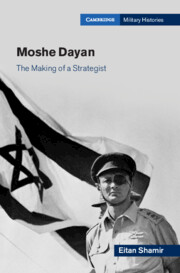
In this major re-evaluation of Moshe Dayan's life and career, Eitan Shamir examines one of the most influential individuals in the history of modern Israel. As IDF Chief of Staff, theatre commander during the Sinai campaign and defence minister during the Six Days and Yom Kippur Wars, Dayan shaped Israeli history as well as the principles of Israel's security and foreign affairs. Eitan Shamir explores the basis and justification for Dayan's reputation as a strategist and what made his command and leadership unique. He reveals the ways in which Moshe Dayan led and planned his campaigns, how he made his decisions and his style as a general and a strategist. His findings shed important new light on broader issues of military command and culture, political-military relations, insurgency and counterinsurgency and the relations between small states and large powers, drawing lasting lessons for strategy today.