To save content items to your account,
please confirm that you agree to abide by our usage policies.
If this is the first time you use this feature, you will be asked to authorise Cambridge Core to connect with your account.
Find out more about saving content to .
To save content items to your Kindle, first ensure no-reply@cambridge.org
is added to your Approved Personal Document E-mail List under your Personal Document Settings
on the Manage Your Content and Devices page of your Amazon account. Then enter the ‘name’ part
of your Kindle email address below.
Find out more about saving to your Kindle.
Note you can select to save to either the @free.kindle.com or @kindle.com variations.
‘@free.kindle.com’ emails are free but can only be saved to your device when it is connected to wi-fi.
‘@kindle.com’ emails can be delivered even when you are not connected to wi-fi, but note that service fees apply.
Chapter 3 describes the imagery and production of the murals of the Old Testament in the Camposanto of Pisa completed in by Benozzo Gozzoli in 1484. Archbishop Filippo de’ Medici’s (1426–74) role in the commission is placed in the expanded context of his patronage and diplomacy throughout a long, distinguished career. These murals, painted during Pisa’s subjection to Florence, enhanced an impressive locus of Pisan identity and pride, while signalling the political reality of Florentine control.
Chapter 1 examines Agnolo Gaddi’s work between 1392 and 1395 in the chapel in Prato cathedral, which was built to house the Virgin’s Belt, the most important relic in the city. Primary sources allow reconstruction of the ceremony during which the precious relic of the Virgin’s Belt was displayed to the public. The monumental narratives of the origins of the Holy Belt and its journey to Prato celebrated Prato’s favored status as custodian of the relic. Detailed surviving payments, here published in full for the first time, reveal a narrative of the chapel’s construction and decoration and bring to light how the artist, Agnolo Gaddi, collaborated with Florentine and Pratese artisans in the enterprise. Agnolo’s professional and personal connections with the Pratese Opera, and the social identities of its members, expose a rich network of relationships in which the commission unfolded.
Chapter 2 focuses on the extensive decoration of the Camposanto in Pisa, the monumental cemetery adjacent to the cathedral complex. Here the author describes the ceremonies associated with death, burial and remembrance that animated the vast spaces. Unlike previous assumptions of a single program that from the beginning guided the mural decoration, it is proposed here that the wall paintings, completed during three discrete periods, reflected the changing social and religious significance of the Camposanto as a communal burial space open to all classes of Pisans. The murals of the life of the Pisan patron saint Rainerius were begun by Andrea di Buonaiuti (also called Andrea da Firenze) and completed by Antonio Veneziano in 1386. Commisssioned by Pietro Gambacorta, the signore of Pisa, they celebrated Pisa’s identity as a vibrant polity with a venerable history, against the backdrop of a fast-changing political reality.
Chapter 4 pivots to Umbria, where Fra Filippo Lippi painted the apse decoration in the cathedral of Spoleto between 1466 and 1469. Here again, primary and secondary sources reveal the ceremonies that took place in the cathedral and highlight the relationship of the apse paintings and the venerated Madonna icon of the cathedral. The bishop of Spoleto, Berardo Eroli, played a leading role in the commission, which is set in the context of his art patronage in Umbria and Rome. From the copious documentation for the Spoleto project – here published in full for the first time – emerges evidence that Eroli conceived the Coronation murals as a magnificent setting for the Madonna icon of the cathedral and its display on holy days, especially the feast of the Virgin’s Assumption, August 15. In his vision and his active involvement in the project during its execution, Eroli sought to link the Spoleto Duomo visually and liturgically with the venerable basilica of Santa Maria Maggiore in Rome.
Florence was known in the Renaissance for its cutthroat competition and hypercritical environment, which sustained the city’s reputation for superb craftsmanship and innovative design. Yet many of its most successful artists worked for long periods outside the city. Vasari states that, to make a reputation at home, an artist had to travel abroad, to execute highly visible and well-compensated projects commissioned by prestigious patrons. Ambrogio Lorenzetti was “called outside his homeland to honor another; and if by chance [that other place] is more noble in customs, mind and ability, he, once unhappy, is filled with joy in seeing himself awarded, embraced and largely honored.”
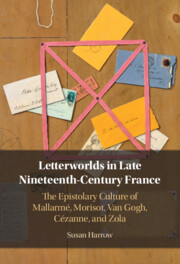
Today's world of e-mails, text messages, and social media posts reminds us that letter-writing is an age-old practice that has continually re-invented itself culturally and contextually, connecting individuals and creating communities that may be local or global, personal or public, purposeful or playful, actual or virtual. Yet we have barely begun to explore why letter-writing matters: how it teaches us important lessons, across historical, cultural, and geographical boundaries, about being human. Letterworlds turns to the past – to the late nineteenth century – in order to explore questions of crucial relevance to our present: questions of subjectivity, solitude, and community, physical and mental wellbeing, ethics, and the everyday. Using a fresh holistic and thematic methodology, Susan Harrow examines how such issues suffuse and animate the letter-writing of a group of writers and artists whose contributions are seminal in the development of Western aesthetic modernity: Mallarmé, Morisot, Van Gogh, Cézanne, and Zola.
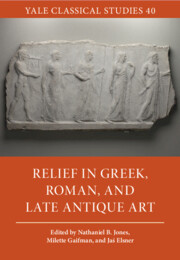
The artistic category of relief has long dominated scholarly discussions of ancient Greco-Roman art for good reason: images in relief pervaded ancient visual culture from the rise of the Greek city-state through to the Christian era. They are witnessed in public and private contexts; terracotta, bronze, and stone media; techniques as varied as incision, modelling, or repoussé; and scales from the miniature to the monumental. Precisely because of the ubiquity and fluidity of ancient relief, the category as such has not been given full consideration in own right, and many questions have remained under-theorized. Boasting an international cast of contributors, this volume addresses key questions about relief across the geographic and temporal scope of the ancient world, including how relief was conceptualized within antiquity, what role materials and techniques played in its creation, and what the relations were between relief media and their effects on viewers.
The first English translation of 'La Galilee', an account of Pierre Loti's travels in the Holy Land from Jerusalem to Beirut, via Damascus and many other interesting places, in 1894.
Pierre Loti (1850-1923) was born Louis-Marie-Julien Viaud into a Protestant family in Rochefort in Saintonge, South-West France (now Charente Maritime). He was an officer of the French Navy and a prolific author of considerable note in nineteenth to early twentieth-century France, publishing many novels and numerous accounts of his travels around the world. He was a member of the French Academy.
Apart from his literary talents, Loti was a pioneer photographer and this translation of his journey from Jerusalem to Beirut in 1894 is greatly enhanced by the reproduction of some of the photographs he took at the time.
From 17 April, 1900, to 6 June of that year, Pierre Loti travelled in a private capacity from Bushire on the Persian Gulf, northwards through Shiraz, Persepolis, Isfahan and Tehran, before returning via the Caspian Sea to Europe. This is the personal day-by-day account of his journey, the hardships of the mountainous terrain and the empty desert. Loti excels in his descriptions of the world around him: the sky, the mountains, the fertile plains, the deserted desert. His descriptions of the people he meets, their dress and manners are remarkable. Loti had come from India and on his way to the Gulf, he stopped off at Muscat and his account of this brief visit was published as 'En passant à Mascate' (Passing through Muscat). This is the first English translation of both texts.
Pierre Loti (1850-1923) was born Louis-Marie-Julien Viaud into a Protestant family in Rochefort in Saintonge, South-West France (now Charente Maritime). He was an officer of the French Navy and a prolific author of considerable note in nineteenth to early-twentieth-century France, publishing many novels and numerous accounts of his travels around the world. He was a member of the French Academy. Apart from his literary talents, Loti was a pioneer photographer and this translation of his journey to Persia in 1900 is greatly enhanced by the reproduction of some of the photographs he took at the time.
In late eighteenth-century Havana, residents frequently referred to the existence of large communities of negros and pardos as 'officers in the trade of painter' and the authors of 'exquisite works.' But who are these artists, and where can we find their works? What sort of works did they produce? Where were they trained, and how did they master their crafts with such perfection? By centering the artistic production and social worlds of artists of African descent in Cuba since the colonial period, this revisionist history of Cuban art provides compelling answers to these questions. Carefully researched and cogently argued, the book explores the gendered racial biases that have informed the constitution of the Cuban art canon; exposes how the ideologues of the slave owning planter class institutionalized the association between 'fine arts' and key attributes of whiteness; and examines how this association continues to shape art historical narratives in Cuba.
This chapter examines attitudes to ancient relief sculpture through a comparison with painting. Focusing on the art of Rome, and especially on the representation of relief sculpture in Roman mural painting of the first centuries BCE and CE, the chapter looks to how ancient painting and relief fed off and reverberated around each other, to the ways in which they both overlapped and, ultimately, sought to distinguish themselves. Drawing on modern media theory, the chapter proposes that Roman relief and painting remediated one another through a double, oscillating logic of immediacy and hypermediacy – through the iterative alternation from communicative transparency to opacity and back. Thinking through relief and painting as reciprocally related media reveals the consistent blurring of boundaries between apparent opposites: two and three dimensions, real and pictorial space, haptic and optic, form and color, and illusion and fiction. The chapter further argues that the representation of relief sculpture within Roman murals permitted painters to explore the boundaries of their capabilities by offering both a material limit to pictorialization and providing ways in which the pictorial could seek to outflank the material.