Refine search
Actions for selected content:
11517 results in Ancient philosophy
Bibliography
-
- Book:
- The Ambivalences of Rationality
- Published online:
- 08 December 2017
- Print publication:
- 21 December 2017, pp 103-118
-
- Chapter
- Export citation
Abbreviations
-
- Book:
- Platonist Philosophy 80 BC to AD 250
- Published online:
- 08 December 2017
- Print publication:
- 21 December 2017, pp xiii-xiv
-
- Chapter
- Export citation
Catalogue of Platonists
-
- Book:
- Platonist Philosophy 80 BC to AD 250
- Published online:
- 08 December 2017
- Print publication:
- 21 December 2017, pp 593-617
-
- Chapter
- Export citation
Copyright page
-
- Book:
- The Ambivalences of Rationality
- Published online:
- 08 December 2017
- Print publication:
- 21 December 2017, pp iv-iv
-
- Chapter
- Export citation
Copyright page
-
- Book:
- Platonist Philosophy 80 BC to AD 250
- Published online:
- 08 December 2017
- Print publication:
- 21 December 2017, pp iv-iv
-
- Chapter
- Export citation
Chapter 18 - Ethical Virtue and the Management of the Passions
- from III - Ethics
-
- Book:
- Platonist Philosophy 80 BC to AD 250
- Published online:
- 08 December 2017
- Print publication:
- 21 December 2017, pp 479-507
-
- Chapter
- Export citation
Chapter 4 - Seeming and Being
-
- Book:
- The Ambivalences of Rationality
- Published online:
- 08 December 2017
- Print publication:
- 21 December 2017, pp 39-56
-
- Chapter
-
- You have access
- HTML
- Export citation
Chapter 20 - The System of the Chaldaean Oracles
- from III - Ethics
-
- Book:
- Platonist Philosophy 80 BC to AD 250
- Published online:
- 08 December 2017
- Print publication:
- 21 December 2017, pp 519-531
-
- Chapter
- Export citation
Introduction: Studying Middle Platonism
-
- Book:
- Platonist Philosophy 80 BC to AD 250
- Published online:
- 08 December 2017
- Print publication:
- 21 December 2017, pp 1-23
-
- Chapter
- Export citation
Chapter 14 - Logic
- from II - Dialectic
-
- Book:
- Platonist Philosophy 80 BC to AD 250
- Published online:
- 08 December 2017
- Print publication:
- 21 December 2017, pp 394-417
-
- Chapter
- Export citation
Chapter 5 - Paradigm Forms
- from I - Cosmology
-
- Book:
- Platonist Philosophy 80 BC to AD 250
- Published online:
- 08 December 2017
- Print publication:
- 21 December 2017, pp 125-146
-
- Chapter
- Export citation
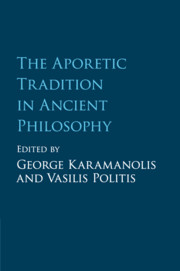
The Aporetic Tradition in Ancient Philosophy
-
- Published online:
- 18 December 2017
- Print publication:
- 28 December 2017
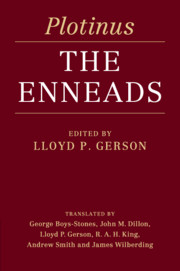
Plotinus: The Enneads
-
- Published online:
- 16 December 2017
- Print publication:
- 28 December 2017
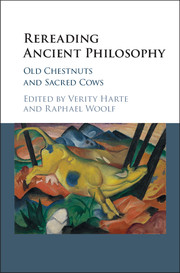
Rereading Ancient Philosophy
- Old Chestnuts and Sacred Cows
-
- Published online:
- 08 December 2017
- Print publication:
- 28 December 2017
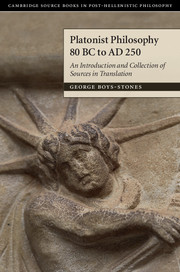
Platonist Philosophy 80 BC to AD 250
- An Introduction and Collection of Sources in Translation
-
- Published online:
- 08 December 2017
- Print publication:
- 21 December 2017
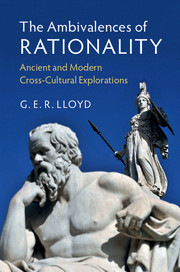
The Ambivalences of Rationality
- Ancient and Modern Cross-Cultural Explorations
-
- Published online:
- 08 December 2017
- Print publication:
- 21 December 2017
Aristotle's Generation of Animals
- A Critical Guide
-
- Published online:
- 24 November 2017
- Print publication:
- 11 January 2018
5 - The Influence of Aristotle’s View of Religion on Medieval Jewish and Christian Thought
-
- Book:
- Aristotle on Religion
- Published online:
- 26 October 2017
- Print publication:
- 02 November 2017, pp 125-139
-
- Chapter
- Export citation
Introduction
-
- Book:
- Aristotle on Religion
- Published online:
- 26 October 2017
- Print publication:
- 02 November 2017, pp vii-viii
-
- Chapter
- Export citation
6 - Conclusion
-
- Book:
- Aristotle on Religion
- Published online:
- 26 October 2017
- Print publication:
- 02 November 2017, pp 140-166
-
- Chapter
- Export citation
