Refine search
Actions for selected content:
11517 results in Ancient philosophy
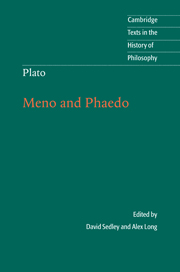
Plato: Meno and Phaedo
-
- Published online:
- 05 June 2014
- Print publication:
- 25 November 2010
2 - God’s eternal knowledge according to Augustine
- from Part I - The nature of God
-
-
- Book:
- The Cambridge Companion to Augustine
- Published online:
- 05 July 2014
- Print publication:
- 05 June 2014, pp 37-59
-
- Chapter
- Export citation
6 - Jesus Christ, the knowledge and wisdom of God
- from Part II - God’s relation to the world
-
-
- Book:
- The Cambridge Companion to Augustine
- Published online:
- 05 July 2014
- Print publication:
- 05 June 2014, pp 108-122
-
- Chapter
- Export citation
The Cambridge Companion to AUGUSTINE - Half title page
-
- Book:
- The Cambridge Companion to Augustine
- Published online:
- 05 July 2014
- Print publication:
- 05 June 2014, pp i-i
-
- Chapter
- Export citation
9 - Augustine on free will
- from Part III - Human nature
-
-
- Book:
- The Cambridge Companion to Augustine
- Published online:
- 05 July 2014
- Print publication:
- 05 June 2014, pp 166-186
-
- Chapter
- Export citation
Part V - Political and ecclesial life
-
- Book:
- The Cambridge Companion to Augustine
- Published online:
- 05 July 2014
- Print publication:
- 05 June 2014, pp 229-272
-
- Chapter
- Export citation
Part I - The nature of God
-
- Book:
- The Cambridge Companion to Augustine
- Published online:
- 05 July 2014
- Print publication:
- 05 June 2014, pp 15-78
-
- Chapter
- Export citation
Dedication
-
- Book:
- The Cambridge Companion to Augustine
- Published online:
- 05 July 2014
- Print publication:
- 05 June 2014, pp ix-x
-
- Chapter
- Export citation
Part VII - Augustine’s legacy
-
- Book:
- The Cambridge Companion to Augustine
- Published online:
- 05 July 2014
- Print publication:
- 05 June 2014, pp 329-348
-
- Chapter
- Export citation
Abbreviations
-
- Book:
- The Cambridge Companion to Augustine
- Published online:
- 05 July 2014
- Print publication:
- 05 June 2014, pp xxi-xxiv
-
- Chapter
- Export citation
1 - The divine nature: being and goodness
- from Part I - The nature of God
-
-
- Book:
- The Cambridge Companion to Augustine
- Published online:
- 05 July 2014
- Print publication:
- 05 June 2014, pp 17-36
-
- Chapter
- Export citation
13 - Heaven and theecclesia perfectain Augustine
- from Part V - Political and ecclesial life
-
-
- Book:
- The Cambridge Companion to Augustine
- Published online:
- 05 July 2014
- Print publication:
- 05 June 2014, pp 251-272
-
- Chapter
- Export citation
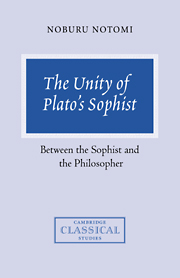
The Unity of Plato's Sophist
- Between the Sophist and the Philosopher
-
- Published online:
- 05 June 2014
- Print publication:
- 15 April 1999
Notes on contributors
-
-
- Book:
- The Cambridge Companion to Augustine
- Published online:
- 05 July 2014
- Print publication:
- 05 June 2014, pp xiii-xviii
-
- Chapter
- Export citation
8 - Augustine on knowledge
- from Part III - Human nature
-
-
- Book:
- The Cambridge Companion to Augustine
- Published online:
- 05 July 2014
- Print publication:
- 05 June 2014, pp 142-165
-
- Chapter
- Export citation
Bibliography
-
- Book:
- The Cambridge Companion to Augustine
- Published online:
- 05 July 2014
- Print publication:
- 05 June 2014, pp 349-366
-
- Chapter
- Export citation
Copyright page
-
- Book:
- The Cambridge Companion to Augustine
- Published online:
- 05 July 2014
- Print publication:
- 05 June 2014, pp viii-viii
-
- Chapter
- Export citation
Part VI - Language and faith
-
- Book:
- The Cambridge Companion to Augustine
- Published online:
- 05 July 2014
- Print publication:
- 05 June 2014, pp 273-328
-
- Chapter
- Export citation
16 - Hermeneutics and reading Scripture
- from Part VI - Language and faith
-
-
- Book:
- The Cambridge Companion to Augustine
- Published online:
- 05 July 2014
- Print publication:
- 05 June 2014, pp 311-328
-
- Chapter
- Export citation
Part II - God’s relation to the world
-
- Book:
- The Cambridge Companion to Augustine
- Published online:
- 05 July 2014
- Print publication:
- 05 June 2014, pp 79-122
-
- Chapter
- Export citation
