To save content items to your account,
please confirm that you agree to abide by our usage policies.
If this is the first time you use this feature, you will be asked to authorise Cambridge Core to connect with your account.
Find out more about saving content to .
To save content items to your Kindle, first ensure no-reply@cambridge.org
is added to your Approved Personal Document E-mail List under your Personal Document Settings
on the Manage Your Content and Devices page of your Amazon account. Then enter the ‘name’ part
of your Kindle email address below.
Find out more about saving to your Kindle.
Note you can select to save to either the @free.kindle.com or @kindle.com variations.
‘@free.kindle.com’ emails are free but can only be saved to your device when it is connected to wi-fi.
‘@kindle.com’ emails can be delivered even when you are not connected to wi-fi, but note that service fees apply.
'What drugs will not cure, the knife will; what the knife will not cure, the cautery will; what the cautery will not cure, must be considered incurable.' This final maxim of the Hippocratic Aphorisms gives a good impression of the general attitude towards drugs in ancient medicine. Drug lore holds a middle position within the tripartite system of ancient therapeutics: dietetics, pharmacology and surgery (including cautery). Dietetics is not mentioned in the aphorism, because it is regarded as a non-invasive method of preserving health rather than of curing disease, and is thus applied prophylactically, or only in mild cases of disease, while pharmacology and, especially, surgery are regarded as rather drastic 'intrusions' into the patient's organism – chosen in order to counteract the noxious impact of an illness or wound. Between the two of them, pharmacology has two advantages: it does not imply the additional risks of surgery, i.e. the possible complications by bleeding or infection of the surgical wound (a very real danger in times without asepsis and antisepsis!); and it is more apt to stimulate the body's self-healing processes to restore its original balance – a holistic view of the human organism to which Galen was especially disposed. Therefore, in Galen's view 'the best physician was the one most capable of treating surgical conditions by means other than the knife, and particularly by diet and drugs'.
Galen was born in September AD 129, in Pergamum on the Ionian seaboard of Asia Minor. He died sometime in the second decade of the third century, probably in Rome. He lived, and worked, until well into his eighties; and over the course of that long and productive life wrote (or rather dictated, sometimes more than one treatise at a time, to relays of slaves) a vast number of works on a wide variety of topics, ranging from medicine, through logic and philosophy, to philology and literary criticism. Many - indeed most - of these books are lost; but we are fortunate to possess two short texts from Galen's own hand that deal with his output: On My Own Books (Lib.Prop.) XIX 8-48, = SM 2, 91-14, and The Order of My Own Books (Ord.Lib.Prop.) XIX 49-61, = SM 2, 80-90; the latter deals with the order in which an aspirant doctor should read them, while the former was written in order, he says, to help people determine which of the many works circulating under his name was genuine. These lists are not exhaustive: several indisputably genuine texts fail to appear in them, either because they were written later, or because for whatever reason Galen chose to disown them; moreover the Greek text suffers from several lacunae (although some of these have been filled from Arabic sources and by way of a newly recovered Greek manuscript in Véronique Boudon's recent edition).
Plato's writings are typically in the form of dialogues in which Socrates (born 469 BC) discusses philosophical questions with other characters of his day. Most of these are based on known historical figures, but the dialogues are not factual accounts; they are fictional, and often richly dramatic, products of Plato's philosophical imagination. The Symposium is a particularly dramatic work. It is set at the house of Agathon, a tragic poet celebrating his recent victory in 416 BC at one of the great dramatic festivals. Those present are amongst the intellectual elite of the day. They include an exponent of heroic poetry (Phaedrus), an expert in the laws of various Greek states (Pausanias), a representative of medical expertise (Eryximachus), a comic poet (Aristophanes) and a philosopher (Socrates). The guests participate in a symposium, a drinking party for aristocratic circles, on this occasion designed to honour Agathon's victory. Each guest delivers a speech in praise of eros, ‘passionate love’, or ‘desire’. The final speech is delivered by Alcibiades, a notorious associate of Socrates, who talks openly about his love for Socrates, in particular.
apollodorus: I believe I am quite well prepared to relate the events you are asking me about, for just the other day I happened to be going into Athens from my home in Phalerum when an acquaintance of mine caught sight of me from behind and called after me, jokily,
‘Phalerian! You there, Apollodorus! Wait for me, will you?’
So I stopped and waited.
‘I have just been looking for you, Apollodorus. I wanted to get from you the story about that party of Agathon's with Socrates, Alcibiades and the rest, the time when they were all together at dinner, and to hear what they said in their speeches on the subject of love. Someone else was telling me, who had heard about it from Phoenix, son of Philippus, and he said that you knew about it too. Actually he could not give any clear account of it, so you must tell me. You are in the best position to report the words of your friend. But tell me this first’, he went on. ‘Were you at that party yourself or not?’
‘It certainly looks as if your informant was rather confused’, I replied, ‘if you think the party you are asking about occurred recently enough for me to be there’.
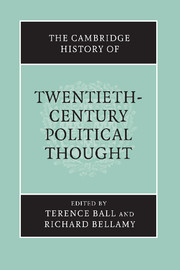
This major work of academic reference provides a comprehensive overview of the development of political thought from the late nineteenth to the end of the twentieth century. Written by a distinguished team of international contributors, this Cambridge History, first published in 2003, covers the rise of the welfare state and subsequent reactions to it, the fascist and communist critiques of and attempted alternatives to liberal democracy, the novel forms of political organisation occasioned by the rise of a mass electorate and new social movements, the various intellectual traditions from positivism to post-modernism that have shaped the study of politics, the interaction between western and non-western traditions of political thought, and the challenge posed to the state by globalisation. Every major theme in twentieth-century political thought is covered in a series of chapters at once scholarly and accessible, of interest and relevance to students and scholars of politics at all levels from beginning undergraduate upwards.
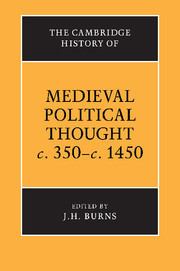
This volume, first published in 1988, offers a comprehensive and authoritative account of the history of a complex and varied body of ideas over a period of more than a thousand years. A work of both synthesis and assessment, The Cambridge History of Medieval Political Thought presents the results of several decades of critical scholarship in the field, and reflects in its breadth of enquiry precisely that diversity of focus which characterised the medieval sense of the 'political', preoccupied with universality at some levels, and with almost minute particularity at others. Thus among the vital questions explored by the distinguished team of contributors are the nature of authority, of justice, of property; the problem of legitimacy, of allegiance, of resistance to the powers that be; the character and function of law, and the role of custom in sustaining a social structure. While the predominant emphasis of the volume is necessarily upon those ideas that developed within Latin Christendom, full weight is also given to the impact of Byzantine, Jewish, and Islamic thought, and the whole comprises a unique distillation of knowledge upon a multi-faceted screen.
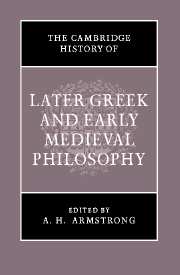
Surveys philosophy from the neo-Platonists to St Anselm, showing how Greek philosophy took the form in which it was known to its cultural inheritors and how they interpreted it.
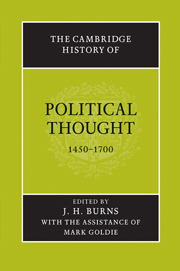
This book, first published in 1992, presents a comprehensive scholarly account of the development of European political thinking through the Renaissance and the reformation to the 'scientific revolution' and political upheavals of the seventeenth century. It is written by a highly distinguished team of contributors.
This major work of academic reference provides a comprehensive overview of the development of western political thought during the European Enlightenment. Written by a distinguished team of international contributors, this Cambridge History is the latest in a sequence of volumes that is now firmly established as the principal reference source for the history of political thought. Every major theme in eighteenth-century political thought is covered in a series of essays at once scholarly and accessible, and the essays are complemented by extensive guides for further reading, and brief biographical notes of the major characters in the text, including Rousseau, Montesquieu and David Hume. Of interest and relevance to students and scholars of politics and history at all levels from beginning undergraduate upwards, this volume chronicles one of the most exciting and rewarding of all periods in the development of western thinking about politics, man (and increasingly woman), and society.
A full account of the philosophy of the Greek and Roman worlds from the last days of Aristotle (c.320 BC) until 100 BC. Hellenistic philosophy, for long relatively neglected and unappreciated, has over the last decade been the object of a considerable amount of scholarly attention. Now available in paperback, this 1999 volume is a general reference work which pulls the subject together and presents an overview. The History is organised by subject, rather than chronologically or by philosophical school, with sections on logic, epistemology, physics and metaphysics, ethics and politics. It has been written by specialists but is intended to be a source of reference for any student of ancient philosophy, for students of classical antiquity and for students of the philosophy of later periods. Greek and Latin are used sparingly and always translated in the main text.