Refine search
Actions for selected content:
3730 results in Classical languages
3 - Proposed Semitisms inThomas:
- from Part I - The original language ofThomas
-
- Book:
- The Composition of the Gospel of Thomas
- Published online:
- 05 March 2012
- Print publication:
- 01 March 2012, pp 43-104
-
- Chapter
- Export citation
6 - Thomasand the Synoptics: A method for assessing influence
- from Part II - The Synoptic Gospels andThomas
-
- Book:
- The Composition of the Gospel of Thomas
- Published online:
- 05 March 2012
- Print publication:
- 01 March 2012, pp 145-167
-
- Chapter
- Export citation
4 - Positive evidence for a Greek-language origin
- from Part I - The original language ofThomas
-
- Book:
- The Composition of the Gospel of Thomas
- Published online:
- 05 March 2012
- Print publication:
- 01 March 2012, pp 105-126
-
- Chapter
- Export citation
11 - The Epistle to the Hebrews andGTh56; 80; 111
- from Part III - Thomasand other early Christian literature
-
- Book:
- The Composition of the Gospel of Thomas
- Published online:
- 05 March 2012
- Print publication:
- 01 March 2012, pp 250-262
-
- Chapter
- Export citation
The Composition of the Gospel of Thomas - Half title page
-
- Book:
- The Composition of the Gospel of Thomas
- Published online:
- 05 March 2012
- Print publication:
- 01 March 2012, pp i-ii
-
- Chapter
- Export citation
2 - Methodological problems with Semitic theories
- from Part I - The original language ofThomas
-
- Book:
- The Composition of the Gospel of Thomas
- Published online:
- 05 March 2012
- Print publication:
- 01 March 2012, pp 24-42
-
- Chapter
- Export citation
Part I - The original language ofThomas
-
- Book:
- The Composition of the Gospel of Thomas
- Published online:
- 05 March 2012
- Print publication:
- 01 March 2012, pp 17-126
-
- Chapter
- Export citation
Copyright page
-
- Book:
- The Composition of the Gospel of Thomas
- Published online:
- 05 March 2012
- Print publication:
- 01 March 2012, pp vi-vi
-
- Chapter
- Export citation
Author index
-
- Book:
- The Composition of the Gospel of Thomas
- Published online:
- 05 March 2012
- Print publication:
- 01 March 2012, pp 318-322
-
- Chapter
- Export citation
Index Locorum
-
- Book:
- The Composition of the Gospel of Thomas
- Published online:
- 05 March 2012
- Print publication:
- 01 March 2012, pp 303-312
-
- Chapter
- Export citation
1 - The problem of the original language ofThomas
- from Part I - The original language ofThomas
-
- Book:
- The Composition of the Gospel of Thomas
- Published online:
- 05 March 2012
- Print publication:
- 01 March 2012, pp 19-23
-
- Chapter
- Export citation
Bibliography
-
- Book:
- The Composition of the Gospel of Thomas
- Published online:
- 05 March 2012
- Print publication:
- 01 March 2012, pp 271-302
-
- Chapter
- Export citation
Conclusion
- from Part III - Thomasand other early Christian literature
-
- Book:
- The Composition of the Gospel of Thomas
- Published online:
- 05 March 2012
- Print publication:
- 01 March 2012, pp 267-270
-
- Chapter
- Export citation
Abbreviations
-
- Book:
- The Composition of the Gospel of Thomas
- Published online:
- 05 March 2012
- Print publication:
- 01 March 2012, pp xi-xiv
-
- Chapter
- Export citation
Series page
-
- Book:
- The Composition of the Gospel of Thomas
- Published online:
- 05 March 2012
- Print publication:
- 01 March 2012, pp iii-iv
-
- Chapter
- Export citation
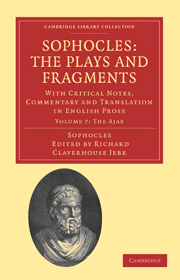
Sophocles: The Plays and Fragments
- With Critical Notes, Commentary and Translation in English Prose
-
- Published online:
- 07 September 2011
- Print publication:
- 11 February 2010
- First published in:
- 1896
Practical Introduction to Latin Prose Composition
-
- Published online:
- 07 September 2011
- Print publication:
- 20 May 2010
- First published in:
- 1842
Syntax of the Moods and Tenses of the Greek Verb
-
- Published online:
- 07 September 2011
- Print publication:
- 10 June 2010
- First published in:
- 1867
Encyklopädie und Methodologie der Philologischen Wissenschaften
-
- Published online:
- 05 August 2011
- Print publication:
- 15 July 2010
- First published in:
- 1886
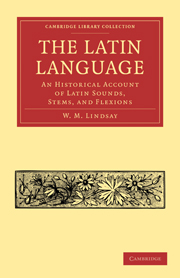
The Latin Language
- An Historical Account of Latin Sounds, Stems, and Flexions
-
- Published online:
- 05 August 2011
- Print publication:
- 31 October 2010
- First published in:
- 1894
