Refine search
Actions for selected content:
212630 results in Engineering
Preface
-
- Book:
- Essential Mathematics for Convex Optimization
- Published online:
- 22 October 2025
- Print publication:
- 26 June 2025, pp xiii-xvi
-
- Chapter
- Export citation
10 - How to Detect Convexity
- from Part III - Convex Functions
-
- Book:
- Essential Mathematics for Convex Optimization
- Published online:
- 22 October 2025
- Print publication:
- 26 June 2025, pp 158-174
-
- Chapter
- Export citation
Appendix B - Prerequisites from Real Analysis
-
- Book:
- Essential Mathematics for Convex Optimization
- Published online:
- 22 October 2025
- Print publication:
- 26 June 2025, pp 366-383
-
- Chapter
- Export citation
Main Notational Conventions
-
- Book:
- Essential Mathematics for Convex Optimization
- Published online:
- 22 October 2025
- Print publication:
- 26 June 2025, pp xvii-xviii
-
- Chapter
- Export citation
Appendix A - Prerequisites from Linear Algebra
-
- Book:
- Essential Mathematics for Convex Optimization
- Published online:
- 22 October 2025
- Print publication:
- 26 June 2025, pp 342-365
-
- Chapter
- Export citation
References
-
- Book:
- Essential Mathematics for Convex Optimization
- Published online:
- 22 October 2025
- Print publication:
- 26 June 2025, pp 425-425
-
- Chapter
- Export citation
Appendix C - Prerequisites from Calculus
-
- Book:
- Essential Mathematics for Convex Optimization
- Published online:
- 22 October 2025
- Print publication:
- 26 June 2025, pp 384-400
-
- Chapter
- Export citation
Appendices
-
- Book:
- Essential Mathematics for Convex Optimization
- Published online:
- 22 October 2025
- Print publication:
- 26 June 2025, pp 342-424
-
- Chapter
- Export citation
3 - Polyhedral Representations and Fourier–Motzkin Elimination
- from Part I - Convex sets in Rn: From First Acquaintance to Linear Programming Duality
-
- Book:
- Essential Mathematics for Convex Optimization
- Published online:
- 22 October 2025
- Print publication:
- 26 June 2025, pp 38-44
-
- Chapter
- Export citation
20 - ★ Cone-Convex Functions: Elementary Calculus and Examples
- from Part IV - Convex Programming, Lagrange Duality, Saddle Points
-
- Book:
- Essential Mathematics for Convex Optimization
- Published online:
- 22 October 2025
- Print publication:
- 26 June 2025, pp 277-283
-
- Chapter
- Export citation
Pressure gradient history effects on integral quantities of turbulent boundary layers: experiments and data-driven models
-
- Journal:
- Journal of Fluid Mechanics / Volume 1014 / 10 July 2025
- Published online by Cambridge University Press:
- 26 June 2025, A2
-
- Article
-
- You have access
- Open access
- HTML
- Export citation
-
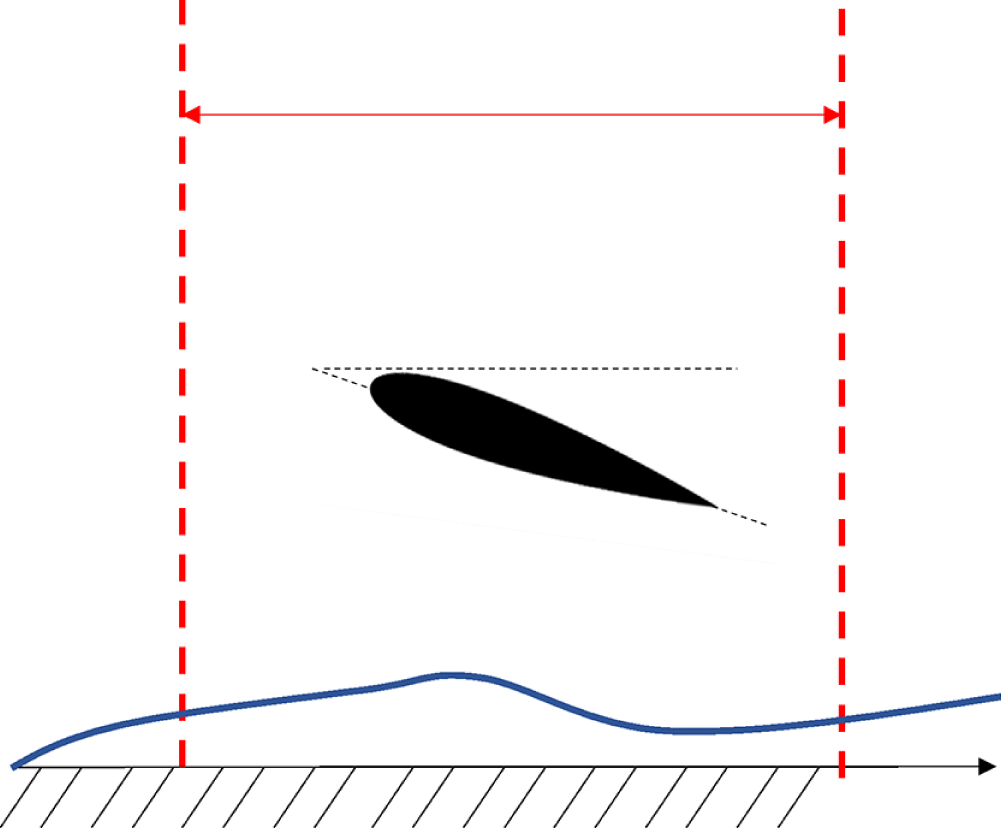
Experiments are carried out in a smooth-wall turbulent boundary layer (TBL) ( $\textit{Re}_\tau \geq 3500$) subjected to different pressure gradient (PG) histories. Oil-film interferometry is used to measure the skin friction evolution over the entire history while wide-field particle image velocimetry captures the mean flow field. This data are used to demonstrate the influence of PG history on skin friction as well as other integral quantities such as displacement ( $\delta ^*$) and momentum thickness ( $\theta$). Based on observations from the data, a new set of ordinary differential equations are proposed to model the streamwise evolution of a TBL subjected to different PG histories. The model is calibrated using a limited number of experimental cases and its utility is demonstrated on other cases. Moreover, the model is applied to data from large-eddy simulations of flows in adverse PG conditions (Bobke et al. 2017, J. Fluid Mech. 820, 667–692). The model is subsequently used to identify the impact of PG history length on the boundary layer. This can also be interpreted as determining the spatial frequency response of the boundary layer to PG disturbances. Results suggest that short spatial variations in PGs primarily affect a small portion of the TBL evolution, whereas longer-lasting ones have a more extensive impact.


Part IV - Convex Programming, Lagrange Duality, Saddle Points
-
- Book:
- Essential Mathematics for Convex Optimization
- Published online:
- 22 October 2025
- Print publication:
- 26 June 2025, pp 233-341
-
- Chapter
- Export citation
7 - Geometry of Polyhedral Sets
- from Part II - Separation Theorem, Extreme Points, Recessive Directions, and Geometry of Polyhedral Sets
-
- Book:
- Essential Mathematics for Convex Optimization
- Published online:
- 22 October 2025
- Print publication:
- 26 June 2025, pp 118-134
-
- Chapter
- Export citation
9 - First Acquaintance with Convex Functions
- from Part III - Convex Functions
-
- Book:
- Essential Mathematics for Convex Optimization
- Published online:
- 22 October 2025
- Print publication:
- 26 June 2025, pp 153-157
-
- Chapter
- Export citation
2 - Theorems of Carathéodory, Radon, and Helly
- from Part I - Convex sets in Rn: From First Acquaintance to Linear Programming Duality
-
- Book:
- Essential Mathematics for Convex Optimization
- Published online:
- 22 October 2025
- Print publication:
- 26 June 2025, pp 28-37
-
- Chapter
- Export citation
22 - Saddle Points
- from Part IV - Convex Programming, Lagrange Duality, Saddle Points
-
- Book:
- Essential Mathematics for Convex Optimization
- Published online:
- 22 October 2025
- Print publication:
- 26 June 2025, pp 297-306
-
- Chapter
- Export citation
Index
-
- Book:
- Essential Mathematics for Convex Optimization
- Published online:
- 22 October 2025
- Print publication:
- 26 June 2025, pp 426-430
-
- Chapter
- Export citation
11 - Minima and Maxima of Convex Functions
- from Part III - Convex Functions
-
- Book:
- Essential Mathematics for Convex Optimization
- Published online:
- 22 October 2025
- Print publication:
- 26 June 2025, pp 175-183
-
- Chapter
- Export citation
15 - Exercises for Part III
- from Part III - Convex Functions
-
- Book:
- Essential Mathematics for Convex Optimization
- Published online:
- 22 October 2025
- Print publication:
- 26 June 2025, pp 218-232
-
- Chapter
- Export citation
1 - First Acquaintance with Convex Sets
- from Part I - Convex sets in Rn: From First Acquaintance to Linear Programming Duality
-
- Book:
- Essential Mathematics for Convex Optimization
- Published online:
- 22 October 2025
- Print publication:
- 26 June 2025, pp 3-27
-
- Chapter
- Export citation
