Refine search
Actions for selected content:
212630 results in Engineering
Acknowledgments
-
- Book:
- Analysis and Design of Data Converters
- Published online:
- 13 November 2025
- Print publication:
- 03 July 2025, pp xvi-xvii
-
- Chapter
- Export citation
3 - Sampling Circuits
-
- Book:
- Analysis and Design of Data Converters
- Published online:
- 13 November 2025
- Print publication:
- 03 July 2025, pp 20-59
-
- Chapter
- Export citation
23 - Nonidealities in ΔΣ Modulators
-
- Book:
- Analysis and Design of Data Converters
- Published online:
- 13 November 2025
- Print publication:
- 03 July 2025, pp 534-558
-
- Chapter
- Export citation
19 - Advanced SAR and Pipelining Techniques
-
- Book:
- Analysis and Design of Data Converters
- Published online:
- 13 November 2025
- Print publication:
- 03 July 2025, pp 418-438
-
- Chapter
- Export citation
2 - Basic Circuit Concepts
-
- Book:
- Analysis and Design of Data Converters
- Published online:
- 13 November 2025
- Print publication:
- 03 July 2025, pp 6-19
-
- Chapter
- Export citation
Contents
-
- Book:
- Wireless Communications and Machine Learning
- Published online:
- 21 October 2025
- Print publication:
- 03 July 2025, pp v-viii
-
- Chapter
- Export citation
Preface
-
- Book:
- Analysis and Design of Data Converters
- Published online:
- 13 November 2025
- Print publication:
- 03 July 2025, pp xv-xv
-
- Chapter
- Export citation
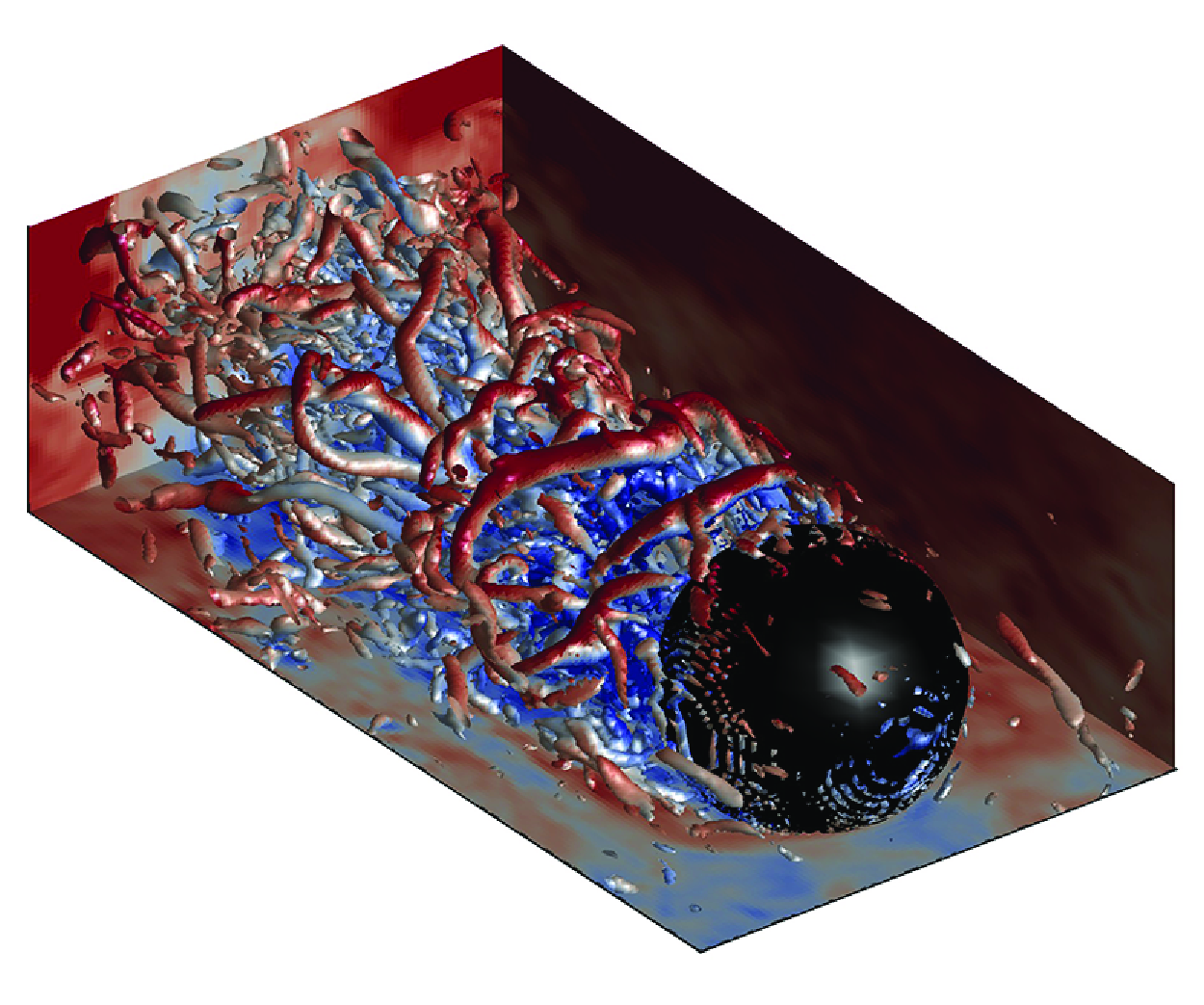
Momentum and energy dynamics across scales in the flow over a rough bed with an array of boulders
-
- Journal:
- Journal of Fluid Mechanics / Volume 1014 / 10 July 2025
- Published online by Cambridge University Press:
- 03 July 2025, A21
-
- Article
-
- You have access
- Open access
- HTML
- Export citation
-
Turbulent flows over rough beds with macroroughness elements of low relative submergence are characteristic of natural river systems. These flows exhibit highly three-dimensional structures, including large-scale coherent patterns, complex nonlinear interactions and significant drag induced by immobile boulders. In this study, large-eddy simulations are conducted of the flow through an array of boulders on a rough bed, based on experiments by Papanicolaou et al. (2012) Acta Geophys. 60 (6), 1502–1546. The analysis includes the instantaneous flow dynamics, the parameterisation of hydrodynamic roughness on the averaged velocity profile and the application of the double-averaged methodology. These upscaling approaches reveal the combined influence of wake turbulence and secondary currents (SCs), and provide insights into momentum and energy conservation mechanisms, which are critical for transport processes in fluvial environments. Results indicate that the boulder array reduces total fluid stress at the rough bed surface to $0.5 \rho u_*^2$, which can have important implications for sediment transport. Form-induced stresses, primarily originating in the boulder wakes, reach up to 37 % of total fluid stress, with peak values comparable to turbulent stresses at mid-boulder elevation. Form-induced kinetic energy (DKE) is shown to have the same magnitude as the turbulent kinetic energy (TKE), highlighting energy transfers from mean flow drag to DKE, then to TKE, before final dissipation. This study underscores the critical role of macroroughness in stress distribution, and the importance of the joint action of SCs and wake turbulence in driving form-induced stresses, which partially counterbalance drag dissipation.

Radiation pattern synthesis of smart fourth dimensional beamforming antenna arrays using optimally splitting pulses
-
- Journal:
- International Journal of Microwave and Wireless Technologies / Volume 17 / Issue 3 / April 2025
- Published online by Cambridge University Press:
- 01 July 2025, pp. 455-470
-
- Article
- Export citation
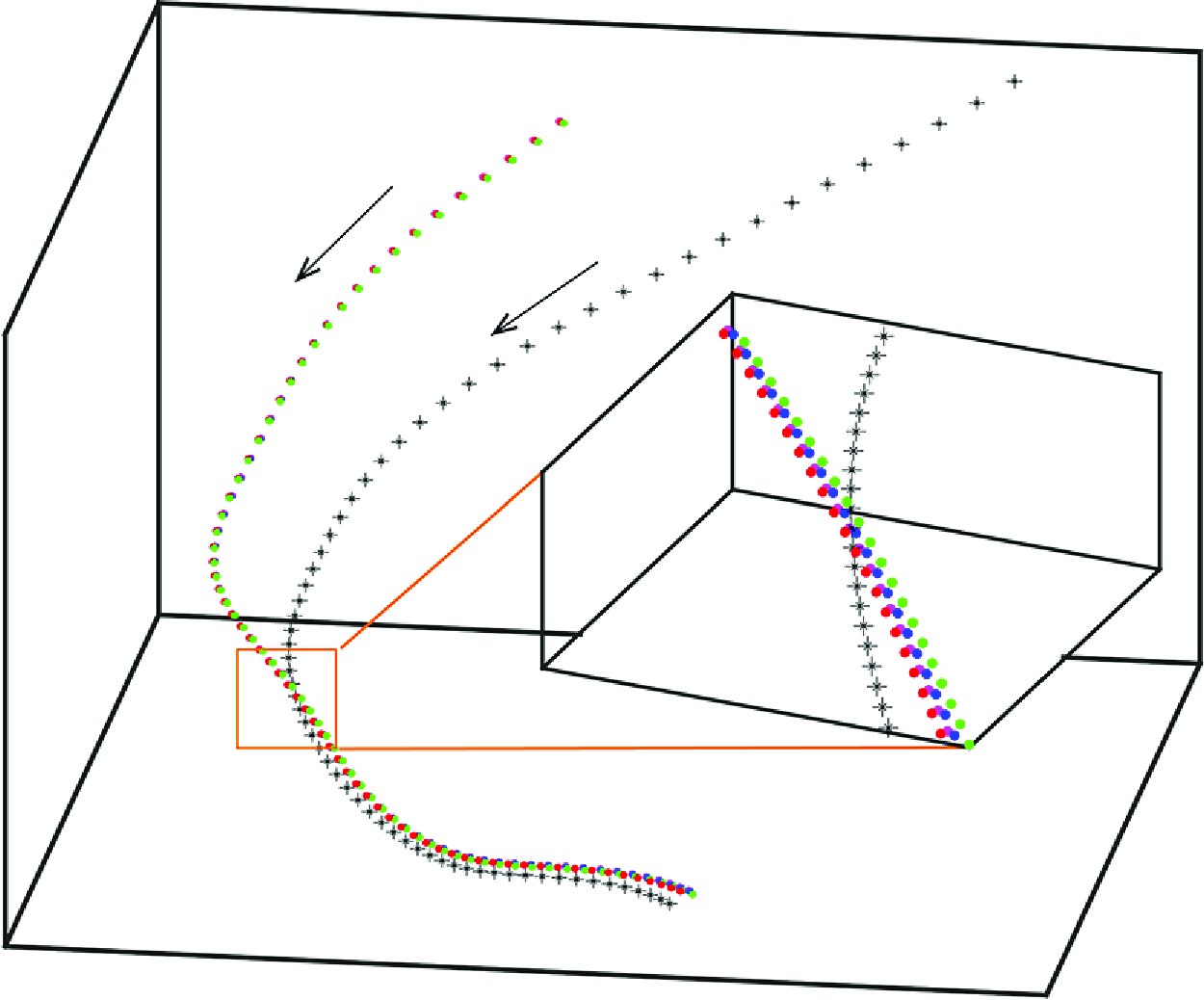
Caustics of inertial particles observed along Lagrangian particle trajectories
-
- Journal:
- Journal of Fluid Mechanics / Volume 1014 / 10 July 2025
- Published online by Cambridge University Press:
- 30 June 2025, A13
-
- Article
- Export citation
-
We extend the perceived velocity gradient defined by a group of particles that was previously used to investigate the Lagrangian statistics of fluid turbulence to the study of inertial particle dynamics. Using data from direct numerical simulations, we observe the correlation between the strong compression in the particle phase and the instantaneous local fluid compression. Furthermore, the Lagrangian nature of the particle velocity gradient defined in this way allows an investigation of its evolution along particle trajectories, including the process after the caustic event, or the blow-up of the particle velocity gradient. Observations reveal that, for particles with Stokes number in the range $St \lesssim 1$, inertial particles experience the maximum compression by local fluid before the caustic event. Interestingly, data analyses show that, while the post-caustic process is mainly the relaxation of the particle motion and the particle relaxation time is the relevant time scale for the dynamics, the pre-caustic dynamics is controlled by the fluid–particle interaction and the proper time scale is determined by both the Kolmogorov time and the particle relaxation time.

Efficient phase locking in massive laser arrays with deep learning from structured data
-
- Journal:
- High Power Laser Science and Engineering / Volume 13 / 2025
- Published online by Cambridge University Press:
- 30 June 2025, e62
-
- Article
-
- You have access
- Open access
- HTML
- Export citation
A proposed conceptual architecture for time-sensitive software-systems
-
- Journal:
- Research Directions: Cyber-Physical Systems / Volume 3 / 2025
- Published online by Cambridge University Press:
- 30 June 2025, e4
-
- Article
-
- You have access
- Open access
- HTML
- Export citation
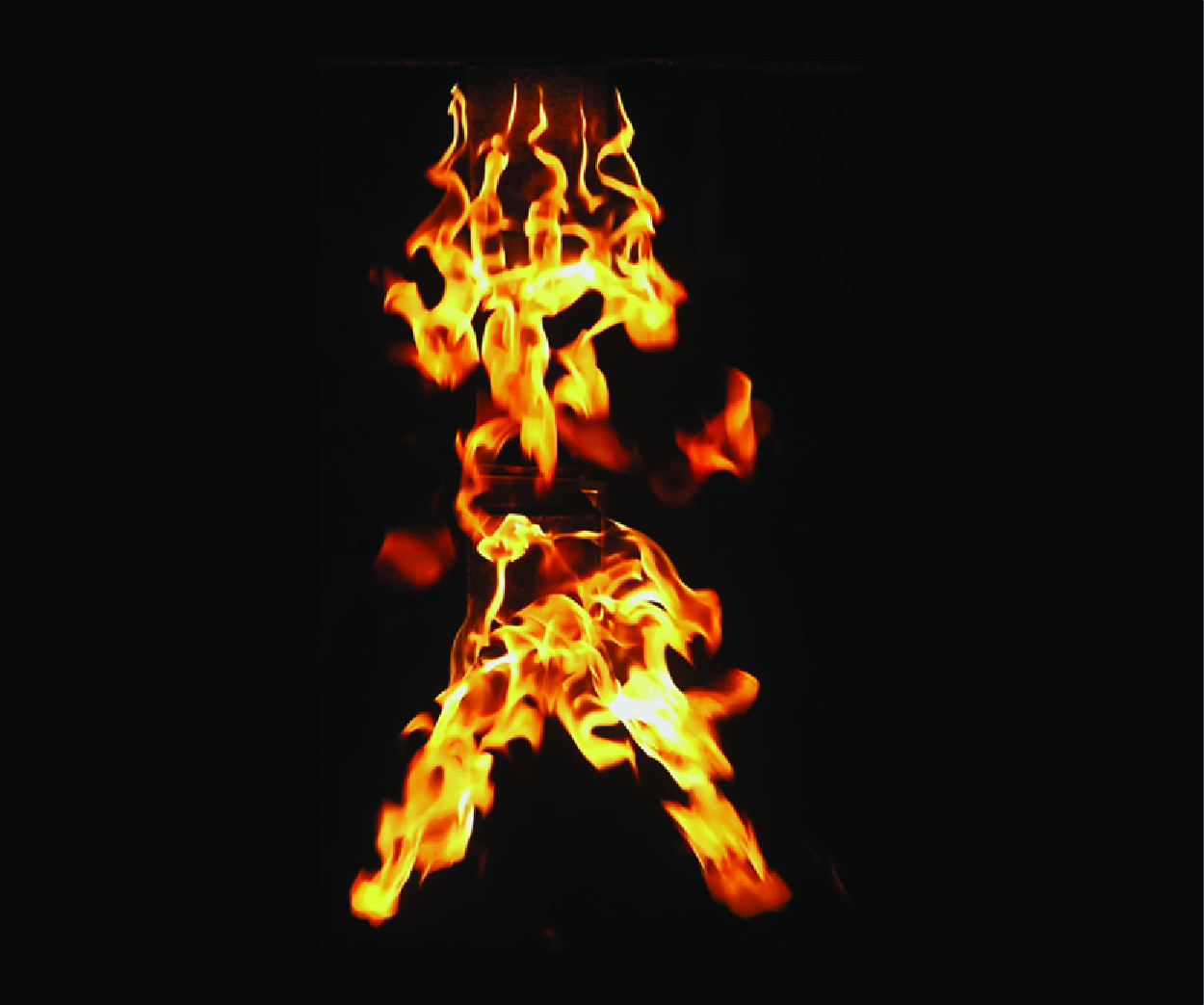
Cross-wind-induced spanwise flapping of tandem turbulent diffusion flames: experimental- and large eddy simulation-based study
-
- Journal:
- Journal of Fluid Mechanics / Volume 1014 / 10 July 2025
- Published online by Cambridge University Press:
- 30 June 2025, A10
-
- Article
- Export citation
-
This research investigates the spanwise oscillation patterns of turbulent non-premixed flames in a tandem configuration, using both experimental methods and large eddy simulations under cross-airflow conditions. Based on the heat release rate (17.43–34.86 kW) and the burner size (0.15 $\times$ 0.15 m), the flame behaves like both a buoyancy-controlled fire (such as a pool fire) and, due to cross-wind effects, a forced flow-controlled fire. The underlying fire dynamics was modelled by varying the spacing between the square diffusion burners, cross-wind velocity and heat release rate. Two flapping modes, the oscillating and bifurcating modes, were observed in the wake of the downstream diffusion flame. This behaviour depends on the wake of the upstream diffusion flame. As the backflow of the upstream flame moved downstream, the maximum flame width of the downstream flame became broader. The flapping amplitude decreased with a stronger cross-wind. Furthermore, the computational fluid dynamics simulation was performed by FireFOAM based on OpenFOAM v2006 2020 to investigate the flapping mechanism. The simulation captured both modes well. Disagreement of the flapping period on the left and right sides results in the oscillating mode, while an agreement of the flapping period results in the bifurcating mode. Finally, the scaling law expressed the dimensionless maximum flame width with the proposed set of basic dimensional parameters, following observations and interpretation by simulations. The results help prevent the potential hazards of this type of basic fire scenario and are fundamentally significant for studying wind-induced multiple fires.

Clinical and instrument-based assessment of balance, gait, and motor functions in pediatric cerebral palsy: A systematic review
-
- Journal:
- Wearable Technologies / Volume 6 / 2025
- Published online by Cambridge University Press:
- 30 June 2025, e29
-
- Article
-
- You have access
- Open access
- HTML
- Export citation
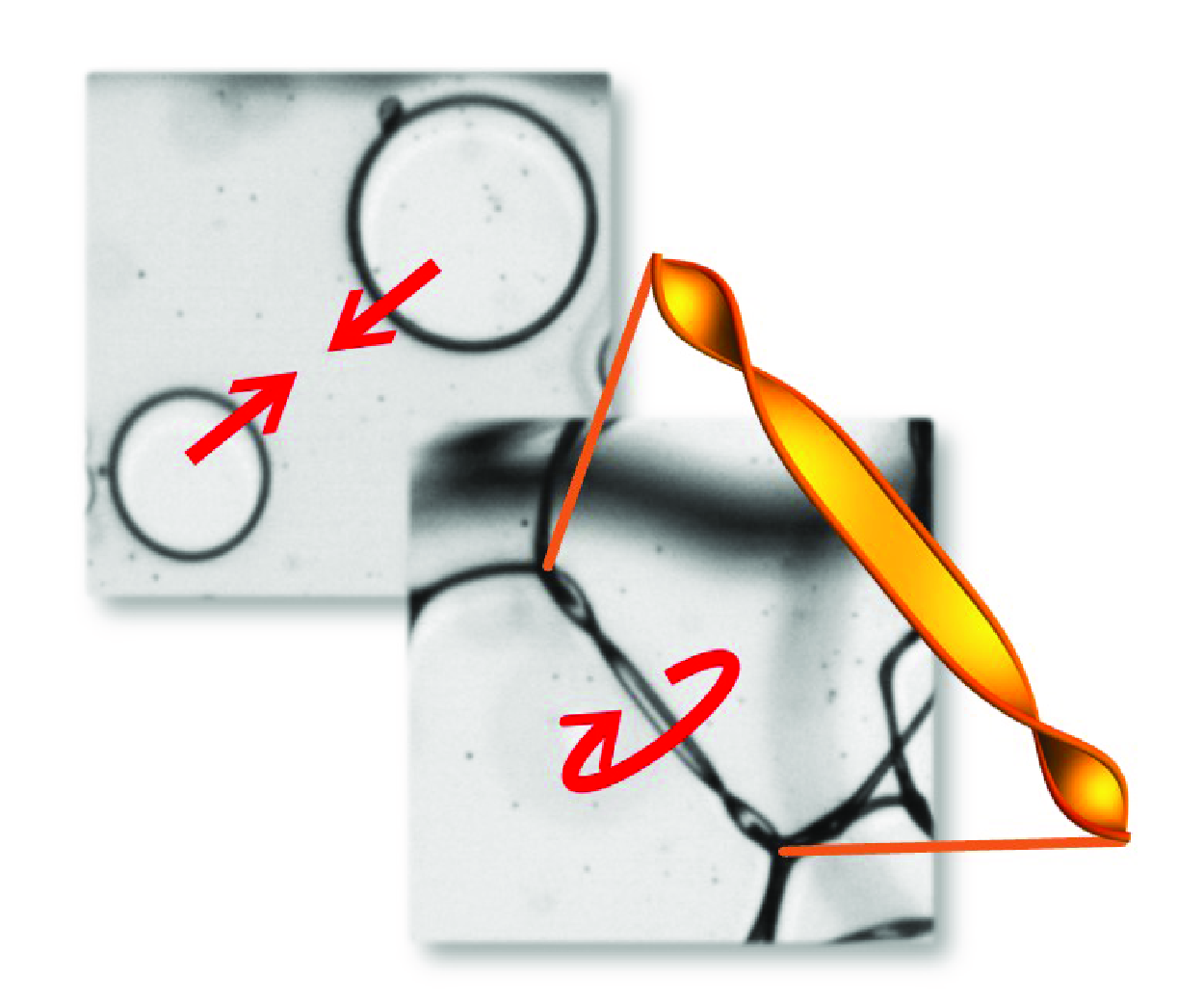
Spinning twisted ribbons: when two holes meet on a curved liquid film
-
- Journal:
- Journal of Fluid Mechanics / Volume 1014 / 10 July 2025
- Published online by Cambridge University Press:
- 30 June 2025, A11
-
- Article
-
- You have access
- Open access
- HTML
- Export citation
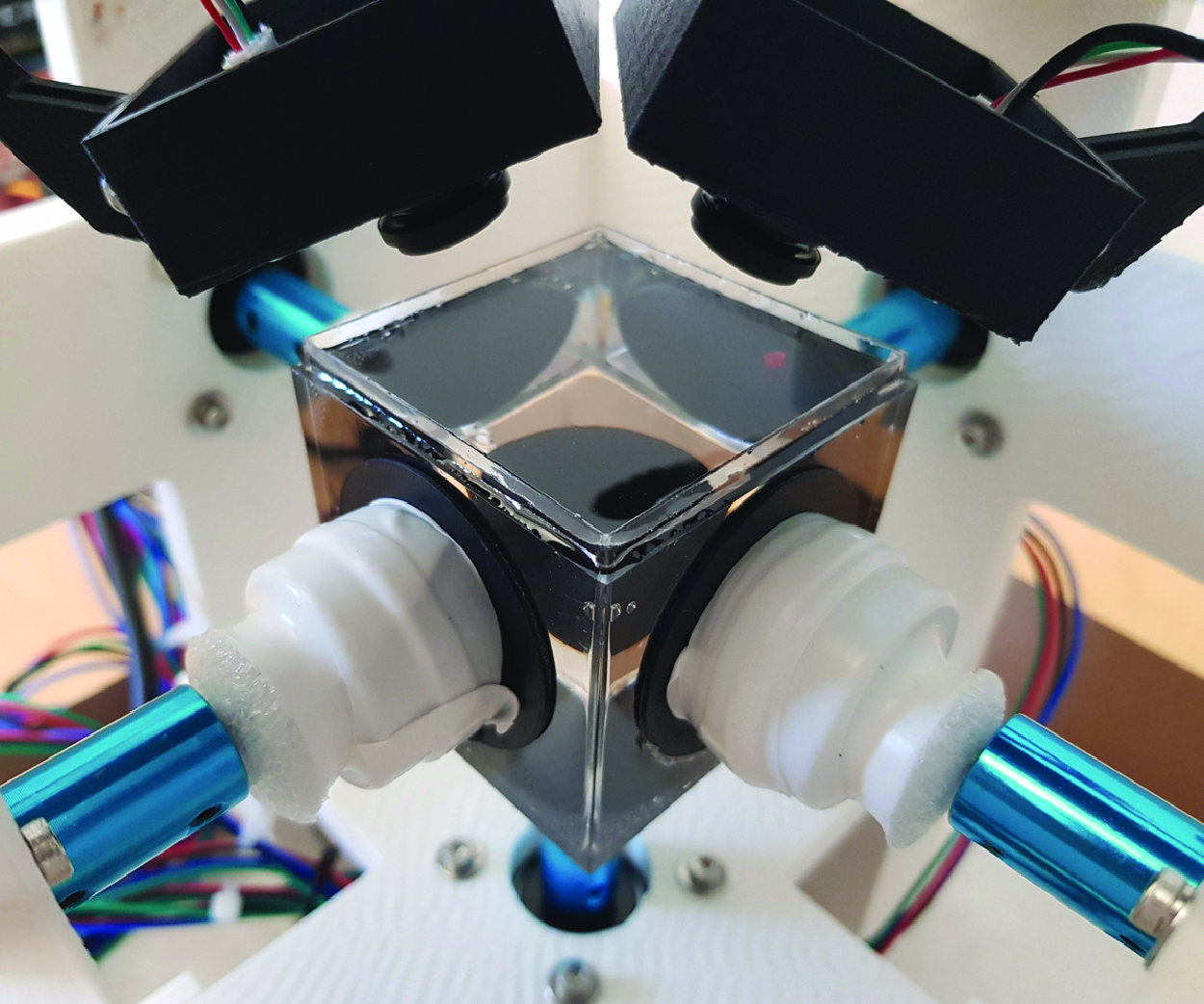
Contactless precision steering of particles in a fluid inside a cube with rotating walls
-
- Journal:
- Journal of Fluid Mechanics / Volume 1014 / 10 July 2025
- Published online by Cambridge University Press:
- 30 June 2025, A15
-
- Article
- Export citation
A novel machine learning-based approach to thermal integrity profiling of concrete pile foundations
- Part of
-
- Journal:
- Data-Centric Engineering / Volume 6 / 2025
- Published online by Cambridge University Press:
- 30 June 2025, e33
-
- Article
-
- You have access
- Open access
- HTML
- Export citation
Multi-view representation learning for performance-based tactical conflict resolution in urban air mobility
-
- Journal:
- The Aeronautical Journal / Volume 129 / Issue 1338 / August 2025
- Published online by Cambridge University Press:
- 30 June 2025, pp. 2240-2262
-
- Article
- Export citation
Bayesian optimization of underground railway tunnels using a surrogate model
- Part of
-
- Journal:
- Data-Centric Engineering / Volume 6 / 2025
- Published online by Cambridge University Press:
- 30 June 2025, e32
-
- Article
-
- You have access
- Open access
- HTML
- Export citation
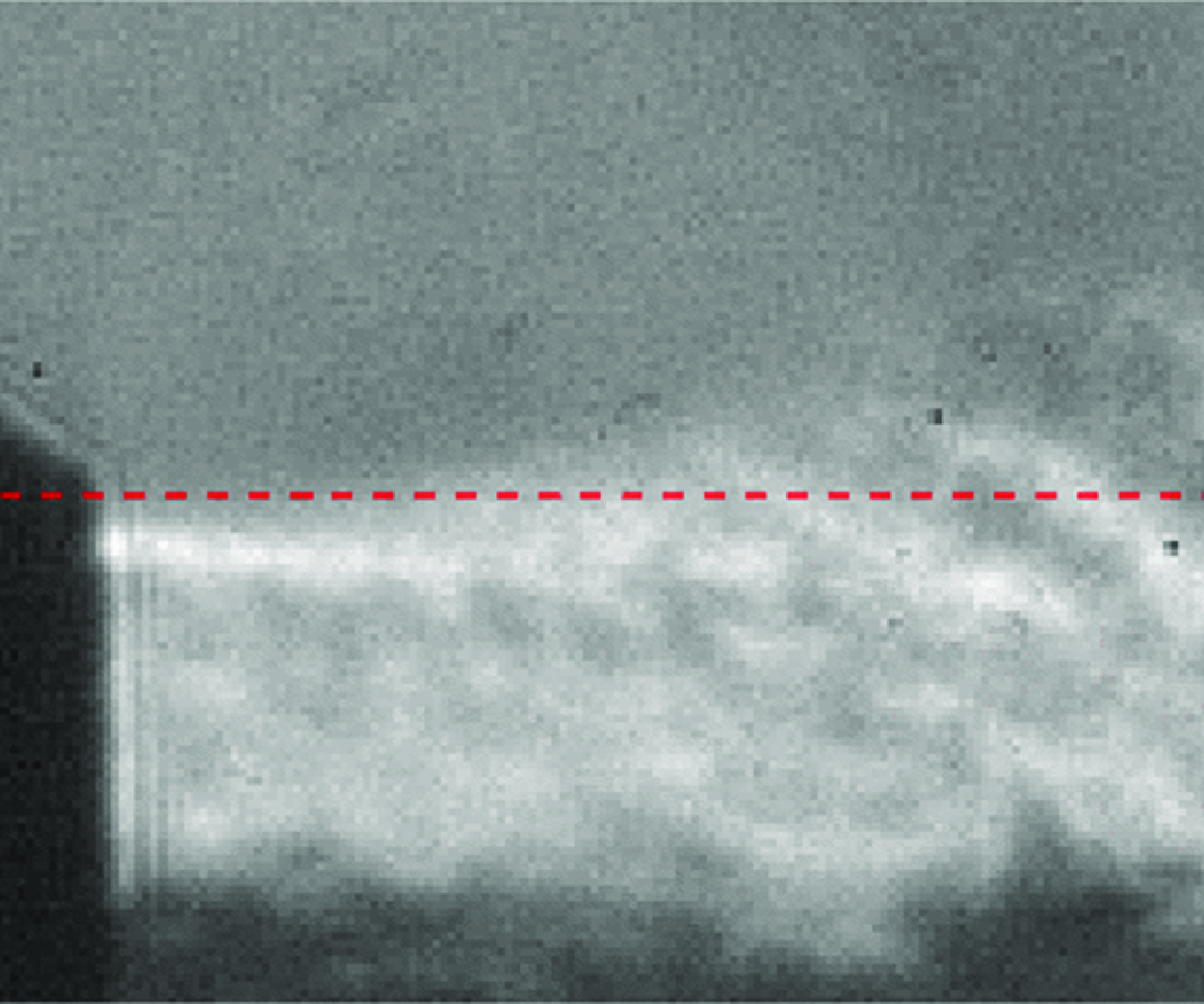
Howling of a model-scale nozzle due to shock-induced boundary-layer separation at its exit
-
- Journal:
- Journal of Fluid Mechanics / Volume 1014 / 10 July 2025
- Published online by Cambridge University Press:
- 30 June 2025, A8
-
- Article
-
- You have access
- Open access
- HTML
- Export citation
