Refine search
Actions for selected content:
212630 results in Engineering

Optimal rigid brush for fluid capture
-
- Journal:
- Journal of Fluid Mechanics / Volume 1014 / 10 July 2025
- Published online by Cambridge University Press:
- 07 July 2025, A29
-
- Article
- Export citation
Research on surface detection and characterization of 3.2 m splicing radio antenna based on laser tracker
-
- Journal:
- International Journal of Microwave and Wireless Technologies / Volume 17 / Issue 4 / May 2025
- Published online by Cambridge University Press:
- 07 July 2025, pp. 629-641
-
- Article
- Export citation

Elliptic liquid jets in a supersonic cross-flow
-
- Journal:
- Journal of Fluid Mechanics / Volume 1014 / 10 July 2025
- Published online by Cambridge University Press:
- 07 July 2025, A34
-
- Article
- Export citation
-
In the present work, we experimentally investigate the transverse injection of elliptic liquid jets into a supersonic cross-flow ( $M_\infty$ = 2.5). The primary focus is to understand the effect of injection orifice aspect ratio ( $\textit{AR}$ = spanwise/streamwise dimension), on the liquid jet breakup mechanism, the flow field around the liquid jet and the resulting droplet sizes formed downstream, for three $\textit{AR}$ cases ( $\textit{AR}$ = 0.3, 1, 3.3). We find that the $\textit{AR}$ = 0.3 case has large unsteadiness in the spray core due to relatively large wavelength Rayleigh–Taylor (RT) waves formed on the liquid jet surface. However, the primary jet breakup occurs through Kelvin–Helmholtz (KH) instabilities formed on the large lateral surfaces, as in coaxial liquid jet breakup. This leads to a higher Sauter mean diameter (SMD) of the droplets in the spray core with a wider range of droplet sizes compared with the circular case ( $\textit{AR}$ = 1.0). However, in the case of $\textit{AR}$ = 3.3, the RT waves are more intense and of smaller wavelength due to the large drag on the liquid jet, which results in a direct catastrophic breakup of the liquid jet by the RT waves. This results in a relatively steady liquid jet and shock structure with the formation of a fine spray and smaller droplets in the spray core than for the $\textit{AR}=1.0$ case. The study shows the importance of the orifice $\textit{AR}$ on the flow around, and the spray downstream of, the liquid jet injection into supersonic cross-flow.


EuMIC 2023 Special Issue
-
- Journal:
- International Journal of Microwave and Wireless Technologies / Volume 17 / Issue 2 / March 2025
- Published online by Cambridge University Press:
- 07 July 2025, p. 163
-
- Article
-
- You have access
- HTML
- Export citation
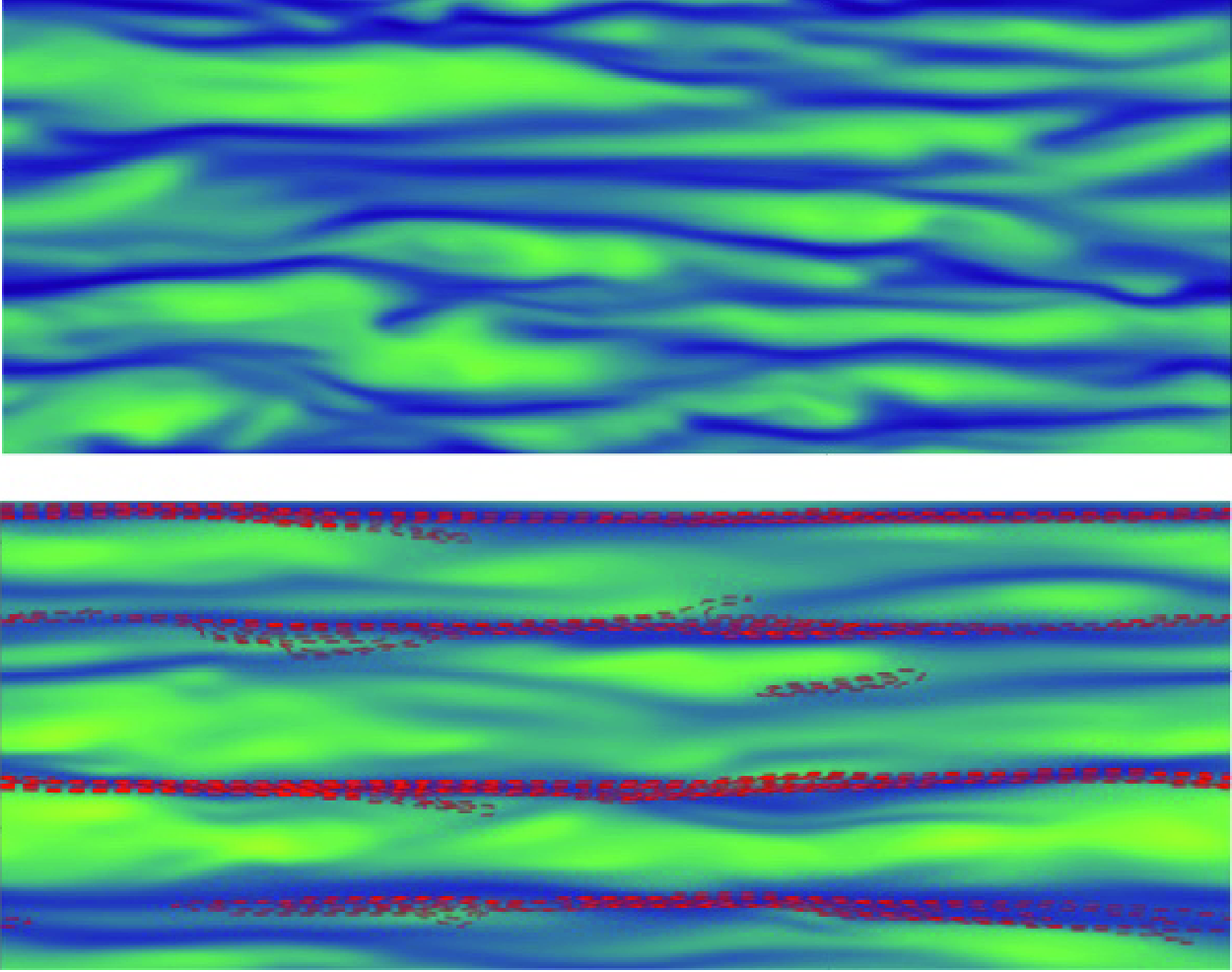
Direct numerical simulation of particle clustering and turbulence modulation: an Eulerian approach
-
- Journal:
- Journal of Fluid Mechanics / Volume 1014 / 10 July 2025
- Published online by Cambridge University Press:
- 07 July 2025, A37
-
- Article
-
- You have access
- Open access
- HTML
- Export citation
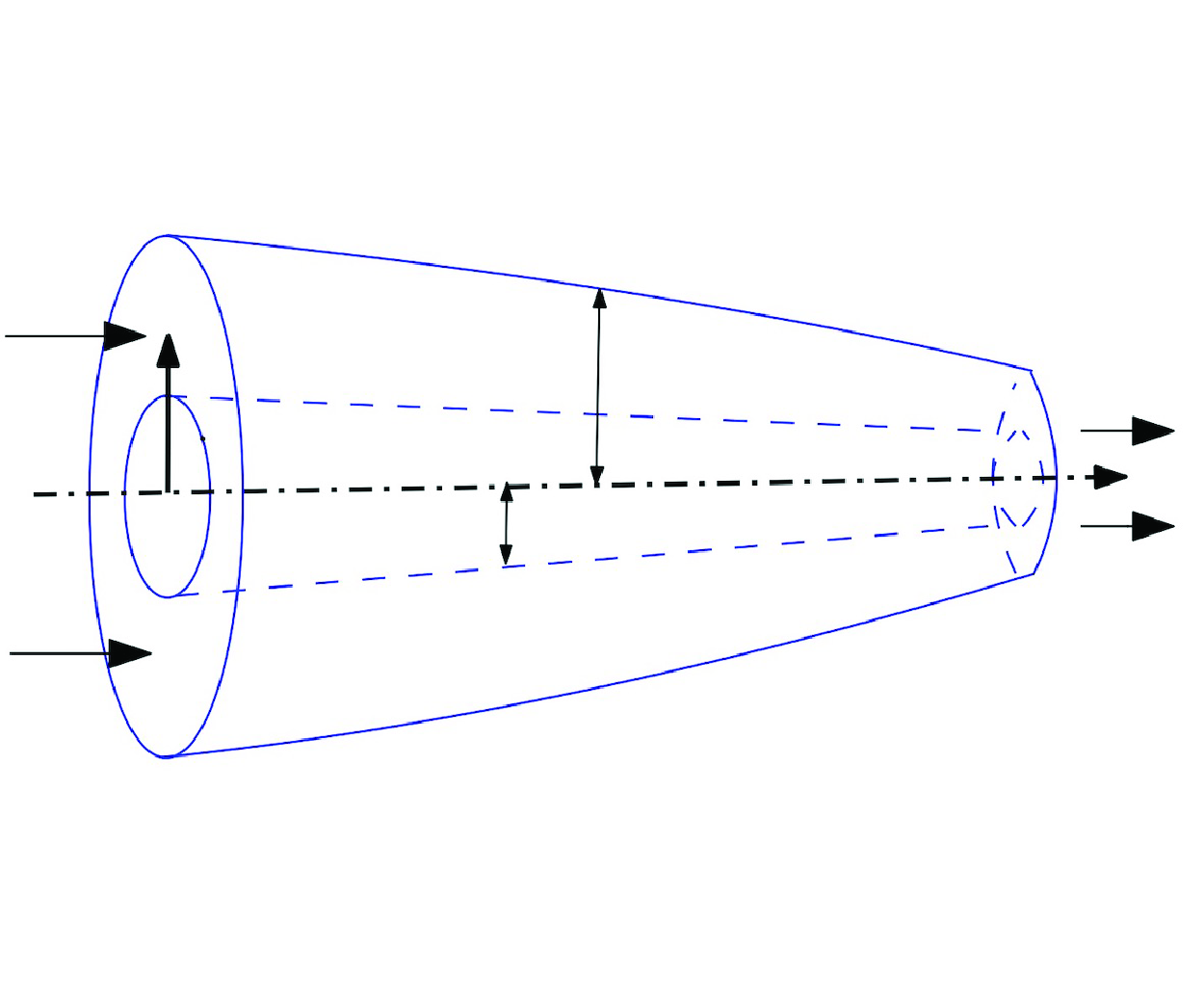
Drawing of weakly viscoelastic fluid tubes
-
- Journal:
- Journal of Fluid Mechanics / Volume 1014 / 10 July 2025
- Published online by Cambridge University Press:
- 07 July 2025, A27
-
- Article
-
- You have access
- Open access
- HTML
- Export citation
Addressing and correcting two case studies of polarization converters misidentified as perfect absorbers: the role of cross-polarized reflection
-
- Journal:
- International Journal of Microwave and Wireless Technologies / Volume 17 / Issue 3 / April 2025
- Published online by Cambridge University Press:
- 07 July 2025, pp. 561-566
-
- Article
- Export citation

Who's Doing What?
- A Closer Look at Methane Climate Impact and Commitments in Southeast Asia's Energy Sector
-
- Published by:
- ISEAS–Yusof Ishak Institute
- Published online:
- 05 July 2025
- Print publication:
- 06 June 2024

Malaysia's Motorcycle Sector
- Past and Present Possibilities in an Era of Energy Transition
-
- Published by:
- ISEAS–Yusof Ishak Institute
- Published online:
- 05 July 2025
- Print publication:
- 12 November 2024
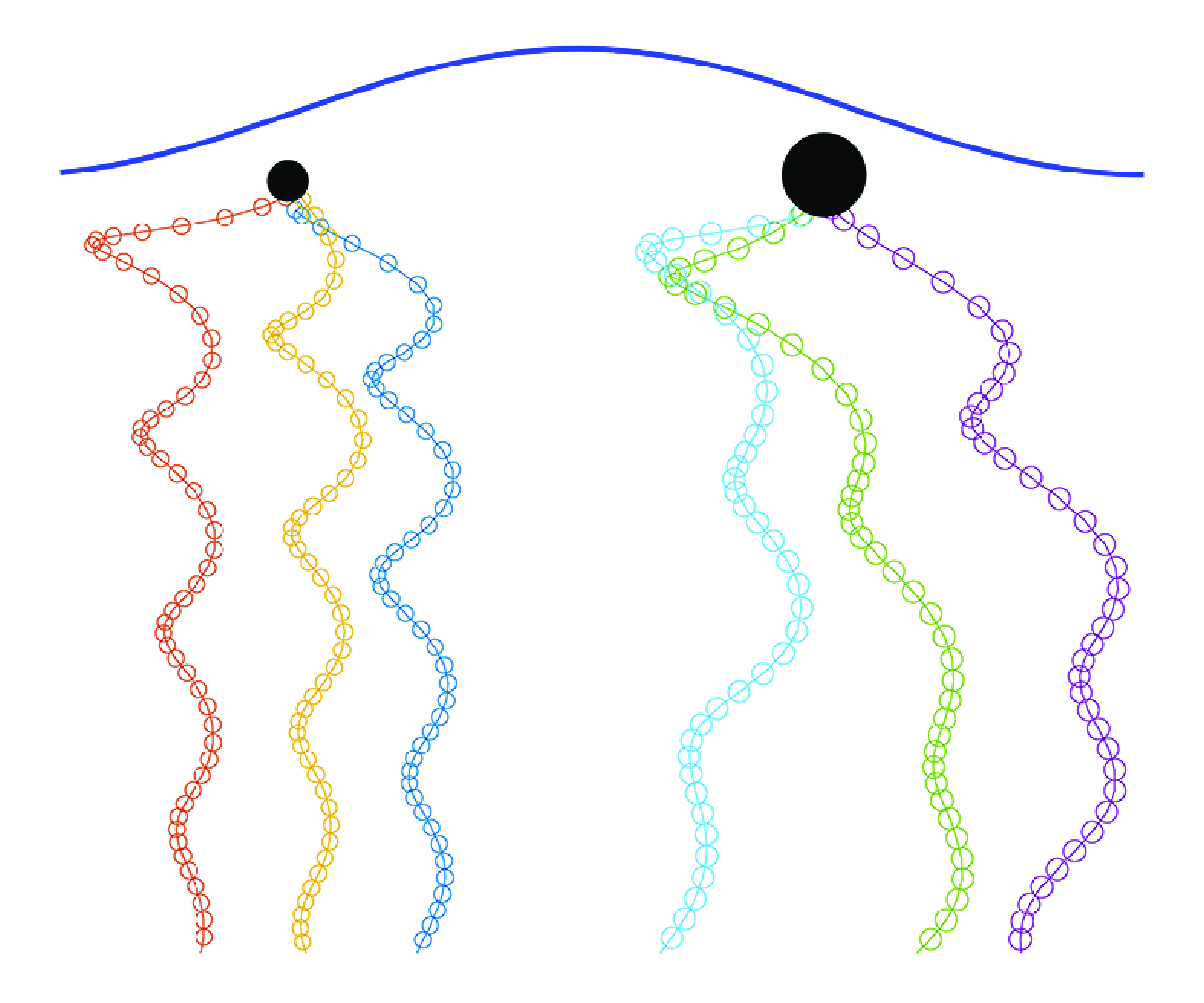
Experimental investigation of inertial spheres settling in surface gravity waves
-
- Journal:
- Journal of Fluid Mechanics / Volume 1014 / 10 July 2025
- Published online by Cambridge University Press:
- 04 July 2025, A33
-
- Article
-
- You have access
- Open access
- HTML
- Export citation
FLM volume 1013 Cover and Front matter
-
- Journal:
- Journal of Fluid Mechanics / Volume 1013 / 25 June 2025
- Published online by Cambridge University Press:
- 04 July 2025, p. f1
-
- Article
-
- You have access
- Export citation
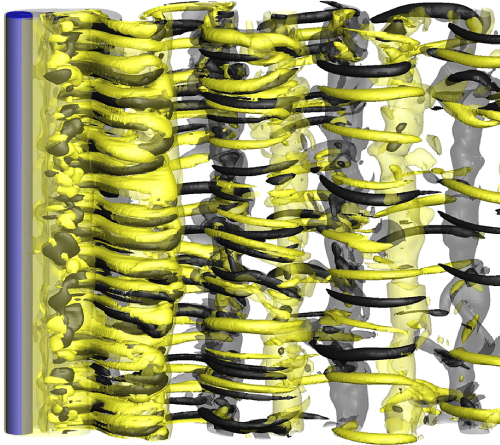
Two- and three-dimensional wake transitions of a circular cylinder with a rear-attached splitter plate
-
- Journal:
- Journal of Fluid Mechanics / Volume 1014 / 10 July 2025
- Published online by Cambridge University Press:
- 04 July 2025, A28
-
- Article
-
- You have access
- Open access
- HTML
- Export citation
Applying artificial neural networks for multidimensional anomaly detection based on flight data monitoring during final approaches
-
- Journal:
- The Aeronautical Journal / Volume 129 / Issue 1340 / October 2025
- Published online by Cambridge University Press:
- 04 July 2025, pp. 2880-2897
-
- Article
-
- You have access
- Open access
- HTML
- Export citation
Small-scale shear layers in isotropic turbulence of viscoelastic fluids – ERRATUM
-
- Journal:
- Journal of Fluid Mechanics / Volume 1014 / 10 July 2025
- Published online by Cambridge University Press:
- 04 July 2025, E1
-
- Article
-
- You have access
- HTML
- Export citation
Unmanned aerial vehicles and aviation safety: a qualitative study
-
- Journal:
- The Aeronautical Journal / Volume 129 / Issue 1340 / October 2025
- Published online by Cambridge University Press:
- 03 July 2025, pp. 2919-2937
-
- Article
-
- You have access
- Open access
- HTML
- Export citation
References
-
- Book:
- Wireless Communications and Machine Learning
- Published online:
- 21 October 2025
- Print publication:
- 03 July 2025, pp 274-286
-
- Chapter
- Export citation
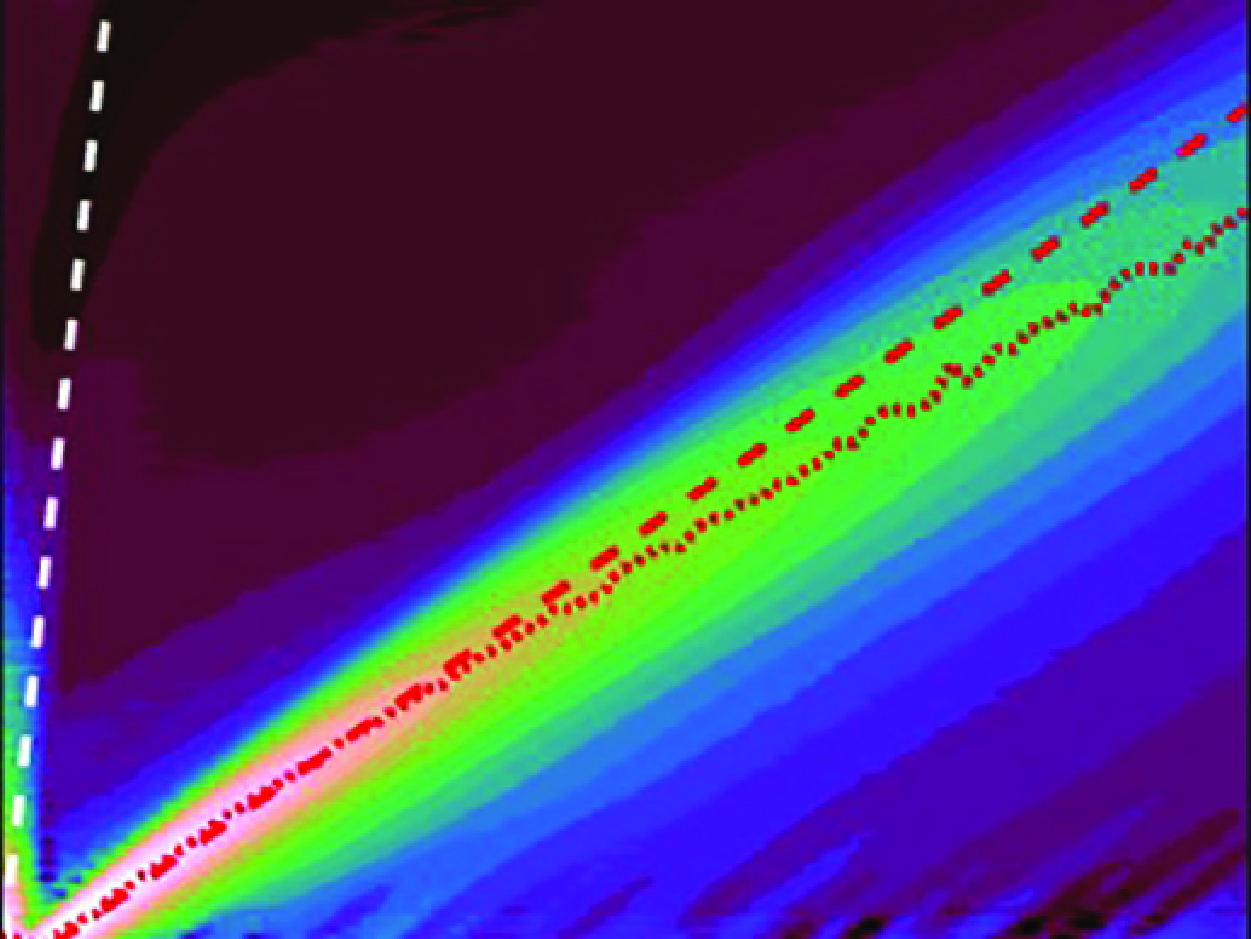
Measurement and analysis of sub-convective wall pressure fluctuations in turbulent boundary layer flows
-
- Journal:
- Journal of Fluid Mechanics / Volume 1014 / 10 July 2025
- Published online by Cambridge University Press:
- 03 July 2025, A26
-
- Article
-
- You have access
- Open access
- HTML
- Export citation
-
Sub-convective wall pressure fluctuations play a critical role in vibroacoustic and noise analyses of vehicle structures as they serve as the primary forcing function. However, measuring these fluctuations is challenging due to their weak pressure magnitudes, typically $10^{-3}{-}10^{-5}$ of convective fluctuations. This study introduces a non-intrusive measurement technique using an array of multi-pore Helmholtz resonator sensors to capture sub-convective fluctuations with high resolution. The array features large-area, spanwise-oriented sensors arranged linearly for optimal sampling. Results provide a continuous streamwise wavenumber–frequency spectrum, resolving sub-convective fluctuations with sufficient range and accuracy. Convergence analysis indicates that long sampling durations, $\mathcal{O}(10^6 \delta ^*/U_\infty )$, $\delta^*$ is the displacement thickness of the boundary layer. $U_\infty$ is the freestream velocity are necessary to capture true sub-convective levels. Comparisons with four existing wall pressure models, which account for sensor area averaging, reveal discrepancies in predicted levels, convection speed relations and convective ridge characteristics. Notably, the measured data align most closely with the Chase (1980, J. Sound Vib., vol.70, pp. 29–67) model at convective peak levels and in the sub-convective domain. However, the observed roll-off at wavenumbers exceeding the convective wavenumber decays more slowly than predicted, giving the convective ridge an asymmetric profile about the convective line. These findings underscore the need for improved wall pressure models that incorporate frequency-dependent convective speed relations, ridge asymmetry, and more accurate sub-convective levels. Further validation using a microphone array from Farabee & Geib (1991) confirms the accuracy of our measurements, which indicate sub-convective pressure levels lower than reported previously.


A supervised machine-learning approach for turboshaft engine dynamic modeling under real flight conditions
-
- Journal:
- The Aeronautical Journal / Volume 129 / Issue 1340 / October 2025
- Published online by Cambridge University Press:
- 03 July 2025, pp. 2777-2801
-
- Article
- Export citation
7 - Design Study of a Comparator
-
- Book:
- Analysis and Design of Data Converters
- Published online:
- 13 November 2025
- Print publication:
- 03 July 2025, pp 129-141
-
- Chapter
- Export citation
13 - Flash ADCs
-
- Book:
- Analysis and Design of Data Converters
- Published online:
- 13 November 2025
- Print publication:
- 03 July 2025, pp 251-283
-
- Chapter
- Export citation
