Refine search
Actions for selected content:
212630 results in Engineering
Dynamic characteristics and stability analysis of multi-body aircraft deployment process based on bifurcation theory
-
- Journal:
- The Aeronautical Journal / Volume 129 / Issue 1340 / October 2025
- Published online by Cambridge University Press:
- 11 July 2025, pp. 2938-2967
-
- Article
- Export citation
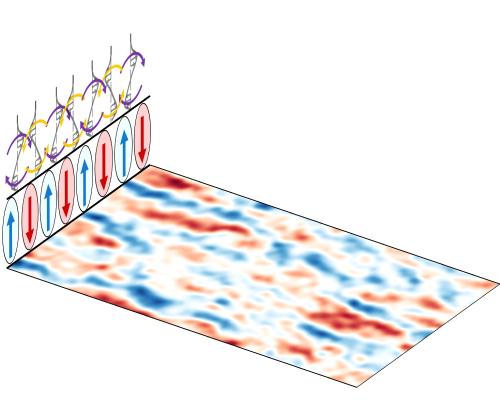
Turbulence-resolving integral simulations for wall-bounded flows
- Part of
-
- Journal:
- Journal of Fluid Mechanics / Volume 1014 / 10 July 2025
- Published online by Cambridge University Press:
- 11 July 2025, A40
-
- Article
-
- You have access
- Open access
- HTML
- Export citation
-
The physical fidelity of turbulence models can benefit from a partial resolution of fluctuations, but doing so often comes with an increase in computational cost. To explore this trade-off in the context of wall-bounded flows, this paper introduces a framework for turbulence-resolving integral simulations (TRIS) with the goal of efficiently resolving the largest motions using a two-dimensional, three-component representation of the flow defined by instantaneous wall-normal integrals of velocity and pressure. Self-sustaining turbulence with qualitatively realistic large-scale structures is demonstrated for TRIS on an open-channel (half-channel) flow configuration using moment-of-momentum integral equations derived from Navier–Stokes with relatively simple closure approximations. Evidence from direct numerical simulations (DNS) suggests that TRIS can theoretically resolve $35\,\%{-}40\,\%$ of the turbulent skin friction enhancement for friction Reynolds numbers between $180$ and $5200$, without a noticeable decrease or increase as a function of Reynolds number. The current implementation of TRIS can match this resolution while simulating one flow through time in ${\sim}1$ minute on a single processor, even for very large Reynolds numbers. The framework facilitates a detailed apples-to-apples comparison of predicted statistics against data from DNS. Comparisons at friction Reynolds numbers of $395$ and $590$ show that TRIS generates a relatively accurate representation of the flow, while highlighting discrepancies that demonstrate a need for improving the closure models. The present results for open-channel flow represent a proof of concept for TRIS as a new approach for wall-bounded turbulence modelling, motivating extension to more general flow configurations such as boundary layers on immersed objects.


A review on advancement in strategies for low-NOx hydrogen combustion with micromix technology
-
- Journal:
- The Aeronautical Journal / Volume 129 / Issue 1341 / November 2025
- Published online by Cambridge University Press:
- 11 July 2025, pp. 3252-3304
-
- Article
- Export citation
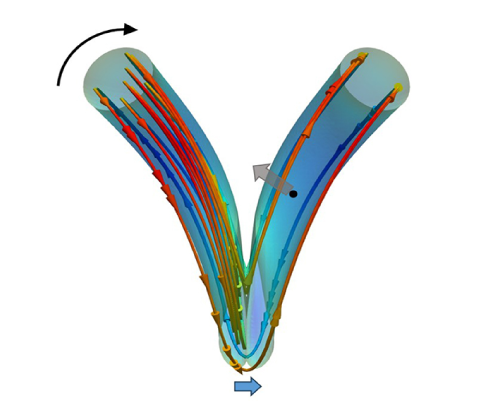
Tilting of vortex rings in the oblique collision reduces the longitudinal quadrupole and octupole modes of aerodynamic sound
-
- Journal:
- Journal of Fluid Mechanics / Volume 1015 / 25 July 2025
- Published online by Cambridge University Press:
- 11 July 2025, A1
-
- Article
- Export citation
Physics-constrained machine learning for reduced composition space chemical kinetics
-
- Journal:
- Data-Centric Engineering / Volume 6 / 2025
- Published online by Cambridge University Press:
- 10 July 2025, e34
-
- Article
-
- You have access
- Open access
- HTML
- Export citation
Design optimization platform for assistive wearable devices applied to a knee damper exoskeleton
-
- Journal:
- Wearable Technologies / Volume 6 / 2025
- Published online by Cambridge University Press:
- 10 July 2025, e30
-
- Article
-
- You have access
- Open access
- HTML
- Export citation
-
Designing optimal assistive wearable devices is a complex task, often addressed using human-in-the-loop optimization and biomechanical modeling approaches. However, as the number of design parameters increases, the growing complexity and dimensionality of the design space make identifying optimal solutions more challenging. Predictive simulation, which models movement without relying on experimental data, provides a powerful tool for anticipating the effects of assistive devices on the human body and guiding the design process. This study aims to introduce a design optimization platform that leverages predictive simulation of movement to identify the optimal parameters for assistive wearable devices. The proposed approach is specifically capable of dealing with the challenges posed by high-dimensional design spaces. The proposed framework employs a two-layered optimization approach, with the inner loop solving the predictive simulation of movement and the outer loop identifying the optimal design parameters of the device. It is utilized for designing a knee exoskeleton with a damper to assist level-ground and downhill gait, achieving a significant reduction in normalized knee load peak value by $ 37\% $ for level-ground and by $ 53\% $ for downhill walking, along with a decrease in the cost of transport. The results indicate that the optimal device applies damping torques to the knee joint during the Stance phase of both movement scenarios, with different optimal damping coefficients. The optimization framework also demonstrates its capability to reliably and efficiently identify the optimal solution. It offers valuable insight for the initial design of assistive wearable devices and supports designers in efficiently determining the optimal parameter set.


Separation control versus circulation control for loads alleviation of plunging unswept and swept wings
-
- Journal:
- The Aeronautical Journal / Volume 129 / Issue 1341 / November 2025
- Published online by Cambridge University Press:
- 10 July 2025, pp. 2985-3003
-
- Article
-
- You have access
- Open access
- HTML
- Export citation
Acoustothermal effect: mechanism and quantification of the heat source – ERRATUM
-
- Journal:
- Journal of Fluid Mechanics / Volume 1014 / 10 July 2025
- Published online by Cambridge University Press:
- 10 July 2025, E4
-
- Article
-
- You have access
- Open access
- HTML
- Export citation

Major role and longitudinal nature of stochastic resonance in promoting chaotic states in viscoelastic channel flow with low inlet perturbations
-
- Journal:
- Journal of Fluid Mechanics / Volume 1014 / 10 July 2025
- Published online by Cambridge University Press:
- 08 July 2025, R4
-
- Article
- Export citation
-
Stochastic resonance (SR) is universal phenomenon, where noise amplifies a weak periodic signal in bistable nonlinear systems, with wide applications in biology, climate science, engineering etc., although in fluid dynamics it remains underexplored. Recently, we unexpectedly found SR above non-modal elastic instability onset in an inertialess viscoelastic channel flow, where it emerges on the top of a chaotic streamwise velocity power spectrum $E_u$ due to its interaction with white-noise spanwise velocity power spectrum $E_w$ and weak elastic waves. These three conditions necessary for SR emergence differ from those required for the classical SR emergence mentioned above. Here, we consider SR in an inertialess viscoelastic channel flow with a smoothed inlet causing order of magnitude lower noise intensity than in our former studies. Our observations reveal that SR appears at the same conditions mentioned above, where SR is found just upon the instability onset in a lower subrange of a transition regime, in contrast, here, SR persists across all flow regimes – transition, elastic turbulence and drag reduction. Furthermore, we provide experimental evidence that SR, presented by a sharp peak in $E_u$, manifests as either a standing or propagating wave in the $x$-direction, with a rather uniform amplitude of streamwise velocity fluctuations and zero propagation velocity in the $z$-direction. These findings reveal a new mechanism underpinning the transition to a chaotic channel flow of viscoelastic fluids and establish SR as a robust framework for understanding complex flow dynamics. This work opens new avenues for exploring SR in other nonlinear systems and practical applications such as mixing enhancement and flow control in industrial and biological contexts.


Low-profile wideband microstrip filtering antenna with parasitic arc-shaped slot
-
- Journal:
- International Journal of Microwave and Wireless Technologies / Volume 17 / Issue 4 / May 2025
- Published online by Cambridge University Press:
- 08 July 2025, pp. 662-672
-
- Article
- Export citation
Assessing optical damage risks by simulating the amplification of back-reflection in a multi-petawatt laser system
-
- Journal:
- High Power Laser Science and Engineering / Volume 13 / 2025
- Published online by Cambridge University Press:
- 08 July 2025, e65
-
- Article
-
- You have access
- Open access
- HTML
- Export citation
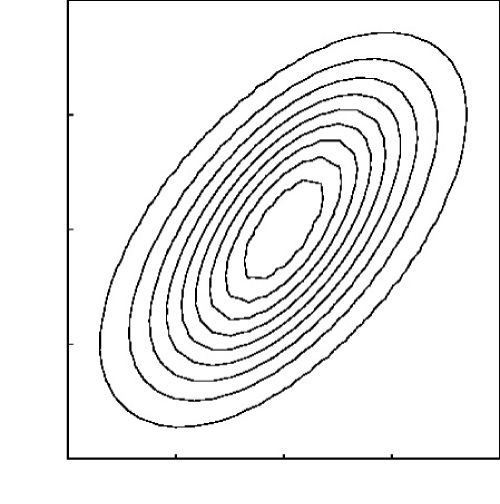
Statistical treatment of dilute suspensions of electrified particles
-
- Journal:
- Journal of Fluid Mechanics / Volume 1014 / 10 July 2025
- Published online by Cambridge University Press:
- 08 July 2025, A38
-
- Article
-
- You have access
- Open access
- HTML
- Export citation
-
An analysis is presented of the suspensions of small, electrified particles in a gas. Two limits of interest for the electrodynamic particulate suspension technique are considered, corresponding to large and small values of the ratio $t_{coll}/t_s$ of the mean time between particle collisions to the viscous adaptation time required for the particles to reach their terminal velocities. The effect of the particle inertia can be neglected when this ratio is large, and only the distribution of particle charges at each point of the suspension needs to be computed. The way this distribution approaches an equilibrium form, determined elsewhere in the continuum regime when the mean free path of the particles is small compared with the suspension size, is described, as well as the connection between continuum regime and quasi-neutrality of the suspension. In the opposite case when $t_{coll}/t_s$ is small, the inertia of the particles plays an important role, and the joint distribution of particle charges and velocities is required. A Boltzmann equation is proposed for this distribution function, taking advantage of the fact that the charges of the particles have little effect on the redistribution of momentum and energy in the collisions. The equilibrium distribution function in the continuum regime is computed approximately, and hydrodynamic equations for the particle phase analogous to the Euler equations for a monoatomic gas are derived. The simplification of these equations when the particle inertia is negligible at the scale of the suspension is worked out.


Pulse-length dependence of the laser-induced damage behavior of a fused-silica antireflective metasurface
-
- Journal:
- High Power Laser Science and Engineering / Volume 13 / 2025
- Published online by Cambridge University Press:
- 07 July 2025, e64
-
- Article
-
- You have access
- Open access
- HTML
- Export citation
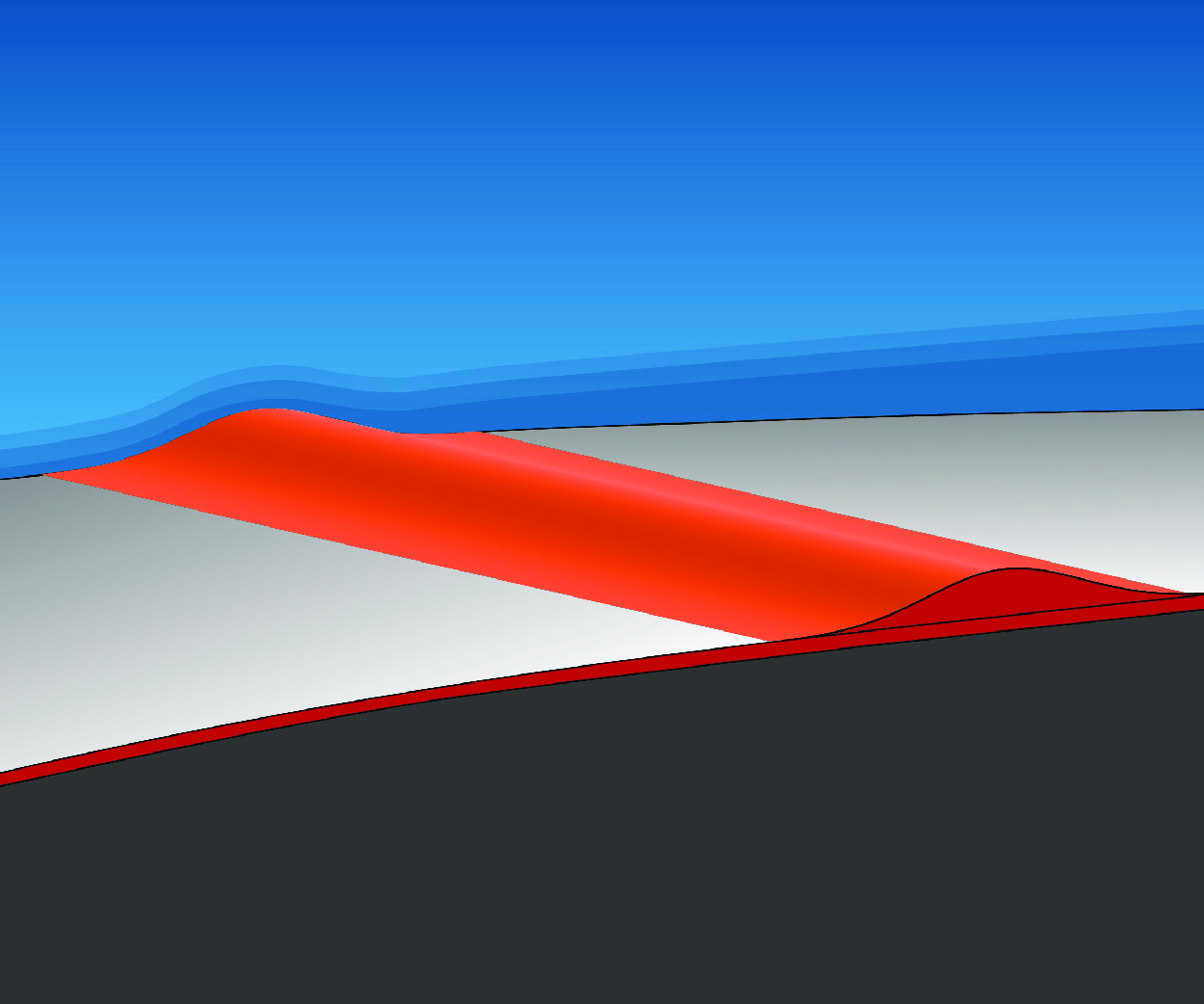
Delay of swept-wing transition using a surface hump
-
- Journal:
- Journal of Fluid Mechanics / Volume 1014 / 10 July 2025
- Published online by Cambridge University Press:
- 07 July 2025, A35
-
- Article
-
- You have access
- Open access
- HTML
- Export citation
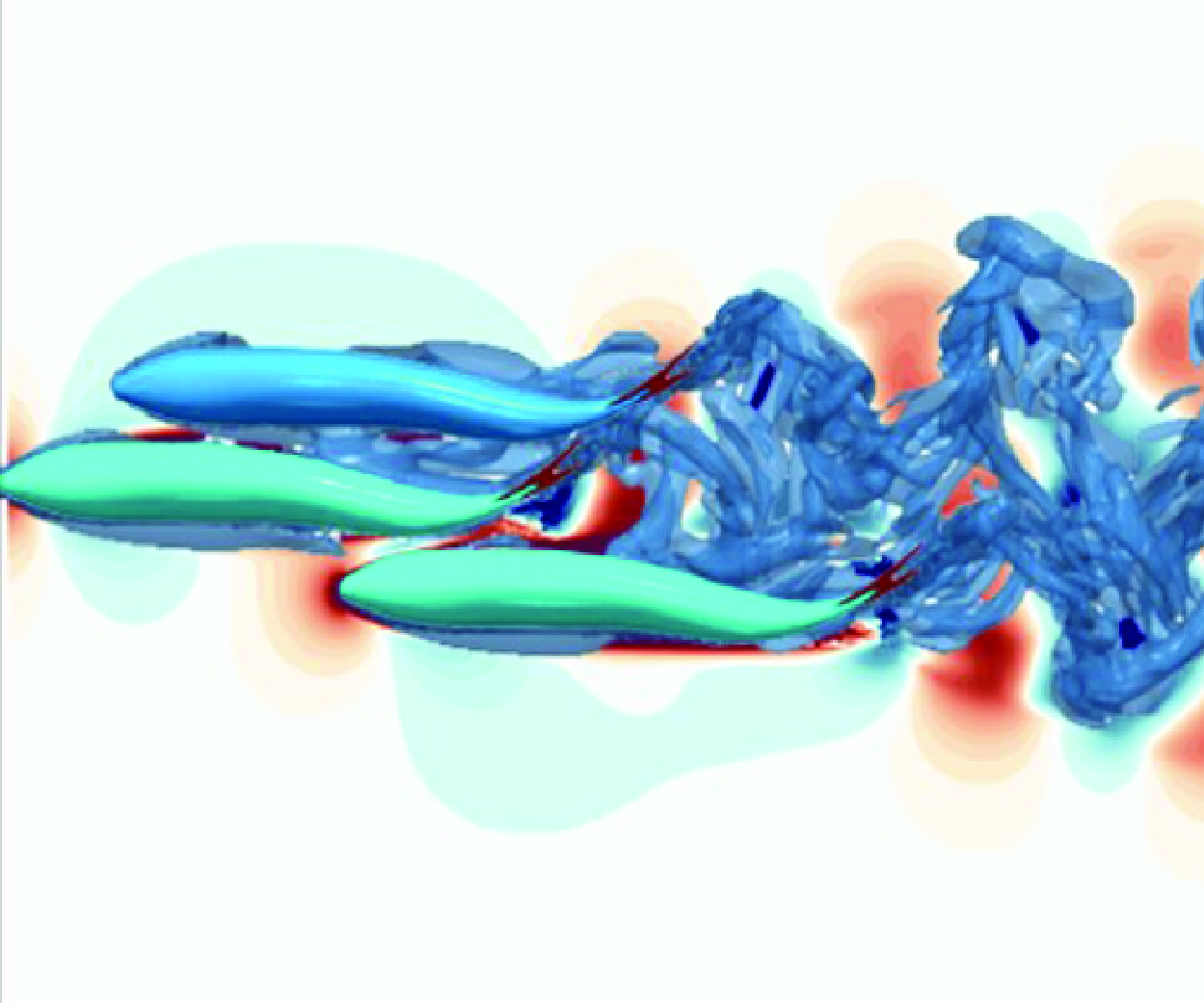
Hydrodynamically beneficial school configurations in carangiform swimmers: insights from a flow-physics informed model
-
- Journal:
- Journal of Fluid Mechanics / Volume 1014 / 10 July 2025
- Published online by Cambridge University Press:
- 07 July 2025, A32
-
- Article
-
- You have access
- Open access
- HTML
- Export citation
Compact 47 GHz band 32-element CMOS phased array transceiver chip with bidirectional IF phase shifter and IQ mixer
-
- Journal:
- International Journal of Microwave and Wireless Technologies / Volume 17 / Issue 9 / November 2025
- Published online by Cambridge University Press:
- 07 July 2025, pp. 1495-1505
-
- Article
- Export citation

Flow in an electrically conducting drop due to an oscillating magnetic field
-
- Journal:
- Journal of Fluid Mechanics / Volume 1014 / 10 July 2025
- Published online by Cambridge University Press:
- 07 July 2025, A36
-
- Article
-
- You have access
- Open access
- HTML
- Export citation
-
A drop of an electrically conducting non-magnetic fluid of radius $R$, electrical conductivity $\kappa$, density $\rho _i$ and viscosity $\eta _i$ is suspended in a non-conducting medium of density $\rho _o$, viscosity $\eta _o$ and subject to an oscillating magnetic field of magnitude $H_0$ and angular frequency $\omega$. Oscillating eddy currents are induced in the drop due to Faraday’s law. The Lorentz force density, the cross product of the current density and the magnetic field, is the superposition of a steady component and an oscillating component with frequency $2 \omega$. The characteristic velocity due to the Lorentz force density is $(\mu _0 H_0^2 R/\eta _i)$ times a function of the dimensionless parameter $\beta = \sqrt {\mu _0 \kappa \omega R^2}$, the square root of the ratio of the frequency and the current relaxation rate. Here, $\mu _0$ is the magnetic permeability. The characteristic velocities for the steady and oscillatory components increase proportional to $\beta ^{4}$ for $\beta \ll 1$, and decrease proportional to $\beta ^{-1}$ for $\beta \gg 1$. The steady flow field consists of two axisymmetric eddies in the two hemispheres with flow outwards along the magnetic field axis and inwards along the equator. The flow in the drop induces a biaxial extensional flow in the surrounding medium, with compression along the magnetic axis and extension along the equatorial plane. The oscillating component of the velocity depends on $\beta$ and the Reynolds number ${Re}_\omega$ based on the frequency of oscillations. For ${Re}_\omega \gg 1$, the amplitude of the oscillatory velocity decreases proportional to ${Re}_\omega ^{-1}$ for $\beta \ll 1$, and proportional to ${Re}_\omega ^{-1/2}$ for $\beta \gg 1$.


Quantum implicit representation of vortex filaments in turbulence
-
- Journal:
- Journal of Fluid Mechanics / Volume 1014 / 10 July 2025
- Published online by Cambridge University Press:
- 07 July 2025, A31
-
- Article
- Export citation
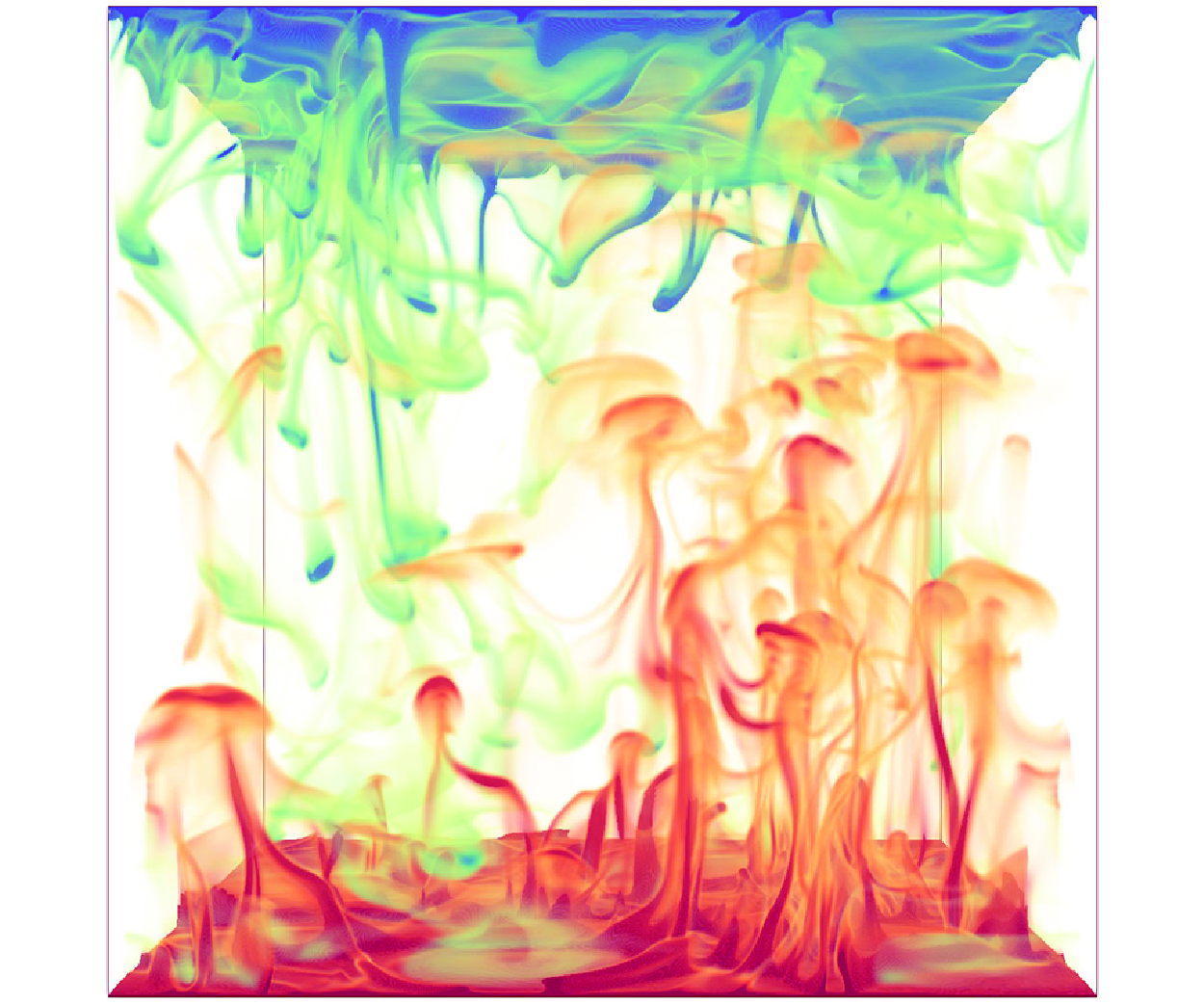
Direct numerical simulations of turbulent Rayleigh–Bénard convection with polymer additives
-
- Journal:
- Journal of Fluid Mechanics / Volume 1014 / 10 July 2025
- Published online by Cambridge University Press:
- 07 July 2025, A22
-
- Article
-
- You have access
- Open access
- HTML
- Export citation
-
We present results of three-dimensional direct numerical simulations of turbulent Rayleigh–Bénard convection of dilute polymeric solutions for Rayleigh number ( $Ra$) ranging from $10^6$ to $ 10^{10}$, and Prandtl number $Pr=4.3$. The viscoelastic flow is simulated by solving the incompressible Navier–Stokes equations under the Boussinesq approximation coupled with the finitely extensible nonlinear elastic Peterlin constitutive model. The Weissenberg number ( $Wi$) is either $Wi=5$ or $Wi=10$, with the maximum chain extensibility parameter $L=50$, corresponding to moderate fluid elasticity. Our results demonstrate that both heat transport and momentum transport are reduced by the presence of polymer additives in the studied parameter range. Remarkably, the specific parameters used in the current numerical study give similar heat transfer reduction values as observed in experiments. We demonstrate that polymers have different effects in different regions of the flow. The presence of polymers stabilises the boundary layer, which is found to be the primary cause of the overall heat transfer reduction. In the bulk region, the presence of polymers slows down the flow by increasing the effective viscosity, enhances the coherency of thermal plumes, and suppresses the small-scale turbulent fluctuations. For small $Ra$, the heat transfer reduction in the bulk region is associated with plume velocity reduction, while for larger $Ra$, it is caused by the competing effects of suppressed turbulent fluctuations and enhanced plume coherency.


Lens for RF-OAM beam convergence
-
- Journal:
- International Journal of Microwave and Wireless Technologies / Volume 17 / Issue 3 / April 2025
- Published online by Cambridge University Press:
- 07 July 2025, pp. 553-559
-
- Article
-
- You have access
- Open access
- HTML
- Export citation
