To save content items to your account,
please confirm that you agree to abide by our usage policies.
If this is the first time you use this feature, you will be asked to authorise Cambridge Core to connect with your account.
Find out more about saving content to .
To save content items to your Kindle, first ensure no-reply@cambridge.org
is added to your Approved Personal Document E-mail List under your Personal Document Settings
on the Manage Your Content and Devices page of your Amazon account. Then enter the ‘name’ part
of your Kindle email address below.
Find out more about saving to your Kindle.
Note you can select to save to either the @free.kindle.com or @kindle.com variations.
‘@free.kindle.com’ emails are free but can only be saved to your device when it is connected to wi-fi.
‘@kindle.com’ emails can be delivered even when you are not connected to wi-fi, but note that service fees apply.
The crystal structure of osimertinib mesylate Form B has been solved and refined using synchrotron X-ray powder diffraction data and optimized using density functional techniques. Osimertinib mesylate Form B crystallizes in space group P-1 (#2) with a = 11.42912(17), b = 11.72274(24), c = 13.32213(22) Å, α = 69.0265(5), β = 74.5914(4), γ = 66.4007(4)°, V = 1511.557(12) Å3, and Z = 2. The crystal structure is characterized by alternating layers of cation–anion and parallel stacking interactions parallel to the ab-planes. The cation is protonated at the nitrogen atom of the dimethylamino group, which forms a strong hydrogen bond between the cation and the anion. That hydrogen atom also participates in a weaker intramolecular hydrogen bond to an amino nitrogen. There are two additional N–H⋅⋅⋅O hydrogen bonds between the cation and the anion. Several C–H⋅⋅⋅O hydrogen bonds also link the cations and anions. The powder pattern has been submitted to ICDD® for inclusion in the Powder Diffraction File™.
A brief introductory chapter puts synchrotron radiation in the context of other radiation sources, includes a short historical survey of particle accelerators and then provides an introduction of the origins and basic theory of synchrotron radiation.
Chapter 4 describes the range of methods used to determine the atomic scale structure of crystalline solids based on X-ray diffraction. It includes a brief introduction to the basic theory of X-ray diffraction but focuses on applications that go beyond those achievable using conventional laboratory X-ray sources. Extensions of the methods to study the structure of surfaces are also included
Chapter 3 describes the key components of the beamlines that deliver synchrotron radiation to experimental users. These include the use of mirrors and other focusing optical components to direct the radiation and monochromators for both the X-ray and vacuum ultraviolet spectral ranges.
Chapter 2 provides a detailed description of synchrotron radiation sources including both bending magnets and insertion devices (wigglers and undulators), describing key properties such as the time structure, polarisation, emittance and spectral brightness, and coherence. Key aspects of the constraints that define the source design and the resulting properties are presented. The chapter includes some comparison with free electron lasers and the associated radiation properties.
Chapter 8 introduces the use of synchrotron radiation for imaging and micro- and nano-analysis, a field that is of growing importance at modern synchrotron radiation facilities. The methods include transmission microscopy and tomography (using both hard and soft X-rays) and a range of methods providing spatially-resolved spectroscopic information based on photoemission, photoabsorption and X-rayfluorescence. Finally two very different methods based on X-ray diffraction are described, namely the very well-established method of X-ray diffraction topography, but the much more modern technique of coherent X-ray diffraction imaging for 'lens-less' imagingdown to the nanoscopic scale.
Chapter 7 is a short chapter describing some methods to investigate the vibrational structure of materialsusing infrared radiation and extremely high resolution inelastic X-ray scattering.
Chapter 6 describes a range of methods to determine different aspects of the electronic structure of materials. These include both core level photoemission (and the associated 'chemical' shifts) and valence band photoemission, notably including angle-resolved photoelectron spectroscopy (ARPES). The use of X-ray absorption near-edge structures (XANES) and the related technique of X-ray magnetic circular dicroism (XMCD) using circularly-polarised radiation is also described, as is the use of X-ray emission spectroscopy (XES) and resonant inelastic X-ray scattering (RIXS) and Compton scattering. Finally, the use of photoemission and photoionisation to investigate gas-phase molecular structure is described.
Chapter 5 describes techniques to determine the localstructure of materials both on an atomic and microscopic scale that do not rely on X-ray crystal diffraction. These include small angle scattering (SAXS) and wide angle scattering (WAXS), near-edge and extended X-ray absorption fine structure spectroscopy (XAFS, NEXAFS, EXAFS) but also photoelectron diffraction and X-ray fluorescence holography.
Reliable hepatitis C prevalence estimates are crucial for a good follow-up of the indicators to eliminate hepatitis by 2030 as set by the World Health Organization. In Belgium, no recent national population-based hepatitis C virus (HCV) seroprevalence estimate is available. The current study estimated HCV prevalence as part of the first Belgian Health Examination Survey, which was organized in 2018 as a second stage of the sixth Belgian Health Interview Survey. This national population-based cross-sectional study resulted in a weighted national HCV seroprevalence of 0.02% (95% CI 0.00–0.07%). The results show a much lower HCV seroprevalence compared to previous studies.
The crystal structure of brigatinib Form A has been solved and refined using synchrotron X-ray powder diffraction data and optimized using density functional theory techniques. Brigatinib Form A crystallizes in space group P-1 (#2) with a = 9.59616(20), b = 10.9351(3), c = 14.9913(6) Å, α = 76.1210(13), β = 79.9082(11), γ = 74.0802(6)°, V = 1458.497(15) Å3, and Z = 2. Structure solution was complicated by the lowest cost factor solution having an unreasonable conformation of the dimethylphosphoryl group. The second-best structure yielded a better refinement. The crystal structure is characterized by alternating layers of aliphatic and aromatic portions of the molecules along the b-axis. Strong N–H⋯N hydrogen bonds link the molecules into pairs, with a graph set R2,2(8). There is a strong intramolecular N–H⋯O hydrogen bond to the phosphoryl group, which determines the orientation of this group. The powder pattern has been submitted to ICDD® for inclusion in the Powder Diffraction File™ (PDF®).
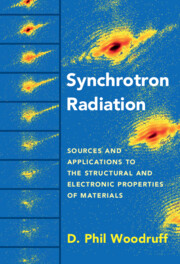
Learn about the properties of synchrotron radiation and its wide range of applications in physics, materials science and chemistry with this invaluable reference. This thorough text describes the physical principles of the subject, its source and methods of delivery to the sample, as well as the different techniques that use synchrotron radiation to analyse the electronic properties and structure of crystalline and non-crystalline materials and surfaces. Explains applications to study the structure and electronic properties of materials on a microscopic, nanoscopic and atomic scale. An excellent resource for current and future users of these facilities, showing how the available techniques can complement information obtained in users' home laboratories. Perfect for graduate and senior undergraduate students taking specialist courses in synchrotron radiation, in addition to new and established researchers in the field.
The crystal structure of ivermectin hemihydrate ethanolate has been solved and refined using synchrotron X-ray powder diffraction data and optimized using density functional techniques. Ivermectin hemihydrate ethanolate crystallizes in space group C2 (#5) with a = 40.9374(10), b = 9.26951(6), c = 14.9488(2) Å, β = 73.047(1)°, V = 5426.12(8) Å3, and Z = 4. The structure consists of layers of ivermectin molecules parallel to the bc-plane. The water and ethanol molecules reside in small voids in the structure. The water molecule, the ethanol molecule, and hydroxyl groups act as donors in O–H⋯O hydrogen bonds. Several C–H⋯O hydrogen bonds were detected. The powder pattern has been submitted to ICDD for inclusion in the Powder Diffraction File™.
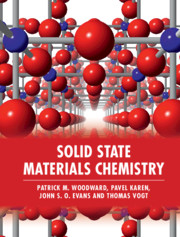
This comprehensive textbook provides a modern, self-contained treatment for upper undergraduate and graduate level students. It emphasizes the links between structure, defects, bonding, and properties throughout, and provides an integrated treatment of a wide range of materials, including crystalline, amorphous, organic and nano- materials. Boxes on synthesis methods, characterization tools, and technological applications distil specific examples and support student understanding of materials and their design. The first six chapters cover the fundamentals of extended solids, while later chapters explore a specific property or class of material, building a coherent framework for students to master core concepts with confidence, and for instructors to easily tailor the coverage to fit their own single semester course. With mathematical details given only where they strengthen understanding, 400 original figures and over 330 problems for hands-on learning, this accessible textbook is ideal for courses in chemistry and materials science.