To save content items to your account,
please confirm that you agree to abide by our usage policies.
If this is the first time you use this feature, you will be asked to authorise Cambridge Core to connect with your account.
Find out more about saving content to .
To save content items to your Kindle, first ensure no-reply@cambridge.org
is added to your Approved Personal Document E-mail List under your Personal Document Settings
on the Manage Your Content and Devices page of your Amazon account. Then enter the ‘name’ part
of your Kindle email address below.
Find out more about saving to your Kindle.
Note you can select to save to either the @free.kindle.com or @kindle.com variations.
‘@free.kindle.com’ emails are free but can only be saved to your device when it is connected to wi-fi.
‘@kindle.com’ emails can be delivered even when you are not connected to wi-fi, but note that service fees apply.
This book discusses reasoning strategies for discovery that are exemplified in numerous biological cases. Scientific discovery should be viewed as an extended, piecemeal process with hypotheses undergoing iterative refinement. Construction, evaluation, and revision are tightly connected in ways that philosophers of science have often not recognized, given their neglect of reasoning in hypothesis construction and revision. Examination of historical cases from twentieth-century biology reveals reasoning strategies that could have produced the changes that did occur. Such critically examined reasoning strategies constitute compiled hindsight gleaned from these past episodes. Examples come from the fields of molecular biology, biochemistry, immunology, neuroscience, and evolutionary biology. Making reasoning strategies explicit shows that they are not merely descriptions of unique historical changes or unwarranted overly general prescriptions. They are advisory. They may be of use as metascientific hypotheses in philosophical and historical analyses of scientific reasoning, of use in future empirical and computational biological research, and of use in science education. Hence, one goal of this book is to make explicit reasoning strategies for construction, evaluation, and revision of scientific hypotheses.
Biologists often seek to discover mechanisms. Knowing what is to be discovered aids the extended process of discovery. The examination of the nature and means of representing biological theories aids analysis of reasoning in their discovery. What play the roles of theories in molecular biology, for example, are diagrammatically represented sets of mechanism schemas for such widely found mechanisms as DNA replication, protein synthesis, and many varieties of gene regulation.
The key ideas in the chapters in Part I on mechanisms and those in Part II on reasoning strategies now need to be integrated and extended. The chapters in Part I provide a characterization of mechanisms, based on an analysis of paradigm cases from molecular and neurobiology. Those chapters also begin a search for reasoning strategies for discovering mechanisms and for analyzing the role of mechanisms in understanding the relations among fields in biology. The chapters in Part II discuss reasoning strategies in scientific change, including the use of analogies, interfield theories, and abstract types of theories, as well as strategies for anomaly resolution.
Biologists often seek to discover mechanisms, as we have seen in previous chapters. The task now is to summarize and extend previous work on reasoning strategies for discovering mechanisms. When the discovery task is construed in an unconstrained way to find some sort of hypothesis, little guidance is available. It is not surprising that some philosophers relegated discovery to psychology, to the study of presumed “a-ha” discovery moments (Popper 1965). They had little to say about how to discover hypotheses or to revise them in light of anomalies. However, when the task is specified as the discovery of a mechanism, much can be said about how to proceed. The product guides the process of discovery, as stressed in Chapters 2 and 3.
Philosophers of biology have debated the nature of the relations between Mendelian genetics and molecular biology for some fifty years. They have proposed a variety of relations between the fields, including reduction, replacement, and explanatory extension. This chapter proposes a new analysis: the two fields discovered separate but serially connected mechanisms. These hereditary mechanisms have different working entities and the mechanisms operate at different times in an integrated temporal series of hereditary mechanisms. This analysis better characterizes the practice of biologists than previous accounts, as evidenced both by the historical development of the two fields and by presentations of the results of the two fields in contemporary textbooks.
Accounts of formal reduction played many roles in philosophical analyses of science in the second half of the twentieth century. Reduction was seen both as the relation among theories at different levels of organization at a given time (sometimes called “microreduction”) and as the relation between predecessor and successor theories. Furthermore, reduction was tied closely to explanation. The connection between what was to be explained (the explanandum) and what did the explaining (the explanans, usually general laws) was claimed to be (usually) deduction (Hempel 1965). Hence, the deduction of the reduced theory (or the observations that it explained) from the reducing theory in formal reduction permitted the claim that the reducing theory explained the reduced theory (or its observation statements). The status of the reduced theory after a reduction was different in different accounts of formal reduction.
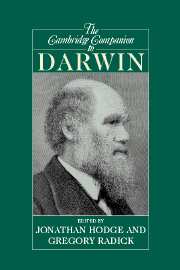
The naturalist and geologist Charles Darwin (1809–82) ranks as one of the most influential scientific thinkers of all time. In the nineteenth century his ideas about the history and diversity of life - including the evolutionary origin of humankind - contributed to major changes in the sciences, philosophy, social thought and religious belief. This volume provides the reader with clear, lively and balanced introductions to the most recent scholarship on Darwin and his intellectual legacies. A distinguished team of contributors examines Darwin's main scientific ideas and their development; Darwin's science in the context of its times; the influence of Darwinian thought in recent philosophical, social and religious debate; and the importance of Darwinian thought for the future of naturalist philosophy. New readers will find this a most convenient and accessible guide to Darwin. Advanced students and specialists will find a conspectus of recent developments in the interpretation of Darwin.
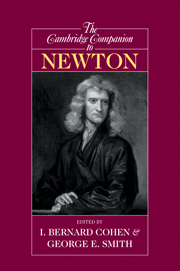
Sir Isaac Newton (1642–1727) was one of the greatest scientists of all time, a thinker of extraordinary range and creativity who has left enduring legacies in mathematics and the natural sciences. In this volume a team of distinguished contributors examine all the main aspects of Newton's thought, including not only his approach to space, time, mechanics, and universal gravity in his Principia, his research in optics, and his contributions to mathematics, but also his more clandestine investigations into alchemy, theology, and prophecy, which have sometimes been overshadowed by his mathematical and scientific interests.
As science turned its focus towards ‘man’, new disciplines emerged with the aim of utilizing scientific methods to understand and regulate human behaviour. Rather than understanding this scientific inquiry into human behaviour as a unique historical phenomenon with an identifiable moment of origin, we must recognize its continuity with a long tradition through which it found momentum yet against which it would struggle for authority. The search for knowledge about human existence and behaviour clearly did not begin with the emergence of science as a discrete discipline in the eighteenth century; instead, through a complex network of intellectual and social reconfigurations, it was incorporated into an emerging disciplinary structure and found legitimization through its relation to science. During this time of change in how knowledge was produced, valued and circulated, a range of new disciplines contended for authority over self-knowledge. To understand how psychoanalysis would eventually come to function within this network of disciplines and ultimately to undermine the concept of science itself, I want to consider briefly how several of them developed and how they come to contribute to Freud's psychoanalytic project.
As philosophy became focused on metaphysical questions explored primarily through philosophical speculation and reason, physiologists continued to use scientific methods to observe and measure bodily responses as a means of establishing the basic foundations for sensory physiology. Despite their attempts to understand all perceptual phenomena in terms of mechanistic bodily operations, however, physiologists were increasingly confronted with a factor that they seemed unable to explain.
Leading, primarily, a visual existence, man's main orientations are focused on light and perception of light. The optical channels of a human being are superior to the rest of his sensory inputs, as long as quantity and complexity of data are under question. With regard to linguistic design, metaphors of light hold an eminent position in human discourse, connected especially to fields of knowledge, learning, moral quality and aesthetic perfection. As a consequence, they stand out in all ideological terrains of human self-constitution, concerning basic religious concepts, their narrative transformations as well as rationalistic sublimations of these models, during modernity's development towards the age of enlightenment.
This essay deals with the interrelationship between scientific–especially physical–theories and the ideological groundwork of a given culture. Centring on influences emerging from pre-formal concepts of reality, the problem will be raised if any explicit physical theory will succeed in keeping a constitutive distance from such pre-scientific forms of worldmaking. It will need to be asked if modern quantifying approaches to nature fall under the clandestine seizure of intersubjective and intracultural dynamics, importing a basic matrix of anthropomorphic worldmaking into those formal and quantified versions of reality we use to call sciences.
Complying with such a project gives good reasons to keep a secure distance from positions which take the social construction of all forms of reality and worldmaking for granted. It is not the structuring idea of this paper to underline the presumable irrelevance of scientific hopes for objective truths – a tendency one might call ‘epistemic relativism’.
The search for health is a constant in all societies, but the increasing wealth of Victorian society made it a realizable priority for an ever-widening clientele. And given the limitations of conventional medicine, with its reliance on techniques such as bleeding or drastic drug regimes, it was not surprising that a galaxy of alternative therapies offered themselves, which were then denounced as quackery by the profession. Some of the fringe movements were chimeras that flourished briefly and faded as quickly. Others showed more staying power, and among the weightier was hydropathy, a system centred on the use of a series of water treatments which originated in Austria in the 1820s at the Gräfenberg establishment of Vincent Priessnitz. Hydropathy was but one of several unorthodox medical therapies on offer in early Victorian Britain. Where it differed from the other fringe movements – mesmerism, galvanism, botanism and even homeopathy – is that it attracted substantial long-term commercial investment. Whereas homeopathy, the most successful of its competitors on the medical margin, remained almost entirely a clinic and surgery bound enthusiasm, hydropathy established its place on both the therapeutic and the physical landscape. The first hydropathic, or water-cure, establishments in Britain appeared in the early 1840s in and around London, subsequently spreading west and north. In England, it was, however, to become an increasingly provincial interest, surviving in its original curative form by the 1880s only at a few northern outposts such as Stockport.
The past two hundred years have seen naturalistic and often materialistic modes of scientific inquiry (as advocated by, for example, John Tyndall and Richard Dawkins) superseding the teleological and theistic methods used by earlier non-specialists. This hardening of the scientific viewpoint (though not absolute, particularly in physics) is interesting when one considers the concomitant increase in the acceptability to the general public of evolutionary explanations, the increase in the popularization of what was seen as ‘good science’, and the parallel reduction of extra-epistemic factors in evolutionary theorizing. In this essay I briefly examine two episodes within the development of a professional Victorian geology: the rejection of ‘scriptural geology’ by the emerging geological community and the controversy over the 1844 publication of Vestiges of the Natural History of Creation. Both of these episodes nicely illustrate the boundary work that went into delineating the emerging community from those that used, and what would become, sidelined modes of discourse. As a part of this delineation – and over the course of the early part of the century – geology was characterized as a practical, specialized, active, ‘masculine’ endeavour that was amenable to Christianity. Such rhetoric allowed the community to distance themselves from both Biblical literalists and the amateurs who in many ways founded the field, thus moving the adjudication of scientific claims out of the public sphere into the hands of what would eventually become the scientific profession.
In 1859, Prince Albert addressed the British Association for the Advancement of Science (BAAS) as its President and attempted to assess the place of science in the modern State. In his description of science, he says:
The operation of Science then has been, systematically to divide human knowledge, and raise, as it were, the separate groups of subjects for scientific consideration, into different and distinct sciences. The tendency to create new sciences is particularly apparent in our present age, and is perhaps inseparable from so rapid a progress as we have seen in our days; for the acquaintance with and mastering of distinct branches in knowledge enables the eye, from the newly gained points of sight, to see the ramifications into which they divide themselves in strict consecutiveness and with logical necessity. But in thus gaining new centres of light, from which to direct our researches, and new and powerful means of adding to its ever-increasing treasures, Science approaches no nearer to the limits of its range, although travelling further and further from its original point of departure.
A little over a year later Albert was dead, but his vision of the material location for the operations of science was beginning to be accomplished.
In early May 1868, the correspondence pages of the Pall Mall Gazette (PMG) were the scene of a heated debate between two of the most well known figures of the day, Professor John Tyndall and Mr Daniel Dunglas Home. Each man was the recognized leader of his field, but their fields were apparently diametrically opposed. Tyndall was head of the Royal Institution and the natural heir to the late Michael Faraday as experimental philosopher and materialist scientist; Home was celebrated across Europe and America as a gifted spiritualist medium, whose physical phenomena were unsurpassed. Their topic was a séance proposed in 1861, at which Faraday was to have examined spiritualist phenomena produced by Home, but which had not ultimately taken place. The two men began a stiffly polite dialogue within the correspondence columns, but rapidly degenerated into personal attacks and self-vindicating reasoning. By the time they called a truce in late May, the debate had clearly demonstrated the strength of the barriers constructed between established scientific practice and areas of investigation still regarded as beyond the scientific pale.
In his pamphlet Observations on the Education of the People, Henry Brougham links scientific education with a stable working populace. For Brougham, science was a unity, and reflection upon it would reveal an ordered world, functioning correctly. ‘The more widely science is diffused’, he writes, ‘the better will the Author of all things be known’. Yet, this view of science, predicated as it was upon a unified Nature, was actively critiqued in the early nineteenth century. Cheap, mass-market periodicals such as the Mechanic's Magazine emerged from a combination of technological innovation, philosophical radicalism and entrepreneurial opportunism, to provide a textual space for an alternative scientific culture. These titles foregrounded dialogue, preventing the ‘thematic finalization’ necessary to disseminate unified Nature as a final signified. Their textual community, lying outside of ‘high’ scientific discourse and yet at times engaging with it, allowed members to negotiate and appropriate, in a dialogic exchange, the contested signs of the industrial age.
This chapter seeks to recover this rival scientific discourse and, by exploring its foundation in the textual community that supported it, identify its codes, constructions and participants. The chapter is organized into three sections: the first considers the foundation of the Mechanic's Magazine and the strategies employed by the editors to carve out a readership from within the reading audience of the new ‘mass’ journals such as the Mirror of Literature.