To save content items to your account,
please confirm that you agree to abide by our usage policies.
If this is the first time you use this feature, you will be asked to authorise Cambridge Core to connect with your account.
Find out more about saving content to .
To save content items to your Kindle, first ensure no-reply@cambridge.org
is added to your Approved Personal Document E-mail List under your Personal Document Settings
on the Manage Your Content and Devices page of your Amazon account. Then enter the ‘name’ part
of your Kindle email address below.
Find out more about saving to your Kindle.
Note you can select to save to either the @free.kindle.com or @kindle.com variations.
‘@free.kindle.com’ emails are free but can only be saved to your device when it is connected to wi-fi.
‘@kindle.com’ emails can be delivered even when you are not connected to wi-fi, but note that service fees apply.
Baruch Spinoza is one of the most important and original thinkers of the modern period. His work inspired religious free-thinkers and political radicals, French Enlightenment philosophes, German Idealists, Russian Marxists, writers, and scientists. The Lexicon is a comprehensive compendium of entries on Spinoza's own concepts and associated historical figures. It cuts through the daunting profusion of Spinoza scholarship by supplying compact entries that contextualize Spinoza's thought, elucidate crucial concepts, and point the way to the relevant scholarly debates and studies. With entries by established and emerging scholars from North America, Australasia, and Europe, this is not only the most comprehensive and up-to-date picture of Spinoza scholarship, but also the most international and most diverse. It is a vital resource for novices and experts alike seeking to expand their knowledge of Spinoza.
Tadashi Ishikawa traces perceptions and practices of gender in the Japanese empire on the occasion of Japan's colonisation of Taiwan from 1895 . In the 1910s, metropolitan and colonial authorities attempted social reform in ways which particularly impacted on family traditions and, therefore, gender relations, paving the way for the politics of comparison within and beyond the empire. In Geographies of Gender, Tadashi Ishikawa delves into a variety of diplomatic issues, colonial and anticolonial discourses, and judicial cases, finding marriage gifts, daughter adoption, and premarital sexual relationships to be sites of tension between norms and ideals among both elite and ordinary men and women. He explores how the Japanese empire became a gendered space from the 1910s through the outbreak of the Second Sino-Japanese War in 1937, arguing that gender norms were both unsettled and reinforced in ways which highlight the instability of metropole-colony relations.
'The Book of Roger' is a twelfth-century Arabic geographical treatise commissioned by King Roger II of Sicily and compiled by the Muslim polymath al-Idrisi. On its completion in around 1157 it was the most detailed description of the known world produced up to that point. This translation covers Sicily, the seat of King Roger's government, along with the other parts of the Norman kingdom in the South: southern Italy, the Adriatic, and Ifriqiya, as well as the book's preface.
Presented in English translation for the first time this text offers insight into Roger's motivation in commissioning such an endeavour, and the relationship between king and scholar. A comprehensive introduction explores what this important work tells us about the Norman kingdom in the South in the Middle Ages, while a series of detailed maps will enhance the reader's appreciation of the richness of al-Idrisi's data.
Arthur Schopenhauer (1788–1860) lived through an era of great political turmoil, but previous assessments of his political thought have portrayed him as a pessimistic observer with no constructive solutions to offer. By assembling and contextualizing Schopenhauer's dispersed comments on political matters, this book reveals that he developed a distinct conception of politics. In opposition to rising ideological movements such as nationalism or socialism, Schopenhauer denied that politics can ever bring about universal emancipation or fraternal unity. Instead, he viewed politics as a tool for mitigating rather than resolving the conflicts of a fundamentally imperfect world. Jakob Norberg's fascinating book reconstructs Schopenhauer's political ideas and shows how they relate to the dominant debates and trends during the period in which he lived. This title is also available as Open Access on Cambridge Core.
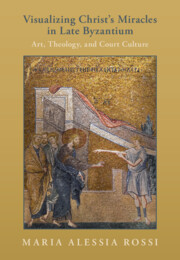
This book investigates the political and spiritual agenda behind monumental paintings of Christ's miracles in late Byzantine churches in Constantinople, Mystras, Thessaloniki, Mount Athos, Ohrid, and Kastoria. It is the first exhaustive examination of Christ's miracles in monumental decoration, offering a comparative and detailed analysis of their selection, grouping, and layout and redefining the significance of this diverse and unique iconography in the early Palaiologan period. Maria Alessia Rossi argues that these painted cycles were carefully and inventively crafted by the cultural milieu, secular and religious, surrounding Emperor Andronikos II (r. 1282–1328) at a time of ferment in the early Palaiologan era. Furthermore, by adopting an interdisciplinary approach, she demonstrates that the novel flowering of Christ's miracles in art was not an isolated phenomenon, but rather emerged as part of a larger surge in literary commissions, and reveals how miracles became a tool to rewrite history and promote Orthodoxy.
While the impacts of Irish emigration to America following the Great Famine of 1845–1852 have been well studied, comparatively little scholarly attention has been paid to the effects of reverse migration on Irish culture, society, and politics. Inspired by the work of historian David P. B. Fitzpatrick (1948–2019) and forming a companion to his final published work The Americanisation of Ireland: Migration and Settlement 1841–1925 (Cambridge, 2019), this volume explores the influence of America in shaping Ireland's modernisation and globalisation. The essays use the concept of Americanisation to explore interdisciplinary themes of material culture, marketing, religion, politics, literature, cinema, music, and folklore. America in Ireland reveals a late nineteenth and early twentieth-century Irish society that was more cosmopolitan than previously assumed, in which 'Returned Yanks' brought home new-fangled notions of behaviour and activities and introduced their families to American products, culture and speech. In doing so, this book demonstrates the value of a transnational and global perspective for understanding Ireland's history.
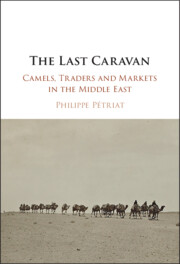
What can travelling camels tell us about the history of the interior of the Middle East? In this innovative book Philippe Pétriat demonstrates how caravans - groups of travellers, often on trade expeditions, journeying together for mutual protection in hostile regions - are essential to understanding the history of the inside territories of the Ottoman Empire with its neighbours. From the first use of camels in transport, through to the decline of the caravan from the 1930s onwards, Pétriat reconstructs the land routes of these travellers through vast steppes and deserts in captivating detail. Moving discussions of the political economy of the Ottoman and post-Ottoman Middle East beyond analysis of the coastal regions and maritime exchanges with Western countries, The Last Caravan instead reveals the pivotal importance of the Ottoman and Arab merchants in the suburbs of the cities and the rural markets and the travelling nomads and the animals that supported them.
Vladimir Putin justifies his imperialist policy by use of the past. For him, Russia has always been an Empire and must remain so. The story of Russian imperialism has deep historical roots, and this book shows how Byzantium, the most powerful medieval and Christian empire, is repeatedly presented in Russian history as the source of the empire's imperial legitimacy.
The author reflects on the role of art and the humanities (especially history and art history) within the power ambitions of regimes and political parties over the last two centuries as tools for the repeated reinvention of an empire's identity; an identity built on a multitude of invented pasts. Within this self-referential narrative, Byzantium becomes the ultimate authority justifying the aggression of the Russian state, and Orthodox belief becomes the bridge linking the medieval past with the present. One of the paradoxes of this narrative is the use of the same past by regimes as different as those of the last Romanovs, Stalin, and Putin, leading to a fundamental question: does this propaganda image really underlie the core identity of Russia?
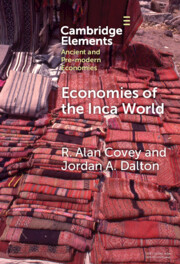
The Inca Empire (c. 1400–1532) was the largest Indigenous state to develop in the Americas, spanning the extraordinarily rich landscapes of the central Andes. Scholarly approaches to Inca-era economies initially drew on Spanish colonial documents that emphasized royal resource monopolies, labor tribute, and kin-based land tenure. Anthropologists in recent decades have emphasized local economic self-sufficiency and the role of reciprocity in Inca economics. This Element adds to the existing literature by reviewing recent archaeological research in the Inca capital region and different provinces. The material evidence and documents indicate considerable variation in the development and implementation of Inca political economy, reflecting an array of local economic practices that were tailored to different Andean environments. Although Inca economic development downplayed interregional trade, emerging evidence indicates the existence of more specialized trading practices in Inca peripheral regions, some of which persisted under imperial rule.
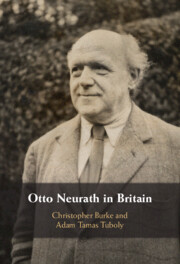
Otto Neurath (1882–1945) was an Austrian-born philosopher of science, sociologist and political economist, and one of the most multi-faceted and creative thinkers in the Vienna Circle. Forced into exile by fascism, he was part of the intellectual exodus from Central Europe. After an adventurous escape to England and internment as an 'enemy alien', he enthusiastically adapted to British culture, working on documentary films and publications for the war effort using the Isotype method of visualization. He treasured the British habit of 'muddling through', and debated planning and economics with fellow Central European émigrés, Friedrich Hayek, Karl Mannheim and Karl Popper. Based on new archival research, this book explores a little-known period of Neurath's rich and fascinating life, weaving together biographical, historical, and philosophical strands that reflect the cross-cultural currents of twentieth-century intellectual history through the lens of Neurath's contribution.
The Global Legend of Prester John delves into the enduring fascination with Prester John, an unreachable, collectively-imagined Christian priest-king who figured prominently in Europe's entrance into an interconnected global world. This Element draws on “The International Prester John Project,” an archive of Prester John narratives, from papal epistles to missionary diaries to Marvel comics, all of which respond to the Christian heterotopia promised in the twelfth-century Letter of Prester John. During the medieval and early modern periods, the desire to legitimize the letter's contents influenced military tactics and papal policy while serving as a cultural touchstone for medieval maps, travel narratives, and romance tales. By providing an overview of distinct narrative paths the legend took along with an analysis of the themes of malleability and elasticity within and across these paths, this Element addresses how belief in Prester John persisted for six centuries despite a lack of evidence.
Byzantine Studies has reached a tipping point: a growing number of historians have realized that the terms 'Byzantium' and 'the Byzantines' distort the reality and identity of the society that we study, and encode a series of prejudices that were embedded in western perceptions. The aim of these terms was to exclude the eastern empire from important discussions and historical developments.
It is time to end this exercise in orientalist fiction, but what are the alternatives? In this book, Anthony Kaldellis surveys the pros and cons of a range of possible options and examines the implications of a field name-change also for art history, philology, and the study of Eastern Orthodoxy. The new name he proposes will carry the field into the next phase of its history, renegotiate its relationships with its peers and respect the testimony of our sources.
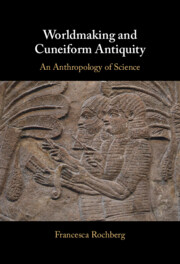
Objects of knowledge exist within material, immaterial, and conceptual worlds. Once the world is conceived from the perspective of others, the physical ontology of modern science no longer functions as a standard by which to understand other orderings of reality, whether from ethnographical or historical sources. Because premodern and non-western sources attest to a plurality of sciences practiced in accordance with different ways of worldmaking from that of the modern West, their study belongs to the history of science, the philosophy of science, and the sociology of science, as well as the anthropology of science. In Worldmaking and Cuneiform Antiquity, Francesca Rochberg extends an anthropology of science to the historical world of cuneiform texts of ancient Babylonia. Exploring how Babylonian science has been understood, she proposes a new direction for scholarship by recognizing the world of ancient science, not as a less developed form of modern science, but as legitimate and real in its own right.
What does it mean for a government to declare its citizens 'dead' while they still live? Following the failed 2016 coup, the Turkish AKP government implemented sweeping powers against some 152,000 of its citizens. These Kanun hükmünde kararnameli ('emergency decreed') were dismissed from their positions and banned for life from public service. With their citizenship rights revoked, Seçkin Sertdemir argues these individuals were rendered into a state of 'civic death'. This study considers how these authoritarian securitisation methods took shape, shedding light on the lived experiences of targeted people. Bringing together approaches from political philosophy, social anthropology, and sociology, Sertdemir outlines the approaches and justifications used by the Turkish government to dismiss opponents, increase surveillance, and brand citizens as 'terrorists'. At the same time, extensive archival research and in-depth interviews bring focus to the impact of these measures on the lives of women, and the disabled and LGBTQ+ communities.
Interest in material culture has produced a rigorous body of scholarship that considers the dynamics of licensing, permissions, and patronage - an ongoing history of the estrangement of works from their authors. Additionally, translation studies is enabling new ways to think about the emergence of European vernaculars and the reappropriation of classical and early Christian texts. This Element emerges from these intersecting stories. How did early modern authors say goodbye to their works; how do translators and editors articulate their duty to the dead or those incapable of caring for their work; what happens once censorship is invoked in the name of other forms of protection? The notion of the work as orphan, sent out and unable to return to its author, will take us from Horace to Dante, Montaigne, Anne Bradstreet, and others as we reflect on the relevance of the vocabularies of loss, charity, and licence for literature.
The Jewish–Arab conflict and the fighting it engenders began before the establishment of the state of Israel and has been a constant of Middle-Eastern politics for over a hundred years. The intensity of the fighting has fluctuated but the variations have been like a jazz tune that plays around a common constant central theme. Because of the continuity and longevity of the conflict, as well as various short-term issues affecting it, each strategic event is analysed by the rival decision makers according to three separate time factors: the immediate – how to achieve the best result and terminate the specific event as quickly as possible; the medium term – how the current event results from the trend of the past few years and will affect that trend favourably over the next few years; and lastly the long term – how the results of the specific current event and the current trend it belongs to fits into the overall conflict and will favourably affect its future direction. Of course, the ‘best strategic result’ and ‘favourable strategic effect’ are different for each participant. The purpose of this chapter is to explore and describe the characteristics of the conflict as a whole and the major theme of the Israeli strategic responses to them, while touching on various shifts in trends or specific events that required fundamental changes in the melodies or temporary improvisations.
All too often, the terms terrorism and insurgency are used interchangeably, just like tactics and strategy. But terrorism is indeed a tactic while insurgency is a strategy, and the two concepts are far from synonymous. This chapter details the differences between terrorism and insurgency, and hence, terrorists and insurgents, by tracing the evolution of each of these terms and placing them in the proper context, while providing numerous examples of terrorist chieftains and insurgent leaders, and how these individuals thought about strategy over time. The chapter will also investigate the considerable overlap between terrorism and insurgency. After all, militants pursuing an insurgent strategy may seek to use terrorism as a tactic toward achieving their objectives. Size can be a useful distinguishing characteristic, because terrorist groups often consist of a small number of individuals. By contrast, insurgent organisations, such as Lebanese Hizballah or the Liberation Tigers of Tamil Eelam (LTTE), number in the thousands. Indeed, many of the most important ‘terrorist’ groups in the world – including Lebanese Hizballah, LTTE, the Provisional Irish Republican Army (PIRA), and the Revolutionary Armed Forces of Colombia (FARC) – are better described as insurgencies that use terrorism than as typical terrorist movements.
This chapter offers an overview of the strategic environment and grand strategies employed by the Ming and Qing dynasties. It discusses how they built upon pre-existing strategic traditions while also incorporating new technologies and tactics to expand the empire, creating a sophisticated state capable of responding to a dazzling array of challenges. The chapter not only delineates the nature of the strategic threats faced by the last Chinese empires, but also covers the extensive primary source materials demonstrating how imperial leadership and personal networks operated alongside institutions to create an effective grand-strategy paradigm allowing the Ming and Qing to retain their superiority in east Asia for some five centuries. Finally, this overview of late imperial grand strategy offers clues into how China still perceives the world and its strategic goals in Asia.