To save content items to your account,
please confirm that you agree to abide by our usage policies.
If this is the first time you use this feature, you will be asked to authorise Cambridge Core to connect with your account.
Find out more about saving content to .
To save content items to your Kindle, first ensure no-reply@cambridge.org
is added to your Approved Personal Document E-mail List under your Personal Document Settings
on the Manage Your Content and Devices page of your Amazon account. Then enter the ‘name’ part
of your Kindle email address below.
Find out more about saving to your Kindle.
Note you can select to save to either the @free.kindle.com or @kindle.com variations.
‘@free.kindle.com’ emails are free but can only be saved to your device when it is connected to wi-fi.
‘@kindle.com’ emails can be delivered even when you are not connected to wi-fi, but note that service fees apply.
A Brief History of Islam in Europe presents an overall presentation and discussion of developments ever since Islam appeared on the European stage thirteen centuries ago. The events and stories presented increase the understanding of present debates on, and notions of, Islam and Muslims in Europe. The leading questions in discussing the role of the Islam in Europe are: how and in what ways did Europeans and Muslims interact, and what is the role of religion therein? And for those Europeans who had never met a Muslim: what was their image of Islam, and how did they study the Muslim? This book shows that in the course of thirteen centuries the Muslim as well as Islam have undergone many metamorphoses. The Muslim has entered the European stage as a conqueror, antichrist, scholar, benign ruler, corsair, tradesman and fellow citizen. The image of Islam has meandered accordingly, as a religion that was feared as an enemy or embraced as a partner against heretical Christians, despised as an abomination or admired as a civilization, and studied for missionary, academic, colonial or security purpose.
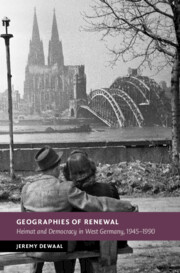
The term 'Heimat', referring to a local sense of home and belonging, has been the subject of much scholarly and popular debate following the fall of the Third Reich. Countering the persistent myth that Heimat was a taboo and unusable term immediately after 1945, Geographies of Renewal uncovers overlooked efforts in the aftermath of the Second World War to conceive of Heimat in more democratic, inclusive, and pro-European modes. It revises persistent misconceptions of Heimat as either tainted or as a largely reactionary idea, revealing some surprisingly early identifications between home and democracy. Jeremy DeWaal further traces the history of efforts to eliminate the concept, which first emerged during the Cold War crisis of the early 1960s and reassesses why so many on the political left sought to re-engage with Heimat in the 1970s and 1980s. This revisionist history intervenes in larger contemporary debates, asking compelling questions surrounding the role of the local, the value of community, and the politics of place attachments.
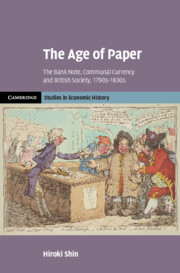
In the first detailed examination of Britain's transition to paper currency, Hiroki Shin explores how state, nation and community each played their respective role in its introduction. By examining archival materials and personal accounts, Shin's work sheds fresh light on societal, institutional, communal and individual responses to the transformation. The dominance of communal currency during the Bank Restriction period (1797–1821) demonstrates how paper currency derived its value from the community of users rather than the state or the intrinsic value of precious metal. Shin traces the expanded use of the Bank of England note – both geographically and socially – in this period, revealing the economic and social factors that accelerated this shift and the cultural manifestations of the paper-based monetary regime, from everyday politics to bank-note forgeries. This book serves as an essential resource for those interested in understanding the modern monetary system's historical origins.
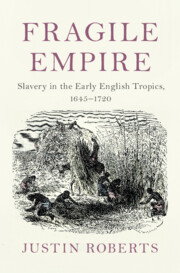
Fragile Empire reinterprets the rise of slavery in the early English tropics through an innovative geographic framework. It examines slavery at English sites in tropical zones across the Atlantic and Indian oceans, and argues that a variety of factors – epidemiology, slave majorities, European rivalries, and the power of indigenous polities – made the seventeenth-century English tropical empire particularly fragile, creating a model of empire in the tropics that was distinct from other English colonizations. English people across the tropics were outnumbered by their slaves. English slavery was forged in the tropics and it was increasingly marked by its permanence, inflexibility, and brutality. Early English societies were not the inevitable precursor to British imperial dominance, instead they were wrought with internal vulnerabilities and external threats from European and non-European competitors. Based on thorough archival research, Justin Roberts' important new study redefines our understanding of slavery and bound labor from a global perspective.
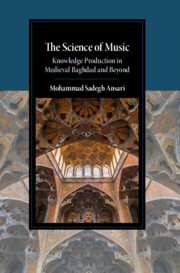
How did the medieval Islamic intellectual tradition conceptualize, produce, and disseminate scientific knowledge? What can we learn about medieval Islamic civilizations from the way they examined and studied the universe? In answering these fundamental questions, Mohammad Sadegh Ansari provides a unique perspective for the study of both musicology and intellectual history. Widely considered to be an art today, music in the medieval Islamic world was categorized as one of the four branches of the mathematical sciences, alongside arithmetic, geometry, and astronomy; indeed, some philosophers and scholars of music went as far as linking music with medicine and astrology as part of an interconnected web of cosmological knowledge. This innovative book raises fascinating questions about how designating music a 'science' rather than an 'art' impacts our understanding of truth and reconstructs a richly holistic medieval system of knowledge in the process.
This chapter centers on the 1967–1968 “Swedish initiative” in the United Nations that led to the 1972 UN Conference on the Human Environment in Stockholm. The diplomatic initiative, underpinned by Swedish scientific expertise, and the Stockholm Conference’s four-year preparatory period marked the emergence of environmental diplomacy and global environmental governance, as well as the rise of North–South tensions over environment and development. The chapter also explains how the autumn 1967 environmental awakening in Sweden, prompted in part by a best-selling environmental polemic by biochemist Hans Palmstierna and an exposé on acid rain by soil scientist Svante Odén, set the stage for the UN intervention orchestrated by Swedish diplomats Inga Thorsson and Sverker Åström. Also that year, as examined in this chapter, the Global Atmospheric Research Program (GARP) conference, hosted by the Meteorological Institute at Stockholm University, demonstrated Stockholm’s central place and Bert Bolin’s leading role in the growing international coordination of climate science.
Despite ubiquitous references to ‘ethnicity’ in both academic and public discourse, the history and politics of this concept remain largely unexplored. By constructing the first transnational and interlingual conceptual history of ethnicity, this book unearths the pivotal role that this concept played in the making of the international order. After critiquing existing accounts of the ‘expansion’ or ‘globalisation’ of international society, the chapter proposes to rethink the birth of the international order through a scrutiny of its major concepts. Fusing Reinhart Koselleck’s method of conceptual history with the philosophical writings of G. W. F. Hegel and Jacques Derrida, the chapter theorises the emergence of the international order as a dialectical process that both negated and preserved existing imperial hierarchies. The concept of ethnicity is ejected by this dialectical process as a residual category – an indigestible kernel of difference and particularity – that cannot be internalised by the work of sublation.
Chapter 2 gives a history of Black resistance from the 1980s until the emergence of the social movement’s umbrella organization, the Comisión 8 N, in 2013. Scholars have documented that late nineteenth-century Afro-Argentine resistance occurred through a strong Black press and mutual aid societies. The literature lacks an empirical analysis of contemporary issues, which I take up in this chapter. I trace the current movement to civil society organizations founded primarily by Black women in the mid 1980s after the country’s return to democracy. I unpack an oft-repeated phrase of my interlocutors, “poner el cuerpo,” – to put one’s whole being into an effort, but also a radical act of taking up space – to contextualize the social movement’s emergence. Moreover, I argue that the radical act of taking up space in visible locations marked as “White spaces” is central to the politics of visibility that led to some of the movement’s successes. While the human rights movement and the Kirchner administrations provided a political opportunity for cultural and ethnoracial activism, Black activists’ continued resistance, despite setbacks, led to the traction and birth of the movement.
Chapter 1 opens with a description of the different peoples of the Americas in 1492 and the earliest contacts with Europeans, and outlines the process of Spanish penetration and settlement. It then explores indigenous reactions to Europeans at first contact, and analyzes the roots of the apotheosis of Europeans in Spanish America, arguing that it is misleading to distinguish too sharply between religious and rational considerations, and indicating that native peoples did not bow before the strangers as gods. The chapter then shifts the focus to the intellectual framework employed by Europeans to situate native peoples within a European worldview (European Mythology of the Indies I). Europeans interpreted indigenous peoples according to their own mythological concepts, such as the myth of the Earthly Paradise, the myth of the Reconquest of Jerusalem, the myth of the Marvelous East, and the myths of the Classical Tradition. The chapter ends with a summary of Spanish expansion into the Pacific.
This chapter analyzes the core elements of Ghazālī’s practical ethics, using The Alchemy of Happiness, a guidebook for Muslims wishing to live a good life in this world (dunyā) while striving toward salvation through faith (dīn). Ghazālī prescribed a pragmatic attitude toward fiqh prioritizing everyday practice and recognized dīn and dunyā as two interconnected but distinct spheres, which he joined through a broadly conceived Islamic ethics. Ghazālī criticized the Sufi tendency to decry all knowledge. In The Alchemy of Happiness, he understood that people held distinct responsibilities, and in turn embedded “responsibility” in the diverse economic and political institutions essential to the functioning of the Abbasid Empire. Ghazālī conceived of the “heart” (dil) as a selective intelligence permitting differentiation among ethical alternatives. His view did not prescribe utilitarian obedience to divine command. For Ghazālī, everyday human need, interaction, and conviviality provided reason to appreciate God’s work. Obedience is not the primary source of correct religious conduct, then, but a disposition of kindness in everyday life.
This chapter explores how academics and textbook authors created Ghana’s foundation story from the heavily politicised narratives of Ghana’s first president, Kwame Nkrumah, and his Convention Peoples Party. It argues that empathy for successful political parties exhibited by first generation Africanists bequeathed to the present a grand narrative fraught with teleology because of its emphasis on anti-colonialism as a recurrent and unchanging problematic. The scholars failed to see a calculated engagement with global ideas and a simultaneous choice made by numerous Gold Coast thinkers to chart intellectual and political projects within the context of the possibilities and constraints of their time. The intellectuals are presented in a hierarchy from proto, cultural, conservative, to radical anti-colonial nationalists, thereby affirming the preeminence of tmuch-vaunted radicals. Recalled this way, the intellectuals’ projects remain distorted and misrepresented. Fortunately, a consideration of the intellectuals’ transnational dialogic encounters within a cosmopolitan prism presents a fuller picture.
The commemoration on 6 March 2007 of the fiftieth anniversary of Ghana’s emergence from eighty years of British colonial rule exposed not only a bitter national divide over whom to credit with the nation’s founding, but also the possibility that a flawed ‘Grand Narrative’ of Ghana’s modern history is the source of this abiding threat to national unity. In marking the Golden Jubilee, the government of the day, led by President John Kufuor of the New Patriotic Party (NPP), honoured heroes of both the national and continental struggles for independence. On the national level, the NPP chose to celebrate the collective known in Ghanaian historical folklore as ‘The Big Six’, the leadership of the post-World War II United Gold Coast Convention (UGCC) nationalist movement.
The early seventeenth century was a period of economic crisis throughout Eurasia. Finance was developed enough for heads of state to raise and equip massive armies, but not developed enough to pay these armies regularly. Within the context of the Mansfeld Regiment’s financial problems, this chapter describes mutiny, desertion, female labor, and the challenges of finding small change during a financial crisis. The Mansfeld Regiment’s operations depended on a network of military finance in central Europe and northern Italy which was broadly ramifying but imperfect and disorganized. The loan that was supposed to support this regiment was delayed; by the time the money arrived, the regiment’s superiors may simply have forgotten about them. The Mansfeld Regiment collapsed two years later.