To save content items to your account,
please confirm that you agree to abide by our usage policies.
If this is the first time you use this feature, you will be asked to authorise Cambridge Core to connect with your account.
Find out more about saving content to .
To save content items to your Kindle, first ensure no-reply@cambridge.org
is added to your Approved Personal Document E-mail List under your Personal Document Settings
on the Manage Your Content and Devices page of your Amazon account. Then enter the ‘name’ part
of your Kindle email address below.
Find out more about saving to your Kindle.
Note you can select to save to either the @free.kindle.com or @kindle.com variations.
‘@free.kindle.com’ emails are free but can only be saved to your device when it is connected to wi-fi.
‘@kindle.com’ emails can be delivered even when you are not connected to wi-fi, but note that service fees apply.
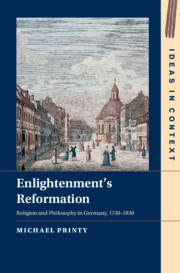
How did we get from the religious core of the sixteenth-century Reformation to the notions of freedom popularised by Hegel and Ranke? Enlightenment's Reformation explores how two key cultural and intellectual achievements – the sixteenth-century Reformation and the late eighteenth-century birth of 'German' philosophy – became fused in public discussion over the course of the 'long' eighteenth century. Michael Printy argues that Protestant theologians and intellectuals recast the meaning of Protestantism as part of a wide-ranging cultural apology aimed at the twin threats of unbelief and deism on the one hand, and against Pietism and a nascent evangelical awakening on the other. The reimagining of the Reformation into a narrative of progress was powerful, becoming part of mainstream German intellectual culture in the early decades of the nineteenth century. Utilising Reformation history, Enlightenment history, and German philosophy, this book explores how the rich if unstable idea linking Protestantism and modern freedom came to dominate German intellectual culture until the First World War.
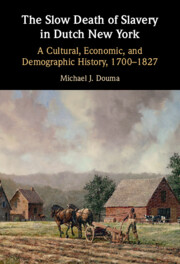
Original and deeply researched, this book provides a new interpretation of Dutch American slavery which challenges many of the traditional assumptions about slavery in New York. With an emphasis on demography and economics, Michael J. Douma shows that slavery in eighteenth-century New York was mostly rural, heavily Dutch, and generally profitable through the cultivation of wheat. Slavery in Dutch New York ultimately died a political death in the nineteenth century, while resistance from enslaved persons, and a gradual turn against slavery in society and in the courts, encouraged its destruction. This important study will reshape the historiography of slavery in the American North.
During the Late Classic (a.d. 600–900), Maya stone monuments from the Western Lowlands documented people with the sajal title. This position was associated with corporate group leaders who acted as governors of secondary sites, supervised warfare-related activities, and manufactured and distributed goods. The increase in records, along with the elaboration of monuments by sajals with differing narratives from those of the rulers, has been identified as a contributing factor to the regional political instability that led to the abandonment of Classic Maya capitals. This article aims to analyze monuments from the political spheres of Yaxchilan, Piedras Negras, and Palenque using a discourse analysis approach to identify the discursive strategies sajals used to showcase and strengthen their hierarchical positions. To accomplish this, I will analyze the discourse in relation to the intermediality of monuments to examine how sajals rivaled the rulers of these cities. Additionally, I will explore the correlation between these discourses and the sociopolitical transformations that preceded the regional collapse in the ninth century a.d.
The article was inspired by Justice Alito's selective and often misleading use of the medieval history of abortion law to justify the overturning of Roe v. Wade. Hoping to offer a corrective view of the larger conversation about abortion during the premodern era, this article hopes to drive home a number of points. First, modern authorities need to acknowledge that the word “abortion” (aborsus) meant something different then than it does now. Second, at its origins, abortion was conceived as a crime against husbands, and thus it falls into a larger body of misogynous law designed to protect men and their heirs from women who exploited their reproductive potential to trick men out of their rightful inheritance. And third, medieval laws against those who provided abortions labeled them as witches or poisoners. Medieval laws about abortion are thus intertwined with fears of the devil and of the woman's body as poison.
Zoroastrians are one of Iran's religious minorities, who managed to survive pressures and adversities during many centuries after the rise of Islam. Despite threats and dangers, this minority always tried to resist the pressures and maintain their identity and social cohesion with some measures. Aqda Cave is one of the examples of material culture left by the Zoroastrians, which can be very helpful for a better understanding of the preservation of their identity and social cohesion over time, a heritage that, based on the assessment of social values, can be effective in the sense of identity, sense of place and sense of belonging of this community. The presentation and preservation of this cultural heritage with the help of Zoroastrians will provide a foundation to acknowledge their rights and construct a respectful character for this minority group. Consequently, the preservation of this heritage could be an attempt to respect cultural diversity, heritage rights and equity as the factors of inclusive social development and world peace.
The modern history of Tianjin, a northern port city in China, offers an intriguing urban case for scholars interested in comparative colonial practices. From the 1860s to the 1940s, Tianjin was home to up to nine foreign concessions and a sequence of different Chinese municipalities. While much scholarship on colonial history has focused on the interactive dynamics between the colonizer and the colonized, Tianjin’s colonial past draws attention to the multiplicity, multilateralism and multilayered trajectories at the heart of the colonial experiences of both imperialist powers and the Chinese. At the heart of this short survey are some reflections on the multi-imperial dimensions of the city of Tianjin. It also explains how the multi-imperial dimensions operated in Tianjin in its treaty-port incarnation and offers some considerations of how the Tianjin case contributes to broader historiographical conversations germane to the imperial–global–urban complex.
This article explores the history of Japan’s municipal electricity regulation. We find that in the early phase of Japanese electrification, rights-of-way and municipal franchises remained undefined compared with these concepts in Western societies. Consequently, Japanese cities started electrification without municipal regulations. Although municipal franchises were introduced to Japan as a regulatory framework in the 1900s, they were tailored to Japan’s political and ideological context. Moreover, the Road Law of 1919 weakened the legal basis for municipal regulation. With the revision of the Electric Utility Law in 1932 and World War II, the decline of municipal regulation became inevitable.
This introduction to the ‘Survey and Speculation’ special issue ‘Empire and Cities’ outlines how this collection came about, summarizes the six contributions and draws general conclusions.
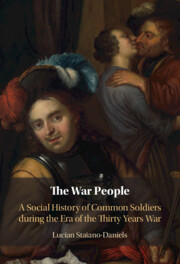
This book uses the transnational story of a single regiment to examine how ordinary soldiers, military women, and officers negotiated their lives within the chaos and uncertainty of the seventeenth century. Raised in Saxony by Wolf von Mansfeld in spring 1625 in the service of the King of Spain, the Mansfeld Regiment fought for one and a half years in northern Italy before collapsing, leaving behind a trail of dead civilians, murder, internal lawsuits…and copious amounts of paperwork. Their story reveals the intricate social world of seventeenth-century mercenaries and how this influenced how they lived and fought. Through this rich microhistorical case study, Lucian Staiano-Daniels sheds new light on key seventeenth-century developments like the military revolution and the fiscal-military state, which is supported by statistical analysis drawn from hundreds of records from the Thirty Years War. This pathbreaking book unifies the study of war and conflict with social history.
How do we - and how should we - engage with the natural environment through the concepts of rights and responsibilities? In this book, Michael Cox develops the theory and practice of environmental property rights, moving beyond simplistic assumptions that do not reflect the diversity of arrangements we see in the world. Recognizing this diversity will help us craft better responses to environmental problems in the future with an interdisciplinary foundation in what has worked, or not worked, in the past. Synthesizing a variety of methods and disciplines, Cox explores rights-based environmental policies as well as different cultural approaches to environmental ownership. The result is a book that helps the reader understand the full range of possibilities when it comes to environmental ownership.
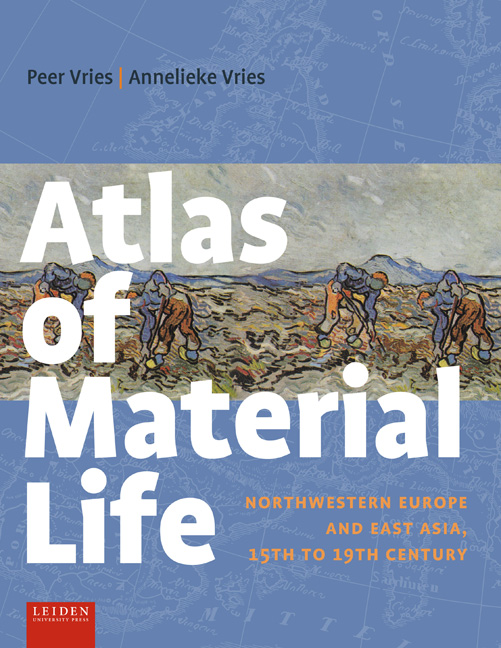
Large-scale comparative economic history of westernmost and easternmost Eurasia can be beneficial for the understanding of global history. This book provides a description of material life in North-western Europe and East Asia, for the period from the late fifteenth to the late nineteenth centuries, with a focus on developments in Great Britain and the Dutch Republic on the one hand and China and Japan on the other hand. With maps, tables, graphs and figures as a prominent and integral part of the book, it provides information, in an accessible format, on the main characteristics of the economic landscape of this period. It demonstrates the constraints to which all pre-industrial economies were subjected because of their dependence on organic natural resources but also the different ways in which the societies discussed dealt with those constraints. To provide a better understanding of this economy of limited possibilities, the final chapter of the book is devoted to the emergence of modern economic growth in Western Europe.
There are many ways of being Muslim in Indonesia, where more people practice Islam than anywhere else in the world. In Being Muslim in Indonesia, Muhammad Adlin Sila reveals the ways Muslims in one city constitute unique religious identities through ritual, political, and cultural practices. Emerging from diverse contexts, the traditionalist and reformist divide in Indonesian Islam must be understood through the sociopolitical lens of its practitioners' whether royalty, clerics, or laity.
Located in Manchuria (Northeast China), the geopolitical borderland between China, Russia, and Japan, among others, Anshan Iron and Steel Works (Angang) was Mao-era China's most important industrial enterprise. The history of Angang from 1915 to 2000 reveals the hybrid nature of China's accelerated industrialization, shaped by transnational interactions, domestic factors, and local dynamics. Utilizing archives in Chinese, Japanese, Russian, and English, Koji Hirata provides the first comprehensive history of this enterprise before, during, and after the Mao era (1949–1976). Through this unique lens, he explores the complex interplay of transnational influences in Mao-era China. By illustrating the symbiotic relationship between socialism and capitalism during the twentieth century, this major new study situates China within the complex global history of late industrialization.
A Brief History of Islam in Europe presents an overall presentation and discussion of developments ever since Islam appeared on the European stage thirteen centuries ago. The events and stories presented increase the understanding of present debates on, and notions of, Islam and Muslims in Europe. The leading questions in discussing the role of the Islam in Europe are: how and in what ways did Europeans and Muslims interact, and what is the role of religion therein? And for those Europeans who had never met a Muslim: what was their image of Islam, and how did they study the Muslim? This book shows that in the course of thirteen centuries the Muslim as well as Islam have undergone many metamorphoses. The Muslim has entered the European stage as a conqueror, antichrist, scholar, benign ruler, corsair, tradesman and fellow citizen. The image of Islam has meandered accordingly, as a religion that was feared as an enemy or embraced as a partner against heretical Christians, despised as an abomination or admired as a civilization, and studied for missionary, academic, colonial or security purpose.
The term 'Heimat', referring to a local sense of home and belonging, has been the subject of much scholarly and popular debate following the fall of the Third Reich. Countering the persistent myth that Heimat was a taboo and unusable term immediately after 1945, Geographies of Renewal uncovers overlooked efforts in the aftermath of the Second World War to conceive of Heimat in more democratic, inclusive, and pro-European modes. It revises persistent misconceptions of Heimat as either tainted or as a largely reactionary idea, revealing some surprisingly early identifications between home and democracy. Jeremy DeWaal further traces the history of efforts to eliminate the concept, which first emerged during the Cold War crisis of the early 1960s and reassesses why so many on the political left sought to re-engage with Heimat in the 1970s and 1980s. This revisionist history intervenes in larger contemporary debates, asking compelling questions surrounding the role of the local, the value of community, and the politics of place attachments.
In the first detailed examination of Britain's transition to paper currency, Hiroki Shin explores how state, nation and community each played their respective role in its introduction. By examining archival materials and personal accounts, Shin's work sheds fresh light on societal, institutional, communal and individual responses to the transformation. The dominance of communal currency during the Bank Restriction period (1797–1821) demonstrates how paper currency derived its value from the community of users rather than the state or the intrinsic value of precious metal. Shin traces the expanded use of the Bank of England note – both geographically and socially – in this period, revealing the economic and social factors that accelerated this shift and the cultural manifestations of the paper-based monetary regime, from everyday politics to bank-note forgeries. This book serves as an essential resource for those interested in understanding the modern monetary system's historical origins.
Fragile Empire reinterprets the rise of slavery in the early English tropics through an innovative geographic framework. It examines slavery at English sites in tropical zones across the Atlantic and Indian oceans, and argues that a variety of factors – epidemiology, slave majorities, European rivalries, and the power of indigenous polities – made the seventeenth-century English tropical empire particularly fragile, creating a model of empire in the tropics that was distinct from other English colonizations. English people across the tropics were outnumbered by their slaves. English slavery was forged in the tropics and it was increasingly marked by its permanence, inflexibility, and brutality. Early English societies were not the inevitable precursor to British imperial dominance, instead they were wrought with internal vulnerabilities and external threats from European and non-European competitors. Based on thorough archival research, Justin Roberts' important new study redefines our understanding of slavery and bound labor from a global perspective.