To save content items to your account,
please confirm that you agree to abide by our usage policies.
If this is the first time you use this feature, you will be asked to authorise Cambridge Core to connect with your account.
Find out more about saving content to .
To save content items to your Kindle, first ensure no-reply@cambridge.org
is added to your Approved Personal Document E-mail List under your Personal Document Settings
on the Manage Your Content and Devices page of your Amazon account. Then enter the ‘name’ part
of your Kindle email address below.
Find out more about saving to your Kindle.
Note you can select to save to either the @free.kindle.com or @kindle.com variations.
‘@free.kindle.com’ emails are free but can only be saved to your device when it is connected to wi-fi.
‘@kindle.com’ emails can be delivered even when you are not connected to wi-fi, but note that service fees apply.
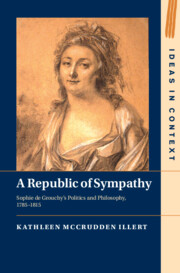
Sophie de Grouchy was a political philosopher and activist practising at the centre of Revolutionary events in France between 1789 and 1815. Despite this, her contributions to the development of political thought are often overlooked, with Grouchy commonly falling under the shadow of her husband Nicolas de Caritat, the marquis de Condorcet. A Republic of Sympathy instead situates Grouchy as a significant figure among her contemporaries, offering the first complete exploration of her shifting thought and practice across this period of societal upheaval. Kathleen McCrudden Illert analyses texts newly attributed to Grouchy and examines her intellectual collaborations, demonstrating how Grouchy continued to develop a unique philosophy which placed sympathy as the glue between the individual and the political community. The study also explores Grouchy's connections with her peers and interlocutors, from Adam Smith and Jean-Jacques Rousseau, to Thomas Paine and Jacques Pierre Brissot. In doing so, it argues powerfully for Grouchy's reintegration into the history of European political thought.
Bureaucrats of Liberation narrates the history of the Southern Africa Project of the Lawyers' Committee for Civil Right under law, a civil rights organization founded in 1963 at the request of President John F. Kennedy. Between 1963 and 1994, the Southern Africa Project connected lawyers from Namibia, South Africa, and the United States. Within the Project's network, activist lawyers exchanged funding resources, provided logistical support for political trials, and mediated new voting and governmental systems. The Project's history provides a lens into twentieth century geopolitics tied to anti-apartheid, decolonization, Cold War, and movements agitating against white supremacy. In doing so, it pays careful attention to the Project's different eras, beginning with US Executive Branch officials helming the effort and evolving into a space where more activist-oriented attorneys on both sides of the Atlantic drove its mission and politics.
Since before the American Civil War, African American and Japanese encounters produced relationships and discourse of knowledge that transcended Eurocentric conceptions of civilization and hierarchies of personhood. Black Transnationalism and Japan introduces the diverse activity and intellectual movements created, shaped, and led by Japanese and African American people. While some Pan-Asianisms and Pan-Africanisms urged a uniting of colonized spaces against the colonizer, and were often expressed in the form of decolonization movements, this volume introduces various transnational phenomena that transcended such dichotomies. Black American-Japanese transnational encounters often occurred on the non-state level from within the two new competing empires of America and Japan. Such transnational encounters reveal not only heretofore hidden historical actors, friendships, and solidarities, but also innovative cultural productions that challenged hierarchies of race, culture, and imperialism.
Inescapable Entrapments? reevaluates the role of the military in foreign policy by comparing the decision-making processes behind British and Dutch military action in Afghanistan. Drawing on more than one hundred interviews, this study finds that neither the military nor the government influenced the other to act; rather, the decision to deploy troops to Afghanistan emerged organically from a series of prior transnational commitments.
This volume in The Medieval Globe Books series surveys the distinctive but also shared rhetorical practices that characterize written requests for intercession, support, and patronage across many languages, cultures, and forms of interaction. Examples range from mundane requests to diplomatic negotiations, preserved in a variety of material media: potsherds, papyrus, paper, administrative handbooks, chronicles, and letter collections. Each contribution focuses on one textual sample or corpus of letters, providing new English translations as well as editions of the original texts in cases where no previous edition is available. Together, they represent the textual conventions and innovations of learned and vernacular epistolary traditions from many regions of North Africa and Eurasia, from the eighth to the fifteenth centuries CE.
For a long time, silk, tea, sinocentrism, and eurocentrism made up a big patch of East Asian history. Simultaneously deviating from and complicating these tags, this edited volume reconstructs narratives from the periphery and considers marginal voices located beyond official archives as the centre of East Asian history. The lives of the Japanese Buddhist monks, Eastern Han local governors, Confucian scholars, Chinese coolies, Shanghainese tailors, Macau joss-stick makers, Hong Kong locals, and Cantonese working-class musicians featured in this collection provide us with a glimpse of how East Asia's inhabitants braved, with versatility, the ripples of political centralization, cross-border movement, foreign imperialism, nationalism, and globalism that sprouted locally and universally. Demonstrating the rich texture of sources discovered through non-official pathways, the ten essays in this volume ultimately reveal the timeless interconnectedness of East Asia and the complex, non-uniform worldviews of its inhabitants.
Unlike most city histories, this book focuses exclusively on the city's connections with colonialism and slavery. Rotterdam, the second-largest Dutch city, is one of Europe's leading ports. Its maritime expansion was intrinsically linked to Dutch colonialism, including slave trading and colonial slavery in the Americas, Africa and Asia. This painful history sits uneasily with the city's modern cosmopolitan image and its large population of 'new Rotterdammer' with colonial roots. The present volume provides a summary of the research that has documented this history, with chapters on the contribution of colonial trade to economic development; the city's involvement in slavery; the role of the urban political elites; the impact on urban development and architecture; the 'ethical impulse'; colonial art and ethnographic collections; colonial and postcolonial migration; and finally the resonance of this history in postcolonial Rotterdam.
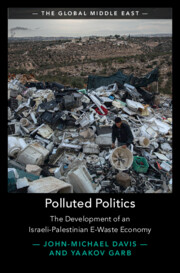
This book describes the politically charged afterlife of Israeli electronics gathered by and processed in a cluster of rural Palestinian villages that has emerged as an informal regional e-waste hub. As with many such hubs throughout the global South, rudimentary recycling practices represent a remarkable entrepreneurial means of livelihood amidst poverty and constraint, that generates staggering damage to local health and the environment, with tensions between these reaching a breaking point. John-Michael Davis and Yaakov Garb draw on a decade of community-based action research with and within these villages to contextualise the emergence, realities and future options of the Palestinian hub within both the geo-political realities of Israel's occupation of the West Bank as well as shifting understandings of e-waste and recycling dynamics and policies globally. Their stories and analysis are a poignant window into this troubled region and a key sustainability challenge in polarized globalized world.
Plebeian Consumers is both a global and local study. It tells the story of how peasants, day workers, formerly enslaved people, and small landholders became the largest consumers of foreign commodities in nineteenth-century Colombia, and dynamic participants of an increasingly interconnected world. By studying how plebeian consumers altered global processes from below, Ana María Otero-Cleves challenges ongoing stereotypes about Latin America's peripheral role in the world economy through the nineteenth century, and its undisputed dependency on the Global North. By exploring Colombians' everyday practices of consumption, Otero-Cleves also invites historians to pay close attention to the intimate relationship between the political world and the economic world in nineteenth-century Latin America. She also sheds light on new methodologies and approaches for studying the material world of men and women who left little record of their own experiences.
Performing Disability in Medieval and Early Modern Britain is a landmark examination of performance history in the medieval and early modern era. Seeking to provide a fact-based assessment of disabled performance, this survey examines the nature and socialization of disabled performers in the medieval and early Tudor periods. Using Records of Early English Drama, literary representations, and targeted histories of disability in the medieval period, this study takes a new and welcome look at the evidence for, and the conceptualization of, 'impairment' as a performative act in the premodern era.
It features discussions on the different societal constructions pertaining to 'disability' (mental incapacity, blindness and deafness, dwarfism, gigantism, etc.), and how the evidence for such conditions was socialized through performance.
Taking an evidence-based and multidisciplinary approach to perceptions of identity and 'othering' in premodern society, this study is certain to appeal to a wide audience, including historians of theatre and performance, disability advocates and theorists, and social historians.
A translation into English of Albert Henry's definitive edition of Adenet le Roi's 'Cleomadés', a story based on a tale from 'The One Thousand and One Nights'.
Palace and pageantry, music and feast contribute to the poetic beauty of the tale, in which the hero Cleomadés and his sweetheart Clarmondine share love of an intensity evoking that of Layla and Majnun, of Isolde and Tristan, of Guinevere and Lancelot. When adventures with a mechanical flying horse separate them disastrously, the lovers undertake epic journeys and devise ingenious ruses to effect their eventual union. In medieval French tradition, their ardour is the consuming passion of the narrative. However, Cleomadés is replete with material on the status of women, of the disabled, of the insane, of religious toleration, of violent behaviour, of duty toward parents. Produced in Paris in 1285 under the patronage of Marie de Brabant, queen of France and daughter of Adenet's first patron, Cleomadés crowns its author's illustrious career.
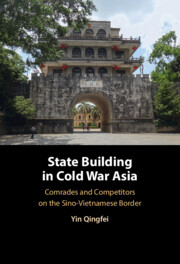
Departing from conventional studies of border hostility in inter-Asian relations, Yin Qingfei explores how two revolutionary states – China and Vietnam – each pursued policies that echoed the other and collaborated in extending their authority to the borderlands from 1949 to 1975. Making use of central and local archival sources in both Chinese and Vietnamese, she reveals how the people living on the border responded to such unprecedentedly aggressive state building and especially how they appropriated the language of socialist brotherhood to negotiate with authorities. During the continuous Indochina wars, state expansion thus did not unfold on these postcolonial borderlands in a coherent or linear manner. Weaving together international, national, and transnational-local histories, this deeply researched and original study presents a new approach to the highly volatile Sino-Vietnamese relations during the Cold War, centering on the two modernising revolutionary powers' competitive and collaborative state building on the borderlands and local responses to it.
En este artículo, estudiamos qué factores individuales y contextuales explican la confianza en los sindicatos latinoamericanos. Utilizando datos de Latinobarómetro (2018–2020), mostramos que la confianza en los sindicatos es mayor entre personas de clase trabajadora y clase media asalariada, así como entre quienes se identifican con la izquierda y confían más en las instituciones políticas. A nivel contextual, la confianza es mayor en países neo-desarrollistas (por ejemplo, Brasil y Uruguay) y menor en países capitalistas tercerizados (por ejemplo, México y países centroamericanos). Contrario a nuestra hipótesis, también encontramos que la confianza en los sindicatos es alta en Chile (un país liberal-rentista con sindicatos débiles) y baja en algunos países redistributivo-rentistas (Venezuela) y neo-desarrollistas (Argentina). Para explicar estos resultados, analizamos cómo la confianza en los sindicatos depende de aspectos contextuales como la informalidad laboral, el desempleo, la inflación, el poder de los partidos de izquierda y el nivel de movilización social.
This second collection of primary sources in English translation ranges across a gamut of places and moments in the early modern Spanish Pacific. It may be used in conjunction with Volume 1 or on its own. While its focus continues to be on the encounters and entanglements that arose in the Spanish Pacific, it more strongly emphasizes the challenges faced by secular and ecclesiastical authorities in their attempts to control a distant colony and reshape its culture, from the complex forms of identify formation in the diverse world of the colonial Philippines to the complexities of inter-imperial rivalry in East and Southeast Asia as a whole. As with Volume 1, each document is introduced by a specialist in the field and includes a list of suggestions for further reading. An introductory essay surveys current work in the field of early modern Spanish Pacific studies and provides a lengthy bibliography.
Datos históricos, lingüísticos y etnográficos muestran que, cuando se utilizan para apoyar la existencia de mercados durante la época prehispánica en el área maya, demandan una interpretación más cautelosa y crítica. En este trabajo se argumenta que fue hasta finales del período posclásico cuando las plazas funcionaron exclusivamente como lugares de mercado de forma cotidiana, ya que antes de ese período las plazas fueron los espacios donde se celebraron numerosos eventos sociales donde también ocurrió un intercambio de mercado, aunque de manera periódica. Además, ciertos términos económicos del lenguaje maya sugieren que transacciones de compra y venta, así como el intercambio por trueque, canje o permuta, pudieron haberse utilizado desde el período preclásico en esos acuerdos económicos. Ambos tipos de transacción forman parte de los intercambios de mercado y, en este artículo, se profundiza en la explicación de cómo pudo haber operado el trueque o canje, tomando en cuenta que, hasta hoy día, la permuta de bienes y/o servicios continúa jugando un papel importantísimo en las transacciones económicas que se realizan en diferentes mercados de México. Un tercer tema analizado en el presente artículo se enfoca en mercaderes quienes concurrían o reunían con otros mercaderes en “puertos francos” o centros de comercio o trasbordo para el intercambio de mercancías, ya sea por trueque o por compra y venta. Estos mercaderes parecen haber sido proveedores de productos que pudieron haber vendido al por mayor a otros mercaderes, o bien, los vendieron a otros comerciantes quienes a su vez realizaron ventas al por menor.
La Milpa, situated in northern Belize, stands out as one of the region's largest archaeological sites, having served as the capital of an ancient Maya city-state. Its significance is indicated by extensive monumental architecture, with the epicenter covering approximately 8.8 ha. The site's corpus of monuments, comprising 23 stelae and several altars, underscores its prominence in northern Belize, rivaling the corpora of sites such as Nim li Punit and Caracol. Despite its remote location, La Milpa has garnered the attention of researchers, particularly since the first modern survey of the site in 1988. Subsequent studies—in particular, that by Nikolai Grube in the 1990s—has provided detailed analyses of the site's corpus of carved monuments. Recent efforts, including epigraphic documentation in 2019, serve to enhance our understanding of La Milpa's dynastic history through traditional epigraphic and computational photographic methods. Utilizing field observations, raking light photography, and 3D photogrammetric models, we have refined previous analyses and provide new insights into the iconography and textual segments of the monuments. Here, we present the results of these recent efforts as well as our new analyses of a selection of monuments.
Dominant historiography in Singapore celebrates Sinnathamby Rajaratnam as one of the city-state’s founding national fathers, and the intellectual superintendent of state-sponsored multiculturalism in what has been characterized as an ‘illiberal democracy’. Little attention, however, has been paid to the extensive periods of Rajaratnam’s life in which he was not in governance with the People’s Action Party, and thus had considerable intellectual autonomy. This article examines the first of these periods—his sojourn in London from 1935 to 1947—marked by connections with overlapping communities of anti-colonial intellectuals drawn from Africa, the Caribbean, and East and South Asia. Close reading of Rajaratnam’s London lifeworld, his published fiction and journalism, and the many annotations he made in the books he read reveals a very different intellectual history than the one that we think we know, and allows us to better understand his lifelong uneasiness with capitalism and racial governmentality. Re-reading Rajaratnam as an autonomous intellectual disembeds his early intellectual life from the story of the developmental state, enabling a focus on the role of affect and form in his writing. The process also offers new insights into Singapore today, where the legacies of state-sponsored multiculturalism are increasingly challenged, and where citizens, residents, and migrants seek new forms of solidarity in and across difference.
Asking the simple question of why writers in one language commented on works composed in another opens up a set of questions and problems for thinking through the relationships between languages and literary cultures and their development over time. The archive of Hindi literature—a set of literary vernaculars that came into use at the end of the fourteenth century and were assimilated into the modern standard language of Hindi during the nineteenth and early twentieth centuries—contains a wealth of commentarial literature, including commentaries in which Hindi writers commented on texts in Sanskrit—the privileged ‘cosmopolitan’ language of literature, science, and scripture. Despite the ubiquity of such commentaries, they have received almost no attention from modern scholars—the result of certain nationalist modes of literary historiography that counterpose Hindi and Sanskrit. This article attempts a preliminary history of commentarial writing in Hindi, outlining the motivations, strategies, and techniques behind different types of commentaries that were composed during the fifteenth to eighteenth centuries. Even this brief survey of commentarial writings reveals not only how writers thought about the relationship between Hindi and Sanskrit—which they understood to be two distinct species or modes of language—but also the techniques and operations through which they created new lexicons and metalanguages in the vernacular of Hindi. These commentaries reflect a type of renaissance that occurred during the sixteenth to eighteenth centuries in northern India, characterised by new types of interpretive and analytical engagements with ‘classical’ works.