To save content items to your account,
please confirm that you agree to abide by our usage policies.
If this is the first time you use this feature, you will be asked to authorise Cambridge Core to connect with your account.
Find out more about saving content to .
To save content items to your Kindle, first ensure no-reply@cambridge.org
is added to your Approved Personal Document E-mail List under your Personal Document Settings
on the Manage Your Content and Devices page of your Amazon account. Then enter the ‘name’ part
of your Kindle email address below.
Find out more about saving to your Kindle.
Note you can select to save to either the @free.kindle.com or @kindle.com variations.
‘@free.kindle.com’ emails are free but can only be saved to your device when it is connected to wi-fi.
‘@kindle.com’ emails can be delivered even when you are not connected to wi-fi, but note that service fees apply.
The fragmentation of the Ilkhanate (1258–1335) midway through the fourteenth century coincided with the publication of several verse histories that were based upon the Blessed History (Tārīkh-i Mubārak) of Rashīd al-Dīn Hamadānī (d. 1318). Seen by many as lacking originality, these texts have often been treated as a new form of literary expression rather than a source of information about key episodes in Ilkhanid history. While it may be true that the verse histories are largely reliant on other sources for information about events that occurred before their time, the choice of what to copy and how it was presented reveals a great deal about changing attitudes to power, religion, and class as the Hülegüid Dynasty weakened and new power brokers appeared. This article will analyse how four verse histories—the Shāhnāmah-yi Chingīzī of Shams al-Dīn Kāshānī (1312–1316), the Ẓafarnāmah of Ḥamdallāh Mustawfī Qazvīnī (1335), the Shāhanshāhnāmah of Aḥmad Tabrīzī (1337), and the Ghāzānnāmah of Nūrī Azhdarī (1361)—reproduced the biography of the prominent Ilkhanid commander, Amīr Nawrūz (d. 1297), to gauge how changing circumstances influenced their view of the past. It will be shown that, although these stories may not offer much in the way of new information about Nawrūz, they do show how writers attempted to reshape their narratives to reinforce values of piety, justice, and loyalty during the Chinggisid crisis of the fourteenth century.
Este artículo analiza la importancia de los movimientos sociales rurales en los procesos de transición de la agricultura convencional hacia prácticas agro-sostenibles. A la luz del concepto de decrecimiento, a través de un análisis comparativo entre cuatro unidades rurales (campamento/asentamientos) con y sin presencia del Movimiento de los Trabajadores Rurales Sin Tierra (MST) en el Gran São Paulo, la investigación reflexiona sobre la presencia de elementos esenciales para los procesos de transición agroecológica en estas comunidades, explorando los datos históricos y constitutivos de las prácticas sociales agrícolas que allí se implementan. Identificando la importancia de los procesos de formación política y técnica, como base para las acciones emprendidas por el MST en el campo de la sostenibilidad, este trabajo analiza la experiencia de los campamentos del Movimiento como loci que forman los sujetos sin tierra, capaces de emprender acciones agro-sostenibles. El presente artículo concluye con reflexiones sobre la relevancia de las teorías del decrecimiento para analizar los procesos de transición agroecológica, así como sobre las medidas educativas ambientales como elementos fundamentales de las políticas públicas destinadas a la construcción de sociedades más igualitarias, autónomas, inclusivas y sostenibles.
Regular remarks of early modern Pashtun authors about the language of their literary works and their ethnicity may be read as an attempt to confirm a distinct place for Pashto writings in the Persophone cultural space and also as an echo of the then-ongoing discourse on Pashtun identity. This article examines the verses of Ashraf Khān Khaṫak (d. 1694) and Kāẓim Khān Khaṫak (d. 1780), who sporadically pondered on artistry and ethnicity as intertwined issues within the framework of the classical genre of self-praise (fakhriyya) and left critical essays on Pashto poetry in the forms of qaṣīda and masnawī. By drawing on Persian poetic traditions, these authors contributed much to the emerging literary criticism in Pashto by sophisticating the discussion of poetic art in their native language. While Ashraf elaborated on the idea of poetry as ‘licit magic’, Kāẓim tried to explain the advantages of the ‘new manner’, which is now commonly known as the ‘Indian style’, for the intellectual progress of both Pashtun litterateurs and their readers. The available details from the poets’ biographies and their occasional statements also indicate that the declarative ethnic self-identification of Pashtun men of letters was intrinsically linked to tribalist ideologies.
Arnold J. Toynbee is considered one of the most crucial figures in the historiography of twentieth-century world history. Although Toynbee’s reputation has significantly waned since the 1950s among many professional historians in the English-speaking world, especially in Britain, some renowned world historians, such as William H. McNeill and Jürgen Osterhammel, have reassessed Toynbee as a pioneering European historian who envisaged world history beyond Eurocentrism since the emergence of the field of global and world history in the 1980s. This article reconsiders the global meaning of Toynbee’s world history beyond this historiographical narrative on Toynbee in the anglophone context by revealing that influential Japanese historians had already found significant potential in his world history in the mid-twentieth century, almost three decades before his reassessment in English-speaking academia. In particular, the article demonstrates how Japanese historians, such as Suzuki Shigetaka, Eguchi Bokurō, and Uehara Senroku, received Toynbee’s idea of world history with various motivations and historical contexts. The research also argues that, despite the differences in their receptive intentions and backgrounds, they interpreted Toynbee as a significant European intellectual who made a self-critique of conventional historical studies in Europe and demonstrated the possibility of rewriting world history beyond Eurocentric assumptions.
This article analyses the collapse of the Mongol empire in the mid- to late fourteenth century (1330s to 1390s) across Eurasia, looking at three facets of the Crisis: environmental—focusing on climate change; epidemiological—exploring the Black Death's impact on the fall of the Chinggisids; and political—mainly the dilution of the Chinggisid charisma due to the halt of expansion. We argue that the main facet of the Crisis was political, and that it derived from the nomadic culture of the Mongols. This was the same political culture that enabled them to establish their huge empire. However, an integral part of this political culture was the need to secure the support of the nomadic elites who were also the backbone of the Mongol army. This proved to be much harder in a reality of excessive natural disasters on the one hand and the erosion of the Chinggisid charisma due to the renunciation of the ideal of world conquest on the other. The result was a growing number of elite groups who contested for power while nominally retaining the framework of the Chinggisid principle, among whom the imperial sons-in-law played a significant part, as well as the shrink and fragmentation of the Chinggisid polities that survived the Crisis.
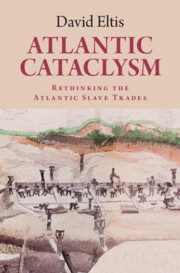
In this comprehensive work, David Eltis offers a two-thousand-year perspective on the trafficking of people, and boldly intervenes in the expansive discussions about slavery in the last half-century. Using new and underexplored data made available by slavevoyages.org, Eltis offers compelling explanations of why the slave trades began and why they ended, and in the process debunks long-held assumptions, including how bilateral rather than triangular voyages were the norm, and how the Portuguese rather than the British were the leading slave traders. Eltis argues that two-thirds of all enslaved people ended up in the Iberian Americas, where exports were most valuable throughout the slave trade era, and not in the Caribbean or the US. Tracing the mass involvement of people in the slave trade business from all parts of the Atlantic World, Eltis also examines the agency of Africans and their experiences in the aftermath of liberation.
The role of editorial staff in shaping early climate change narratives has been underexplored and deserves more attention. During the 1970s, the epistemological underpinnings of the production of knowledge on climate change were contested between scientists who favoured computer-based atmospheric simulations and those who were more interested in investigating the long-term history of climatic changes. Although the former group later became predominant in the Intergovernmental Panel on Climate Change during the 1980s, the latter had a sizable influence over climate discourse during the 1970s. Of these, one of the key popularizers of climate discourse during the 1970s was the British climatologist Hubert Lamb (1913–97). The correspondence between Lamb and journal editors who gatekept and curated different audiences helped craft resonant messages about climate change and its potential effects, and we explore Lamb's interactions with editors of Nature, the UNESCO Courier, The Ecologist and Development Forum in the 1973–4 period. Through understanding how climate change discussion was influenced by editors, we gain an insight into how such narratives had to be adjusted to fit into pre-existing discourses before their importance was more widely established, and how these adjustments helped shape conceptualizations of climate change as a global, human-caused phenomenon and a source of universal threat.
During the Syrian war, many archaeological sites were subjected to systematic looting and destruction, often on a massive scale. Among the casualties of this looting is a colossal basalt statue of a lion that was located at the archaeological site of Ain Dara in northwest Syria. The lion of Ain Dara is a prominent local symbol and of great importance for the collective memory of northwest Syria, especially for the people of Wadi Afrin. Its disappearance will also have serious repercussions for the local economy as it was, in the past, an important tourist attraction. In this article, we investigate how the statue was stolen, why it was stolen, and where it is now. By using the lion statue of Ain Dara as a case study, we aim to shed more general light on the networks responsible for looting and trafficking Syrian antiquities, the factors that have enabled their growth during the conflict, and the role of civil society organizations in reducing their harmful impact on the cultural community of the Syrian people.
The Committees for the Defense of the Revolution (CDR) were one of the most important mass organizations in revolutionary Cuba. During the 1960s, the CDR developed a slew of actions among the Cuban masses, organizing cultural, political, and economic activities that shaped the revolutionary process from below. Through their work, the CDR gave meaning to their own idea of Cuban socialism. In the context of revolutionary upheaval, they were born as mass organizations to organize political surveillance against counterrevolutionary enemies. But the CDR also deployed productive power that sought to improve the lives of fellow Cubans. Organizing workers to solve local problems helped to reimagine the purpose of labor as a resource for public utility. For moments, the CDR even became the state. This article highlights the crucial role of the CDR members in the revolutionary process and their impact on the everyday lives of Cuban people.
What does it mean to write the history of science and the ‘big picture’? In this introduction, I argue that ‘scale’ is a crucial but relatively underutilized concept for addressing this question. Rather than taking ‘big’ as a transparent category, I develop a detailed theoretical account of scale in the history and historiography of science. Following work in political geography, I argue that there is a ‘politics of scale’, one that the sciences have played a key role in shaping. Following work in the philosophy of history, I argue that scale should be thought of in its temporal dimension as well as its more traditional spatial dimension. And following work in cultural anthropology, I argue that scale should be understood as an actor's category just as much as an analytic category. The sciences, it turns out, have been one of the principal means through which scale is made and contested. More broadly, this volume of BJHS Themes encourages a creative and open-ended approach to scale in the history of science.
Los sistemas de pensiones en la encrucijada: Desafíos para la sostenibilidad en América Latina. By Alberto Arenas de Mesa. Santiago: CEPAL, 2019. Pp. 315. Open access.
Power, Alliances, and Redistribution: The Politics of Social Protection for Low-income Earners in Argentina, 1943–2015. By Carl Freidrich Bossert. Berlin: Budrich Academic Press, Opladen, 2021. Pp. 373. Open access.
El porvenir de la vejez: Demografía, empleo y ahorro. By María Amparo Cruz Saco, Bruno Seminario, Favio Leiva, Carla Moreno, and María Alejandra Zegarra. Lima: Universidad del Pacífico, 2021. Pp. 430. S/.52.00 paperback, S/.28.00 ebook.
La desestructuración del sistema peruano de pensiones. By María Amparo Cruz-Saco, Bruno Seminario, Favio Leiva, Carla Moreno, María Alejandra Zegarra. Lima: Universidad del Pacífico, 2020. Pp. 96.
Welfare and Social Protection in Contemporary Latin America. Edited By Gibrán Cruz-Martínez. New York: Routledge, 2019. Pp. 254. $47.65 e-book.
Pensiones de capitalización individual en América Latina: Efectos, reformas, impacto del COVID-19 y propuestas de política. By Carmelo Mesa-Lago. Santiago: CEPAL, 2022. Pp. 104. Open access.
The preponderance and influence of the public sector in the financial system have long been a defining characteristic of Brazilian capitalism. While exerting control over the national credit system through targeted lending policies and other regulatory tools, the federal government also wields significant weight through its state-owned institutions. This article delves into the role of Banco do Brasil (BB), a prominent financial institution and policymaking instrument of the Brazilian government, during the zenith of the developmental state between 1964 and 1982. In contrast to the prevailing focus on financing public spending, this study investigates the international engagements of BB and unveils its participation in managing the country’s external imbalances. BB’s financing proved crucial in bypassing the IMF and reinforcing the government’s commitment to industrialization and developmentalism. The article offers new insights into the forces of Brazil’s state-led finance and the political economy shaping its current banking and regulatory landscape.
The 1814 memoir of missionary wife Harriet Newell was important for awakening the early nineteenth-century American Evangelical imagination on behalf of the burgeoning missionary cause. As young women ‘read the self’ and patterned their lives according to the literary examples they encountered, Newell's memoir used the language of ‘usefulness’ as a powerful theological plot. This article hopes to address the lacuna of scholarship regarding the theological aspects of Newell's writing and how it was those aspects in particular which subsequent generations venerated in the creation of missionary wife memoirs.
Pain into Purpose is a groundbreaking exploration of Argentina's Movimiento Negro (Black resistance movement). Employing a multi-year ethnography of Black political organizing, Prisca Gayles delves deep into the challenges activists face in confronting the erasure and denial of Argentina's Black past and present. She examines how collective emotions operate at both societal and interpersonal levels in social movements, arguing that activists strategically leverage societal and racialized emotions to garner support. Paying particular attention to the women activists who play a crucial role in leading and sustaining Argentina's Black organizations, the book showcases the ways Black women exercise transnational Black feminist politics to transform pain into purpose.
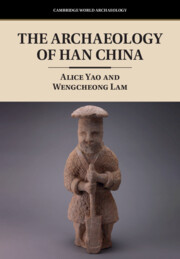
The Han Dynasty, which ruled from 202 BCE to 212 CE, is often taken as a reference point and model for Chinese identity and tradition. Covering a geographical expanse comparable to that of the People's Republic of China, it is foundational to understanding Chinese culture and politics, past and present. This volume offers an up-to-date overview of the archaeology of the Han Empire. Alice Yao and Wengcheong Lam study the period via an interdisciplinary approach that combines textual and archaeological evidence. Exploring the dynamics of empire building in East Asia, Yao and Lam draw on recent archaeological discoveries to recast Western Han imperialism as a series of contingent material projects, including the organization of spatial orders, foodways, and the expansion of communication and ritual activities. They also demonstrate how the archaeology of everyday life offers insights into the impact of social change, and how people negotiated their identities and cultural affiliations as individuals and imperial subordinates.