To save content items to your account,
please confirm that you agree to abide by our usage policies.
If this is the first time you use this feature, you will be asked to authorise Cambridge Core to connect with your account.
Find out more about saving content to .
To save content items to your Kindle, first ensure no-reply@cambridge.org
is added to your Approved Personal Document E-mail List under your Personal Document Settings
on the Manage Your Content and Devices page of your Amazon account. Then enter the ‘name’ part
of your Kindle email address below.
Find out more about saving to your Kindle.
Note you can select to save to either the @free.kindle.com or @kindle.com variations.
‘@free.kindle.com’ emails are free but can only be saved to your device when it is connected to wi-fi.
‘@kindle.com’ emails can be delivered even when you are not connected to wi-fi, but note that service fees apply.
The complexity of tone can only be appreciated through phonological patterning that unveils structures beyond differences in pitch heights and contour profiles. Following an introduction on tone's ability to express lexical and grammatical contrasts, Section 2 explains that phonetically, fundamental frequency profiles make for the best descriptors. From these descriptions, Section 3 explains how, through postulations of subatomic entities that comprise tones, a language's tone inventory can be quite symmetrical. In looking at tone's independence from the syllable and segments, Section 4 establishes tone as an autosegment. Sections 5, 6, and 7 go on to discuss a myriad of complexities where tones interact with one another and with other phonological entities. Here, the authors offer a suggestion on how some of these interactions can be captured within the same analytical umbrella. Section 8 then peeks into tone's phonological properties through music and poetry.
This Element documents the evolution of a research program that began in the early 1960s with the author's first investigation of language change on Martha's Vineyard. It traces the development of what has become the basic framework for studying language variation and change. Interviews with strangers are the backbone of this research: the ten American English speakers appearing here were all strangers to the interviewer at the time. They were selected as among the most memorable, from thousands of interviews across six decades. The speakers express their ideas and concerns in the language of everyday life, dealing with their way of earning a living, getting along with neighbors, raising a family – all matters in which their language serves them well. These people speak for themselves. And you will hear their voices. What they have to say is a monument to the richness and variety of the American vernacular, offering a tour of the studies that have built the field of sociolinguistics.
This Element shows how two social movements, lesbian separatism and Men Going Their Own Way (MGTOW), reflect the changing and complex (anti-)feminist ideologies of their time. The authors outline the historical and political background of those discourses and how they are influencing contemporary gender relations. The materials analysed comprise ten manifestos, which are examined with a combination of data-led discourse analysis and theory-led argumentation analysis. The manifestos are similar in that both sets of authors construct homogenous in-groups and out-groups as well as dichotomies between them. There are some differences though in how this is linguistically realised and who is classified as an out-group. Both groups cast social actors in particular roles and establish ethical norms, but strategic planning and utopias are more prominent among lesbian separatists. Freedom, advantage and authority are central in each group's argumentation, but lesbian separatists also stress humanitarianism while MGTOW focus on financial matters.
By exploring the associations that people make between emotions and colours, looking at how they vary across languages, and exploring the explanations that people provide for the associations that they make, this Element provides insight into the ways in which humans express emotions through colour, and the reasons why they do so. Metaphoric (and metonymic) language and thought play a key role on several levels in the formation of emotion–colour associations, interacting with physical, environmental and social factors. A strong metaphorical connection between the valence of the emotion and the lightness of the colours with which it is associated, and between the intensity of an emotion and the saturation level of the colours with which it is associated is found. However, the strength of this association varies according to the linguistic background of the speaker, and the gender in which the emotion is presented.
This Element provides a systematic overview and synthesis of corpus-based research into collocations focusing on the learning and use of collocations by second language (L2) users. Underlining the importance of collocation as a key notion within the field of corpus linguistics, the text offers a state-of-the-art account of the main findings related to the applications of corpora and corpus-based measures for defining, identifying and analysing collocations as related to second language acquisition. Emphasising the quality of L2 collocation research, the Element illustrates key methodological issues to be considered when conducting this type of corpus analysis. It also discusses examples of pertinent research questions and points to representative studies treated as models of good practice. Aiming at researchers both new and experienced, the Element also points to avenues for future work and shows the relevance of corpus-based analysis for improving the process of learning and teaching of L2 collocations.
Construction Grammar (CxG) has developed into a broad and highly diverse family of approaches that have in common that they see constructions, i.e. form-meaning pairs at various levels of abstraction and complexity, as the basic units of language. This Element gives an overview of the origin and the current state of the art of constructionist approaches, focusing, on the one hand, on basic concepts like the notion of 'constructions', while at the same time offering an in-depth discussion of current research trends and open questions. It discusses the commonalities and differences between the major constructionist approaches, the organization of constructional networks as well as ongoing research on linguistic creativity, multimodality and individual differences. This title is also available as Open Access on Cambridge Core.
The Fourth Industrial Revolution (4IR) describes the technological transformations that are incrementally, but radically, changing everyday life practices. Like previous industrial revolutions, technological advancements are so pervasive and impactful that everything from an individual's sense of identity and understanding of the world to the economic success of an entire industry are profoundly altered by 4IR innovation. Despite the significance of 4IR transformations, little applied linguistic research has examined how these emergent technologies collectively transform human behavior and communication. To this end, this Element identifies key 4IR issues and outlines how they relate to applied linguistic research. The Element argues that applied linguists are in an excellent position to contribute to such research, as expertise in language and communication is critical to understanding 4IR issues. However, to make interdisciplinary and wider societal contributions, applied linguists must rethink how 4IR technologies can be harnessed to more efficiently publish and disseminate timely research.
To encompass the history of Arabic practice of translation, this Element re-defines translation as combination, a process of meaning-remaking that synthesizes multi reality. The Arabic translators of the Middle Ages did not simply find an equivalent to the source text but combined its meaning with their own knowledge and experience. Thus, part of translating a text was to add new thought to it. It implies a complex process that Homi Bhabha calls “cultural hybridity,” in which the target text combines knowledge of the source text with knowledge from the target culture, and the source text is different from the target text “without assumed or imposed hierarchy.” Arabic translations were a cultural hybridity because the translators added new thought to their target texts, and because saw their language as equal to the Greek.
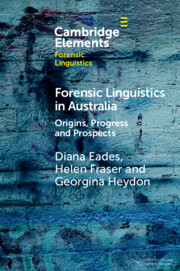
This Element presents an account of forensic linguistics in Australia since the first expert linguistic evidence in 1959, through early work in the 1970s-1980s, the defining of the discipline in the 1990s, and into the current era. It starts with a consideration of some widespread misconceptions about language that affect the field and some problematic ideologies in the law, which underly much of the discussion throughout the Element. The authors' report of forensic linguists' work is structured in terms of the linguistic, interactional and sociocultural contexts of the language data being analysed, whether in expert evidence, in research, or in practical applications of linguistics in a range of legal settings. The Element concludes by highlighting mutual engagement between forensic linguistic practitioners and both the judiciary and legal scholars, and outlines some of the key factors which support a critical forensic linguistics approach in much of the work in the authors' country.
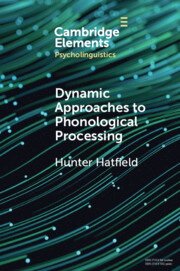
Natural language occurs in time. Events happen earlier, later, or simultaneously with other events; however, this temporal dimension is often downplayed or overlooked. This Element introduces readers with a background in structural linguistics to dynamic approaches to phonological processing. It covers models of serial order, speech production and speech perception, with special attention to how they can enhance one another. The work then asks whether dynamic approaches have the potential to change how we think of phonological structure. Key ideas discussed include phonemes and auditory targets, control mechanisms creating structure, and the shape of phonological representations in a dynamic context. The work should function as a bridge for those with linguistic questions who want to learn answers derived from the study of speech as a dynamic system.
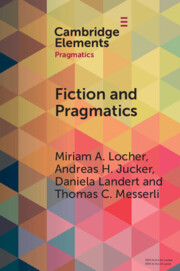
This Element outlines current issues in the study of the pragmatics of fiction. It starts from the premise that fictional texts are complex and multi-layered communicative acts which deserve attention in pragmatic research in their own right, and it highlights the need to understand them as cultural artefacts rich in possibilities to explore pragmatic effects and pragmatic theorising. The issues covered are (1) the participation structure of fictional texts, (2) the performance aspect of fictional texts, (3) the interaction between readers and viewers and the fictional texts, as well as (4) the pragmatic effects of drawing on indexical linguistic features for evoking ideologies in characterisation. This title is also available as Open Access on Cambridge Core.
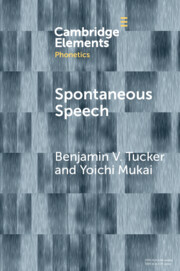
Phonetic research investigates how speakers and listeners use speech to convey messages. The speech produced to encode a particular message can vary wildly. Understanding and explaining the phonetic variability embodied in this example is one of the main motivations for this Element. Why and how do speakers produce this variability and how does it impact listeners? This Element focuses on spontaneous speech and its relationship with phonetic research. The authors discuss background and describe research investigating the variation that occurs when speakers and listeners are engaged in spontaneous, conversational speech. As a result, this Element explores aspects of spontaneous speech from the phonetic perspective using both production and perception areas of phonetics. This Element focuses on spontaneous speech and its relationship with phonetic research, exploring aspects of spontaneous speech from the phonetic perspective using both production and perception areas of phonetics.
This Element provides an overview of research focusing on language teaching practices for young multilingual learners in primary classrooms in English-speaking contexts. The term 'young multilingual learner' refers to primary school children, with ages ranging from approximately 5 to 12 years old at various English language proficiency levels. Pedagogy-informed research studies conducted in K-5 classrooms are used to develop research-informed pedagogies for young multilingual learners in primary classrooms. The authors use the notion of culturally sustaining teaching practices to provide examples from pedagogy-informed research studies. The focus on early (K-3) and intermediate (4-5) grades provides a range of illustrations of such practices. The Element concludes with implications for teacher education and the preparation of teachers of young multilingual learners.
Moving beyond two main concepts of 'interlingual' and 'intralingual' discrimination, this Cambridge Element addresses the concept of 'translingual discrimination', which refers to inequality based on transnational migrants' specific linguistic and communicative repertoires that are (il)legitimized by the national order of things. Translingual discrimination adds intensity to transnational processes, with transnational migrants showing two main characteristics of exclusion - 'translingual name discrimination' and its associated elements such as 'name stigma' and 'name microaggression'; and 'translingual English discrimination' and its elements such as 'accentism', 'stereotyping' and 'hallucination'. The accumulation of these characteristics of translingual discrimination causes negative emotionality in its victims, including 'foreign language anxiety' and 'translingual inferiority complexes'. Consequently, transnational migrants adopt coping strategies such as 'CV whitening', 'renaming practices', 'purification', and 'ethnic evasion' while searching for translingual safe spaces. The Element concludes with the social and pedagogical implications of translingual discrimination in relation to transnational migrants.
This Element uses data from the Springville Project to explore how the functions of the inherited forms invariant be (from English sources) and zero (from creolization) have transformed during the twentieth century. Originally just alternative present tense copula/auxiliary forms, both features developed into aspectual markers – invariant be to mark durativity/habituality and zero to mark nonstativity. The motivation for these innovations were both socio-cultural and linguistic. The Great Migration and its consequences provided a demographic and socio-cultural context within which linguistic innovations could develop and spread. The mismatch between form and function within the present tense copula/auxiliary system and the grammatical ambiguities that affected both invariant be and zero provided linguistic triggers for this reanalysis. When taken together, the evolution of these forms illustrates how restructured linguistic subsystems (and eventually new varieties) emerge out of the interplay between inheritance and innovation.
Does the language we speak affect the way we think? This Element provides a synthesis of contemporary research on the interplay between language and cognition in speakers of two or more languages and examines variables deemed to impact bilingual acquisition and conceptualization of language-specific thinking patterns during L2 learning. An overview of different yet interrelated studies is offered across a variety of conceptual domains to illustrate different approaches and key variables. The comparison of monolingual and bilingual data demonstrates the highly integrative nature between L2 learning and the changing of one's entire cognitive outlook in L2 speakers. This Element makes relevant connections between language learning and bilingual cognition, aiming to shed new light on how learners acquire conceptual distinctions of the target language(s). It also raises theoretical and pedagogical issues that encourage teachers to reflect upon how to incorporate recent advances in language-and-cognition research with aspects of L2 teaching.
Recommend this
Email your librarian or administrator to recommend adding this to your organisation's collection.