Refine search
Actions for selected content:
4437 results in Semantics and pragmatics
Contents
-
- Book:
- The Syntax of Portuguese
- Published online:
- 30 March 2023
- Print publication:
- 06 April 2023, pp v-vi
-
- Chapter
- Export citation
1 - Introduction
-
- Book:
- The Syntax of Portuguese
- Published online:
- 30 March 2023
- Print publication:
- 06 April 2023, pp 1-4
-
- Chapter
- Export citation
7 - Affirmation, Negation, and yes/no Questions and Answers
-
- Book:
- The Syntax of Portuguese
- Published online:
- 30 March 2023
- Print publication:
- 06 April 2023, pp 369-454
-
- Chapter
- Export citation
Copyright page
-
- Book:
- The Syntax of Portuguese
- Published online:
- 30 March 2023
- Print publication:
- 06 April 2023, pp iv-iv
-
- Chapter
- Export citation
Index
-
- Book:
- The Syntax of Portuguese
- Published online:
- 30 March 2023
- Print publication:
- 06 April 2023, pp 502-508
-
- Chapter
- Export citation
6 - Null Objects and Null Possessors
-
- Book:
- The Syntax of Portuguese
- Published online:
- 30 March 2023
- Print publication:
- 06 April 2023, pp 331-368
-
- Chapter
- Export citation
2 - The Pronominal System
-
- Book:
- The Syntax of Portuguese
- Published online:
- 30 March 2023
- Print publication:
- 06 April 2023, pp 5-56
-
- Chapter
- Export citation
References
-
- Book:
- The Syntax of Portuguese
- Published online:
- 30 March 2023
- Print publication:
- 06 April 2023, pp 464-500
-
- Chapter
- Export citation
8 - Conclusion
-
- Book:
- The Syntax of Portuguese
- Published online:
- 30 March 2023
- Print publication:
- 06 April 2023, pp 455-463
-
- Chapter
- Export citation
Tables
-
- Book:
- The Syntax of Portuguese
- Published online:
- 30 March 2023
- Print publication:
- 06 April 2023, pp vii-ix
-
- Chapter
- Export citation
4 - Null Subjects
-
- Book:
- The Syntax of Portuguese
- Published online:
- 30 March 2023
- Print publication:
- 06 April 2023, pp 142-229
-
- Chapter
- Export citation
Abbreviations
-
- Book:
- The Syntax of Portuguese
- Published online:
- 30 March 2023
- Print publication:
- 06 April 2023, pp xii-xiv
-
- Chapter
- Export citation
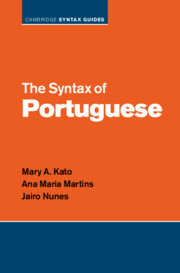
The Syntax of Portuguese
-
- Published online:
- 30 March 2023
- Print publication:
- 06 April 2023
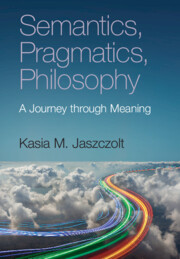
Semantics, Pragmatics, Philosophy
- A Journey through Meaning
-
- Published online:
- 22 March 2023
- Print publication:
- 16 March 2023
-
- Textbook
- Export citation
Index
-
- Book:
- Semantics, Pragmatics, Philosophy
- Published online:
- 22 March 2023
- Print publication:
- 16 March 2023, pp 399-414
-
- Chapter
- Export citation
Stage 2 - Word Meaning and Concepts
-
- Book:
- Semantics, Pragmatics, Philosophy
- Published online:
- 22 March 2023
- Print publication:
- 16 March 2023, pp 18-43
-
- Chapter
- Export citation
Stage 9 - Conclusion: The Future of Meaning?
-
- Book:
- Semantics, Pragmatics, Philosophy
- Published online:
- 22 March 2023
- Print publication:
- 16 March 2023, pp 360-363
-
- Chapter
- Export citation
Abbreviations and Symbols
-
- Book:
- Semantics, Pragmatics, Philosophy
- Published online:
- 22 March 2023
- Print publication:
- 16 March 2023, pp xx-xxiv
-
- Chapter
- Export citation
References
-
- Book:
- Semantics, Pragmatics, Philosophy
- Published online:
- 22 March 2023
- Print publication:
- 16 March 2023, pp 364-398
-
- Chapter
- Export citation
Stage 6 - Conveying Information
-
- Book:
- Semantics, Pragmatics, Philosophy
- Published online:
- 22 March 2023
- Print publication:
- 16 March 2023, pp 167-235
-
- Chapter
- Export citation
