To save content items to your account,
please confirm that you agree to abide by our usage policies.
If this is the first time you use this feature, you will be asked to authorise Cambridge Core to connect with your account.
Find out more about saving content to .
To save content items to your Kindle, first ensure no-reply@cambridge.org
is added to your Approved Personal Document E-mail List under your Personal Document Settings
on the Manage Your Content and Devices page of your Amazon account. Then enter the ‘name’ part
of your Kindle email address below.
Find out more about saving to your Kindle.
Note you can select to save to either the @free.kindle.com or @kindle.com variations.
‘@free.kindle.com’ emails are free but can only be saved to your device when it is connected to wi-fi.
‘@kindle.com’ emails can be delivered even when you are not connected to wi-fi, but note that service fees apply.
Chapter 3, “Invoking the Name of Mary,” reconstructs the resonance of Marian invocation for charm participants of the late-Saxon period. While the elaborate monastic cult of the Virgin had not yet spread into popular devotion at this time, the Church urged Christians to trust Mary with their needs. It taught the people that she would advocate for them in response to their prayers. Church festivals, liturgy, homily, and poetry expose laity to narratives about Mary’s intervention on behalf of the faithful. The Mother of Christ could intercede with her son; the Queen of Heaven and Hell could command saints and overcome the devil. Charms that invoke Mary call on her by name, relate stories about the Virgin’s miraculous bearing of Christ, and prescribe her Magnificat or Masses said in her honor. Through the operation of charms’ semiotic systems, the Virgin known from vernacular and ecclesiastical traditions becomes immanent for the charm audience. By identifying the ways in which Mary is invoked, this chapter demonstrates Mary’s contributions to remedies for acute physical and spiritual conditions.
The Introduction begins by quoting a lengthy charm from Lacnunga and asks if there is rhyme and reason for its many formulas. It answers that question by establishing that comprehensive verbal strategies operate in early English charms. These take the form of unified sets of incantations that comprise the four verbal medicines identified in the book. Two involve the invocation of liturgy, a notion introduced here. The preface places folk tradition within the context of popular Christianity and considers charms as practical remedies for disease. Charm efficacy may be attributed to word-power, the skill of healers, prayer, and supplication. After examining Anglo-Saxon theories of disease the preface surveys what we know about medical practitioners at the time. It defines terminology, presents the corpus of charms, and summarizes methodology. Finally, it describes the performance-based analytical framework that will be used for the study of charms’ oral performance.
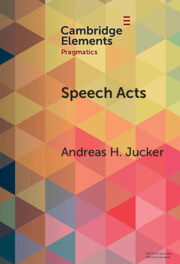
This Element outlines current issues in the study of speech acts. It starts with a brief outline of four waves of speech act theory, that is, the philosophical, the experimental, the corpus-based and the discursive approaches. It looks at some of the early experimental and corpus-based methods and discusses their more recent developments as a background to the most important trends in current speech act research. Discursive approaches shift the focus from single utterances to interaction and interactional sequences. Multimodal approaches show that the notion of 'speech act' needs to be extended in order to cover the multimodality of communicative acts. And diachronic approaches focus on the historicity of speech acts. The final section discusses some open issues and potential further developments of speech act research.
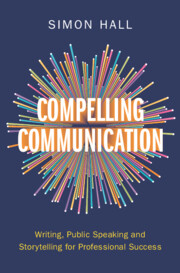
Do your communication skills let you down? Do you struggle to explain and influence, persuade and inspire? Are you failing to fulfil your potential because of your inability to wield words in the ways you'd like? This book has the solution. Written by a University of Cambridge Communication Course lead, journalist and former BBC broadcaster, it covers everything from the essentials of effective communication to the most advanced skills. Whether you want to write a razor sharp briefing, shine in an important presentation, hone your online presence, or just get yourself noticed and picked out for promotion, all you need to know is here. From writing and public speaking, to the beautiful and stirring art of storytelling, and even using smartphone photography to help convey your message, this invaluable book will empower you to become a truly compelling communicator.
For many, public speaking is nothing less than terrifying. But the art is indispensable if you want to get on in life, and can be mastered by learning certain techniques. These include how to start and end a talk, effective structures and the use of slides and data, as well as incorporating your character to help make presentations come alive.
Strategic communication is the art of using your writing, presenting, storytelling, online and media skills to achieve your aims. To do so effectively you need to be clear on your goals, and must draw up a plan which identifies your key audiences, how to reach them and when. This chapter also looks at the dark arts of dealing with difficult news, as well as strategies for handling a crisis if you’re ever unfortunate enough to suffer one.
Media coverage can help get your message across to millions, but journalists require careful handling. Here we discover how to write a news release which attracts the attention of a reporter, and ways to make sure a media interview works to your advantage. The chapter also examines how to deal with difficult questions, what to wear for an appearance in the news, and reveals the dirty tricks which some journalists use.
Storytelling is the magic ingredient for ensuring your messages make an impact and are remembered. But, to work well, stories require certain ingredients, including a classic narrative structure, jeopardy, pace and the use of character in telling them.
For maximum effect, stories should be deployed strategically. That requires understanding the art of persuasion, the stages of a successful story, scene setting, and how to use the stories of others to illustrate important points. But by far the most powerful of all is knowing and using the stories which only you can tell.
Advanced writing skills can make a piece of content truly excellent. Such tricks of the wordsmith’s trade include specialist structures, ensuring your content is inclusive and appealing to all, elegantly laid out, and efficiently edited.
The best public speakers use a series of tricks to enchant an audience. They are revealed in this chapter and include: incorporating interactions to make a crowd feel part of the performance, signposting to continually refresh interest, the showbusiness of magic moments for truly memorable talks, the use of commanding body language, how to deal with nerves and preparing for the question and answer session.