To save content items to your account,
please confirm that you agree to abide by our usage policies.
If this is the first time you use this feature, you will be asked to authorise Cambridge Core to connect with your account.
Find out more about saving content to .
To save content items to your Kindle, first ensure no-reply@cambridge.org
is added to your Approved Personal Document E-mail List under your Personal Document Settings
on the Manage Your Content and Devices page of your Amazon account. Then enter the ‘name’ part
of your Kindle email address below.
Find out more about saving to your Kindle.
Note you can select to save to either the @free.kindle.com or @kindle.com variations.
‘@free.kindle.com’ emails are free but can only be saved to your device when it is connected to wi-fi.
‘@kindle.com’ emails can be delivered even when you are not connected to wi-fi, but note that service fees apply.
Law in the United States, Second Edition, is a concise presentation of the salient elements of the American legal system designed mainly for jurists of civil law backgrounds. It focuses on features of American law likely to be least familiar to jurists from other legal traditions, such as American common law, the federal structure of the U.S. legal system, and the American constitutional tradition. The use of comparative law technique permits foreign jurists to appreciate the American legal system in comparison with legal systems with which they are already familiar. Chapters in the second edition also cover such topics as American civil justice, criminal law, jury trial, choice of laws and international jurisdiction, the American legal profession, and the influence of American law in the global legal order.
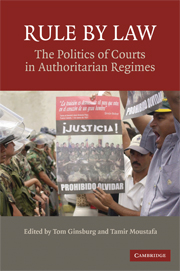
Scholars have generally assumed that courts in authoritarian states are pawns of their regimes, upholding the interests of governing elites and frustrating the efforts of their opponents. As a result, nearly all studies in comparative judicial politics have focused on democratic and democratizing countries. This volume brings together leading scholars in comparative judicial politics to consider the causes and consequences of judicial empowerment in authoritarian states. It demonstrates the wide range of governance tasks that courts perform, as well as the way in which courts can serve as critical sites of contention both among the ruling elite and between regimes and their citizens. Drawing on empirical and theoretical insights from every major region of the world, this volume advances our understanding of judicial politics in authoritarian regimes.
For the 2010 Hamlyn Lectures, Alan Paterson explores different facets of three key institutions in a democracy: lawyers, access to justice and the judiciary. In the case of lawyers he asks whether professionalism is now in terminal decline. To examine access to justice, he discusses past and present crises in legal aid and potential endgames and in relation to judges he examines possible mechanisms for enhancing judicial accountability. In demonstrating that the benign paternalism of lawyers in determining the public good with respect to such issues is no longer unchallenged, he argues that the future roles of lawyers, access to justice and the judiciary will only emerge from dialogues with other stakeholders claiming to speak for the public interest.
With the forces of globalization as a backdrop, this casebook develops labor and employment law in the context of the national laws of nine countries important to the global economy - the US, Canada, Mexico, UK, Germany, France, China, Japan and India. These national jurisdictions are highlighted by considering international labor standards promulgated by the International Labor Organization as well as the rulings and standards that emerge from two very different regional trade arrangements - the labor side accord to NAFTA and the European Union. Across all these different sources of law, this book considers the law of individual employment, collective labor law dealing with unionization as well as the laws against discrimination, the laws protecting privacy and the systems used to resolve labor and employment disputes. This is the first set of law school course materials in English covering international and comparative employment and labor law.
This thorough appraisal of competition law and policy from an international and comparative perspective covers the role of different international organisations active in the area, the significance of multinational enterprises and, in particular, the differences between US and EU systems. Taking examples from regions such as Africa, the Middle East and Asia, Maher M. Dabbah looks at the law and policy in developing countries and at a regional level, the internationalisation of competition law and the doctrines of extraterritoriality, bilateral cooperation and multilateral cooperation as well as the relationship between competition and trade policy. The book should prove useful to anyone who is interested in gaining an insight into the international dimension of competition law and policy. It is written in a language and style which make such a complex topic both possible to understand and enjoyable.
Although the trust is generally seen as a creation of the common law tradition, modern civilian systems are increasingly interested in incorporating the trust institution. This collection of essays explores multiple civilian experiences with the trust. The reform of Quebec's trust institution attracted worldwide attention in 1994. Louisiana's 1964 Trust Code stands in an uneasy relationship with its general law of property. Israel has had a fascinating pluralist experience of multiples trusts. The People's Republic of China passed a Trust Law in 2001 and the development of the trust in this important economy is a matter of great interest and some controversy. France adopted a trust in 2007, and in Italy, trusts can be created through the choice of foreign governing law, under the Hague Trusts Convention. The concluding chapter draws conclusions from all the essays and sets out challenges for future research in the comparative law of trusts.
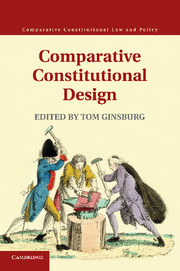
This volume brings together essays by many of the leading scholars of comparative constitutional design from many perspectives to collectively assess what we know - and do not know - about the design process as well as particular institutional choices concerning executive power, constitutional amendment processes and many other issues. Bringing together positive and normative analysis, this volume provides state of the art in a field of growing theoretical and practical importance.
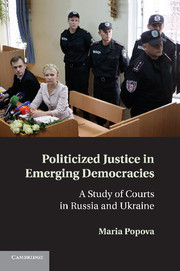
Why are independent courts rarely found in emerging democracies? This book moves beyond familiar obstacles, such as an inhospitable legal legacy and formal institutions that expose judges to political pressure. It proposes a strategic pressure theory, which claims that in emerging democracies, political competition eggs on rather than restrains power-hungry politicians. Incumbents who are losing their grip on power try to use the courts to hang on, which leads to the politicization of justice. The analysis uses four original datasets, containing 1,000 decisions by Russian and Ukrainian lower courts from 1998 to 2004. The main finding is that justice is politicized in both countries, but in the more competitive regime (Ukraine) incumbents leaned more forcefully on the courts and obtained more favorable rulings.
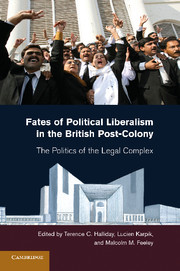
What explains divergences in political liberalism among new nations that shared the same colonial heritage? This book assembles exciting original essays on former colonies of the British Empire in South Asia, Africa and Southeast Asia that gained independence after World War II. The interdisciplinary country specialists reveal how inherent contradictions within British colonial rule were resolved after independence in contrasting liberal-legal, despotic and volatile political orders. Through studies of the longue durée and particular events, this book presents a theory of political liberalism in the post-colony and develops rich hypotheses on the conditions under which the legal complex, civil society and the state shape alternative postcolonial trajectories around political freedom. This provocative volume presents new perspectives for scholars and students of postcolonialism, political development and the politics of the legal complex, as well as for policy makers and publics who struggle to construct and defend basic legal freedoms.
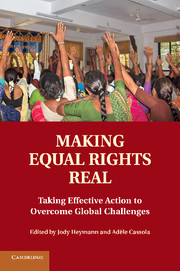
Making Equal Rights Real brings together leaders from around the world who have been working effectively to increase equal economic and social rights, ranging from rights in the workplace to property ownership and education. The contributors tell the detailed stories of effective approaches to implementing equal rights for racial and ethnic minorities in North America, women in Africa, children in the Middle East and sexual minorities in Asia. They also describe approaches taken around the world to increase equal rights for people living in poverty, for those living with disabilities and for all people seeking the information they need to hold their government accountable for implementing everyone's rights. The book addresses what can be done by policymakers, civil society, non-governmental organizations, lawyers seeking to implement equal rights legislation and advocates working in the community, as well as those developing constitutions and negotiating international agreements.