To save content items to your account,
please confirm that you agree to abide by our usage policies.
If this is the first time you use this feature, you will be asked to authorise Cambridge Core to connect with your account.
Find out more about saving content to .
To save content items to your Kindle, first ensure no-reply@cambridge.org
is added to your Approved Personal Document E-mail List under your Personal Document Settings
on the Manage Your Content and Devices page of your Amazon account. Then enter the ‘name’ part
of your Kindle email address below.
Find out more about saving to your Kindle.
Note you can select to save to either the @free.kindle.com or @kindle.com variations.
‘@free.kindle.com’ emails are free but can only be saved to your device when it is connected to wi-fi.
‘@kindle.com’ emails can be delivered even when you are not connected to wi-fi, but note that service fees apply.
Photographs of a single shark specimen (1040 mm in total length) caught in the Oyodo River estuary, Miyazaki Prefecture, Kyushu, Japan, by a recreational angler and uploaded to the social networking service Facebook, were identified as a juvenile specimen of the bull shark Carcharhinus leucas. The photographic record, now deposited in the Kanagawa Prefectural Museum of Natural History collection, represents the northernmost record of this species in the western Pacific Ocean. Although C. leucas is known to utilize primarily tropical estuarine habitats as nursery grounds, a few reports exist regarding the utilization of subtropical and warm-temperate latitude estuaries, as in this case. From the perspectives of species conservation and shark-bite mitigation in warm-temperate latitudes, further information on C. leucas occurrence around its northern distribution limit is required.
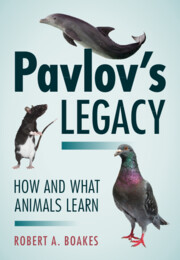
Pavlov claimed that his experiments with dogs would transform the study of psychology and the treatment of mental illness. His work inspired researchers to study how animals learn to traverse mazes, avoid shocks, or press levers to obtain food, and also to compare the learning and cognitive abilities of different species, ranging from apes and dolphins to rats and pigeons. This book describes five decades of research into animal learning and comparative psychology, examining Pavlov's influence on this research and discoveries made by scientists who accepted many of his claims, while others looked for evidence to reject them. Drawing together diverse strands of research and providing historical and biographical information to bring the details to life, this is an ideal resource for graduate students and researchers in behavioural neuroscience, as well as for anyone in adjacent fields with an interest in learning theory.
This chapter begins by noting that, while psychologists and neuroscientists have almost always studied learning in a laboratory setting, other scientists - ethologists - have mainly studied learning in more natural environments. One form of early learning, imprinting, was studied by the Austrian ethologist, Konrad Lorenz. The chapter describes his claims about this phenomenon and how researchers that were more experimentally oriented than Lorenz tested these claims and rejected many of them. The interaction between ethologists and learning theorists led to studies of how species differed in regard to constraints on what they can learn, a topic that is covered in the second half of Chapter 6. This describes research on topics such a sign- and goal-tracking, conditioning of fear reactions and the work of Garcias group on taste-aversion learning.
This chapter describes research in comparative psychology. Many of these studies aimed to show that species differ in their learning and problem-solving abilities. The chapter starts with studies that attempted to teach a language to chimpanzees and examined their apparently remarkable ability to learn by imitation. The chapter then describes studies of complex learning in monkeys, focusing on the work of Harlow, before moving on to dolphins. The attempt by Bitterman to demonstrate differences between rat-like and fish-like learning abilities is followed by an account of experiments that used matching-to-sample tasks in pigeons and compared the learning abilities of corvids with those of pigeons.
This chapter starts by describing key findings from the late 1960s - blocking, contingency effects, and relative cue validity - that were obtained by Leon Kamin, Bob Rescorla, and Allan Wagner from experiments on discrimination learning and fear conditioning. These led to a major shift in the way learning by animals was studied. Instead of concentrating on how their behavior changed, it took such changes as an index of what associations the animals had formed. An important example of this shift was the body of experiments on second-order conditioning and related topics carried out by Rescorla and his students. A number of theories of associative learning that were developed in the 1970s, notably the Rescorla-Wagner theory and Wagners subsequent SOP model, have remained influential for over 50 years. In the early 1980s an important distinction was drawn between actions, which are sensitive to their consequences, and automatic habits.
This chapter describes the life of B.F. Skinner, a behaviorist who remains as famous as Pavlov. It describes his development of the operant chamber - widely known as a Skinner box - and that of procedures used to control events within the chamber. These enabled complex experiments to be run, not only by Skinnerians who agreed with Skinners radical views on science and on the pre-eminent role of operant conditioning in human life, but also by those without any sympathy for such views. The chapter also traces the expansion of the movement, the Experimental Analysis of Behavior, founded by Skinner and his close friend and associate, Fred Keller, both within and beyond the United States. It notes the decline of Skinners influence following the cognitive revolution in American psychology; for example, challenges to his claim that human conditioning can occur without awareness.
This chapter describes Pavlovs life and major research achievements. It also follows research on one of the topics he was the first to investigate. Pavlov believed that his experiments on dogs contributed to understanding various aspects of human psychology. One such topic was experimental neurosis. The chapter describes how his approach influenced other researchers and eventually led to what has become a standard tool used by many clinical psychologists. Despite such interests, Pavlov always described himself as a physiologist and maintained that the main point of his experiments was to obtain greater understanding of the brain. Yet, as described in this chapter, his concept of how the brain works ignored mainstream developments in neurophysiology and was a major target for a critical admirer, the Polish scientist, Jerzy Konorski.
This chapter focuses on attempts to understand avoidance learning. The original experiments were first performed in the St. Petersburg laboratory of Pavlovs arch-rival, Vladimir Bekhterev. Researchers there arranged that, if when a signal was given, a dog failed to flex a leg, a shock would be delivered; if the leg was flexed in time, the shock was avoided. In general, these dogs learned quickly to flex the target leg as soon as the signal was given. It took over 30 years before a widely accepted explanation was developed of how the absence of an event could promote learning. A key contribution was the two-factor theory developed by Hobart Mowrer. His studies of avoidance learning and those that followed, mainly by Richard Solomon and his students, laid the foundation for breakthroughs in the study of associative learning in the late 1960s. The chapter also describes research on punishment.
This chapter describes how the question of how animals perceive their world led to developments in discrimination training. These studies included ones that, for example, tested whether a dog, cat, or rat could learn to discriminate between two stimuli that differed only in color. Developments in the study of discrimination learning became increasingly theoretical. For example, one important issue had to do with the possible role of attention in discrimination learning. Rejection of this possibility by the highly influential behaviorist, Kenneth Spence, led to his important continuity theory. In turn, studies of phenomena such as transfer-along-a continuum and the overtraining-reversal-effect in the 1950s and 1960s by a series of researchers, including Stuart Sutherland and Nick Mackintosh in the UK, led to a revival of interest in selective attention in discrimination learning. The final section describes studies of stimulus generalization and behavioral contrast.
This chapter centers on the work of Hulls arch critic, Edward Tolman. He was convinced that the Pavlov-inspired approach to the study of learning was far too narrow. Using a variety of mazes, Tolman and his students obtained evidence that their rats could anticipate events - rather just make conditioned responses - and could learn about the spatial properties of environments they were placed in. In the late 1960s various researchers - most with little connection to Tolman - discovered the important role of the context in which an animal was conditioned. In the 1970s experiments by neuroscientists on the function of the hippocampus led to a revival of interest in spatial learning and renewed appreciation of Tolmans suggestion that animals form representations - maps - of their environment.
This chapter describes the theories of Clark Hull, who had an enormous influence on American psychology from the time he first wrote about - and reinterpreted - Pavlovs work in the early 1930s to well into the 1960s. Hulls ambition was to develop a general theory of learning and motivation based on the development of habits - as studied mainly in rats - that would provide psychology with the equivalent of Newtons contribution to physics. His vision inspired some of the brightest and most productive researchers into animal learning in the 1950s and 1960s. Important topics that the neo-Hullians studied included the partial reinforcement extinction effect and conditioning of visceral responses.
Cephalopod populations have expanded over recent decades, both numerically and geographically. These expansions are particularly noteworthy because cephalopods are a taxon of quickly reproducing, high-metabolic rate predators that can have disproportionate impacts on naïve ecosystems. We report a new occurrence of an octopus species in 11.6 m of water in Burrows Bay, Washington, USA (coastal northeast Pacific Ocean). These newly identified individuals have several characteristics that clearly differentiate them from either of the two known octopus species that occur in shallow water within the area: Octopus rubescens and Enteroctopus dofleini. Instead, specimens superficially resemble Muusoctopus leioderma, a species which is found in the geographic area, but has never been reported at depths less than 70 m. Octopuses were collected for morphological and genetic comparison to known octopus species, focusing on other nominal Muusoctopus species. Genetic comparisons were conducted using three mitochondrial loci (12S ribosomal RNA, cytochrome oxidase subunit III, and cytochrome b) sequenced for the octopus along with two M. leioderma museum specimens, including the species' neotype. Observation of octopus behaviour revealed a unique burrowing behaviour. Morphology of the octopus found in Burrows Bay largely coincides with M. leioderma, with a few notable differences. Phylogenetic analysis revealed that Burrows Bay octopus forms a monophyletic clade with the M. leioderma neotype, but also suggested that M. leioderma is more closely related to Octopus californicus than to the other members of the genus Muusoctopus. These octopuses are thus attributed to M. leioderma but the generic placement of the species should be reviewed.
The family Syngnathidae contains 52 seahorse species, which inhabit a range of habitats including coral reefs, seagrass beds and coastal estuaries. The seahorse Hippocampus kelloggi is among the most widely distributed species, occurring from Indo-West Pacific to East Africa. This species was included in the IUCN Red List in 2017 and is classified as vulnerable according to A2cd criteria. In this study, three specimens collected from the central coast of Mozambique were investigated and based on morphology and mitochondrial subunit of cytochrome oxidase I (COI) were identified as H. kelloggi. These results confirmed for the first time the extensive range of occurrence of H. kelloggi on the central coast of Mozambique.