To save content items to your account,
please confirm that you agree to abide by our usage policies.
If this is the first time you use this feature, you will be asked to authorise Cambridge Core to connect with your account.
Find out more about saving content to .
To save content items to your Kindle, first ensure no-reply@cambridge.org
is added to your Approved Personal Document E-mail List under your Personal Document Settings
on the Manage Your Content and Devices page of your Amazon account. Then enter the ‘name’ part
of your Kindle email address below.
Find out more about saving to your Kindle.
Note you can select to save to either the @free.kindle.com or @kindle.com variations.
‘@free.kindle.com’ emails are free but can only be saved to your device when it is connected to wi-fi.
‘@kindle.com’ emails can be delivered even when you are not connected to wi-fi, but note that service fees apply.
The term eutrophication broadly refers to the enrichment of aquatic systems by inorganic plant nutrients (Mason, 1991; Wetzel, 2001). Lake eutrophication occurs when nutrient supplies, usually phosphorus (P) and nitrogen (N), are elevated over rates that occur in the absence of any system perturbation, and results in increased production. Causes of eutrophication include human (anthropogenic eutrophication) and non-human (natural eutrophication) disturbances. Marked natural eutrophication events are relatively rare and may result from dramatic episodes, such as forest fire (e.g. Hickman et al., 1990), tree die-off (Boucherle et al., 1986; Hall & Smol, 1993; St. Jacques et al., 2000) and prolific returns of spawning salmon to nursery lakes (Gregory-Eaves & Keatley, this volume), to name a few mechanisms. Climatic episodes, such as droughts, may also concentrate lake-water nutrients by increasing contributions of nutrient-rich groundwater (e.g. Webster et al., 1996), or reducing flushing rates and increasing deepwater anoxia leading to elevated internal P loading from sediments to the illuminated surface waters (Brüchmann & Negendank, 2004). Some lakes lie in naturally fertile catchments or receive high natural loads of nutrients from groundwater and are naturally eutrophic (e.g. Hall et al., 1999). In most cases, however, eutrophication is caused by anthropogenic nutrient inputs from domestic and industrial sewage disposal, farming activities, soil erosion, and numerous other activities.
Eutrophication is the most widespread form of lake pollution on a global scale, and has many deleterious effects on aquatic systems (Harper, 1992; Smith et al., 2006). In addition to increasing overall primary production, eutrophication causes considerable changes to biochemical cycles and biological communities (Schelske, 1999). Marked changes occur at all levels in the food web and entire communities can change or die out (Carpenter et al., 1995).
Lakes are intricately tied to the climate system in that their water level and chemistry are a manifestation of the balance between inputs (precipitation, stream inflow, surface runoff, groundwater inflow) and outputs (evaporation, stream outflow, groundwater recharge) (Mason et al., 1994). Hence, changes in a lake's hydrologic budget caused by climatic change have the potential to alter lake level and lake chemistry. These changes, in turn, may affect the physiological responses and species composition of the lake's biota, including diatoms. Here we review the use of diatoms as indicators of hydrologic and climatic change, with an emphasis on environmental reconstruction in arid and semi-arid regions. First we discuss linkages among climate, hydrology, lake hydrochemistry, and diatoms that form the foundation for environmental reconstruction, and then we review selected examples of diatom-based studies.
Lake hydrology and hydrochemistry
Lakes vary in their hydrologic sensitivity to climatic change (Winter, 1990). In basins with a surface outlet, lake-level increase is constrained by topography, and any change in input is usually balanced by outflow. Thus, in open basins, lake level fluctuates relatively little, unless hydrologic change is sufficiently large to drop water level below the outlet level. In contrast, closed-basin lakes without surface outflow often show changes in level associated with changes in the balance between precipitation and evaporation (P – E).
The significance of relative sea level during the late Quaternary is recognized by disciplines across the Earth sciences. Sea-level histories are important for calibrating and constraining geophysical models of Earth's rheology and glacio-isostatic adjustment (e.g. Peltier, 2004). Sea level is crucial to any study of coastal evolution as it serves as the ultimate baseline for continental denudation (Summerfield, 1991). For human populations, sea levels during the late Quaternary have been an important factor in sustaining coastal communities and may have profoundly influenced the very initiation of human civilization (e.g. Turney and Brown, 2007). Publication of reports from the Intergovernmental Panel on Climate Change (IPCC, 2007) re-emphasized the importance of sea level as a barometer of climate and drew attention to the potentially devastating consequences of future climate-related sea-level change (e.g. Rahmstorf, 2007). However, the IPCC also highlighted the uncertainty with which the driving mechanisms of sea-level change are understood and the disconnection between long-term geological and recent observational trends. Predictions of sea level for the twenty-first century rely on models, and the veracity of model output is based on verification against observations. Interpretation of these observations requires great care in light of the large spatial and temporal variability in relative sea-level change (Milne et al., 2009).
Sea level is far from a constant, planar surface and exhibits spatial and temporal changes at a multitude of scales. To the observer, these changes are manifestations of relative sea level, a term which reflects the uncertainty in separating the often simultaneous contributions from movements of the ocean surface and land (Shennan, 2007).
Lake acidification became an environmental issue of international significance in the late 1960s and early 1970s when Scandinavian scientists claimed that “acid rain” was the principal reason why fish populations had declined dramatically in Swedish and Norwegian lakes (Odén, 1968; Jensen & Snekvik, 1972; Almer et al., 1974). Similar claims were being made at about the same time in Canada (Beamish & Harvey, 1972). However, these claims were not immediately accepted by all scientists. It was argued by some that acidification was due to natural factors or to changes in catchment land use and management (Rosenqvist 1977, 1978; Krug & Frink, 1983; Pennington, 1984).
In the scientific debate that followed, diatom analysis played a pivotal role. It enabled the timing and extent of lake acidification to be reconstructed (Charles et al., 1989; Battarbee et al., 1990; Dixit et al., 1992a) and allowed the various competing hypotheses concerning the causes of lake acidification to be evaluated (Battarbee et al., 1985; Battarbee & Charles, 1994; Emmett et al., 1994). However, diatoms had been recognized and used as indicators of water pH well before the beginning of this controversy. The acid rain issue served to highlight the importance of diatoms and stimulated the advance of more robust and sophisticated techniques, especially the development of transfer functions for reconstructing lake-water pH and related hydrochemical variables.
This chapter outlines the history of diatoms as pH indicators, and describes how diatoms are currently used in studies of acid and acidified waters. It then describes how diatom-based paleolimnological methods have been used to trace the pH and acidification history of lakes and how diatoms are being used to monitor acidity trends in streams and lakes.
High Arctic environments continue to receive increased attention from the scientific community, policy makers, and the public at large because polar regions are considered to be especially sensitive to the effects of global climatic and other environmental changes (Rouse et al., 1997; ACIA, 2004; IPCC, 2007). Polar lakes and ponds, and the biota they contain, are important sentinels of environmental changes (Pienitz et al., 2004; Schindler & Smol, 2006) and have thus been the focus of many research programs (Vincent & Laybourn-Parry, 2008).
There is considerable potential for using living and fossil diatom assemblages to track environmental trends in High Arctic regions (Smol & Douglas, 1996; Douglas et al., 2004a). A growing number of studies have examined the taxonomy, ecology, and paleoecology of High Arctic diatoms, as lakes and ponds are dominant features of most Arctic landscapes. Given the diversity and vastness of these regions, many exciting research opportunities exist. For example, about 18% (by area) of Canada's surface waters are situated north of 60 °N (Statistics Canada, 1987), and Sheath (1986) estimated that tundra ponds cover approximately 2% of the Earth's surface. The heightened interest in High Arctic environments, coupled with an increased accessibility of these remote regions (e.g. by helicopter), has resulted in a recent surge of interest in Arctic diatom research. Whilst some proxy techniques, such as palynology and dendroecology, have limited applicability in some High Arctic regions due to the paucity of higher plants (Gajewski et al., 1995), paleolimnological approaches using diatoms have become especially important for studies of long-term global environmental change.
Diatoms are major contributors to total primary production as well as many important biogeochemical processes in aquatic environments (Falkowski et al., 1998; Smetacek, 1999). Nonetheless, a small number of species (<30) have been recognized as harmful to fisheries, wildlife, or people, through production of either a toxin or various exudates, or via mechanical damage due to cell morphology and/or high biomass accumulation. Fryxell & Villac (1999), and more recently Fryxell & Hasle (2003), have identified several of these harmful taxa and outlined their often devastating impacts on other organisms, ecosystems, and economies. Examples include: oily surface films associated with bird mortalities (Coscinodiscus centralis Ehrenb., Coscinodiscus concinnus W. Smith); surface accumulations on beach surf-zones affecting tourism/recreation (Asterionellopsis glacialis [Castracane] Round, Anaulus australis Drebes & D. Schulz; in Villac & Noronha, 2008); mucilage production causing a condition known as “mare sporco” (or dirty sea) (Ceratoneis closterium Ehrenb., Pseudo-nitzschia pseudodelicatissima [Hasle] Hasle) as well as clogging of bivalve gills (Thalassiosira mala Takano) and fishing nets (Guinardia striata [Stolterfoth] Hasle, Coscinodiscus wailesii Gran & Angst); high biomass accumulations resulting in shading and depletion of oxygen/nutrients (C. wailesii) as well as clogging gills of benthic shellfish and bony fish (Cerataulina pelagica [Cleve] Hendey); and spines/setae inflicting physical damage to fish gills leading to major financial losses for aquaculture operations (Chaetoceros convolutus Castracane and Chaetoceros concavicornis Mangin).
The polar regions, both Arctic and Antarctic, show strong evidence of climate change affecting freshwater species, communities, and ecosystems, and are expected to undergo rapid and continued change in the future (IPCC, 2007). Diatoms in the freshwater and brackish habitats of inland waters of the Antarctic provide valuable records of their historic and modern environmental status. Antarctic habitats also contain a unique biodiversity of species many of which are found nowhere else on Earth. In this chapter, we review investigations using diatoms as indicators of environmental change in Antarctic and subantarctic island habitats, including lakes and ponds, streams and seepage areas, mosses and soils, cryoconite holes, brine lakes, and remarkable subsurface glacial lakes.
The Antarctic continent holds the vast majority of the Earth's freshwater, but the water is largely inaccessible because it is in the form of ice. Life is dependent upon liquid water, a substance scarce in Antarctica. Less than 0.4% of the continent is ice free, and it is within these ice-free regions that freshwater lakes and ephemeral streams form, fed by the melting of snow and glacial ice and occasional precipitation. These ice-free regions are located primarily near the Antarctic coastline (Figure 14.1). Of these regions, the “desert oases” of East Antarctica are considered to be the coldest, driest regions on Earth. In the limited parts of these oases where liquid water is available, even if present for only a few short weeks of the year, there is life (McKnight et al., 1999).
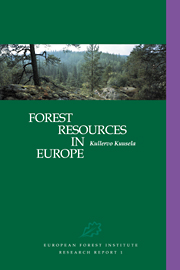
This volume provides a detailed country-by-country account of the increase in forest resources in Europe. The author discusses the implications of this expansion for the future health and vitality of the forests, for forest policy management and silviculture, and for the economic viability and environmental sustainability of the resource. An increase in thinnings and regeneration cuttings is advocated, replacing unstable tree species by true climatic climax species, and shortening rotation ages. The author concludes that preserving the sustainability and biodiversity of Europe's forest ecosystems can be achieved by maintaining the genetic diversity, density, age and health stability of forests, protecting biotopes of endangered species and establishing cultural biotopes and strictly protected natural reserves.
This book simultaneously provides a useful checklist of all taxa published in Flora Europaea and documents the sources of all the chromosome numbers cited therein. It will be useful to anyone wishing to have ready access to the names and sequence of taxa used in Flora Europaea (for example in botanical libraries and herbaria) and for those involved with chromosome studies of the European flora.
This biography of John Ray, the seventeenth-century naturalist, was first published in 1942 at the height of the Second World War. It was written by Charles Raven, an eminent theologian who shared Ray's deep respect for intellectual integrity, honest exploration of the natural world, and the value of both theology and scientific endeavour. More than a superb history, this offers an opportunity to reassess the pivotal contributions of a brilliant but often undervalued scientist. Ray's major publications were written in Latin; Raven's linguistic skills – coupled with his passion for natural history – made him ideally suited to interpret Ray's scientific legacy. Raven reviews Ray's academic and scientific careers in the context of the dramatic social upheavals of his time. He evaluates the remarkable long-term and widespread influence of Ray's work on the development of science, alongside the significance of his final book, The Wisdom of God.
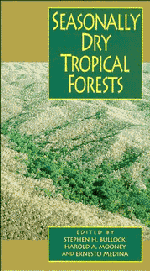
Prolonged seasonal drought affects most of the tropics, including vast areas presently or recently dominated by 'dry forests'. These forests have received scant attention, despite the fact that humans have used and changed them more than rain forests. This volume reviews the available information, often making contrasts with wetter forests. The world's dry forest heterogeneity of structure and function is shown regionally. In the neotropics, biogeographic patterns differ from those of wet forests, as does the spectrum of plant life-forms in terms of structure, physiology, phenology and reproduction. Biomass distribution, nutrient cycling, below-ground dynamics and nitrogen gas emission are also reviewed. Exploitation schemes are surveyed, and examples are given of non-timber product economies. It is hoped that this review will stimulate research leading to more conservative and productive management of dry forests.
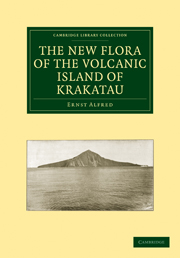
On 27 August 1883, the island of Krakatau was destroyed in one of the most violent volcanic events ever recorded. This caused the 'year without a summer', thousands of deaths (mainly from tsunamis), fabulous sunsets and a measurable cooling of the oceans over nearly a century. Krakatau also provided evolutionary biologists with a unique opportunity to investigate the mechanisms of plant dispersal. This had been the subject of laborious research for Charles Darwin, who had speculated upon and, it seems, accurately postulated how an 'unstocked island' might be recolonised. In this 1908 volume, Alfred Ernst analysed the effects of wind, birds and sea currents in the transport not only of seeds but also of trees, branches and even of substantial animals. Krakatau's ecosystem, at a more primitive stage than that Darwin had seen on the Galapagos Islands, demonstrated how simple but continuous natural forces might re-establish a complex ecology.
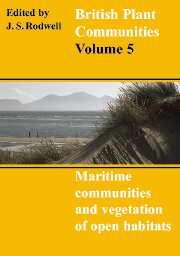
British Plant Communities is the first systematic and comprehensive account of the vegetation types of this country. It covers all natural, semi-natural and major artificial habitats in Great Britain (but not Northern Ireland), representing the fruits of fifteen years of research by leading plant ecologists. The book breaks new ground in wedding the rigorous interest in the classification of plant communities that has characterized Continental phytosociology with the deep concern traditional in Great Britain to understand how vegetation works. The published volumes have been greeted with universal acclaim, and the series has become firmly established as a framework for a wide variety of teaching, research and management activities in ecology, conservation and land-use planning.
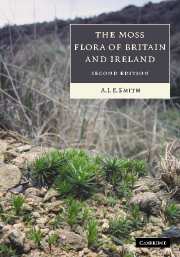
This book describes and illustrates in detail the 760 species of mosses currently known to occur in the British Isles and incorporates the most up-to-date information available on classification and nomenclature, together with recent synonyms. The species descriptions provide information on frequency, ecology, geographical relationships and distribution, including information on protected species and those species at risk. For many species there are footnotes to aid identification. In addition to the species descriptions there are descriptions of families and genera and also introductory information on conservation, collection, preservation and examination of material, together with advice on using the keys. An artificial key to genera provides the only workable comprehensive key published in the English language. This second edition incorporates the very considerable advances in our knowledge of mosses made in the last quarter of the twentieth century and will provide a unique resource for all concerned with these fascinating organisms.
Flowering and fruiting are key processes in the biology of higher plants, ensuring the transfer of genetic material from one generation to the next. In addition, as almost all of the world's agricultural and horticultural industries depend on the production of flowers, fruits and seeds, the study of the reproductive biology of cultivated plants is of fundamental importance to humankind. Surprisingly, therefore, this topic has received relatively little attention from environmental physiologists compared with studies on the growth and development of vegetative structures. This book, based on a meeting held by the Environmental Physiology Group of the Society of Experimental Biology, sets out to correct this deficiency. The topic is given a broad and comprehensive treatment, with chapters covering the onset of flowering through to the development and growth of fruits and seeds, and finally to ecological and evolutionary aspects of fruiting. This volume will therefore serve as a useful introduction to the various aspects of flowering and fruiting and will also provide a thorough general overview of the subject for students and researchers alike.
One of the predicted consequences of the depletion of stratospheric ozone is an increase in the amount of ultraviolet light reaching the surface of the earth, in particular UV-B (320–280nm). Although the real effects are as yet unknown, this change in radiation could have profound consequences for plant growth and productivity. The need for information concerning the relationship between plants and UV-B is therefore pressing. This volume brings together authoritative contributions from leading experts in UV-B/plant studies and is unique in considering interactions at various scales, ranging from the level of the cell through to the level of the community. Information concerning ozone depletion and physical aspects of UV-B radiation complements the biological information to provide a thorough and comprehensive review of the status of knowledge.
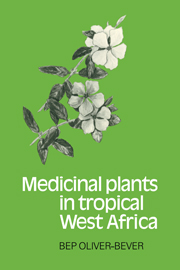
First published in 1986, this book describes the most important medicinal plants in tropical West Africa and similar humid tropical climates. After a short introduction about early traditional medicine, the bulk of the book gives an account of locally occurring plants, grouped by their medicinal actions. Plants that affect the cardiovascular and nervous systems are discussed, as are those with antibiotic, insecticidal and molluscicidal properties. Those which affect the hormonal systems of humans are catalogued and so are others that act as adrenal-cortex, sex and thyroid hormones. There is a full botanical index, which includes the commonly found synonyms for many of the plants and the work is illustrated by the author's own water colours. It may be of particular interest and use to pharmacists, biochemists, botanists and pharmacologists and of great value to those who exploit locally available resources in treating diseases in tropical areas.
The prospect of future climate change has stimulated research into the physiological responses of plants to stress. Water is a key factor controlling the distribution and abundance of plants in nature and the efficient uptake and subsequent transport of water within the plant is critical in hot, dry regions. This book, based on a meeting which focused on the failure of the hydraulic pathway within the xylem, brings together contributions from a range of experts who have worked on the cavitation of water in the transport system. The phenomenon of cavitation, discovered only in the 1960s, is now becoming recognised as being widespread and, whilst its ecological significance is a matter for further research, many scientists consider than embolism in the xylem predisposes plants to further water stress. Cavitation and refilling may, therefore, hold the key to vegetational response to climatic warming and drying. This book will provide a valuable compendium of information for those working in the plant and environmental sciences as well as for those whose interests lie in the more applied disciplines of agriculture and forestry.