To save content items to your account,
please confirm that you agree to abide by our usage policies.
If this is the first time you use this feature, you will be asked to authorise Cambridge Core to connect with your account.
Find out more about saving content to .
To save content items to your Kindle, first ensure no-reply@cambridge.org
is added to your Approved Personal Document E-mail List under your Personal Document Settings
on the Manage Your Content and Devices page of your Amazon account. Then enter the ‘name’ part
of your Kindle email address below.
Find out more about saving to your Kindle.
Note you can select to save to either the @free.kindle.com or @kindle.com variations.
‘@free.kindle.com’ emails are free but can only be saved to your device when it is connected to wi-fi.
‘@kindle.com’ emails can be delivered even when you are not connected to wi-fi, but note that service fees apply.
Georgia lies to the northeast of Türkiye, having a western border on the Black Sea. With a population of some 3·73 million, Georgia has a tradition of gastronomic excellence dating back millennia. However, changing lifestyles and external influences have, as elsewhere, led to problems of suboptimal nutrition, and lifestyle-related diseases and disorders prevail. There is considerable scope for improving the focus on public health (PH) and nutrition in Georgia. With this in mind, the Georgian Nutrition Society teamed up with The Nutrition Society of the UK and Ireland and the Sabri Ülker Foundation, a PH charity based in Istanbul, Türkiye, to host a conference and workshops in Tbilisi, Georgia. The primary purpose was to review the current status of PH and nutrition in Georgia with reference to the situation elsewhere, to share examples of best practice and to identify opportunities for improvement. A particular highlight was the presentation of a programme of nutrition education for family physicians recently implemented in Türkiye. This summary of the proceedings is intended as a blueprint for action in Georgia and also to inspire others to consider how PH might be improved via a focus on balanced nutrition.
Child care environments offer an ideal setting for feeding interventions. CELEBRATE Feeding is an approach implemented in child care environments in two Maritime Provinces in Canada to support responsive feeding (RF) to foster children’s self-efficacy, self-regulation, and healthy relationships with food. This study aimed to describe RF in child care using established and enhanced scoring frameworks.
The Environment and Policy Assessment and Observation (EPAO) was modified to reflect RF environments and practices, resulting in our modified EPAO and a CELEBRATE scale. Observations were conducted in 18 child care rooms. Behaviours and environments were scored on both scales, creating 21 RF scores, with a score of ‘3’ indicating the most responsiveness. Descriptive analyses of the scores were conducted. The overall room averages were Mean (M) = 41.00, Standard Deviation (SD) = 7.07 (EPAO), and M = 37.92 SD = 6.50 (CELEBRATE). Most responsive scores among rooms within our EPAO and CELEBRATE scales, respectively, were ‘educators not using food to calm or encourage behaviour’ (M = 2.94, SD = 0.24; M = 2.98, SD = 0.06) and ‘not requiring children to sit at the table until finished’ (M = 2.89, SD = 0.47; M = 2.97, SD = 0.12). The least responsive scores within the EPAO were ‘educator prompts for children to drink water’ (M = 0.78, SD = 0.94) and ‘children self-serving’ (M = 0.83, SD = 0.38). The least responsive in the CELEBRATE scale were ‘enthusiastic role modelling during mealtime’ (M = 0.70, SD = 0.68) and ‘praise of mealtime behaviour unrelated to food intake’ (M = 0.74, SD = 0.55). The CELEBRATE scale captured unique observation information about RF to allow documenting change over time with detailed measurement to inform and support nutrition interventions within child care environments.
Examine the key elements that characterise social media advertisements targeted at adolescents by asking adolescents which features of Instagram ads promoting ultra-processed products make them designed to appeal to adolescents.
Design:
Instagram ads promoting ultra-processed products and brands were selected from a database in which ads had been classified regarding whether they were primarily targeted at adolescents from an adult perspective. Adolescents completed a sorting task in small groups and were requested to reach a consensus through discussions and sticky notes regarding whether sixty ads were designed to appeal to them. The sorting task was analysed using content analysis based on inductive coding.
Setting:
One private secondary school and two after-school clubs.
Participants:
Convenience sample of 105 Uruguayan adolescents aged 11–17 years.
Results:
Ten categories were identified regarding the reasons for sorting ads as (not) designed to appeal to adolescents: product type, graphic design, explicit references to age groups, language, activities or themes, memes, celebrities, characters, promotions and novelty. Product type emerged as a key element, with adolescents perceiving ads as designed to appeal to them simply because they promoted specific products.
Conclusions:
This research contributes to the validation of criteria defined in previous studies and can be used for the development of tools to monitor the prevalence and power of adolescent-targeted digital marketing. However, the importance attributed to type of product suggests that regulations should not exclusively focus on exposure to digital marketing specifically targeted at adolescents but also on exposure to marketing in general.
The primary goal of the investigation was to analyse the anti-inflammatory and antioxidant properties of Gamma-linolenic acid (GLA) on rats with indomethacin (IND)-induced gastric ulcers. Thirty rats were divided into five groups: Control, IND (50 mg/kg, p.o.), IND pretreated with GLA 100 mg/kg (p.o. for 14 d), IND pretreated with GLA 150 mg/kg (p.o. for 14 d) and IND pretreated with omeprazole (20 mg/kg, p.o. for 14 d). The stomach tissues were examined to calculate the ulcer index and pH and analyse biochemical markers (prostaglandin E2 (PGE2), cyclooxygenase 1 (COX1), TNF-1, IL-6 and intercellular adhesion molecule-1 (ICAM1)) and oxidative stress parameters (malondialdehyde: (MDA), superoxide dismutase (SOD), glutathione (GSH) and CAT (catalase)) as well as undergo histopathological assessment. GLA 100 and 150 mg/kg showed a protective effect against IND-induced gastric damage. It reduced levels of COX1, TNF-1, IL-6 and ICAM and increased PGE2 levels. GLA also normalised antioxidant function by modulating MDA, SOD, GSH and CAT. GLA intervention protects against IND-induced gastric ulcers by restoring oxidant/antioxidant balance and reducing inflammation.
It is inconclusive whether trimethylamine N-oxide (TMAO) and choline and related metabolites, namely trimethylamine (TMA), l-carnitine, betaine and dimethylglycine (DMG), are associated with non-alcoholic fatty liver disease (NAFLD). Our objective was to investigate these potential associations. Additionally, we sought to determine the mediating role of TMAO. In this 1:1 age- and sex-matched case–control study, a total of 150 pairs comprising NAFLD cases and healthy controls were identified. According to the fully adjusted model, after the highest tertile was compared with the lowest tertile, the plasma TMAO concentration (OR = 2·02 (95 % CI 1·04, 3·92); P trend = 0·003), l-carnitine concentration (OR = 1·79 (1·01, 3·17); P trend = 0·020) and DMG concentration (OR = 1·81 (1·00, 3·28); P trend = 0·014) were significantly positively associated with NAFLD incidence. However, a significantly negative association was found for plasma betaine (OR = 0. 50 (0·28, 0·88); P trend = 0·001). The restricted cubic splines model consistently indicated positive dose–response relationships between exposure to TMAO, l-carnitine, and DMG and NAFLD risk, with a negative association being observed for betaine. The corresponding AUC increased significantly from 0·685 (0·626, 0·745) in the traditional risk factor model to 0·769 (0·716, 0·822) when TMAO and its precursors were included (l-carnitine, betaine and choline) (P = 0·032). Mediation analyses revealed that 14·7 and 18·6 % of the excess NAFLD risk associated with l-carnitine and DMG, respectively, was mediated by TMAO (the P values for the mediating effects were 0·021 and 0·036, respectively). These results suggest that a higher concentration of TMAO is associated with increased NAFLD risk among Chinese adults and provide evidence of the possible mediating role of TMAO.
Methyl donor micronutrients might affect muscle strength via DNA methylation. We aimed to evaluate the combined relationship of dietary methyl donor micronutrients containing betaine, choline, methionine, vitamin B12, vitamin B6 and folate on muscle strength. This cross-sectional study was conducted on 267 subjects including 113 men and 154 women. Dietary intake of micronutrients was assessed utilising a validated 168-item semi-quantitative FFQ, and methyl donor micronutrient score (MDMS) was calculated. The muscle strength of the participants was measured using a digital handgrip dynamometer. The association was determined using linear regression analysis. The mean age of participants was 36·8 ± 13·2 years. After taking into account potential confounding variables, there was no significant association between dietary methyl donor micronutrient score (MDMS) and the mean left-hand muscle strength (β: 0·07, se: 0·05, P = 0·07); however, the changes were significant in the mean right-hand muscle strength (β: 0·09, se: 0·04, P = 0·03). There was also a significant positive relationship between mean muscle strength and methyl donors’ intake after fully adjusting for potential confounders (β: 0·08, se: 0·04, P = 0·04). In conclusion, our findings revealed that higher dietary methyl donor micronutrient consumption is associated with enhanced muscle strength. As a result, advice on a higher intake of methyl donor-rich foods including grains, nuts, dairy products and seafood might be recommended by dietitians as a general guideline to adhere to. Additional prospective studies are needed to confirm the findings.
To determine whether the Chinese heart-healthy diet (Sichuan cuisine version) (CHH diet-SC) was more expensive than the conventional Sichuan diet and explore the food groups and nutrients that mainly affected the cost of CHH diet-SC.
Design:
Cost analysis of 4-week intervention diets in the Sichuan center representing southwestern China in the CHH diet study.
Setting:
A multicentre, parallel-group, single-blind, randomised feeding trial evaluating the efficacy of lowering blood pressure with the cuisine-based CHH diet.
Participants:
Totally, fifty-three participants with hypertension aged 25–75 years in the Sichuan center were randomised into the control group (n 26) or the CHH diet-SC group (n 27).
Results:
The CHH diet-SC was more expensive than the control diet (¥27·87 ± 2·41 v. ¥25·18 ± 2·79 equals $3·90 ± 0·34 v. $3·52 ± 0·39, P < 0·001), and the incremental cost-effectiveness ratio for a 1-mm Hg systolic blood pressure reduction was ¥9·12 ($1·28). Intakes and the cost of seafood, dairy products, fruits, soybeans and nuts, whole grains and mixed beans were higher for the CHH diet-SC than for the control diet (P < 0·001). Intakes of vitamin B1, vitamin B6, vitamin C, Mg and phosphorus were positively correlated with the cost (P < 0·05).
Conclusions:
The CHH diet-SC costs more than the conventional Sichuan diet, partly due to the high cost of specific food groups. Positive correlations between the intakes of vitamin B1, vitamin B6, vitamin C, Mg, phosphorus and the dietary cost could be a direction to adjust the composition within the food groups to reduce the cost of the CHH diet-SC.
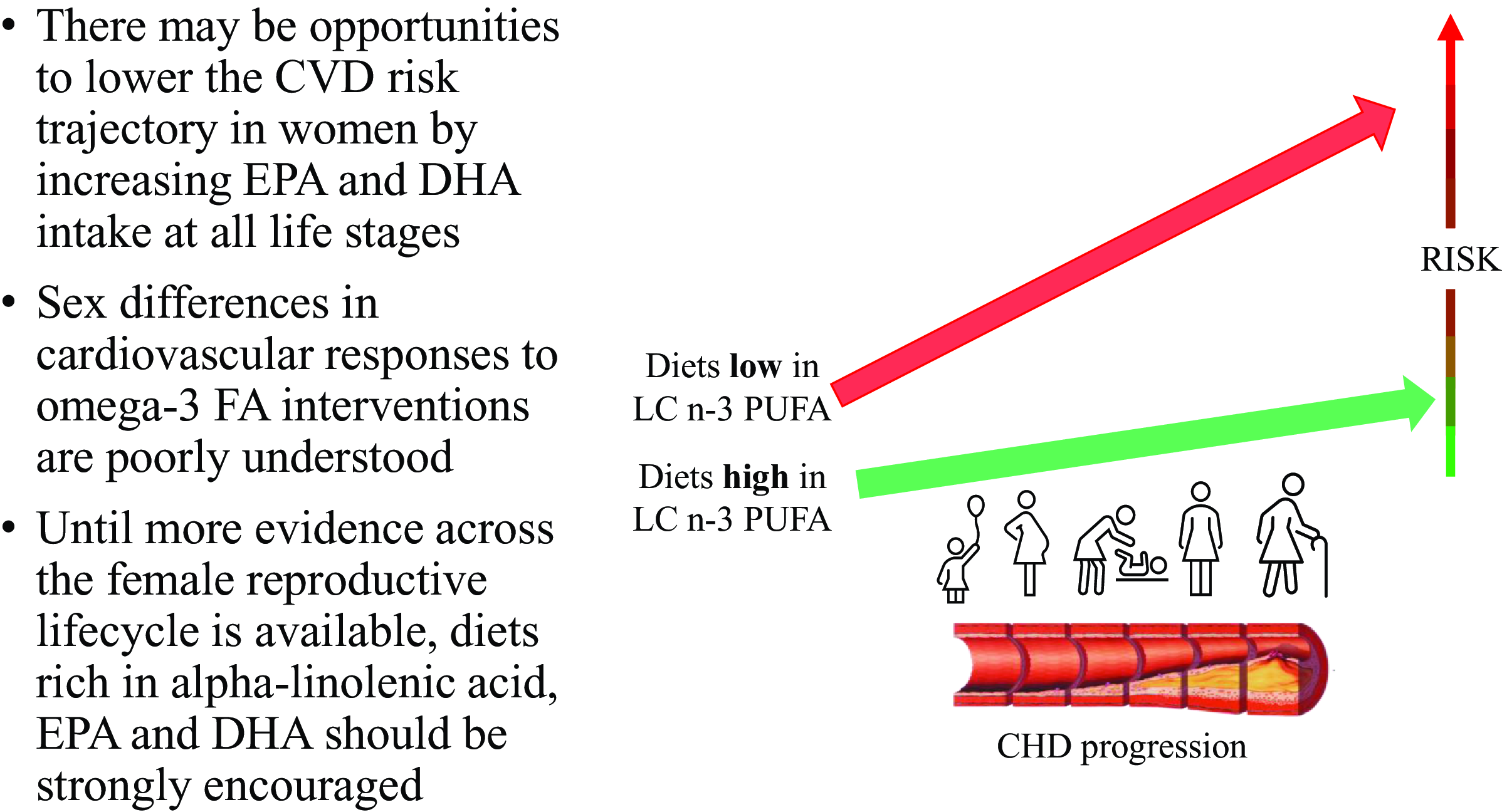
Cardiovascular diseases (CVDs) are a major health concern for women. Historically there has been a misconception that men are at greater risk because CVD tends to occur earlier in life compared to women. Clinical guidelines for prevention of heart disease are currently the same for both sexes, but accumulating evidence demonstrates that risk profiles diverge. In fact, several CVD risk factors confer an even greater risk in women relative to men, including high blood pressure, obesity, diabetes and raised triglycerides. Furthermore, many female-specific CVD risk factors exist, including early menarche, pregnancy complications, polycystic ovary syndrome, reproductive hormonal treatments and menopause. Little is known about how diet interacts with CVD risk factors at various stages of a woman’s life. Long chain (LC) n-3 polyunsaturated fatty acid (PUFA) intakes are a key dietary factor that may impact risk of CVD throughout the life course differentially in men and women. Oestrogen enhances conversion of the plant n-3 PUFA, alpha-linolenic acid, to LCn-3 PUFA. Increasing the frequency of oily fish consumption or LCn-3 PUFA supplementation may be important for reducing coronary risk during the menopausal transition, during which time oestrogen levels decline and the increase in CVD risk factors is accelerated. Women are under-represented in the evidence base for CVD prevention following LC n-3 PUFA supplementation. Therefore it is not clear whether there are sex differences in response to treatment. Furthermore, there is a lack of evidence on optimal intakes of LC n-3 PUFA across the lifespan for CVD prevention in women.
Trans vaccenic acid (TVA, trans11–18 : 1) and cis9, trans11-CLA (also known as rumenic acid; RA) have received widespread attention as potentially beneficial trans-FA due to their putative health benefits, including anti-diabetic properties. The objective of this study was to determine the effects of beef fat naturally enriched with TVA and RA on parameters related to glucose homoeostasis and associated metabolic markers in diet-induced obese (DIO) mice. Thirty-six male C57BL/6J mice (8 weeks old) were fed for 19 weeks with either a control low-fat diet (CLF), a control high-fat diet (CHF), or a TVA+RA-enriched high-fat diet (EHF). Compared with CLF, feeding either CHF or EHF resulted in adverse metabolic outcomes associated with high-fat diets, including adiposity, impaired glucose control and hepatic steatosis. However, the EHF diet induced a significantly higher liver weight TAG content and elevated plasma alanine transaminase levels compared with the CHF diet. Collectively, the findings from this study suggest that EHF does not improve glucose tolerance and worsens liver steatosis in DIO mice. However, the adverse effects of EHF on the liver could be in part related to the presence of other trans-FA in the enriched beef fat.
This study aimed to compare the differences in the intake of food groups and nutrients between Japanese adults who consumed the recommended daily vegetable intake (350 g/day) and those who did not. Dietary information was obtained from one-day dietary records collected from the 2016 National Health and Nutrition Survey, which was conducted in 46 prefectures in Japan. The participants aged ≥20 years (n = 21,606; 53.8% women) were classified into the < and ≥350 g/day groups. Inter-group differences for 17 food groups and 27 nutrients were assessed as percentages of consumers (food groups only) and energy-adjusted intake (units/MJ/d or % of total energy intake). Overall, 29% of participants consumed ≥350 g/day of vegetables. The ≥350 g/day group had a higher percentage of consumers and energy-adjusted intakes for all vegetable subgroups than the <350 g/day group. For other food groups, the ≥350 g/day group had higher percentages of consumers for all food groups, except for cereals, eggs, and condiments and seasonings, which showed no significant differences. However, the ≥350 g/day group had a significantly higher energy-adjusted intake for potatoes and other tubers, mushrooms, meats, and condiments and seasonings but a significantly lower value for cereals, eggs, savoury snacks and confectionaries, and beverages. The ≥350 g/day group had a significantly higher intake of almost all (25/27) nutrients, including sodium, than the <350 g/day group. Participants with vegetable intake ≥350 g/day might have a more favourable intake of food groups and nutrients; however, watching for salt intake is necessary when promoting vegetable intake.
There is significant evidence that an unhealthy diet greatly increases the risk of complications during pregnancy and predisposes offspring to metabolic dysfunction and obesity. While fat intake is typically associated with the onset of obesity and its comorbidities, there is increasing evidence linking sugar, particularly high fructose corn syrup, to the global rise in obesity rates. Furthermore, the detrimental effects of added sugar intake during pregnancy on mother and child have been clearly outlined. Guidelines advising pregnant women to avoid food and beverages with high fat and sugar have led to an increase in consumption of ‘diet’ or ‘light’ options. Examination of some human birth cohort studies shows that heavy consumption (at least one beverage a day) of non-nutritive sweetener (NNS) containing beverages has been associated with increased risk of preterm birth and increased weight/BMI in male offspring independent of maternal weight, which appears to be offset by breastfeeding for 6 months. Rodent models have shown that NNS exposure during pregnancy can impact maternal metabolic health, adipose tissue function, gut microbiome profiles and taste preference. However, the mechanisms underlying these effects are multifaceted and further research, particularly in a translational setting is required to fully understand the effects of NNS on maternal and infant health during pregnancy. Therefore, this review examines maternal sweetener intakes and their influence on fertility, maternal health outcomes and offspring outcomes in human cohort studies and rodent models.
The National Health Service (NHS) England website provides guidance on foods/drinks to avoid or limit during pregnancy because of microbiological, toxicological or teratogenic hazards. The aims were to determine adherence and whether demographic characteristics were associated with adherence.
Design:
Cross-sectional study.
Setting:
Online survey of postpartum women resident in England during pregnancy.
Participants:
Recently, postpartum women resident in England during their pregnancy (n 598; median age 33 (IQR 30–36) years) completed an online questionnaire (April–November 2022). Questions included those on consumption of twenty-one food/drink items that the NHS advises pregnant women to avoid/limit. The study is part of the Pregnancy, the Environment And nutRition (PEAR) Study. Summary statistics were used to determine proportions adhering to the guidance. Adjusted logistic regression was used to model the associations of adherence with demographic characteristics.
Results:
Adherence was generally high (>90 % for eight of ten food/drink items to be avoided). However, among pre-pregnancy consumers, several items were not completely avoided, for example, 81 % (128/158) for game meat/gamebirds, 37 % (176/478) for cured meats and 17 % (81/467) for soft cheeses. Greater educational attainment (e.g. caffeinated soft drinks OR 2·25 (95 % CI 1·28, 3·94)), greater maternal age (e.g. oily fish 1·64 (1·05, 2·56)) and lower parity (e.g. caffeinated coffee 0.28 (0.11, 0.69)) were the most usual characteristics associated with adherence.
Conclusion:
Evidence of concerning levels of non-adherence for some food/drink items suggests a case for more education on some of the guidance, particularly for women with lower educational attainment, greater parity and greater maternal age. Further research on barriers to the implementation of the guidance is needed.
To characterise nutritionally adequate, climate-friendly diets that are culturally acceptable across socio-demographic groups. To identify potential equity issues linked to more climate-friendly and nutritionally adequate dietary changes.
Design:
An optimisation model minimises distance from observed diets subject to nutritional, greenhouse gas emissions (GHGE) and food-habit constraints. It is calibrated to socio-demographic groups differentiated by sex, education and income levels using dietary intake data. The environmental coefficients are derived from life cycle analysis and an environmentally extended input–output model.
Setting:
Finland.
Participants:
Adult population.
Results:
Across all population groups, we find large synergies between improvements in nutritional adequacy and reductions in GHGE, set at one-third or half of the current level. Those reductions result mainly from the substitution of meat with cereals, potatoes and roots and the intra-category substitution of foods, such as beef with poultry in the meat category. The simulated more climate-friendly diets are thus flexitarian. Moving towards reduced-impact diets would not create major inadequacies related to protein and fatty acid intakes, but Fe could be an issue for pre-menopausal females. The initial socio-economic gradient in the GHGE of diets is small, and the patterns of adjustments to more climate-friendly diets are similar across socio-demographic groups.
Conclusions:
A one-third reduction in GHGE of diets is achievable through moderate behavioural adjustments, but achieving larger reductions may be difficult. The required changes are similar across socio-demographic groups and do not raise equity issues. A population-wide policy to promote behavioural change for diet sustainability would be appropriate.
This study aimed to (1) examine the clustering of energy balance-related behaviours (EBRB) and (2) investigate whether EBRB clusters, temperament and hair cortisol concentration (HCC) associate with overweight.
Design:
We assessed food consumption using food records, screen time (ST) using sedentary behaviour diaries, sleep consistency and temperament (negative affectivity, surgency, effortful control) using questionnaires and HCC using hair samples. Accelerometers were used to assess physical activity (PA) intensities, sleep duration and sleep efficiency. Researchers measured each child’s weight and height. We used finite mixture models to identify EBRB clusters and multilevel logistic regression models to examine the associations between EBRB clusters, temperament, HCC and overweight.
Setting:
The cross-sectional DAGIS survey, data collected in 2015–2016.
Participants:
Finnish 3–6-year-olds (n 864) recruited through preschools.
Results:
One-third of the participants were categorised into the cluster labelled ‘Unhealthy diet, excessive screen time’, characterised by unhealthy dietary choices (e.g. greater consumption of high-fat, high-sugar dairy products) and longer ST. Two-thirds were categorised into the second cluster, labelled ‘Healthy diet, moderate screen time’. PA and sleep were irrelevant for clustering. Higher negative affectivity and lower effortful control associated with the ‘Unhealthy diet, excessive screen time’ cluster. EBRB clusters and HCC did not associate with overweight, but surgency was positively associated with overweight (OR = 1·63, 95 % CI 1·17, 2·25).
Conclusions:
Of the EBRB, food consumption and ST seem to associate. As temperament associates with EBRB clusters and overweight, tailored support acknowledging the child’s temperament could be profitable in maintaining a healthy weight.
The teenage years represent a crucial period of physical and cognitive growth and development with sufficient micronutrient intakes necessary to meet high nutritional requirements. This review examines current micronutrient intakes in teenagers in the Western world in the context of public health implications including the prevalence of inadequate intakes and risk of excessive intakes. Intakes of vitamins A, D, E and C, folate, calcium, iron, magnesium, zinc and potassium in teenagers are low when compared to generally accepted recommendations, while there is little risk of excessive micronutrient intakes based on current dietary patterns. Therefore, strategies should focus on increasing micronutrient intakes in order to decrease the risk of negative impacts resulting from these low intakes. These strategies should be mindful of guidance towards an environmentally sustainable diet whilst ensuring that nutrient intakes in teenagers are not further negatively impacted. In order to identify, implement and monitor the effectiveness of such strategies, intakes of micronutrients should be continually monitored in nationally representative samples of the population for all age groups including this vulnerable cohort of teenagers.
Nutritional education is pivotal in the medical nutritional therapy of type 2 diabetes mellitus (T2DM). The extended parallel process model (EPPM) is a health education method for inducing desirable health behaviours. The present study aimed to investigate the effect of nutritional education based on the EPPM in T2DM patients on knowledge, attitude, practice, anthropometric indices, glycaemic factors, lipid profile and adherence to the diabetic diet. A randomised, double-blind, controlled, factorial field trial was designed for T2DM patients aged 30–59 years (n 88). Participants were randomly allocated into four groups to receive EPPM-based nutritional education through gain framed message (GFM), loss framed message (LFM), their combination (G\LFM) or usual diabetic education in the control group (CG). Participants were assessed before and after the study duration. After 3 months of intervention, eighty participants finished the study. The EPPM-based intervention increased participants’ knowledge, behavioural intention, perceived sensitivity, severity, self-efficacy (P < 0·001 for all) and response efficacy (P = 0·029) in comparison with CG. GFM (P = 0·004) and G\FLM (P = 0·034) reduced carbohydrate intake and LFM (P = 0·034) and G\LFM (P = 0·047) decreased fat intake. Between-group analysis indicated interventions reduced weight (P = 0·046), BMI (P = 0·038), fasting blood sugar (P = 0·030), 2-hour postprandial blood glucose (P = 0·027) and TAG (P = 0·002) in comparison with the CG. Results were NS for protein intake, waist and hip circumference, waist:hip ratio, HbA1c, total cholesterol, LDL and HDL. Nutritional education based on EPPM could increase the knowledge and awareness of T2DM patients. Also, it could be beneficial for blood glucose amendment. Further investigations are recommended.