To save content items to your account,
please confirm that you agree to abide by our usage policies.
If this is the first time you use this feature, you will be asked to authorise Cambridge Core to connect with your account.
Find out more about saving content to .
To save content items to your Kindle, first ensure no-reply@cambridge.org
is added to your Approved Personal Document E-mail List under your Personal Document Settings
on the Manage Your Content and Devices page of your Amazon account. Then enter the ‘name’ part
of your Kindle email address below.
Find out more about saving to your Kindle.
Note you can select to save to either the @free.kindle.com or @kindle.com variations.
‘@free.kindle.com’ emails are free but can only be saved to your device when it is connected to wi-fi.
‘@kindle.com’ emails can be delivered even when you are not connected to wi-fi, but note that service fees apply.
As suggested throughout this book, digital transformations do not simply make individuals, organizations or societies more transparent. What happens is rather an intensification of the need to manage visibilities – to consider what to make (in)visible and how to guide attention. So far, my main concern has been to suggest what these developments mean for individuals and organizations, but now the focus shifts to broader societal issues. That is, how do hopes about digital transparency and processes of visibility management shape the way we think about societies and political affairs? Looking at such different phenomena as state control, corporate reporting, social editing and attempts to govern future affairs, the chapter offers an account of visibility management as a form of social ordering.
There is an important historical backdrop to this. Transparency is intimately tied to the project of modernity – the hope for technological progress, human perfectability and scientific scrutiny and rationality. But transparency is also an Enlightenment ideal that largely remains unchallenged, despite its limitations and obvious ties to phenomena such as totalitarianism and surveillance.
Media and other technologies make new forms of human action possible, and they do so not only as devices of information, but also as “agencies of order” (Peters, 2015). Such ordering effects are well described and well theorized in existing research on the societal consequences of media and digital technologies. What is less pronounced is that digital transformations have consequences for how our attention is guided, both as individuals and as organizations and societies. That is, they make us see, know and govern in new ways, and shape what we think of as reality. To explore these issues, it may be useful to return to insights from earlier thinking that articulated the relationship between media and human realities and how mediations shape social life. At the advent of modern journalism and news media, Lippmann (1922) reminded us that media put “pictures in our heads.” Such pictures condition how humans act on the world, and to study the power of media, Lippmann suggested, we need to articulate how such special interests come to control our view of the world (Turner, 2014). These issues are still salient today, where new types of corporations are taking up roles that are comparable to those of media conglomerates of the past. Not only are tech companies taking over large parts of social infrastructures and becoming the primary spaces for social interaction and entry points for news and other societally important forms of information.
I develop an analytically tractable model that integrates the risk-shifting problem between bondholders and shareholders with the moral-hazard problem between shareholders and the manager. An optimal contract binds shareholders and the manager, and this contract’s flexibility allows shareholders to relax the manager’s incentive constraint following a “good” profitability shock. Thus, the optimal contract amplifies the upside and thereby increases shareholder appetite for risk shifting. Whereas some empirical studies find a positive relation between risk shifting and leverage, others find a negative relation. This model predicts a non-monotonic relation between risk shifting and leverage and can reconcile these contradictory empirical findings.
A critical handbook for those interested and engaged in investing capital to generate financial returns with social and environmental impacts, “The ImpactAssets Handbook for Investors” offers a review of total portfolio management strategy and practice for investing capital and understanding its impact on creating a better world for both investors and community members.
Over the last decades, encouragement of business engagement with environmental and socio-economic development has gained prominence due to the perceived weakening of states and multilateral institutions against the forces of global capitalism. Different ways of encouraging changes in business behavior have been promoted, such as the formation of public/private partnerships, corporate social responsibility initiatives, and other forms of non-binding organizational arrangements. However, there is no real consensus on the desired role of business in development, what the best policies for global development are, or what “development” itself is and should be defined as. Indeed, precisely as a formal consensus has been reached on the broad agenda of the United Nations Sustainable Development Goals, a narrower agenda focusing on industrialization, modernization, and economic growth is promoted by new actors, many originating in the Global South. This special issue asks how the emergence of new actors and the adaptation by global institutions affect the ways in which business engages with development. This introductory article positions the issue's contributions into three discussions: exploring issues of global coherence and division on key debates; understanding how new actors are reshaping the public-private divide; and assessing how disconnects within discourse on business and development can amplify negative societal consequences in fragile settings of weak governance.
Drawing on social exchange and emotional regulation perspectives, this study investigates the role of emotional suppression in reducing the detrimental effects of workplace ostracism on organizational learning. Based on the responses of 162 participants from the financial industry, and with the application of moderated mediation analysis, the findings demonstrate that workplace ostracism is mediated by employee silence, which has a negative effect on organizational learning. Interestingly, however, the results exhibit that emotional suppression operates as a buffer between workplace ostracism, employee silence and organizational learning, which leads to the achievement of organizational learning motives. Therefore, the silent employees, who experience workplace ostracism, may still be contributing toward organizational learning, if they are proficient in suppressing their emotions. Given that, the study implies that emotional suppression is fundamentally important to reduce the injurious outcomes of workplace ostracism, in the contemporary organizational settings, particularly with regard to organizational learning.
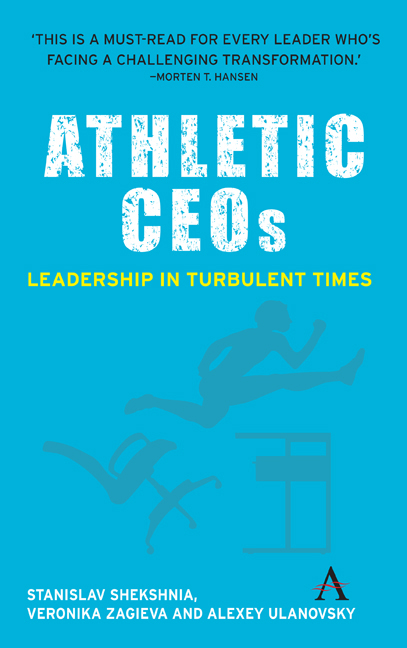
‘Athletic CEOs: Leadership in Turbulent Times’ presents an unorthodox model of effective business leadership for turbulent environments – Athletic Leadership. Athletic CEOs are not humble or empathic; their leadership is grounded in a combination of toughness and adaptability. They deliver superior performance and transform their companies, employees and near-environments by systematically applying a set of meta-practices.
In today's competitive global economy, most managers are - or will be - global managers. They may work in their home country, but are influenced by global events and have to manage diverse workforces. As such, they need multicultural competence and global management skills to work successfully across cultures. This new edition pairs a richly illustrated text with management applications, key concepts, discussion questions, web-based cases and skill-building exercises aimed at current and aspiring managers. Each chapter is accompanied by a Manager's Notebook highlighting field strategies and encouraging students to develop multicultural competence that will be highly valued by future employers. Exploring the challenges and opportunities facing global managers, readers can examine cultural, organizational, and managerial environments before developing a range of skills from communication and leadership to negotiation and global team management. Suitable for students taking courses in international management, cross-cultural management or international HRM at advanced undergraduate, Masters and MBA levels.
Following the 2007–9 financial crisis, the EU strengthened its institutional apparatus for bank regulation, creating a trio of sectoral bodies, including the European Banking Authority (EBA). Various aspects of this new system have been studied, but to date, little is known about how banks engage with their new supranational regulator. We argue that such engagement fosters an interdependence between banks and regulators, thus contributing to the efficiency and robustness of the overall regulatory regime; but also that it is contingent on the regulator exhibiting the qualities of credibility, legitimacy, and transparency. These qualities are grounded in the domestic regulatory governance literature, but we suggest that they are rendered problematic by the complexities of the EU's multilevel system and, in particular, the overlap in competences between the EBA and the European Central Bank. We examine the EBA in the light of these criteria and find that banks’ engagement remains pitched towards established national regulators and the EU's legislative arena. This poses concerns for the efficacy of agency governance in the EU's regulatory regime for banking.