To save content items to your account,
please confirm that you agree to abide by our usage policies.
If this is the first time you use this feature, you will be asked to authorise Cambridge Core to connect with your account.
Find out more about saving content to .
To save content items to your Kindle, first ensure no-reply@cambridge.org
is added to your Approved Personal Document E-mail List under your Personal Document Settings
on the Manage Your Content and Devices page of your Amazon account. Then enter the ‘name’ part
of your Kindle email address below.
Find out more about saving to your Kindle.
Note you can select to save to either the @free.kindle.com or @kindle.com variations.
‘@free.kindle.com’ emails are free but can only be saved to your device when it is connected to wi-fi.
‘@kindle.com’ emails can be delivered even when you are not connected to wi-fi, but note that service fees apply.
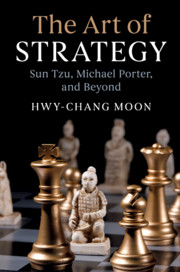
When it comes to strategy, how should we define victory? For centuries, Eastern and Western thinkers have grappled with this question, offering different answers. What can we learn from this difference? In The Art of Strategy, Moon provides a novel and systematic integration of the two dominant frameworks of the East and West: Sun Tzu's military strategy and Michael Porter's business strategy. This unlikely combination of thinking suggests an innovative extension of our understanding and practice of strategy, which will appeal to scholars, students, practitioners and general readers with an interest in strategy. By aligning the perspectives of these two great thinkers, Moon argues that true winning is about maximizing and optimizing overall value for all engaged stakeholders, and this requires a more efficient approach to strategy.
This Element reviews the first 120 years of organization theory, examining its development from the sociology of organizations and management theory. It is initially organized around two streams of thought. The first is found in political economy and the sociology of organizations, with an emphasis on understanding the new organizations that arose in the late nineteenth and early twentieth centuries. The second derives from practitioner–scholars, whose aim was to provide theories and approaches to managing these new organizations. The Element then shows how each of the streams of understanding and managing came together to produce organization theory. In doing this, it also describes how the institutional frameworks in academic associations, academic centres and journals came out of these approaches and how they strengthened the development of organization theory.
Research on innovation management has pointed out that the capitalization of collaborative innovation practices is influenced by firms’ internal context. This paper aims to answer the following question: which organizational factors help to overcome the challenges that firms face in the different phases of the collaborative innovation process? For this purpose, previous literature is revised and three case studies are analyzed by means of applying a framework that structures the collaborative innovation process in three areas of relevance (i.e., development, integration and commercialization of the innovation). The results of the analysis inform the proposal of a theoretical framework that identifies the organizational context factors that determine the success or failure of collaborative innovation practices in each of the stages of the process.
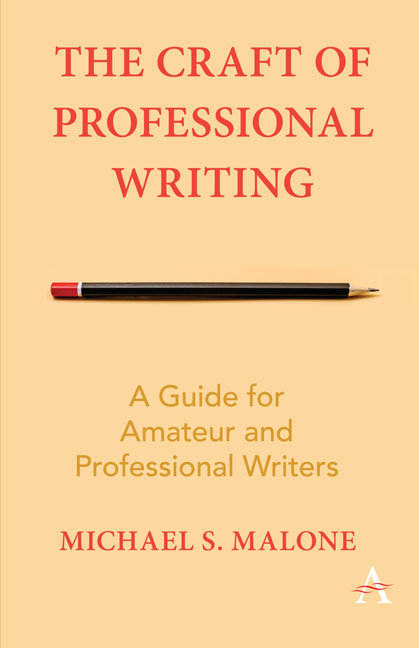
The Craft of Professional Writing is the most complete book ever written about the real-life work of being a writer. Covering topics ranging from business writing (advertising, PR) to commercial work (news reporting, feature writing, blogging, non-fiction books) to creative writing (screenplays and novels), as well as advice on pitching, rejection and leading a writer’s life, the narrative is filled with anecdotes and illuminating stories, as well as tricks of the trade in each form of writing. For the student, The Craft of Professional Writing is the most wide-ranging and practical textbook on the subject. Designed to be an instructional text for producing professional-level work, it is also a survey of the various writing professions to enable budding writers to make career decisions. For the professional, this book is the ultimate reference work—offering practical tips and advice they can return to again and again to help them through various phases of their career.
This Element describes child sexual abuse and the formal organizations in which it can occur, reviews extant perspectives on child abuse, and explains how an organization theory approach can advance understanding of this phenomenon. It then elaborates the main paths through which organizational structures can influence child sexual abuse in organizations and analyze how these structures operate through these paths to impact the perpetration, detection, and response to abuse. The analysis is illustrated throughout with reports of child sexual abuse published in a variety of sources. The Element concludes with a brief discussion of the policy implications of this analysis.
Generally, estimation of changes in social surplus requires knowledge of entire demand and supply schedules. Chapter 4 discusses direct estimation of demand and supply curves, focusing on the demand curve for the purpose of measuring consumer surplus. It assumes that there is a market demand schedule for the good in question, such as garbage collection or gasoline, and we can observe at least one point on this demand curve. In many applications of CBA, however, the markets for certain “goods,” such as human life or pollution, do not exist or are imperfect for reasons discussed in Chapter 3.
In the Affair of so much Importance to you, wherein you ask my Advice, I cannot for want of sufficient Premises, advise you what to determine, but if you please I will tell you how. When those difficult Cases occur, they are difficult, chiefly because while we have them under Consideration, all the Reasons pro and con are not present to the Mind at the same time; but sometimes one Set present themselves, and at other times another, the first being out of Sight. Hence the various Purposes or Inclinations that alternately prevail, and the Uncertainty that perplexes us.
The prices of most goods and services tend to rise over time, that is, we experience inflation. However, in practice, not all prices (or values) increase at the same rate. Some prices, such as house prices and fuel prices, are often much more volatile than others. For this reason, some countries exclude such volatile items from their basket of goods when computing the CPI. And the prices of some goods and services sometimes go in a different direction to other prices. For example, from December 2010 to December 2016 in the US, the all-items CPI rose about 10 percent; however, the price of houses rose about 21 percent, while the price of gold fell about 15 percent.1
It seems only natural to think about the alternative courses of action we face as individuals in terms of their costs and benefits. Is it appropriate to evaluate public policy alternatives in the same way? The CBA of the highway sketched in Chapter 1 identifies some of the practical difficulties analysts typically encounter in measuring costs and benefits. Yet, even if analysts can measure costs and benefits satisfactorily, evaluating alternatives solely in terms of their net benefits may not always be appropriate. An understanding of the conceptual foundations of CBA provides a basis for determining when CBA can be appropriately used as a decision rule, when it can usefully be part of a broader analysis, and when it should be avoided.
In the actual practice of ex anteCBA in circumstances involving significant risks, analysts almost always apply the Kaldor–Hicks criterion to expected net benefits. They typically estimate changes in social surplus conditional on particular contingencies occurring, and then they compute the expected value over the contingencies as explained in Chapter 11. Economists, however, now generally consider option price, the amount that individuals are willing to pay for policies prior to the realization of contingencies, to be the theoretically correct measure of willingness to pay in circumstances of uncertainty or risk.
Educational attainment can benefit society. Most directly, it usually increases the productivity of the educated. It can also provide external benefits to the rest of society by reducing the risks that individuals commit crimes or become dependent on social services. In developed economies, these external benefits are likely to be largest when attainment involves moving beyond secondary schooling. For example, in the United States only 83 percent of individuals overall, and 75 percent of African Americans, earn high school diplomas.1
Numerous studies have examined the benefits from and costs of higher education. The major benefit considered in these studies is the increase in earnings that results from additional education, some of which accrues to the individual and some of which accrues to the government as taxes. The major costs that are typically considered are school operating costs (which are covered by tuition, tax subsidies, and donations) and earnings forgone by students as a result of enrollment. This leaves out other potential benefits and costs, many of which occur outside the marketplace and some of which may be of considerable importance to students, other members of society, or both. These include, for example, higher education’s effects on the quality of life, child rearing, economic growth, health, crime, and governance.
This case summarizes an ex post CBA of the Tulsa Individual Development Account (IDA) program. The analysis is based on data collected 10 years after the initial random assignment of participants into treatment and control groups and about six years after the program ended.1 Most relevant to the subject of this chapter, it considers the distributional consequences of the IDA program from participant, government, and donor perspectives. In addition, it uses Monte Carlo simulation to assess uncertainty in the IDA CBA.
When evaluating government policies or projects, analysts must decide on the weights to apply to policy impacts that occur in different periods, which are normally measured in years.1 Using weights, denoted by wt, and estimates of the real annual net social benefits, NSBt, the estimated net present value (NPV) of a project is given by:2
Government policies, programs, and projects affect some individuals differently from others. Thus, in conducting CBAs, analysts sometimes report – indeed sometimes are required to report – benefits and costs for separate categories of people. The relevant classification of individuals into groups for this purpose usually depends on the specific policy under evaluation. Some common examples of categories include: consumers versus producers versus taxpayers, program participants versus non-participants, citizens (of a nation or a state or a city) versus non-citizens, and high-income groups versus low-income groups.
Cost–effectiveness analysis (CEA) is widely used as an alternative to CBA, especially in policy arenas such as education, health, and defense. It is used in situations with two characteristics. First, the policies being evaluated have one major benefit that analysts or clients are unwilling or unable to monetize. Many public health programs have this characteristic: their major purpose is to save lives (reduce fatality risk) and it may be possible to predict the numbers of statistical lives saved by alternative public health programs, but decision-makers are unwilling to place a monetary (dollar) value on a life saved. In national defense, analysts sometimes deal with intermediate goods with tenuous linkages to individual preferences.