Refine search
Actions for selected content:
46862 results in Management
Part III - Next Steps
-
- Book:
- Beyond Politics
- Published online:
- 11 December 2017
- Print publication:
- 21 December 2017, pp 381-450
-
- Chapter
- Export citation
Contents
-
- Book:
- Beyond Politics
- Published online:
- 11 December 2017
- Print publication:
- 21 December 2017, pp v-v
-
- Chapter
- Export citation
Copyright page
-
- Book:
- Beyond Politics
- Published online:
- 11 December 2017
- Print publication:
- 21 December 2017, pp iv-iv
-
- Chapter
- Export citation
5 - The Corporate Sector
- from Part II - Private Governance
-
- Book:
- Beyond Politics
- Published online:
- 11 December 2017
- Print publication:
- 21 December 2017, pp 177-244
-
- Chapter
- Export citation
Appendix: Further Readings
-
- Book:
- Beyond Politics
- Published online:
- 11 December 2017
- Print publication:
- 21 December 2017, pp 451-453
-
- Chapter
- Export citation
8 - Objections
- from Part III - Next Steps
-
- Book:
- Beyond Politics
- Published online:
- 11 December 2017
- Print publication:
- 21 December 2017, pp 383-406
-
- Chapter
- Export citation
Part I - Setting the Table
-
- Book:
- Beyond Politics
- Published online:
- 11 December 2017
- Print publication:
- 21 December 2017, pp 1-116
-
- Chapter
- Export citation
6 - The Household Sector
- from Part II - Private Governance
-
- Book:
- Beyond Politics
- Published online:
- 11 December 2017
- Print publication:
- 21 December 2017, pp 245-312
-
- Chapter
- Export citation
9 - New Directions and Extensions
- from Part III - Next Steps
-
- Book:
- Beyond Politics
- Published online:
- 11 December 2017
- Print publication:
- 21 December 2017, pp 407-437
-
- Chapter
- Export citation
3 - The Governance Challenge
- from Part I - Setting the Table
-
- Book:
- Beyond Politics
- Published online:
- 11 December 2017
- Print publication:
- 21 December 2017, pp 64-116
-
- Chapter
- Export citation
Acknowledgments
-
- Book:
- Beyond Politics
- Published online:
- 11 December 2017
- Print publication:
- 21 December 2017, pp xxi-xxvi
-
- Chapter
- Export citation
10 - Conclusion
- from Part III - Next Steps
-
- Book:
- Beyond Politics
- Published online:
- 11 December 2017
- Print publication:
- 21 December 2017, pp 438-450
-
- Chapter
- Export citation
7 - Cross-cutting Initiatives
- from Part II - Private Governance
-
- Book:
- Beyond Politics
- Published online:
- 11 December 2017
- Print publication:
- 21 December 2017, pp 313-380
-
- Chapter
- Export citation
4 - The Private Governance Opportunity
- from Part II - Private Governance
-
- Book:
- Beyond Politics
- Published online:
- 11 December 2017
- Print publication:
- 21 December 2017, pp 119-176
-
- Chapter
- Export citation
1 - Introduction
- from Part I - Setting the Table
-
- Book:
- Beyond Politics
- Published online:
- 11 December 2017
- Print publication:
- 21 December 2017, pp 3-36
-
- Chapter
- Export citation
Preface
-
- Book:
- Beyond Politics
- Published online:
- 11 December 2017
- Print publication:
- 21 December 2017, pp ix-xx
-
- Chapter
- Export citation
2 - The Climate Challenge
- from Part I - Setting the Table
-
- Book:
- Beyond Politics
- Published online:
- 11 December 2017
- Print publication:
- 21 December 2017, pp 37-63
-
- Chapter
- Export citation
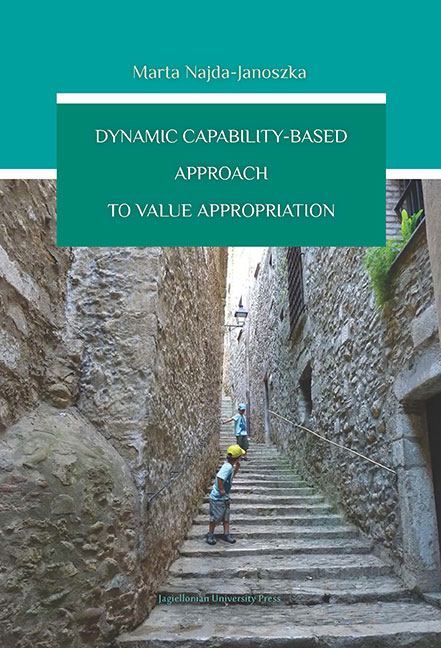
Dynamic Capability-Based Approach to Value Appropriation
-
- Published by:
- Jagiellonian University Press
- Published online:
- 20 December 2017
- Print publication:
- 01 May 2016
Karin Lukas, Barbara Linder, Astrid Kutrzeba and Claudia Sprenger, Corporate Accountability: The Role and Impact of Non-Judicial Grievance Mechanisms (UK: Edward Elgar Publishing, 2016), pp. ix + 397
-
- Journal:
- Business and Human Rights Journal / Volume 3 / Issue 2 / July 2018
- Published online by Cambridge University Press:
- 19 December 2017, pp. 303-306
-
- Article
- Export citation

Next Generation Technology-Enhanced Assessment
- Global Perspectives on Occupational and Workplace Testing
-
- Published online:
- 18 December 2017
- Print publication:
- 28 December 2017
