Refine search
Actions for selected content:
6997 results in Mathematical modeling and methods
AN OPTIMAL LINEAR FILTER FOR ESTIMATION OF RANDOM FUNCTIONS IN HILBERT SPACE
- Part of
-
- Journal:
- The ANZIAM Journal / Volume 62 / Issue 3 / July 2020
- Published online by Cambridge University Press:
- 07 January 2021, pp. 274-301
-
- Article
-
- You have access
- Export citation
-
Let $\boldsymbol{f}$ be a square-integrable, zero-mean, random vector with observable realizations in a Hilbert space H, and let $\boldsymbol{g}$ be an associated square-integrable, zero-mean, random vector with realizations which are not observable in a Hilbert space K. We seek an optimal filter in the form of a closed linear operator X acting on the observable realizations of a proximate vector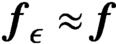 $\boldsymbol{f}_{\epsilon } \approx \boldsymbol{f}$ that provides the best estimate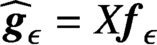 $\widehat{\boldsymbol{g}}_{\epsilon} = X \boldsymbol{f}_{\epsilon}$ of the vector $\boldsymbol{g}$. We assume the required covariance operators are known. The results are illustrated with a typical example.


ANZ VOLUME 62 ISSUE 2 COVER AND FRONT MATTER
-
- Journal:
- The ANZIAM Journal / Volume 62 / Issue 2 / April 2020
- Published online by Cambridge University Press:
- 22 December 2020, pp. f1-f2
-
- Article
-
- You have access
- Export citation
ANZ VOLUME 62 ISSUE 2 COVER AND BACK MATTER
-
- Journal:
- The ANZIAM Journal / Volume 62 / Issue 2 / April 2020
- Published online by Cambridge University Press:
- 22 December 2020, pp. b1-b8
-
- Article
-
- You have access
- Export citation
MODELLING HUMAN CARRYING CAPACITY AS A FUNCTION OF FOOD AVAILABILITY
- Part of
-
- Journal:
- The ANZIAM Journal / Volume 62 / Issue 3 / July 2020
- Published online by Cambridge University Press:
- 18 December 2020, pp. 318-333
-
- Article
-
- You have access
- Export citation
3 - Langevin and Fokker–Planck Equations and Their Applications
-
- Book:
- Thinking Probabilistically
- Published online:
- 15 December 2020
- Print publication:
- 17 December 2020, pp 39-66
-
- Chapter
- Export citation
8 - Random Matrix Theory
-
- Book:
- Thinking Probabilistically
- Published online:
- 15 December 2020
- Print publication:
- 17 December 2020, pp 145-183
-
- Chapter
- Export citation
Contents
-
- Book:
- Thinking Probabilistically
- Published online:
- 15 December 2020
- Print publication:
- 17 December 2020, pp v-vii
-
- Chapter
- Export citation
Appendix F - Notation, Notation. . .
-
- Book:
- Thinking Probabilistically
- Published online:
- 15 December 2020
- Print publication:
- 17 December 2020, pp 222-224
-
- Chapter
- Export citation
References
-
- Book:
- Thinking Probabilistically
- Published online:
- 15 December 2020
- Print publication:
- 17 December 2020, pp 225-231
-
- Chapter
- Export citation
2 - Random Walks
-
- Book:
- Thinking Probabilistically
- Published online:
- 15 December 2020
- Print publication:
- 17 December 2020, pp 15-38
-
- Chapter
- Export citation
5 - Noise
-
- Book:
- Thinking Probabilistically
- Published online:
- 15 December 2020
- Print publication:
- 17 December 2020, pp 81-95
-
- Chapter
- Export citation
Frontmatter
-
- Book:
- Thinking Probabilistically
- Published online:
- 15 December 2020
- Print publication:
- 17 December 2020, pp i-iv
-
- Chapter
- Export citation
7 - Anomalous Diffusion
-
- Book:
- Thinking Probabilistically
- Published online:
- 15 December 2020
- Print publication:
- 17 December 2020, pp 133-144
-
- Chapter
- Export citation
6 - Generalized Central Limit Theorem and Extreme Value Statistics
-
- Book:
- Thinking Probabilistically
- Published online:
- 15 December 2020
- Print publication:
- 17 December 2020, pp 96-132
-
- Chapter
- Export citation
Appendix B - A Brief Linear Algebra Reminder, and Some Gaussian Integrals
-
- Book:
- Thinking Probabilistically
- Published online:
- 15 December 2020
- Print publication:
- 17 December 2020, pp 211-213
-
- Chapter
- Export citation
Appendix E - Minimizing Functionals, the Divergence Theorem, and Saddle-Point Approximations
-
- Book:
- Thinking Probabilistically
- Published online:
- 15 December 2020
- Print publication:
- 17 December 2020, pp 220-221
-
- Chapter
- Export citation
Acknowledgements
-
- Book:
- Thinking Probabilistically
- Published online:
- 15 December 2020
- Print publication:
- 17 December 2020, pp viii-viii
-
- Chapter
- Export citation
Appendix D - Review of Newtonian Mechanics, Basic Statistical Mechanics, and Hessians
-
- Book:
- Thinking Probabilistically
- Published online:
- 15 December 2020
- Print publication:
- 17 December 2020, pp 217-219
-
- Chapter
- Export citation
Index
-
- Book:
- Thinking Probabilistically
- Published online:
- 15 December 2020
- Print publication:
- 17 December 2020, pp 232-234
-
- Chapter
- Export citation
Appendix C - Contour Integration and Fourier Transform Refresher
-
- Book:
- Thinking Probabilistically
- Published online:
- 15 December 2020
- Print publication:
- 17 December 2020, pp 214-216
-
- Chapter
- Export citation
