Refine search
Actions for selected content:
3876 results in Optimization
15 - Smoothed Analysis of Pareto Curves in Multiobjective Optimization
- from Part Four - Smoothed Analysis
-
-
- Book:
- Beyond the Worst-Case Analysis of Algorithms
- Published online:
- 17 December 2020
- Print publication:
- 14 January 2021, pp 334-358
-
- Chapter
- Export citation
4 - Resource Augmentation
- from Part One - Refinements of Worst-Case Analysis
-
-
- Book:
- Beyond the Worst-Case Analysis of Algorithms
- Published online:
- 17 December 2020
- Print publication:
- 14 January 2021, pp 72-92
-
- Chapter
- Export citation
2 - Parameterized Algorithms
- from Part One - Refinements of Worst-Case Analysis
-
-
- Book:
- Beyond the Worst-Case Analysis of Algorithms
- Published online:
- 17 December 2020
- Print publication:
- 14 January 2021, pp 27-51
-
- Chapter
- Export citation
20 - Topic Models and Nonnegative Matrix Factorization
- from Part Five - Applications in Machine Learning and Statistics
-
-
- Book:
- Beyond the Worst-Case Analysis of Algorithms
- Published online:
- 17 December 2020
- Print publication:
- 14 January 2021, pp 445-464
-
- Chapter
- Export citation
5 - Perturbation Resilience
- from Part Two - Deterministic Models of Data
-
-
- Book:
- Beyond the Worst-Case Analysis of Algorithms
- Published online:
- 17 December 2020
- Print publication:
- 14 January 2021, pp 95-119
-
- Chapter
- Export citation
27 - Prior-Independent Auctions
- from Part Six - Further Applications
-
-
- Book:
- Beyond the Worst-Case Analysis of Algorithms
- Published online:
- 17 December 2020
- Print publication:
- 14 January 2021, pp 586-605
-
- Chapter
- Export citation
17 - Robust High-Dimensional Statistics
- from Part Five - Applications in Machine Learning and Statistics
-
-
- Book:
- Beyond the Worst-Case Analysis of Algorithms
- Published online:
- 17 December 2020
- Print publication:
- 14 January 2021, pp 382-402
-
- Chapter
- Export citation
Part Four - Smoothed Analysis
-
- Book:
- Beyond the Worst-Case Analysis of Algorithms
- Published online:
- 17 December 2020
- Print publication:
- 14 January 2021, pp 283-284
-
- Chapter
- Export citation
3 - From Adaptive Analysis to Instance Optimality
- from Part One - Refinements of Worst-Case Analysis
-
-
- Book:
- Beyond the Worst-Case Analysis of Algorithms
- Published online:
- 17 December 2020
- Print publication:
- 14 January 2021, pp 52-71
-
- Chapter
- Export citation
Part Two - Deterministic Models of Data
-
- Book:
- Beyond the Worst-Case Analysis of Algorithms
- Published online:
- 17 December 2020
- Print publication:
- 14 January 2021, pp 93-94
-
- Chapter
- Export citation
22 - Generalization in Overparameterized Models
- from Part Five - Applications in Machine Learning and Statistics
-
-
- Book:
- Beyond the Worst-Case Analysis of Algorithms
- Published online:
- 17 December 2020
- Print publication:
- 14 January 2021, pp 486-505
-
- Chapter
- Export citation
19 - Efficient Tensor Decompositions
- from Part Five - Applications in Machine Learning and Statistics
-
-
- Book:
- Beyond the Worst-Case Analysis of Algorithms
- Published online:
- 17 December 2020
- Print publication:
- 14 January 2021, pp 424-444
-
- Chapter
- Export citation
LINEARLY IMPLICIT ENERGY-PRESERVING FOURIER PSEUDOSPECTRAL SCHEMES FOR THE COMPLEX MODIFIED KORTEWEG–DE VRIES EQUATION
- Part of
-
- Journal:
- The ANZIAM Journal / Volume 62 / Issue 3 / July 2020
- Published online by Cambridge University Press:
- 12 January 2021, pp. 256-273
-
- Article
-
- You have access
- Export citation
CONFORMAL IMAGE REGISTRATION BASED ON CONSTRAINED OPTIMIZATION
-
- Journal:
- The ANZIAM Journal / Volume 62 / Issue 3 / July 2020
- Published online by Cambridge University Press:
- 12 January 2021, pp. 235-255
-
- Article
-
- You have access
- Export citation
POINTWISE RESIDUAL METHOD FOR SOLVING PRIMAL AND DUAL ILL-POSED LINEAR PROGRAMMING PROBLEMS WITH APPROXIMATE DATA
-
- Journal:
- The ANZIAM Journal / Volume 62 / Issue 3 / July 2020
- Published online by Cambridge University Press:
- 12 January 2021, pp. 302-317
-
- Article
-
- You have access
- Export citation
DRAPING WOVEN SHEETS
- Part of
-
- Journal:
- The ANZIAM Journal / Volume 62 / Issue 4 / October 2020
- Published online by Cambridge University Press:
- 07 January 2021, pp. 355-385
-
- Article
-
- You have access
- Export citation
AN OPTIMAL LINEAR FILTER FOR ESTIMATION OF RANDOM FUNCTIONS IN HILBERT SPACE
- Part of
-
- Journal:
- The ANZIAM Journal / Volume 62 / Issue 3 / July 2020
- Published online by Cambridge University Press:
- 07 January 2021, pp. 274-301
-
- Article
-
- You have access
- Export citation
-
Let $\boldsymbol{f}$ be a square-integrable, zero-mean, random vector with observable realizations in a Hilbert space H, and let $\boldsymbol{g}$ be an associated square-integrable, zero-mean, random vector with realizations which are not observable in a Hilbert space K. We seek an optimal filter in the form of a closed linear operator X acting on the observable realizations of a proximate vector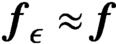 $\boldsymbol{f}_{\epsilon } \approx \boldsymbol{f}$ that provides the best estimate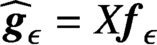 $\widehat{\boldsymbol{g}}_{\epsilon} = X \boldsymbol{f}_{\epsilon}$ of the vector $\boldsymbol{g}$. We assume the required covariance operators are known. The results are illustrated with a typical example.


ANZ VOLUME 62 ISSUE 2 COVER AND FRONT MATTER
-
- Journal:
- The ANZIAM Journal / Volume 62 / Issue 2 / April 2020
- Published online by Cambridge University Press:
- 22 December 2020, pp. f1-f2
-
- Article
-
- You have access
- Export citation
ANZ VOLUME 62 ISSUE 2 COVER AND BACK MATTER
-
- Journal:
- The ANZIAM Journal / Volume 62 / Issue 2 / April 2020
- Published online by Cambridge University Press:
- 22 December 2020, pp. b1-b8
-
- Article
-
- You have access
- Export citation
MODELLING HUMAN CARRYING CAPACITY AS A FUNCTION OF FOOD AVAILABILITY
- Part of
-
- Journal:
- The ANZIAM Journal / Volume 62 / Issue 3 / July 2020
- Published online by Cambridge University Press:
- 18 December 2020, pp. 318-333
-
- Article
-
- You have access
- Export citation
