Refine search
Actions for selected content:
3664 results in Opera
The Staging of Salieri’s Les Danaïdes as Seen by a Cellist in the Orchestra
-
- Journal:
- Cambridge Opera Journal / Volume 26 / Issue 1 / March 2014
- Published online by Cambridge University Press:
- 19 February 2014, pp. 65-82
-
- Article
- Export citation
OPR volume 26 issue 1 Cover and Back matter
-
- Journal:
- Cambridge Opera Journal / Volume 26 / Issue 1 / March 2014
- Published online by Cambridge University Press:
- 19 February 2014, pp. b1-b4
-
- Article
-
- You have access
- Export citation
Pimmalione: Rousseau and the Melodramatisation of Italian Opera
-
- Journal:
- Cambridge Opera Journal / Volume 26 / Issue 1 / March 2014
- Published online by Cambridge University Press:
- 19 February 2014, pp. 1-39
-
- Article
- Export citation
OPR volume 26 issue 1 Cover and Front matter
-
- Journal:
- Cambridge Opera Journal / Volume 26 / Issue 1 / March 2014
- Published online by Cambridge University Press:
- 19 February 2014, pp. f1-f4
-
- Article
-
- You have access
- Export citation

Laughter between Two Revolutions
- Opera Buffa in Italy, 1831-1848
-
- Published by:
- Boydell & Brewer
- Published online:
- 05 December 2013
- Print publication:
- 01 December 2013
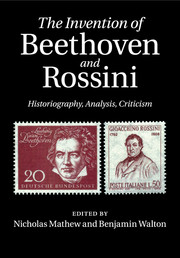
The Invention of Beethoven and Rossini
- Historiography, Analysis, Criticism
-
- Published online:
- 05 December 2013
- Print publication:
- 07 November 2013

Friedelind Wagner
- Richard Wagner's Rebellious Granddaughter
-
- Published by:
- Boydell & Brewer
- Published online:
- 05 December 2013
- Print publication:
- 17 October 2013
Dedication
-
- Book:
- Laughter between Two Revolutions
- Published by:
- Boydell & Brewer
- Published online:
- 05 December 2013
- Print publication:
- 01 December 2013, pp v-vi
-
- Chapter
- Export citation
3 - Old Librettos Revisited: Gaetano Rossi and Luigi Ricci's Le nozze di Figaro (1838) and Other Remakes
-
- Book:
- Laughter between Two Revolutions
- Published by:
- Boydell & Brewer
- Published online:
- 05 December 2013
- Print publication:
- 01 December 2013, pp 89-138
-
- Chapter
- Export citation
1 - Opera Buffa in 1832: Il nuovo Figaro and L'elisir d'amore
-
- Book:
- Laughter between Two Revolutions
- Published by:
- Boydell & Brewer
- Published online:
- 05 December 2013
- Print publication:
- 01 December 2013, pp 21-56
-
- Chapter
- Export citation
Index
-
- Book:
- Laughter between Two Revolutions
- Published by:
- Boydell & Brewer
- Published online:
- 05 December 2013
- Print publication:
- 01 December 2013, pp 297-304
-
- Chapter
- Export citation
Acknowledgments
-
- Book:
- Laughter between Two Revolutions
- Published by:
- Boydell & Brewer
- Published online:
- 05 December 2013
- Print publication:
- 01 December 2013, pp xi-xiv
-
- Chapter
- Export citation
Notes
-
- Book:
- Laughter between Two Revolutions
- Published by:
- Boydell & Brewer
- Published online:
- 05 December 2013
- Print publication:
- 01 December 2013, pp 241-282
-
- Chapter
- Export citation
List of Figures
-
- Book:
- Laughter between Two Revolutions
- Published by:
- Boydell & Brewer
- Published online:
- 05 December 2013
- Print publication:
- 01 December 2013, pp ix-x
-
- Chapter
- Export citation
Selected Bibliography
-
- Book:
- Laughter between Two Revolutions
- Published by:
- Boydell & Brewer
- Published online:
- 05 December 2013
- Print publication:
- 01 December 2013, pp 283-296
-
- Chapter
- Export citation
Conclusion: The Ricci Legacy, Crispino e la comare (1850), and Post-1848 Opera Buffa
-
- Book:
- Laughter between Two Revolutions
- Published by:
- Boydell & Brewer
- Published online:
- 05 December 2013
- Print publication:
- 01 December 2013, pp 231-240
-
- Chapter
- Export citation
6 - “Evviva la Francia”? Nationality, Censorship, and Donizetti's La figlia del reggimento (1840)
-
- Book:
- Laughter between Two Revolutions
- Published by:
- Boydell & Brewer
- Published online:
- 05 December 2013
- Print publication:
- 01 December 2013, pp 199-230
-
- Chapter
- Export citation
2 - The Ricci Supremacy and the Celebration of Italian Comedy: Un'avventura di Scaramuccia (1834)
-
- Book:
- Laughter between Two Revolutions
- Published by:
- Boydell & Brewer
- Published online:
- 05 December 2013
- Print publication:
- 01 December 2013, pp 57-88
-
- Chapter
- Export citation
5 - Genre in Giovanni Peruzzini and Lauro Rossi's Il borgomastro di Schiedam (1844)
-
- Book:
- Laughter between Two Revolutions
- Published by:
- Boydell & Brewer
- Published online:
- 05 December 2013
- Print publication:
- 01 December 2013, pp 165-198
-
- Chapter
- Export citation
Introduction: Comedy in an Age of Tragedy
-
- Book:
- Laughter between Two Revolutions
- Published by:
- Boydell & Brewer
- Published online:
- 05 December 2013
- Print publication:
- 01 December 2013, pp 1-20
-
- Chapter
- Export citation
