To save content items to your account,
please confirm that you agree to abide by our usage policies.
If this is the first time you use this feature, you will be asked to authorise Cambridge Core to connect with your account.
Find out more about saving content to .
To save content items to your Kindle, first ensure no-reply@cambridge.org
is added to your Approved Personal Document E-mail List under your Personal Document Settings
on the Manage Your Content and Devices page of your Amazon account. Then enter the ‘name’ part
of your Kindle email address below.
Find out more about saving to your Kindle.
Note you can select to save to either the @free.kindle.com or @kindle.com variations.
‘@free.kindle.com’ emails are free but can only be saved to your device when it is connected to wi-fi.
‘@kindle.com’ emails can be delivered even when you are not connected to wi-fi, but note that service fees apply.
In this chapter we compare and contrast our natural deduction proof method with another way of proving sequents: the truth-tree method. The method of truthtrees (or semantic tableaux as it is also called) was developed by the Dutch logician E. W. Beth (1908–64). We also show how truth-tables can be used to test for validity and invalidity. Both methods – truth-trees and truth-tables – have similar advantages and disadvantages.
SOME COMMENTS ON TRUTH-TREES
The tree method of proof has two interesting features. First, it is entirely mechanical. No creativity or ingenuity is required in order to complete a tree. Second, the tree method, implemented correctly, is guaranteed to determine whether a given sequent of elementary logic is valid or invalid.
Our natural deduction system has neither of these features. It can take insight to see how to prove a valid sequent using our inference rules. And our natural deduction system can only show a valid sequent to be valid. It cannot prove an invalid sequent to be invalid. But the tree method can conclusively show an invalid sequent to be invalid.
These noteworthy features of the tree method come at a cost. First, using the tree method we can easily determine whether a given sequent is valid or invalid, but we get no sense of why it is valid or invalid. In contrast, natural deduction proofs allow us to see, step by step, that the conclusion of a valid sequent follows from its premises, and why. Second, tree proofs can become very unwieldy, especially in the case of more complex sequents. Natural deduction proofs, in contrast, are relatively compact and easy to follow.
The aim of this book is to introduce students to the ideas and techniques of symbolic logic. Logic is the study of arguments. After working through this book the reader should be in a position to identify and evaluate a wide range of arguments.
Once an argument has been identified, we need to determine whether it is a good argument or a bad one. By ‘good argument’ we mean a valid argument; by ‘bad argument’ we mean an invalid argument. Our primary method for determining validity will be natural deduction proofs, but we also use the (simpler but more cumbersome) method of truth-trees. In addition, we briefly show how truth-tables can also be used to test for validity.
Elementary logic studies arguments, and, in doing so, it studies the logical or inferential properties of the so-called logical connectives: ‘and’, ‘if … then …’, ‘or’, ‘not’ and ‘if and only if’. We use these logical words much of the time, even if we might find it hard to say what they mean. In logic, however, these key words have a clear and explicit meaning.
SOME KEY TERMS AND IDEAS
Premises and conclusion
In elementary logic, the premises and conclusion of an argument are all declarative sentences; that is, they are sentences that are either true or false. There are only two truth-values and each declarative sentence has one and only one of them. ‘The cat is on the mat’, ‘no one loves Raymond’ and ‘all bachelors are bald’ are examples of declarative sentences.
In his preface Mr Wilson writes 'I feel that a great many adults … would do better to spend less time in simply accepting the concepts of others uncritically, and more time in learning how to analyse concepts in general'. Mr Wilson starts by describing the techniques of conceptual analysis. He then gives examples of them in action by composing answers to specific questions and by criticism of quoted passages of argument. Chapter 3 sums up the importance of this kind of mental activity. Chapter 4 presents selections for the reader to analyse, followed by questions of university entrance/scholarship type. This is a book to be worked through, in a sense a text-book.
This is an introductory 2001 textbook on probability and induction written by one of the world's foremost philosophers of science. The book has been designed to offer maximal accessibility to the widest range of students (not only those majoring in philosophy) and assumes no formal training in elementary symbolic logic. It offers a comprehensive course covering all basic definitions of induction and probability, and considers such topics as decision theory, Bayesianism, frequency ideas, and the philosophical problem of induction. The key features of this book are a lively and vigorous prose style; lucid and systematic organization and presentation of ideas; many practical applications; a rich supply of exercises drawing on examples from such fields as psychology, ecology, economics, bioethics, engineering, and political science; numerous brief historical accounts of how fundamental ideas of probability and induction developed; and a full bibliography of further reading.
In 1931, the young Kurt Gödel published his First Incompleteness Theorem, which tells us that, for any sufficiently rich theory of arithmetic, there are some arithmetical truths the theory cannot prove. This remarkable result is among the most intriguing (and most misunderstood) in logic. Gödel also outlined an equally significant Second Incompleteness Theorem. How are these Theorems established, and why do they matter? Peter Smith answers these questions by presenting an unusual variety of proofs for the First Theorem, showing how to prove the Second Theorem, and exploring a family of related results (including some not easily available elsewhere). The formal explanations are interwoven with discussions of the wider significance of the two Theorems. This book will be accessible to philosophy students with a limited formal background. It is equally suitable for mathematics students taking a first course in mathematical logic.
One of the questions that philosophers discuss is: How can we avoid, or at least reduce, errors when explaining the world? The skeptical answer to this question is: We cannot avoid errors since no statement is certain or even definitely plausible, but we can eliminate some past errors. This book advocates the skeptical position and discusses its practical applications in science, ethics, aesthetics, and politics. It brings philosophy down to earth and comprises an outline of a skeptical guide to the real world.
Fundamentals of Critical Argumentation presents the basic tools for the identification, analysis, and evaluation of common arguments for beginners. The book teaches by using examples of arguments in dialogues, both in the text itself and in the exercises. Examples of controversial legal, political, and ethical arguments are analyzed. Illustrating the most common kinds of arguments, the book also explains how to evaluate each kind by critical questioning. Douglas Walton shows how arguments can be reasonable under the right dialogue conditions by using critical questions to evaluate them. The book teaches by example, both in the text itself and in exercises, but it is based on methods that have been developed through the author's thirty years of research in argumentation studies.
This is a book about sensory states and their apparent characteristics. It confronts a whole series of metaphysical and epistemological questions and presents an argument for type materialism: the view that sensory states are identical with the neural states with which they are correlated. According to type materialism, sensations are only possessed by human beings and members of related biological species; silicon-based androids cannot have sensations. The author rebuts several other rival theories (dualism, double aspect theory, eliminative materialism, functionalism), and explores a number of important issues: the forms and limits of introspective awareness of sensations, the semantic properties of sensory concepts, knowledge of other minds, and unity of consciousness. The book is a significant contribution to the philosophy of mind, and has much to say to psychologists and cognitive scientists.
This is the first of a three-volume collection of David Lewis's most recent papers in all the areas to which he has made significant contributions. The purpose of this collection (and the two volumes to follow) is to disseminate even more widely the work of a preeminent and influential late twentieth-century philosopher. The papers are now offered in a readily accessible format. This first volume is devoted to Lewis's work on philosophical logic from the last twenty-five years. The topics covered include: deploying the methods of formal semantics from artificial formalised languages to natural languages, model-theoretic investigations of intensional logic, contradiction, relevance, the differences between analog and digital representation, and questions arising from the construction of ambitious formalised philosophical systems. The volume will serve as an important reference tool for all philosophers and their students.
Ainslie argues that our responses to the threat of our own inconsistency determine the basic fabric of human culture. He suggests that individuals are more like populations of bargaining agents than like the hierarchical command structures envisaged by cognitive psychologists. The forces that create and constrain these populations help us understand so much that is puzzling in human action and interaction: from addictions and other self-defeating behaviors to the experience of willfulness, from pathological over-control and self-deception to subtler forms of behavior such as altruism, sadism, gambling, and the 'social construction' of belief. This book integrates approaches from experimental psychology, philosophy of mind, microeconomics, and decision science to present one of the most profound and expert accounts of human irrationality available. It will be of great interest to philosophers and an important resource for professionals and students in psychology, economics and political science.
This new and expanded edition of The Logic of Real Arguments explains a distinctive method for analysing and evaluating arguments. It discusses many examples, ranging from newspaper articles to extracts from classic texts, and from easy passages to much more difficult ones. It shows students how to use the question 'What argument or evidence would justify me in believing P?', and also how to deal with suppositional arguments beginning with the phrase 'Suppose that X were the case.' It aims to help students to think critically about the kind of sustained, theoretical arguments which they commonly encounter in the course of their studies, including arguments about the natural world, about society, about policy, and about philosophy. It will be valuable for students and their teachers in a wide range of disciplines including philosophy, law and the social sciences.
Second edition of the introductory guidebook to the basic principles of constructing sound arguments and criticising bad ones. Non-technical in approach, it is based on 186 examples, which Douglas Walton, a leading authority in the field of informal logic, discusses and evaluates in clear, illustrative detail. Walton explains how errors, fallacies, and other key failures of argument occur. He shows how correct uses of argument are based on sound strategies for reasoned persuasion and critical responses. This edition takes into account many developments in the field of argumentation study that have occurred since 1989, many created by the author. Drawing on these developments, Walton includes and analyzes 36 new topical examples and also brings in work on argumentation schemes. Ideally suited for use in courses in informal logic and introduction to philosophy, this book will also be valuable to students of pragmatics, rhetoric, and speech communication.
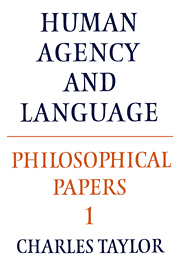
Charles Taylor has been one of the most original and influential figures in contemporary philosophy: his 'philosophical anthropology' spans an unusually wide range of theoretical interests and draws creatively on both Anglo-American and Continental traditions in philosophy. A selection of his published papers is presented here in two volumes, structured to indicate the direction and essential unity of the work. He starts from a polemical concern with behaviourism and other reductionist theories (particularly in psychology and the philosophy of language) which aim to model the study of man on the natural sciences. This leads to a general critique of naturalism, its historical development and its importance for modern culture and consciousness; and that in turn points, forward to a positive account of human agency and the self, the constitutive role of language and value, and the scope of practical reason. The volumes jointly present some two decades of work on these fundamental themes, and convey strongly the tenacity, verve and versatility of the author in grappling with them. They will interest a very wide range of philosophers and students of the human sciences.
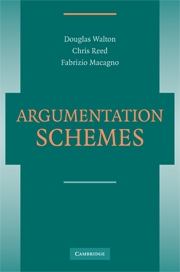
This book provides a systematic analysis of many common argumentation schemes and a compendium of 96 schemes. The study of these schemes, or forms of argument that capture stereotypical patterns of human reasoning, is at the core of argumentation research. Surveying all aspects of argumentation schemes from the ground up, the book takes the reader from the elementary exposition in the first chapter to the latest state of the art in the research efforts to formalize and classify the schemes, outlined in the last chapter. It provides a systematic and comprehensive account, with notation suitable for computational applications that increasingly make use of argumentation schemes.
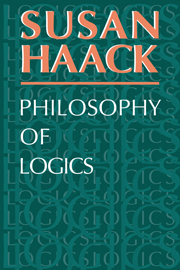
The first systematic exposition of all the central topics in the philosophy of logic, Susan Haack's book has established an international reputation (translated into five languages) for its accessibility, clarity, conciseness, orderliness, and range as well as for its thorough scholarship and careful analyses. Haack discusses the scope and purpose of logic, validity, truth-functions, quantification and ontology, names, descriptions, truth, truth-bearers, the set-theoretical and semantic paradoxes, and modality. She also explores the motivations for a whole range of non-classical systems of logic, including many-valued logics, fuzzy logic, moddal and tense logics, and relevance logics. Persupposing only an elementary knowledge of formal logic, this book includes many useful summary tables and diagrams, as well as a helpful glossary of technical terms. Wide-ranging, informative, and eminently readable, this book has proven a valuable resource for generations of students and scholars in a variety of disciplines outside philosophy needing guidance on the philosophy of logic.
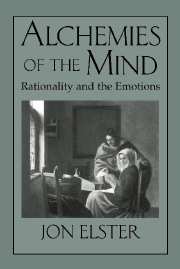
Jon Elster has written a comprehensive, wide-ranging book on the emotions in which he considers the full range of theoretical approaches. Drawing on history, literature, philosophy and psychology, Elster presents a complete account of the role of the emotions in human behaviour. While acknowledging the importance of neurophysiology and laboratory experiment for the study of emotions, Elster argues that the serious student of the emotions can learn more from the great thinkers and writers of the past, from Aristotle to Jane Austen. He attaches particular importance to the work of the French moralists, notably La Rochefoucauld, who demonstrated the way esteem and self-esteem shape human motivation. The book also maintains a running dialogue with economists and rational-choice theorists. Combining methodological and theoretical arguments with empirical case-studies and written with Elster's customary verve and economy, this book has great cross-disciplinary appeal.