Refine search
Actions for selected content:
238501 results in Physics and Astronomy
A 70.7% slope-efficiency, mid-infrared tunable Fe:ZnSe laser gain-switched by a high-energy 3.47 μm potassium titanyl arsenate optical parametric oscillator and amplifier
-
- Journal:
- High Power Laser Science and Engineering / Volume 13 / 2025
- Published online by Cambridge University Press:
- 06 October 2025, e106
-
- Article
-
- You have access
- Open access
- HTML
- Export citation

Attenuating transmitted infragravity waves by a small heaving body
-
- Journal:
- Journal of Fluid Mechanics / Volume 1020 / 10 October 2025
- Published online by Cambridge University Press:
- 06 October 2025, A29
-
- Article
-
- You have access
- Open access
- HTML
- Export citation

Direct numerical simulation of nucleate boiling with a resolved microlayer and conjugate heat transfer
-
- Journal:
- Journal of Fluid Mechanics / Volume 1020 / 10 October 2025
- Published online by Cambridge University Press:
- 06 October 2025, A30
-
- Article
-
- You have access
- Open access
- HTML
- Export citation

Derivation of linearly stable Onsager symmetry principle-consistent equations and their validation for force-driven Poiseuille flow
-
- Journal:
- Journal of Fluid Mechanics / Volume 1020 / 10 October 2025
- Published online by Cambridge University Press:
- 06 October 2025, A31
-
- Article
-
- You have access
- Open access
- HTML
- Export citation
Complex analysis of laser-induced contamination in high-reflectivity mirrors
-
- Journal:
- High Power Laser Science and Engineering / Volume 13 / 2025
- Published online by Cambridge University Press:
- 06 October 2025, e108
-
- Article
-
- You have access
- Open access
- HTML
- Export citation

Global instability of flows through single- and double-bifurcation airway models
-
- Journal:
- Journal of Fluid Mechanics / Volume 1020 / 10 October 2025
- Published online by Cambridge University Press:
- 06 October 2025, A32
-
- Article
-
- You have access
- Open access
- HTML
- Export citation
-
This study considers the global instability of unidirectional flows through single, and double, bifurcation models using linear stability and direct numerical simulation (DNS). The motivation is respiratory flows, so we consider flow in both directions, through two geometries. We identify conditions (quantified by the Reynolds number, ${Re}=U^*D/\nu$, where $U^*$ is the peak centreline velocity, $D$ is the primary pipe diameter and $\nu$ is the kinematic viscosity) where temporal fluctuations occur using DNS. We calculate the linear stability of the steady flows, identifying the critical Reynolds number and leading unstable modes. For flows from single to double pipe, the critical Reynolds number is dependent on the number of bifurcations in the domain, but the mode structures are similar, with growth observed in regions dominated by longitudinal vortices formed by the centrifugal imbalance of flows passing through curved bifurcations. Flows in the opposite direction, from double to single pipe, also depend on the number of bifurcations in the domain. The flow through the double-bifurcation case undergoes two spatial symmetry-breaking bifurcations, altering the mode structure and critical Reynolds number. In all cases, the critical Reynolds number closely matches with temporal fluctuations observed from DNS, suggesting transition is the result of a linear instability, similar to other curved geometries like toroidal and helical pipes. We compare the frequencies of the modes with the frequencies observed from DNS, finding a close match during both initial and saturated flows. These results are important for understanding respiratory flows where turbulent mixing and streaming contribute to gas transport.


Plasma formation with regulated electric potential distribution in SMOLA helical mirror device
- Part of
-
- Journal:
- Journal of Plasma Physics / Volume 91 / Issue 5 / October 2025
- Published online by Cambridge University Press:
- 06 October 2025, E138
-
- Article
-
- You have access
- Open access
- HTML
- Export citation
-
This paper presents experimental results from the SMOLA device, constructed at the Budker Institute of Nuclear Physics, to verify the concept of helical mirror confinement. The experiments discussed focus on collision regimes and plasma rotation in the transport section, controlled primarily by the axisymmetric plasma gun. The plasma gun of the SMOLA comprises a lanthanum hexaboride cathode, a hollow copper anode and magnetic coils, forming a magnetron discharge with a high degree of ionisation and a radial electric field for ${\textbf{E}} \boldsymbol{\times} {\textbf{B}}$ drift. Ion collisionality is adjustable from collisional to collisionless via magnetic configuration and gas feed of the plasma gun. The main processes in collisions are the ion–ion binary collisions. Electric potential radial distribution, governed by discharge voltage, the anode geometry and its potential, enables ${\textbf{E}} \boldsymbol{\times} {\textbf{B}}$ plasma rotation such that the axial magnetic mirrors velocity in the rotating plasma reference frame can be comparable to the ion thermal velocity ( $V_Z \geqslant V_{T_i}$), which realises conditions for effective plasma confinement.


Effects of phase transition and fluid properties on sloshing-induced impact pressures
-
- Journal:
- Journal of Fluid Mechanics / Volume 1020 / 10 October 2025
- Published online by Cambridge University Press:
- 06 October 2025, A27
-
- Article
-
- You have access
- Open access
- HTML
- Export citation
Status and perspectives of the FUSION INFN project for the study and optimization of the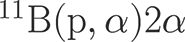 $^{11}\text{B}(\text{p},\alpha)2\alpha$ nuclear fusion reaction for Inertial Confinement applications
-
- Journal:
- Laser and Particle Beams / Volume 43 / 2025
- Published online by Cambridge University Press:
- 06 October 2025, e4
-
- Article
-
- You have access
- Open access
- HTML
- Export citation
-
The FUSION project (an acronym for FUsion StudIes of prOton boron Neutron-less reaction in laser-generated plasma) was launched in 2022 by researchers from INFN (Istituto Nazionale di Fisica Nucleare) and ENEA. This project marks the first scientific initiative funded by INFN in the field of Inertial Confinement Fusion (ICF). The main objectives of FUSION are to develop a new generation of solid targets designed to enhance the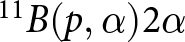 $^{11}B(p,\alpha)2\alpha$ fusion reaction rate, being this reaction a potential candidate for future ICF schemes. FUSION will also focus on designing novel diagnostic techniques for measuring reaction products and, ultimately, estimating alpha and proton cross-sections in a plasma environment.
The project will be carried out through two experimental campaigns at a laser facility equipped with a high-energy, long-pulse (picosecond) laser. In the proposed experimental setup, the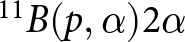 $^{11}B(p,\alpha)2\alpha$ reaction will be triggered simultaneously ‘in target’ by the protons generated in the laser matter interaction and 11B present in the same expanding plasma and in the ‘pitcher-catcher’ configuration. In FUSION, a set of measurements will also be dedicated to a first estimation of the proton and alpha-stopping power in a plasma. FUSION will enable a comprehensive understanding of the reactions and will help in optimize the conditions for future applications in inertial nuclear fusion with the $^{11}B(p,\alpha)2\alpha$ reaction.

Combinatorial cusp count and clover invariants
- Part of
-
- Journal:
- Mathematical Proceedings of the Cambridge Philosophical Society / Volume 180 / Issue 2 / March 2026
- Published online by Cambridge University Press:
- 03 October 2025, pp. 237-245
- Print publication:
- March 2026
-
- Article
-
- You have access
- Open access
- HTML
- Export citation
-
We construct efficient topological cobordisms between torus links and large connected sums of trefoil knots. As an application, we show that the signature invariant $\sigma_\omega$ at $\omega=\zeta_6$ takes essentially minimal values on torus links among all concordance homomorphisms with the same normalisation on the trefoil knot.



Engineering Physics
- Fundamentals and Applications
-
- Published online:
- 02 October 2025
- Print publication:
- 30 June 2026
-
- Textbook
- Export citation

Aerosol deposition in mucus-lined ciliated airways
- Part of
-
- Journal:
- Journal of Fluid Mechanics / Volume 1020 / 10 October 2025
- Published online by Cambridge University Press:
- 02 October 2025, A16
-
- Article
-
- You have access
- Open access
- HTML
- Export citation
Inducibility of rainbow graphs
- Part of
-
- Journal:
- Mathematical Proceedings of the Cambridge Philosophical Society / Volume 180 / Issue 1 / January 2026
- Published online by Cambridge University Press:
- 02 October 2025, pp. 191-218
- Print publication:
- January 2026
-
- Article
-
- You have access
- Open access
- HTML
- Export citation
-
We prove that there is an absolute constant $C{\,\gt\,}0$ such that every k-vertex connected rainbow graph R with minimum degree at least $C\log k$ has inducibility $k!/(k^k-k)$. The same result holds if $k\ge 11$, and R is a clique. This answers a question posed by Huang, that is a generalisation of an old problem of Erdös and Sós. It remains open to determine the minimum k for which this is true.


Ordered bases, order-preserving automorphisms and bi-orderable link groups
- Part of
-
- Journal:
- Mathematical Proceedings of the Cambridge Philosophical Society / Volume 180 / Issue 1 / January 2026
- Published online by Cambridge University Press:
- 02 October 2025, pp. 219-235
- Print publication:
- January 2026
-
- Article
-
- You have access
- Open access
- HTML
- Export citation

From vortices to forces – a data-driven framework for unsteady lift generation in three-dimensional vortex-dominated flows
-
- Journal:
- Journal of Fluid Mechanics / Volume 1020 / 10 October 2025
- Published online by Cambridge University Press:
- 01 October 2025, A23
-
- Article
-
- You have access
- Open access
- HTML
- Export citation
-
Time-varying flow-induced forces on bodies immersed in fluid flows play a key role across a range of natural and engineered systems, from biological locomotion to propulsion and energy-harvesting devices. These transient forces often arise from complex, dynamic vortex interactions and can either enhance or degrade system performance. However, establishing a clear causal link between vortex structures and force transients remains challenging, especially in high-Reynolds-number nominally three-dimensional flows. In this study, we investigate the unsteady lift generation on a rotor blade that is impulsively started with a span-based Reynolds number of 25 500. The lift history from this direct-numerical simulation reveals distinct early-time extrema associated with rapidly evolving flow structures, including the formation, evolution and breakdown of leading-edge and tip vortices. To quantify the influence of these vortical structures on the lift transients, we apply the force partitioning method (FPM) that quantifies the surface pressure forces induced by vortex-associated effects. Two metrics – $Q$-strength and vortex proximity – are derived from FPM to provide a quantitative assessment of the influence of vortices on the lift force. This analysis confirms and extends qualitative insights from prior studies, and offers a simple-to-apply data-enabled framework for attributing unsteady forces to specific flow features, with potential applications in the design and control of systems where unsteady aerodynamic forces play a central role.


The non-dimensional parameters influencing tip leakage noise
-
- Journal:
- Journal of Fluid Mechanics / Volume 1020 / 10 October 2025
- Published online by Cambridge University Press:
- 01 October 2025, A14
-
- Article
-
- You have access
- Open access
- HTML
- Export citation
-
Tip leakage noise is one of the least understood noise sources in turbomachinery, arising from the interactions between the tip leakage flow, blade tips and casing boundary layer. This study employs experimental and parametric investigations to systematically identify three key non-dimensional parameters that govern tip leakage noise: the angle of attack $\alpha$, the ratio between the maximum aerofoil thickness and gap size $\tau _{\textit{max}}/e$ and between the gap size and boundary-layer thickness $e/\delta$. These parameters regulate two fluid-dynamic instabilities, vortex shedding and shear-layer roll-up, responsible for the two tip leakage noise sources. Specifically, the first noise source arises when $\tau _{\textit{max}}/e \lt 4$ and with the tip vortex positioned away from the aerofoil surface for $\alpha \geqslant 10^\circ$. The second noise source occurs whenever the tip flow separates at the pressure side edge, with its strength proportional to the lift coefficient, depending on $\alpha$, and diminishing as $e/\delta$ decreases and $\tau _{\textit{max}}/e$ increases. Additionally, a relationship between the first noise source and drag losses is established, demonstrating that these losses are governed by $\alpha$ and $\tau _{\textit{max}}/e$.


Laser-induced droplet deformation: curvature inversion explained from instantaneous pressure impulse
-
- Journal:
- Journal of Fluid Mechanics / Volume 1020 / 10 October 2025
- Published online by Cambridge University Press:
- 01 October 2025, A21
-
- Article
-
- You have access
- Open access
- HTML
- Export citation
-
We investigate the shape of a tin sheet formed from a droplet struck by a nanosecond laser pulse. Specifically, we examine the dynamics of the process as a function of laser beam properties, focusing on the outstanding puzzle of curvature inversion: tin sheets produced in experiments and state-of-the-art extreme ultraviolet (EUV) nanolithography light sources curve in a direction opposite to previous theoretical predictions. We resolve this discrepancy by combining direct numerical simulations with experimental data, demonstrating that curvature inversion can be explained by an instantaneous pressure impulse with low kurtosis. Specifically, we parametrise a dimensionless pressure width, $ W$, using a raised cosine function and successfully reproduce the experimentally observed curvature over a wide range of laser-to-droplet diameter ratios, $ 0.3 \lt d/D_0 \lt 0.8$. The simulation process described in this work has applications in the EUV nanolithography industry, where a laser pulse deforms a droplet into a sheet, which is subsequently ionised by a second pulse to produce EUV-emitting plasma.


Stokes flow in a converging–diverging channel gap: eigenvalues, vortices and complex branching
-
- Journal:
- Journal of Fluid Mechanics / Volume 1020 / 10 October 2025
- Published online by Cambridge University Press:
- 01 October 2025, A19
-
- Article
-
- You have access
- Open access
- HTML
- Export citation

Solute mixing in porous media with dispersion and buoyancy
-
- Journal:
- Journal of Fluid Mechanics / Volume 1020 / 10 October 2025
- Published online by Cambridge University Press:
- 01 October 2025, A24
-
- Article
-
- You have access
- Open access
- HTML
- Export citation
-
We analyse the process of convective mixing in two-dimensional, homogeneous and isotropic porous media with dispersion. We considered a Rayleigh–Taylor instability in which the presence of a solute produces density differences driving the flow. The effect of dispersion is modelled using an anisotropic Fickian dispersion tensor (Bear, J. Geophys. Res., vol. 66, 1961, pp. 1185–1197). In addition to molecular diffusion ( $D_m^*$), the solute is redistributed by an additional spreading, in longitudinal and transverse flow directions, which is quantified by the coefficients $D_l^*$ and $D_t^*$, respectively, and it is produced by the presence of the pores. The flow is controlled by three dimensionless parameters: the Rayleigh–Darcy number $\textit{Ra}$, defining the relative strength of convection and diffusion, and the dispersion parameters $r=D_l^*/D_t^*$ and $\varDelta =D_m^*/D_t^*$. With the aid of numerical Darcy simulations, we investigate the mixing dynamics without and with dispersion. We find that in the absence of dispersion ( $\varDelta \to \infty$) the dynamics is self-similar and independent of $\textit{Ra}$, and the flow evolves following several regimes, which we analyse. Then we analyse the effect of dispersion on the flow evolution for a fixed value of the Rayleigh–Darcy number ( $\textit{Ra}=10^4$). A detailed analysis of the molecular and dispersive components of the mean scalar dissipation reveals a complex interplay between flow structures and solute mixing. We find that the dispersion parameters $r$ and $\varDelta$ affect the formation of fingers and their dynamics: the lower the value of $\varDelta$ (or the larger the value of $r$), the wider, more convoluted and diffused the fingers. We also find that for strong anisotropy, $r=O(10)$, the role of $\varDelta$ is crucial: except for the intermediate phases of the flow dynamics, dispersive flows show more efficient (or at least comparable) mixing than in non-dispersive systems. Finally, we look at the effect of the anisotropy ratio $r$, and we find that it produces only second-order effects, with relevant changes limited to the intermediate phase of the flow evolution, where it appears that the mixing is more efficient for small values of anisotropy. The proposed theoretical framework, in combination with pore-scale simulations and bead packs experiments, can be used to validate and improve current dispersion models to obtain more reliable estimates of solute transport and spreading in buoyancy-driven subsurface flows.


High-time-resolution properties of 35 fast radio bursts detected by the Commensal Real-time ASKAP Fast Transients survey
-
- Journal:
- Publications of the Astronomical Society of Australia / Volume 42 / 2025
- Published online by Cambridge University Press:
- 01 October 2025, e133
-
- Article
-
- You have access
- Open access
- HTML
- Export citation
-
We present microsecond-resolution, coherently dedispersed, polarimetric measurements of 35 fast radio bursts (FRBs) detected during the Commensal Real-time ASKAP Fast Transients (CRAFT) incoherent sum (ICS) survey with the Australian Square Kilometre Array Pathfinder (ASKAP). We find a wide diversity of time–frequency morphology and polarisation properties broadly consistent with those of currently known non-repeating FRBs. The high S/N and fine time-resolution of our data however reveals a wealth of new information. Key results include (i) the distribution of scattering timescales, ${{{\unicode{x03C4}}_\textrm{obs}}}$, is limited purely by instrumental effects, with no downturn at high ${{{\unicode{x03C4}}_\textrm{obs}}}$ as expected from a log-normal distribution; (ii) for the 29 FRBs with known redshift, there is no detectable correlation between ${{{\unicode{x03C4}}_\textrm{obs}}}$ and dispersion measure (DM) fluctuations about the Macquart relation, in contrast to expectations from pulsar scattering–DM relations; (iii) all FRBs probably have multiple components, and at least a large fraction have variable PA, the identification of which is limited by scattering; (iv) at least half of all FRBs exhibit PA microstructure at 200 $\mu{}$s–200 ns timescales, with behaviour most closely resembling a sub-category of Crab main pulses; (v) that there is a break in the FRB circular polarisation distribution at Stokes $V \gtrsim 20$%, which is suggestive of a discrete sub-population.


