Refine search
Actions for selected content:
238502 results in Physics and Astronomy

Women in the History of Quantum Physics
- Beyond Knabenphysik
-
- Published online:
- 02 July 2025
- Print publication:
- 19 June 2025
WiFi-RTT indoor positioning using Particle, Genetic and Grid filters with RSSI-based outlier detection
-
- Journal:
- The Journal of Navigation / Volume 78 / Issue 4-6 / July 2025
- Published online by Cambridge University Press:
- 04 December 2025, pp. 384-402
- Print publication:
- July 2025
-
- Article
-
- You have access
- Open access
- HTML
- Export citation
NAV volume 78 issue 4-6 Cover and Back matter
-
- Journal:
- The Journal of Navigation / Volume 78 / Issue 4-6 / July 2025
- Published online by Cambridge University Press:
- 11 May 2026, pp. b1-b2
- Print publication:
- July 2025
-
- Article
-
- You have access
- Export citation
Bibliometric analysis of smart port cybersecurity research
-
- Journal:
- The Journal of Navigation / Volume 78 / Issue 4-6 / July 2025
- Published online by Cambridge University Press:
- 16 April 2026, pp. 474-492
- Print publication:
- July 2025
-
- Article
- Export citation
Wayfinding behaviours in natural environments
-
- Journal:
- The Journal of Navigation / Volume 78 / Issue 4-6 / July 2025
- Published online by Cambridge University Press:
- 25 November 2025, pp. 369-383
- Print publication:
- July 2025
-
- Article
-
- You have access
- Open access
- HTML
- Export citation
Path planning and collision avoidance technologies for maritime autonomous surface ships: a review of COLREGs compliance, algorithmic trends and the navigation-GPT framework
-
- Journal:
- The Journal of Navigation / Volume 78 / Issue 4-6 / July 2025
- Published online by Cambridge University Press:
- 20 February 2026, pp. 430-450
- Print publication:
- July 2025
-
- Article
- Export citation
Ship path planning based on multi-factor and multi-scale A* algorithm
-
- Journal:
- The Journal of Navigation / Volume 78 / Issue 4-6 / July 2025
- Published online by Cambridge University Press:
- 02 March 2026, pp. 451-460
- Print publication:
- July 2025
-
- Article
- Export citation
NAV volume 78 issue 4-6 Cover and Front matter
-
- Journal:
- The Journal of Navigation / Volume 78 / Issue 4-6 / July 2025
- Published online by Cambridge University Press:
- 11 May 2026, pp. f1-f2
- Print publication:
- July 2025
-
- Article
-
- You have access
- Export citation
Discovery of Main-sequence Radio Pulse emitters from widefield sky surveys
-
- Journal:
- Publications of the Astronomical Society of Australia / Volume 42 / 2025
- Published online by Cambridge University Press:
- 01 July 2025, e110
-
- Article
-
- You have access
- Open access
- HTML
- Export citation
-
Magnetic AB stars are known to produce periodic radio pulses by the electron cyclotron maser emission (ECME) mechanism. Only 19 such stars, known as ‘Main-sequence Radio Pulse emitters’ (MRPs), are currently known. The majority of MRPs have been discovered through targeted observation campaigns that involve carefully selecting a sample of stars that are likely to produce ECME and which can be detected by a given telescope within reasonable amount of time. These selection criteria inadvertently introduce bias in the resulting sample of MRPs, which affects subsequent investigation of the relation between ECME properties and stellar magnetospheric parameters. The alternative is to use all-sky surveys. Until now, MRP candidates obtained from surveys were identified based on their high circular polarisation ( $\gtrsim 30\%$). In this paper, we introduce a complementary strategy, which does not require polarisation information. Using multi-epoch data from the Australian SKA Pathfinder (ASKAP) telescope, we identify four MRP candidates based on the variability in the total intensity light curves. Follow-up observations with the Australia Telescope Compact Array (ATCA) confirm three of them to be MRPs, thereby demonstrating the effectiveness of our strategy. With the expanded sample, we find that ECME is affected by temperature and the magnetic field strength, consistent with past results. There is, however, a degeneracy regarding how the two parameters govern the ECME luminosity for magnetic A and late-B stars (effective temperature $\lesssim 16$ kK). The current sample is also inadequate to investigate the role of stellar rotation, which has been shown to play a key role in driving incoherent radio emission.


How safe are the United Kingdom’s ports? A statistical analysis using accident data and AIS vessel movements
-
- Journal:
- The Journal of Navigation / Volume 78 / Issue 4-6 / July 2025
- Published online by Cambridge University Press:
- 11 December 2025, pp. 403-429
- Print publication:
- July 2025
-
- Article
-
- You have access
- Open access
- HTML
- Export citation
Estimating greenhouse gases using ship trajectory data
-
- Journal:
- The Journal of Navigation / Volume 78 / Issue 4-6 / July 2025
- Published online by Cambridge University Press:
- 06 April 2026, pp. 461-473
- Print publication:
- July 2025
-
- Article
- Export citation
GalProTE: Galactic properties mapping using transformer encoder
-
- Journal:
- Publications of the Astronomical Society of Australia / Volume 42 / 2025
- Published online by Cambridge University Press:
- 01 July 2025, e102
-
- Article
-
- You have access
- Open access
- HTML
- Export citation
EMUSE: Evolutionary Map of the Universe Search Engine
-
- Journal:
- Publications of the Astronomical Society of Australia / Volume 42 / 2025
- Published online by Cambridge University Press:
- 01 July 2025, e099
-
- Article
-
- You have access
- Open access
- HTML
- Export citation
Advanced prediction of maritime vessel traffic flow using spatio-temporal multi-graph convolutional networks within inland waterways
-
- Journal:
- The Journal of Navigation / Volume 78 / Issue 4-6 / July 2025
- Published online by Cambridge University Press:
- 20 April 2026, pp. 493-518
- Print publication:
- July 2025
-
- Article
- Export citation
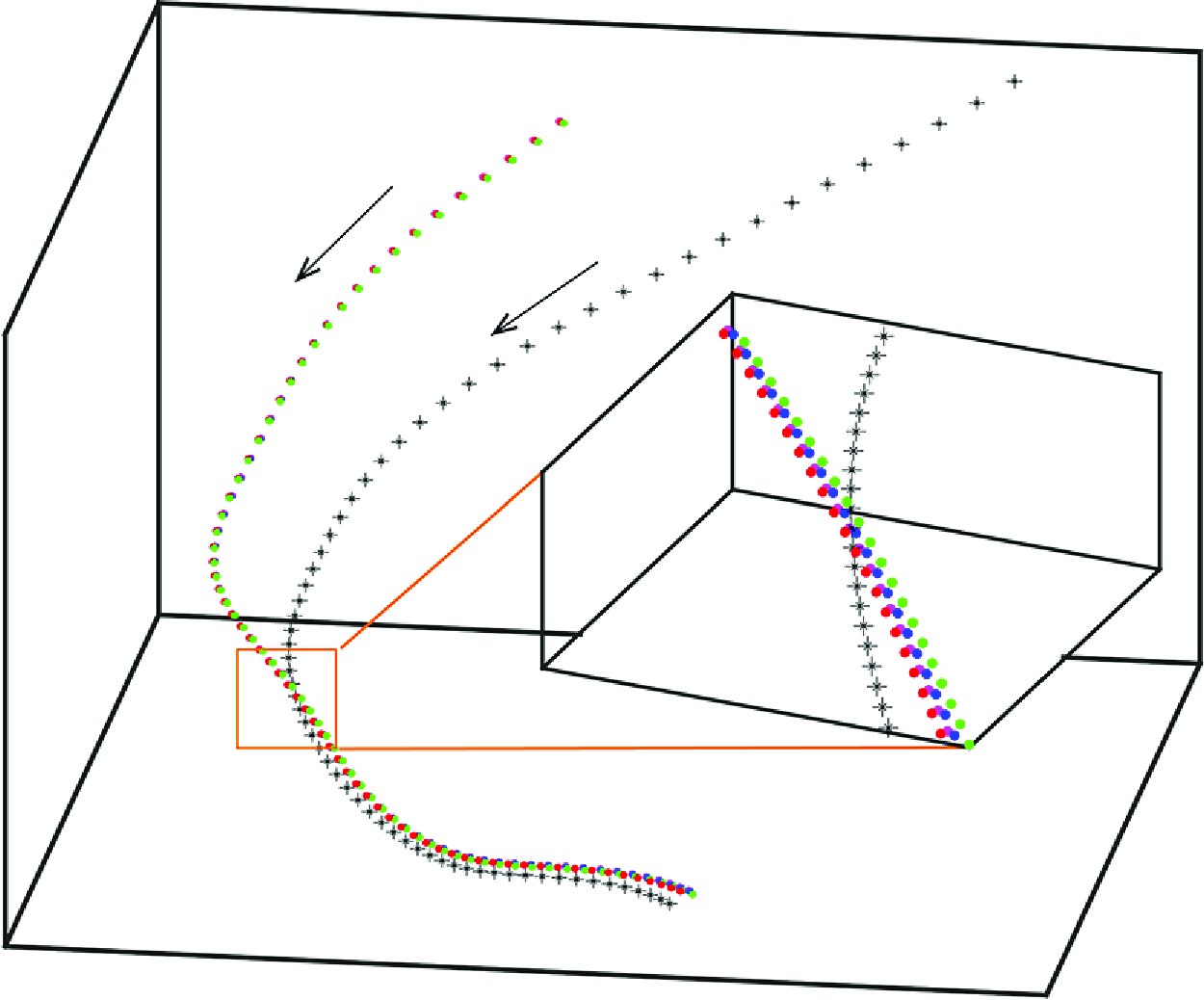
Caustics of inertial particles observed along Lagrangian particle trajectories
-
- Journal:
- Journal of Fluid Mechanics / Volume 1014 / 10 July 2025
- Published online by Cambridge University Press:
- 30 June 2025, A13
-
- Article
- Export citation
-
We extend the perceived velocity gradient defined by a group of particles that was previously used to investigate the Lagrangian statistics of fluid turbulence to the study of inertial particle dynamics. Using data from direct numerical simulations, we observe the correlation between the strong compression in the particle phase and the instantaneous local fluid compression. Furthermore, the Lagrangian nature of the particle velocity gradient defined in this way allows an investigation of its evolution along particle trajectories, including the process after the caustic event, or the blow-up of the particle velocity gradient. Observations reveal that, for particles with Stokes number in the range $St \lesssim 1$, inertial particles experience the maximum compression by local fluid before the caustic event. Interestingly, data analyses show that, while the post-caustic process is mainly the relaxation of the particle motion and the particle relaxation time is the relevant time scale for the dynamics, the pre-caustic dynamics is controlled by the fluid–particle interaction and the proper time scale is determined by both the Kolmogorov time and the particle relaxation time.

Efficient phase locking in massive laser arrays with deep learning from structured data
-
- Journal:
- High Power Laser Science and Engineering / Volume 13 / 2025
- Published online by Cambridge University Press:
- 30 June 2025, e62
-
- Article
-
- You have access
- Open access
- HTML
- Export citation
A proposed conceptual architecture for time-sensitive software-systems
-
- Journal:
- Research Directions: Cyber-Physical Systems / Volume 3 / 2025
- Published online by Cambridge University Press:
- 30 June 2025, e4
-
- Article
-
- You have access
- Open access
- HTML
- Export citation
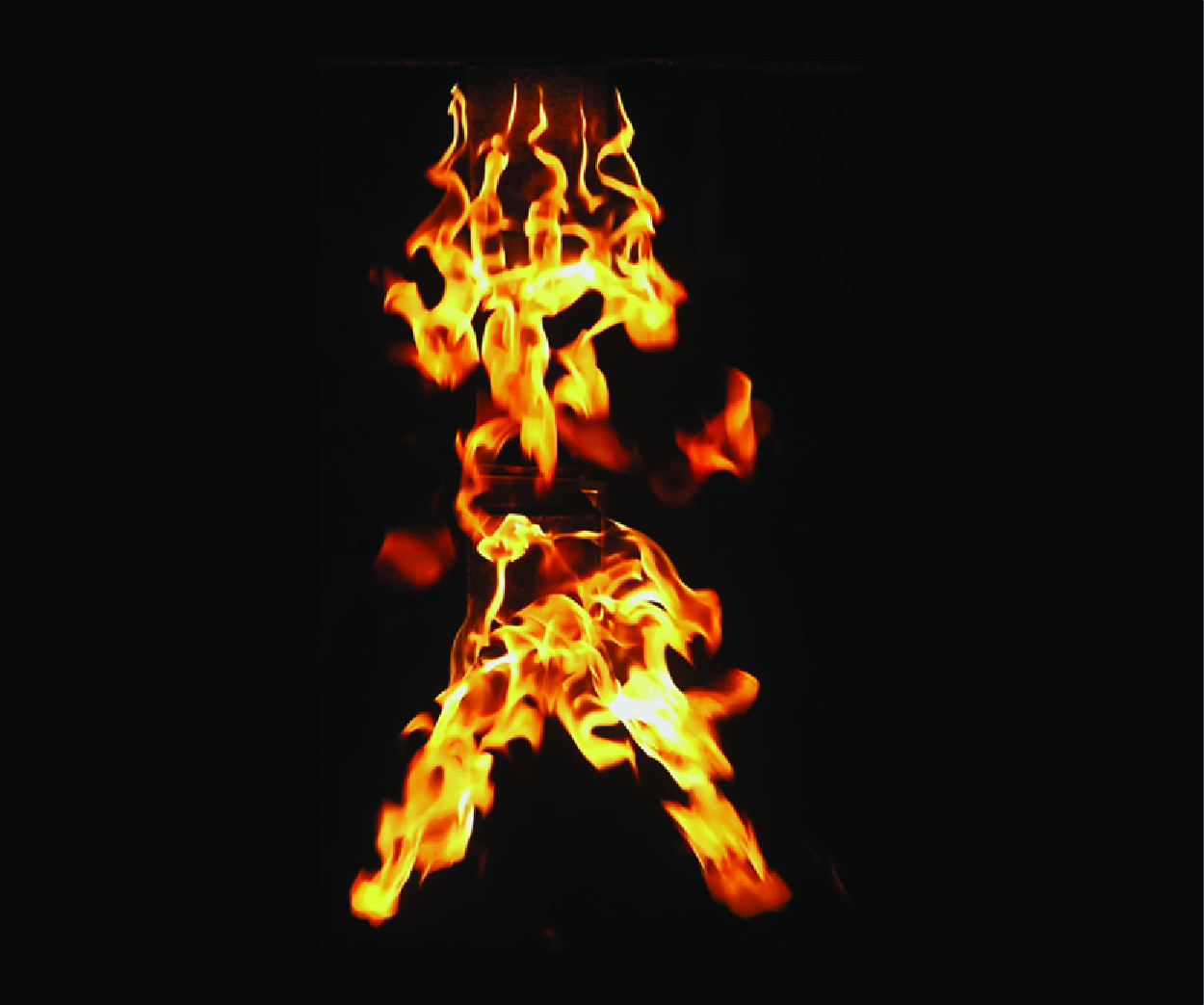
Cross-wind-induced spanwise flapping of tandem turbulent diffusion flames: experimental- and large eddy simulation-based study
-
- Journal:
- Journal of Fluid Mechanics / Volume 1014 / 10 July 2025
- Published online by Cambridge University Press:
- 30 June 2025, A10
-
- Article
- Export citation
-
This research investigates the spanwise oscillation patterns of turbulent non-premixed flames in a tandem configuration, using both experimental methods and large eddy simulations under cross-airflow conditions. Based on the heat release rate (17.43–34.86 kW) and the burner size (0.15 $\times$ 0.15 m), the flame behaves like both a buoyancy-controlled fire (such as a pool fire) and, due to cross-wind effects, a forced flow-controlled fire. The underlying fire dynamics was modelled by varying the spacing between the square diffusion burners, cross-wind velocity and heat release rate. Two flapping modes, the oscillating and bifurcating modes, were observed in the wake of the downstream diffusion flame. This behaviour depends on the wake of the upstream diffusion flame. As the backflow of the upstream flame moved downstream, the maximum flame width of the downstream flame became broader. The flapping amplitude decreased with a stronger cross-wind. Furthermore, the computational fluid dynamics simulation was performed by FireFOAM based on OpenFOAM v2006 2020 to investigate the flapping mechanism. The simulation captured both modes well. Disagreement of the flapping period on the left and right sides results in the oscillating mode, while an agreement of the flapping period results in the bifurcating mode. Finally, the scaling law expressed the dimensionless maximum flame width with the proposed set of basic dimensional parameters, following observations and interpretation by simulations. The results help prevent the potential hazards of this type of basic fire scenario and are fundamentally significant for studying wind-induced multiple fires.

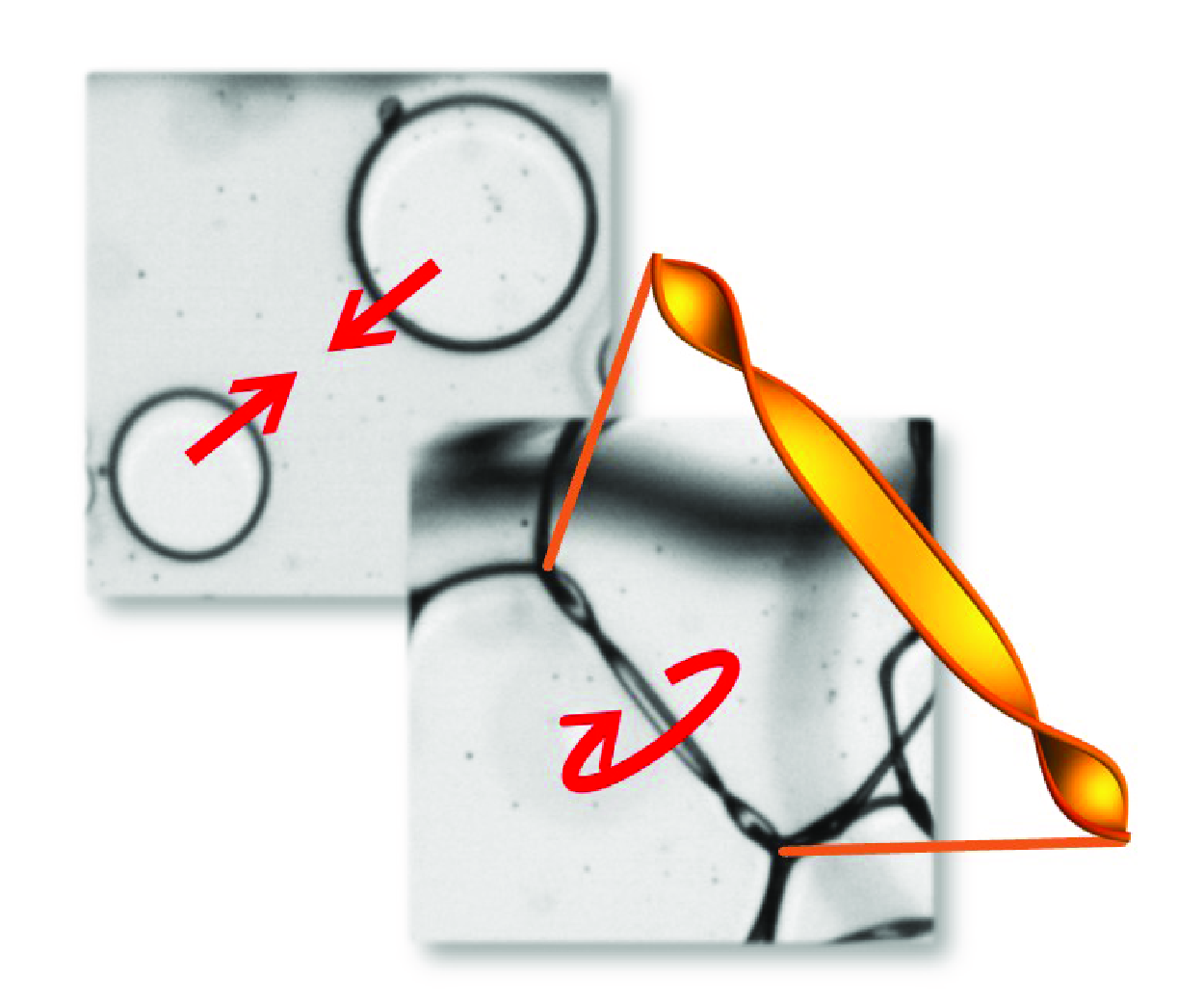
Spinning twisted ribbons: when two holes meet on a curved liquid film
-
- Journal:
- Journal of Fluid Mechanics / Volume 1014 / 10 July 2025
- Published online by Cambridge University Press:
- 30 June 2025, A11
-
- Article
-
- You have access
- Open access
- HTML
- Export citation
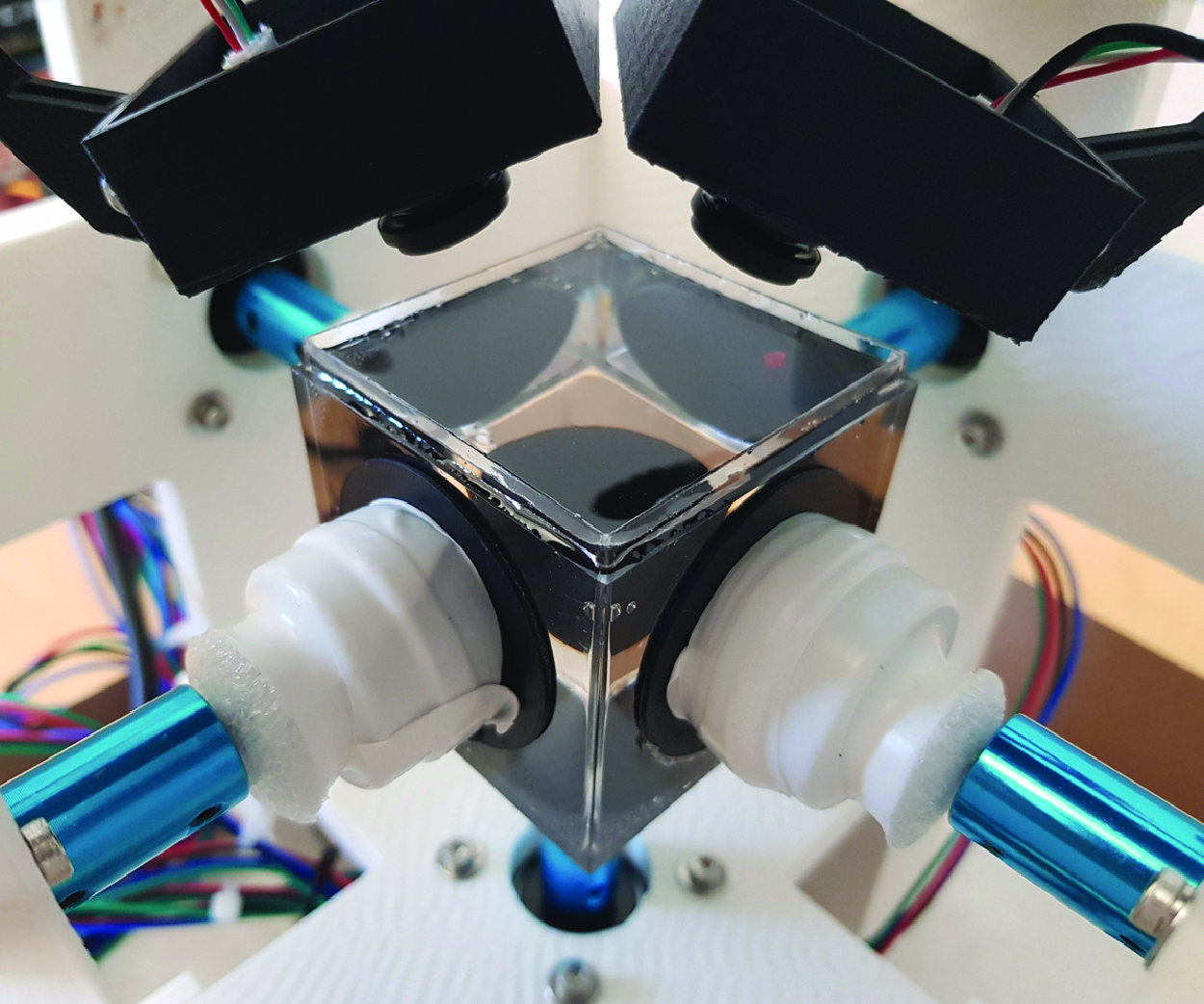
Contactless precision steering of particles in a fluid inside a cube with rotating walls
-
- Journal:
- Journal of Fluid Mechanics / Volume 1014 / 10 July 2025
- Published online by Cambridge University Press:
- 30 June 2025, A15
-
- Article
- Export citation
