To save content items to your account,
please confirm that you agree to abide by our usage policies.
If this is the first time you use this feature, you will be asked to authorise Cambridge Core to connect with your account.
Find out more about saving content to .
To save content items to your Kindle, first ensure no-reply@cambridge.org
is added to your Approved Personal Document E-mail List under your Personal Document Settings
on the Manage Your Content and Devices page of your Amazon account. Then enter the ‘name’ part
of your Kindle email address below.
Find out more about saving to your Kindle.
Note you can select to save to either the @free.kindle.com or @kindle.com variations.
‘@free.kindle.com’ emails are free but can only be saved to your device when it is connected to wi-fi.
‘@kindle.com’ emails can be delivered even when you are not connected to wi-fi, but note that service fees apply.
Attenuation of shock waves through dense granular media with varying macro-scale and micro-scale parameters has been numerically studied in this work by a coupled Eulerian–Lagrangian approach. The results elucidate the correlation between the attenuation mechanism and the nature of shock-induced unsteady flows inside the granular media. As the shock transmission becomes trivial relative to the establishment of unsteady interpore flows, giving way to the gas filtration, the shock attenuation mechanism transitions from the shock dynamics and deduction of propagation area associated with the shock transmission, to the drag-related friction dissipation alongside the gas filtration. The ratio between the maximum shock transmission length and the thickness of the particle layer is found to be a proper indicator of the nature of shock-induced flows. More importantly, it is this ratio that successfully collapses the upstream and downstream pressures of shock impacted particle layers with widely ranging thickness and volume fraction, leading to a universal scaling law for the shock attenuation effect. We further propose a correlation between the structure of particle layer and the corresponding maximum shock transmission length, guaranteeing adequate theoretical predictions of the upstream and downstream pressures. These predictions are also necessary for an accurate estimation of the spread rate of shock dispersed particle bed through a pressure-gradient-based scaling method.
When a drop impacts a solid substrate or a thin liquid film, a thin gas disc is entrapped due to surface tension, the gas disc retracting into one or several bubbles. While the evolution of the gas disc for impact on solid substrate or film of the same fluid as the drop has been largely studied, little is known on how it varies when the liquid of the film is different from that of the drop. We study numerically the latter unexplored area, focusing on the contact between the drop and the film, leading to the formation of an air bubble. The volume of fluid method was adapted to three fluids in the framework of the Basilisk solver. The numerical simulations show that the deformation of the liquid film due to air cushioning plays a crucial role in bubble entrapment. A new model for the contact time and the entrapment geometry was deduced from the case of the impact on a solid substrate. This was done by considering the deformation of the thin immiscible liquid layer during impact depending mainly on its thickness and viscosity. The lubrication of the gas layer was found to be the major effect governing bubble entrapment. However, the film viscosity was also identified as having a critical role in bubble formation and evolution; the magnitude of its influence was also quantified.
Gravity currents are a ubiquitous density-driven flow occurring in both the natural environment and in industry. They include: seafloor turbidity currents, primary vectors of sediment, nutrient and pollutant transport; cold fronts; and hazardous gas spills. However, while the energetics are critical for their evolution and particle suspension, they are included in system-scale models only crudely, so we cannot yet predict and explain the dynamics and run-out of such real-world flows. Herein, a novel depth-averaged framework is developed to capture the evolution of volume, concentration, momentum and turbulent kinetic energy from direct integrals of the full governing equations. For the first time, we show the connection between the vertical profiles, the evolution of the depth-averaged flow and the energetics. The viscous dissipation of mean-flow energy near the bed makes a leading-order contribution, and an energetic approach to entrainment captures detrainment of fluid through particle settling. These observations allow a reconsideration of particle suspension, advancing over 50 years of research. We find that the new formulation can describe the full evolution of a shallow dilute current, with the accuracy depending primarily on closures for the profiles and source terms. Critically, this enables accurate and computationally efficient hazard risk analysis and earth surface modelling.
The transport of droplets in microfluidic channels is strongly dominated by interfacial properties, which makes it a relevant tool for understanding the mechanisms associated with the presence of more or less soluble surfactants. In this paper, we show that the mobility of an oil droplet pushed by an aqueous carrier phase in a Hele-Shaw cell qualitatively depends on the nature of the surfactants: the drop velocity is an increasing function of the drop radius for highly soluble surfactants, whereas it is a decreasing function for poorly soluble surfactants. These two different behaviours are experimentally observed by using two families of surfactant with a carbon chain of variable length. We first focus on the second regime, observed here for the first time, and we develop a model which takes into account the flux of surfactants on the whole droplet interface, assuming an incompressible surfactant monolayer. This model leads to a quantitative agreement with the experimental data, without any adjustable parameter. We then propose a model for a stress-free interface, i.e. for highly soluble surfactants. In these two limits, the models become independent on the physico-chemical properties of the surfactants, and should be valid for any surfactant complying with the incompressible or stress-free limit. As such, we provide a theoretical framework with two limits for all the experimental physico-chemical configurations, which constitute the bounds for the droplet mobility for intermediate surfactant solubility.
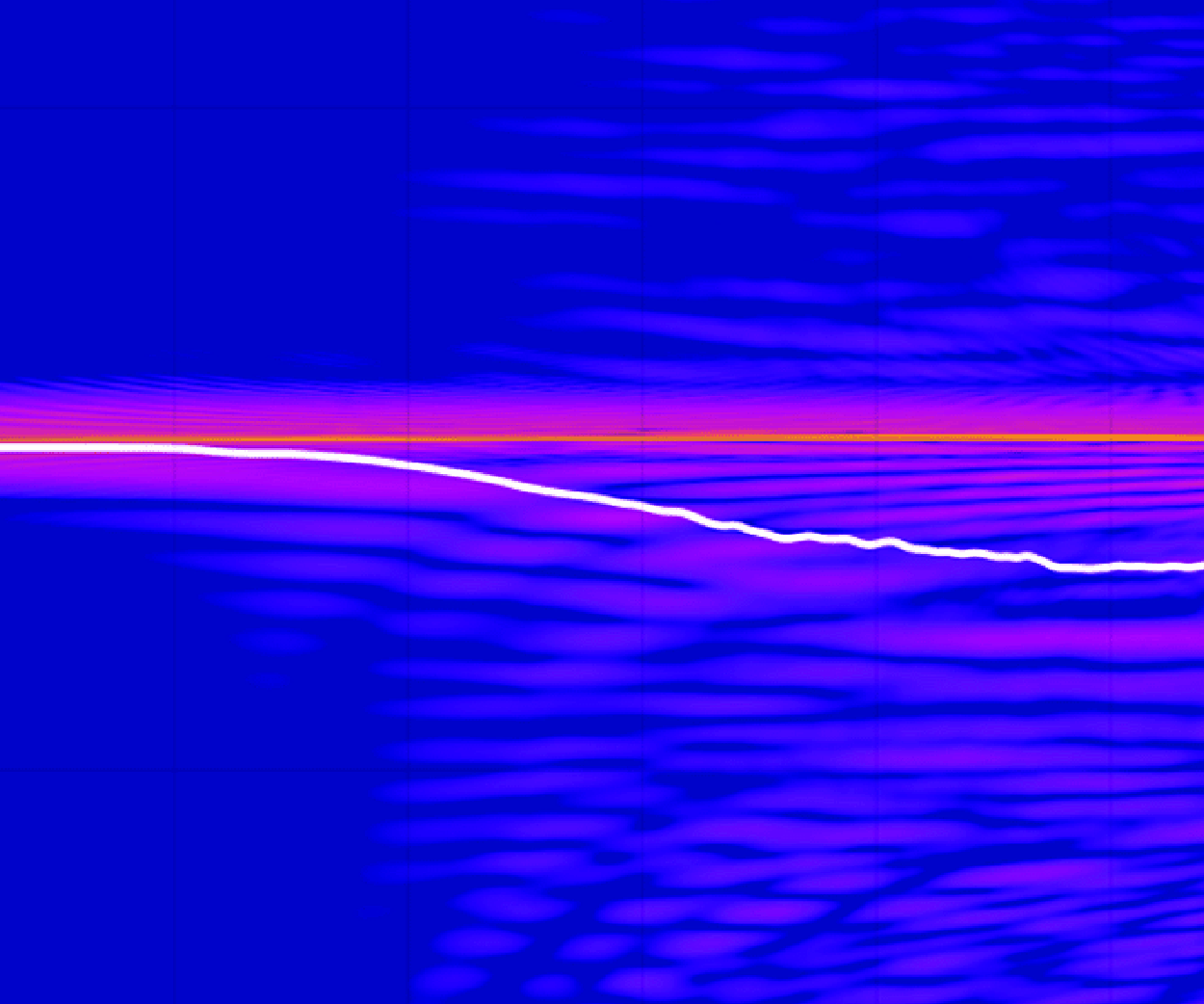
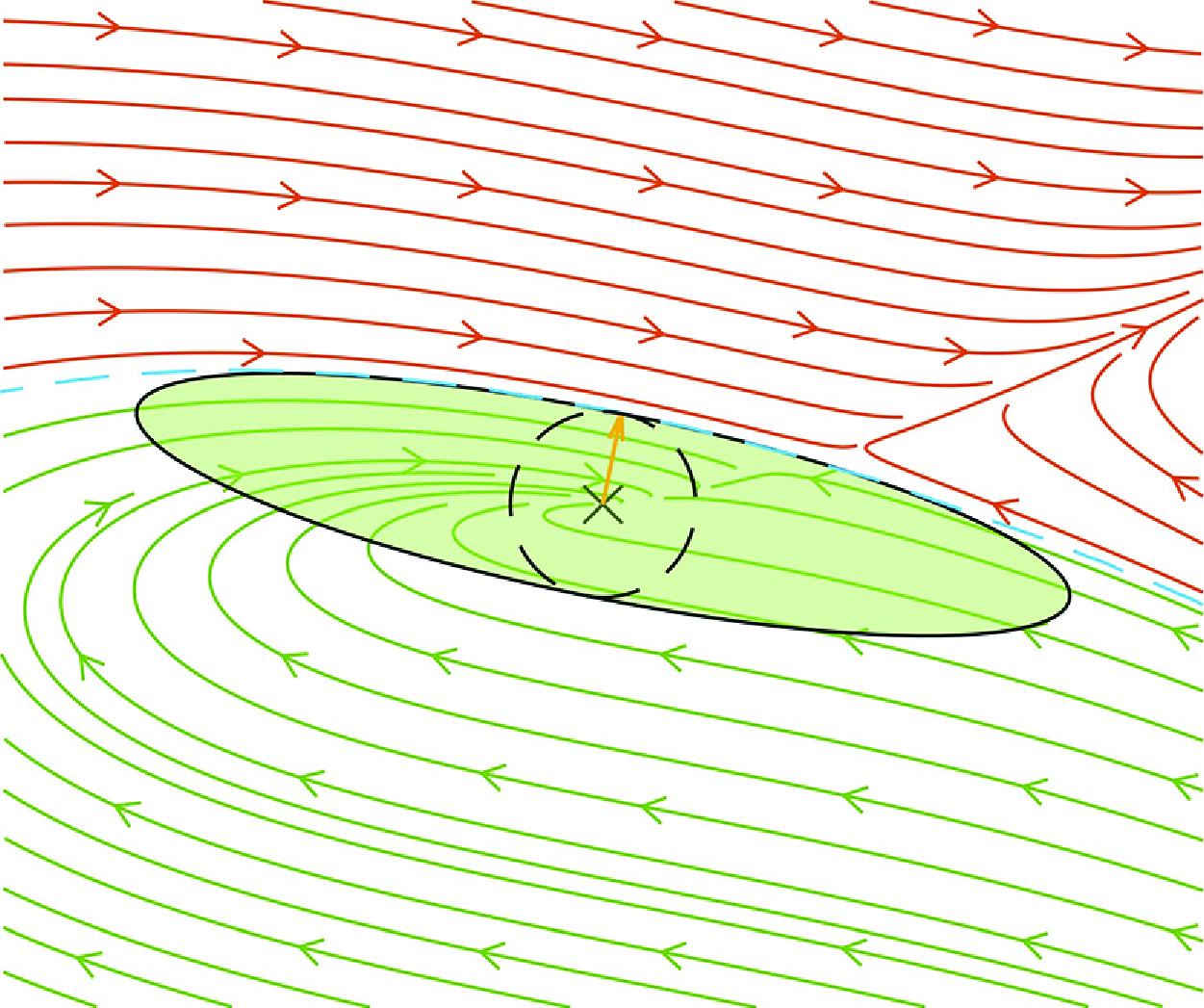
We investigate the momentum fluxes between a turbulent air boundary layer and a growing–breaking wave field by solving the air–water two-phase Navier–Stokes equations through direct numerical simulations. A fully developed turbulent airflow drives the growth of a narrowbanded wave field, whose amplitude increases until reaching breaking conditions. The breaking events result in a loss of wave energy, transferred to the water column, followed by renewed growth under wind forcing. We revisit the momentum flux analysis in a high-wind-speed regime, characterized by the ratio of the friction velocity to wave speed $u_\ast /c$ in the range $[0.3\,{-}\,0.9]$, through the lens of growing–breaking cycles. The total momentum flux across the interface is dominated by pressure, which increases with $u_\ast /c$ during growth and reduces sharply during breaking. Drag reduction during breaking is linked to airflow separation, a sudden acceleration of the flow, an upward shift of the mean streamwise velocity profile and a reduction in Reynolds shear stress. We characterize the reduction of pressure stress and flow acceleration through an aerodynamic drag coefficient by splitting the analysis between growing and breaking stages, treating them as separate subprocesses. While drag increases with $u_\ast /c$ during growth, it decreases during breaking. Averaging over both stages leads to a saturation of the drag coefficient at high $u_\ast /c$, comparable to what is observed at high wind speeds in laboratory and field conditions. Our analysis suggests that this saturation is controlled by breaking dynamics.
The fourth edition of Pedrottis' Introduction to Optics is a comprehensive revision of a classic guide to the fascinating properties of light, now with new authors. Ideally suited for undergraduate optics courses in physics and electrical/electronic engineering departments, this edition adopts a distinctive phenomenological approach, bringing the underlying science to life through interactive simulations and beautifully revised figures. The modular structure and succinct style of previous editions has been maintained, while the content has been modernized, new topics have been added, and a greater consistency of terminology attained. For even more effective learning, a recurring theme of student engagement runs throughout the text, supported by a multifaceted pedagogical package that reinforces key concepts, develops a clear understanding of optical technologies and applications, and connects to students' experiences and observations from everyday life.
This book is designed for senior undergraduate and graduate students pursuing courses in mathematics, physics, engineering and biology. The text begins with a study of ordinary differential equations. The concepts of first- and second-order equations are covered initially. It moves further to linear systems, series solutions, regular Sturm–Liouville theory, boundary value problems and qualitative theory. Thereafter, partial differential equations are explored. Topics such as first-order partial differential equations, classification of partial differential equations and Laplace and Poisson equations are also discussed in detail. The book concludes with heat equation, one-dimensional wave equation and wave equation in higher dimensions. It highlights the importance of analysis, linear algebra and geometry in the study of differential equations. It provides sufficient theoretical material at the beginning of each chapter, which will enable students to better understand the concepts and begin solving problems straightaway.
We investigate turbulent flow between two concentric cylinders, oriented either axially or azimuthally. The axial configuration corresponds to a concentric annulus, where curvature is transverse to the flow, while the azimuthal configuration represents a curved channel with longitudinal curvature. Using direct numerical simulations, we examine the effects of both types of curvature on turbulence, varying the inner radius from $r_i=0.025\delta$ to $r_i=95.5\delta$, where $\delta$ is the gap width. The bulk Reynolds number, based on bulk velocity and $\delta$, is set at $R_b\approx 5000$, ensuring fully turbulent conditions. Our results show that transverse curvature, although breaking the symmetry of axial flows, induces limited changes in the flow structure, leading to an increase in friction at the inner wall. In contrast, longitudinal curvature has a significant impact on the structure and statistics of azimuthal flows. For mild to moderate longitudinal curvatures ($r_i\gt 1.5\delta$), the convex wall stabilises the flow, reducing turbulence intensity, wall friction and turbulent kinetic energy (TKE) production. For extreme longitudinal curvatures ($r_i\leqslant 0.25\delta$), spanwise-coherent flow structures develop near the inner wall, leading to a complete redistribution of the TKE budget: production becomes negligible near the inner wall, while pressure–velocity correlations increase substantially. As a result, the mean TKE peaks near the inner wall, thereby weakening the stabilising effect of convex curvature.
We investigate the dynamics and the stability of the incompressible flow past a corrugated dragonfly-inspired airfoil in the two-dimensional (2-D) $\alpha {-}Re$ parameter space, where $\alpha$ is the angle of attack and $Re$ is the Reynolds number. The angle of attack is varied in the range of $-5^{\circ } \leqslant \alpha \leqslant 10^{\circ }$, and $Re$ (based on the free stream velocity and the airfoil chord) is increased up to $Re=6000$. The study relies on linear stability analyses and three-dimensional (3-D) nonlinear direct numerical simulations. For all $\alpha$, the primary instability consists of a Hopf bifurcation towards a periodic regime. The linear stability analysis reveals that two distinct modes drive the flow bifurcation for positive and negative $\alpha$, being characterised by a different frequency and a distinct triggering mechanism. The critical $Re$ decreases as $|\alpha |$ increases, and scales as a power law for large positive/negative $\alpha$. At intermediate $Re$, different limit cycles arise depending on $\alpha$, each one characterised by a distinctive vortex interaction, leading thus to secondary instabilities of different nature. For intermediate positive/negative $\alpha$, vortices are shed from both the top/bottom leading- and trailing-edge shear layers, and the two phenomena are frequency locked. By means of Floquet stability analysis, we show that the secondary instability consists of a 2-D subharmonic bifurcation for large negative $\alpha$, of a 2-D Neimark–Sacker bifurcation for small negative $\alpha$, of a 3-D pitchfork bifurcation for small positive $\alpha$ and of a 3-D subharmonic bifurcation for large positive $\alpha$. The aerodynamic performance of the dragonfly-inspired airfoil is discussed in relation to the different flow regimes emerging in the $\alpha {-}Re$ space of parameters.
Dispersion in spatio-temporal random flows is dominated by the competition between spatial and temporal velocity resets along particle paths. This competition admits a range of normal and anomalous dispersion behaviours characterised by the Kubo number, which compares the relative strength of spatial and temporal velocity resets. To shed light on these behaviours, we develop a Lagrangian stochastic approach for particle motion in spatio-temporally fluctuating flow fields. For space–time separable flows, particle motion is mapped onto a continuous time random walk (CTRW) for steady flow in warped time, which enables the upscaling and prediction of the large-scale dispersion behaviour. For non-separable flows, we measure Lagrangian velocities in terms of a new sampling variable, the average number of velocity transitions (both temporal and spatial) along pathlines, which renders the velocity series Markovian. Based on this, we derive a Lagrangian stochastic model that represents particle motion as a coupled space–time random walk, that is, a CTRW for which the space and time increments are intrinsically coupled. This approach sheds light on the fundamental mechanisms of particle motion in space–time variable flows, and allows for its systematic quantification. Furthermore, these results indicate that alternative strategies for the analysis of Lagrangian velocity data using new sampling variables may facilitate the identification of (hidden) Markov models, and enable the development of reduced-order models for otherwise complex particle dynamics.
Surfactant transport is central to a diverse range of natural phenomena with numerous practical applications in physics and engineering. Surprisingly, this process remains relatively poorly understood at the molecular scale. Here, we use non-equilibrium molecular dynamics (NEMD) simulations to study the spreading of sodium dodecyl sulphate on a thin film of liquid water. The molecular form of the control volume is extended to a coordinate system moving with the liquid–vapour interface to track surfactant spreading. We use this to compare the NEMD results to the continuum description of surfactant transport on an interface. By including the molecular details in the continuum model, we establish that the transport equation preserves substantial accuracy in capturing the underlying physics. Moreover, the relative importance of the different mechanisms involved in the transport process is identified. Consequently, we derive a novel exact molecular equation for surfactant transport along a deforming surface. Close agreement between the two conceptually different approaches, i.e. NEMD simulations and the numerical solution of the continuum equation, is found as measured by the surfactant concentration profiles, and the time dependence of the so-called spreading length. The current study focuses on a relatively simple specific solvent–surfactant system, and the observed agreement with the continuum model may not arise for more complicated industrially relevant surfactants and anti-foaming agents. In such cases, the continuum approach may fail to predict accompanying phase transitions, which can still be captured through the NEMD framework.
We investigate the emergent three-dimensional (3-D) dynamics of a rapidly yawing spheroidal swimmer interacting with a viscous shear flow. We show that the rapid yawing generates non-axisymmetric emergent effects, with the active swimmer behaving as an effective passive particle with two orthogonal planes of symmetry. We also demonstrate that this effective asymmetry generated by the rapid yawing can cause chaotic behaviour in the emergent dynamics, in stark contrast to the emergent dynamics generated by rapidly rotating spheroids, which are equivalent to those of effective passive spheroids. In general, we find that the shape of the equivalent effective particle under rapid yawing is different to the average shape of the active particle. Moreover, despite having two planes of symmetry, the equivalent passive particle is not an ellipsoid in general, except for specific scenarios in which the effective shape is a spheroid. In these scenarios, we calculate analytically the equivalent aspect ratio of the effective spheroid. We use a multiple scales analysis for systems to derive the emergent swimmer behaviour, which requires solving a non-autonomous nonlinear 3-D dynamical system, and we validate our analysis via comparison to numerical simulations.
Direct numerical simulations in a low-curvature viscoelastic turbulent Taylor vortex flow, with Reynolds numbers ranging from 1500 to 8000 and maximum chain extensibility ($L$) from 50 to 200, reveal a maximum drag reduction (MDR) asymptote. Compared with the classical MDR observed in planar wall-bounded shear flows, that is, drag reduction (DR) is $\sim -80\, \%$, this MDR state achieves only moderate levels of DR ($\sim -60\,\%$). This is due to the existence of large-scale structures (LSSs). A careful examination of the flow structures reveals that the polymer–turbulence interaction suppresses small-scale vortices and stabilizes the LSSs. These structural changes in turn lead to a reduction of Reynolds stress, and consequently to a DR flow state. Although Reynolds stress does not vanish as observed in classical MDR states, the small-scale vortices that heavily populate the near-wall region are also almost completely eliminated in this flow state. Concurrently, significant polymer stresses develop as a consequence of the interaction between polymer chains and LSSs that partially offset the magnitude of DR, leading to MDR asymptotes with moderate levels of DR. Moreover, we demonstrate that polymer deformation, i.e. deviation from the equilibrium state, is directly correlated with the LSSs dynamics, while the polymer deformation fluctuation displays a universal property in the MDR state. Hence, it is not surprising that the extent of DR exhibits a non-monotonic dependence on the maximum chain extensibility. Specifically, the variation in $L$ alters the incoherent and coherent angular momentum transport by small- and large-scale flow structures, respectively. To that end, the most DR flow state occurs at a moderate value $L=100$. Overall, this study further supports the universal property of polymer-induced asymptotic states in wall-bounded turbulence and paves the way for mechanistic understanding of drag modification that arises from the interaction of polymers with small- and large-scale flow structures.
The radio telescopes of the European VLBI Network (EVN) and the University of Tasmania (UTAS) conducted an extensive observation campaign of the European Space Agency’s (ESA) Mars Express (MEX) spacecraft between 2013 and 2020. The campaign, carried out under the Planetary Radio Interferometry and Doppler Experiment (PRIDE) framework, aimed to study interplanetary phase scintillation and assess the noise budget in the closed-loop Doppler observations. The average closed-loop Doppler noise was determined to be approximately 10 mHz at a 10-s integration time, reaffirming the technique’s suitability for radio science experiments. We evaluated how different observational parameters such as the solar elongation, antenna size, and elevation angle impact the Doppler noise. A key part of the analysis involved comparing results from co-located telescopes to investigate system noise effects. Co-located telescopes at both Wettzell and Hobart provided highly consistent results, with any deviations serving as diagnostic tools to identify station-dependent issues. Additionally, the use of phase calibration tones during spacecraft tracking showed that the instrumental noise contribution is of the order of 5$\%$ of the total noise. This study provides a detailed noise budget for closed-loop Doppler observations with VLBI telescopes while emphasizing the effectiveness of the co-location method in isolating system-level noise. These findings are important for optimizing future radio science and VLBI tracking missions using stations outside the the Deep Space Network (DSN) and European Space Tracking (ESTRACK) network.
We propose a hybrid numerical model for the collective motion of fish groups, which integrates an agent-based model with a computational fluid dynamics (CFD)-based model. In the agent-based model, the fish group is represented by self-propelled particles (SPPs), incorporating social forces with local interactive rules. The CFD-based model treats the fish body with an undulated filament that responds to the hydrodynamic forces imposed by the surrounding fluid flow. These two models are coupled using a central pattern generator controller. We test this hybrid model with groups of 30–50 individuals. The results show that the group exhibits various collective behaviours, including tight schooling, sparse schooling and milling patterns, by adjusting the coefficients in the SPP model. Due to the hydrodynamic interactions, particularly with the obstacle avoidance model, both the individuals’ and the group’s mean speed fluctuate, differentiating it from traditional SPP models that typically consider volumeless particles. More interestingly, our findings indicate that fish benefit from collective motion in terms of energetic consumption in both schooling and milling patterns. It is important to note that the swimming fish are actuated using a very simple mechanism without any optimisation strategy. An additional study investigates the effects of the Reynolds number, demonstrating the capability of the current hybrid model to account for fish groups of varying body lengths or swimming speeds. Future applications of this model are promising, offering potential insights into the energetic advantages of collective motion in large-scale fish groups.
The flow over a cambered NACA 65(1)–412 airfoil at $Re\,=\,2\times 10^4$ is described based on a high-order direct numerical simulation. Simulations are run over a range of angles of attack, $\alpha$, where a number of instabilities in the unsteady, three-dimensional flow field are identified. The balance and competing effects of these instabilities are responsible for significant and abrupt (with respect to $\alpha$) changes in flow regime, with measurable consequences in time-averaged, integrated force coefficients, and in the far-wake footprint. At low $\alpha$, the flow is strongly influenced by vortex roll-up from the pressure side at the trailing edge. The interaction of this large-scale structure with shear and three-dimensional modal instabilities in the separated shear layer and associated wake region on the suction side, explains the transitions and bifurcations of the the flow states as $\alpha$ increases. The transition from a separation at low $\alpha$ to reattachment and establishment of a laminar separation bubble at the trailing edge at critical $\alpha$ is driven by instabilities within the separated shear layer that are absent at lower angles. Instabilities of different wavelengths are then shown to pave the path to turbulence in the near wake.
The temporal characteristics of fully localised turbulent bands in transitional channel flow remains unclear due to the difficulty in resolving the large length and time scales involved. Here, we tackle this problem by performing statistical lifetime studies in sufficiently large computational domains. The results show signs of stochastic memoryless decay of a fully localised band, suggesting a chaotic-saddle behaviour of the entire band as a coherent entity. Although the mean lifetime of a turbulent band was reported to increase with the band length, our data suggest that it saturates at a certain length. This saturation results in a characteristic lifetime for a fully developed band with a changing length due to the intermittent chipping and decay of turbulence at the upstream end. This memoryless behaviour is observed down to Reynolds number $Re=630$ in our study and we propose that the onset of the memoryless behaviour is in the range of $Re\simeq 620{-}630$. Our data also show that the time it takes for a perturbed flow to enter the saddle, i.e. to start behaving memorylessly, can be thousands of convective time units, which is comparable to the maximum achievable observation time in existing channel set-ups and may pose difficulties for experiments.
The Lyman alpha (Ly$\alpha$) forest in the spectra of $z\gt5$ quasars provides a powerful probe of the late stages of the epoch of reionisation (EoR). With the recent advent of exquisite datasets such as XQR-30, many models have struggled to reproduce the observed large-scale fluctuations in the Ly$\alpha$ opacity. Here we introduce a Bayesian analysis framework that forward-models large-scale lightcones of intergalactic medium (IGM) properties and accounts for unresolved sub-structure in the Ly$\alpha$ opacity by calibrating to higher-resolution hydrodynamic simulations. Our models directly connect physically intuitive galaxy properties with the corresponding IGM evolution, without having to tune ‘effective’ parameters or calibrate out the mean transmission. The forest data, in combination with UV luminosity functions and the CMB optical depth, are able to constrain global IGM properties at percent level precision in our fiducial model. Unlike many other works, we recover the forest observations without invoking a rapid drop in the ionising emissivity from $z\sim7$ to 5.5, which we attribute to our sub-grid model for recombinations. In this fiducial model, reionisation ends at $z=5.44\pm0.02$ and the EoR mid-point is at $z=7.7\pm0.1$. The ionising escape fraction increases towards faint galaxies, showing a mild redshift evolution at fixed UV magnitude, $M_\textrm{UV}$. Half of the ionising photons are provided by galaxies fainter than $M_\textrm{UV} \sim -12$, well below direct detection limits of optical/NIR instruments including $\textit{ JWST}$. We also show results from an alternative galaxy model that does not allow for a redshift evolution in the ionising escape fraction. Despite being decisively disfavoured by the Bayesian evidence, the posterior of this model is in qualitative agreement with that from our fiducial model. We caution, however, that our conclusions regarding the early stages of the EoR and which sources reionised the Universe are more model-dependent.