Refine search
Actions for selected content:
238502 results in Physics and Astronomy
Further Reading
-
- Book:
- Classical Mechanics
- Published online:
- 26 June 2025
- Print publication:
- 19 June 2025, pp 411-416
-
- Chapter
- Export citation
4 - Work Distributions from Hamiltonian Trajectories
-
- Book:
- Stochastic Thermodynamics
- Published online:
- 09 June 2025
- Print publication:
- 19 June 2025, pp 60-82
-
- Chapter
- Export citation
Preface
-
- Book:
- Fluid Mechanics
- Published online:
- 26 June 2025
- Print publication:
- 19 June 2025, pp 1-7
-
- Chapter
- Export citation
7 - Thermodynamically Consistent Asymmetric Random Walk
-
- Book:
- Stochastic Thermodynamics
- Published online:
- 09 June 2025
- Print publication:
- 19 June 2025, pp 133-145
-
- Chapter
- Export citation
6 - Kinetic Theory
-
- Book:
- Fluid Mechanics
- Published online:
- 26 June 2025
- Print publication:
- 19 June 2025, pp 302-356
-
- Chapter
- Export citation
Index
-
- Book:
- Electromagnetism
- Published online:
- 26 June 2025
- Print publication:
- 19 June 2025, pp 433-437
-
- Chapter
- Export citation
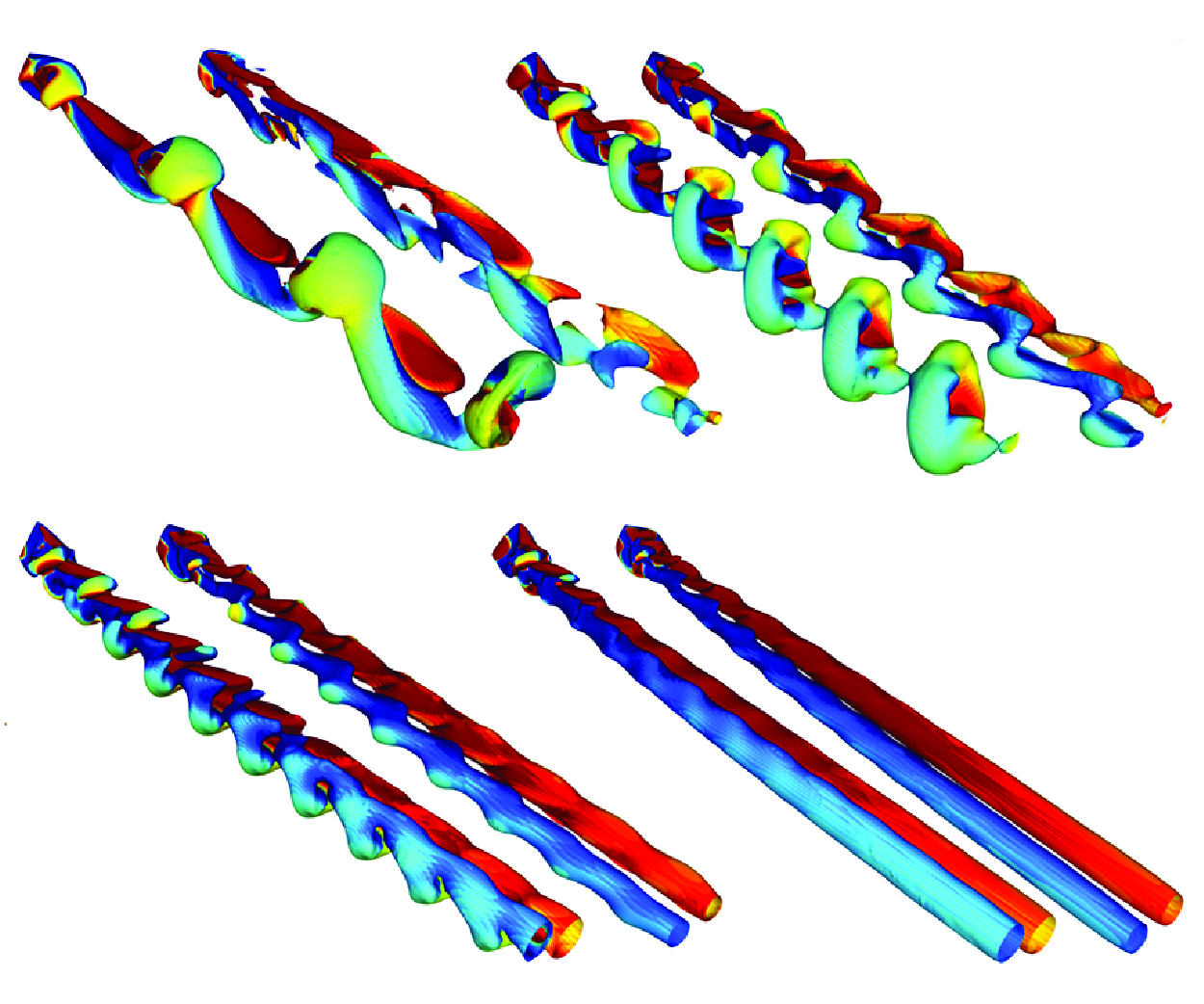
Transversely rotating angular particle in an inertial flow at moderate Reynolds numbers
-
- Journal:
- Journal of Fluid Mechanics / Volume 1013 / 25 June 2025
- Published online by Cambridge University Press:
- 19 June 2025, A30
-
- Article
-
- You have access
- Open access
- HTML
- Export citation
Stealing galaxies from galaxy clusters
-
- Journal:
- Publications of the Astronomical Society of Australia / Volume 42 / 2025
- Published online by Cambridge University Press:
- 19 June 2025, e086
-
- Article
-
- You have access
- Open access
- HTML
- Export citation
-
We investigate galaxy groups that reside in the field but have been previously processed by galaxy clusters. Observationally, they would appear to have the same properties as regular field groups at first glance. However, one would expect to find quantifiable differences in processed groups as dynamical interactions within clusters perturb them. We use IllustrisTNG300 simulation to statistically quantify that processed groups of galaxies show different properties compared to regular field groups. Our analysis encompasses a broad range of groups with total masses between $8 \times 10^{11} \mathrm{ M}_{\odot}$ and $7 \times 10^{13} \mathrm{ M}_{\odot}$. We distinguish between processed groups that passed through a galaxy cluster and capture more galaxies, referred to as thief groups, and groups that did not capture any new members, referred to as non-thief groups. The employed statistical tools show that thief groups are generally less compact and contain more members, while non-thief groups seem to have the same properties as the field groups which makes them indistinguishable.


Appendix F - Supplement on the Dynamics for Systems with Discrete States
-
- Book:
- Stochastic Thermodynamics
- Published online:
- 09 June 2025
- Print publication:
- 19 June 2025, pp 432-441
-
- Chapter
- Export citation
Dedication
-
- Book:
- Classical Mechanics
- Published online:
- 26 June 2025
- Print publication:
- 19 June 2025, pp v-vi
-
- Chapter
- Export citation
References
-
- Book:
- Electromagnetism
- Published online:
- 26 June 2025
- Print publication:
- 19 June 2025, pp 430-432
-
- Chapter
- Export citation
4 - Projections
-
- Book:
- Solving Problems with Projections
- Published online:
- 05 June 2025
- Print publication:
- 19 June 2025, pp 116-186
-
- Chapter
- Export citation
Notes
-
- Book:
- Solving Problems with Projections
- Published online:
- 05 June 2025
- Print publication:
- 19 June 2025, pp 361-363
-
- Chapter
- Export citation
References
-
- Book:
- Quantum Mechanics
- Published online:
- 27 June 2025
- Print publication:
- 19 June 2025, pp 677-682
-
- Chapter
- Export citation
12 - Atoms
-
- Book:
- Quantum Mechanics
- Published online:
- 27 June 2025
- Print publication:
- 19 June 2025, pp 382-427
-
- Chapter
- Export citation
Copyright page
-
- Book:
- Quantum Mechanics
- Published online:
- 27 June 2025
- Print publication:
- 19 June 2025, pp iv-iv
-
- Chapter
- Export citation
Index
-
- Book:
- Fluid Mechanics
- Published online:
- 26 June 2025
- Print publication:
- 19 June 2025, pp 409-412
-
- Chapter
- Export citation
5 - Turbulence
-
- Book:
- Fluid Mechanics
- Published online:
- 26 June 2025
- Print publication:
- 19 June 2025, pp 271-301
-
- Chapter
- Export citation
Further Reading
-
- Book:
- Quantum Mechanics
- Published online:
- 27 June 2025
- Print publication:
- 19 June 2025, pp 671-676
-
- Chapter
- Export citation
Preface
-
- Book:
- Classical Mechanics
- Published online:
- 26 June 2025
- Print publication:
- 19 June 2025, pp 1-5
-
- Chapter
- Export citation
-
Summary
Any education in theoretical physics begins with the laws of classical mechanics. The basics of the subject were laid down long ago by Galileo and Newton and are enshrined in the famous equation
that we all learn in school. But there is much more to the subject and, in the intervening centuries, the laws of classical mechanics were reformulated to emphasise deeper concepts such as energy, symmetry, and action. This textbook describes these different approaches to classical mechanics, starting with Newton’s laws before turning to subsequent developments such as the Lagrangian and Hamiltonian approaches. The book emphasises Noether’s profound insights into symmetries and conservation laws, as well as Einstein’s vision of spacetime, encapsulated in the theory of special relativity. Classical mechanics is not the last word on theoretical physics. But it is the foundation for all that follows. The purpose of this book is to provide this foundation.
