Refine search
Actions for selected content:
238492 results in Physics and Astronomy

Dynamics of spheroidal particle migration within the elasto-inertial square duct flow of Giesekus viscoelastic fluids
-
- Journal:
- Journal of Fluid Mechanics / Volume 1028 / 10 February 2026
- Published online by Cambridge University Press:
- 04 February 2026, A24
-
- Article
- Export citation
-
Dynamics of spheroidal particle migration within the elasto-inertial square duct flow of Giesekus viscoelastic fluids were studied by using the direct forcing/fictitious domain method. The results show rich migration behaviours, a spheroidal particle gradually transitions from the corner (CO), channel centreline (CC), inertial rotational (IR), diagonal line and cross-section midline equilibrium positions with a decrease in the elastic number, depending on the initial particle position, initial particle orientation and fluid elasticity. From the effect of secondary flow, the IR equilibrium position is reported when the fluid inertia is relatively strong. Six (five) kinds of rotational behaviours are observed for the elasto-inertial migration of prolate (oblate) spheroids. Moreover, the critical elastic number is determined for the migration of spheroidal particles in Giesekus fluids. Near the critical elastic number, oblate and prolate spheroids can simultaneously maintain the CC, CO and IR equilibrium positions, and the initial orientation of particles affects their final rotational modes and equilibrium positions. Through comprehensive analysis, empirical formulas governing the ability of oblate and prolate spheroids to maintain the CC equilibrium position are proposed as $\textit{Wi} = 0.055\,\textit{Re}{-0.1}$ and Wi = 0.045 Re−0.35 when n = 0.5, 0.01 ≤ Wi ≤ 1. Due to the different directions of the pressure forces acting on the particles and the forces from the first normal stress difference and the second normal stress difference, the equilibrium position in Giesekus fluids is rapidly increased by increasing the secondary flow at higher elastic numbers, which is contrary to the phenomenon observed in the Oldroyd-B fluid.

Direct numerical simulations of turbulent boundary layer premixed flame flashback over rough walls
-
- Journal:
- Journal of Fluid Mechanics / Volume 1028 / 10 February 2026
- Published online by Cambridge University Press:
- 04 February 2026, A32
-
- Article
-
- You have access
- Open access
- HTML
- Export citation

On the algebraic stretching dynamics of variable-density mixing in shock–bubble interaction
-
- Journal:
- Journal of Fluid Mechanics / Volume 1028 / 10 February 2026
- Published online by Cambridge University Press:
- 04 February 2026, A27
-
- Article
- Export citation
-
The mixing mechanism within a single vortex has been a theoretical focus for decades, while it remains unclear especially under the variable-density (VD) scenario. This study investigates canonical single-vortex VD mixing in shock–bubble interactions (SBI) through high-resolution numerical simulations. Special attention is paid to examining the stretching dynamics and its impact on VD mixing within a single vortex, and this problem is investigated by quantitatively characterising the scalar dissipation rate (SDR), namely the mixing rate, and its time integral, referred to as mixedness. To study VD mixing, we first examine single-vortex passive-scalar (PS) mixing with the absence of a density difference. Mixing originates from diffusion and is further enhanced by the stretching dynamics. Under the axisymmetry and zero diffusion assumptions, the single-vortex stretching rate illustrates an algebraic growth of the length of scalar strips over time. By incorporating the diffusion process through the solution of the advection–diffusion equation along these stretched scalar strips, a PS mixing model for SDR is proposed based on the single-vortex algebraic stretching characteristic. Within this framework, density-gradient effects from two perspectives of the stretching dynamics and diffusion process are discovered to challenge the extension of the PS mixing model to VD mixing. First, the secondary baroclinic effect increases the VD stretching rate by the additional secondary baroclinic principal strain, while the algebraic stretching characteristic is still retained. Second, the density source effect, originating from the intrinsic nature of the density difference in the multi-component transport equation, suppresses the diffusion process. By accounting for both the secondary baroclinic effect on stretching and the density source effect on diffusion, a VD mixing model for SBI is further modified. This model establishes a quantitative relationship between the stretching dynamics and the evolution of the mixing rate and mixedness for single-vortex VD mixing over a broad range of Mach numbers. Furthermore, the essential role of the stretching dynamics on the mixing rate is demonstrated by the derived dependence of the time-averaged mixing rate $\overline {\langle \chi \rangle }$ on the Péclet number ${\textit{Pe}}$, which scales as $\overline {\langle \chi \rangle } \sim {\textit{Pe}}^{{2}/{3}}$.


Scaling transitions in plane turbulent wall jets
-
- Journal:
- Journal of Fluid Mechanics / Volume 1028 / 10 February 2026
- Published online by Cambridge University Press:
- 04 February 2026, A28
-
- Article
- Export citation
-
In the fully developed region of a plane turbulent wall jet, the key jet parameters, including the jet velocity Um, jet half-width z1/2 and wall shear stress $ \tau_{0}$, follow the classical power-law scaling with the streamwise distance x: Um $v$/M0 ∼ (xM0/ $v$2)−α, z1/2M0/ $v$2 ∼ (xM0/ $v$2)β and $ \tau_{0}$ $v$2/(ρ $M_{0}^{2}$) ∼ (xM0/ $v$2)−χ, where M0 is the source kinematic momentum flux, $v$ is the coefficient of kinematic viscosity of fluid, ρ is the mass density of fluid and α, β and χ are the positive scaling exponents. We present a theoretical framework to determine these exponents. Our framework reveals that each jet parameter exhibits a scaling transition. This transition is driven by a shift in the scaling law of the skin-friction coefficient as the Reynolds number Rem = Umzm/ $v$ changes over from Rem < 8000 to Rem > 10 000, where zm is the wall-normal location corresponding to the jet velocity. Specifically, α transitions from 4(1 + γ)/(9 − γ) to 13(1 + γ)/[2(14 − γ)], β from 8/(9 − γ) to 13/(14 − γ) and χ from (9 + 7γ)/(9 − γ) to (14 + 12γ)/(14 − γ), where γ ≈ 0.05 is a parameter determined from experiments. We validate the theoretical predictions against extensive experimental datasets from the literature.


Reducing complex physics to its phase dynamics
-
- Journal:
- Journal of Fluid Mechanics / Volume 1028 / 10 February 2026
- Published online by Cambridge University Press:
- 04 February 2026, F1
-
- Article
-
- You have access
- HTML
- Export citation
Effect of negative triangularity on scrape-off layer plasma turbulence in double-null L-mode plasmas
-
- Journal:
- Journal of Plasma Physics / Volume 92 / Issue 1 / February 2026
- Published online by Cambridge University Press:
- 04 February 2026, E2
-
- Article
-
- You have access
- Open access
- HTML
- Export citation

Lattice Boltzmann modelling of droplet impact and splashing at high Reynolds and Weber numbers
-
- Journal:
- Journal of Fluid Mechanics / Volume 1028 / 10 February 2026
- Published online by Cambridge University Press:
- 03 February 2026, A20
-
- Article
- Export citation
-
We developed a two-phase lattice Boltzmann model by coupling the entropic multiple-relaxation-time (EMRT or KBC) collision operator enabling low fluid viscosity, with a source term (Wang et al. 2022, Phys. Rev. E vol. 105, no 4) to independently adjust surface tension. The coupling is implemented via the exact difference method (EDM), which allows full consideration of external-force effects on the entropic stabiliser in KBC, in contrast to the recent work of Wang et al. (2022 Phys. Rev. E vol. 105) and Xu et al. (2024 Comput. Math. Appl. vol. 159, 92–101). More importantly, we address a major drawback of the EDM by explicitly demonstrating how its high-order error terms influence the pressure tensor and surface tension. Using the developed model, we investigated droplet impact and splashing on a thin liquid film at a remarkably high Weber number of ${\textit{We}} = 5000$ and Reynolds number of ${\textit{Re}} = 5000$. Droplet impact and splashing on flat surfaces and mesh structures at very high ${\textit{Re}}$ (15 200) and ${\textit{We}}$ (1020) are also studied after validating four representative cases against experiments. For droplet impact on flat surfaces, hydrophobicity promotes the growth of peripheral instabilities, leading to fingering splashing. Corona splashing transitions to fingering splashing as the liquid–gas viscosity ratio increases. For droplet impact on mesh structures, large openings promote liquid penetration, whereas small openings enhance spreading. As the solid ratio increases, the maximum spreading ratio increases monotonically but nonlinearly, whereas the maximum penetrated liquid pillar length first rises and then drops. These simulations demonstrate the proposed model offers significant advantages for accurately capturing and elucidating complex droplet impact and splashing dynamics at high ${\textit{Re}}$ and ${\textit{We}}$.


Magnetic steering of chiral nanobots subject to thermal noise
-
- Journal:
- Journal of Fluid Mechanics / Volume 1028 / 10 February 2026
- Published online by Cambridge University Press:
- 03 February 2026, A26
-
- Article
-
- You have access
- Open access
- HTML
- Export citation
-
Torque-driven steering of magnetic micro/nanobots in fluids is one of the most promising platforms of controlled propulsion at the small scales, and it has been the focus of modern biomedical applications. The propulsion is a result of rotation–translation coupling and it requires non-trivial (e.g. chiral) geometry of the nanobot and the weak (millitesla) rotating magnetic field. At submicron scale, nanobots are subjected to intrinsic thermal fluctuations that may become comparable to the magnetic driving. We investigate the effect of Brownian fluctuations on the actuation and steering of magnetized nanohelices in a viscous fluid numerically, using Langevin simulations. First, we assume force-free propulsion and study the effect of thermal fluctuations on driven rotation and steering of the nanohelix. We demonstrate that the random Brownian torque dramatically impedes the nanobot’s propulsion via (i) hindering the rate of the forced rotation; (ii) altering its orientation, i.e. increasing the precession angle of the forced rotations. We further demonstrate that even for fairly low thermal noise (rotational Péclet number, $ \textit{Pe} \approx 10$), the angular velocity of the forced rotation drops by $2$–
$2$– $3$ times, while the precession angle increases two fold as compared with the non-Brownian limit. Both these factors contribute to an approximately $2.5$-fold reduction of the propulsion velocity. Furthermore, when the magnitude of thermal fluctuations is comparable to magnetic driving ( $ \textit{Pe} \approx 1$), we find an order-of-magnitude reduction of the propulsion speed. Although inclusion of a stochastic thermal force does not alter the propulsion velocity on average, it considerably increases its variance and further impedes the propeller’s steerability.


Hydraulic resistance of channels obstructed by a dense array of elastic fibres
-
- Journal:
- Journal of Fluid Mechanics / Volume 1028 / 10 February 2026
- Published online by Cambridge University Press:
- 03 February 2026, A21
-
- Article
- Export citation
-
Dense arrays of soft hair-like structures protruding from surfaces are ubiquitous in living systems. Fluid flows can easily deform these soft hairs, which in turn impacts the flow properties. At the microscale, flows are often confined, which exacerbates this feedback loop: the hair deformation strongly affects the flow geometry. Here, I investigate experimentally and theoretically pressure-driven flows in laminar channels obstructed by a dense array of elastic fibres or ‘hairs’. I show that the system displays a nonlinear hydraulic resistance that I model by treating the hair bed as a deformable porous medium whose height results from the deflection of individual fibres. This fluid–structure interaction model encompassing flow in porous media, confinement and elasticity is then leveraged to identify the key dimensionless parameter governing the problem: $\hat {f}_0$, a dimensionless drag that combines fluid, solid and geometrical properties. Finally, I demonstrate how these results can be harnessed to design passive flow control elements for microfluidic networks.


Power-law scaling of mixing in recirculation zones: non-reacting versus reacting flows
-
- Journal:
- Journal of Fluid Mechanics / Volume 1028 / 10 February 2026
- Published online by Cambridge University Press:
- 03 February 2026, A23
-
- Article
- Export citation
-
The recirculation zone is critical for flame stabilization in combustion processes, yet a quantitative, mechanistic understanding of its inherently complex mixing state remains a challenge. To address this gap, we introduce a novel characteristic parameter, the characteristic mixture fraction ( $Z_u$), defined from the observation of localized mixture uniformity within the zone. Using validated large-eddy simulation combined with the flamelet/progress-variable approach, we systematically examine the relationship between $Z_u$ and the momentum flux ratio ( $J$). The results reveal that a dual-power-law scaling relationship between $Z_u$ and $J$ is a fundamental characteristic of bluff-body stabilized flows, persisting with and without chemical reactions. This scaling, however, is profoundly modified by combustion. Compared with non-reacting flows, reacting flows exhibit a shift in the transition point between power-law regimes to a higher $J$ and a shallower scaling exponent (e.g. approximately −0.15 for reacting versus −0.5 for non-reacting flows in the jet-envelopment regime). These quantitative distinctions are decisively attributed to thermophysical effects induced by heat release, interpreted through two synergistic mechanisms: at the macroscale, thermal expansion reduces density, weakening the recirculation zone’s momentum resistance; at the microscale, increased viscosity suppresses turbulent mixing efficiency. Thus, a predictive mechanistic framework centred on the parameter $Z_u$ is established, providing not only a robust metric for quantifying complex mixing states but also fundamental insights into how heat release acts on turbulent mixing. Consequently, it offers new perspectives for combustor optimization and understanding of complex mixing–combustion coupling.


On the ventilation of surface-piercing hydrofoils under steady-state conditions
-
- Journal:
- Journal of Fluid Mechanics / Volume 1028 / 10 February 2026
- Published online by Cambridge University Press:
- 03 February 2026, A25
-
- Article
-
- You have access
- Open access
- HTML
- Export citation
-
The present study experimentally investigates the onset of ventilation of surface-piercing hydrofoils. Under steady-state conditions, the depth-based Froude number $\textit{Fr}$ and the angle of attack $\alpha$ define regions in which distinct flow regimes are either locally or globally stable. To map the boundary between these stability regions, the parameter space $(\alpha , \textit{Fr})$ was systematically surveyed by increasing $\alpha$ until the onset of ventilation while maintaining a constant $\textit{Fr}$. Two simplified model hydrofoils were examined: a semi-ogive with a blunt trailing edge and a modified NACA 0010-34. Tests were conducted in a towing tank under quasi-steady-state conditions for aspect ratios of $1.0$ and $1.5$, and for $\textit{Fr}$ ranging from $0.5$ to $2.5$. Ventilation occurred spontaneously for all test conditions as $\alpha$ increased. Three distinct trigger mechanisms were identified: nose, tail and base ventilation. Nose ventilation is prevalent at $\textit{Fr} \lt 1.0$ and $\textit{Fr} \lt 1.25$ for aspect ratios of $1.0$ and $1.5$, respectively, and is associated with an increase in the inception angle of attack. Tail ventilation becomes prevalent at higher $\textit{Fr}$, and the inception angle of attack exhibits a negative trend. Base ventilation was only observed for the semi-ogive profile, but it did not lead to the development of a stable ventilated cavity. Notably, the measurements indicate that the boundary between bistable and globally stable regions is not uniform and extends to significantly higher $\alpha$ than previously estimated. A revised stability map is proposed to reconcile previously published and current data, demonstrating how two alternative paths to a steady-state condition can lead to different flow regimes.


Vortex dynamics of a forced globally unstable jet: breaking and preserving axisymmetry
-
- Journal:
- Journal of Fluid Mechanics / Volume 1028 / 10 February 2026
- Published online by Cambridge University Press:
- 03 February 2026, A22
-
- Article
-
- You have access
- Open access
- HTML
- Export citation
-
A low-density jet is known to exhibit global self-excited axisymmetric oscillations at a discrete natural frequency. This global mode manifests as large-scale periodic vortex ring structures in the near field. We experimentally investigate the effectiveness of axial and transverse forcing in controlling such global vortical structures. We apply acoustic forcing at a frequency ( $f_{\!f}$) around the natural global frequency of the jet ( $f_n$) leading up to and beyond lock-in. Using time-resolved stereoscopic particle image velocimetry, we find that the jet synchronises to $f_{\!f}$ when forced sufficiently strongly. When forced purely axially, the jet exhibits in-phase roll-up of the shear layers, producing axisymmetric vortex ring structures. When forced purely transversely, the jet exhibits anti-phase roll-up of the shear layers, producing tilted vortex ring structures. We find that the former produces relatively strong oscillations, while the latter produces oscillations that are even weaker than those of the unforced case due to asynchronous quenching. We show that the transverse forcing breaks the jet axisymmetry by altering the topology of the coherent structures in the near field, leading to global instability suppression. We also find that the wavelength of the applied forcing has a notable influence on the evolution of vortical structures, thereby modifying the forced response of the jet. The efficacy of transverse forcing and the influence of the forcing wavelength in suppressing the global mode of a self-excited low-density jet present new possibilities for the open-loop control of a variety of globally unstable flows.


Quantum Cosmology
- An Introduction
-
- Published online:
- 02 February 2026
- Print publication:
- 19 February 2026

A passive cell body plays an active role in microalgal swimming via non-reciprocal interactions
-
- Journal:
- Journal of Fluid Mechanics / Volume 1028 / 10 February 2026
- Published online by Cambridge University Press:
- 02 February 2026, A16
-
- Article
- Export citation

A composite mean temperature transformation for compressible turbulent boundary layers
-
- Journal:
- Journal of Fluid Mechanics / Volume 1028 / 10 February 2026
- Published online by Cambridge University Press:
- 02 February 2026, A12
-
- Article
-
- You have access
- Open access
- HTML
- Export citation
Linear stability studies for a quasi-axisymmetric equilibrium including plasma flow, drift and viscosity effects
-
- Journal:
- Journal of Plasma Physics / Volume 91 / Issue 6 / December 2025
- Published online by Cambridge University Press:
- 02 February 2026, E157
-
- Article
-
- You have access
- Open access
- HTML
- Export citation

Probing the Consistency of Quantum Field Theory I
- From Nonconvergence to Haag's Theorem (1949–1954)
-
- Published online:
- 30 January 2026
- Print publication:
- 26 February 2026
-
- Element
-
- You have access
- Open access
- HTML
- Export citation

Unified scaling laws in porous-medium vertical natural convection
-
- Journal:
- Journal of Fluid Mechanics / Volume 1028 / 10 February 2026
- Published online by Cambridge University Press:
- 30 January 2026, A17
-
- Article
- Export citation
-
This study conducted theoretical analysis and direct numerical simulations (DNS) of vertical natural convection in a two-dimensional cavity filled with porous media, where the imposed temperature gradient is oriented perpendicular to the direction of gravity. Three regimes characterised by distinct flow states and the angle $\theta$ of the isothermal layer are identified. In the steady regime I with $\theta \approx \pi /2$, the flow is weak and heat transfer is dominated by conduction. In the transitional regime II with rapidly increasing $\theta$, kinetic and thermal boundary layers gradually develop. In the turbulent regime III with $\theta \approx 0$, clear boundary layers arise and turbulent thermal convection prevails. Corresponding to these flow states, theoretical analysis is performed to derive the scaling laws of the Nusselt number $\textit{Nu}-1\sim Ra_{D}^{\gamma _1 }\textit{Pr}^{\eta _1}$ and Reynolds number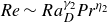 $\textit{Re}\sim Ra_{D}^{\gamma _2 }\textit{Pr}^{\eta _2}$ with respect to Rayleigh–Darcy number $Ra_D$ and Prandtl number $\textit{Pr}$. We derive $(\gamma _1,\gamma _2,\eta _1,\eta _2)=(2,1,0,-1)$ for the steady regime and $(1/3,4/9,0,-2/3)$ for the turbulent regime. All theoretical scaling exponents in these two regimes are validated by DNS results. Furthermore, we find that the influence of the Darcy number $Da$ becomes almost negligible when it is sufficiently small. Unified models for $\textit{Pr}=1$ are proposed to integrate the three regimes and are applicable across a broad range of $\phi$ and $Ra_D$, which are satisfactorily verified by DNS results. The unified models provide a predictive framework for heat transport and flow intensity in porous-medium thermal convection, thereby offering practical values for thermal engineering applications.


A quasi-isodynamic stellarator configuration towards a fusion power plant
-
- Journal:
- Journal of Plasma Physics / Volume 91 / Issue 6 / December 2025
- Published online by Cambridge University Press:
- 30 January 2026, E153
-
- Article
-
- You have access
- Open access
- HTML
- Export citation

Pattern selection between two-dimensional Rayleigh–Bénard convection and electroconvection near electrochemical surfaces
-
- Journal:
- Journal of Fluid Mechanics / Volume 1028 / 10 February 2026
- Published online by Cambridge University Press:
- 30 January 2026, A10
-
- Article
- Export citation
