Refine search
Actions for selected content:
238501 results in Physics and Astronomy

Vortex dynamics of a forced globally unstable jet: breaking and preserving axisymmetry
-
- Journal:
- Journal of Fluid Mechanics / Volume 1028 / 10 February 2026
- Published online by Cambridge University Press:
- 03 February 2026, A22
-
- Article
-
- You have access
- Open access
- HTML
- Export citation
-
A low-density jet is known to exhibit global self-excited axisymmetric oscillations at a discrete natural frequency. This global mode manifests as large-scale periodic vortex ring structures in the near field. We experimentally investigate the effectiveness of axial and transverse forcing in controlling such global vortical structures. We apply acoustic forcing at a frequency ( $f_{\!f}$) around the natural global frequency of the jet ( $f_n$) leading up to and beyond lock-in. Using time-resolved stereoscopic particle image velocimetry, we find that the jet synchronises to $f_{\!f}$ when forced sufficiently strongly. When forced purely axially, the jet exhibits in-phase roll-up of the shear layers, producing axisymmetric vortex ring structures. When forced purely transversely, the jet exhibits anti-phase roll-up of the shear layers, producing tilted vortex ring structures. We find that the former produces relatively strong oscillations, while the latter produces oscillations that are even weaker than those of the unforced case due to asynchronous quenching. We show that the transverse forcing breaks the jet axisymmetry by altering the topology of the coherent structures in the near field, leading to global instability suppression. We also find that the wavelength of the applied forcing has a notable influence on the evolution of vortical structures, thereby modifying the forced response of the jet. The efficacy of transverse forcing and the influence of the forcing wavelength in suppressing the global mode of a self-excited low-density jet present new possibilities for the open-loop control of a variety of globally unstable flows.


Quantum Cosmology
- An Introduction
-
- Published online:
- 02 February 2026
- Print publication:
- 19 February 2026

A passive cell body plays an active role in microalgal swimming via non-reciprocal interactions
-
- Journal:
- Journal of Fluid Mechanics / Volume 1028 / 10 February 2026
- Published online by Cambridge University Press:
- 02 February 2026, A16
-
- Article
- Export citation

A composite mean temperature transformation for compressible turbulent boundary layers
-
- Journal:
- Journal of Fluid Mechanics / Volume 1028 / 10 February 2026
- Published online by Cambridge University Press:
- 02 February 2026, A12
-
- Article
-
- You have access
- Open access
- HTML
- Export citation
Linear stability studies for a quasi-axisymmetric equilibrium including plasma flow, drift and viscosity effects
-
- Journal:
- Journal of Plasma Physics / Volume 91 / Issue 6 / December 2025
- Published online by Cambridge University Press:
- 02 February 2026, E157
-
- Article
-
- You have access
- Open access
- HTML
- Export citation

Probing the Consistency of Quantum Field Theory I
- From Nonconvergence to Haag's Theorem (1949–1954)
-
- Published online:
- 30 January 2026
- Print publication:
- 26 February 2026
-
- Element
-
- You have access
- Open access
- HTML
- Export citation

Unified scaling laws in porous-medium vertical natural convection
-
- Journal:
- Journal of Fluid Mechanics / Volume 1028 / 10 February 2026
- Published online by Cambridge University Press:
- 30 January 2026, A17
-
- Article
- Export citation
-
This study conducted theoretical analysis and direct numerical simulations (DNS) of vertical natural convection in a two-dimensional cavity filled with porous media, where the imposed temperature gradient is oriented perpendicular to the direction of gravity. Three regimes characterised by distinct flow states and the angle $\theta$ of the isothermal layer are identified. In the steady regime I with $\theta \approx \pi /2$, the flow is weak and heat transfer is dominated by conduction. In the transitional regime II with rapidly increasing $\theta$, kinetic and thermal boundary layers gradually develop. In the turbulent regime III with $\theta \approx 0$, clear boundary layers arise and turbulent thermal convection prevails. Corresponding to these flow states, theoretical analysis is performed to derive the scaling laws of the Nusselt number $\textit{Nu}-1\sim Ra_{D}^{\gamma _1 }\textit{Pr}^{\eta _1}$ and Reynolds number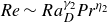 $\textit{Re}\sim Ra_{D}^{\gamma _2 }\textit{Pr}^{\eta _2}$ with respect to Rayleigh–Darcy number $Ra_D$ and Prandtl number $\textit{Pr}$. We derive $(\gamma _1,\gamma _2,\eta _1,\eta _2)=(2,1,0,-1)$ for the steady regime and $(1/3,4/9,0,-2/3)$ for the turbulent regime. All theoretical scaling exponents in these two regimes are validated by DNS results. Furthermore, we find that the influence of the Darcy number $Da$ becomes almost negligible when it is sufficiently small. Unified models for $\textit{Pr}=1$ are proposed to integrate the three regimes and are applicable across a broad range of $\phi$ and $Ra_D$, which are satisfactorily verified by DNS results. The unified models provide a predictive framework for heat transport and flow intensity in porous-medium thermal convection, thereby offering practical values for thermal engineering applications.


A quasi-isodynamic stellarator configuration towards a fusion power plant
-
- Journal:
- Journal of Plasma Physics / Volume 91 / Issue 6 / December 2025
- Published online by Cambridge University Press:
- 30 January 2026, E153
-
- Article
-
- You have access
- Open access
- HTML
- Export citation

Pattern selection between two-dimensional Rayleigh–Bénard convection and electroconvection near electrochemical surfaces
-
- Journal:
- Journal of Fluid Mechanics / Volume 1028 / 10 February 2026
- Published online by Cambridge University Press:
- 30 January 2026, A10
-
- Article
- Export citation
Parameter optimisation design of helicon wave plasma source in High Magnetic field Helicon eXperiment
-
- Journal:
- Journal of Plasma Physics / Volume 91 / Issue 6 / December 2025
- Published online by Cambridge University Press:
- 30 January 2026, E156
-
- Article
-
- You have access
- Open access
- HTML
- Export citation

Note on a controlled interconversion between two minimal surfaces
-
- Journal:
- Journal of Fluid Mechanics / Volume 1028 / 10 February 2026
- Published online by Cambridge University Press:
- 30 January 2026, A18
-
- Article
-
- You have access
- Open access
- HTML
- Export citation
-
Recent work (Raufaste et al. 2022 Soft Matter, vol. 18, p. 4944) studied the dynamics of a soap film in the shape of an unstable minimal surface whose evolution is governed in part by the frictional forces associated with surface Plateau border (SPB) motion. In this note, we study a variant of this problem in which a half-catenoid bounded by a wire loop and a fluid bath axisymmetrically surrounds a cylindrical rod with a radius equal to the neck of the critical catenoid given by the wire loop. When the half-catenoid is brought just beyond the point of instability, the film touches the cylinder and separates from the bath, creating an SPB that is dragged upwards along the rod by the now unstable soap film, and asymptotically relaxes to a new stable annular minimal surface. For this free-boundary problem involving an unstable initial condition, we find the dynamics by balancing the capillary force of successive unstable minimal surfaces spanning the SPB and the wire loop with the frictional force associated with the moving SPB. We find good agreement between theory and experiment using the frictional force $f\sim \textit{Ca}^{2/3}$ given by Bretherton’s law, where $ \textit{Ca} $ is the capillary number.


Microstreaming induced by a micro-cantilever vibrating elliptically in a viscous fluid
-
- Journal:
- Journal of Fluid Mechanics / Volume 1028 / 10 February 2026
- Published online by Cambridge University Press:
- 30 January 2026, A11
-
- Article
- Export citation
FLM volume 1027 Cover and Front matter
-
- Journal:
- Journal of Fluid Mechanics / Volume 1027 / 25 January 2026
- Published online by Cambridge University Press:
- 30 January 2026, p. f1
-
- Article
-
- You have access
- Export citation
Laser pulse focusing and energetic electron generation by magnetised plasma lens
-
- Journal:
- Journal of Plasma Physics / Volume 91 / Issue 6 / December 2025
- Published online by Cambridge University Press:
- 30 January 2026, E154
-
- Article
-
- You have access
- Open access
- HTML
- Export citation
Reconstructions of electron-temperature profiles from EUROfusion pedestal database using turbulence models and machine learning
-
- Journal:
- Journal of Plasma Physics / Volume 91 / Issue 6 / December 2025
- Published online by Cambridge University Press:
- 30 January 2026, E155
-
- Article
-
- You have access
- Open access
- HTML
- Export citation
-
This study makes use of plasma-profile data from the EUROfusion pedestal database (Frassinetti et al. 2020 Nucl. Fusion vol. 61, p. 016001), focusing on the electron-temperature and electron-density profiles in the edge region of H-mode ELMy JET ITER-Like-Wall (ILW) pulses. We make systematic predictions of the electron-temperature pedestal, taking engineering parameters of the plasma pulses and the density profiles as inputs. We first present a machine-learning (ML) algorithm which, given more inputs than theory-based modelling, is able to reconstruct unseen temperature profiles within $20\,\%$ of the experimental values. We find a hierarchy of the most consequential engineering parameters for such predictions. This result confirms the conceptual possibility of accurate data-driven prediction. Next, taking a simple theoretical approach that assumes a definite local relationship between the electron-density ( $R/L_{n_e}$) and electron-temperature ( $R/L_{T_e}$) gradients, we find that a range of power-law scalings $R/L_{T_e}=A(R/L_{n_e})^\alpha$ with $\alpha\approx 0.4$ correctly capture the behaviour of the electron-temperature in the steep-gradient region. Fitting $A$ and $\alpha$ independently for each pedestal reveals a clear one-to-one correlation, suggesting an underlying constraint in pedestal physics. The measured $\eta_e = L_{n_e}/L_{T_e}$ values across the pedestal exhibit a wide distribution, significantly exceeding the slab-ETG linear stability threshold, implying either a non-linear threshold shift or a measurably supercritical saturated turbulent state. Finally, we fit parameters for scalings that relate the turbulent heat flux to the gradients $R/L_{T_e}$ and $R/L_{n_e}$, similarly to models extracted from gyrokinetic simulations. The inclusion of more experimental parameters is necessary for such models to match the accuracy of our ML results.


Dancing rivulets in an air-filled Hele-Shaw cell
-
- Journal:
- Journal of Fluid Mechanics / Volume 1028 / 10 February 2026
- Published online by Cambridge University Press:
- 30 January 2026, A13
-
- Article
- Export citation

Assessment of non-intrusive sensing in wall-bounded turbulence through explainable deep learning
-
- Journal:
- Journal of Fluid Mechanics / Volume 1028 / 10 February 2026
- Published online by Cambridge University Press:
- 30 January 2026, A19
-
- Article
-
- You have access
- Open access
- HTML
- Export citation
-
In this work we present a framework to explain the prediction of the velocity fluctuation at a certain wall-normal distance from wall measurements with a deep-learning model. For this purpose, we apply the deep-SHAP (deep Shapley additive explanations) method to explain the velocity fluctuation prediction in wall-parallel planes in a turbulent open channel at a friction Reynolds number ${\textit{Re}}_\tau =180$. The explainable-deep-learning methodology comprises two stages. The first stage consists of training the estimator. In this case, the velocity fluctuation at a wall-normal distance of 15 wall units is predicted from the wall-shear stress and wall-pressure. In the second stage, the deep-SHAP algorithm is applied to estimate the impact each single grid point has on the output. This analysis calculates an importance field, and then, correlates the high-importance regions calculated through the deep-SHAP algorithm with the wall-pressure and wall-shear stress distributions. The grid points are then clustered to define structures according to their importance. We find that the high-importance clusters exhibit large pressure and shear-stress fluctuations, although generally not corresponding to the highest intensities in the input datasets. Their typical values averaged among these clusters are equal to one to two times their standard deviation and are associated with streak-like regions. These high-importance clusters present a size between 20 and 120 wall units, corresponding to approximately 100 and 600 $\unicode{x03BC} \textrm {m}$ for the case of a commercial aircraft.


Locally imprimitive points on elliptic curves
- Part of
-
- Journal:
- Mathematical Proceedings of the Cambridge Philosophical Society / Volume 180 / Issue 3 / May 2026
- Published online by Cambridge University Press:
- 29 January 2026, pp. 663-683
- Print publication:
- May 2026
-
- Article
-
- You have access
- Open access
- HTML
- Export citation
-
Under the Generalised Riemann Hypothesis (GRH), any element in the multiplicative group of a number field K that is globally primitive (i.e., not a perfect power in $K^*$) is a primitive root modulo a set of primes of K of positive density.
For elliptic curves $E/K$ that are known to have infinitely many primes ${\mathfrak{p}}$ of cyclic reduction, possibly under GRH, a globally primitive point $P\in E(K)$ may fail to generate any of the point groups $E(k_{\mathfrak{p}})$. We describe this phenomenon in terms of an associated Galois representation $\rho_{E/K, P}\,:\,G_K\to\mathrm{GL}_3({\widehat {{\mathbf{Z}}}})$, and use it to construct non-trivial examples of global points on elliptic curves that are locally imprimitive.


Influence of inflow turbulence on wake dynamics of a square cylinder
-
- Journal:
- Journal of Fluid Mechanics / Volume 1028 / 10 February 2026
- Published online by Cambridge University Press:
- 29 January 2026, A15
-
- Article
- Export citation
I can see your halo: Constraining the MilkyWay halo DM with FRB population studies
-
- Journal:
- Publications of the Astronomical Society of Australia / Volume 43 / 2026
- Published online by Cambridge University Press:
- 29 January 2026, e017
-
- Article
-
- You have access
- Open access
- HTML
- Export citation
-
Fast radio bursts (FRBs) probe the electron column density along the line of sight and hence can be used to probe foreground structures. One such structure is the Galactic halo. In this work, we use a total of 98 high Galactic latitude ( $|b| \gt 20^\circ$) FRBs detected by ASKAP, Parkes, DSA, and FAST with 32 associated redshifts to constrain the dispersion measure (DM) contribution from the Galactic halo. We simultaneously fit unknown FRB population parameters, which show correlations with the Galactic halo but are not completely degenerate. We primarily use an isotropic model for the halo, but find no evidence favouring a particular halo model. We find DM $_\mathrm{MW,halo}$ = $68^{+27}_{-24}$ pc cm $^{-3}$, which is in agreement with other results within the literature. Previous constraints on DM $_\mathrm{MW,halo}$ with FRBs have used a few, low-DM FRBs. However, this is highly subject to fluctuations between different lines of sight, and hence using a larger number of sightlines as we do is more likely to be representative of the true average contribution. Nevertheless, we show that individual FRBs can still skew the data significantly and hence will be important in the future for more precise results.


