To save content items to your account,
please confirm that you agree to abide by our usage policies.
If this is the first time you use this feature, you will be asked to authorise Cambridge Core to connect with your account.
Find out more about saving content to .
To save content items to your Kindle, first ensure no-reply@cambridge.org
is added to your Approved Personal Document E-mail List under your Personal Document Settings
on the Manage Your Content and Devices page of your Amazon account. Then enter the ‘name’ part
of your Kindle email address below.
Find out more about saving to your Kindle.
Note you can select to save to either the @free.kindle.com or @kindle.com variations.
‘@free.kindle.com’ emails are free but can only be saved to your device when it is connected to wi-fi.
‘@kindle.com’ emails can be delivered even when you are not connected to wi-fi, but note that service fees apply.
At the heart of the history of post-revolutionary Christianity in America is the relationship between race and salvation. Compared with all the busy Enlightenment rationalisation, the unequivocal egalitarianism of Christian salvation, the admissibility of all to saving grace, had a much more obvious appeal to those in immediate need of bodily and spiritual redemption. Christian slaves, Charles Pinckney and many others argued, would be better workers, eternally grateful to their owners for showing them 'the light of the true Christian faith'. John Adams and Jefferson respected slavery as a form of property and refused to take seriously a proposal to arm a slave regiment that would win freedom for its service. A bit like M. Jourdain discovering that he had, all along been speaking Prose, author owned that until deep into the twentieth century almost every great conflict in British history had been in its essence one of religion.
The right to freedom of choice in religion is indeed, as the basic Western documents claim, a fundamental human right. Though free exercise of religion is a basic human right, religion cannot be the source or ground of human rights. Author's argument places religion in a larger context of value. But it does not denigrate religion, which has been a remarkable force for good as well as bad over human history. Though the bad may be more prominent in our minds right now, fixed by terror, history is too complex to allow that as the final word. The right to decide community could not be made objective because morality divides resources among people. The argument for human rights does not travel through a religious understanding of the universe; on the contrary a religious understanding is defensible, if at all, only through the intellectually prior doctrine of human rights.
This chapter shows where the philosophical worldviews that inform the religion of Islam and the rights discourse may be distant from each other, and where they may be closer than we ordinarily realize. Rights discourse does not declare itself specific to certain countries or cultural paradigms, its attraction for its adherents is its claim to universalism. The Islamic worldview might well be shared or at least sympathetically judged by all believers in an Absolute Divine Creator: devout and committed believers in a Divinity that does not share authority are logically in a quandary otherwise. In the West, secularism is a subject of great controversy, in terms of what it requires by way of specific policies and legislative tools. Having emerged as part of the secularisation of Western society, it derives its authority from something other than a supernatural or metaphysical source.
The text of the treatise comprises a list of numbered responses to ‘reasons’, which correspond closely to sections of the printed version of Scot’s Discoverie. The text is provided together with excerpts from the relevant parts of the Discoverie for comparison, and is fully annotated. The author uses a variety of theological sources in addition to biblical quotations, including St Augustine, Calvin, Peter Martyr Vermigli, Cyprian, and Chrysostom. The treatise touches on a range of issues in relation to witchcraft, including the veracity and causes of witches’ confessions, the question of whether accused witches are mentally ill or not, whether witches are guilty of idolatry and apostasy, and the circumstances under which execution is justified. The author presents a thorough critique of Scot’s method, as well as his conclusions.
This article investigates the construction of the past in Carolingian Europe by focusing on the ‘Martinelli’, a family of manuscripts that contain texts related to the cult of Martin of Tours (d. 397). The article focuses particularly on the presentation of the writings of Gregory of Tours (d. 594) within these manuscripts. Two codices are used as case studies: Berlin, ms Phillipps 1877 and Paris, BnF, ms Lat. 10848. This analysis sheds new light on when the earliest Martinellus was compiled, the reception of Gregory of Tours and the agency of scribes in shaping conceptions of the past in the Carolingian period.
In this landmark contribution to the study of modern China, Steve Smith examines the paradox of 'supernatural politics'. He shows that we cannot understand the meaning of the Communist revolution to the Han Chinese without exploring their belief in gods, ghosts and ancestors. China was a religious society when the Communist Party took power in 1949, and it sought to erode the influence of the minority religions of Buddhism, Daoism, Catholicism and Protestantism. However, it was the folk religion of the great majority that seemed to symbolize China's backwardness. Smith explores the Party's efforts to eliminate belief in supernatural entities and cosmic forces through propaganda campaigns and popularizing science. Yet he also shows how the Party engaged in 'supernatural politics' to expand its support, utilizing imagery, metaphors and values that resonated with folk religion and Confucianism. Folk religion is thus essential to understanding the transformative experience of revolution.
Spirituality in Mind offers a unique, personal, and critical perspective on the complex entanglements between psychiatry, spirituality, religion, and theology. Drawing on over four decades of experience, the author explores how spirituality, despite often being overlooked or undervalued, is central to holistic, patient-centred psychiatric care. Through compelling case studies and interdisciplinary insights, the book challenges conventional symptom-focused models and advocates for a shift toward meaningful recovery. It engages with the concept of “clinical theology,” highlighting the ordinary theological concerns of patients and the need for psychiatry to be more spiritually attentive. By integrating perspectives from the critical medical humanities, this book demonstrates that spirituality is not an optional extra but a core concern of psychiatry, psychiatrists, and patients alike. Spirituality in Mind raises vital questions about the nature and purpose of psychiatric practice, offering a new vision for mental health care.
New Religious Movements (NRMs) have emerged periodically from the formative period of Islam to the present day. This Element considers a representative sample, organized by chronological period and then by type. In earlier periods, particular features of Islam either encouraged or discouraged the emergence of NRMs. Modernity brought new conditions that led to new types of NRM, the focus of this Element. Initially, NRMs arose in resistance to modernity or in support of it. Then came NRMs adjusted to the age of mass modernity. The Element also examines Western NRMs of Islamic origin or coloring. All these NRMs are understood in terms of their relationship with the dominant religious community, the host society, and political authority, as well as the novelty of their beliefs and practice.
Like many other world religious and spiritual traditions, the Sikh tradition is philosophically rich. However, its contributions have been wholly unrepresented in Western analytic philosophy. The goal of this Element is to present a central aspect of Sikh philosophy, its ethics, by using the tools and methods of analytic philosophy to reconstruct it in a form that is understandable to Western audiences, while still accurately capturing its unique and autochthonous features. On the interpretation of Sikh ethics this Element presents, the Sikh ethical theory understands ethics in terms of truthful living – in particular, living in a way that is true to the fundamental Oneness of all existence. Features of the Sikh ethical theory discussed include its account of vice and virtue, its account of right conduct, and the philosophical relationship between ethical theory and practice. This title is also available as Open Access on Cambridge Core.
This article contributes to ongoing attempts to move historical understanding of Christian attitudes to Jews beyond a dichotomy between philo- and antisemitism. Employing the history of emotions, it examines how ‘love’ was understood in the specific religious, social and historical contexts in which it was advocated. Focusing on the Church of Scotland’s 1839 ‘Mission of Enquiry to the Jews’, it shows how the Church advocated a system of shared feeling towards Jews among believers. This ‘love’ engaged a variety of different emotional states linked to contemporary internal tensions within the Church of Scotland, and prophetic hopes for their resolution.
Paul Cullen was without question the most important Irishman of his generation and a figure of global importance. He is also among the least understood. Examining every aspect of Cullen's life and career, Colin Barr explores how Cullen was characterised by his contemporaries as an 'Italian monk', 'the deadly foe of Irish liberty', 'an obscurantist run mad', or 'the most malignant enemy of the English & English Government in Ireland.' One frustrated contemporary called him 'the Pope of Ireland'. This study explores Cullen's early years and education in papal Rome, his career in the curia and then in Ireland, as Archbishop of Dublin, the first Irish cardinal, and author of the compromise text that defined the dogma of papal infallibility. Drawing on more than100 archives in ten countries, The Irish Pope examines Cullen's life and work at home and abroad, and through it the history of Ireland in the mid-Victorian era.
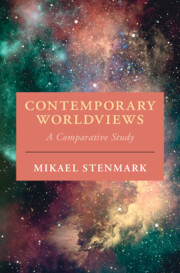
In this book, Mikael Stenmark identifies and explores several prominent religious and secular worldviews that people in contemporary society hold. Three nonreligious worldviews are highlighted: scientism, secular humanism, and transhumanism. These are contrasted with four religious worldviews: Abrahamic theism, Buddhism, the new spirituality (the so-called 'spiritual but not religious' individuals, SBNR), and religious naturalism. Some challenges facing each of these worldviews are discussed toward the end of each chapter. The book offers a unique study of several key secular outlooks on life that go far beyond previous studies of atheism, nonreligion, and religious 'nones.' It also provides a rare insight into the beliefs, values, and attitudes that secular and religious thinkers consider essential to our identity and place in the world, as well as what we should deeply care about in life.