

Service learning is a pedagogical practice that allows teachers to immerse students in hands-on projects that solve problems for their community, while still incorporating state standards/content into the experience (Service Learning Academy, n.d.). Students develop civic responsibility, twenty-first century skills (core competencies such as collaboration, digital literacy, critical thinking, and problem-solving that advocates believe schools need to teach to help students thrive in today’s world; Rich, Reference Rich2010), and tools for self-reflection and personal growth. Many universities, such as the University of Nebraska Omaha (UNO), incorporate service learning into their Community Outreach departments with the hopes of connecting the university with local schools and members of a community to emphasize critical thinking and content with real-world experiences (Service Learning Academy, n.d.). According to Furco (Reference Furco1996), service learning is different from other hands-on learning opportunities, such as community service or internships. In typical community service projects, students are not connecting the experience to content standards, and during internships, students are usually participating in the service at his/her own benefit, rather than for the benefit of the community. Service learning distinguishes itself “by the intention to equally benefit the provider and the recipient of the service as well as to ensure equal focus on both the service being provided and the learning that is occurring” (Furco, Reference Furco1996, p. 12). All parties benefit from the experience, and students learn content, civic duty, twenty-first century skills, reflection, and content standards while actively participating in the project.
To implement service learning, all parties must be aware of the needs of the community and of the classroom learning. Projects must be properly matched to achieve both learning and civic duty. When choosing a community partner, teachers should work with their students to incorporate their interests while still following the curriculum. Allow students to brainstorm community issues they would like to work on so that they can have increased buy-in from the beginning of the project. Student choice also allows students to be involved in inquiry-based learning by allowing them to conduct background research and develop a methodology for their ideas. For example, Rachael Arens’ Horticulture students at Omaha Northwest High School, Steve Rodie’s Environmental Sustainability students at UNO, and the City of Omaha identified a local problem that needed a solution. According to Clean Solutions for Omaha (n.d.):
The federal government has identified at least 772 communities nationwide, including Omaha, that must reduce their combined sewer system overflows in order to improve water quality in the receiving stream. This federal mandate means Omaha must reduce the number of combined sewer system overflows of raw sewage to the Missouri River and Papillion Creek from about 52 per year to under eight per year or achieve 85 percent capture of the wet weather volume. Unlike federal mandated improvements to wastewater treatment facilities in the 1970s and 1980s that provided federal funding to support the projects, the federal mandate to reduce the occurrence of combined sewer overflow (CSO) discharges to the receiving streams is not federally funded; thus, local users of the system are required to pay for the improvements.
To alleviate this local problem, Northwest High School, UNO, and the City of Omaha decided to engineer and build a rain garden on the Northwest High School campus to control storm water runoff and to collect surface pollutants, while also promoting native plant growth for declining pollinator species. The garden collects stormwater runoff from the roof of the greenhouse and provides an outdoor learning environment for Northwest classes.
Both high school and college students gained many benefits from participating in the project. They learned about content standards of biodiversity, chemical analysis, energy cycling, native plants, environmental sustainability, the scientific method and designing a research project, and the engineering principles aligned with the Next Generation Science Standards. Not only did they learn content, but also both the Northwest and UNO students acquired many twenty-first century skills in engineering the project, such as using tools effectively to construct and plant the garden. The students also learned valuable leadership skills and effective communication skills outside of classroom hours with students of varying ages in order to develop an aesthetically pleasing, functional design. These designs were then presented to the community at UNO, to an Omaha Green Tour, and to low-impact development conferences. The rain garden not only serves as an outdoor learning space for many science classes, but also other cross-curricular courses at Northwest High School. For example, the Art class students designed a rain barrel to collect additional runoff from the roof, and the technology students created a website that connects to a QR code on a sign in front of the rain garden. The website introduces the purpose of the garden, and students can learn about the different plant and insect species present in the garden.
The City of Omaha also mutually benefitted from the collaboration by fulfilling the mandate set by the federal government, while also creating awareness and activism among Omaha youth. Because the rain garden proved to be a major development for the city, the students created and submitted an informational video to the Samsung Solve for Tomorrow Contest. This project placed first in the state of Nebraska and earned Northwest High School $20,000 worth of Samsung technology. Students were asked to give interviews for the news media, and the project was displayed in National Geographic’s Next Generation Environmental Leaders webpage, a huge accolade for the students.
The rain garden project provided an excellent example of a successful service-learning project in which all parties involved benefitted, student learning occurred, and student civic responsibility increased. Service learning can be achieved across any age group or subject if a willing partner can be appropriately matched. To appropriately match, teachers must first ask themselves, “What do I want my students to learn?” By answering this question, the teacher can then begin researching local problems that can address his/her standards. A university with a Service Learning department, such as UNO, may also facilitate this research by identifying a local need and then matching the teacher with a researcher or community partner with similar goals. This newfound relationship will not only benefit students’ learning, but also foster the teacher’s growth by giving him/her a more meaningful approach to teaching and improving engagement in the classroom.
To make the project successful, the school, university, and community partners identified common goals among everyone involved. It was imperative to ensure everyone benefitted to create a sustainable project and prevent burnout. Choosing partners who were accountable and worked well with youth was also important for the success of the project. All people involved worked out a timeline of project implementation and a list of items needed and worked together to write grants for additional funds needed.
To assess student learning and engagement throughout service-learning projects, teachers can implement a variety of assessments. Teachers can provide pre- and post-surveys to determine student learning of the content. In these surveys, students can also indicate their level of engagement compared to traditional classroom teaching. Teachers can also have students write reflections, keep a learning portfolio, create project posters, present their learning to the class/public, or incorporate project questions into content-related tests/assignments. These assessments differ from other classes without service learning because they include meaningful self-reflections that allow students to go above and beyond just the content. The teacher can also assess student learning and engagement by evaluating the amount of time students stay on task, the amount of time students participate and voice their opinions, and the level of questions the students formulate.
The following case studies in this chapter underwent a series of steps to ensure that all parties benefitted from the experience and that student learning was taking place. Figure 5.1 shows the protocol that was followed in each service-learning project.
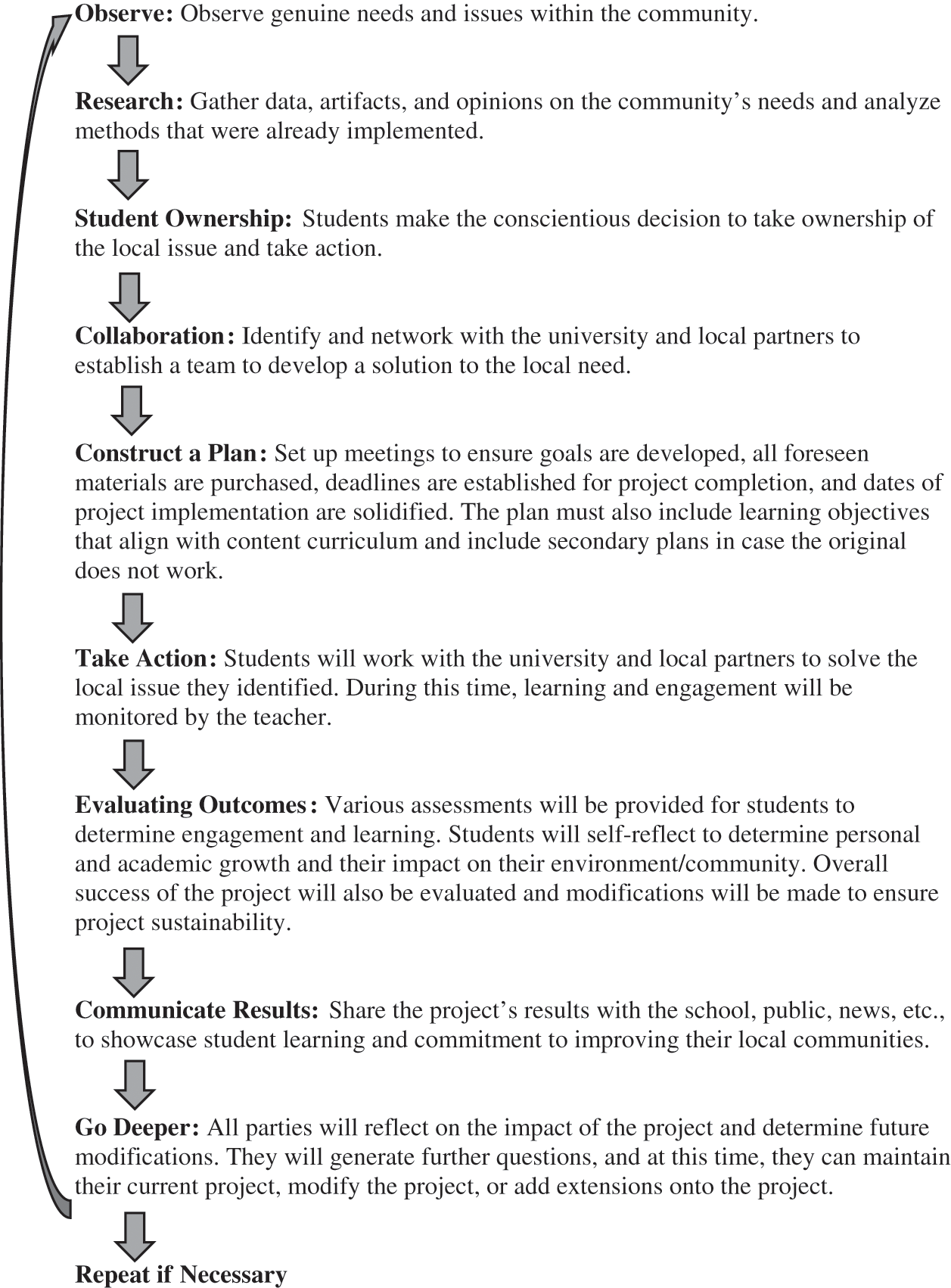
Figure 5.1 Service-learning model for project implementation
Case Example
Rachael Arens’ Horticulture and Environmental Science classes also collaborated with Stephanie Lynham’s UNO International classes (ILUNO) for the service-learning “Seed to Salad” project to complement the learning opportunities of the rain garden/outdoor classroom space. The Seed to Salad project began in the fall of 2014 with the expectation of allowing students to investigate foreign food, plants, and food crises around the world. By doing this, both Northwest and ILUNO students learn about each other’s cultures and get to transgress racial or gender stereotypes and barriers often placed in today’s society.
Both the Northwest and ILUNO students began by meeting in each other’s classrooms, where students presented on their respective cultures. They prepared cultural dishes for each other, focusing on the plants and foods from the areas of the world where they originate. They also took a field trip to the food bank for the Heartland food pantry to learn about food shortages, and then boxed foods for hungry families. After getting to learn about one another’s cultures and foods/plants, the students decided they wanted to create their own community garden to provide healthy produce for the Northwest community. Rachael Arens wrote and received a grant from Big Gardens to install 12 wooden garden beds on Northwest High School’s campus. The ILUNO students helped the Northwest Horticulture students and Big Gardens build the boxes and then fill them with topsoil.
Once the boxes were built, the Horticulture and ILUNO students met to discuss the plants that they wanted to be planted into the boxes. They presented on plants from their own cultures, medicinal plants, produce, and native plants to Nebraska. They had to research whether the plants could handle the hardiness zones of Nebraska, how the plants were to be cared for, and spacing requirements for each plant. Once the plant lists were developed, seeds were purchased and the ILUNO and Northwest students met multiple times to start the seeds in Northwest’s greenhouse and care for them as they grew large enough to be transplanted outside in late spring. After the last average frost-free date, the ILUNO students assisted the Northwest Horticulture students in transplanting the plants and producing plugs to the garden beds outside. They also practiced directly planting seeds into the garden beds for some of the plants that could not be transplanted, putting up fencing to keep out rabbits, and labeling all the plants to inform community members of the produce. Both Northwest and ILUNO students learned best gardening practices and were able to learn about plants from other cultures in the process. The collaboration of preparing and planting the community garden each spring continues to be a highlight among both student groups as they get to break down cultural and language barriers and come together for the common purpose of feeding others. This is important since Northwest High School is a Title 1 school where 74 percent of families qualify for free/reduced lunches (Nebraska Department of Education, n.d.). The produce from the community garden is used in both Horticulture and Food courses at Northwest, but also for families and students to acquire fresh produce and bond with other community members while gardening. This teaches both the ILUNO and Northwest students not only content skills, but also civic responsibility to help feed the hungry within their community.
After learning how to garden, the Northwest and ILUNO students created a “Bridge to Worlds” painting for the Adams Park Community Center in North Omaha and a “Foods Around the World” painting for the Sienna Francis homeless shelter in downtown Omaha. Both centers needed artwork to beautify their empty walls and to brighten the spirits of each center’s members.
Throughout the gardening project, both the Northwest High School and ILUNO students learned about gardening practices, energy cycling, global food shortages, native plants and pollinator species, pest management, and environmental and civic awareness. The ILUNO students were also able to benefit by practicing the English language with the Northwest students. The community also experienced the following benefits: (1) the Northwest community had free access to a community garden with fresh produce; (2) the Sienna Francis House and Adams Park Community Center gained student-made, culture/food-inspired artwork to beautify their walls; and (3) the Sienna Francis House had boxed foods prepared for them. All of these needs were met within the community while students were able to learn about each other’s cultures and break down stereotypes often constructed due to lack of understanding.
The Northwest and ILUNO students also built an aquaponics system to support the Seed to Salad project. They partnered with Whispering Roots, a local nonprofit organization, to assist with the design and materials and to find a sustainable way to provide fresh food for the Northwest community. Aquaponics combines aquaculture (raising fish) and hydroponics (growing produce) in one integrated system. The fish waste provides a natural nutrition source for the produce, and the plants, in turn, filter and clean the water for the fish. The students learned about nutrient cycling and species interactions with both biotic and abiotic factors. This allowed them to fully understand how the system worked as they were building it. The students then grew fresh pepper plants, kale, and basil, and raised tilapia fish in their aquaponics system. This produce was given to the Food classes at Northwest, as well as to the families of Northwest students.
Northwest High School and ILUNO students also helped build community gardens in other locations in Omaha after they gained expertise from building the community garden at Northwest High School. They partnered with Nebraskans for Civic Reform to address the food desert problems in North Omaha. They discussed the issues that lead to food deserts and the community gardens’ provision of not only nutritious food, but also community involvement. In the spring of 2016, the students started construction of a community garden at the Sherman Center in North Omaha. They constructed boxes, filled the boxes with soil, planted seeds, spread mulch, and mixed compost. They returned the following year to help with planting and ensuring weeds were not spreading into the boxes. The ILUNO students enjoyed seeing multiple sides of Omaha and felt proud that they could help feed others on a different side of the world. From data collected from student pre- and post-surveys, the Northwest students were happy that they could give back to their community and provide their expertise of gardening to others. In this case, they were the teachers providing direction on construction, planting, composing, and pest control.
The Seed to Salad service-learning project also supported the community garden in other ways. For example, many pollinator species are declining due to habitat infringement, pesticides, etc., and these pollinators are crucial for produce production. The Northwest and ILUNO students decided also to focus on this issue and collaborated with the Omaha Henry Doorly Zoo and the Monarch Watch program. Monarch Watch is a nonprofit education, conservation, and research program based at the University of Kansas that focuses on the monarch butterfly, its habitat, and its fall migration (Lovett, Reference Lovett2017). They asked for citizen scientists around the globe to collect data on the monarch butterflies that could not have been collected by one or a small group of researchers alone. The Henry Doorly Zoo trained the students in how to tag monarch butterflies’ wings and then upload this information to a national database. The students tracked and monitored the southern migration patterns of the butterflies as well as the population numbers of the species. Throughout the project, students learned about content standards of biodiversity, populations, human impacts, and species interactions. Students also learned science fieldwork techniques and had the opportunity to work with technology and an international research database.
The project also served as an incredibly engaging method for students to obtain content knowledge. Students were actively involved in capturing monarch butterflies in large nets and then carefully placing sticker tags on their delicate wings. They also had to determine the sex of the butterflies, record the size, and identify where each butterfly was found. Students had a lot of fun running around capturing the butterflies and were more engaged than if the teacher had provided direct instruction about the content in a typical classroom setting. Both ILUNO and Northwest students also had time to reflect on how monitoring the monarch butterflies impacted their community and world. To reflect on the experience, students discussed the impacts though a Socratic Seminar discussion. A Socratic Seminar is a pedagogical method that “is a formal discussion, based on a text, in which the leader asks open-ended questions. Within the context of the discussion, students listen closely to the comments of others, thinking critically for themselves, and articulate their own thoughts and their responses to the thoughts of others. They learn to work cooperatively and to question intelligently and civilly” (Israel, Reference Israel, Holden and Schmit2002, p. 89). Students discussed how human interactions can impact biodiversity and how their own actions can directly or indirectly hurt the monarch or other pollinators’ populations. They also discussed what they could do to make a difference, how they could create more awareness, and how they could encourage others to also work toward preserving biodiversity and ecosystems.
The Seed to Salad project also incorporated water quality in its efforts to teach students about healthy gardening practices. Both Northwest High School and ILUNO students collaborated with the UNO Watershed Network to test for atrazine levels in local streams. Atrazine is a common herbicide applied in the United States that has been found to be an endocrine disruptor for many aquatic species, including fish and frogs. This causes a trophic (the feeding habits or food relationships of different organisms in a food chain; Biology Online, n.d.) imbalance in many aquatic ecosystems, so UNO wanted to test for the presence of this pesticide around the state of Nebraska. UNO does not have enough researchers to collect data multiple times through the spring around the state, so they called out to high schools to act as citizen scientists to collect the large amounts of data for them.
Northwest Environmental and Horticulture students as well as the ILUNO students were initially trained by UNO researchers to collect and test water samples. This taught students how to look for microorganisms and how to work with the various technologies needed. The students then collected water samples every week in April and May from the Papio Creek near Northwest High School. They tested for water turbidity, for high phosphate and nitrate levels, and for the presence of atrazine. Students then uploaded this information to an online database that allowed them to also see data from other schools around the state. Students learned about standards of energy cycling, human impacts, and biodiversity, and they were able to work with scientific technology and to collaborate with other citizen scientists around the state and at UNO. Students also reflected on how pesticides impact ecosystems and how integrated pest management and best management practices should be utilized when growing crops. Students weighed the pros and cons of utilizing pesticides and their economic benefits versus organic farming, and the Northwest and ILUNO students discussed the differences between farming practices and exposure to pesticides within their own communities and countries.
Lastly, Northwest High School and ILUNO students focused on another water quality issue in Omaha for their Seed to Salad project. Since Omaha has a combined sewer system, any pollution that enters the storm drains will run into local creeks and eventually major rivers. Consequently, litter and illegal dumping in storm drains pollute our streams/rivers and negatively impact aquatic ecosystems. To alleviate this problem, the Northwest High School and ILUNO students collaborated with Keep Omaha Beautiful to clean and label storm drains around Omaha. Keep Omaha Beautiful is a nonprofit organization in Omaha that “is committed to litter reduction, community beautification, and education on recycling and environmental stewardship in the Omaha area” (Keep Omaha Beautiful, n.d.). They reach out to community members and schools to help them with their cleanup efforts in order to keep up with the rapid accumulation of pollution in Omaha’s streets.
Keep Omaha Beautiful taught the Northwest and ILUNO students about pollution, human impacts on the ecosystem, and the difference they can make in their community. After the initial instruction, maps showing all the streets and storm drains in Northwest Omaha were provided to the students. The students were then taught how to properly clean and label the storm drains, how to let others know that the drains had been cleaned, and also how to create an awareness of pollution prevention. The students then walked around the streets, cleaning and labeling every individual storm drain. Storm drains at the bottom of large watersheds accumulated a lot of pollution and organic matter that the students collected in large trash bags for Keep Omaha Beautiful. They kept a log of how many bags of pollution they had filled and how many storm drains had been labeled. Northwest and ILUNO students clean the storm drains every fall and spring semester to ensure that pollution and organic matter does not accumulate in the drains around their community.
After cleanup, students reflected on the impacts they had made on their community. The ILUNO students shared how pollution was dealt with in their countries and how working with Omaha students allows them to be part of a global effort. The Northwest students revealed how they can start making more of an effort to keep pollution out of the watershed and streets and how they can be more conscientious of what they pour down their drains. Both Northwest and ILUNO students took accountability for their efforts in pollution prevention and wanted to raise more awareness in order to help others become environmental stewards in their community and world.
The Seed to Salad service-learning project plans on continually growing and remaining flexible regarding the needs of the classroom and student body. As the needs of the community and world change, so too will the direction of the project. Future plans for the project include the continuation of planting and caring for the Northwest community garden, monarch tagging, assisting with storm drain labeling and cleanup with Keep Omaha Beautiful, caring for the aquaponics system with Whispering Roots, and building other community gardens around Omaha with Nebraskans for Civic Reform. The Seed to Salad project, as well as the Rain Garden project with Steve Rodie’s UNO class, will be collaborating with more environmental partners throughout the city to strengthen student learning and expand the rain garden and community garden into an outdoor classroom. Advanced Placement Environmental Science students will work with Steve Rodie’s UNO Environmental Appreciation class to perform waste inventories of UNO, the Omaha Public School District, and Northwest High School. They will then create an action plan for alleviating the waste accumulation in each location, and subsequently conduct research on the efficacy of the implementation of their plans. The Northwest Horticulture and AP Environmental Science students will also continue to design the outer spaces of the rain garden and community garden and expand them into an outdoor classroom that includes a solar panel, a seating area with a writing board, an orchard, a medicinal/herbal plot, and an additional rain garden. These areas will contribute more produce for the community and will provide more environmental learning opportunities for students.
The Northwest Horticulture and AP Environmental Science students will also collaborate with the ILUNO students and the Henry Doorly Zoo to test for chytrid fungus on frogs at the Safari Park in Nebraska. Chytrid fungus is a highly infectious amphibian disease caused by Batrachochytrium dendrobatidis. Thirty percent of amphibian species across the globe have been experiencing declines in populations, and the chytrid fungus disease is thought to be a major contributor to the decline (Stuart et al., Reference Stuart, Chanson and Cox2004). Scientists do not know how to stop the spread or control the disease in wild frog populations, so there is a dire need for further scientific research of the fungus. Both Northwest and ILUNO students plan to assist the Henry Doorly Zoo with their Amphibian Conservation Education Project, conducting an amphibian survey to determine the viability of amphibian habitats and health and to test for the presence of chytrid fungus. Both Northwest and ILUNO students will learn about a global problem that affects amphibians from countries around the world and about the impact the fungus has on biodiversity, populations, and tropic imbalances.
Project Implementation
Service learning is an incredibly worthwhile style of teaching that will beneficially impact the teacher, students, and community. However, it can be time-consuming for teachers to successfully plan and implement the projects in their classes. To make the projects successful, time and financial needs must be considered before a project is started.
Teachers, professors, and community partners work many hours, making it difficult to incorporate extra projects. The UNO Service Learning Academy recognizes this time constraint, so they hire graduate students to assist each service-learning project and to alleviate any potential stress or burdens that would otherwise be placed on the teachers or professors. The graduate students set up meetings between the teachers, UNO professors, and community partners, and they ensure that the projects meet service-learning standards (NYLC, 2008). During these meetings, everyone plans the upcoming events and the desired project outcomes. They also discuss items that need to be ordered, and the graduate student facilitates setting up interactions between the schools, the university, and the community partners. This can be difficult since teaching schedules do not often align with the professor’s class schedules. The graduate student may then brainstorm other options, such as Skype communication or after-school meetings. Transportation is also supported by the UNO Service Learning Academy, so the graduate student arranges bus transportation for the students. This alleviates cost responsibilities for the school, making the projects more affordable and achievable. Lastly, the graduate student attends all of the interactions between the school, the university, and the community partners to ensure that everything runs smoothly. Snacks/refreshments are often provided for the students, and any supplies such as crafts, aquaponics systems, seeds, soil, etc., are also purchased through the UNO Service Learning Academy to ensure that all the projects run smoothly and components are procured.
Despite the support from the UNO Service Learning Academy, additional funds were needed for larger expenses and were paid for via other grants. For example, the Northwest High School rain garden was funded by the Nebraska Arboretum Sustainable Schoolyards Project Grant, the Natural Resources District Best Management Practices (BMP) Stormwater Grant, the Natural Resources District Outdoor Classroom Grant, and the Omaha Northwest High School Alumni Foundation. The Northwest High School community garden was funded by the Big Gardens Grant, the Lowes Toolbox for Education Grant, the National Council of Jewish Women’s Grant, and multiple individual Northwest family donations. The expansion of the outdoor classroom at Northwest will also have to be funded through state and community grants, which requires a large time commitment from a teacher or administrator at the school. In addition, further meetings may have to be attended to ensure that school facilities are aware of the projects and that construction on the school site does not interfere with any previous structures, such as sprinkler systems, wires, etc.
To make service-learning projects successful, the teacher also must have an innate drive to want to think outside the box and implement experiential teaching strategies in the classroom. The service-learning pedagogy fosters hands-on, immersive projects that allow students to tap into their curiosity, design their own learning experiences, and participate in full-inquiry laboratory experiences. The greatest rewards are seen by teaching in this manner. Students often start the semester apprehensive and scared to explore their abilities, yet finish the semester with a great amount of confidence. In addition, by providing open-ended inquiry projects, teachers and professors obtain the opportunity to learn alongside their students, and the line between teacher and student is blurred. These experiences can be most powerful and rewarding when not only the students grow, but also teachers grow and learn along with them. Many teachers fear relinquishing control in the classroom and stick to cookie-cutter-style experiments that do not allow students to learn beyond the content (Abdi, Reference Abdi2014). Anyone can read and follow a lab manual, so it is difficult to determine if the students learned or if they simply followed directions. This style does not embody true science or learning. This is like someone teaching a student to play the piano but never allowing them to play music. The magic is in the performance. The service-learning style of teaching embraces students to get messy, make mistakes, learn from those mistakes, and reach for a higher understanding by participating in each part of the scientific method to give back to their community. Students need to conduct and be part of real-life science experiments and projects – where the real magic and learning occur. Therefore, teachers must possess the tools of flexibility and patience to make service-learning projects possible. They too must be willing for mistakes to occur and to grow from them. They must be willing to be flexible with their time and scheduling to make projects work, and they must be creative in their approach to student reflection to ensure that learning is occurring.
The impacts and learning achievable through service learning are lost if all partners are not reflecting throughout the project. The teacher must incorporate reflection throughout the experience not only to gauge whether content learning is taking place, but to also gauge the students’ understanding of their impacts on their community or world. This allows the students to make meaning of their learning and to understand how they have been personally impacted by the experience. Personal reflection empowers students to take the next steps in the growth of their ideologies and how they want to continue to learn and give back to the world (Ash & Clayton, Reference Ash and Clayton2004). Students also learn to ask higher-level questions on the content, which leads to increased in-depth learning. Students also get to ask themselves questions regarding the choices they made and the intention behind those choices. Through these reflections, students can analyze their successes and failures and contemplate options for continued growth and change. Reflections can take the form of student journals, surveys, debates, discussions, essays, etc., and should be provided to the students throughout the experience to monitor growth (Molee et al., Reference Molee, Henry, Sessa and McKinney-Prupis2011).
The graduate student also facilitates an end-of-semester/year reflection among the teacher, professor, and community partner. These reflections are just as imperative as the student reflections since they rely on the teacher, professor, or community partner questioning the aspects of the project that worked well and the parts that need improvement. Any concerns can be addressed, including student behavior, engagement, time management, needed materials, and communication. Teachers and professors can ask themselves whether they felt students truly learned the content and civic responsibility and whether they themselves also learned and benefitted alongside the students. This reflection allows the project to remain fluid enough to change regarding the needs of the community and classroom and the needs of the individuals involved.
To create a sustainable project, it is also important to foster strong communication and bonds between the members in the project. The professor can act as a mentor and provide valuable content knowledge, and the community partner can also provide other networking opportunities with others in the community. The teacher, in turn, can provide expertise on behavior management, student interactions, and teaching strategies. The partnerships naturally become friendships over time, which strengthen the integrity of the project by increasing enjoyment of its implementation and sustainability. In addition, all appropriate school administration staff should be aware of the project and included in meetings to ensure proper communication and that any changes to curriculum or school sites are approved.
Troubleshooting
Since there are many people involved throughout the project, one can assume challenges may arise that may threaten the integrity of the expected outcome. Many challenges can be predicted and hopefully solved during the meetings directed by the graduate student at the beginning of the project, but some issues may arise that cannot be predicted. Based on the author’s experience, some of the most common issues that arise during service-learning include the following: (1) the community partner backs out of the project or the teacher struggles to find an appropriate community partner; (2) the university partner backs out or the teacher cannot find an appropriate university partner; (3) communication is poor among partners; (4) students misbehave throughout the project; and (5) administrative support changes.
If the community partner backs out or one simply cannot think of an appropriate community partner, engage with resources such as the UNO Service Learning Academy, which has a great understanding of who could benefit and align with your content and vision. The teacher can also allow students to conduct research and brainstorm potential community partners. This gives the students a voice and choices in their learning outcomes. Lastly, the teacher can also be flexible and slightly change their vision to meet the need of another community partner.
If the university partner does not exist or backs out, a teacher can simply wait it out and hope for another potential partner. Again, they should contact the partners at the university and see if there is another appropriate match that can be made or if there is another angle the project can take to align with another professor. If a professor is simply not available for the year, the teacher can get creative and write mini-grants that will provide transportation and funding for their current vision.
Due to hectic schedules and the number of people involved, poor communication among partners may arise throughout the project. The graduate student should be used as the first line of communication to ensure that all dates and meeting notes are verified by everyone involved. If communication issues persist, the partners should reach out to each other to share their concerns about ineffective communication. It is imperative that personal relationships and mentorships are fostered throughout the project so that lines of communication remain open and that not all interactions are strictly business. Building positive personal relationships allows all members to feel comfortable discussing potential issues and keeps the project sustainable for the future.
Student behavior may be the most unpredictable aspect for all parties involved and can make or break projects if not managed appropriately. The teacher must first remove the student from the situation to prevent escalation and then identify whether the misbehavior is an acute or chronic problem and handle the situation accordingly. The teacher can use this opportunity to empower students to see the implications of their actions on the project and to see how they can further connect to the meaning of the project in order to become more engaged.
Administrative support may change throughout the project. This can cause challenges for addressing content standards in the classroom, transportation, grant funding, school site preparation, or scheduling meetings. To address this issue, the partners need to ensure that administration staff are always aware of the details of the project and to stress the impact that service learning has on student learning, engagement, and civic responsibility and the impacts it has on the community. It also helps to have additional stakeholder buy-in, such as other administrators, cross-curricular involvement, or grant funders, to ensure the project remains sustainable after one person leaves.
One can never can truly anticipate the issues that may arise during a service-learning project, but remaining open-minded and flexible and realizing things will go wrong at times can alleviate any potential stress. One should develop a contingency plan for things that can be predicted (such as weather, scheduling conflicts, etc.) and sustain an open line of communication between partners, administration, and stakeholders. Things that go wrong can also be used as learning experiences and turned into something positive. For example, the Northwest rain garden was supposed to be completed in a semester; however, the benches and signs were not funded by the original grants, some plants died, and obvious gaps were seen in the garden. Teacher Rachael Arens used this time to teach students to design other parts of the garden, recognize sick plants/pest problems, and learn how to write grants to ask for funding for the benches and signs. The students also used the time to develop the website that the sign linked to in order to provide information about the purpose of the rain garden, as well as information on individual plant species. The benches and signs were installed a year and a half later than anticipated, but the experience was transformed into one of positive learning.
Conclusion
This chapter provided readers with real-life classroom examples of current practices of community engagement, implementation practices to make service-learning projects thrive, and means to strengthen student learning projects and twenty-first century skill development. Today’s jobs are requiring more than just content knowledge from graduating students. They desire students who possess twenty-first century skills, have experience working with a variety of personalities, are passionate, think outside the box, and have a desire to give back to their community (Waterman, Reference Waterman2014). Service learning provides students with the tools to develop these traits in order to prepare them for college and life outside of school. Teachers should challenge themselves to evolve their pedagogy to include hands-on service learning in their classrooms. Not only will they transform their students’ learning and way of thinking, but they will also transform themselves and how they approach the philosophy of teaching. The fruits that service learning provides for everyone invested in its projects are plentiful; it simply takes careful planning, flexibility, an ardent desire for learning and civic engagement, and reflection to create successful projects that can change an individual, a community, and the world.
