



1. The cultural manifold
Imagine that a new human society, free of any previous cultural influence, is established on a large, remote island. The humans successfully survive and breed for many generations, maintaining a stable population. Imagine also that anthropologists return a thousand years later and study this pristine society. What should they expect to find?
Fox (Reference Fox, Eisenberg and Dillon1971) envisioned such an “Experimental Eden” and argued the island would host a “recognizable human culture and society” (p. 284). It would have marriage, taboo, property, dancing, myths and legends, initiation rites, institutions for settling disputes, and supernatural practices and beliefs. “Without any exposure to cultural traditions our tribe would develop very specific and highly complex patterns of behavior, and probably very quickly – within a matter of a few generations, once they had developed a language” (p. 285; emphasis in the original).
Fox was far from the first person to speculate that human societies regularly develop suites of complex cultural traditions. Seventy-five years earlier, Boas (Reference Boas1896, p. 901) wrote about converging lines of evidence that “human society has grown and developed everywhere in such a manner that its forms, its opinions and its actions have many fundamental traits in common.” For him, this implied that “laws exist which govern the development of society” – laws that apply across time and throughout human history. “Many attempts have been made to discover the causes which have led to the formation of ideas ‘that develop with iron necessity wherever man lives,’” he wrote. “This is the most difficult problem of anthropology and we may expect that it will baffle our attempts for a long time to come” (p. 902).
In recent years, evolutionary and cognitive researchers have returned to Boas’s most difficult problem. Researchers studying music have documented patterns of universality (Mehr et al., Reference Mehr, Singh, York, Glowacki and Krasnow2018, Reference Mehr, Singh, Knox, Ketter, Pickens-Jones and Atwood2019; Savage et al., Reference Savage, Brown, Sakai and Currie2015; Singh & Mehr, Reference Singh and Mehr2023) and experimentally investigated the processes by which they might emerge (Ravignani et al., Reference Ravignani, Delgado and Kirby2017; Verhoef & Ravignani, Reference Verhoef and Ravignani2021). Other researchers have sought to identify similarities in legal institutions across societies, connecting them to underlying psychological foundations and cultural evolutionary processes (Fitouchi & Singh, Reference Fitouchi and Singh2023; Sznycer et al., Reference Sznycer, Sell and Williams2021; Sznycer & Patrick, Reference Sznycer and Patrick2020). In line with growing research on witchcraft (Hutton, Reference Hutton2017; Singh, Reference Singh2021a), divination (Boyer, Reference Boyer2020a; Hong & Henrich, Reference Hong and Henrich2021), and shamanism (Singh, Reference Singh2018, Reference Singh2025; Winkelman, Reference Winkelman2004), Boyer (Reference Boyer2020b) identified what he called “wild traditions” – beliefs and practices that are near-universal, consistently exhibit certain features, and reappear even when campaigns seek to destroy them. Aside from these domains, researchers have also worked to explain and identify patterns in narrative (Dubourg & Baumard, Reference Dubourg and Baumard2022; Hogan, Reference Hogan2003; Singh, Reference Singh2021b), marriage (Boyer, Reference Boyer2018), and supernatural punishment beliefs (Bendixen, Apicella, et al., Reference Bendixen, Apicella, Atkinson, Cohen, Henrich and McNamara2023; Fitouchi et al., Reference Fitouchi, Singh, Andé and Baumard2025), among other ubiquitous traditions.
Here, I refer to such near-universal, complex sociocultural traditions as “super-attractors.” This term builds on “cultural attractors,” a term coined by Sperber (Reference Sperber1996) and which scholars currently use to describe cultural possibilities favored during cultural transmission (Scott-Phillips et al., Reference Scott-Phillips, Blancke and Heinz2018). Sperber (Reference Sperber and Brockman2012) presented the happy ending of Little Red Riding Hood as an example of a cultural attractor; even if a person told the story with its happy ending cut off, others would be predisposed to reconstruct it during encoding and retelling, ensuring its reappearance and subsequent stability. Both psychological factors and aspects of the physical environment help determine which cultural traits are attractors (Miton et al., Reference Miton, Wolf, Vesper, Knoblich and Sperber2020; Sperber & Hirschfeld, Reference Sperber and Hirschfeld2004).
Super-attractors qualify as Sperberian cultural attractors, yet they differ from most other attractors in two important ways (Figure 1). First, whereas many cultural attractors represent structurally simple variants, like the direction of stares in portraits (O. Morin, Reference Morin2013), super-attractors are necessarily complex, comprising packages of functionally interrelated attractors. Consider shamanism, or the practice in which a specialist enters apparently non-ordinary states to engage with unseen agents, such as local spirits, and provide services like healing and divination (Singh, Reference Singh2018, Reference Singh2025). Across societies, shamanism tends to exhibit many reliably occurring, functionally related features, including (1) altered states (and techniques for inducing them), (2) claims of otherworldly contact, (3) goal-oriented services (such as healing and divination), and (4) dramatic initiation rituals. Likewise, the sympathetic plot – a recurrent narrative structure – includes a (1) goal-directed protagonist who (2) confronts obstacles, (3) eventually triumphs, and (4) reaps rewards (Singh, Reference Singh2021b). In both cases, each component represents as a cultural attractor, although, through their co-occurrence and interaction, they give rise to a super-attractor. Importantly, the attractors composing a super-attractor are not merely a collection of discrete components; rather, they relate dynamically to produce new, emergent properties or functions that are not present in any individual attractor.
Cultural attractors are mapped along dimensions of complexity and robustness to environmental variation. Super-attractors are those that combine the highest complexity with the greatest reliability of emergence across diverse environments. The placement of examples is approximate and should be taken as illustrative rather than definitive.

Second, whereas many examples of cultural attractors are environment-dependent (Scott-Phillips et al., Reference Scott-Phillips, Blancke and Heinz2018), super-attractors are much less so. For example, portraits that appear to gaze directly at the viewer may represent cultural attractors (O. Morin, Reference Morin2013), but their existence relies on a tradition of portraiture and its many cultural and ecological precursors, including durable pigments, techniques that enable representational accuracy (proportions, shading, perspective), and enough resources to sustain artistic specialists. Marriage, dance songs, hero stories, and justice institutions, meanwhile, exist in human societies the world over, from hunting-gathering bands to industrial, mega-urbanized states. To be sure, super-attractors are not immune to all environmental variation. Corporate groups, shamanism, and lullabies are vulnerable to disappearing when population size collapses (Singh & Hill, Reference Singh and Hill2025; Walker et al., Reference Walker, Wichmann, Mailund and Atkisson2012); utopians have briefly eradicated marriage (Vickers, Reference Vickers2013). But super-attractors are, by definition, much more robust to ecological, social, and cultural differences than most other cultural attractors, developing around the world and in societies of diverse subsistence strategies and social organization (e.g., Boyer, Reference Boyer2020b).
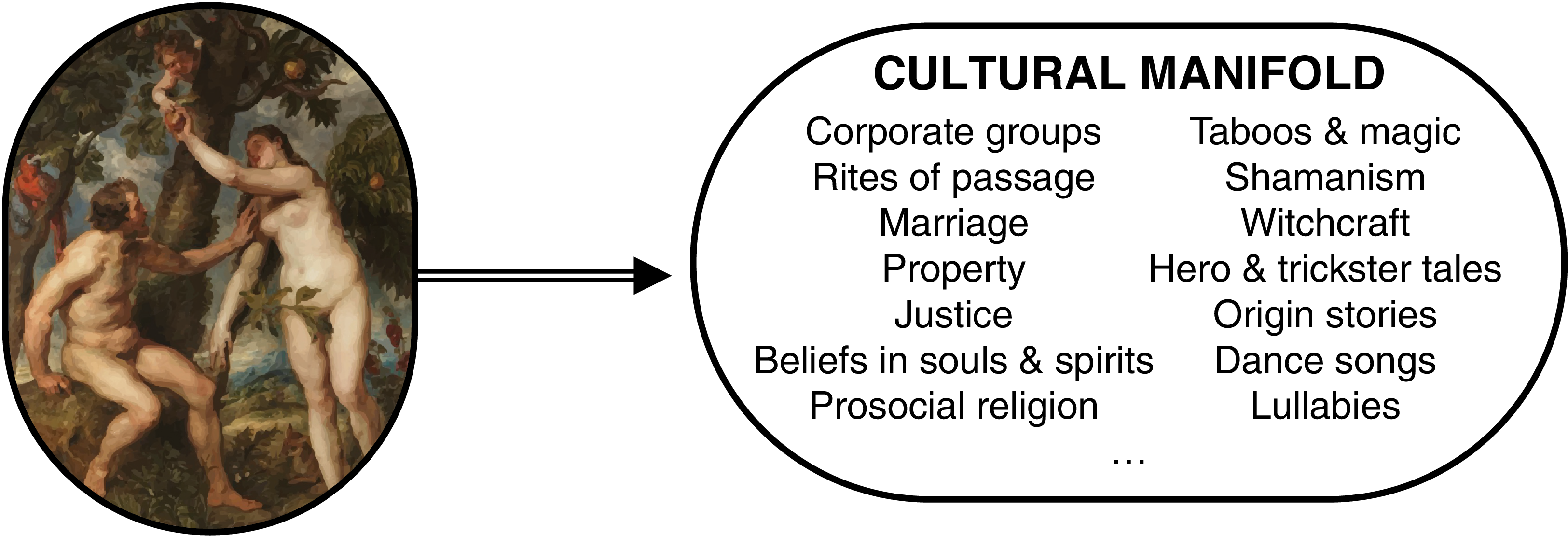
I refer to the set of super-attractors as the “cultural manifold” (Figure 2). I use the word manifold, because, in everyday speech, it suggests multiplicity. There are at least two reasons to devote scholarly attention to the cultural manifold. The first is for the importance of its components. Costly, widespread, ancient, and uniquely elaborated among humans, super-attractors constitute central puzzles of the social sciences. As long as our aim is to understand human behavior, super-attractors are obvious targets. The second reason is the one that Boas pointed out more than a century ago: The existence of the cultural manifold suggests general processes underlying the development of culture and society – processes that presumably play out similarly across time and space. The cultural manifold thus serves as an empirical testing ground for researchers to generate and refine social scientific theory.
A new, pristine human society, or Experimental Eden, is expected to develop the set of all super-attractors, or the “cultural manifold.”
Why do humans so reliably build such strikingly similar packages of culture? Whence the cultural manifold? To date, answers to these questions have been characterized by an explanatory pluralism. Different super-attractors are explained with different explanatory frameworks. Some are understood as genetic adaptations (Bering, Reference Bering2006; Gintis, Reference Gintis2007; Johnson & Krüger, Reference Johnson and Krüger2004; Mehr & Krasnow, Reference Mehr and Krasnow2017); others, as cultural practices which develop to benefit the individual or the group (Leeson, Reference Leeson2014; Schimmelpfennig & Muthukrishna, Reference Schimmelpfennig and Muthukrishna2021; D. Smith et al., Reference Smith, Schlaepfer, Major, Dyble, Page and Thompson2017; Winkelman, Reference Winkelman2002); still others, as cultural variants that are most memorable or most easily reconstructed during cultural transmission (Boyer, Reference Boyer2001).
In this paper, I acknowledge that many processes likely contribute but argue that one process – what I have called subjective (cultural) selection – is the most important in driving the emergence of super-attractors and producing their regularities. Subjective selection occurs as people craft and selectively retain cultural variants evaluated as useful for attaining proximate, psychologically determined goals (Singh, Reference Singh2022). Such goals, including changing the weather or soothing a fussy infant, are instrumental means to achieve higher-level, adaptive goals, such as securing food or caring for one’s offspring (Dubourg et al., Reference Dubourg, Chambon and Baumard2025; Tomasello, Reference Tomasello2022). Because humans reliably pursue similar goals and evaluate similar variants as compelling for achieving those goals, subjective selection produces comparable traditions, including super-attractors.
Many evolutionary psychologists have pushed back against mainstream cultural evolutionary theories for what they perceive to be a lack of appreciation for the sophistication of human cognition (Krasnow & Delton, Reference Krasnow and Delton2016; Sperber, Reference Sperber, Enfield and Levinson2006; Tooby & Cosmides, Reference Tooby and Cosmides2016). The subjective selection framework addresses such critiques, demonstrating how processes of goal-directed cognition, when iterated, can drive the evolution of much complex culture. By using this framework to explain many components of the cultural manifold, I hope both to advance our understanding of these origins of these important human behaviors and to showcase the central role of subjective selection in constructing our cultural worlds.
2. Subjective selection
I propose that super-attractors, like much of culture, evolve as people craft and selectively retain cultural variants that best satisfy evaluations of goal-oriented, instrumental utility. I have referred to this process as “subjective selection” (Singh, Reference Singh2022).
The conceptual foundations of subjective selection have a long history in the behavioral sciences. Goals as psychological constructs have been studied for more than a century in empirical psychology and continue to attract debate, refinement, and analysis (Ach, Reference Ach1935; Austin & Vancouver, Reference Austin and Vancouver1996; Chu et al., Reference Chu, Tenenbaum and Schulz2024; Heath et al., Reference Heath, Larrick and Wu1999; James, Reference James1890; Lewin, Reference Lewin and Rapaport1951; Locke & Latham, Reference Locke and Latham1990). The same goes for the processes by which individuals evaluate goal-directed behaviors, especially reinforcement learning (Ribas-Fernandes et al., Reference Ribas-Fernandes, Solway, Diuk, McGuire, Barto, Niv and Botvinick2011; Schultz et al., Reference Schultz, Dayan and Montague1997; Sutton & Barto, Reference Sutton and Barto1998). Rather than attempting an exhaustive review of these topics, I focus here on synthesizing these concepts with ideas from cultural evolution, which explore how complexity can develop through the selective retention and recombination of functionally relevant modifications (R. Boyd & Richerson, Reference Boyd and Richerson1985; Cavalli-Sforza & Feldman, Reference Cavalli-Sforza and Feldman1981; Henrich, Reference Henrich2016; Richerson & Boyd, Reference Richerson and Boyd2008). Viewed through this lens, psychological processes like goal pursuit and instrumental evaluation, though typically analyzed at the individual level, cumulatively give rise to population-level cultural evolutionary dynamics, including subjective selection.
2.1. Presenting subjective selection
Subjective selection can happen at different timescales. On the shortest timescales, it manifests as trial and error: A person has a goal, they invent a solution, they evaluate the extent to which that solution achieves the goal, and then they either modify or retain the solution (e.g., Allen et al., Reference Allen, Smith and Tenenbaum2020). But subjective selection can also occur across generations as individuals manufacture, pass along, and preferentially adopt variants evaluated as useful for regular goals.
I refer to this process as “subjective” for two reasons. First, the ends people are motivated to achieve are psychologically determined. Because of how natural selection has shaped human motivation, we pursue higher-level outcomes, such as food, sex, status, and information, as well as lower-level goals that aid in their pursuit, such as killing animals or wooing potential mates (Kenrick et al., Reference Kenrick, Griskevicius, Neuberg and Schaller2010). Second, we subjectively evaluate whether a cultural variant satisfies a goal. This evaluation often works – we might tell, for instance, that a variant of a spear is better at killing a deer – but it is not perfect. Humans historically have had difficulty recognizing the value of behaviors like handwashing or boiling water (Rogers, Reference Rogers2003), and we are predisposed to believe that ineffective techniques, or “superstitions,” are effective for influencing uncertain outcomes (Beck & Forstmeier, Reference Beck and Forstmeier2007; Burger & Lynn, Reference Burger and Lynn2005; Vyse, Reference Vyse2014). Evaluations of variants’ effectiveness are constrained and influenced by our psychology.
In the language of proximate and ultimate causation, then, the subjective selection framework considers the ultimate function of much of culture to be to satisfy our proximate psychology. Natural selection has produced a flexible psychology with proximate goals and mechanisms of evaluation. These, in turn, become ultimate-level cultural evolutionary pressures shaping which traditions emerge, persist, and fade.
Various researchers had earlier emphasized the importance of goals and subjective evaluation in the evolution of culture (Alexander, Reference Alexander1979; Boehm, Reference Boehm1978; R. Boyd & Richerson, Reference Boyd and Richerson1985; Pulliam & Dunford, Reference Pulliam and Dunford1980; see also Malinowski, Reference Malinowski1960). Moreover, subjective selection is broadly consistent with existing cultural evolutionary frameworks. As with much work by cultural attraction theorists, for example, it underscores the role of human psychology in shaping culture. In the context of dual inheritance theory, meanwhile, subjective selection often consists of a combination of “guided variation,” as people produce variants that they expect will be useful, and “content biases” that favor the adoption of variants that seem to best achieve goals. Yet despite its simplicity and compatibility, the idea of subjective selection has remained under-developed in the contemporary cultural evolution literature. It thus differs in important ways from oft-invoked cultural evolutionary processes.
The main features distinguishing subjective selection from other hypothesized processes are the two sources of subjectivity: proximate goals and the psychology of evaluation. Unlike most work by cultural attraction theorists until recently (e.g., Atran, Reference Atran1998; Boyer, Reference Boyer2001; O. Morin, Reference Morin2013; Sperber & Hirschfeld, Reference Sperber and Hirschfeld2004), subjective selection focuses on goal-directed behavior. Unlike cultural group selection or cultural evolution through cue-biased transmission (e.g., imitating the healthy, successful, or prestigious), meanwhile, subjective selection emphasizes subjective appeal over objective benefits. Of course, subjective appraisals of instrumental value can, and often do, correspond with objective benefits: A spear that works well for hunting can both be subjectively evaluated as useful for a goal and produce objective benefits. But this need not to be the case. People can evaluate magical practices to be effective for healing illness or divining the future, even when they have no causal impact (Hong, Reference Hong2022a; Hong & Henrich, Reference Hong and Henrich2021); people might believe that endorsing particular narratives will make their groupmates more cooperative, regardless of those narratives’ efficacy (Fitouchi et al., Reference Fitouchi, Singh, Andé and Baumard2025). Through its emphasis on goals and the psychology of evaluation, subjective selection stresses features of individual-level psychology that, until recently, have been underemphasized in the study of cultural evolution (although see André et al., Reference André, Baumard and Boyer2023; Baumard et al., Reference Baumard, André, Nettle, Fitouchi and Scott-Philippsn.d.; Hong & Henrich, Reference Hong and Henrich2021; Hong & Zinin, Reference Hong and Zinin2023; Mercier & Boyer, Reference Mercier and Boyer2020 for indications of a scholarly shift).
2.2. The psychology of goals and evaluation
According to a subjective selection framework, people’s goals and evaluative processes interact to shape and constrain the design of culture. Understanding the psychology of goals and evaluation is thus critical to recognizing how subjective selection acts.
2.2.1. What are goals?
Goals are ends toward which individuals are motivated (see Table 1 for definitions). They can be represented cognitively and include both internal states (e.g., experiencing pleasure, controlling one’s body temperature) and external outcomes (e.g., spearing a deer, starting a successful company). Vertebrates appear to organize their behavior in the pursuit of goals (Del Giudice, Reference Del Giudice2023; Kenrick et al., Reference Kenrick, Griskevicius, Neuberg and Schaller2010; Tomasello, Reference Tomasello2022); as a result, goals profoundly shape cognition, such as in how states of the world are mapped, how actions are judged and selected, and how rewards are computed (De Martino & Cortese, Reference De Martino and Cortese2023; Molinaro & Collins, Reference Molinaro and Collins2023). Decades of research on goal pursuit show that people are often not consciously aware of their goals and how those goals guide their behavior (Bargh et al., Reference Bargh, Gollwitzer, Lee-Chai, Barndollar and Trötschel2001; Custers & Aarts, Reference Custers and Aarts2010).
Some definitions of “goal”

a Definitions originally referring to “goals” (plural) have been modified to refer to a “goal” (singular) for consistency.
Goals appear to be structured hierarchically (Figure 3) (Austin & Vancouver, Reference Austin and Vancouver1996; Botvinick, Reference Botvinick2008, Reference Botvinick2012; Dubourg et al., Reference Dubourg, Chambon and Baumard2025). At the apex of the hierarchy are superordinate goals, also termed “core biological goals” (Del Giudice, Reference Del Giudice2023), such as sex, status, security, food, and information (Kenrick et al., Reference Kenrick, Griskevicius, Neuberg and Schaller2010). That these goals ultimately guide our behavior reflects their adaptive value: Natural selection seems to have shaped human psychology to secure outcomes that reliably increased fitness in ancestral environments (Barrett, Reference Barrett2015; Pinker, Reference Pinker1997; Schaller et al., Reference Schaller, Kenrick, Neel and Neuberg2017; Tomasello, Reference Tomasello2022; Tooby & Cosmides, Reference Tooby and Cosmides1990).
Goal-directed behavior is hierarchical. Superordinate or core biological goals (red) ultimately guide behavior; natural selection has shaped human motivation to pursue these ends, which reliably increased fitness in ancestral conditions. Hierarchically structured under superordinate goals are subordinate or instrumental goals (blue); these have not been defined by natural selection but are flexibly and strategically selected to advance superordinate goals. Cultural behaviors, such as using a canoe (A) or singing a lullaby (B), are adopted and evaluated in the same way as other goal-directed behaviors. Some behaviors, such as singing lullabies, may be deployed in service of several superordinate goals.

Hierarchically structured under superordinate goals is the second set: subordinate goals, also called “instrumental goals” (Del Giudice, Reference Del Giudice2023). To acquire food, for example, we might execute the following sequence of subordinate goals: Find stick; leave camp; walk to mango tree; knock down mangos with stick; collect mangos. Importantly, subordinate goals are themselves composed of a hierarchy of subordinate goals (Botvinick, Reference Botvinick2008). A goal like walk to mango tree itself comprises complicated sub-routines, like Step over log and Swat away mosquitoes. Because of the hierarchical nature of goal pursuit, a subordinate goal (like typing the word “goal”) and its ultimate, superordinate outcome (like acquiring status or material resources) can be linked through an elaborate set of nested links (Dubourg et al., Reference Dubourg, Chambon and Baumard2025). In line with the hierarchical nature of goal pursuit, experimental research suggests that humans experience simultaneous reward signals corresponding to different levels of a goal hierarchy (Diuk et al., Reference Diuk, Tsai, Wallis, Botvinick and Niv2013; Ribas-Fernandes et al., Reference Ribas-Fernandes, Solway, Diuk, McGuire, Barto, Niv and Botvinick2011).
2.2.2. Humans select behaviors, including cultural ones, using goal-directed evaluation
A basic premise of subjective selection is that the cognitive processes involved in evaluating and adopting cultural behaviors are the same as those involved in selecting any goal-directed behavior. Researchers, particularly those working within a reinforcement learning framework, generally distinguish between two evaluative processes – habit and planning – involved in the selection of goal-directed behavior (Gershman, Reference Gershman and Waldmann2015; Kool et al., Reference Kool, Cushman and Gershman2018). Both can occur outside of conscious awareness. Habit, known also as model-free learning, occurs when the individual selects behaviors based on their previously computed rewards. It is referred to as “model-free” because the individual does not use a causal model of the environment to select a behavior, but rather tracks its expected reward, updating it based on deviations from predicted values. For example, a person may head to a tree (let’s call it tree X) to collect mangos only to find fewer mangos there, thus updating the value of the subordinate goal Find mangos at tree X.
In planning, known also as model-based learning, an individual uses a causal model to calculate the expected value of a behavior, selecting it based on this simulation (Kool et al., Reference Kool, Cushman and Gershman2018). For example, an individual may see a new kind of fruit tree and use their familiarity with mango trees to simulate a novel routine to acquire the trees’ fruits. Our causal models can be shaped by culturally transmitted beliefs, creating pathways by which cultural variants can affect each other’s selective environments. Given tradeoffs between habit and planning – habit is frugal but inflexible; planning is the opposite – organisms benefit from integrating them (Cushman & Morris, Reference Cushman and Morris2015; Keramati et al., Reference Keramati, Smittenaar, Dolan and Dayan2016; Kool et al., Reference Kool, Cushman and Gershman2018).
At first, social learning may seem a distinct process by which individuals adopt behaviors. Nevertheless, converging lines of evidence – including theoretical work (Aoki, Reference Aoki2010; Enquist et al., Reference Enquist, Eriksson and Ghirlanda2007), studies on learning in non-human animals (Heyes, Reference Heyes2012), and research on the neuroscience of social cognition (Olsson et al., Reference Olsson, Knapska and Lindström2020) – demonstrate that cultural learning is constrained by individual evaluations. For example, systems involved in social learning show substantial neural and computational overlap with the systems involved in self-experienced, value-based learning, including computing prediction errors that are used to update the value of learned actions (Olsson et al., Reference Olsson, Knapska and Lindström2020). Individuals not only observe others’ behaviors but engage in what is called “vicarious reinforcement learning,” evaluating actions by attending to others’ costs and rewards (Olsson et al., Reference Olsson, Knapska and Lindström2020). Instrumental evaluation also appears early in development: Young children, including infants, are attentive to others’ goals (Baillargeon et al., Reference Baillargeon, Scott and Bian2016; Woodward, Reference Woodward2009) and preferentially reproduce goal-directed behaviors compared to behaviors with no clear intended outcome (Elsner, Reference Elsner2007).
The importance of individual evaluation in social learning is corroborated by sociological research. Rogers (Reference Rogers2003), for example, reviewed an extensive body of literature on the diffusion of innovations, ultimately concluding that five characteristics – perceived relative advantage, compatibility, complexity, trialability, and observability – are most predictive of whether an innovation spreads. Critically, all relate to individual evaluation. Cultural behaviors, as with all behaviors, are more likely to be adopted when they are evaluated as effectively satisfying goals.
2.3. Selective schemes and cultural “technologies”
Because people’s goals vary, trajectories of cultural evolution driven by subjective selection should vary, too. Spears might evolve as people selectively retain implements that appear best for killing. Chocolate chip cookies might evolve as they selectively retain recipes that produce the most gustatory pleasure. Rain magic might evolve as they selectively retain esoteric practices that seem best at changing weather.
I refer to these as different “selective schemes”; each selective scheme can be reconceptualized as a cultural selection for a given trait. The evolution of spears, then, would be guided by one selective scheme: a cultural selection for effective seeming killing implements. The evolution of chocolate chip cookies would be shaped by another: a cultural selection for delicious foods. Rain magic, finally, would be shaped by a third: a selection for weather-changing techniques that seem to work best.
The design features favored under a given selective scheme depend on many factors. Some of these apply across human populations, such as the laws of physics or genetically encoded features of the human taste system. Others can vary considerably. For example, cultural beliefs about how illness works or where rain comes from (which may have themselves developed through subjective selection) can affect evaluations of healing or weather rituals – and thus the variants that are favored. In that vein, rain magic that involved lizards became popular during Song dynasty China because of their resemblance to dragons, creatures long associated with rain in China (Hong et al., Reference Hong, Slingerland and Henrich2024). We would expect much less reliance on this “lizard rainmaking method” in cultures that do not connect dragons to weather.
Selective schemes can interact. Consider, for example, narratives about witches and sorcerers. These appear partly to be shaped by a selection for compelling explanations of misfortune: People seek to understand why they suffer calamities and, particularly in ecologies that promote paranoid or conspiratorial thinking, they find compelling explanations that attribute that suffering to distrusted parties (Singh, Reference Singh2021a). However, witchcraft narratives also appear to be affected by a selection for demonizing narratives: Under certain conditions, people iteratively craft stories about rivals that justify violence or spur others to attack them (Cohen, Reference Cohen1972; Cohn, Reference Cohn1976; Goode & Ben-Yehuda, Reference Goode and Ben-Yehuda1994); in cultural ecologies in which witchcraft and sorcery narratives also serve as plausible explanations of misfortune, those can be leveraged to demonize targets, who are accused not only of using dark powers for harm but of posing existential threats and engaging in morally abhorrent acts (Hutton, Reference Hutton2017). A cultural tradition – the belief in heinous witches – is thus plausibly shaped by several interacting cultural selective schemes.
An implication of subjective selection and the existence of selective schemes is that many traditions can be considered “technologies” (see also Hong & Henrich, Reference Hong and Henrich2021; Horton, Reference Horton1967). Arthur (Reference Arthur2009) defined a “technology” most basically as a “means to fulfill a human purpose.” Oil refining, a diesel engine, an electrical generator, a speech recognition algorithm – all are means to carry out human purposes. If, as I have argued, much of culture evolves to satisfy psychologically determined goals, then those cultural traditions qualify as technologies by Arthur’s definition. Not only is, say, a hammer a technology to hammer in nails or a spear a technology for killing animals, but voodoo magic is a compelling but erroneous technology for making rivals sick. Divination is an effective-seeming technology to acquire hard-to-access information. Chocolate chip cookies are technologies to induce gustatory pleasure.
Researchers studying culture have long drawn fundamental distinctions between domains of culture, separating, for example, material from symbolic culture or adaptive from non-adaptive culture. Such distinctions have invited a sense that different cultural domains develop through distinct processes which parallel contrasting theoretical approaches: songs and folktales emerge through one set of processes in which psychology is paramount; food-processing techniques and bows and arrows evolve through another set of processes that optimize individual- and group-level benefits (Sterelny, Reference Sterelny2017). A subjective selection framework invites a different view of culture, however. Rather than reifying distinctions, it suggests that many traditions in our diverse cultural repertoires – from stories to cheesecake to spears to igloos – evolve as compelling solutions for instrumental ends.
2.4. Explaining culture: A subjective approach
The subjective selection framework generates hypotheses for the origins, function, and persistence of cultural traditions, including super-attractors (Box 1). Partly because people around the world pursue shared goals and evaluate cultural variants in similar ways, subjective selection drives the convergent evolution of many traditions, resulting in the regularities of the cultural manifold. It is outside of the scope of this paper to enumerate and provide explanations of all super-attractors. Instead, I will go through three domains – religion, esthetics, and social institutions – addressing, in each domain, two super-attractors and reviewing evidence of their regular development through subjective selection. With the exception of corporate group structure, these super-attractors have been selected, because each has been the subject of comparative research and has been analyzed within the framework of subjective selection.
Deriving and testing hypotheses within a subjective selection framework
Explaining design through subjective selection may seem to invite circular reasoning. If we hypothesize that traditions develop and persist because people perceive them to be effective for achieving goals, this may seem to imply that any cultural behavior must have emerged for that reason. However, this concern is misplaced. The explanatory power of any ultimate-level framework comes not from assuming that traits exist because they were selected for but from identifying the pressures that shape their emergence and persistence. Just as explaining a trait’s evolution through natural selection or cultural group selection often involves clarifying its adaptive function, proposing that a tradition develops through subjective selection is most informative when the account specifies the proximate goal the tradition seems to fulfill (and, ideally, the ultimate-level reasons humans pursue that goal), as well as the factors that make it a compelling solution for achieving that goal. Such factors might include physical constraints imposed by the natural world, genetically encoded features of the human brain, and complementary cultural variants, such as beliefs that enhance the perceived efficacy of the tradition.
The predictions generated by a subjective selection hypothesis will vary depending on the specifics of that hypothesis. In sections 3 through 5, for example, I review seven hypotheses for how super-attractors develop through subjective selection, each of which makes predictions about a cultural domain. In addition to these, any subjective selection hypothesis that specifies the relevant goal will yield at least five additional, basic predictions (see also Singh, Reference Singh2022, pp. 276–277):
-
1. People pursuing that goal will adopt the tradition more frequently than people not pursuing that goal.
-
2. Providing an alternative tradition evaluated as better satisfying the goal will reduce people’s reliance on the tradition of interest.
-
3. Manipulating the perceived efficacy of the tradition for satisfying the goal will affect people’s reliance on it, even when holding the actual efficacy constant.
-
4. Manipulating the perceived efficacy of the tradition for satisfying the goal will elicit activity in brain regions associated with reward prediction error for goal-directed activities.
-
5. Manipulating the perceived efficacy of the tradition for satisfying the goal will affect participants’ use of the tradition when pursuing that goal more than when pursuing other goals.
The main alternatives to these accounts are cultural evolutionary theories that point to objective individual- or group-level benefits – often, benefits of which individuals are unaware. For example, theorists have emphasized the importance of processes such as cultural group selection and cultural evolution driven by success-biased imitation (R. Boyd & Richerson, Reference Boyd and Richerson1985; Henrich, Reference Henrich2004a, Reference Henrich2016; Richerson & Boyd, Reference Richerson and Boyd2008). These processes have been hypothesized to produce adaptive, functional cultural design without individual agency or planning and without individuals aware of the traits’ benefits. In other words, magic, myths, dance songs, and justice institutions – to name a few – are often said to culturally evolve not because individuals instrumentally craft and retain similar solutions for universally occurring goals but rather because they generate objective benefits and are favored by blind cultural evolutionary processes.
I contend that such accounts are limited in their ability to explain many super-attractors, as are approaches that frame various super-attractors as cognitive by-products. A basic reason is that they often fail to explain why humans, so attentive to costs and benefits, should care to adopt, endorse, transmit, and invest in various cultural traditions (see also André et al., Reference André, Baumard and Boyer2023). Culture relies on people to keep it alive. Stories survive only as long as they are told; music endures only as long it is performed; justice institutions last only as long people employ them. A subjective selection framework not only spotlights people’s instrumental reasons for investing in culture; it demonstrates the powerful explanatory power that comes from centering such motivations when analyzing the recurrent features of cultural practices.
3. Religion explained
If super-attractors are testing grounds for developing and evaluating social scientific theory, religion has been the paradigmatic case study. Few if any cultural domains have attracted as much scholarly attention within the evolutionary and cognitive literature as religion (Atran, Reference Atran2002; Bloom, Reference Bloom2007; Boyer, Reference Boyer2001; Guthrie, Reference Guthrie1995; Henrich, Reference Henrich2020; Norenzayan, Reference Norenzayan2013). Paralleling larger debates in the naturalistic study of culture (Richerson, Reference Richerson2017; Sterelny, Reference Sterelny2017), research on religion has been marked by a tension between by-product approaches and adaptationist accounts (Boyer, Reference Boyer2001; Johnson & Bering, Reference Johnson and Bering2006; Pyysiäinen & Hauser, Reference Pyysiäinen and Hauser2010; D. S. Wilson, Reference Wilson2002). An influential synthesis has sought to reconcile these approaches, proposing that cultural group selection favors variants of cognitively sticky beliefs that best promote group-level cooperation (Norenzayan et al., Reference Norenzayan, Shariff, Gervais, Willard, McNamara, Slingerland and Henrich2016).
In recent years, however, a subset of researchers has contributed to what might be considered a third approach – one that focuses on people’s instrumental goals and the psychology of evaluation in explaining the emergence, stabilization, and design features of magico-religious traditions (Boyer, Reference Boyer2020a; Fitouchi et al., Reference Fitouchi, Singh, Andé and Baumard2025; Fitouchi & Singh, Reference Fitouchi and Singh2022; Hong, Reference Hong2022b; Hong et al., Reference Hong, Slingerland and Henrich2024; Hong & Henrich, Reference Hong and Henrich2021, Reference Hong and Henrich2024; Hong & Zinin, Reference Hong and Zinin2023; Mercier & Boyer, Reference Mercier and Boyer2020; Miton et al., Reference Miton, Claidière and Mercier2015; Singh, Reference Singh2018, Reference Singh2025). This research overcomes limitations of by-product and adaptationist accounts while demonstrating that complex, ubiquitous religious traditions plausibly develop as people convergently build them to satisfy everyday ends.
3.1. Shamanism as a compelling technology to control uncertain outcomes
Around the world, human societies have shamans, defined here as specialists who, in non-ordinary states, engage with unseen realities and provide services like healing and divination (Hultkrantz, Reference Hultkrantz1993; Singh, Reference Singh2025). Shamanism appears to be a super-attractor. Winkelman (Reference Winkelman1984, Reference Winkelman1986) coded a subsample of 47 cultures in the Standard Cross-Cultural Sample and found shamans in more than 90% of the cultures examined, while a review of hunter-gatherer religions reported shamanism in 29 of 33 societies (Peoples et al., Reference Peoples, Duda and Marlowe2016; see Singh, Reference Singh2018a for details). Of the remaining four, the members of one, the Mbuti, visited the “local witch doctor” of nearby farmers (Putnam, Reference Putnam and Coon1948, p. 340); for another, the Tiwi, anthropologists referred to “clever” men who could foretell the future (Pilling, Reference Pilling1958, p. 115); a third, the Sirionó, seemed to have lost shamanism in recent centuries following demographic collapse (Walker et al., Reference Walker, Wichmann, Mailund and Atkisson2012). Centralized states and religious authorities have attempted to destroy shamanic traditions numerous times throughout history, yet their efforts usually either fail or are successful only briefly before it reappears (Bell, Reference Bell2005; Boyer, Reference Boyer2020b; Meeks, Reference Meeks2011). Aside from their defining features, shamanic traditions frequently exhibit other common features, including dramatic initiations, practices of deprivation, and claims of superhuman powers (Singh, Reference Singh2018, Reference Singh2025).
Researchers have put forward numerous hypotheses to explain shamanism. Many outline some mechanism by which shamanism helps clients or boosts group-level success (Achterberg, Reference Achterberg1985; Blackwell & Purzycki, Reference Blackwell and Purzycki2018; McClenon, Reference McClenon2001; Watson-Jones & Legare, Reference Watson-Jones and Legare2018). Winkelman’s theory of shamanism, for example, posits that shamanic traditions worldwide induce a cross-culturally consistent trance state that has an “integrative” effect on cognition, enhancing capacities such as social intelligence and familiarity with natural history (Winkelman, Reference Winkelman2002). Such an account suffers from important shortcomings, however, including a lack of evidence for the benefits proposed (Singh, Reference Singh2018). Furthermore, whereas Winkelman’s theory predicts similar trance states and cognitive effects (particularly in terms of “integration”) across societies, research on non-ordinary states has documented very little overlap and much more diversity (Vaitl et al., Reference Vaitl, Birbaumer, Gruzelier, Jamieson, Kotchoubey and Kubler2005), even when restricting comparisons to psychoactive substances used by shamans in the Americas (Singh, Reference Singh2025).
Despite many claims of objective benefits of shamanic practices, most evidence indicates a perception of benefits; people clearly often think that shamanic ceremonies work (see, e.g., van der Watt et al., Reference van der Watt, van de Water, Nortje, Oladeji, Seedat and Gureje2018). A subjective selection account thus focuses on the ostensible efficacy of shamanism (Singh, Reference Singh2018, Reference Singh2025). Humans are predisposed to adopt ineffective interventions, or “superstitions,” to sway important, unpredictable outcomes such as illness and the weather (Vyse, Reference Vyse2014) – a bet-hedging tendency plausibly explained by cognitive mechanisms that have evolved to minimize costly errors (Johnson et al., Reference Johnson, Blumstein, Fowler and Haselton2013; see also the smoke detector principle: Nesse, Reference Nesse2019). As specialists compete to provide magical services and clients preferentially choose the services that subjectively seem most effective, shamanism develops. What makes shamanic traditions compelling is that the specialist uses various practices to “xenize,” or apparently become distinct from normal humans, bolstering their claim that they can engage with the gods, spirits, and other agents believed to oversee uncertain outcomes (Singh, Reference Singh2025).
A subjective selection account of shamanism attributes its existence and design features to (a) clients’ goals in seeking out shamanic services (namely, controlling uncertain, fitness-relevant events such as illness) and (b) the features of specialists that clients use to evaluate their ability to provide services (often, otherness as a sign of special powers). It therefore makes clear predictions about the design features of shamanism. It predicts, for example, that, despite variation in their activities, shamans will act foremost to help clients control uncertain outcomes, an expectation borne out by cross-cultural analysis (Singh, Reference Singh2018). It also predicts that the various practices so often associated with shamanism should promote perceptions of otherness and special powers. I have elsewhere reviewed ethnographic evidence that altered states and dramatic initiations have these effects (Singh, Reference Singh2018) and, in field experiments, demonstrated that, as predicted, Mentawai participants (Indonesia) infer fundamental difference and supernatural power from shamanic self-denial (Singh & Henrich, Reference Singh and Henrich2020). In shamanism, we find a super-attractive tradition that develops everywhere because it assures clients they have some control over uncertain events.
3.2. Supernatural punishment beliefs as technologies for mutual policing
Across societies, people claim that antisocial acts are punished by supernatural forces such as gods, spirits, or karmic forces. Although such prosocial religious beliefs were long assumed to be limited to large-scale societies (Baumard & Boyer, Reference Baumard and Boyer2013; Roes & Raymond, Reference Roes and Raymond2003; Tylor, Reference Tylor1920a), this conclusion seems partly an artifact of datasets biased against detecting moralistic punishment in smaller-scale societies (Lightner et al., Reference Lightner, Bendixen and Purzycki2023; Purzycki et al., Reference Purzycki, Bendixen and Lightner2023). Recent research, including coding of the ethnographic record (Boehm, Reference Boehm, Bulbulia, Sosis, Harris, Genet, Genet and Wyman2008), detailed ethnographic studies (Purzycki, Reference Purzycki2016; Singh et al., Reference Singh, Kaptchuk and Henrich2021; Townsend et al., Reference Townsend, Aktipis, Balliet and Cronk2020), and cross-cultural surveys (Bendixen, Lightner, et al., Reference Bendixen, Lightner, Apicella, Atkinson, Bolyanatz and Cohen2023; Purzycki et al., Reference Purzycki, Willard, Klocová, Apicella, Atkinson and Bolyanatz2022), shows that moralistic supernatural punishment is much more widespread.
According to the leading theory in the evolutionary and cognitive literature, supernatural punishment beliefs have culturally evolved to promote cooperation (Norenzayan, Reference Norenzayan2013; Norenzayan et al., Reference Norenzayan, Shariff, Gervais, Willard, McNamara, Slingerland and Henrich2016; Norenzayan & Shariff, Reference Norenzayan and Shariff2008). Such an approach permits that religious beliefs emerge as by-products of cognitive biases but adds that competition among groups selects for those religious packages with group-level benefits (Norenzayan et al., Reference Norenzayan, Shariff, Gervais, Willard, McNamara, Slingerland and Henrich2016). Nonetheless, the central assumption that moralistic punishment beliefs make people more cooperative has become increasingly debated in recent years (Bendixen, Lightner, et al., Reference Bendixen, Lightner, Apicella, Atkinson, Bolyanatz and Cohen2023; Jacquet et al., Reference Jacquet, Pazhoohi, Findling, Mell, Chevallier and Baumard2021; Kavanagh et al., Reference Kavanagh, Jong, Whitehouse, Kirmayer, Worthman, Kitayama, Lemelson and Cummings2020). Moreover, group-adaptive accounts overlook the critical fact that people endorse supernatural beliefs for strategic purposes, using threats of mystical sanctions to motivate self-serving behavior (Fitouchi & Singh, Reference Fitouchi and Singh2022; Moon, Reference Moon2021; Singh et al., Reference Singh, Wrangham and Glowacki2017).
A subjective selection account overcomes these limitations and shows that focusing on a critical and common goal – controlling others’ cooperation – can explain much of supernatural punishment (Fitouchi et al., Reference Fitouchi, Singh, Andé and Baumard2025). Whatever the effects of religious beliefs on cooperation, a less contested claim is that people believe that holding supernatural punishment beliefs makes others more cooperative (Gervais et al., Reference Gervais, Xygalatas, McKay, Van Elk, Buchtel and Aveyard2017, Reference Gervais, Ross, McKay, Brown-iannuzzi, Pennycook and Lanman2024). Prosocial religions thus plausibly develop from people crafting and selectively endorsing beliefs that they intuit, based on their folk psychology, will encourage others to cooperate (Fitouchi & Singh, Reference Fitouchi and Singh2022). When each individual, lacking full confidence in others’ cooperation, strategically pushes supernatural punishment beliefs, their micro-level interactions can give rise to a dynamic of collective, mutual policing, such that everyone pays trivial costs to maintain shared moralistic beliefs (Fitouchi et al., Reference Fitouchi, Singh, Andé and Baumard2025). As people preferentially adopt and endorse those variants they subjectively believe will best achieve the goal of encouraging others’ cooperation, the beliefs should evolve into their most subjectively appealing forms.
Fitouchi et al. (Reference Fitouchi, Singh, Andé and Baumard2025) derived, and found support for, nine predictions of such a subjective selection account of supernatural punishment beliefs. These include, for example, that individuals who desire higher levels of social control are more likely to endorse punitive religious beliefs (Atkinson & Bourrat, Reference Atkinson and Bourrat2011; Jackson et al., Reference Jackson, Caluori, Abrams, Beckman, Gelfand and Gray2021), that lower social trust is associated with greater endorsement of such beliefs (Berggren & Bjørnskov, Reference Berggren and Bjørnskov2011; Jacquet et al., Reference Jacquet, Pazhoohi, Findling, Mell, Chevallier and Baumard2021), and that punitive religious beliefs are not only prosocial but, under some circumstances, extractive and self-serving, as well (Bentzen & Gokmen, Reference Bentzen and Gokmen2023; Singh et al., Reference Singh, Wrangham and Glowacki2017; Strassmann, Reference Strassmann1992; Strassmann et al., Reference Strassmann, Kurapati, Hug, Burke, Gillespie, Karafet and Hammer2012). Moralistic supernatural punishment beliefs also target behaviors that people are motivated to control in everyday life (Bendixen, Apicella, et al., Reference Bendixen, Apicella, Atkinson, Cohen, Henrich and McNamara2023) and that are difficult to police by secular means; see, for example, that the Mentawai water spirit Sikameinan oversees food-sharing, one of the few domains of cooperation unregulated by secular justice (Singh et al., Reference Singh, Kaptchuk and Henrich2021; Singh & Garfield, Reference Singh and Garfield2022). Although some of these predictions are shared by group-adaptationist theories, the subjective selection account critically predicts that changes should be driven not by any proposed process of cultural group selection (e.g., interdemic selection, payoff-biased migration) but by shifts in individual-level motivations to control others’ behavior, an expectation supported by survey data (Houtman & Aupers, Reference Houtman and Aupers2007; Houtman & Mascini, Reference Houtman and Mascini2002; Tamir et al., Reference Tamir, Connaughton and Salazar2020).
4. Esthetic behaviors explained
Esthetic behaviors, including music, storytelling, and visual adornment, are not only longstanding topics of anthropological interest (Boas, Reference Boas1928; Lévi-Strauss, Reference Lévi-Strauss1955; Malinowski, Reference Malinowski1948; Merriam, Reference Merriam1964; Tylor,Reference Tylor1920b) but also common, costly, and puzzling enough to have attracted considerable evolutionary theorizing (B. Boyd, Reference Boyd2009; Carroll, Reference Carroll2012; Dutton, Reference Dutton2009; Mehr et al., Reference Mehr, Krasnow, Bryant and Hagen2021; Savage et al., Reference Savage, Loui, Tarr, Schachner, Glowacki, Mithen and Fitch2021; Tooby & Cosmides, Reference Tooby and Cosmides2001). These ubiquitous behaviors plausibly develop through subjective selection as people fashion sound and word (and image, although not covered here) to fit universal goals.
4.1. Dance songs and lullabies as behavioral technologies
Music has appeared in every society where researchers have looked (Mehr et al., Reference Mehr, Singh, Knox, Ketter, Pickens-Jones and Atwood2019; Savage et al., Reference Savage, Brown, Sakai and Currie2015). Moreover, several domains of music exhibit remarkable internal consistency. Across diverse populations – including among young children (Hilton, Thierry, et al., Reference Hilton, Thierry, Yan, Martin and Mehr2022), in smaller-scale societies (Yurdum et al., Reference Yurdum, Singh, Glowacki, Vardy, Atkinson and Hilton2023), in massive online experiments with English speakers (Hilton, Moser, et al., Reference Hilton, Moser, Bertolo, Lee-Rubin, Amir and Bainbridge2022; Mehr et al., Reference Mehr, Singh, York, Glowacki and Krasnow2018, Reference Mehr, Singh, Knox, Ketter, Pickens-Jones and Atwood2019), and in experiments with speakers of 29 languages across 48 countries (Yurdum et al., Reference Yurdum, Singh, Glowacki, Vardy, Atkinson and Hilton2023) – naïve listeners can identify the function of foreign dance songs and lullabies from audio recordings alone (Singh & Mehr, Reference Singh and Mehr2023). Moreover, analyses of recordings have identified acoustic features that tend to characterize these song domains and which distinguish them not just from each other but from other musical and non-musical vocalizations, as well (Hilton, Moser, et al., Reference Hilton, Moser, Bertolo, Lee-Rubin, Amir and Bainbridge2022; Mehr et al., Reference Mehr, Singh, York, Glowacki and Krasnow2018, Reference Mehr, Singh, Knox, Ketter, Pickens-Jones and Atwood2019). Given their complex forms, universality, and similarity worldwide, dance songs and lullabies seem clear examples of super-attractors.
What accounts for these musical super-attractors? One explanation is biological adaptation, which posits that humans have been shaped by natural selection to produce and respond to dance songs and lullabies. Universal patterns would thus reflect dance- and lullaby-specific adaptations. In line with such an explanation, some researchers argue that human musicality has been shaped by natural selection (at least in part), with dance songs and lullabies serving as credible signals or a mechanisms for social bonding (Mehr et al., Reference Mehr, Krasnow, Bryant and Hagen2021; Savage et al., Reference Savage, Loui, Tarr, Schachner, Glowacki, Mithen and Fitch2021).
A biological-adaptation explanation of musical super-attractors runs into at least three limitations, however. First, observations of the lack of dancing and lullabies among the Northern Aché, whose ancestors experienced a series of population bottlenecks in recent centuries and lost much of their complex culture, suggest that dance songs and lullabies require cultural transmission to be maintained (Singh & Hill, Reference Singh and Hill2025.; see also Aubinet, Reference Aubinet2024). Second, although dance songs and lullabies are highly stereotyped across societies, other song types also are widespread and exhibit regular features cross-culturally (Bertolo et al., Reference Bertolo, Snarskis, Kyritsis, Yurdum, Bainbridge and Atwood2025). Naïve listeners can identify foreign healing songs; people in different societies have similar conceptions of what a healing song should like; and analyses of acoustic features have identified some features that tend to distinguish healing songs from other song domains (Hilton, Thierry, et al., Reference Hilton, Thierry, Yan, Martin and Mehr2022; Mehr et al., Reference Mehr, Singh, York, Glowacki and Krasnow2018, Reference Mehr, Singh, Knox, Ketter, Pickens-Jones and Atwood2019; Yurdum et al., Reference Yurdum, Singh, Glowacki, Vardy, Atkinson and Hilton2023). Despite these similarities, there is little reason currently to expect that humans have genetically evolved to produce healing songs. When it comes to musical domains, ubiquity and regularity of structure are not necessarily indications of specialized, biological adaptation.
A final limitation of biological-adaptation explanations of musical super-attractors is the absence of evidence of adaptation. Psychological research on the universality, domain-specificity, and ontogeny of behavioral responses to music has struggled to identify signatures of adaptation (Singh & Mehr, Reference Singh and Mehr2023). For instance, many lines of evidence suggest that our capacity to respond to dance songs – that is, our capacity to perceive beat and spontaneously entrain to it – is a by-product of vocal learning. The only other animals that spontaneously entrain to beats are parrots (also sophisticated vocal learners), while recent research has shown substantial overlap between the genetic and neural mechanisms involved in vocal learning and those involved in beat perception and entrainment (Cahill et al., Reference Cahill, Armstrong, Deran, Khoury, Paten, Haussler and Jarvis2021; Niarchou et al., Reference Niarchou, Gustavson, Sathirapongsasuti, Anglada-Tort, Eising and Bell2022; Patel et al., Reference Patel, Iversen, Bregman and Schulz2009; Rouse et al., Reference Rouse, Patel and Kao2021; Schachner et al., Reference Schachner, Brady, Pepperberg and Hauser2009). Although some researchers posit that gene-culture coevolution has subsequently shaped rhythmic perception and response (e.g., Patel, Reference Patel2021), there is currently no indication that the psychological mechanisms involved in beat perception and entrainment are music-specific adaptations as opposed to features of our psychology that exist for non-musical ends (Singh & Mehr, Reference Singh and Mehr2023).
The framework of subjective selection provides alternatives to biological-adaptation explanations of musical super-attractors. Consider dance songs. Dance songs plausibly develop because, like pornography or chocolate chip cookies, they are technologies for feeling good (see Box 2). Action synchronized to music is pleasurable (Foster Vander Elst et al., Reference Foster Vander Elst, Vuust and Kringelbach2021; Witek et al., Reference Witek, Clarke, Wallentin, Kringelbach and Vuust2014), seemingly as an incidental consequence of vocal learning mechanisms, which entail intrinsic rewards for accurately predicting and reproducing the temporal structures of auditory sequences (Patel, Reference Patel2021). As people shape songs into forms that best facilitate enjoyable vocal and motor entrainment, they produce convergent structures in dance songs (Singh & Mehr Reference Singh and Mehr2023). Of course, people can then build on this common, super-attractive structure for other ends, such as signaling coalitional formidability, inducing altered states, feeling bonded, or promoting cooperation, as often proposed (B. Campbell, Reference Campbell2023; Hagen & Bryant, Reference Hagen and Bryant2003; Mogan et al., Reference Mogan, Fischer and Bulbulia2017; Tarr et al., Reference Tarr, Launay and Dunbar2014). But these other ends do not explain why music is pleasurable in the first place, and the ubiquity and structural commonalities of dance songs seem to reflect this common aim of experiencing the rewards of temporal prediction.
Technologies of pleasure
I argue in the main text that traditions such as dance songs and hero stories are technologies of pleasure, engineered to deliver psychological reward. However, the claim raises a basic question: Should pleasure be considered analogous to the other goals discussed, such as restoring cooperation or putting an infant to sleep? In one sense, no. Hedonic reward is often experienced when achieving superordinate, fitness-relevant goals, such as eating, having sex, and interacting with friends and loved ones (Berridge & Kringelbach, Reference Berridge and Kringelbach2015; Bloom, Reference Bloom2010; Kringelbach & Berridge, Reference Kringelbach and Berridge2009). Contrasts between pleasure and other goals, whether superordinate or subordinate, may thus seem like comparisons at different levels of analysis and thus dubious. Yet pleasure can also become decoupled from the adaptive outcomes it was meant to motivate, and its pursuit can interfere with other goal-directed behavior (Hofmann & Van Dillen, Reference Hofmann and Van Dillen2012; Stroebe, Reference Stroebe2022). Eating cheesecake and watching pornography are pleasurable because the activities provide cues of states that tended to advance fitness in ancestral environments – yet consuming cheesecake often harms nutritional status while viewing pornography bypasses the actual behaviors and relationships that would normally increase reproductive success. Conceptualizing these and other traditions as technologies for inducing pleasure captures this decoupling, further highlighting that many traditions develop and persist because they satisfy a subjective end in the absence of adaptive benefits.
Lullabies, too, plausibly develop through subjective selection as parents experiment with and preferentially retain songs effective for soothing infants. Although humans seem to respond most to lullabies during infancy (suggesting specialized cognitive mechanisms expressed during relevant developmental stages), adults also rely on lullaby-like music to fall asleep. Studies of Canadians and Finns find that substantial numbers of people – up to 56% of respondents, in one study (Brown et al., Reference Brown, Qin and Esmail2017) – report using music to fall asleep (C. M. Morin et al., Reference Morin, LeBlanc, Daley, Gregoire and Mérette2006; Urponen et al., Reference Urponen, Vuori, Hasan and Partinen1988). Furthermore, a recent analysis of sleep playlists on the streaming platform Spotify found that the soporific songs that adults rely on share features with lullabies, such as softness and a slow tempo (Scarratt, Heggli, Vuust, & Jesperson, Reference Scarratt, Heggli, Vuust and Jesperson2023). These findings question the conclusion that responses to lullabies are infant-specific adaptations, instead raising the possibility of a pan-human predisposition to be calmed by soft, slow music (see also Scarratt, Heggli, Vuust, & Sadakata, Reference Scarratt, Heggli, Vuust and Sadakata2023). Parents attempting to calm fussy infants try a variety of techniques, learning their infants’ preferences and repeatedly using what seems to work. Such a process conceivably fuels the development of calming songs, especially as people learn effective songs from others, resulting in global convergences in the acoustic structure of lullabies.
4.2. The sympathetic plot as a technology of entertainment
Storytelling is a human universal. Even supposed cultural exceptions, such as the Sirionó of Bolivia and the Pirahã of Brazil, tell stories, including particular variants over and over (Everett, Reference Everett2005; Holmberg, Reference Holmberg1969). Aside from their universality, stories include super-attractive variants. Scholars of the world’s literature have long provided evidence that certain complex narrative structures recur across diverse contexts (Raglan, Reference Raglan1936; Rank, Reference Rank1914; Scheub, Reference Scheub2007). Many of their projects converge on the “hero’s story” or the “sympathetic plot” (Booker, Reference Booker2004; J. Campbell, Reference Campbell1949; Hogan, Reference Hogan2003, Reference Hogan2011; Raglan, Reference Raglan1936; Rank, Reference Rank1914; Singh, Reference Singh2021b; von Hahn, Reference von Hahn1876). The sympathetic plot features a goal-directed protagonist who confronts obstacles, overcomes them, and wins rewards (Singh, Reference Singh2021b). Stories with such a structure tend to exhibit other common features: protagonists are often appealing (e.g., strong, caring); they start out alone and suffer early misfortunes (e.g., they are orphaned or abandoned); they are high-status or at least tied to high-status individuals (e.g., they are adopted by royalty or the offspring of a deity); their opponents are repulsive and formidable; and their opponents eventually suffer or are reformed. Such features appear not only in many (or most) popular Western stories but also in the myths, folktales, and legends of peoples around the world (Booker, Reference Booker2004; Hogan, Reference Hogan2003, Reference Hogan2011; Thompson, Reference Thompson1946).
The sympathetic plot exhibits features suggesting that it is the product of subjective selection – and, in particular, a cultural selection for entertainment (Singh, Reference Singh2021b; see also Dubourg & Baumard, Reference Dubourg and Baumard2022). Humans are motivated to feel pleasure (Box 2), and storytellers benefit from providing entertainment, such as through greater status. As audiences demand their favorite stories, and storytellers preferentially tell them, they jointly drive a cultural selection for entertaining stories – that is, for those that best capture human attention and eventually provide pleasure. Scheub (Reference Scheub1975) observed the selective retention of entertaining material working with ntsomi storytellers among the Xhosa. He wrote that “an artist includes and emphasizes those elements that she delighted in during ntsomi performances that she witnessed, and she does not fail to recall those details that particularly delighted her audiences during her own productions” (p. 90). He saw this subjective selection as important for the tradition’s evolution: “Considering that this process of borrowing, influencing, innovating, and combining has been going on for decades, there should be no surprise that such an involved form has developed” (p. 81).
The sympathetic plot seems to entertain through two pathways (Singh, Reference Singh2021b). First, by presenting a protagonist who has a goal but difficulty achieving it, it triggers psychological mechanisms for learning about obstacles. Several lines of experimental evidence demonstrate that humans are intrigued and attentive when hearing about obstacles that others confront (Delatorre et al., Reference Delatorre, León, Salguero, Palomo-Duarte and Gervás2018; Fine & White, Reference Fine and White2002; Gerrig, Reference Gerrig1989; Iran-Nejad, Reference Iran-Nejad1987; Jose, Reference Jose1988) – a response that likely reflects psychological adaptations for vicarious learning (Thouzeau, Reference Thouzeau2023).
Second, the sympathetic plot is exquisitely designed to evoke sympathetic joy, or the pleasure experienced when a cooperative beneficiary succeeds. It presents the kinds of individuals we would want to befriend: warm, competent, attractive, in-group members who are in-need (Gottschall, Reference Gottschall2005; Jobling, Reference Jobling2001; Kimball, Reference Kimball1999; Mattix, Reference Mattix2012). Audiences often engage in parasocial relationships with these individuals, representing them as people they know (Giles, Reference Giles2010; Hoffner & Cantor, Reference Hoffner and Cantor1991; Klimmt et al., Reference Klimmt, Hartmann, Schramm, Bryant and Vorderer2006) and feeling positive affect – sympathetic joy – when those characters ultimately succeed (Trabasso & Chung, Reference Trabasso and Chung2004; Zillmann, Reference Zillmann1995; Zillmann & Cantor,Reference Zillmann and Cantor1977).
Viewing the sympathetic plot from the perspective of these psychological responses reveals its ubiquitous features to be sensitively assembled to attract attention, induce sympathy, and produce pleasure. The overlapping aims of storytellers to entertain and audiences to be entertained creates a selective scheme for pleasure-inducing stories that results in the heroic archetype.
5. Social institutions explained
Subjective selection can also explain the evolution of social institutions. Social institutions differ from the other domains discussed in at least two important ways. First, more than religious or esthetic traditions, social institutions are shaped by how individuals negotiate conflicts of interest (Molho et al., Reference Molho, Peña, Singh and Derex2024). Because their existence hinges on many individuals adhering to them, the evolution and stability of social institutions depends not only on whether people evaluate them as instrumentally useful but also on variables such as the degree of overlapping interests among parties and the relative power differentials among them (Singh et al., Reference Singh, Wrangham and Glowacki2017). Second, whereas the perceived utility for religious and esthetic traditions was often illusory (in the case of shamanism) or targeted at producing pleasure (in the case of dancing and the sympathetic plot), social institutions represent a domain of culture where subjective benefits and objective group-functional benefits seem often to align. In the examples considered here, people design social institutions to restore or mobilize cooperation, and the capacity for different institutions to produce these outcomes is likely critical for their long-term maintenance.
5.1. Justice institutions as technologies to satisfy retribution and restore cooperation
Human societies regularly develop institutions of justice for dealing with social transgressions. Rather than taking any form, however, those institutions tend to exhibit four common features: (1) They impose costs on transgressors; (2) they transfer benefits to victims; (3) they involve a sense of proportionality between the severity of the transgression and the magnitude of costs imposed or benefits transferred; and (4) the imposition of costs or transfer of benefits follows institutionalized procedures, sometimes accompanied by ritualized ceremonies (Black, Reference Black2000; Fitouchi & Singh, Reference Fitouchi and Singh2023; Hoebel, Reference Hoebel1954; Strathern & Stewart, Reference Strathern and Stewart2012).
A common explanation for such responses to wrongdoing, particularly the imposition of costs, is that they serve to enforce cooperative norms. According to a popular view, punishment generally – and thus punitive justice, in particular – functions to increase the cost of free-riding and thereby incentivize group-beneficial, cooperative behaviors (R. Boyd, Reference Boyd2018). Such a norm-enforcement hypothesis explains some punitive institutions, such as those used to protect common-pool resources (Ostrom, Reference Ostrom1990), yet it fails to describe punitive justice in many societies, particularly those with dense kin networks in which people have long time horizons and interdependent obligations (Baumard, Reference Baumard2010; Black, Reference Black2000; Wiessner, Reference Wiessner2020).
According to the alternative relation-restoration hypothesis, many justice systems develop through subjective selection as people design procedures to restore cooperation between transgressors and victims following violations of reciprocal obligations (Fitouchi & Singh, Reference Fitouchi and Singh2023). The logic is simple: Victims are less willing to cooperate with transgressors until they pay costs (Ohtsubo & Watanabe, Reference Ohtsubo and Watanabe2009), a desire that likely evolved to deter future exploitation from the transgressor and other onlookers (McCullough et al., Reference McCullough, Kurzban and Tabak2013). Although victims can satisfy this urge by directly attacking the aggressor, doing so risks cycles of feuding (Glowacki, Reference Glowacki2024). Furthermore, victims prefer to be compensated following transgressions, with experimental work demonstrating that compensatory payments encourage forgiveness (Komiya et al., Reference Komiya, Ohtsubo, Oishi and Mifune2018). The relation-restoration hypothesis thus proposes that justice systems evolve through subjective selection as interacting partners create and preferentially employ procedures that repair dyadic cooperation in ways that satisfy both parties while constraining rash retaliation (Fitouchi & Singh, Reference Fitouchi and Singh2023).
The relation-restoration hypothesis generates at least seven predictions. These include that third parties should care more about reconciliation than imposing costs on offenders, that victims should prefer transfers of benefits over brute cost-infliction, and that punitive institutions should be accompanied by practices that constrain retaliation and facilitate reconciliation. These predictions were tested, and supported, using observations of justice systems in three-small societies: the Kiowa of the American Great Plains, Mentawai horticulturalists on Siberut Island, Indonesia, and the Nuer of South Sudan (Fitouchi & Singh, Reference Fitouchi and Singh2023; see also Wiessner, Reference Wiessner2020). The relation-restoration hypothesis also explains a quirk of punitive justice: Contrary to the predictions of a norm enforcement account, some societies create systems to pay victims that end up barely imposing costs on transgressors and thus have little deterrence value. In northern Somalia, for instance, people formed groups with as many as several thousand members to pay blood-money following a killing. In these cases, observed Lewis (Reference Lewis1961, p. 174), “the amounts paid by individual members may be infinitesimal. Thus, while exchange of blood-price removes immediate enmity between lineages it often provides little economic deterrent to continued bloodshed.” A system was constructed to appease victims’ desire for payment but with little apparent effect on enforcing norms.
Unlike most of the other super-attractors considered here, there has been less systematic, cross-cultural research on how justice systems compare worldwide. It is thus possible that the relation-restoration hypothesis explains a subset of justice institutions with, perhaps, a substantial proportion of punitive justice systems developing as people construct, through subjective selection, systems to generally deter wrongdoing (e.g., Leeson, Reference Leeson2007; McDowell, Reference McDowell2004; Ostrom, Reference Ostrom1990). Future investigations will better clarify patterns in the world’s justice systems and the processes by which they develop.
5.2. Corporate groups as technologies to mobilize cooperation
Humans are often organized into corporate groups, which are defined by at least five features: (1) They exist in perpetuity; (2) they have clear, restrictive membership; (3) they are cooperative units in which membership carries duties (e.g., helping defend a territory) and privileges (e.g., hunting on it); (4) they have mutually exclusive membership (e.g., an individual typically cannot be a member of two clans); and (5) they recruit members through qualifications that usually build on existing connections, such as kinship or residence (Befu & Plotnicov, Reference Befu and Plotnicov1962; Hayden & Cannon, Reference Hayden and Cannon1982). These features define rule-created social groupings as diverse as clans, guilds, lineages, and age sets – even the gangs of lobster fishermen working in the harbors of coastal Maine (Acheson, Reference Acheson1988; Glowacki, Reference Glowacki2020).
Corporate groups are widespread. When Murdock and Wilson (Reference Murdock and Wilson1972) surveyed the 186 societies of the Standard Cross-Cultural Sample, they found that 117 had clans or similar kinship-based corporate groups. Although a comprehensive examination of the societies in the SCCS purportedly lacking such groups has yet to be conducted, ethnographic reports of several, such as the Pawnee and Torajans, reveal them to have residence-based corporate groups (Beierle & Malone, Reference Beierle and Malone1997; Dorsey et al., Reference Dorsey, Murie and Spoehr1940). Others – such as the Eastern Pomo, Copper Inuit, and !Kung – had kin-based corporate groups in recent memory but lost them by the time that anthropologists described them (Singh & Glowacki, Reference Singh and Glowacki2022, p. 420; see also the Ifugao (Beyer & Barton, Reference Beyer and Barton1911)). In fact, cultural phylogenetics suggest that the cultural ancestors of various South American nomadic hunter-gatherer societies, including the Aché and Sirionó, lost corporate group structure recently in history, likely in the wake of demographic collapse (Walker et al., Reference Walker, Wichmann, Mailund and Atkisson2012). Although corporate groups may not be a cultural universal, they are more widespread than the SCCS suggests.
The features of corporate groups seem well-designed to mobilize cooperation. By specifying mutual obligations among a closed group of individuals, they prune competing loyalties and assure fellow group members of each other’s future cooperation. According to a subjective selection framework, then, they can emerge as individuals deliberately create closed groups to promote mutual benefits, further tweaking them in ways that best mobilize cooperation. After one such group appears in a social landscape, other people hoping to compete would then borrow the initial structure, refining it in ways that seem to further encourage cooperation.
Such a subjective selection account is consistent with perhaps the best documented instance of a newly emerged system of corporate groups: the rise of prison gangs in the United States. According to Skarbek (Reference Skarbek2014), before the 1950s, inmates in the United States grouped together in “tips” or “cliques,” informal groups held together by preprison acquaintances. These were not corporate groups: They lacked membership requirements or a clear group identity, and people could be members of multiple, overlapping cliques.
Starting in the late 1950s, however, the social organization transitioned (Morrill, Reference Morrill2013; Skarbek, Reference Skarbek2014). In 1957, young Mexican American inmates in the Deuel Vocational Institution (DVI) in California formed a new kind of social unit to defend themselves against black and white inmates. Rather than being fluid, membership in the gang was official, exclusive, and a lifetime commitment; recruits had to give up street gang affiliations and pledge their allegiance to the new group. They eventually called themselves the Mexican Mafia and, later, La Eme. As the new group refined its rules and organizational structure, it came to dominate the DVI, robbing non-gang members of their possessions and eventually metastasizing into prisons throughout California. To contend, other inmates established similar corporate groups, such as La Nuestra Familia, the Black Guerilla Family, the Blue Bird Gang, the Aryan Brotherhood, and the Texas Syndicate, which likewise recruited based on race and geography. Gang membership subsequently became so crucial and commonplace in U.S. prisons that, prior to a Supreme Court ruling in 2005, reception forms asked new inmates to check a box indicating gang affiliation (Goodman, Reference Goodman2008).
The rise and spread of American prison gangs illustrates two key points about the role of subjective selection in producing corporate groups specifically and social institutions more broadly. First is the role of instrumentality: The first such group, the Mexican Mafia, seems to have been deliberately created with the goal of mobilizing cooperation, specifically for mutual defense. As the innovation spread, other people assembled into similar groups for the same end. Second is the fact that subjective selection seems to have fueled a process of cultural group selection (at least if “group” is defined at the level of the prison gang): People designed and adopted those cultural traits that served their individual goals (e.g., safety) but, because of their overlapping interests, ended up honing institutions that encouraged groupwide cooperation.
6. Addressing potential criticisms
6.1. Addressing the possibility of deep, shared cultural ancestry
I have argued that much of the cultural manifold develops through subjective selection; as people worldwide selectively produce and retain cultural variants evaluated as useful for instrumental ends, they produce similarities in complex culture. An alternative perspective, however, emphasizes shared cultural ancestry. By this perspective, global similarities in complex traditions stem not from convergent subjective selection but from a cultural “African Eve” to which each super-attractor might be traced (see, e.g., Witzel, Reference Witzel2012). Although complex cultural packages can certainly diffuse over large expanses (e.g., Stépanoff, Reference Stépanoff2021), there are at least three reasons to suspect that shared cultural ancestry cannot by itself account for the cultural manifold.
First is what Morin (Reference Morin2016) called the Wear-and-Tear Problem. Humans adopt and pass on traditions but rarely, if ever, with 100% transmission fidelity. Such errors and modifications mean that neutral cultural variation evolves alarmingly quickly and that, without other stabilizing mechanisms, traditions quickly transform beyond recognizability. Language, for example, evolves fast enough that many linguists consider it futile to reconstruct phylogenetic relationships beyond about six to ten thousand years. The Wear-and-Tear problem does not necessarily mean that super-attractors have evolved numerous times. But, at the least, it suggests that stabilizing mechanisms have maintained core features of each domain as humans spread around the world. The evidence reviewed above indicates that their subjective appeal – and, specifically, their apparent usefulness for regular instrumental ends – qualifies as a powerful stabilizing mechanism. Even if humans worldwide did inherit the cultural manifold from a common cultural ancestor many millennia ago, the Wear-and-Tear Problem nevertheless suggests that subjective selection has maintained them.
Second is the diversity exhibited within each type of super-attractor. Justice institutions function in a variety of ways, from transferring pigs and durian trees to victims (Singh & Garfield, Reference Singh and Garfield2022) to spearing the legs of offenders and their kin (Warner, Reference Warner1958). Supernatural punishment beliefs may often target uncooperative behavior, although the nature of the supposed punishers and the behaviors targeted exhibit substantial variation (Bendixen, Apicella et al., 2023; Boehm, Reference Boehm, Bulbulia, Sosis, Harris, Genet, Genet and Wyman2008; Singh et al., Reference Singh, Kaptchuk and Henrich2021; Townsend et al., Reference Townsend, Aktipis, Balliet and Cronk2020). Likewise, although shamanic traditions all involve altered states, those states are understood in many ways, from consulting spirits in dreams (Radcliffe-Brown, Reference Radcliffe-Brown1922) to spirit possession (Kendall, Reference Kendall1985) to boiling energy (Katz, Reference Katz1982). This variation suggests analogy rather than homology – that super-attractors do not trace to single ancestral origin points but rather are convergently reconstructed across human societies.
Finally, human populations have frequently experienced bottlenecks dramatic enough that they have lost substantial complex culture, including many super-attractors (Henrich, Reference Henrich2004b; Holmberg, Reference Holmberg1969; Singh & Hill, Reference Singh and Hill2025; Walker et al., Reference Walker, Wichmann, Mailund and Atkisson2012). It’s plausible that, following such bottlenecks, most human populations re-established connections with other societies, allowing lost traditions to diffuse back in. However, one set of populations represents a possible, albeit speculative, instance in which such connections seem not to have been re-established: the Andaman Islanders. Despite likely undergoing a bottleneck small enough to destroy much of their cultural complexity, the Andaman Islanders exhibited most or all of the cultural manifold, including rites of passage, dance music, shamanism, origin myths, and marriage (Radcliffe-Brown, Reference Radcliffe-Brown1922). Genetic analyses are consistent with the Andamanese have remained genetically isolated since arriving in the islands many millennia ago (Mondal et al., Reference Mondal, Casals, Xu, Dall’Olio, Pybus and Netea2016; Mondal, personal communication). Although the British had set up a penal colony before concerted ethnographic description began, and Malay, Burmese, and European pirates had long raided the islands for slaves, it is unlikely that these interactions transmitted the super-attractors studied here, especially as Radcliffe-Brown (Reference Radcliffe-Brown1922) noted that the British presence had the effect of destroying indigenous institutions. All of this suggests that Andamanese culture may be as close to a societal rebirth – Fox’s Experimental Eden, essentially – as researchers might discover, potentially confirming that super-attractors develop anew under near-pristine conditions.
6.2. Addressing assumptions of adaptiveness
The subjective selection framework is agnostic to individual- or group-level benefits. What matters instead is that individuals perceive a cultural variant to be useful. This agnosticism clashes with a widespread and enduring assumption in the analysis of culture, according to which, “any expensive and long-lasting cultural trait (such as traditions passed down within a lineage for thousands of years) should be presumed to be adaptive” (Heying & Weinstein, Reference Heying and Weinstein2021). By subscribing to this assumption, many researchers implicitly treat processes such as cultural group selection as decisive sieves for preserving and filtering adaptive cultural variation.
Such prioritization is unjustified for at least two reasons, however. The first is that processes such as cultural group selection require variation (R. Boyd & Richerson, Reference Boyd and Richerson1985, Reference Boyd and Richerson2010). Imagine, for instance, that groups with witchcraft beliefs are less competitive than groups without them. Will cultural group selection select against witchcraft beliefs, or at least the non-adaptive versions? Not necessarily, in part because the subjective appeal of witchcraft beliefs may compel people in all groups to adopt and endorse them, removing the variation necessary for selection. Even if groups without witchcraft beliefs somehow emerge and spread at the expense of other groups, it is not clear that they can necessarily keep witchcraft beliefs out. The reliable development of some traditions can weaken the capacity for blind, adaptive cultural evolutionary processes to act.
Another reason to be skeptical of the key role sometimes ascribed to adaptive cultural evolutionary processes is that it remains unresolved how important they are in naturalistic settings. Using group extinction rates in New Guinea, Soltis et al. (Reference Soltis, Boyd and Richerson1995) concluded “that a minimum of 500 to 1,000 years would be required for the spread of a single group-beneficial trait under the influence of [cultural group selection by interdemic selection].” As this is the minimum, it presumably requires a very strong selection coefficient; insofar as any super-attractors have negative or neutral fitness effects, those would be expected to be relatively small and so cultural group selection by natural selection would be expected to be much slower. Faster mechanisms of cultural group selection have since been proposed and modeled. Selective migration, for example, has been posited as a mechanism by which cultural group selection might occur (R. Boyd & Richerson, Reference Boyd and Richerson2009), although empirical research has yet to demonstrate its importance in shaping culture. Boyd and Richerson (Reference Boyd and Richerson2002) also showed that cultural group selection might occur via selective imitation, yet adding psychological richness, such as by considering people’s instrumental aims in adopting variants and the constraints of the psychology of evaluation, would turn such a process into subjective selection.
Whereas the role of such blind adaptive cultural evolutionary processes remains unclear, the centrality of individual evaluations of usefulness is well demonstrated. As pointed out earlier, sociological research has concluded that the most important factors determining whether an innovation spreads through a population – including trialability, compatibility, and, most importantly, perceived relative advantage – reflect individual evaluation (Rogers, Reference Rogers2003). Indeed, cultural transmission experiments corroborate the central role of individual evaluation in the development of complex culture (Miton & Charbonneau, Reference Miton and Charbonneau2018). In a common paradigm, participants are given an objective, such as building a plane to throw as far as possible or assembling a basket to hold rice (e.g., Caldwell & Millen, Reference Caldwell and Millen2009; Zwirner & Thornton, Reference Zwirner and Thornton2015). Over generations, as individuals iteratively tinker with and pass on their attempts, it is the repeated evaluation of success that acts as the primary selective mechanism. The reason that planes evolve to fly farther or that baskets evolve to hold more rice is, simply, that people introduce variations, judge the extent to which they work, and retain the variants judged to be the best. In fact, even Derex et al.’s (Reference Derex, Bonnefon, Boyd and Mesoudi2019) experiment showing that people can improve technologies while lacking a causal understanding nevertheless relies on iterative, instrumental evaluation: Individuals judged the efficacy of innovations for achieving a goal (minimizing the time for a wheel to go down a track) and decided whether to retain them on the basis of the evaluation. Although factors like group size and connectedness are clearly pivotal in affecting cultural evolutionary dynamics (Derex et al., Reference Derex, Perreault and Boyd2018; Derex & Boyd, Reference Derex and Boyd2016; Henrich, Reference Henrich2004b; Muthukrishna & Henrich, Reference Muthukrishna and Henrich2016), the diverse experimental literature suggests that instrumental evaluation is the filter through which most variants must pass. Culture evolves foremost as people keep what seems to best satisfy their ends.
7. Discussion
7.1. Subjective selection beyond the cultural manifold
I have demonstrated the power of a subjective selection framework by focusing on super-attractors across religion, esthetics, and social institutions. Nevertheless, viewing culture as shaped by subjective selection generates proposals for how other super-attractors may be crafted to achieve people’s instrumental ends. Rites of passage may be constructed through several interacting selective schemes, such as a selection for practices that establish common knowledge about shifting social roles (Thomas et al., Reference Thomas, DeScioli, Haque and Pinker2014), a selection for hazing-like practices that increase trust in newcomers (Cimino, Reference Cimino2011), and a selection for practices that seem to change the essence of a person. Marriage plausibly develops as partners and their families establish shared contractual expectations, such as about sex and property, and other unions borrow and build on such arrangements (see the evolution of pirate ship constitutions for an analogy: E. T. Fox, Reference Fox2013). Although ownership is sometimes considered a genetically evolved strategy or inclination (e.g., Gintis, Reference Gintis2007; Tibble & Carvalho, Reference Tibble and Carvalho2018), studies of the emergence and evolution of property regimes among people of roughly similar power show them iteratively designing and negotiating over property rules, apparently in an effort to design standards that are both fair and efficient (Ellickson, Reference Ellickson1989, Reference Ellickson1993, Reference Ellickson2006; Kimbrough et al., Reference Kimbrough, Smith and Wilson2010; B. J. Wilson et al., Reference Wilson, Jaworski, Schurter and Smyth2012). Future research will develop more precise accounts for how a broader set of super-attractors might develop through subjective selection which can then be tested against existing alternative theories.
Of course, there is no reason that subjective selection should be limited to the development of super-attractors. As with many existing frameworks, subjective selection plausibly explains the development of much adaptive technology. Assuming people accurately evaluate whether modifications better serve to satisfy their goals, they should adopt those variants, driving culture towards evermore useful forms (see, e.g., Allen et al., Reference Allen, Smith and Tenenbaum2020; Caldwell & Millen, Reference Caldwell and Millen2009; Zwirner & Thornton, Reference Zwirner and Thornton2015). A subjective selection framework also explains cultural inefficiencies (Singh, Reference Singh2022). First, it helps explain why effective practices are sometimes suboptimal. As long as people’s evaluations include faulty cues – such as baseball managers looking to footspeed rather than to a player’s ability to withstand bad pitches when judging their performance (Thaler & Sunstein, Reference Thaler and Sunstein2004) – we should expect systematic inefficiencies in otherwise effective cultural traits. Second, a subjective selection framework explains why adaptive behaviors such as boiling water or handwashing (even with ash or water) often fail to emerge or spread. Despite these behaviors producing substantial benefits (Hoque & Briend, Reference Hoque and Briend1991; Luby et al., Reference Luby, Halder, Huda, Unicomb and Johnston2011), their effects are noisy and time-lagged, making them difficult to evaluate and thus less likely to be retained. Finally, as illustrated with the example of shamanism, a subjective selection framework explains why some ineffective cultural practices spread. Specifically, cognitive biases can lead us to infer efficacy when there is none, maintaining practices that have no effect on their stated outcome, such as superstitions.
I focused on near-universals here, but subjective selection should also drive the development of variable cultural practices. There exist numerous contributors to cultural variety, including diverse ecological conditions (Diamond, Reference Diamond1997; E. A. Smith & Codding, Reference Smith and Codding2021), variable exposure to neighboring societies (Diamond & Bellwood, Reference Diamond and Bellwood2003), and historical contingency (such as the outsized impact of the Catholic Church in Europe: Henrich, Reference Henrich2020). As a result of these and other factors, people in different environments will have different goals, different means of satisfying those goals, and different evaluation criteria for what constitutes a solution. Indeed, Arthur (Reference Arthur2009) noted that technological innovation is self-reinforcing because of how new technologies breed new “human needs”: in seventeenth century Europe, for example, mining led to water seepage, creating a need for drainage and, in turn, a primitive version of the steam engine. Our goals engender both universality and variety in our cultural repertoires.
7.2. Subjective functionalism and the emic as etic
Analyses of culture in anthropology have long centered on the question of function. Traditions appear functional, and, although theorists have debated over what exactly their functions are, a common approach has been to view function in the context of objective benefits, usually at the group level. Whether we consider the structural-functionalism of scholars like Radcliffe-Brown and Durkheim (Pope, Reference Pope1975; Radcliffe-Brown, Reference Radcliffe-Brown1935), the functionalism of ecological anthropologists and cultural materialists (Harris, Reference Harris1974; Orlove, Reference Orlove1980; Ross et al., Reference Ross, Arnott, Basso, Beckerman, Robert and Forbis1978; Vayda, Reference Vayda1974), or the functionalism implied by cultural group selection (R. Boyd & Richerson, Reference Boyd and Richerson2010; D. S. Wilson, Reference Wilson2002), diverse approaches convergently frame cultural traits as adaptations critical for the survival and reproduction of the social group.
The framework of subjective selection, in contrast, suggests what might be called “subjective functionalism.” The subjective function of many traditions is, as established, to be perceived as useful for achieving proximate goals. The subjective function of dance music is to incite dancing, that of shamanism is to appear to control uncertain outcomes, that of a spear is to kill, that of a hammer is to hammer nails, that of corporate groups is to mobilize cooperation, and that of cheesecake is to evoke gustatory pleasure.
Because of the emphasis here on goals and individual evaluation, an important difference between subjective functionalism and other forms of functionalism is the degree to which it treats the emic as a causal force behind the etic. In the behavioral sciences, an emic explanation of a behavior is produced by a cultural insider, while an etic account examines the behavior from outside the cultural context. Functional accounts have often entailed large disparities between the emic and the etic, reflecting a sense that people are unaware of the reasons various cultural traditions persist. Classic examples are witchcraft beliefs: Emically, people often cite them to explain misfortune (e.g., Evans-Pritchard, Reference Evans-Pritchard1937), yet, in seeking to explain them, researchers have often turned to supposed group-level benefits, such as their alleged role in promoting cooperation (Faulkingham, Reference Faulkingham1971; P. Leeson, Reference Leeson2021; Schimmelpfennig & Muthukrishna, Reference Schimmelpfennig and Muthukrishna2021).
As with any behavior they engage in, of course, people may often be unaware of, or unwilling to share, the instrumental ends for which they are evaluating and maintaining cultural variants. Nevertheless, the framework presented here – perhaps to a greater extent than any other functional approach in the history of the study of culture – sees great value in people’s reported reasons for why they rely on a tradition or what its function is. Our traditions are mirrors of our deepest goals and the problems we confront in their pursuit. If we want to understand why people engage in some practice, a useful starting place is to ask them.
8. Summary
Since 1896, when Franz Boas proposed that the ubiquity of some traditions attests to universal laws of cultural development, the study of human behavior has undergone an efflorescence. Psychologists have probed the mechanics of the human mind. Anthropologists have traveled the world and systematically documented the richness and myriad manifestations of human culture. Evolutionary theorists have mapped the population-level processes shaping our and other species’ phenotypes. This paper attempts to synthesize these threads, proposing that the cultural manifold – the set of reliably developing, complex cultural practices – emerges not from blind cultural evolutionary processes but from subjective selection, wherein people build, evaluate, and retain cultural traits that appear to best serve their goals. This account is surely incomplete. But, like the traditions it seeks to explain, it is one iteration in a longer arc of refinement – fated to be judged, modified, and eventually replaced by something that seems to better achieve its stated aims.
Acknowledgments
H. Clark Barrett proposed the term “super-attractors” in passing in 2019. For their comments on earlier versions of this article, I am grateful to Luke Glowacki and four reviewers, as well as Patricio Cruz y Celis Peniche, Mark Grote, Cristina Moya, Pete Richerson, and other members of the E.E.H.B.C. Group at U.C. Davis. Eli Elster and Léo Fitouchi provided characteristically incisive feedback at several points in the life of this manuscript.
Financial support
This research received no specific grant from any funding agency, commercial, or not-for-profit sectors.
Competing interests
The author declares no conflicts of interest.
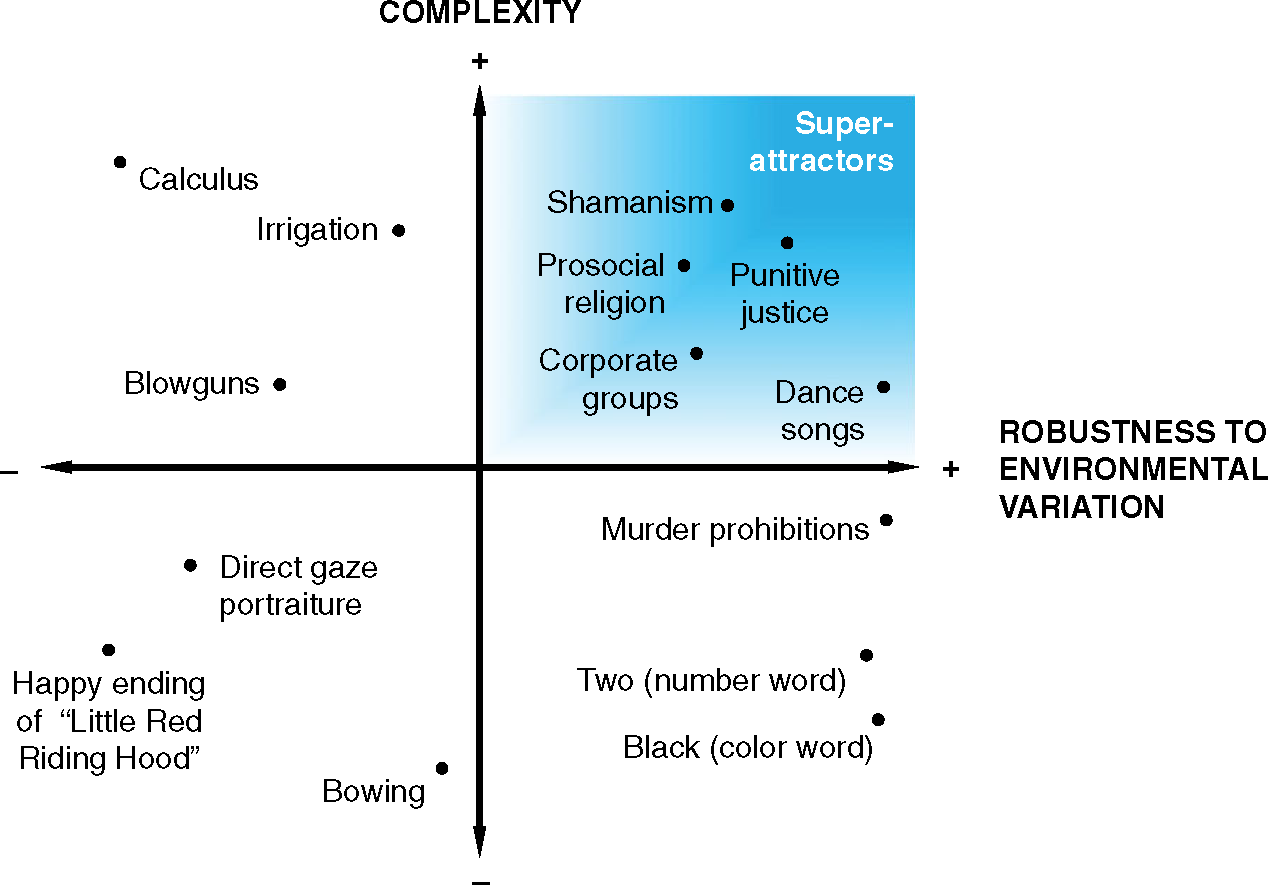

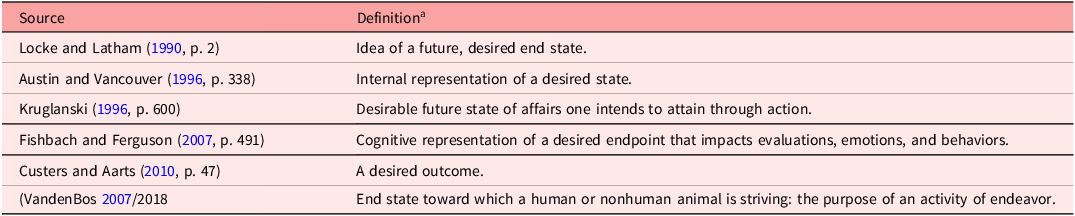
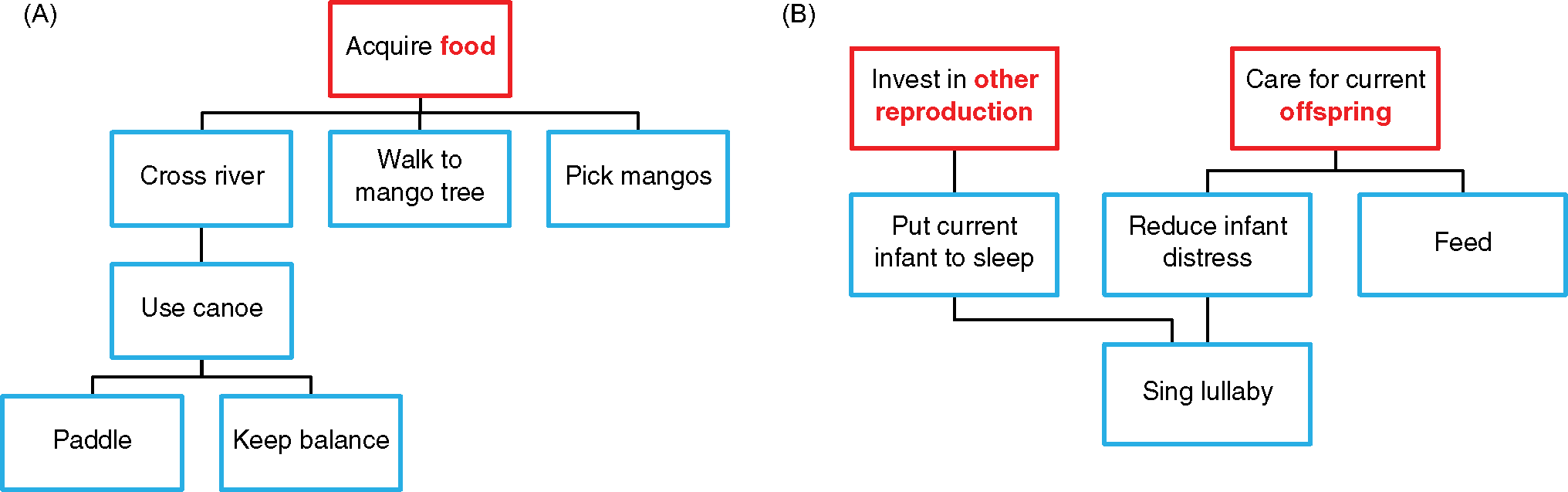



Target article
Subjective selection, super-attractors, and the origins of the cultural manifold
Related commentaries (27)
Basic emotions underlie both proximal and distal behaviors, resulting in social institutions that are either adaptive, vestigial, or a little of both
Beyond usefulness: Symbolic super-attractors in the cultural manifold
Core knowledge shapes what actions are considered and how others will perceive them
Cultural affordances
Cultural evolution by revealed preferences – from status signals to alien porn
Cultural super-attractors in critical care: The intensive care unit as a living manifold of meaning
From attractors to ecological strategies: Embedding subjective selection in an evolutionary-ecological framework
From selection to surgery: Aesthetic chills bridge subjective functionalism and cognitive calibration
Functionalism versus the structuralist tradition
Healing rituals and dietary practices as cultural super-attractors
If lullabies and hero stories are super-attractors, what are music and language? Absolute universals imply genetic mechanisms
Language is a super-attractor: Does it evolve through subjective selection?
Moral progress as a counter-attractor
On the originality of subjective selection and the importance of payoff-biased diffusion and migration in shaping the cultural manifold
Reasons to be fussy about subjective selection and super-attractors
Silent forces: How normative ecologies reshape super-attractors
Spandrels in the cathedral of the mind
Subjective selection as an outcome of natural selection
Subjective selection is a mechanistic and behaviorally integrative account of group-level selection, not a replacement
Subjective selection needs context: Culture shapes goal selection, evaluations of usefulness, and “actual” effectiveness
Subjective selection needs socially transmitted goals and culturally evolving problems
Subjective selection requires objective constraints
The nature of goals in subjective selection: Origins, shaping forces, and salience
The pros and cons of reverting to methodological individualism
Western jurisprudence and criminal justice systems as superstitious belief
Whose subjectivity? Power and inequality in cultural selection
Will cultural evolution regain its sight?
Author response
Goals, power, and selection: Foundational issues in the naturalistic study of culture