


A balanced diet with adequate intakes of at least thirty-four nutrients in childhood is essential for optimal growth and development, school performance, behaviour and prevention of diseases such as asthma or obesity(1–Reference Feinstein, Sabates and Sorhaindo4). Results from the Health Survey for England(5) and the National Diet and Nutrition Survey(Reference Glynn, Emmett and Rogers6) indicate that 80 % of English children do not meet the target of eating five portions of fruits and vegetables a day, and saturated fat intakes were nearly 50 % higher than the recommended level. Change is urgently required to improve the diets of children to encourage healthy growth and development and prevent the development of chronic disease in adult life.
Dietary quality is a multidimensional concept characterised in many different ways. High fat, low vitamins, large portions, excess sugar, low fibre, insufficient Fe, and too few whole grains, fruits or vegetables all could indicate an unhealthy diet. Nutrient intakes have traditionally been used to reflect diet quality, but there is an increasing realisation that practical dietary advice needs to be based on foods rather than nutrients, because in reality this is what people eat(Reference McCarthy, Robson and Livingstone7). Defining single foods as good or bad can be problematic, as their effects can vary depending on the health outcome; for instance, breakfast cereals fortified with vitamins and minerals can benefit growth but if also high in sugar this can harm dental health. One alternative approach is to categorise foods as essential (core) or superfluous (non-core) to a healthy diet, a method that has been used in the study of children's diet(Reference Bell, Kremer and Magarey8–Reference Webb, Lahti-Koski and Rutishauser11). The Australian dietary guidelines are based on five core food groups (1, carbohydrate-rich; 2, vegetables; 3, fruits; 4, dairy products; 5, high-protein) with all other foods defined as extra or non-core foods(Reference Bell, Kremer and Magarey8). Non-core foods are more energy dense than core foods and lower in nutrients required for health(Reference Rangan, Randall and Hector10, Reference Webb, Lahti-Koski and Rutishauser11) and should ideally be eaten in moderation. Although it could be argued that non-core foods can provide some useful nutrition, for example essential fat intake, a diet based on core food adequately meets essential requirements and thus any nutrition from non-core foods can be viewed as extra. Characterising intakes in this way can provide a simple index of diet quality for use in large-scale research.
Children's intakes are reflection of the foods that are familiar and preferred. Foods that are available, accessible, advertised on television (TV) or eaten by parents or peers will tend to be eaten more frequently(Reference Patrick and Nicklas12). Knowing the correlates of food intake in children can help to inform the development of effective interventions to achieve positive dietary change. Most attention has been paid to fruit and vegetable consumption, with fewer studies investigating less healthy foods such as fast food or high-sugar snacks and drinks(Reference van der Horst, Oenema and Ferreira13, Reference McClain, Chappuis and Nguyen-Rodriguez14). It is possible that different factors influence the intake of core foods that are part of a healthy diet and non-core foods that are eaten more for pleasure. Preferences are a strong driver of food intake because children will often reject foods they do not like(Reference Patrick and Nicklas12). A recent review found a positive association between preferences and intake of fruits and vegetables in eleven of thirteen studies(Reference McClain, Chappuis and Nguyen-Rodriguez14). Similar evidence for non-core foods is incomplete, but suggests that the impact of preferences may be limited(Reference McClain, Chappuis and Nguyen-Rodriguez14). TV watching is often related to consumption of unhealthy foods even after controlling for a range of family environment factors(Reference Campbell, Crawford and Ball15–Reference Aranceta, Perez-Rodrigo and Ribas17). Exposure to adverts, which are usually biased towards non-core food varieties, has been associated with more requests, higher preferences and greater intake of these foods in children(Reference Halford, Boyland and Hughes18–Reference Halford, Gillespie and Brown20). Higher levels of physical activity have also been related to a healthier dietary intake in adults(Reference Jago, Nicklas and Yang21–Reference Park, Murphy and Wilkens23). Few studies have investigated the relationship in children, and results have been weak or inconsistent(Reference Craig, McNeill and Macdiarmid24, Reference Jago, Ness and Emmett25). For example, lower fruit and vegetable intake was associated with less activity in girls but not in boys, and more snacks were associated with higher activity in younger children but not in older children(Reference Craig, McNeill and Macdiarmid24).
In addition to individual factors such as preferences, the family environment can have a powerful effect in shaping children's food intake. Children cannot eat foods that are not available to them, and given that they eat at least two-thirds of their meals at home, the range of foods available in the home sets limits to their possible food choices(Reference Rosenkranz and Dzewaltowski19). One study found that fruit, but not vegetable, availability was correlated with intake, while availabilities of savoury and sweet snacks were associated with higher intake of non-core foods(Reference Spurrier, Magarey and Golley9). However, two reviews have reported that overall evidence is inconsistent both for the core and for the limited range of non-core foods investigated(Reference van der Horst, Oenema and Ferreira13, Reference McClain, Chappuis and Nguyen-Rodriguez14). Parents are an important element of the family environment. They buy food for the home and are responsible for children's access to food through their feeding practices. Practices such as ‘restriction’ and ‘pressure to eat’ typically aim to lower intake of ‘junk’ foods or increase intake of core foods, but experimental evidence suggests that they can be counter-productive, with higher ‘junk’ food consumption often observed(Reference Ventura and Birch26). However, associations between parental feeding styles and children's diet could also reflect parents reacting to their children's refusals to eat core foods or requests for non-core foods, suggesting that diet is a cause not a consequence of parental feeding practices(Reference Ventura and Birch26). Finally, parents' own intakes serve as a model of eating for their children to learn from and are one of the most commonly documented correlates of food intake in children(Reference van der Horst, Oenema and Ferreira13). One might expect parental food preferences to serve as a model in a similar way; however, evidence suggests a weak relationship between parents' and children's food preferences, but this may change with age as children are exposed to a wider range of foods because exposure is a powerful determinant of preferences(Reference Wardle27–Reference Wardle, Cooke and Gibson29).
The multiple determinants of children's food intake are inevitably interlinked, e.g. TV watching may influence children's preferences and home availability if requests for non-core foods increase. Parents' food intake and preferences are also likely to be reflected in availability. Most existing investigations look at univariable relationships neglecting the potential inter-correlations(Reference McClain, Chappuis and Nguyen-Rodriguez14, Reference Pearson, Biddle and Gorely30). A multivariable approach could identify the key players in the development of food intake in children. Therefore, the aim of this analysis was to take a multidimensional approach in assessing the independent correlates of core and non-core food intake in children.
Methods
Sample
Data came from questionnaires collected in a subsample of twins in the Twins Early Development Study (TEDS). The TEDS is a population-based sample of over 15 000 twin pairs born in the UK between 1994 and 1996(Reference Oliver and Plomin31). The families described in the present study were taking part in an investigation of genetic and environmental influences on appetite and growth, and had been selected so that half had two overweight or obese parents (BMI>27 kg/m2) and half had lean parents (BMI < 25 kg/m2). The groups were matched for geography and paternal occupation(Reference Wardle, Guthrie and Sanderson32). Both groups contributed data to the present study, with results combined after testing for parental weight group differences in children's food intake to confirm that the two samples were homogeneous.
At baseline in 1999, the sample consisted of 428 children from 214 families (100 overweight or obese and 114 normal-weight families), from all over England and Wales. Families were contacted again in 2006 when children were aged 11 years, and data from 346 children (173 families) were obtained; a follow-up rate of 80 %. At both times, families were visited at home where children completed behavioural tasks and mothers completed questionnaires. The present study was conducted according to the guidelines laid down in the Declaration of Helsinki, and all procedures involving human subjects were approved by the University College London Committee for the Ethics of non-National Health Service Human Research. Verbal informed consent was obtained from all parents on the telephone before the home visit, and written consent forms were completed by parents on behalf of themselves and their children at the start of the home visit.
Classification of foods as core or non-core
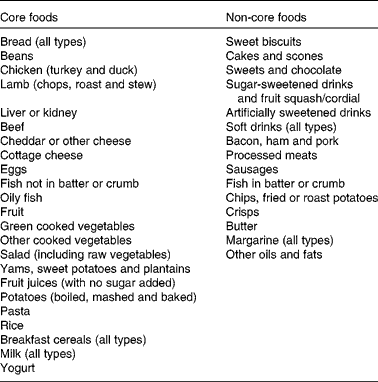
Each food group in the FFQ, food availability or food preference questionnaires was defined as a core or a non-core food (see Table 1 for examples) based on the Australian dietary guidelines(Reference Bell, Kremer and Magarey8). Core foods were defined as those included in the five core groups: 1 – bread, cereals, rice, pasta and noodles; 2 – vegetables; 3 – fruits; 4 – dairy products; 5 – meat and fish. All other foods were classified as non-core. For most foods, it was obvious when to classify them as core and non-core. When it was not obvious, previous research was consulted(Reference Bell, Kremer and Magarey8–Reference Webb, Lahti-Koski and Rutishauser11). For example, fruit juice was considered a core food, but fruit squash was defined as non-core and meat was classified as non-core if it was processed. A complete list of core and non-core foods can be requested from the authors.
Examples of foods defined as core and non-core
Food intake
Children's food intake was assessed at age 11 (sd 0·5) years using a validated FFQ completed by the mother(Reference Hammond, Nelson and Chinn33). Mothers reported their child's frequency of consumption of forty-five foods or food groups with response options of ‘never’, ‘once a month’, ‘once a fortnight’, ‘once a week’, ‘2 d a week’, ‘3 d a week’, ‘4 d a week’, ‘5 d a week’, ‘6 d a week’ or ‘every day’. Data were recoded to provide values reflecting frequencies per day: for example, ‘every day’ was recoded as 1 (time/d), ‘once a week’ was recoded as 1/7 (times/d), once a fortnight was recoded as 1/14 (times/d), etc. Total daily consumption frequency (times/d) of core (twenty-seven foods) and non-core foods (eighteen foods) by the child was calculated by summing the daily intakes. Parents' self-reported food intake was assessed in 1999 using a FFQ validated for adults(Reference Bingham, Gill and Welch34), and total daily consumption frequency (times/d) of core (seventy-three foods) and non-core foods (fifty-seven foods) was calculated by summing intakes of core and non-core foods, respectively.
Food preferences and availability
Child and maternal food preferences were assessed at follow-up by food preference questionnaires used in the baseline assessment, which were developed using food lists in the adult and child FFQ(Reference Wardle, Sanderson and Leigh Gibson35). Children reported their own food preferences, an approach that has been used previously(Reference Nicklaus, Boggio and Chabanet36). Foods were presented as a written list and were rated on a five-point scale from hate it = 1 to love it = 5, a separate response indicated if any foods had not been tried. Average preference ratings for all core (child = seventy-four foods; mother = ninety foods) and non-core (child = thirty-three foods; mother = thirty-six foods) foods that had been tried were calculated separately. Home food availability was measured by a questionnaire at follow-up by the mother reporting whether a list of 118 foods were currently present or absent from the home, and total number of core (out of eighty-three foods) and non-core (out of thirty-five foods) foods available in the home was calculated.
Parental feeding practices
Parental feeding practices were measured at follow-up using validated scales from the child feeding questionnaire(Reference Birch, Fisher and Grimm-Thomas37) and the parental feeding style questionnaire(Reference Wardle, Sanderson and Guthrie38) completed by the mother. Monitoring (three items), restriction (eight items), pressure to eat (four items) and encouragement (eight items) scales were created by taking the average of responses to items on a Likert scale of either 1 (never) to 5 (always) or 1 (disagree) to 5 (agree).
Television watching and physical activity
TV watching by the child during the week and at the weekend was reported by the mother, and total TV watching (h/week) was computed. Activity was measured using the Actigraph model 7164 accelerometer, which is the most valid and commonly used device in children(Reference Reilly, Penpraze and Hislop39). Actigraph data files were processed using the MAHUffe program (www.mrc-epid.cam.ac.uk/Research/PA/downloads.html), and total physical activity (mean accelerometer counts per minute) was calculated.
Data analysis
Data are presented as means and standard deviations or percentages. Differences in preferences for core and non-core foods were examined using paired t tests. Analyses of the correlates of core and non-core food intake in children used a complex samples general linear model to take account of the clustering of twins within families. Each potential correlate was entered into a basic model with either child's core or child's non-core food intake as the outcome. All significant (P < 0·05) correlates identified from the basic models were individually entered into an adjusted model containing child's age, sex, and BMI standard deviation score, maternal education and family weight group as covariates with either child's core or child's non-core food intake as the outcome. In fully adjusted models, all significant correlates identified in the basic models were added to the adjusted model to identify independent correlates of either core or non-core food intake in children.
Data were missing for varying numbers of participants on different potential correlates. For univariate analyses, all available data were used to look at relationships between core or non-core food intake and individual variables. In the fully adjusted model, only cases with available data on all variables were included in the analysis (n 223). The reduced sample size was largely a result of missing data on maternal food intake; therefore, we also imputed maternal food intake data by replacing missing values with the sample mean. Analyses were repeated using the imputed data to establish whether a larger sample size modified the estimates and significance of all other covariates included in the fully adjusted models.
The effects of potential correlates of core and non-core food intake were directly compared in two further models with core or non-core food intake as the outcomes. Both models contained all significant (P < 0·05) correlates identified from the fully adjusted models for both core and non-core foods as well as child's age, sex, and BMI standard deviation score, maternal education and family weight group as covariates. Maternal food preferences were additionally included because results using the larger sample with imputed data on maternal food intake suggested that maternal food preference was a significant correlate of children's core food intake. All variables were standardised by calculating z-scores (z-score = (individual value − mean)/standard deviation) before entering the models, and model effect estimates from the core (b 1 and se1) and non-core food intake (b 2 and se2) models were compared using a Z test (Z = (b 1 − b 2)/(se12+se22), exact P values are obtained from standard normal distribution tables)(Reference Paternoster, Brame and Mazerolle40, Reference Clogg, Petkova and Haritou41). Analyses were completed in SPSS version 15 (SPSS, Inc., Chicago, IL, USA).
Results
The presence of significant differences in food intake between children from families with overweight and lean parents was examined. Mean consumption of core foods (lean: 8·0 (sd 0·2); overweight: 8·2 (sd 0·2)) or non-core foods (lean: 5·0 (sd 0·1)); overweight: 5·2 (sd 0·2)) did not vary by parental weight group; therefore, the groups were combined. Descriptive characteristics of individual and family environment factors are displayed in Table 2. Children's preferences for non-core foods were significantly higher than their preference for core foods (P < 0·0001).
(Mean values and standard deviations or percentages)
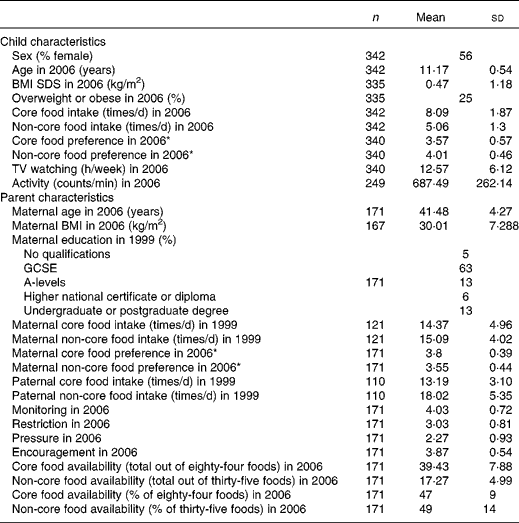
SDS, standard deviation score; TV, television; GCSE, General Certificate of Secondary Education.
* Scores range from 1 to 5 and a higher score reflects a greater preference.
Correlates of core food intake
Basic models indicated that a higher intake of core foods by the child was associated with a higher preference for core foods by the child and the mother, a greater availability of core foods in the home, a higher intake of core foods by the mother and a more encouraging parental feeding style (Table 3). There was no evidence of an association between child's core food intake and time spent watching TV, physical activity, other parental feeding styles or paternal core food intake. After adjusting for child's sex, age, and BMI standard deviation score, maternal education and parental weight group, estimates remained similar for the effect of food preferences, maternal core food intake and an encouraging feeding style (Table 3). The estimate for the effect of availability of core foods on child's core food consumption was reduced slightly from 0·05 to 0·03 and no longer reached statistical significance. In the fully adjusted model (n 223) that included all correlates identified in the basic models, only the child's preference for core foods and maternal intake of core foods showed evidence of an independent association with the core food intake (Table 3). The effect estimate of maternal core food preferences on child's core food intake was reduced by half and no longer reached statistical significance. In the fully adjusted model including imputed values for cases with missing maternal core food intake data (n 301), maternal core food intake (0·12, 95 % CI 0·06, 0·18; P = 0·0002), the child's core food preferences (0·75, 95 % CI 0·39, 1·11; P < 0·0001) and the mother's core food preferences (0·89, 95 % CI 0·14, 1·64; P = 0·02) were independently associated. Home food availability (0·00, 95 % CI − 0·04, 0·03; P = 0·88) and encouragement (0·08, 95 % CI − 0·40, 0·56; P = 0·74) were attenuated and non-significant.
(Estimates and 95 % confidence intervals)
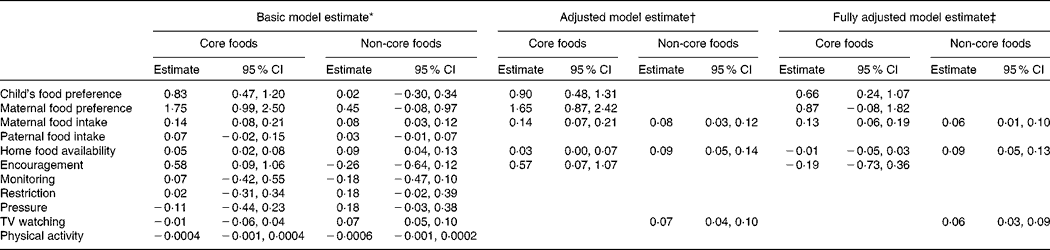
SDS, standard deviation score; TV, television.
* Estimates are from complex samples general linear model analysis, with the child's core or non-core food intake as the dependent variable. The basic model contains each potential correlate in the only independent variable in the model. All potential correlates identified as significant in a basic model are analysed in an adjusted model.
† Adjusted model is the basic model+child's sex, child's age in 2006, child's BMI SDS in 2006, maternal education and parental weight group at baseline as covariates.
‡ Fully adjusted model is the adjusted model+all potential correlates identified as significant in the basic model.
Inter-correlations between the correlates of child's core food intake are reported in Table 4. Maternal core food intake was moderately (r 0·4) and the child's preference for core foods was weakly (r 0·2) correlated with maternal core food preferences, suggesting that either or both of these factors partly mediate the association between maternal core food preferences and child's core food intake in the fully adjusted model. Availability of core foods was moderately correlated with both maternal preferences (r 0·3) and intake of core foods (r 0·3), which may explain the attenuation of the effect of availability in the fully adjusted model. Attenuation of the effect of encouragement on child's core food intake could be accounted for by the moderate correlation between encouragement and maternal preference for core foods (r 0·35) and the weak correlation with core food availability (r 0·2).
(Pearson's r correlation coefficients†)

*P < 0·05, ***P < 0·0001.
† Calculated by square rooting r 2 derived from a complex samples general linear model of one variable against another variable.
Correlates of non-core food intake
Basic models indicated that a greater intake of non-core foods by children was associated with a greater availability of non-core foods in the home, a higher intake of non-core foods by the mother and more TV watching by the child (Table 3). There was no evidence of an association between non-core food intake and food preferences of either the child or the mother, child's physical activity, any of the parental feeding styles or paternal intake of non-core foods. After adjusting for child's sex, age, and BMI standard deviation score, maternal education and parental weight group, estimates of the effects identified in the basic models remained the same (Table 3). In the fully adjusted model, where all correlates identified in the basic models were included together as independent variables, greater intake of non-core foods by the child was independently associated with availability of non-core foods in the home, maternal intake of non-core foods and time spent watching TV by the child (Table 3).
Inter-correlations between the independent covariates of non-core food intake by the child are displayed in Table 5. These correlations suggest that TV watching is weakly associated with maternal intake of non-core food (r 0·21) but not with availability of non-core foods in the home (r 0·1) (Table 3).
(Pearson's r correlation coefficients†)

TV, television.
**P = 0·01.
† Calculated by square rooting r 2 derived from a complex samples general linear model of one variable against another variable.
Comparing the independent correlates of core and non-core food intake
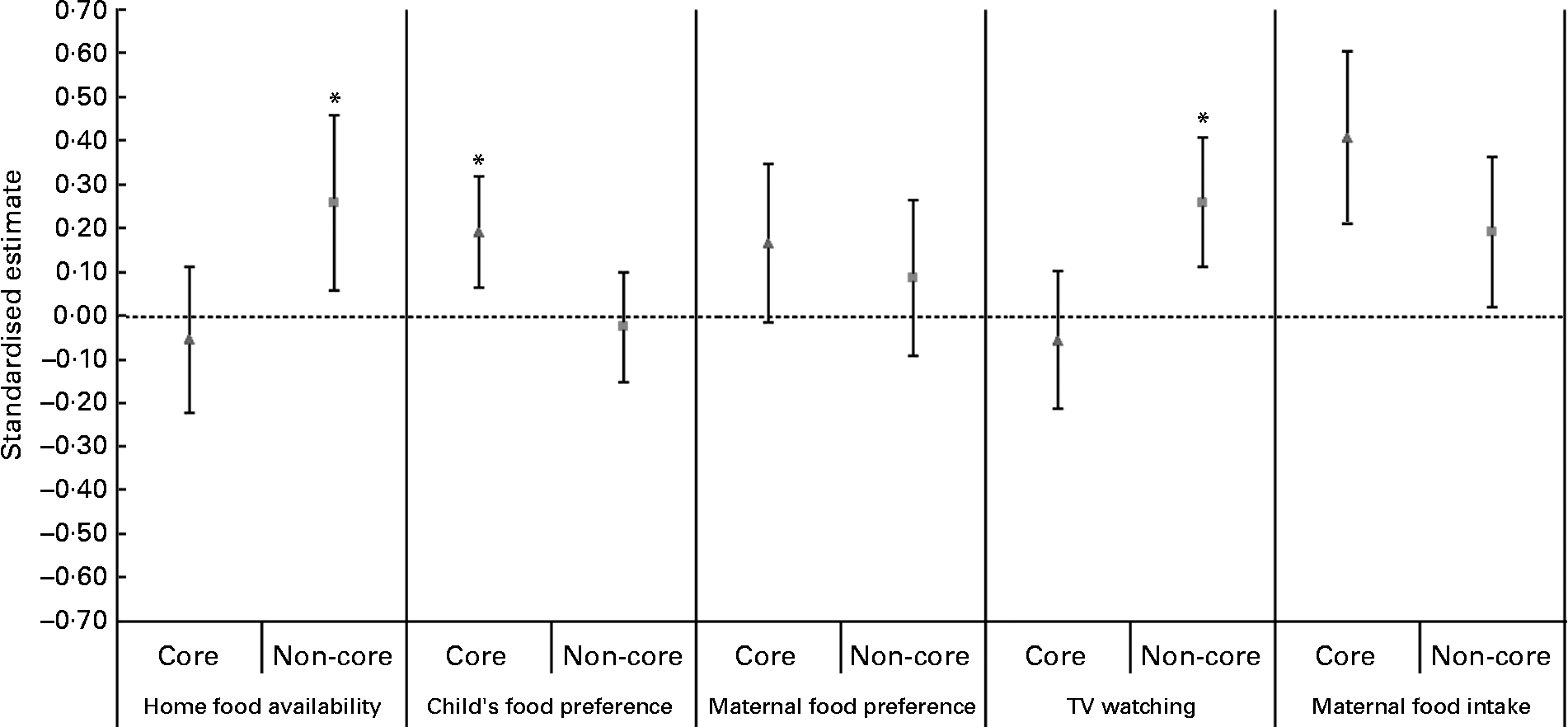
A comparison of the standardised effects of availability, maternal and child's food preference, TV watching and maternal food intake on core and non-core food consumption is displayed in Fig. 1. Availability and TV watching were associated with a higher non-core food intake, whereas children's preferences were only associated with a higher core food intake. The effect estimates of maternal food intake and preferences did not differ significantly for core and non-core foods, with a higher maternal intake being associated with a higher intake of both food types by children. The standardised model was repeated with imputed maternal food intake data (n 297), and the results were largely unchanged. With imputed maternal intake data, the standardised estimate for maternal core food preferences with children's core food intake was significant (estimate 0·17 (se 0·09); P = 0·02), but there was no significant difference when compared with the effect estimate of maternal preferences with non-core food intake (estimate 0·09 (se 0·09), Z test; P = 0·48). In the final standardised models, a total of 36 and 26 % of the variance was explained for core and non-core food intake, respectively.
Comparing the independent standardised correlates of core and non-core food intake in children (n 219). Values are standardised estimates and 95 % CI from a complex samples general linear model with either the child's core or non-core food intake as the outcome and including all potential correlates identified as significant in the fully adjusted models as independent variables. All variables were standardised with child's sex, child's age in 2006, child's BMI standard deviation score in 2006, maternal education and parental weight group at baseline as covariates. Z test indicated if estimates were significantly different for core and non-core foods. * Standardised estimates were significantly different (P < 0·05). TV, television.
Discussion
The present study suggests important differences in the correlates of core and non-core food consumption in children. Maternal intake of both food types was independently associated with the child's intake, but preferences were only associated with intake of core foods, while food availability and TV exposure were only associated with non-core food intake.
Maternal intake was associated with a higher consumption of both core and non-core foods in the present analysis. This confirms existing work which has repeatedly shown a positive correlation between parents' and children's intakes(Reference van der Horst, Oenema and Ferreira13). Interestingly, in the present study, there was no evidence of an association between paternal and child's food intake. Maternal intake has been studied more frequently, making the role of paternal intake in relation to their child's intake less clear. A study of similarity in parents' and children's nutrient intakes found weaker correlations between children and fathers than children and mothers(Reference Oliveria, Ellison and Moore42), although this differential effect of mothers and fathers is not supported consistently by other studies(Reference Vauthier, Lluch and Lecomte43, Reference Elfhag, Tholin and Rasmussen44). Mothers report greater perceived responsibility for feeding their child(Reference Blissett, Meyer and Haycraft45), suggesting that fathers play a more limited role in children's diet. There were also more missing data for paternal intakes in the present study, so if the effect on child's intake is weaker than that of maternal intakes, then a larger sample may be required to detect the effect.
In the present analyses, children's food preferences were related to the intake of core foods but not of non-core foods. This different effect may be explained by the variation in overall preference ratings for each food type; non-core foods tended to be liked more than core foods in the present study (as shown in Table 2), a finding that is supported by the wider literature(Reference Wardle and Cooke46, Reference Russell and Worsley47). For well-liked foods, other factors that limit the amount of food eaten such as availability may become more important, whereas for less palatable foods, dislike is a salient feature. The effect of maternal preferences was partially, but not fully, attenuated by the inclusion of other significant correlates of core food intake and was only marginally non-significant in the model without imputed maternal intake data. Confirmation of this effect in a larger independent sample would help to substantiate this finding.
An association was found in the present study between the availability and intake of non-core foods, which was not observed for core food intake. Previous studies have also found an association between the availability of non-core foods such as sweet and savoury snacks and consumption of non-core foods by children(Reference Spurrier, Magarey and Golley9, Reference Campbell, Crawford and Ball15), whereas support for a link between the availability and intake of core foods such as fruits and vegetables is inconsistent(Reference van der Horst, Oenema and Ferreira13). The attenuation of the effect of availability on core food intake after the inclusion of maternal food intake and child's food preferences suggests that the association with availability is coincidental with high maternal intake and child's preferences. Perhaps in the case of core foods, although some availability is clearly necessary to allow intake, a greater availability on its own is not sufficient to increase children's intakes.
TV watching has been hypothesised to increase the availability of non-core foods in the home, as these foods are advertised more frequently, which encourages children to request them more often(Reference Halford, Gillespie and Brown20). However, in the present study, there was no correlation between TV watching and availability of non-core foods; in fact, both were independently related to children's intake. Furthermore, availability of non-core foods was correlated with maternal non-core food intake, which suggests that children's requests for foods they see on TV may have a weak influence on parent purchasing behaviour relative to the impact of the parent's own intake and preferences(Reference Rosenkranz and Dzewaltowski19).
Differences observed in the present study of the effect of availability and preferences on core and non-core food intake may reflect differences in the relative influence of genes and environments on preferences for these types of foods. Previous analyses of the TEDS subsample of genetic and environmental effects on child's food preferences found that genes explained just 20 % of the variation in preferences for the dessert group of foods (which were primarily non-core foods) compared with 51–78 % of the variation in preferences for foods in the core group such as fruits, meat and fish(Reference Wardle and Cooke46). Based on these previous findings, it may therefore be expected that variation in environmental factors such as availability and TV exposure affects intake of non-core foods, whereas differences in individual preferences, which may be genetically determined, explain more of the intake of core foods. However, this does not mean that environmental changes cannot affect preferences for core foods; in fact, interventions to increase exposure to vegetables by repeated tasting have been successful in improving children's liking of vegetables(Reference Wardle, Cooke and Gibson29), but rather that environmental variation that exists in the present sample (e.g. in availability) is not sufficient on its own to create differences in core food preferences or intake. Future work might substantiate this proposal by examining the heritability of core food intake and assessing the extent to which genetically based differences in core food preferences and intake are shared.
Parents should be aware of the multiple factors that can influence their child's food intake, including the impact of their own food choices and eating behaviour(Reference Wardle27). A parent's own commitment to eat healthily, if lacking, could undermine attempts to ensure healthful eating in their children(Reference Rosenkranz and Dzewaltowski19). The old adage ‘Do as I say and not as I do’ probably does not work when trying to convince children to eat healthily. Parents should try to provide a healthy range of foods (plenty of core foods) while limiting availability of non-core foods as well as setting a good example by eating a healthy balance of core and non-core foods themselves.
The present results must be interpreted within the context of the strengths and limitations of the study. The sample of twins and recruitment of families based on parental weight status limit the ability to generalise the results to a wider population of children; a largely cross-sectional design precludes interpretation of the direction of effects. Many measures were self-reported and may be biased by factors such as social desirability. Under-reporting of children's TV watching by parent reports has been documented(Reference Rossiter and Robertson48) and could not be ruled out in the present analysis, which may mean that correlations between TV watching and food intake have been underestimated. The food intake measures lacked information on portion size, making it impossible to assess the quantity of food eaten on each occasion. Therefore, this analysis examined the variety of core and non-core foods consumed but could not investigate variation in the amounts eaten. Furthermore, parent food intake was measured 7 years before the measurement of food intake in children, which may not be representative of concurrent parental intakes. However, relative stability of diet in adulthood has been documented elsewhere(Reference Borland, Robinson and Crozier49), suggesting that parents' intakes are likely to be ranked in a similar order over time. The strengths of the present analysis include the wide range of data available from both parents and their children on the potential correlates of food intake, which allowed a multivariable investigation of effects, and characterisation of the whole diet in terms of core and non-core foods rather than a narrow focus on just one or two food groups such as fruits and vegetables. Future studies with a larger sample size and adequate power to look at interactions might investigate the inter-relationships between the various correlates of food intake to create a more comprehensive model of food intake in children; pathways of action suggested by the attenuation effects observed in the present paper may be confirmed in this way.
Conclusion
Parental intake was associated with the child's intake for both core and non-core foods, but in addition, preferences were important for core foods but not for non-core foods, whereas availability and TV exposure were only important for non-core food intake. Longitudinal studies are needed to determine causality, but the present results suggest that interventions should have multiple targets at both the individual and family environment level and that different approaches may be appropriate to successfully change the balance of core and non-core foods in children's diets.
Acknowledgements
We gratefully acknowledge the ongoing contribution of the parents and children in the TEDS. The TEDS is supported by a programme grant (G0500079) from the UK Medical Research Council, and work on a subsample of the TEDS is supported in part by a grant from the Biotechnology and Biological Sciences Research Council (31/D19086). L. J., C. H. M. v. J. and J. W. are currently funded by a programme grant from Cancer Research UK (C1418/A7974). L. J. had the idea for the analysis, analysed the data and drafted the manuscript. J. W. designed the study, supervised the data collection, and advised on the idea, analysis and interpretation of the findings. C. H. M. v. J. advised on the idea, analysis and interpretation of the findings. All authors were responsible for critical revisions to the manuscript and approval of the final version. The authors have no conflicts of interest.



