Published on behalf of Australian Mathematical Society
We partner with a secure submission system to handle manuscript submissions.
Please note:
Click Proceed to submission system to continue to our partner's website.

We show that if w is a multilinear commutator word and G a finite group in which every metanilpotent subgroup generated by w-values is of rank at most r, then the rank of the verbal subgroup  $w(G)$ is bounded in terms of r and w only. In the case where G is soluble, we obtain a better result: if G is a finite soluble group in which every nilpotent subgroup generated by w-values is of rank at most r, then the rank of $w(G)$ is at most $r+1$.
A graph is edge-primitive if its automorphism group acts primitively on the edge set, and  $2$-arc-transitive if its automorphism group acts transitively on the set of $2$-arcs. In this paper, we present a classification for those edge-primitive graphs that are $2$-arc-transitive and have soluble edge-stabilizers.
Let  $G/K$ be an irreducible symmetric space, where G is a noncompact, connected Lie group and K is a compact, connected subgroup. We use decay properties of the spherical functions to show that the convolution product of any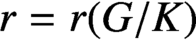 $r=r(G/K)$ continuous orbital measures has its density function in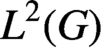 $L^{2}(G)$ and hence is an absolutely continuous measure with respect to the Haar measure. The number r is approximately the rank of $G/K$. For the special case of the orbital measures, $\nu _{a_{i}}$, supported on the double cosets $Ka_{i}K$, where $a_{i}$ belongs to the dense set of regular elements, we prove the sharp result that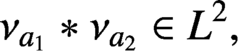 $\nu _{a_{1}}\ast \nu _{a_{2}}\in L^{2},$ except for the symmetric space of Cartan class $AI$ when the convolution of three orbital measures is needed (even though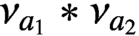 $\nu _{a_{1}}\ast \nu _{a_{2}}$ is absolutely continuous).
Let u and  $\varphi $ be two analytic functions on the unit disk D such that $\varphi (D) \subset D$. A weighted composition operator $uC_{\varphi }$ induced by u and $\varphi $ is defined on $A^2_{\alpha }$, the weighted Bergman space of D, by $uC_{\varphi }f := u \cdot f \circ \varphi $ for every $f \in A^2_{\alpha }$. We obtain sufficient conditions for the compactness of $uC_{\varphi }$ in terms of function-theoretic properties of u and $\varphi $. We also characterize when $uC_{\varphi }$ on $A^2_{\alpha }$ is Hilbert–Schmidt. In particular, the characterization is independent of $\alpha $ when $\varphi $ is an automorphism of D. Furthermore, we investigate the Hilbert–Schmidt difference of two weighted composition operators on $A^2_{\alpha }$.
We show that, given a compact minimal system  $(X,g)$ and an element h of the topological full group $\tau [g]$ of g, the infinite orbits of h admit a locally constant orientation with respect to the orbits of g. We use this to obtain a clopen partition of $(X,G)$ into minimal and periodic parts, where G is any virtually polycyclic subgroup of $\tau [g]$. We also use the orientation of orbits to give a refinement of the index map and to describe the role in $\tau [g]$ of the submonoid generated by the induced transformations of g. Finally, we consider the problem, given a homeomorphism h of the Cantor space X, of determining whether or not there exists a minimal homeomorphism g of X such that $h \in \tau [g]$.
In this paper, we define a family of functionals generalizing the Yang–Mills–Higgs functionals on a closed Riemannian manifold. Then we prove the short-time existence of the corresponding gradient flow by a gauge-fixing technique. The lack of a maximum principle for the higher order operator brings us a lot of inconvenience during the estimates for the Higgs field. We observe that the  $L^2$-bound of the Higgs field is enough for energy estimates in four dimensions and we show that, provided the order of derivatives appearing in the higher order Yang–Mills–Higgs functionals is strictly greater than one, solutions to the gradient flow do not hit any finite-time singularities. As for the Yang–Mills–Higgs k-functional with Higgs self-interaction, we show that, provided $\dim (M)<2(k+1)$, for every smooth initial data the associated gradient flow admits long-time existence. The proof depends on local $L^2$-derivative estimates, energy estimates and blow-up analysis.