

What Is Work Engagement?
Organizations and workplaces have the potential to influence employees’ health and well-being, which accounts for the numerous definitions, theories, and measures about health and well-being. Some inconsistences also exist among the terms that researchers use to refer to psychological and/or physical health/well-being, such as “psychological well-being”, “subjective well-being”, “mental health”, and “physical health”, among others. Moreover “health” and “well-being” are considered as equivalents, but at times health has a more physical component and well-being a more psychological one.
The World Health Organization defines health as “a state of complete physical, mental and social well-being, not merely absence of disease or infirmity” (WHO, 1946). Moreover, the Organization for Economic Cooperation and Development (OECD) defines health as “a physical, psychological, mental, and social state of tolerance and compensation outside the limits of which any situation is perceived by the individual …as the manifestation of a morbid state …[so] as far as the individual is concerned, his opinion is the only one that counts” (cited in Emmet, Reference Emmet, Green and Baker1991, p. 40). The OECD developed the Better Life project that includes objective well-being variables and also subjective well-being defined as “good mental states, including all the various evaluations, positive and negative, that people make of their lives, and the affective reaction of people to their experiences” (OECD, 2013, p. 29).
Thus, it is important to differentiate different facets of health/well-being, such as: physical health/well-being of workers (e.g., physical symptoms and physical illnesses and diseases); psychological health/well-being (mental/emotional), addressing topics such as positive/negative emotional states, satisfaction, strain, burnout, engagement, thriving, and so on; and social/societal facets, such as connectedness, giving/receiving help, and prosocial motivation. These three levels refer to health/well-being related to the presence of positive states (e.g., satisfaction) and the absence of negative states (e.g., anxiety). However, whereas the WHO or OECD health definitions address general well-being, our concern is with workplace well-being, which Grant et al. (Reference Grant, Christianson and Price2007, p. 52), drawing on the work by Warr (Reference Warr1987), define as “the overall quality of an employee’s experience and functioning at work”. In 1999, Danna and Griffin proposed several definitions of health and well-being in the workplace, indicating that “health” “generally appears to encompass both physiological and psychological symptomology within a more medical context (e.g., reported symptomology or a diagnosis of illness or disease)” (p. 364). Furthermore, “well-being” is rooted in the concept of “affective well-being” by Warr (Reference Warr1987, Reference Warr1990), which is broader and views the person as a whole that includes context-free measures such as life satisfaction and home–work relations.
Building on the literature, although in previous research health is usually linked to physical symptoms, I agree more with the WHO definition of “health” as a state of complete physical, mental, and social “well-being”, which is conceptually similar. Moreover, health and well-being “are not the mere absence of illness”, which coincides with the positive psychology perspective, according to which well-being and happiness are not simply the absence of negative functions but rather something more. In other words, a lack of job burnout among employees of a company is not the same thing as the presence of work engagement among them. Therefore, well-being is a complex psychosocial construct that is not only the absence of negative psychological constructs but also includes different life domains and comprises multiples physical, psychological, and social dimensions as well (e.g., Forgeard et al., Reference Forgeard, Jayawickreme, Kern and Seligman2011; Friedman & Kern, Reference Friedman and Kern2014; Huppert & So, Reference Huppert and So2013; Ryff & Keyes, Reference Ryff and Keyes1995).
In the specific arena of work and organizations, we could extrapolate that there are three main facets of work-related well-being concerned with physical, psychological, and social functioning in the workplace and in organizations. I will adapt this approach by referring to organizational well-being as a multilevel construct that includes individual, group, leader, and organizational (IGLO) levels (Nielsen et al., Reference Nielsen, Yarker, Munir and Bültmann2018) of different facets (i.e., physical, psychological-mental/emotional, and social) of well-being in a reciprocal, nutritive, and sustainable relationship over time (Salanova, Reference Salanova2020a). I suggest that there is no unique model of organizational well-being, but that there are rather different ones that consider “well-being” in organizations with multiple facets that can be measured and enhanced over time.
With this broad background in mind, I consider work engagement (WE) as an indicator of psychological well-being. In this regard, although past research has shown different approaches to work engagement, such as need satisfaction (Kahn, Reference Kahn1990), satisfaction-engagement (Harter et al., Reference Harter, Schmidt and Hayes2002), multidimensional (Saks, Reference Saks2006), and burnout-engagement (Maslach & Leiter, Reference Maslach and Leiter1997; Schaufeli et al., Reference Schaufeli, Salanova, González-Romá and Bakker2002; see Shuck, Reference Shuck, Alagaraja, Rose, Owen, Osam and Bergman2017 for a review), in this chapter, work engagement will be considered within the burnout-engagement approach, due to its predominance in the research on work engagement (see Schaufeli & Bakker, Reference Schaufeli, Bakker, Tuch, Bakker, Tay and Gander2022, for a review). The work engagement concept is rooted in occupational health psychology (OHP) and positive organizational psychology (POP) as a distinct concept but is negatively related to burnout, and in turn it is defined in its own right as a fully motivational (affective-cognitive) experience, a kind of psychological well-being at work. For example, one of the most widespread definitions of WE (Schaufeli et al., Reference Schaufeli, Salanova, González-Romá and Bakker2002) views it as a “positive, fulfilling, work-related state of mind that is characterized by vigor, dedication, and absorption” (p. 74). Moreover, Bakker et al. (Reference Bakker, Schaufeli, Leiter and Taris2008) define work engagement as “a positive, fulfilling affective-motivational state of work-related well-being that is characterized by vigor, dedication, and absorption” (p. 187).
Rather than a momentary and specific state, work engagement refers to a more persistent and psychological state that is not focused on any particular object, event, individual, or behavior. Vigor is characterized by high levels of energy and mental resilience while working, the willingness to invest effort in one’s work, and persistence even in the face of difficulties. Dedication is characterized by a sense of significance, enthusiasm, inspiration, pride, and challenge. Dedication has a wider scope because it not only refers to a particular cognitive or belief state but also includes the affective dimension as well. The final dimension of engagement, absorption, is characterized by being fully concentrated and deeply engrossed in one’s work, where time passes quickly and one finds it difficult to detach from work. Sometimes engagement has been considered as “flow” (Csikszentmihalyi, Reference Csikszentmihalyi1990), but while both are related, they are not the same. Specifically, the subdimension of absorption is very close to flow experiences because both are related to focused attention, clear mind, unison of mind and body, effortless concentration, complete control, loss of self-consciousness, distortion of time, and intrinsic enjoyment. However, flow is temporary and related to the specific task or activity that you are doing, and engagement is a more pervasive and persistent positive state of mind.
Based on previous research, in Salanova (Reference Salanova, Meyer and Schneider2021), I define work engagement as a key indicator of employee health/well-being, specifically organizational well-being at all IGLO levels, as well as a core dimension of a healthy organization, as in the healthy and resilient organization (HERO) model (Salanova et al., Reference Salanova, Llorens, Cifre and Martínez2012, Reference Salanova, Llorens and Martínez2019). Thus, employees with high levels of work engagement (i.e., vigor, dedication, and absorption) are characterized by a positive pattern of psychological well-being at work, and team engagement or collective engagement exists at different levels in organizations (Salanova et al., Reference Salanova, Llorens, Cifre, Martínez and Schaufeli2003) and is an indicator of a healthy organization.
Furthermore, employee engagement is a complex well-being psychological construct that coexists in organizations with other constructs such as employee burnout. In other places (Salanova et al., Reference Salanova, Del Libano, Llorens and Schaufeli2014), we provided evidence of a parsimonious, theory-based classification of profiles of employee well-being: burnout, work engagement, and other less well-known profiles such as workaholism and 9-to-5 employees (see Figure 9.1). We contributed to the discussion (Avey et al., Reference Avey, Luthans, Smith and Palmer2010) about the conceptualization and measurement of employee well-being by suggesting a new combination of motivational, affective, and cognitive dimensions with which to interpret differences in patterns of employee well-being. Specifically, we showed that engaged workers have high levels of energy while working, take pleasure in and are challenged by jobs where they can use their skills and energy, and feel good at work. They also identify with their work and their organization. In sum, the concept of engaged employees consists of a pattern of psychological well-being characterized by high levels of positive drive and energy, pleasure, work identification, and feeling challenged to have good job skills. Moreover, despite being heavy work investors, this “investment” is positive, due to their subjective perceptions of high levels of well-being and favorable job characteristics (medium job demands and high job resources), according to the predictions of the JD-R Model (Bakker & Demerouti, Reference Bakker and Demerouti2017; Schaufeli & Bakker, Reference Schaufeli, Bakker, Tuch, Bakker, Tay and Gander2022), which will be described in the next section.
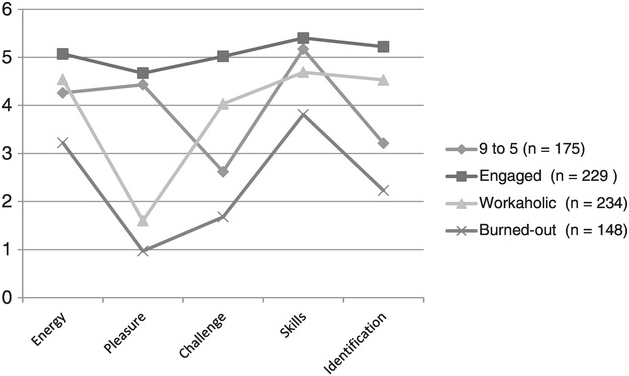
Figure 9.1 The four profiles of employee well-being
How and Why Do Employees Experience Work Engagement?
Mainly, research has focused on the way workplaces influence employees’ stress and strain and how organizational/job characteristics are potential stressors with a negative impact on employee life and societies (see Chapters 1–3 of this book). However, organizations can also influence employees in a positive way by reducing job stress and illness and enhancing work-related psychological well-being, as in work engagement, allowing employees to experience these positive feelings in healthy organizations (Salanova et al., Reference Salanova, Llorens, Cifre and Martínez2012) and psychologically healthy workplaces (Day & Nielsen, Reference Day, Nielsen, Chmiel, Fraccaroni and Sverke2017; Kelloway & Day, Reference Kelloway and Day2005). We defined HERO as
those organizations that make systematic, planned, and proactive efforts to improve employees’ and organizational processes and outcomes such as work engagement… [and] that involve carrying out healthy organizational resources and practices aimed at improving the work environment at the levels of (a) the task (autonomy, feedback), (b) the interpersonal (social relationships, transformational leadership), and (c) the organization (HR practices), especially during turbulence and times of change.
In a similar way, the idea of a psychologically healthy workplace (PHW) refers to a workplace that aims to foster employee health by reducing negative stressors and demands and promoting organizational resources to enhance well-being (Kelloway & Day, Reference Kelloway and Day2005). Day and Randell (Reference Day, Randell, Day, Kelloway and Hurrell2014) defined PHW as workplaces that “are dedicated to promoting and supporting the physical and psychological health and well-being of their employees while simultaneously incorporating solid business practices to remain an efficient and productive business entity and having a positive impact on their clients and community” (p. 10).
These nutritive workplace environments provide employees with job resources, not only material ones, such as salaries, time structure, etc., but also the satisfaction of basic psychological needs so that employees feel more engaged and motivated in the workplace. According to self-determination theory (SDT; Deci & Ryan, Reference Deci and Ryan2000), humans are basically motivated and experience psychological well-being (such as work engagement) when three basic psychological needs are satisfied, i.e., the need for autonomy, competence, and relatedness. In the workplace, for example, employees can experience autonomy by making decisions about their tasks, competence by using signature strengths in different work areas, and relatedness by cultivating social relationships and having leaders’ social support, in addition to contributing to coworkers’ personal grow and development. In these inspiring work atmospheres, work is meaningful and engaging and leads employees to thrive and flourish as human beings.
The job demands-resources (JD-R) model (Bakker & Demerouti, Reference Bakker and Demerouti2017; Schaufeli & Bakker, Reference Schaufeli, Bakker, Tuch, Bakker, Tay and Gander2022) is a good theoretical framework to explain how job resources together with job demands influence work engagement and reduce job burnout (see Chapter 8 in this book for a more detailed overview of burnout). According to the JD-R model, job resources contribute to an intrinsic motivational process because they help employees to obtain personal and professional growth, learning, and development. They also play a role in extrinsic motivational because they are instrumental for achieving different goals at work. In addition, the JD-R model postulates that job resources are even more relevant when job demands are higher, such as work overload, role conflicts, and emotional demands (Bakker et al., Reference Bakker and Demerouti2007).
Different meta-analyses on work engagement have shown its uniqueness and relationships with job demands and (job and personal) resources. Halbesleben (Reference Halbesleben, Bakker and Leiter2010) carried out a meta-analysis that included 74 unique samples and 45,683 participants, in order to assess the associations between work engagement and job demands and resources. As expected, job resources (i.e., social support, job control, feedback, and climate) were positively related to work engagement (ρ = .35), whereas job demands (i.e., work overload and work–family conflict) were weakly and negatively associated with it (ρ = −.09). However, although resources are usually strongly related to work engagement, this is not always true for job demands. For example, in a recent study, Lesener et al. (Reference Lesener, Gusy, Jochmann and Wolter2019) carried out a meta-analysis that included 77 longitudinal samples, and they showed that job demands were not related to work engagement over time, whereas job resources were reciprocally related to work engagement. Thus, it seems that resources and work engagement could have a kind of reciprocal effect on each other over time, and so the idea of positive gain cycles emerged in past research. Resources have motivational power as drivers of work engagement, which, in turn, leads to the accumulation of more resources, and so on (Salanova et al., Reference Salanova, Schaufeli, Xanthopoulou, Bakker, Bakker and Leiter2010). Recently, DeCuypere and Schaufeli (Reference Decuypere and Schaufeli2020) also showed in their meta-analysis (k = 69, N = 32,924) that work engagement was positively correlated with a very important job social resource, that is, positive leadership styles, including transformational (ρ = .45), servant (ρ = .40), and authentic (ρ = .35) leadership.
Personal resources are mutually related to job resources and appear to influence work engagement and, in turn, job performance. Recent research showed that relatively permanent personal resources (e.g., personality traits such as extraversion, positive affectivity, conscientiousness; see meta-analysis by Young et al., Reference Young, Glerum, Wang and Joseph2018) and more state-like and temporary personal resources (i.e., resilience, self-efficacy, emotional intelligence, psychological capital; see systematic review by Bailey et al., Reference Bailey, Madden, Alfes and Fletcher2017; Carmona et al., 2020; Peláez et al., Reference Peláez, Coo and Salanova2020) are strongly related to work engagement. Research suggests that these personal and job resources have effects on WE, which in turn influences job attitudes and behaviors, business outcomes, and health and well-being (see Figure 9.2), as described recently by Schaufeli and Bakker (Reference Schaufeli, Bakker, Tuch, Bakker, Tay and Gander2022). Figure 9.2 also reflects research suggesting that WE can influence job resources (see above) and be influenced by employees’ health and well-being, job attitudes, and work behaviors (explained in greater detail below). The arrows therefore depict reciprocal relationships between WE and those other constructs.
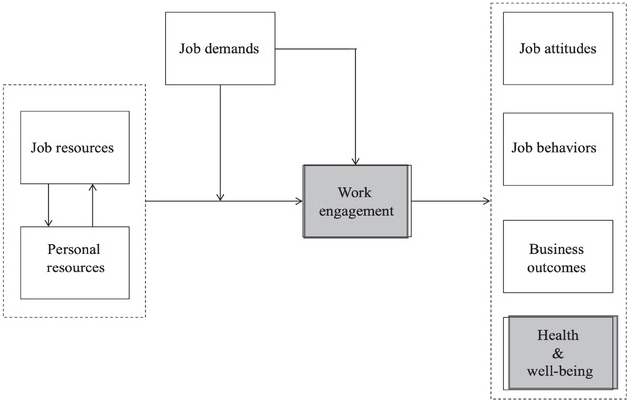
Figure 9.2 Integrative model of work engagement
In sum, work engagement occurs in the context of (healthy) organizations at different IGLO levels as a positive well-being psychological experience, due to the influence of personal and job resources and job demands. In turn, work engagement has a positive effect on positive attitudes, behaviors, and “other facets of health and well-being”, as described in the following sections. As mentioned above, health and well-being “are not the mere absence of illness”; they do not simply involve an absence of negative symptoms but rather something more. A lack of burnout or depression symptoms is not the same thing as the presence of engagement, happiness, trust, thriving, and so on, because well-being is a complex psychosocial construct. In this chapter, I consider work engagement to be an indicator of psychological well-being, and according to the JD-R and HERO models, it is also related to other well-being facets, such as physical, psychological, and social well-being.
Work Engagement and Physical Well-Being
Physical well-being catches physiological markers of health and sickness in organizations; it is normally investigated through feelings of health, including positive markers, such as a feeling of energy, and negative ones, such as lack of fatigue, strain, and psychosomatic complains (i.e., headaches, sleep problems, musculoskeletal disorders). According to predictions of the JD-R model, employees working in environments where they experience higher levels of WE draw on positive psychological spiral gains that positively influence their health (Xanthopoulou et al., Reference Xanthopoulou, Bakker, Demerouti and Schaufeli2009). For example, in a sample of older employees, a study with a one-year longitudinal design showed that physical load, higher psychological job demands, and lower autonomy at baseline were associated with poorer physical health at follow-up, but higher WE at baseline was related to better physical and, especially, mental health over time, showing this kind of positive spiral (Leijten et al., Reference Leijten, van den Heuvel and van der Beek2015). Moreover, in a recent meta-analytic structural equation model (MASEM), Goering et al. (Reference Goering, Shimazu, Zhou, Wada and Sakai2017) found that there was a positive relationship between WE and physical health (ß = 0.08), albeit weaker in magnitude. Regarding medical indicators of physical health, prospective cohort studies showed that engaged employees had low levels of C-reactive protein, which is an established risk factor for cardiovascular disease (Eguchi et al., 2016). Work engagement is also associated with healthy cardiac autonomic activity (Seppälä et al., Reference Seppälä, Mauno, Kinnunen, Feldt, Juuti, Tolvanen and Rusko2012). These last two studies seem to suggest that WE fosters cardiovascular health as well.
Work engagement has been researched in terms of its relationship with sleep quality and as an indirect measure of physical health. The idea is that good sleep quality is an indicator of physical health and improves levels of WE among employees because it is a vital resource that fills people with positive energy. Thus, in a sample of 328 workers, Barber et al. (Reference Barber, Grawitch and Munz2013) observed that people who are frequently engaged in poor sleeping behaviors had lower self‐regulatory competence, suffered depletion of energy, and showed less work engagement. A daily diary study with 107 employees (Kühnel et al., Reference Kühnel, Zacher, Bloom and Bledow2017) provided data showing that sleep quality was beneficial for employees’ daily work engagement. After nights when employees slept better, they indicated higher WE during the next day. In a similar vein and considering that recovery could be a kind of marker of sleep quality, Sonnentag et al. (Reference Sonnentag, Mojza, Demerouti and Bakker2012) found that when individuals were more sleep recovered in the morning, they experienced more engagement at the workplace. Moreover, using a diary study (N = 63), Diestel et al. (Reference Diestel, Rivkin and Schmidt2015) tested the moderating effect of sleep quality between emotional dissonance and daily work engagement, showing that the negative relationship between them was mitigated by increasing daily sleep quality. However, the work engagement–sleep quality relationship seems to be complex. Sheng et al. (Reference Sheng, Wang, Hong, Zhu and Zhang2019) showed that chronic sleep quality moderated the relationship between daily time pressure (as a type of challenge demand) and daily engagement. Thus, when the sleep quality at person-level is high, then a curvilinear relationship exists between time pressure experienced and WE that increases moderately day by day.
Finally, it is interesting to report research results about the way WE is related to physical energy while working, and that WE could have a limit in terms of workers’ depletion of energy or exhaustion over work days and weeks, with potential negative long-term effects. WE involves resource investment each day at work, and it is accumulative over time. Therefore, WE physiologically depletes resources, causing employees to feel exhausted. In this regard, research has shown, on the one hand, that WE may increase feelings of exhaustion over time (Byrne et al., Reference Byrne, Peters and Weston2016, Hakanen et al., Reference Hakanen, Peeters and Schaufeli2018, Schaufeli et al., Reference Schaufeli, Salanova, González-Romá and Bakker2002), but this engagement–exhaustion relationship is even more complex. For example, from a temporal perspective, Junker et al. (Reference Junker, Kaluza, Häusser, Mojzisch, van Dick, Knoll and Demerouti2020) investigated how exhaustion develops over time as a function of WE. In two samples, they showed that WE may be positive in the short term (in the beginning, high levels of engagement are associated with less exhaustion), but more harmful in the long term by increasing exhaustion over time.
Mäkikangas et al. (Reference Mäkikangas, Hyvönen and Feldt2016) showed that the association between changes in WE and changes in exhaustion is not identical in every individual; instead, subgroups exist (i.e., moderating variables) where increases in WE are unrelated to decreases in exhaustion, for example. Thus, one study (Chen et al., Reference Chen, Richard, Boncoeur and Ford2020) showed that WE predicts exhaustion when individuals score lower on the conscientiousness and emotional stability personality traits. They found a three-way interaction where WE increased emotional exhaustion in less conscientious individuals who were also neurotic or emotionally unstable, whereas it decreased emotional exhaustion in more conscientious individuals who were emotionally stable. Finally, WE also mediated the effect of the toxic relationship between emotional exhaustion and negative affect on productivity loss in employees due to their presenteeism. In a sample of 42 employees (Ferreira et al., Reference Ferreira, da Costa Ferreira, Cooper and Oliveira2019) who completed a ten-day diary survey (420 diary tasks), multilevel linear modeling showed this mediating effect of WE, pointing to the relevance of promoting WE to reduce the effects of negative affect and emotional exhaustion on productivity.
Depletion of physical energy and feelings of exhaustion in highly engaged employees can be explained physiologically. In a recent study, Baethge et al. (Reference Baethge, Junker and Rigotti2020) showed that WE was related to high sympathetic arousal (heart rate variation, HRV) in a sample of 118 public office employees on five working days, and multilevel analyses showed that elevated WE during one work week was associated with higher sympathetic activation, which is a health risk. Thus, a positive subjective construct (i.e., work engagement) does not always match objective indicators of well-being, as other research has also shown (Feldman et al., Reference Feldman, Cohen, Lepore, Matthews, Kamarck and Marsland1999; Jackowska et al., Reference Jackowska, Dockray, Hendrickx and Steptoe2011). Schwerdtfeger and Gerteis (Reference Schwerdtfeger and Gerteis2014) found that daily activated engagement was related to less momentary HRV and, therefore, stronger sympathetic activation. Their absorption on that day may further reduce their perception of early signs of fatigue (Sonnentag et al., Reference Sonnentag, Binnewies and Mojza2010) and then negatively affect their levels of well-being in the long run. Because prolonged sympathetic activation has been associated with severe physiological consequences, including cardiovascular and metabolic diseases (Grassi et al., Reference Grassi, Dell’Oro and Quarti-Trevano2005), it could be an indicator of a “negative side” of work engagement, at least in terms of the long-term physiological costs of a highly engaged work workforce.
Work Engagement and Psychological Well-Being
Psychological (mental and emotional) well-being comprises both the absence of negative mind states and the presence of positive ones. Past research has shown that WE is related to an absence of anxiety, depression (Shuck et al., Reference Shuck, Alagaraja, Rose, Owen, Osam and Bergman2017), and burnout (Schaufeli & Bakker, 2022). For example, Innstrand et al. (Reference Innstrand, Langballe and Falkum2012), in a two-year longitudinal study, examined the dynamic relationships between WE (i.e., vigor and dedication) and symptoms of anxiety and depression in a sample of 3,475 respondents from different occupational groups in Norway. The results showed that WE is more likely to be the antecedent of low symptoms of depression and anxiety than the other way around. In particular, the vigor dimension of WE predicts lower levels of depression and anxiety two years later. Moreover, WE not only predicts future self-reported outcomes such as low levels of depressive symptoms (Hakanen & Schaufeli, Reference Hakanen and Schaufeli2012) and low levels of psychological distress (Hakanen et al., Reference Hakanen, Peeters and Schaufeli2018) but is also an important predictor of the nonoccurrence of a major depression diagnosis (Imamura et al., Reference Imamura, Kawakami, Inoue, Shimazu, Tsutsumi and Takahashi2016). In the recent systematic review about how WE, along with work vigor, is related to physical and psychological health, Cortés-Denia et al. (Reference Cortés-Denia, Lopez-Zafra and Pulido-Martos2021) found, in the final 70 papers reviewed, that WE is mostly related to a lower risk of suffering from stress, anxiety, depression, fatigue, and psychological tension.
Regarding the relationship between engagement and burnout, research is intense and very productive (see Chapter 8 in this book), although there is still an ongoing debate about the relationships between the two, i.e., whether they are identical and opposite constructs (Maslash & Leiter, Reference Maslach and Leiter1997) or whether WE does not add anything beyond burnout. Abundant research and meta-analyses on WE (shown in this chapter) show that engagement is a psychological construct that adds something to the research. Even the burnout and engagement dimensions are placed on two distinct and bipolar dimensions (i.e., energy with vigor and exhaustion; and identification with dedication and cynicism) (González-Romá et al., Reference González-Romá, Schaufeli, Bakker and Lloret2006; Schaufeli & Salanova, Reference Schaufeli and Salanova2007). In that sense, an absence of one (e.g., low engagement) does not necessarily imply that the other is high (e.g., high burnout).
The bipolar dimension of energy seems to be more prominent, and, in any case, both terms refer to energy, with energy depletion (burnout) and increased energy (engagement) being related to each other. In a recent MASEM, Goering et al. (Reference Goering, Shimazu, Zhou, Wada and Sakai2017) concluded that burnout and engagement manifested different relationships with drivers and antecedents proposed by the JD-R model. For example, challenge demands are related to both engagement and burnout. However, hindrance demands have a stronger relationship with burnout, whereas job resources relate more strongly to WE. Burnout and engagement have different attitudinal, emotional, and behavioral consequences as well.
From a temporal perspective, longitudinal analyses of burnout and engagement could answer some questions about the way these two constructs develop over time, i.e., how engagement influences burnout and vice versa. Because well-being levels can fluctuate over time (Mäkikangas et al., Reference Mäkikangas, Hyvönen and Feldt2016), employees can move from feeling engaged to feeling burnout, and vice versa. Depending on specific organizational characteristics, WE can be an antecedent of burnout (e.g., due to impaired social exchange processes; Schaufeli & Salanova, Reference Schaufeli and Salanova2011), but it is also possible that initial levels of burnout can develop into more engagement over time if personal and job resources also change. For example, in the study by Mäkikangas et al. (Reference Mäkikangas, Hyvönen and Feldt2016), the authors concluded that well-being tends to vary over time, especially in younger employees. Considering changing job environments, they argue that an increase in resources is related to a boost in well-being, and that the opposite is also true.
But what influences what? Research on the way burnout is related to engagement over time (Hakanen & Schaufeli, Reference Hakanen and Schaufeli2012) showed that burnout at Time 1 is negatively related to engagement at Time 2 (after three years) and Time 3 (four years after Time 2). Experiencing burnout seems to deplete resources and hamper engagement over time. In a sample of 274 secondary-school teachers, Llorens and Salanova (Reference Llorens and Salanova2014) found, in a two-wave longitudinal study, that exhaustion and cynicism negatively predicted vigor and dedication over time (eight months later). We considered that these findings tested the conservation of resources theory (Hobföll, Reference Hobföll1989), in the sense that when people lost some valued resources, they try to minimize the possibility of losing even more. However, this relationship between burnout and engagement over time seems to be moderated by the time lag. For example, in the systematic review by Maricuțoiu et al. (Reference Maricuțoiu, Sulea and Iancu2017) with 25 longitudinal studies (N = 13.271 participants), they did not find a significant temporal order between burnout and engagement, taking into account all the time intervals. However, when considering a specific timeframe, i.e., a 12-month time lag, the results showed a reciprocal, negative relationship between exhaustion (the energy dimension of burnout) and work engagement. The other interesting result is that the effect of burnout on engagement seems to be stronger than the effect of engagement on burnout.
Based on previous research on the relationship between engagement and burnout over time, this relationship is complex and depends, among other things, on the time lag. Moreover, it could also depend on the level of analysis used to examine engagement and burnout. For example, an interesting theoretical approach is defended by Sabine Sonnentag’s studies showing that engagement and burnout differ at a deeper psychological level because they are related to each other at different levels of analysis (i.e., WE occurs at the task level and burnout at the job level). Work engagement fluctuates from task to task during a workday, whereas burnout is a chronic state that is more lasting over time, more pervasive, and affected more by job characteristics than by specific tasks.
However, psychological well-being is not only the absence of negative mental constructs such as anxiety, depression, or burnout. From a positive psychological approach, well-being includes not only the mere absence of illness but also the presence of positive states of mind such as positive emotions or work engagement, among others. Ryan and Deci (Reference Ryan, Deci, Deci and Ryan2002), for example, noted that (1) two types of psychological well-being can be differentiated: hedonic and eudaimonic well-being; and (2) although the relations between the two are still unclear and more research is needed (Heintzelman, Reference Heintzelman, Diener, Oishi and Tay2018), it is interesting to clarify how work engagement is related to each of them.
Hedonic Well-Being
Hedonic well-being involves “feeling good”, and the concept most frequently used to measure it is subjective well-being, which consists of high levels of positive affect together with low levels of negative affect, and life satisfaction (Diener & Emmons, Reference Diener and Emmons1984). The term “affect” is often used as a broad concept to refer to discrete emotions (e.g., joy or curiosity) and moods that are not specifically related to a concrete stimulus, such as feeling happy or feeling sad. Regarding positive and negative affect, it is typically assessed by asking people how often they have experienced concrete emotions (joy, contentment, anger, worry, etc.).
Work engagement seems to be associated with affect. In this regard, Erdil and Müceldili (Reference Erdil and Müceldili2014) found that envy, which is a characteristic of negative affect in the workplace, is negatively associated with WE, whereas Kong and Li (Reference Kong and Li2018) found that negative affect does not predict WE, but positive affect does. Moreover, positive affect is proposed as a psychological mechanism to buffer the costs associated with stressors, such as job insecurity, in terms of reduced work engagement. Vander Elst et al. (Reference Vander Elst, Bosman, De Cuyper, Stouten and De Witte2013) found empirical evidence in a sample of 296 employees from a South African institution, based on the COR theory. They explain that people with high positive affect cope better when they experience stressful situations in their lives, suffering less from the negative consequences of job insecurity, and they are even more engaged in their work. In addition, Ouweneel et al. (Reference Ouweneel, Le Blanc, Schaufeli and van Wijhe2012), using a diary study with Dutch university employees, found that positive affect after a working day was positively related to the levels of engagement in the next day when employees experienced hope before working.
This relationship could be explained from the broad-and-build theory (Fredrickson, Reference Fredrickson2001), where the positive emotions (i.e., joy, enthusiasm) broaden people’s thought-action repertories and build their personal resources, which in turn may promote well-being (e.g., work engagement). Positive emotions and work engagement could have a reciprocal relationship, with WE being both a driver and a consequence of them. First, feeling positive emotions at work leads employees to have higher levels of work engagement, but feeling engaged is also a pleasant experience that elicits future positive emotional states. Furthermore, positive emotions/affect also increase WE indirectly via personal resources such as self-efficacy, optimism, and resilience (Salanova et al., Reference Salanova, Schaufeli, Xanthopoulou, Bakker, Bakker and Leiter2010), which have strong motivational potential and are important predictors of WE (Bakker & Demerouti, Reference Bakker and Demerouti2007. In other studies, these personal (or job) resources predicted WE through positive affect. For example, in a sample of 422 employees at a large IT company, Wang et al. (Reference Wang, Li and Li2017) showed that positive affect partially mediates the relationships between resilience, transformational leadership, and WE. In addition, Malinowski and Lim (Reference Malinowski and Lim2015), in a sample of 299 adults with full-time employment, showed that positive affect mediates the relationship between (dispositional) mindfulness and WE. The reciprocal nature of the relationship between emotions and WE was also tested in a cross-lagged study with a sample of 941 teachers in Croatia (Burić & Macuka, Reference Burić and Macuka2018). They showed that the more engaged teachers at Time 1 also showed higher levels of positive emotions (joy, pride) and lower levels of negative emotions (anger, fatigue) at Time 2; and teachers with more positive emotions (and low negative emotions) at T1 were also more engaged in their work six months later.
However, although positive emotions have a clear and direct effect on WE, not all kinds of positive emotions/affect are related to WE in the same way. In a two-way longitudinal study with a sample of 274 secondary-school teachers, Salanova et al. (Reference Salanova, Llorens and Schaufeli2011) found more complex temporal relationships between positive affect and WE over time. More enthusiasm, satisfaction, and comfort predict higher WE over time, but positive affect characterized by high activation (i.e., enthusiasm) had a stronger effect on engagement than does positive affect with lower levels of activation (i.e., comfort). In turn, WE predicts positive emotions with high levels of activation (i.e., enthusiasm), but it negatively predicts emotions with low levels of energy, such as comfort. Thus, the more engaged teachers feel, the more enthusiasm and the less comfort they will feel over time.
Positive/negative affect and emotions seem to have a complex relationship with WE. Using a longitudinal design, Clark et al. (Reference Clark, Michel, Stevens, Howell and Scruggs2014), in a sample of 340 working adults, showed that positive emotions – specially joviality and self‐assurance – mediated the relationship between WE and work–home enrichment. Wu and Wu (Reference Wu and Wu2019), in 263 supervisor–employee dyads (131 supervisors plus 263 employees) in a Chinese company, showed that employees’ positive (but not negative) emotions mediated the positive effect of supervisors’ expression of positive emotions on WE; and this engagement mediated the positive effect of employees’ positive emotions on their innovative behavior. In this direction, Miralles et al. (Reference Miralles, Navarro and Unger2015) analyzed the mediating role of positive and negative affect between work event appraisals and daily work engagement, using a ten-day diary study with 117 workers (1,203 observations). Multilevel analysis showed that positive and negative affect partially mediated the relationship between daily event appraisal and WE, but the effect of positive affect was greater than the effect of negative affect.
These results could be explained in the lens of the affective events theory (AET) proposed by Weiss and Cropanzano (Reference Weiss, Cropanzano, Staw and Cummings1996), where the positive or negative events the employees have at work trigger affective reactions (e.g., curiosity, anger), which in turn influence employees’ work attitudes and behaviors, such as work engagement. Following the assumptions of AET and based on spillover theory (Edwards & Rothbard, Reference Edwards and Rothbard2000), which considers that psychological states can transfer from one life domain (e.g., family) to another (e.g., work), Gkorezis et al. (Reference Gkorezis, Bellou, Xanthopoulou, Bakker and Tsiftsis2016), in a four‐week diary study (N = 164 observations), showed a spillover effect from football games to negative affective events at work domain, which mediated between satisfaction with the football game and work engagement. Another theory that explains the complex relationships between positive/negative affect, and WE comes from the self-regulation affective shift model of work engagement developed by Bledow et al. (Reference Bledow, Schmitt, Frese and Kühnel2011). This model asserts that WE emerges from the dynamic interplay between positive and negative affect, in the sense that negative affect is positively related to WE if negative affect is followed by positive affect. In their study, they tested this hypothesis in a sample of 55 software developers, collecting data twice a day on nine working days. Hence, negative mood and negative events experienced in the morning of a workday were positively related to WE in the afternoon, but that occurs only if positive mood was high in the time interval between morning and afternoon.
The last indicator of hedonic or subjective well-being is satisfaction, which, according to Diener and Emmons (Reference Diener and Emmons1984), could also be called “cognitive well-being” because it is based on an evaluation or appraisal of how well one’s life is going relative to an ideal state of affairs and the person’s appraisal of his or her overall degree of life contentment (Pavot & Diener, Reference Pavot and Diener1993). People with high cognitive well-being should judge that their goals, desires, and standards are largely met by the current conditions of their life; i.e., they are satisfied with their life. However, it also includes satisfaction with specific life domains, such as work (i.e., domain satisfactions). In this sense, job satisfaction was defined as “a pleasurable or positive emotional state resulting from the appraisal of one’s job” (Locke, Reference Locke and Dunnette1976, p. 1300). In this regard, relationships between WE and job satisfaction proliferate (Judge et al., Reference Judge, Weiss, Kammeyer-Mueller and Hulin2017) in past research on the psychological understanding of work in people’s lives, and they seem to be related but empirically distinguishable dimensions of employee well-being, as Rothmann (Reference Rothmann2008) showed. Thus, job satisfaction indicates pleasure experienced, whereas WE is a more complex construct that refers to positive energy, dedication, and absorption of employees in their work. Job satisfaction has a more “satiated” nature and is based on the past, whereas WE is a more “motivating” construct and oriented toward the future, bringing employees to initiate positive behavior.
Some studies have shown that WE and life/job satisfaction are both outcome indicators of well-being and positively related to each other. Cortés-Denia et al. (Reference Cortés-Denia, Lopez-Zafra and Pulido-Martos2021), in their recent systematic review, found that WE is related to life satisfaction, but what is the causal link between the two? Does WE predict satisfaction or vice versa? For example, in the study by Dugan and Barnes-Farrell (Reference Dugan and Barnes-Farrell2020) with 440 working mothers, life satisfaction and WE were significatively correlated (.32), and both were positive well-being consequences of engaging in self-care behaviors and experiencing less stress due to the second shift workload. Extremera et al. (Reference Extremera, Durán and Rey2005) also found, in a sample of 112 employees who work with mentally handicapped people, that emotional intelligence (as a personal positive resource) predicted both life satisfaction and WE as intercorrelated outcome variables. Job satisfaction and WE are sometimes considered psychological mechanisms that explain how some workplace drivers influence employee behaviors. For example, Wang et al. (Reference Wang, Xu, Zhang and Li2020), in a sample of 1,312 Chinese hotel employees, recently showed the mediating role of both of these constructs between professional identity and turnover intention as important ways to associate professional identity with turnover intention.
However, different meta-analytic studies have provided more empirical evidence that WE is positively related to satisfaction. For example, Goering et al. (Reference Goering, Shimazu, Zhou, Wada and Sakai2017) found that WE relates positively to job satisfaction (ß = 0.24), and the meta-analytic study by Christian et al. (Reference Christian, Garza and Slaughter2011) with a sample of 9,712 employees (k = 4) found a correlation between engagement and job satisfaction of .53. In some studies, WE is a kind of mediator variable between different job/personal resources and job/life satisfaction. The idea here is that WE, which includes positive, meaningful, and extraordinary work experiences, could generate positive thinking, experiences, and feelings, helping individuals to achieve their personal goals and aspirations and improving their life/job satisfaction. Thus, Ariza-Montes et al. (Reference Ariza-Montes, Molina-Sánchez and Ramirez-Sobrino2018), in a study with 142 Spanish religious workers, found that WE mediated the relationship between authenticity (as a personal resource) and subjective well-being, considering life satisfaction as an outcome of WE. Considering emotional intelligence as a personal resource, Butakor et al. (Reference Butakor, Guo and Adebanji2021), in a sample of 260 teachers, showed that job satisfaction mediated the relationship between teachers’ emotional intelligence and WE. Liu et al. (Reference Liu, Zeng, Chen and Lan2019) found that WE directly affected life satisfaction in 760 police officers (β = 0.58, p < 0.001), and it indirectly influenced their life satisfaction through work–family conflict (β = −0.07, p < 0.05). A study by Eldor et al. (Reference Eldor, Harpaz and Westman2016), using multilevel models in a sample of 554 employees from different occupational sectors, found that WE was strongly related to job satisfaction (r = .55***), but also to life satisfaction (r = .44***). Furthermore, their findings stressed that WE offers a significant added value above and beyond job satisfaction in predicting work and nonwork positive attitudes such as life satisfaction. Based on the JD-R model, Salmela-Aro and Upadyaya (Reference Salmela-Aro and Upadyaya2018) examined, among others, how personal and job demands and resources of 1,415 employees were related to their life satisfaction, as well as the full mediating role of WE during different career stages, again finding this relationship: higher work engagement was related to greater life satisfaction.
Longitudinal studies also provide empirical evidence about the link between WE and satisfaction. For example, in a three-wave seven-year follow-up design with a national sample of 1,964 Finnish dentists, Hakanen and Schaufeli (Reference Hakanen and Schaufeli2012) found that WE spills over to general, context-free well-being, such as life satisfaction over time (from T1 to T2 and from T2 to T3), but not the other way around, i.e., life satisfaction only predicted life satisfaction over time, not WE. In addition, Karatepe and Karadas (Reference Karatepe and Karadas2015), using a time lag of two weeks in three waves with 285 frontline employees, found that WE partially mediated the relationship between psychological capital (as a personal resource) and job, career, and life satisfaction.
Eudaimonic Well-Being
Eudaimonia was introduced by Aristotle to describe human flourishing as a kind of virtue that influences one’s own potential and development and is different from the pleasurable experiences that define hedonic well-being. Virtue is a type of activity directed toward some sort of universal completeness or perfection according to our human nature, such as personal growth and development, accomplishment, thriving, and self-determination, among others (Ryan et al., Reference Ryan, Huta and Deci2008; Vittersø, Reference Vittersø2004). With eudaimonic well-being, the existence of positive emotions and positive attitudes toward one’s life or work is less important that the process of having a good life and a positive psychological functioning (Jayawickreme et al., Reference Jayawickreme, Forgeard and Seligman2012; Ryff, Reference Ryff1989).
Carol Ryff suggests that the psychological well-being (PWB) construct is based on individuals’ growth and fulfillment in six main dimensions (i.e., positive relations, autonomy, mastery, life purpose, self-acceptance, and personal growth). These dimensions are drawn from self-determination theory (Ryan & Deci, Reference Ryan and Deci2000), which considers eudaimonia to be a kind of “self-realization” focusing on what processes can be achieved through self-actualization. These Ryff dimensions are self-acceptance, positive social relationships, and autonomy. The others are more associated with personal growth and fulfillment. According to Ryft, engagement in important work (in our case, work engagement) means that people make relevant contributions to society.
Eudaimonic theories of well-being and happiness can also be applied at work and in organizations, making it possible for employees to cultivate psychological competencies such as virtuosity, autonomy, and positive relations with colleagues and clients, regardless of whether they feel good or feel like it (Kesevir, Reference Kesebir, Diener, Oishi and Tay2018). Bartels et al. (Reference Bartels, Peterson and Reina2019) recently developed a measure of workplace eudaimonic well-being based on the eudaimonic perspective of Ryft’s general well-being (1989) and Keyes’ social context theory (Reference Keyes1998). They defined it as “an employee’s subjective evaluation of his or her ability to develop and optimally function within the workplace” (p. 3). Eudaimonic workplace well-being considers Ryft’s six dimensions of general well-being together with Keyes’ five social dimensions of well-being (i.e., social integration, social acceptance, social contribution, social actualization, and social coherence). Bartels et al. (Reference Bartels, Peterson and Reina2019) showed sufficient discriminant validity between the two dimensions of eudaimonic well-being and employee engagement in their study. On a three-wave questionnaire with 338 Chinese employees, Yang et al. (Reference Yang, Feng, Meng and Qiu2019) showed that career adaptability has a significant effect on WE, which in turn predicts eudaimonic well-being as a kind of antecedent or driver. However, other studies showed that WE is also a consequence of eudaimonic well-being. For example, Aiello and Tesi (Reference Aiello and Tesi2017, in a sample of 140 social workers, provided evidence for a mediational model where job resources fully mediate the association between eudaimonic well-being and WE. In this study, eudaimonic well-being endorses the perception, identification, and promotion of job resources, which in turn were associated with WE.
The psychological construct(s) that constitutes the core of eudaimonic well-being is still an under-researched topic. For example, Kashdan et al. (Reference Kashdan, Biswas-Diener and King2008) noted that there is greater consensus about the dimensions of hedonic well-being, but not those of eudaimonic well-being. However, some eudaimonic well-being dimensions such as meaning, self-determination, or flourishing appear more frequently in research (Huta & Waterman, Reference Huta and Waterman2014; Kahn & Fellows, Reference Kahn, Fellows, Dik, Byrne and Steger2013; Keyes, Reference Keyes2007; Steger et al., Reference Steger, Littman-Ovadia, Miller, Menger and Rothmann2012).
Meaningfulness has been quite researched as a component of eudaimonic well-being, as a kind of feeling that one’s life is meaningful (Baumeister, Reference Baumeister and Leary1995). If the activities that we are doing are related to our own personal mission/vision and we believe we are contributing to something larger than (i.e., transcend) ourselves, then we can experience higher levels of psychological meaningfulness (Hitge & Van Schalkwyk, Reference Hitge and Van Schalkwyk2018; Olivier & Rothmann, Reference Olivier and Rothmann2007), which implies positive psychological experiences. In the arena of work and organizations, meaningful work has been suggested as crucial for the psychological experience of engagement (Chalofsky, Reference Chalofsky2010; Fairle, Reference Fairle2011). Meaningfulness further aids in the enhancement and maintenance of general mental health, life satisfaction, and WE (Glazer et al., Reference Glazer, Kozusznik, Meyers and Ganai2014). The psychological meaningfulness of work represents the employee’s cognitive assessment of work as significant and meaningful. So far, you can expect that when employees have these feelings, they will invest energy at work and feel vigorous, dedicated, and fully absorbed in their tasks. It is easy to imagine that if the work context is not meaningful (does not fit one’s values, boring tasks, etc.), employees simply are not engaged at work. We rarely put energy into activities if they have no personal meaning or if we believe our efforts will ultimately result in fruitless results and consequences.
However, meaningfulness at work and the meaning of work are not the same thing. Pratt and Ashforth (Reference Pratt, Ashforth, Cameron, Dutton and Quinn2008) suggested that meaningfulness is related to subjective evaluations of the amount of meaning something holds, whereas the “meaning of work” refers to the individuals’ interpretation of the role work plays in their lives (e.g., salary, calling, social relevance). Meaning seems to be “psychological” in nature and derived from individual values, beliefs, and personal attitudes. Meaningful work tries to respond to questions such as: does my work have significance and purpose for me? Does it contribute to finding a broader meaning in my life? Does it make a positive contribution to the greater good? These conditions of meaningful work seem to be drivers of WE; thus, the extent to which workers experience meaningfulness at work is a necessary condition for experiencing engagement (Kahn & Fellows, Reference Kahn, Fellows, Dik, Byrne and Steger2013). Meaningfulness is a consequence of different drivers such as purpose (viewing one’s circumstances like connected to the future), personal control and efficacy (being cause for some particular fact), and belonging (due to nutritive connections to others) (Baumeister & Leary, Reference Baumeister and Leary1995).
Vogt et al. (Reference Vogt, Jenny and Bauer2013) suggested that meaningfulness is the extent to which one’s work is seen as worthy of commitment and involvement. Therefore, the meaningfulness of a job is a kind of personal resource that employees have available to put toward work tasks (Kahn, Reference Kahn1992). Perceiving work as meaningful denotes an important connection between employees and their work, which stimulates them to go a step forward the usual job requirements. For example, the meta-analysis by Christian et al. (Reference Christian, Garza and Slaughter2011) shows that a general sense of meaningfulness in one’s work increases employee engagement. The recent study by Van Zyl et al. (Reference Van Zyl, Rothmann and Nieman2020) with a sample of 274 South African industrial psychologists found three mental health profiles (languishing, moderately mentally healthy, and flourishing) that significantly differ in their levels of meaningful work and WE. Flourishers showed higher levels of both. Research demonstrated that employees with a high psychological experience of meaningful work are more committed to the organization and less likely to leave it, feeling more engaged than employees who do not consider their work to be particularly meaningful (May et al., Reference May, Gilson and Harter2004; Olivier & Rothmann, Reference Olivier and Rothmann2007). Moreover, meaningful work and WE are connected via psychological mechanisms such as the use of strengths by employees. In this regard, Van Wingerden and Van der Stoep (Reference Van Wingerden and Van der Stoep2018) found, in a sample of 459 employees, that multiple factors such as strength use and WE mediated the impact of meaningful work on performance. In addition, interestingly, meaningful work influences WE not only directly but also indirectly via the use of character strengths by employees. Thus, when employees perceive their work as meaningful, they are more likely to use their strengths and feel more work engaged.
Steger et al. (Reference Steger, Littman-Ovadia, Miller, Menger and Rothmann2012), in a sample of 252 white-collar employees, found that meaningful work was an even better predictor of WE than affective disposition. Individuals that feel that their work is meaningful are more engaged, regardless of their affective disposition. Moreover, in a sample of 194 employees in a two‐wave longitudinal study, Matthew and Jiang (Reference Matthew and Jiang2017) found that meaningful work is positively related to enrichment of work‐to‐life over time. In addition, WE mediated, but did not moderate, the relationship between meaningful work at Time 1 and work‐to‐life enrichment at Time 2. Hence, it seems that meaningful work is associated with benefits that transfer from work to nonwork areas, such as the full experience of work‐to‐life enrichment. These enriching benefits of meaningful work appear only when people invest in their work role by using their personal strengths, thus experiencing their work activities with vigor, absorption, and dedication (i.e., work engaged). However, it seems that the relationship between meaningful work and work engagement depends on the focus on between-or-within-person. Recently, Vogel et al. (Reference Vogel, Rodell and Sabey2020), in a daily within-person examination of 86 employees (N = 804 observations), found that when there is a misfit in one day between received and needed meaningful work, it could be related with a lower engagement this day.
Regarding self-determination as a (multi-)component of eudaimonic well-being, we would expect employees who report being fully engaged in their work to also have a strong intrinsic work motivation (Meyer, Reference Meyer and Gagné2014). In this direction, SDT (Deci & Ryan, Reference Deci and Ryan1985; Ryan & Deci, Reference Ryan and Deci2000) explains why employees have intrinsically motivated behaviors such as an “inherent tendency to seek out novelty and challenges, to extend and exercise one’s capacities, to explore, and to learn” (Ryan & Deci, Reference Ryan and Deci2000, p. 70). Intrinsic motivation is related to three basic psychological needs fulfillment: autonomy, competence, and relatedness. When these needs are met, employees feel intrinsically motivated to perform a specific behavior, and they feel good and engaged in their work.
Research on the mediating role of these basic psychological needs and work engagement is quite fruitful. For instance, Van den Broeck et al. (2008) found that basic psychological need satisfaction explains the influence of job demands on WE and is a mediator between the two. Schreurs et al. (Reference Schreurs, van Emmerick, Van den Broeck and Guenter2014) also found that need satisfaction was positively associated with WE. Goodboy et al. (Reference Goodboy, Martin and Bolkan2020), in a study about the negative effects of workplace bullying on work engagement in a sample of 243 full-time employees, showed an indirect relationship between workplace bullying and WE that was mediated by basic psychological needs satisfaction. Thus, workplace bullying indirectly and negatively affects employees’ WE, denying them their autonomy and relatedness needs and decreasing their motivation to perform work in a fulfilling way. Recently, Zeijen et al. (Reference Zeijen, Petrou, Bakker and van Gelderen2020) carried out a multilevel study with 97 police officers’ dyads (N = 194 participants) during two-time blocks on one working day (N = 227–491 episodes). They showed that episodic need satisfaction influences work engagement when police officers satisfy their own daily needs showing support, and it also depends on when the support is given and also to who is provided. This study expands the SDT by showing the relevance of social support in the relationship between need satisfaction and WE. From a within-person approach, and considering daily work engagement (i.e., transient state of mind that exists at a given moment and fluctuates within the same individual over short periods of time) instead of work engagement (i.e., how engaged employees feel in relation to their work in general and over longer periods of time), Bakker et al. (Reference Bakker and Oerlemans2019) used a diary study with a multilevel approach (N = 66 employees who responded to a daily diary questionnaire, N = 261; as well as momentary, task-related items, N = 1,539) to show that daily job crafting was positively related to daily work engagement through momentary need satisfaction and momentary engagement. This episodic and momentary engagement is more likely when employees satisfy their basic needs for relatedness, autonomy, and competence.
Finally, from the area of positive psychology, Hursthouse (Reference Hursthouse1999) argued that a flourishing life (just as adopting a healthy lifestyle) is the best bet for being healthy and happy, even though it does not guarantee perfect health or longevity. Flourishing seems to be an umbrella psychological construct that contains different dimensions of well-being, such as hedonic, eudaimonic, and social well-being. It is a state of optimal mental health in individuals who feel good, not only about themselves but also about their potential to (socially) contribute to the world around them in positive ways (Keyes, Reference Keyes2007). Flourishing is on one end of a mental health continuum, with languishing on the opposite end as the absence of mental health. Seligman (Reference Seligman2018) presented a similar flourishing model called PERMA: positive emotion, engagement (flow), (positive) relationships, meaning, and achievement. According to Seligman, these five elements of well-being are pursued for their own sake and not necessarily to increase other well-being elements. It is interesting that the PERMA model includes (life) engagement and flow as dimensions of flourishing in life.
Research has shown that WE predicts flourishing and acts as a mediating variable between job/personal resources and flourishing. For example, Diedericks and Rothmann (Reference Diedericks and Rothmann2013), in a sample of 205 technology professionals, found that work engagement (together with job satisfaction) partially mediated between personal and job resources (supervisor relations and work role fit) and flourishing (considered a complex indicator of emotional, psychological, and social well-being). In addition, in a sample of 142 nuns, Ariza-Montes et al. (Reference Ariza-Montes, Molina-Sánchez and Ramirez-Sobrino2018) found that the more engaged nuns are in their work (social action to serve the poorest and most disadvantaged people), the more they flourish in their working environment and in their personal lives. However, in other studies, flourishing mediated between job/personal resources and work engagement. In a sample of 229 employees and using structural equation modeling (SEM), Shao-mei Zheng et al. (Reference Shao-mei Zheng, Gunasekara and Blaich2018) showed that psychological flourishing partially mediated the relationship between mindfulness and work engagement.
Therefore, although flourishing could be considered an umbrella construct that includes psychological (hedonic and eudaimonic) and social well-being, I think it is important to consider its unique contribution to the relationship between work engagement and social well-being.
Work Engagement and Social Well-Being
In a more general view of well-being, Keyes (Reference Keyes2007) noted that social well-being refers to a psychosocial experience where individuals are socially accepting, believe in the others’ potential, feel that the society is meaningful and their own activities are meaningful for others, and experience psychological relatedness with other people. In this regard, engagement is associated with social well-being because it contributes to a meaningful life, making the person feel part of society (Keyes, Reference Keyes2007). Moreover, social well-being could be experienced in the workplace because it is associated with strong feelings of social connection with others, such as coworkers, leaders, customers, etc. For example, giving and receiving help to people in the workplace could guard against job demands (Teng et al., Reference Teng, Zhang and Qiu2018; Uy et al., Reference Uy, Lin and Ilies2017), and prosocial motivations, such as the desire to exert effort to benefit others or social collectives, are potential indicators of social well-being that could be related to a strong sense of energy at work and being dedicated to and absorbed in tasks, that is, work engagement. For example, in a study about the relationship between job insecurity and work engagement and performance, Shin and Hur (Reference Shin and Hur2020) found that the negative relationship between job insecurity and work engagement was weakest when employees’ help-giving and prosocial motivations were both high. Thus, giving/receiving help and prosocial behavior are potential psychosocial mechanisms of social well-being that alleviate work engagement when employees suffer from job insecurity.
Furthermore, when interactions and relationships with others, such as coworkers, leaders, and customers, shape how people think, feel, and behave, they can potentially affect meaningfulness if they provide the opportunity to reinforce valued identities at work (Kahn, Reference Kahn, Dutton and Ragins2007). These relational sources of meaning could be, for example, voices that are heard, important work social connections, or even competent and inspirational supervision by leaders. When these social sources of meaning are present in the workplace, they can cause employees to think about relevant questions, such as whether it is worthwhile for them to be fully engaged at this moment in their work/task/teamwork (Kahn & Fellows, Reference Kahn, Fellows, Dik, Byrne and Steger2013). In this context, the construct of team/collective work engagement and its relationship with indicators of social well-being makes sense. Work engagement can also be shared by team members as an index of (collective) team engagement (Salanova et al., Reference Salanova, Llorens, Cifre, Martínez and Schaufeli2003; Schaufeli & Salanova, Reference Schaufeli and Salanova2011; Torrente et al., Reference Torrente, Salanova, Llorens and Schaufeli2012). This sharedness of engagement can occur through an emotional contagion process defined as “the tendency to automatically imitate and synchronize facial expressions, vocalizations, postures, and movements with those of another person and, therefore, to converge together” (Hatfield et al., Reference Hatfield, Cacioppo and Rapson1994). We have shown the existence of team engagement in studies with more than 200 work units and their leaders. This research reveals that team engagement is activated by the presence of social resources shared by the team (i.e., team coordination, teamwork, shared social support), and it results in high in-role and extra-role performance (Cruz et al., Reference Cruz, Salanova and Martínez2013; Gracia et al., Reference Gracia, Salanova, Grau and Cifre2013; Salanova et al., Reference Salanova, Llorens and Schaufeli2011; Torrente et al., Reference Torrente, Salanova, Llorens and Schaufeli2012, Reference Torrente, Salanova and Llorens2013). To date, team/group cohesion could be an indicator of social well-being because it can be understood as the extent to which team members are committed to their team and how well the team is integrated as it pursues its goals (Kozlowski & Ilgen, Reference Kozlowski and Ilgen2006). Members of teams with high cohesion are more motivated to contribute to the team’s collective goal and engage in collective work as a team. For example, in a longitudinal three-wave study with 118 project teams (605 individuals) that performed three creativity tasks, we showed (Rodriguez-Sánchez et al., Reference Rodríguez-Sánchez, Devloo, Rico, Salanova and Anseel2017) that team cohesion leads to collective team engagement, which in turn has a positive effect on team creative performance.
A psychosocial construct that is close to cohesion is organizational connectedness (Huynh, Reference Huynh, Metzer and Winefield2012a), a collective positive state of well-being that people experience when they feel a strong sense of belonging in the workplace or even with customers, clients, and recipients of their service. People with high organizational connectedness manifest human striving for interpersonal attachments through positive feelings of appreciation and respect as part of the relationship with the client, through feelings such as compassion and altruistic behaviors, and in turn they experience satisfaction due to the feelings of appreciation and gratitude received from others (Dein & Abbas, Reference Dein and Abbas2005). Moreover, organizational connectedness could be related to an individual’s sense of connection to the values of an organization where employees feel appreciated, recognized, and treated fairly, as well as connection to their own tasks when they are motivating and inspiring. Studies by Huynh and colleagues (Huynh et al., Reference Huynh, Metzer and Winefield2012a, Reference Huynh, Metzer and Winefield2012b) have shown that organizational connectedness is related to desirable outcomes for people doing voluntary tasks, including work engagement. For example, Huynh et al. (2014), in a sample of 887 volunteers, and based on the JD-R model framework, showed that WE and organizational connectedness were positive mechanisms that explain how job resources are related to turnover. These well-being psychological constructs are also highly intercorrelated (r = .61); however, in this study, no specific relationships between the two were proposed.
Social well-being could also be experienced with people from other life domains outside the workplace, such as family, friends, community, society, etc., thus affecting work engagement and vice versa. For example, engagement in the workplace may provide benefits for individuals’ positive social contacts and interactions, which are valuable social resources that lead to a positive social connection with others at work and successful communal and social functioning. According to the spillover theory (Wilensky, Reference Wilensky1960), attitudes and behaviors experienced in a social domain (i.e., work) could be transferred to other life contexts, showing a kind of effect on one’s skills and psychological experience. For example, engaged employees could express a desire to be useful and contribute to other social contexts related to social life (Vigoda-Gadot et al., Reference Vigoda-Gadot, Mizrahi, Miller-Mor and Tevet2008). This spillover is defined by Greenhaus and Powell (Reference Greenhaus and Powell2006, p. 73) as “the extent to which experiences in one role improve the quality of life in the other role”. In this regard, WE has been related to community social involvement, referred to as activities of individual citizens, such as belonging to community associations and school committees and taking part in cultural activities aimed at influencing the community (Verba & Nie, Reference Verba and Nie1972). Moreover, Eldor et al. (Reference Eldor, Harpaz and Westman2016) found in their multilevel study that WE is also related to employees’ levels of community involvement, creating added value beyond the work area and enriching other social domains of their lives outside the workplace. At the societal level, the European Working Conditions Survey has shown that work engagement at the national level is curvilinearly related to a country’s gross domestic product and linearly related to various indicators of good governance, such as public integrity, quality of democracy, and gender equality as societal indicators of social well-being (Schaufeli, Reference Schaufeli2018).
Finally, it is important to note that social well-being is processed differently by individuals and groups. It also depends on cultural and societal norms and is different, for example, in collectivistic or individualistic cultures. The Chinese term “guanxi” is related to personal connections from the implicit psychological contracts reciprocity exchanged, and also nurture mutual commitment and the desire for relationships in the long term (Chen et al., Reference Chen, Chen and Huang2013) as the general quality of “informal” relationships rather than formal relationships (Wong et al., Reference Wong, Ngo and Wong2003). Guanxi can be built and used to progress through life and work (Chen et al., Reference Chen, Chen and Huang2013; Xin & Pearce, Reference Xin and Pearce1996). However, guanxi in HRM practices is negatively perceived by employees when they observe other colleagues with more guanxi-based preferential treatment and, thus, perceive them as guanxi beneficiaries. Thus, studies have shown the negative effects of employees’ perceptions of guanxi HRM practices on employee outcomes, such as in‐role and extra‐role performance (Hsu & Wang, Reference Hsu and Wang2007), management trust (Chen et al., Reference Chen, Friedman, Yu and Sun2011), and even work engagement. For example, in a three-wave study with 338 employees on how career adaptability affects eudaimonic well-being and work engagement, Yang et al. (Reference Yang, Qian, Liu, Huang, Chau and Wang2018) found that career adaptability has a significant effect on work engagement, which, in turn, predicts EWB, with these effects being stronger when guanxi is low. Moreover, in a double study with (1) a three time‐lagged sample of 45 work groups and 205 employees in a state‐owned organization and another (2) cross‐sectional study of 101 work groups and 413 employees in 101 different organizations, Yang et al. (Reference Yang, Qian, Liu, Huang, Chau and Wang2018) showed that supervisors’ perceptions of guanxi HRM practices were positively related to subordinates’ perceptions of guanxi HRM practices, which, in turn, negatively affected subordinates’ work engagement.
Conclusions
I would like to end the chapter by making some theoretical and practical concluding remarks and describing current insights about what WE is, how and why employees experience it, how WE is related to other indicators of organizational well-being, and some notes for a future research agenda on work engagement and organizational well-being.
Throughout the chapter, work engagement is considered a key element of organizational well-being, a multilevel construct (IGLO) presenting different facets or areas of well-being, such as physical, psychological, and social well-being, which are reciprocally related over time (Salanova, Reference Salanova2020a). Work engagement could be considered a “psychological” indicator of organizational well-being. Of course, there are different definitions of work engagement, as I noted in this chapter. However, from my point of view, an integrative vision of WE is rooted in OHP and POP, as a concept distinct from but negatively related to burnout. Defined in its own right, WE is considered a fully motivational (affective-cognitive) experience, a kind of psychological well-being in the workplace, characterized by vigor, dedication, and absorption. Furthermore, WE is contextualized in a broader picture as a core dimension of a HERO, where the incidence of WE in an organization coexists with other patterns of employee well-being, such as burnout, workaholics, and 9-to-5 employees.
Work-engaged employees usually work in nutritive workplace environments that provide them with enough job resources and healthy organizational practices to not only satisfy their basic physical and psychological needs but also provide them with future positive and inspirational scenarios so that they can prosper and flourish. This chapter showed empirical evidence about the way employees experience work engagement in these HERO environments, where job resources may play either an intrinsic motivational role because they foster employees’ growth, learning, and development, or an extrinsic motivational role because they are instrumental in achieving work goals. Moreover, resources and work engagement seem to work together and have a reciprocal interinfluence on each other over time, forming positive gain cycles and spirals. Resources have motivational power as drivers of work engagement, which, in turn, leads to the accumulation of more resources, and so on. Employees feel motivated when resources are available in the workplace, and different meta-analyses have shown that job demands and job and personal resources are linked to work engagement, which in turn has consequences for employees’ work attitudes (i.e., organizational commitment), behaviors (i.e., job performance), or health/well-being.
This chapter examined the relationships between work engagement and other facets of well-being at work. The well-being concept is viewed in different ways in the research literature. My goal was to clarify this point and propose a trilogy of facets of well-being (i.e., physical, psychological, and social) from research on POP. From this perspective, health and well-being “are not the mere absence of illness”; there is not simply an absence of negative symptoms but rather something else, i.e., positive states of mind where the presence of engagement, positive affect, connectedness, and flourishing, among other indicators, make well-being a complex psychosocial construct.
Without trying to be exhaustive, we learn some of the following lessons from past research about how work engagement and organizational well-being are related. First, being more engaged at work seems to protect the employee by providing positive psychological gains and then better physical well-being as indicated by less risk of cardiovascular disease, better sleep quality, and healthier job recovery, as well as higher physical energy and less exhaustion while working. I presented evidence about differences in these results based on personal, temporal, and contextual factors, with moderating and mediating variables that explain unexpected results. We have to consider these factors for both theoretical and practical reasons, in order to invest in positive psychological interventions in the workplace.
Second, work-engaged workers also manifest less anxiety, depression, and burnout as main indicators of negative psychological well-being. Thus, WE seems to help prevent or reduce anxiety and depression, rather than the other way around. The latest and most recent systematic review by Cortés-Denia et al. (Reference Cortés-Denia, Lopez-Zafra and Pulido-Martos2021) shows that WE is mostly related to a lower risk of suffering from stress, anxiety, depression, fatigue, and psychological tension. Among all these negative indicators of psychological well-being, it is clear that the most researched question has to do with the way WE is related to burnout in the workplace. The chapter shows how the two constructs are connected, and that work engagement research started due to results from burnout studies, as a kind of antipode of burnout. Abundant research compiled in systematic and meta-analytic studies demonstrates that WE adds something to burnout. The two concepts display empirically distinct relationships within the JD-R model, particularly in terms of drivers (i.e., challenge or hindrance demands, or job resources), but they also predict different consequences. Interestingly, the time and level of analysis are important variables, and recent results show that these constructs are reciprocally related over time, but the effect of burnout on engagement seems to be stronger than the effect of engagement on burnout. Moreover, engagement and burnout differ at a deeper psychological level because they are related to each other at “different levels of analysis”. Hence, WE seems to occur at the task level, and burnout at the job level of analysis.
The relationship between WE and hedonic (psychological) well-being is fascinating as well. For example, WE has a causal temporal sequence where the more engaged employees are with their work, the more positive (and the less negative) affect they feel over time, such as greater hope and less envy. Feeling positive emotions at work leads employees to have higher levels of work engagement, but feeling engaged is also a pleasant experience that elicits future positive emotional states over time. In these relationships, personal resources such as self-efficacy, optimism, resilience, etc., interact with positive affect in the prediction of work engagement as important moderators in the development of WE over time. However, positive and negative emotions and affect have a complex relationship with WE, as described in the chapter. Recent research on this topic calls for more research to obtain a clearer picture of what it is happening in the world of emotions and work engagement relationships.
Further insights stem from research on how satisfaction and engagement are related to each other. They seem to be related but empirically distinguishable dimensions of employee well-being. Satisfaction indicates more pleasure, is past oriented, and shows need/expectation satiation, whereas WE is a multidimensional construct, future oriented, and more “motivational”.
As far as psychological well-being is concerned, WE is considered a kind of “eudaimonic psychological well-being indicator”. As documented in the chapter, the psychological construct(s) that make up the core of eudaimonic well-being are still an under-researched topic, mainly because they consist of a range of constructs that vary across researchers. Without trying to mention all of them, I focused on the three most researched constructs: meaningfulness, self-determination, and flourishing. In sum, although differences exist when considering time frames and between-and-within-person approaches, research shows that when employees feel that their work is meaningful to them, they invest energy in their work activity, feeling vigorous, dedicated, and fully absorbed in their tasks. In addition, when employees have their psychological needs of competence, autonomy, and relatedness satisfied, they feel intrinsically motivated by their work and fully work engaged. Regarding flourishing in the workplace, the research shows that, despite its umbrella nature, flourishing seems to be reciprocally related to WE.
Finally, the area of social well-being and its relationship with work engagement has been less researched compared to other facets of well-being. We know that the social context in organizations (i.e., social support from colleagues and supervisors) is a strong driver of work engagement. However, social well-being is not a job (social) resource; instead, it is related to the psychosocial experience of being socially accepted and coherent, finding society meaningful, and experiencing connection and relatedness with others. Research on giving and receiving help, prosocial motivation, group cohesion, and organizational connectedness has shown that these social well-being indicators are related to work engagement at the individual and the collective levels, such as teams and groups.
To end the chapter, I would like to present some ideas for a future research agenda about the relationships between WE and organizational well-being indicators. Much research has addressed links between WE and negative well-being (e.g., anxiety, depression, burnout). However, new changes in societies and the labor market, such as more digital societies or overqualified employees, require research on other negative indicators of psychological well-being, such as technostress, techno-aholism, and boredom at work, and their relationships with work engagement. Can WE protect against these negative psychological consequences of new changes in the labor market, or will WE simply suffer as a result?
Recent research on the way time and levels of analysis act on burnout and engagement relationships calls for more studies on the interaction between time and levels of analysis in predicting the development of burnout (at the job level) and engagement (at the task level). Furthermore, research on collective levels of work engagement, in other words team engagement, complicates the equation, which should be a new area of future research as well. Do team-engaged groups develop over time with different patterns of psychological well-being based on previous levels of burnout (at the job level) and task engagement?
The complex and fascinating results about how emotions/affect are related to WE call for more longitudinal and multilevel studies to obtain a clearer picture of this relationship, as well as more studies with physiological measures of emotions/affect facets and their consequences for WE. No studies were found using these techniques that could clarify the sometimes-contradictory results. For example, based on the self-regulation affective shift model of work engagement developed by Bledow et al. (Reference Bledow, Schmitt, Frese and Kühnel2011), we could obtain greater knowledge about the way WE emerges from the dynamic interplay between positive and negative affect over time, which neurological areas and mechanisms are activated in our brain, and so on.
More research is needed on the reciprocal relationships between work engagement and other well-being constructs outside the workplace, considering the permeable nature of the boundaries between work and beyond-work domains, by considering research on the spillover theory and expanding its implications.
Although social well-being and work engagement seem to be related, there is a need for more research on how different indicators of social well-being are related and how and under what conditions they are related to engagement. This is interesting because the idea that one’s own happiness and well-being can be linked to the perception of others’ well-being is called “psychological interconnection of happiness”, and it has been researched in cultural psychology by Uchida and colleagues in the Japanese context. For example, Hitokoto and Uchida (Reference Hitokoto, Uchida, Demir and Sümer2018) standardized a self-report scale called the “interdependent happiness scale” to measure individual perceptions of the interpersonally harmonized, quiescent, and ordinary nuances of happiness that represent the shared meaning of happiness in an interdependent cultural context. Research on work engagement (at different levels of analysis) and the psychological interconnection of happiness would be an interesting and inspiring area of research, as shown with other psychosocial constructs such as social capital (Fukushima et al., Reference Fukushima, Uchida and Takemura2021).
Finally, longitudinal studies should consider levels of analysis (i.e., individual, group, leader, and organization) in the explanation of the way individual and team engagement develop over time in organizations, in order to clarify these complex relationships over time and across different levels and their effects on different facets of well-being (physical, psychological, and social). Moreover, this new research will be useful for designing workplace interventions to increase work engagement (at different levels) and its effects on organizational well-being.


