Published on behalf of The London Mathematical Society
We partner with a secure submission system to handle manuscript submissions.
Please note:
Click Proceed to submission system to continue to our partner's website.
Let  $X$ be a smooth geometrically connected projective curve over the field of fractions of a discrete valuation ring $R$, and $\mathfrak {m}$ a modulus on $X$, given by a closed subscheme of $X$ which is geometrically reduced. The generalized Jacobian $J_\mathfrak {m}$ of $X$ with respect to $\mathfrak {m}$ is then an extension of the Jacobian of $X$ by a torus. We describe its Néron model, together with the character and component groups of the special fibre, in terms of a regular model of $X$ over $R$. This generalizes Raynaud's well-known description for the usual Jacobian. We also give some computations for generalized Jacobians of modular curves $X_0(N)$ with moduli supported on the cusps.
Given a perfect field  $k$ with algebraic closure $\overline {k}$ and a variety $X$ over $\overline {k}$, the field of moduli of $X$ is the subfield of $\overline {k}$ of elements fixed by field automorphisms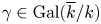 $\gamma \in \operatorname {Gal}(\overline {k}/k)$ such that the Galois conjugate $X_{\gamma }$ is isomorphic to $X$. The field of moduli is contained in all subextensions $k\subset k'\subset \overline {k}$ such that $X$ descends to $k'$. In this paper, we extend the formalism and define the field of moduli when $k$ is not perfect. Furthermore, Dèbes and Emsalem identified a condition that ensures that a smooth curve is defined over its field of moduli, and prove that a smooth curve with a marked point is always defined over its field of moduli. Our main theorem is a generalization of these results that applies to higher-dimensional varieties, and to varieties with additional structures. In order to apply this, we study the problem of when a rational point of a variety with quotient singularities lifts to a resolution. As a consequence, we prove that a variety $X$ of dimension $d$ with a smooth marked point $p$ such that $\operatorname {Aut}(X,p)$ is finite, étale and of degree prime to $d!$ is defined over its field of moduli. $\mathbb {S}^{4m+3}$ as the principal orbit
We prove that there exists at least one positive Einstein metric on 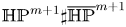 $\mathbb {HP}^{m+1}\sharp \overline {\mathbb {HP}}^{m+1}$ for $m\geq ~2$. Based on the existence of the first Einstein metric, we give a criterion to check the existence of a second Einstein metric on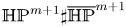 $\mathbb {HP}^{m+1}\sharp \overline {\mathbb {HP}}^{m+1}$. We also investigate the existence of cohomogeneity-one positive Einstein metrics on $\mathbb {S}^{4m+4}$ and prove the existence of a non-standard Einstein metric on $\mathbb {S}^8$.
Let  $\mathfrak {F}_n$ be the set of all cuspidal automorphic representations $\pi$ of $\mathrm {GL}_n$ with unitary central character over a number field $F$. We prove the first unconditional zero density estimate for the set $\mathcal {S}=\{L(s,\pi \times \pi ')\colon \pi \in \mathfrak {F}_n\}$ of Rankin–Selberg $L$-functions, where $\pi '\in \mathfrak {F}_{n'}$ is fixed. We use this density estimate to establish: (i) a hybrid-aspect subconvexity bound at $s=\frac {1}{2}$ for almost all $L(s,\pi \times \pi ')\in \mathcal {S}$; (ii) a strong on-average form of effective multiplicity one for almost all $\pi \in \mathfrak {F}_n$; and (iii) a positive level of distribution for $L(s,\pi \times \widetilde {\pi })$, in the sense of Bombieri–Vinogradov, for each $\pi \in \mathfrak {F}_n$.
We introduce the notion of completed  $F$-crystals on the absolute prismatic site of a smooth $p$-adic formal scheme. We define a functor from the category of completed prismatic $F$-crystals to that of crystalline étale $\mathbf {Z}_p$-local systems on the generic fiber of the formal scheme and show that it gives an equivalence of categories. This generalizes the work of Bhatt and Scholze, which treats the case of a mixed characteristic complete discrete valuation ring with perfect residue field.