





1 Introduction
1.1 Counterfactual inference
We tend to make counterfactual assumptions and to draw conclusions from them. Among the most fundamental constructions that we use to express our steps in counterfactual reasoning are counterfactual conditionals of the form:
-
(1.1) If it were the case that A, then it would be the case that B.
(If A were the case, B would be the case.)
and their past subjunctive versions of the form ‘If it had been the case that A, then it would have been the case that B’ (‘If A had been the case, B would have been the case’). A classic example (due to [Reference Stalnaker and Rescher28]):
-
(1.2) If Hoover had been born a Russian, then he would have been a Communist.
What is characteristic of counterfactual inference is the fact that reasoning with counterfactuals may give rise to so-called counterfactual fallacies. These suggest that their logical behaviour differs considerably from that of the material conditional. Firstly, transitivity does not seem to hold in general. For example, it defies our intuitions to conclude (1.4) from (1.2) and (1.3).
-
(1.3) If he had been a Communist, then he would have been a traitor.
-
(1.4) If he had been born a Russian, then he would have been a traitor.
Secondly, the logic of counterfactuals seems to be non-monotonic, as the so-called fallacy of strengthening of the antecedent suggests. For example, we are not willing to infer (1.5) from (1.2).
-
(1.5) If Hoover had been born a Russian and had been a political activist, then he would have been a Communist.
Thirdly, also contraposition seems to fail, as we are reluctant to pass from (1.2) to (1.6).
-
(1.6) If Hoover had not been a Communist, then he would not have been born a Russian.
The terminology is not uniform. On a narrow conception, counterfactuals are contrary-to-fact conditionals (cf. [Reference Chisholm4]) and are classified as subjunctive conditionals whose antecedents are assumed to be false (e.g., [Reference von Fintel, Sauerland and Percus37]). On a wide conception, this assumption is not made, and ‘counterfactual conditional’ and ‘subjunctive conditional’ are used interchangeably (e.g., [Reference Starr, Zalta and Nodelman31, Reference von Fintel, Russell and Graff Fara38]). Accordingly, on the latter but not on the former conception, (1.7) can be classified as a couterfactual, even if it is used to support the thesis that its antecedent is true (see [Reference Anderson1, p. 37]).
-
(1.7) If Jones had taken arsenic, he would have shown just exactly those symptoms which he does in fact show.
The latter usage seems to be more entrenched (cf. [Reference Starr, Zalta and Nodelman31]). It seems, though, that (1.7) can be classified as counterfactual in a narrow sense, if we admit a narrow conception on which counterfactuals are subjunctive conditionals whose antecedents are assumed to be not settled. We may then quite naturally regard uses of the likes of (1.7) as supporting the truth of their antecedents. In developing our proposal, we will take it that counterfactuals presuppose that their antecedents are not true, i.e., that they do not express facts.
1.2 The model-theoretic perspective
Counterfactual inference is typically studied from a model-theoretic perspective. On this perspective, model-theoretic structures are methodologically fundamental for the study of the meaning and the logic of counterfactuals (see, e.g., [Reference Starr, Zalta and Nodelman31] for overview). Their meaning is defined, most prominently, either in terms of truth conditions by appeal to models which involve sets of possible worlds and suitable relations on them, or dynamically by appeal to their context change potential which is technically construed as a function from sets of worlds to sets of worlds.
The most familiar kind of model-theoretic approach to the semantics of counterfactuals is certainly the one which explains their meaning in terms of truth conditions which appeal to the idea of the similarity of possible worlds (e.g., [Reference Lewis17, Reference Nute21, Reference Stalnaker and Rescher28]). Roughly: (1.1) (in symbols: $A> B$
) is true in a possible world w (e.g., the actual world) just in case B is true in all the possible worlds in which A is true that are most similar to w, where the crucial assumption is made that there is an ordering of all worlds according to their similarity to w. One way to capture the notion of similarity formally is by means of a selection function which takes an antecedent statement A and the actual world and determines the possible worlds in which A is true that are closest to the actual world (see, in particular, [Reference Nute21, Reference Nute, Cross, Gabbay and Guenthner22]). Another way, due to D. Lewis [Reference Lewis17], proceeds in terms of spheres. Intuitively, each world is assigned a set of nested spheres of possible worlds which surround it. The possible worlds contained in its inner spheres are more similar to it than those contained in its outer surrounding spheres. Counterfactual fallacies can be nicely illustrated by means of this semantics. For example, transitivity fails for the derivation of (1.4) from premisses (1.2) and (1.3), since the closest worlds in which the antecedent of (1.2) is true (i.e., Hoover is born a Russian) are less similar to the actual world, and thus in spheres more remote to it, than the closest worlds in which the antecedent of (1.3) is true (i.e., Hoover is a Communist). A generalization of sphere semantics is preference semantics. It has been proposed by J. P. Burgess in [Reference Burgess3]. This semantics does not assign a system of spheres to every world. Rather it equips each world w with a ternary preference relation (symbol:
$A> B$
) is true in a possible world w (e.g., the actual world) just in case B is true in all the possible worlds in which A is true that are most similar to w, where the crucial assumption is made that there is an ordering of all worlds according to their similarity to w. One way to capture the notion of similarity formally is by means of a selection function which takes an antecedent statement A and the actual world and determines the possible worlds in which A is true that are closest to the actual world (see, in particular, [Reference Nute21, Reference Nute, Cross, Gabbay and Guenthner22]). Another way, due to D. Lewis [Reference Lewis17], proceeds in terms of spheres. Intuitively, each world is assigned a set of nested spheres of possible worlds which surround it. The possible worlds contained in its inner spheres are more similar to it than those contained in its outer surrounding spheres. Counterfactual fallacies can be nicely illustrated by means of this semantics. For example, transitivity fails for the derivation of (1.4) from premisses (1.2) and (1.3), since the closest worlds in which the antecedent of (1.2) is true (i.e., Hoover is born a Russian) are less similar to the actual world, and thus in spheres more remote to it, than the closest worlds in which the antecedent of (1.3) is true (i.e., Hoover is a Communist). A generalization of sphere semantics is preference semantics. It has been proposed by J. P. Burgess in [Reference Burgess3]. This semantics does not assign a system of spheres to every world. Rather it equips each world w with a ternary preference relation (symbol: $<_{w}$
) which is transitive and irreflexive. Intuitively,
$<_{w}$
) which is transitive and irreflexive. Intuitively, $x <_{w} y$
says that world x is preferred to world y with respect to w. According to this analysis,
$x <_{w} y$
says that world x is preferred to world y with respect to w. According to this analysis, $A> B$
is true at w in case B is true at all the worlds in which A is true that are most preferred with respect to w. Like sphere semantics this semantics can be construed as a special case of selection-function semantics.
$A> B$
is true at w in case B is true at all the worlds in which A is true that are most preferred with respect to w. Like sphere semantics this semantics can be construed as a special case of selection-function semantics.
The conception of counterfactual inference as reflecting reasoning about possible worlds and their set-theoretic relations to each other also pertains to the aforementioned dynamic approaches. Here (e.g., [Reference Veltman35, Reference Veltman36]), very roughly, an information state or context is formally represented as a set of possible worlds, and the meaning of a formula is given by an interpretation function which assigns a context change potential to it. Intuitively, in an update, formulae delete all worlds from contexts in which they are false.
On the model-theoretic perspective, the logic of counterfactuals is explained on the basis of model-theoretically defined consequence relations. Roughly, consequence is understood according to the general idea that all models of the premisses are models of the conclusion. Correspondingly, validity is conceived of as truth in all models. On this perspective, proof systems are secondary. Typically, the task is to define a Hilbert-style axiom system for a given consequence relation. And this is to be done in such a way that a completeness theorem can be established for the system. Completeness is here understood as external completeness: the systems are to be complete with respect to the models. Usually, the axiom systems extend classical logic and the results obtained for them presuppose classical reasoning also in the metatheory.
Structural proof theory is not even secondary, as structural proof systems (e.g., natural deduction, sequent calculi) are usually defined for the axiomatic counterfactual logics that have been defined for the model-theoretic consequence relations. Labelled (or external) proof systems (e.g., [Reference Girlando, Negri, Olivetti, Bezhanishvili, D’Agostino, Metcalfe and Studer12, Reference Negri and Sbardolini19, Reference Poggiolesi24]) exhibit this model-theoretic dependency in a particularly transparent way, since they, in effect, incorporate the model-theoretic semantics into their rules. The calculus G3V for Lewis’s most basic logic V (cf. his chart in [Reference Lewis17, Chapter 6]) proposed in [Reference Girlando, Negri, Olivetti, Bezhanishvili, D’Agostino, Metcalfe and Studer12] can serve as a good illustration of such an incorporation. The system uses labels for possible worlds (e.g., x) and spheres (e.g., a). Its rules manipulate labelled formulae such as $x:A$
,
$x:A$
, $a\in S(x)$
, and
$a\in S(x)$
, and $a\Vdash ^{\exists }A$
. The first formula means that world x forces the truth of A, the second that sphere a is contained in x’s system of spheres, and the last one that sphere a contains a world that forces the truth of A. Internal proof systems for counterfactual logics (e.g., [Reference Lellmann, Pattinson, Fariñas del Cerro, Herzig and Mengin16, Reference Olivetti, Pozzato and De Nivelle23]), by contrast, do not involve a syntax of labels and labelled formulae that cannot be defined in terms of the object language of these logics. Instead, they make use of structural operators and specific rules which directly imitate model-theoretic structures involved in the semantics. For example, in [Reference Olivetti, Pozzato and De Nivelle23] a sequent calculus for Lewis’s V is proposed whose sequents contain so-called blocks—essentially syntactic structures which represent finite disjunctions of comparative possibility formulae of the form
$a\Vdash ^{\exists }A$
. The first formula means that world x forces the truth of A, the second that sphere a is contained in x’s system of spheres, and the last one that sphere a contains a world that forces the truth of A. Internal proof systems for counterfactual logics (e.g., [Reference Lellmann, Pattinson, Fariñas del Cerro, Herzig and Mengin16, Reference Olivetti, Pozzato and De Nivelle23]), by contrast, do not involve a syntax of labels and labelled formulae that cannot be defined in terms of the object language of these logics. Instead, they make use of structural operators and specific rules which directly imitate model-theoretic structures involved in the semantics. For example, in [Reference Olivetti, Pozzato and De Nivelle23] a sequent calculus for Lewis’s V is proposed whose sequents contain so-called blocks—essentially syntactic structures which represent finite disjunctions of comparative possibility formulae of the form $A \preccurlyeq B$
(‘it is at least as possible that A as it is that B’)—and specific rules for the handling of blocks such as Com which, roughly, reflects the nesting of spheres and Jump which reflects moving from world to world in the model.Footnote
1
$A \preccurlyeq B$
(‘it is at least as possible that A as it is that B’)—and specific rules for the handling of blocks such as Com which, roughly, reflects the nesting of spheres and Jump which reflects moving from world to world in the model.Footnote
1
Figuratively speaking, on the model-theoretic perspective we represent counterfactual inference primarily, e.g., by drawing similarity circles around possible worlds (sphere semantics; [Reference Lewis17]) or, alternatively, by crossing possible worlds out (update semantics; e.g., [Reference Veltman36]). Thus, we construe counterfactual inference, ultimately, as an operation on representations of alternative scenarios. The deductive use of counterfactual assumptions and counterfactuals in natural counterfactual reasoning is not basic on that perspective.
Indeed, one may argue that not even the use of counterfactuals needs to be considered essential on the model-theoretic perspective. As the reader may know, due to the presence of a “long and obscure” ([Reference Lewis17, p. 133]) axiom in his favourite logic of counterfactuals, VC, Lewis preferred an axiomatization of that logic, and other counterfactual logics ([Reference Lewis17, p. 131]), that uses the aforementioned notion of comparative possibility ( $\preccurlyeq $
) rather than the counterfactual (Lewis’s symbol:
$\preccurlyeq $
) rather than the counterfactual (Lewis’s symbol: ${\mathrel {\mathop \Box }\mathrel {\mkern -2.5mu}\rightarrow }$
) as an undefined notion. On Lewis’s account, these operators are interdefinable. Specifically, the definition of
${\mathrel {\mathop \Box }\mathrel {\mkern -2.5mu}\rightarrow }$
) as an undefined notion. On Lewis’s account, these operators are interdefinable. Specifically, the definition of ${\mathrel {\mathop \Box }\mathrel {\mkern -2.5mu}\rightarrow }$
in terms of primitive
${\mathrel {\mathop \Box }\mathrel {\mkern -2.5mu}\rightarrow }$
in terms of primitive $\preccurlyeq $
is as follows:
$\preccurlyeq $
is as follows: $A \ {\mathrel {\mathop \Box }\mathrel {\mkern -2.5mu}\rightarrow } \ B =_{def} (\bot \preccurlyeq A) \vee \neg ((A \& \neg B) \preccurlyeq (A\& B))$
. What is interesting about this is that, on this approach, the study of counterfactual inference can, in principle, discard the counterfactual conditional. What, at bottom, matters is classical reasoning about comparative possibility in model-theoretic structures (cf. [Reference Lewis17, Section 2.5]).
$A \ {\mathrel {\mathop \Box }\mathrel {\mkern -2.5mu}\rightarrow } \ B =_{def} (\bot \preccurlyeq A) \vee \neg ((A \& \neg B) \preccurlyeq (A\& B))$
. What is interesting about this is that, on this approach, the study of counterfactual inference can, in principle, discard the counterfactual conditional. What, at bottom, matters is classical reasoning about comparative possibility in model-theoretic structures (cf. [Reference Lewis17, Section 2.5]).
1.3 The proof-theoretic perspective
The model-theoretic perspective on semantics and logic is not the only possible one, of course. For example, W. H. Holliday and T. F. Icard III observe in [Reference Holliday, Icard, Ball and Rabern15]:
“In this paper, we have assumed that the models come first and the axiomatizations are then to be discovered. Yet in some cases it may seem that the model-theoretic proposals are largely guided by the task of delivering the right entailment predictions. Given this apparent primacy of entailment and inference patterns, one might wonder whether the semanticist ought simply to focus attention on proof systems themselves and eschew model theory altogether. In that case, axiomatic systems, together with a specific deductive apparatus intended to capture natural inferential patterns, would be the main object of study. This kind of project has of course been pursued within linguistic semantics (…), and there is a distinguished tradition of proof theoretic semantics within philosophy of logic and language.”Footnote 2 ([Reference Holliday, Icard, Ball and Rabern15, p. 93])
Though it is natural to construe counterfactual inference as reasoning from counterfactual assumptions, counterfactual assumptions and the inferential practice of drawing conclusions from them play only a subordinate role, if any, in contemporary research on counterfactual inference.
On the proof-theoretic perspective on counterfactual inference which I would like to suggest, proof-theoretic structure is fundamental for the semantics and logic of counterfactuals. We start from a certain primacy of inferential practice and proof theory (e.g., [Reference Prawitz26, Reference Schroeder-Heister, Zalta and Nodelman27, Reference Tennant32]). Proof-theoretic structure can be conceived of in terms of trees in which one proceeds from counterfactual assumptions, the leaves of the tree, to conclusions, its root, by means of rules of inference. The main formal methods of inquiry are those of structural proof theory (e.g., [Reference Negri and von Plato20, Reference Prawitz25, Reference Troelstra and Schwichtenberg33]).
On this perspective, meaning is explained, following the tradition of proof-theoretic semantics in terms of derivations in suitable structural proof systems (see [Reference Schroeder-Heister, Zalta and Nodelman27] for overview). Historically, the guiding idea behind the proof-theoretic approach to meaning has been first formulated by G. Gentzen for the operators of first-order logic in [Reference Gentzen9]:
“The introductions represent, as it were, the ‘definitions’ of the symbol concerned, and the eliminations are no more, in the final analysis, than the consequences of these definitions. This fact may be expressed as follows: In eliminating a symbol, we may use the formula with whose terminal symbol we are dealing only ‘in the sense afforded it by the introduction of that symbol’.” ([Reference Gentzen9, p. 80]).
We take a structural proof system (more specifically, a natural deduction system) to be suitable, in case it admits this kind of inversion (cf. [Reference Prawitz25, p. 33]) and seek to develop such a system for counterfactual inference.
Importantly, we take an intuitionistic stance, one that rests on the BHK-perspective on meaning (cf. [Reference Troelstra and van Dalen34, p. 9]). Specifically, we take meaning to be determined in terms of canonical derivations, i.e., derivations which apply an introduction rule in the last inference step (cf. [Reference Dummett6, Reference Prawitz26]). Endorsing a BHK-conception, the inference rules of the proof system should capture the constructive meaning of its operators. In particular, the proof systems should admit an explanation of what it takes to infer—constructively—a consequent of a counterfactual conditional from its antecedent. Given this conception, we take truth to rest on explicit constructive canonical proof. As a consequence of our intuitionistic stance, we do not take validity to be truth in all models (not even in Heyting-algebra-valued models, or in intuitionistic Kripke models), as the model-theoretic approach to intuitionistic logic is alien to the BHK-conception. Rather, we take validity to be determined directly by the principles of constructive proof without reference to external structures (e.g., [Reference Martin-Löf18]). This intuitionistic perspective on validity has been adequately captured by J. D. Hamkins as follows:
“[I]n classical logic, one has a semantic validity concept that is independent of, and perhaps prior to, any proof system; one defines that an assertion is valid classically when it is true in all models. The goal of classical logic, then, is to capture this validity concept in a system of formal reasoning, and we judge a proof system by whether or not it does so. Namely, a proof system implements classical logic precisely if it is sound and complete with respect to semantic validity. Intuitionistic logic, in contrast, does not seem to begin with a clear prior semantics or validity concept. Rather, intuitionism begins with general ideas about the nature of constructive reasoning; one then designs a proof system as Heyting did, so as to implement and formalize those guiding ideas. The result is intuitionist logic, provided as a formal proof system. In effect, the proof system itself helps us to clarify and express more fully what intuitionistic logic is in the first place. In particular, one can use the intuitionistic proof system to define the corresponding validity concept: to be valid intuitionistically means ultimately to be provable in the intuitionistic system, to be provable according to constructive principles of reasoning.” ([Reference Hamkins14, p. 183]).
Accordingly, we shall not construe completeness as an external notion, i.e., as completeness with respect to structures (e.g., models) external to the proof system, but as internal completeness, i.e., as an internal property of a suitable proof system, specifically, one that admits of normalization (or cut-elimination) and possesses the subformula property. A notion of internal completeness has been characterized by J.-Y. Girard as follows:
“If we consider cut-free proofs, then all possible proofs are already there, there is no way to produce new ones. In other terms, the calculus is complete—nothing is missing. Observe that this completeness does not refer to any sort of model, it is an internal property of syntax. Such a property cannot be an accident, it should be given its real place, the first: The subformula property is the actual completeness.” ([Reference Girard10, pp. 139–140]).Footnote 3
On our proof-theoretic perspective, there is, thus, no semantics/proof system-dichotomy. A proof system, given that it has certain desirable proof-theoretic properties, is itself a semantical framework (cf. [Reference Wansing, Zalta and Nodelman39]). This perspective, thus, differs fundamentally from the model-theoretic one taken in recent work on intuitionistic versions of counterfactual logics (e.g., [Reference Ciardelli and Liu5, Reference Weiss40]). In particular, models and their semantic ontology (e.g., possible worlds) are required neither for the formal explanation of the meaning of counterfactuals, nor for that of valid counterfactual inference.
1.4 The proposal
Starting from the conviction that the study of counterfactual inference, i.e., the study of reasoning from counterfactual assumptions, is carried out more adequately as a study of proof-theoretic rather than model-theoretic structure, we define modal natural deduction systems, building on previous work in [Reference Więckowski, Piecha and Wehmeier43], where only the implicational fragment has been considered. Such proof systems are modal, since they make use of modes of assumptions which are sensitive to the factuality status of the formula that is to be assumed. We shall distinguish three kinds of status: factual, counterfactual, and independent. The rules of a modal system draw on this status. The factuality status is determined by means of a reference proof system on top of which a modal proof system is defined. Specifically, the factuality status of atomic sentences is determined by a subatomic system which is integrated into the reference proof system.
Due to the possibility of making assumptions in various modes, modal proof systems can be used for the proof-theoretic modeling of reasoning from both counterfactual and factual assumptions. Quite naturally, then, the availability of these assumption modes will allow us to study not only the inferential behaviour of counterfactuals, but also that of reason giving or causal since-subordinator sentences (factuals, for short) which, intuitively, presuppose that their antecedents are true:
-
(1.8) Since A is the case, B is the case.
On the simplifying assumption that ‘because’ behaves inferentially in a way sufficiently similar to causal ‘since’, we may use modal proof systems also for the analysis of reasoning with sentences of the form:
-
(1.9) B is the case, because A is the case.
The structure of this paper is as follows: Section 2 defines reference proof systems and Section 3 modal proof systems. The rules of modal proof systems are considerably more involved than those of natural deduction for intuitionistic logic. This is something one naturally expects, when dealing with counterfactuals. Specifically, before proving normalization, we have to make sure that the conversions for derivations in modal systems do not lead us from derivations to non-derivations. This preservation of the legitimacy of derivations is shown in Section 4 together with the normalization theorem. Presupposing these insights, Section 5 proves the subexpression (incl. subformula) property for modal systems which admits both the formulation of a decision procedure, the method of counter-derivations, and a demonstration of the internal completeness of these systems. It uses the method to discuss counterfactual fallacies and to assess familiar axioms of counterfactual logics. Section 6 defines a proof-theoretic semantics for factuals and counterfactuals and proposes a refinement of modal proof systems which makes them suitable for reasoning with conditional ‘might’-constructions of the following forms:
-
(1.10) If A were the case, B might be the case.
-
(1.11) Since A is the case, B might be the case.
2 Reference proof systems
The purpose of a reference proof system, an $\textsf {R}$
-system, is to determine what counts as a fact.
$\textsf {R}$
-system, is to determine what counts as a fact. $\textsf {R}$
-systems are defined for the language
$\textsf {R}$
-systems are defined for the language $L0$
.
$L0$
.
Definition 2.1. The language $L0$
comprises the following primitive symbols:
$L0$
comprises the following primitive symbols:
-
1. denumerably many individual (or nominal) constants (metavariables: $\alpha $
,
$\alpha _{i}$
);
$\alpha $
,
$\alpha _{i}$
); -
2. denumerably many n-ary predicate constants (metavariables:
$\varphi ^{n}$
,
$\varphi ^{n}_{i}$
); -
3. the two-place connectives
$\supset $
,
$\&$
, and
$\vee $
; -
4. the logical constant
$\bot $
(absurdity); -
5. brackets (,).


 $\mathcal {C}$
and
$\mathcal {C}$
and $\mathcal {P}$
are the sets of nominal and predicate constants, respectively. Their union
$\mathcal {P}$
are the sets of nominal and predicate constants, respectively. Their union $\mathcal {C}\cup \mathcal {P}$
is the set of non-logical constants (metavariables:
$\mathcal {C}\cup \mathcal {P}$
is the set of non-logical constants (metavariables: $\tau $
,
$\tau $
, $\tau _{i}$
). Notation:
$\tau _{i}$
). Notation: $\star \in \{\supset , \&, \vee \}$
.
$\star \in \{\supset , \&, \vee \}$
.
Definition 2.2. A prime formula of $L0$
is either an atomic sentence (
$L0$
is either an atomic sentence ( $\varphi ^{n}\alpha _{1} ... \alpha _{n}$
) or
$\varphi ^{n}\alpha _{1} ... \alpha _{n}$
) or $\bot $
. The notion of a formula (of
$\bot $
. The notion of a formula (of $L0$
) is defined inductively by:
$L0$
) is defined inductively by:
-
1. Any prime formula is a formula.
-
2. If A and B are formulae, then so are
$A \supset B$
(implication),
$A \& B$
(conjunction), and
$A \vee B$
(disjunction).


 $Atm$
is the set of atomic sentences.
$Atm$
is the set of atomic sentences. $Atm(\alpha ) =_{def} \{A \in Atm: A$
contains at least one occurrence of
$Atm(\alpha ) =_{def} \{A \in Atm: A$
contains at least one occurrence of $\alpha \in \mathcal {C}\}$
and
$\alpha \in \mathcal {C}\}$
and $Atm(\varphi ^{n}) =_{def} \{A \in Atm: A$
contains an occurrence of
$Atm(\varphi ^{n}) =_{def} \{A \in Atm: A$
contains an occurrence of $\varphi ^{n} \in \mathcal {P}\}$
.
$\varphi ^{n} \in \mathcal {P}\}$
. $Fml_{0}$
is the set of formulae of
$Fml_{0}$
is the set of formulae of $L0$
.
$L0$
.
Definition 2.3. Defined operators of $L0$
:
$L0$
:
-
1.
$\neg A =_{def} A \supset \bot $
(negation); -
2.
$A \leftrightarrow B =_{def} (A \supset B) \& (B \supset A)$
(bi-implication).


Definition 2.4.
-
1. Any non-logical constant and any formula of
$L0$
is an expression (metavariables:
$\epsilon $
,
$\epsilon ^{\prime }$
). -
2. Let
$\epsilon $
be an expression (of
$L0$
). Subexpressions of
$\epsilon $
are defined by:-
(a)
$\epsilon $
is a subexpression of
$\epsilon $
; -
(b) If
$\varphi ^{n}\alpha _{1} ... \alpha _{n}$
is a subexpression of A, then so are
$\varphi ^{n}, \alpha _{1}, ..., \alpha _{n}$
; -
(c) If
$B \star C$
is a subexpression of A, then so are B and C.
-




A special case of the above definition:
Definition 2.5. Let A be a formula (of $L0$
). Subformulae of A are defined by:
$L0$
). Subformulae of A are defined by:
-
1. A is a subformula of A;
-
2. If
$B \star C$
is a subformula of A, then so are B and C.

A reference proof system $\textsf {R}$
is a natural deduction system for intuitionistic logic that incorporates a subatomic system. The purpose of a subatomic system is to define the meaning of atomic sentences (e.g., ‘Hoover is a Communist’) and that of their components in a proof-theoretic way. We, first, recapitulate what a subatomic system is.
$\textsf {R}$
is a natural deduction system for intuitionistic logic that incorporates a subatomic system. The purpose of a subatomic system is to define the meaning of atomic sentences (e.g., ‘Hoover is a Communist’) and that of their components in a proof-theoretic way. We, first, recapitulate what a subatomic system is.
Definition 2.6. A subatomic system $\mathcal {S}$
is a pair
$\mathcal {S}$
is a pair $\langle \mathcal {I}, \mathcal {R}\rangle $
, where
$\langle \mathcal {I}, \mathcal {R}\rangle $
, where $\mathcal {I}$
is a subatomic base and
$\mathcal {I}$
is a subatomic base and $\mathcal {R}$
a set of rules for the introduction and elimination of atomic sentences. These components are defined as follows:
$\mathcal {R}$
a set of rules for the introduction and elimination of atomic sentences. These components are defined as follows:
-
1. A subatomic base
$\mathcal {I}$
is a 3-tuple
$\langle \mathcal {C}, \mathcal {P}, v\rangle $
, where v is such that:-
(a) for any
$\alpha \in \mathcal {C}$
,
$v: \mathcal {C}\rightarrow \wp (Atm)$
, where
$v(\alpha )\subseteq Atm(\alpha )$
; -
(b) for any
$\varphi ^{n}\in \mathcal {P}$
,
$v: \mathcal {P}\rightarrow \wp (Atm)$
, where
$v(\varphi ^{n})\subseteq Atm(\varphi ^{n})$
.
For any
$\tau \in \mathcal {C}\cup \mathcal {P}$
:
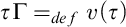
$\tau \Gamma =_{def} v(\tau )$
.
$\tau \Gamma $
is the set of term assumptions for
$\tau $
. -
-
2.
$\mathcal {R}$
is a set of I/E-rules:








Definition 2.7 (Derivations in
$\mathcal {S}$
-systems)

Basic step. Any term assumption $\tau \Gamma $
and any atomic sentence A (i.e., a derivation from the open assumption of A) is an
$\tau \Gamma $
and any atomic sentence A (i.e., a derivation from the open assumption of A) is an $\mathcal {S}$
-derivation.
$\mathcal {S}$
-derivation.
Induction step. If $\mathcal {D}_{i}$
, for
$\mathcal {D}_{i}$
, for $i \in \{0, ..., n\}$
, are
$i \in \{0, ..., n\}$
, are $\mathcal {S}$
-derivations, then an
$\mathcal {S}$
-derivations, then an $\mathcal {S}$
-derivation can be constructed by means of the
$\mathcal {S}$
-derivation can be constructed by means of the $as$
I/E-rules displayed above.
$as$
I/E-rules displayed above.
Definition 2.8.
-
1. An atomic sentence which is the conclusion of (an application of)
$as$
I and at the same time the premiss of
$as$
E is a maximum atomic sentence (or an
$as$
-maximum); -
2. A successive application of
$as$
I and
$as$
E is an
$as$
-detour; -
3. Derivations in
$\mathcal {S}$
-systems which do not contain
$as$
-maxima are
$\mathcal {S}$
-derivations in normal form (or normal
$\mathcal {S}$
-derivations).


Definition 2.9 (Detour conversion for
$as$
)


Theorem 2.1. Any derivation $\mathcal {D}$
in an
$\mathcal {D}$
in an $\mathcal {S}$
-system can be transformed into a normal
$\mathcal {S}$
-system can be transformed into a normal $\mathcal {S}$
-derivation.
$\mathcal {S}$
-derivation.
Proof Immediate.
Definition 2.10. Let $\mathcal {D}$
be a derivation in an
$\mathcal {D}$
be a derivation in an $\mathcal {S}$
-system.
$\mathcal {S}$
-system.
-
1. An
$\mathcal {S}$
-unit in
$\mathcal {D}$
is either an occurrence of (i) an atomic sentence or (ii) a term assumption
$\tau \Gamma $
in
$\mathcal {D}$
. We use
$U_{\mathcal {S}}, U_{\mathcal {S}}^{\prime }$
(possibly with subscripts) for
$\mathcal {S}$
-units; -
2. In case
$U_{\mathcal {S}}$
is a term assumption
$\tau \Gamma $
in
$\mathcal {D}$
,
$\tau $
is the expression in
$U_{\mathcal {S}}$
.


Theorem 2.2. If $\mathcal {D}$
is a normal
$\mathcal {D}$
is a normal $\mathcal {S}$
-derivation of an
$\mathcal {S}$
-derivation of an $\mathcal {S}$
-unit
$\mathcal {S}$
-unit $U_{\mathcal {S}}$
from a set of
$U_{\mathcal {S}}$
from a set of $\mathcal {S}$
-units
$\mathcal {S}$
-units $\Gamma $
, then each
$\Gamma $
, then each $\mathcal {S}$
-unit in
$\mathcal {S}$
-unit in $\mathcal {D}$
is a subexpression of an expression in
$\mathcal {D}$
is a subexpression of an expression in $\Gamma \cup \{U_{\mathcal {S}}\}$
.
$\Gamma \cup \{U_{\mathcal {S}}\}$
.
Proof Immediate.
These observations allow us to give an elementary proof-theoretic semantics for non-logical constants and atomic sentences of $L0$
.
$L0$
.
Definition 2.11. The meaning of
-
1. a non-logical constant
$\tau $
is given by the term assumptions
$\tau \Gamma $
for it which are determined by the subatomic base
$\mathcal {I}$
of the subatomic system
$\mathcal {S}$
; -
2. an atomic sentence
$\varphi ^{n}\alpha _{1} ... \alpha _{n}$
is given by the set of its canonical derivations in
$\mathcal {S}$
, such derivations apply
$as$
I in the last inference step.


Having recalled what a subatomic system is, we now define the intended kind of reference proof system. Such systems combine subatomic with superatomic inference.
Definition 2.12 (Derivations in
$\textsf {R}$
-systems)

Basic step. Any term assumption $\tau \Gamma $
and any
$\tau \Gamma $
and any $L0$
-formula A (i.e., a derivation from the open assumption of A) is an
$L0$
-formula A (i.e., a derivation from the open assumption of A) is an $\textsf {R}$
-derivation.
$\textsf {R}$
-derivation.
Induction step. If $\mathcal {D}_{0}$
,…,
$\mathcal {D}_{0}$
,…, $\mathcal {D}_{n}$
are
$\mathcal {D}_{n}$
are $\textsf {R}$
-derivations, then an
$\textsf {R}$
-derivations, then an $\textsf {R}$
-derivation can be constructed by means the
$\textsf {R}$
-derivation can be constructed by means the $as$
I/E-rules and the following familiar intuitionistic rules, where C is possibly a term assumption:
$as$
I/E-rules and the following familiar intuitionistic rules, where C is possibly a term assumption:

It can be shown that derivations in $\textsf {R}$
-systems normalize (i.e., contain no detours) and that normal derivations enjoy the subexpression and the subformula property.
$\textsf {R}$
-systems normalize (i.e., contain no detours) and that normal derivations enjoy the subexpression and the subformula property.
Theorem 2.3 (Normalization (
$\textsf {R}$
-systems))

Any derivation $\mathcal {D}$
in an
$\mathcal {D}$
in an $\textsf {R}$
-system can be transformed into a normal
$\textsf {R}$
-system can be transformed into a normal $\textsf {R}$
-derivation.
$\textsf {R}$
-derivation.
Theorem 2.4 (Subexpression property (
$\textsf {R}$
-systems))

If $\mathcal {D}$
is a normal
$\mathcal {D}$
is a normal $\textsf {R}$
-derivation of a unit
$\textsf {R}$
-derivation of a unit $U_{\textsf {R}}$
from a set of units
$U_{\textsf {R}}$
from a set of units $\Gamma $
, then each unit in
$\Gamma $
, then each unit in $\mathcal {D}$
is a subexpression of an expression in
$\mathcal {D}$
is a subexpression of an expression in $\Gamma \cup \{U_{\textsf {R}}\}$
.
$\Gamma \cup \{U_{\textsf {R}}\}$
.
Corollary 2.1 (Subformula property (
$\textsf {R}$
-systems))

If $\mathcal {D}$
is a normal
$\mathcal {D}$
is a normal $\textsf {R}$
-derivation of formula A from a set of formulae
$\textsf {R}$
-derivation of formula A from a set of formulae $\Gamma $
, then each formula in
$\Gamma $
, then each formula in $\mathcal {D}$
is a subformula of a formula in
$\mathcal {D}$
is a subformula of a formula in $\Gamma \cup \{A\}$
.
$\Gamma \cup \{A\}$
.
The proofs of these results are adaptations of the proofs in [Reference Więckowski, Piecha and Wehmeier43]. They are omitted, since they are special cases of the corresponding proofs in Sections 4 and 5.
Remark 2.1. Traditional benefits of the subformula property include the consistency of a proof system and a simplification of proof search in it. Specifically, all theorems of $\textsf {R}$
-systems can be established by means of normal canonical proofs.
$\textsf {R}$
-systems can be established by means of normal canonical proofs.
Definition 2.13.
-
1. A derivation
$\mathcal {D}$
of a formula A in an
$\textsf {R}$
-system is a canonical derivation iff it derives A by means of an I-rule in the last step of
$\mathcal {D}$
; -
2. A canonical derivation
$\mathcal {D}$
of A in an
$\textsf {R}$
-system is a canonical proof of A in that system iff there are no applications of
$as$
-rules and no undischarged (or open) assumptions in
$\mathcal {D}$
; -
3. The conclusions of canonical
$\textsf {R}$
-derivations are
$\textsf {R}$
-theses and the conclusions of
$\textsf {R}$
-proofs are also
$\textsf {R}$
-theorems.


We may now define the notion of a fact.
Definition 2.14. An established thesis (or fact) of $\textsf {R}$
is an
$\textsf {R}$
is an $L0$
-formula for which a canonical
$L0$
-formula for which a canonical $\textsf {R}$
-derivation has been constructed.
$\textsf {R}$
-derivation has been constructed. $\Theta _{\textsf {R}}$
is the set of so far established theses.
$\Theta _{\textsf {R}}$
is the set of so far established theses.
3 Modal proof systems
Modal proof systems are modal, because they make use of modes of making assumptions. These modes are sensitive to the factuality status of the formula that is to be assumed. This status is determined by means of a reference proof system. Modal proof systems are defined for the language $L1$
which extends
$L1$
which extends $L0$
.
$L0$
.
Definition 3.1. The language $L1$
comprises:
$L1$
comprises:
-
1. the primitive symbols of
$L0$
; and -
2. the two-place connectives for factual, counterfactual, and mode-sensitive implication, conjunction, and disjunction:
$\supset _{f}$
,
$\supset _{c}$
,
$\supset _{\ast }$
,
$\&_{f}$
,
$\&_{c}$
,
$\&_{\ast }$
, and
$\vee _{f}$
,
$\vee _{c}$
,
$\vee _{\ast }$
.


Metalinguistic notation: $\star ^{i} \in \{\supset , \supset _{f}, \supset _{c}, \supset _{\ast }\}$
,
$\star ^{i} \in \{\supset , \supset _{f}, \supset _{c}, \supset _{\ast }\}$
, $\star ^{c} \in \{\&, \&_{f}, \&_{c}, \&_{\ast }\}$
, and
$\star ^{c} \in \{\&, \&_{f}, \&_{c}, \&_{\ast }\}$
, and $\star ^{d} \in \{\vee , \vee _{f}, \vee _{c}, \vee _{\ast }\}$
.
$\star ^{d} \in \{\vee , \vee _{f}, \vee _{c}, \vee _{\ast }\}$
.
Definition 3.2. The notion of a formula of $L1$
is defined inductively by:
$L1$
is defined inductively by:
-
1. Any formula of
$L0$
is a formula (of
$L1$
); -
2. If A, B are formulae, then
$A \supset _{f} B$
,
$A \supset _{c} B$
,
$A \supset _{\ast } B$
,
$A \&_{f} B$
,
$A \&_{c} B$
,
$A \&_{\ast } B$
,
$A \vee _{f} B$
,
$A \vee _{c} B$
,
$A \vee _{\ast } B$
are formulae.


 $Fml_{1}$
is the set of formulae of
$Fml_{1}$
is the set of formulae of $L1$
.
$L1$
.
Notational convention: In case a compound $L0$
-formula A is used as a formula of
$L0$
-formula A is used as a formula of $L1$
, we write
$L1$
, we write $\supset _{\ast }$
[
$\supset _{\ast }$
[ $\&_{\ast }$
,
$\&_{\ast }$
, $\vee _{\ast }$
] for occurrences of
$\vee _{\ast }$
] for occurrences of $\supset $
[
$\supset $
[ $\&$
,
$\&$
, $\vee $
] in A.
$\vee $
] in A.
Definition 3.3. Defined operators of $L1$
:
$L1$
:
-
1.
$\neg _{\ast } A =_{def} A \supset _{\ast } \bot $
(mode-sensitive negation); -
2.
$A \leftrightarrow _{\ast } B =_{def} (A \supset _{\ast } B) \&_{\ast } (B \supset _{\ast } A)$
(mode-sensitive bi-implication).


Remark 3.1. We may also allow for factual and counterfactual versions of negation ( $\neg _{f}$
,
$\neg _{f}$
, $\neg _{c}$
) and bi-implication (
$\neg _{c}$
) and bi-implication ( $\leftrightarrow _{f}$
,
$\leftrightarrow _{f}$
, $\leftrightarrow _{c}$
).
$\leftrightarrow _{c}$
).
Definition 3.4 (Expression, subexpression, and subformula)
The definitions of these notions for $L1$
are analogous to those for
$L1$
are analogous to those for $L0$
.
$L0$
.
Assumption modes are characteristic of modal proof systems.
Definition 3.5 (Assumption modes)
There are three modes of making assumptions in a modal proof system:
-
1.
$| A|$
indicates that A is assumed in the factual mode, given that
$A \in Fml_{0}$
and
$A\in \Theta _{\textsf {R}}$
; -
2.
$\wr A\wr $
indicates that A is assumed in the counterfactual mode, given that
$A \in Fml_{0}$
and
$A \in \Theta _{\textsf {R}}^{c}$
, where
$\Theta _{\textsf {R}}^{c} =_{def} Fml_{0}\setminus \Theta _{\textsf {R}}$
; -
3.
$( A)$
indicates that A is assumed in the usual independent (or neutral) mode, where
$A \in Fml_{1}$
. Specifically, in case A is also an
$L0$
-formula, A is assumed independently of whether it is contained in
$\Theta _{\textsf {R}}$
or
$\Theta _{\textsf {R}}^{c}$
.


 $/A/$
indicates that A is assumed in one of the three modes. We call the symbols flanking assumed formulae status markers.
$/A/$
indicates that A is assumed in one of the three modes. We call the symbols flanking assumed formulae status markers.
Remark 3.2. 1. Let A be a formula of $L0$
and suppose we have established A as a fact. We can, then, make the factual assumption
$L0$
and suppose we have established A as a fact. We can, then, make the factual assumption $| A|$
. However, we are debarred from making the counterfactual assumption
$| A|$
. However, we are debarred from making the counterfactual assumption $\wr A\wr $
. We may assume counterfactually only
$\wr A\wr $
. We may assume counterfactually only $\wr \neg A\wr $
, provided that we have no canonical derivation of
$\wr \neg A\wr $
, provided that we have no canonical derivation of $\neg A$
so far.
$\neg A$
so far.
2. The independent mode of assumption is the standard one. It has been used already in reference proof systems. We use the status markers (), in case we make independent assumptions in modal proof systems. In derivations, the context will help one to determine whether the brackets are used as status markers or as auxiliary symbols in formulae: In case a top formula occurrence is enclosed in (), these symbols are status markers.
3. As a consequence of Definition 3.5, formulae which contain a factual or a counterfactual operator can be assumed only in the independent mode. Given the notational convention, formulae containing exclusively mode-sensitive operators can be assumed in any mode.
Definition 3.6 (Negated status markers) $\not | A\not |$
indicates either
$\not | A\not |$
indicates either $\wr A\wr $
or
$\wr A\wr $
or $( A)$
;
$( A)$
; $\not \wr A\not \wr $
indicates either
$\not \wr A\not \wr $
indicates either $| A|$
or
$| A|$
or $( A)$
;
$( A)$
; $\not ( A\not )$
indicates either
$\not ( A\not )$
indicates either $| A|$
or
$| A|$
or $\wr A\wr $
.
$\wr A\wr $
.
Definition 3.7.
-
1. A formula A in a derivation
$\mathcal {D}$
in a modal proof system may have three different kinds of modal status.-
(a) A has factual status in
$\mathcal {D}$
, if it depends on no counterfactual assumption, and either-
i. A depends on at least one factual assumption (special case:
$| A|$
), or -
ii. A has been derived by means of term assumptions, or
-
iii. A is a conclusion of a canonical derivation in
$\textsf {R}$
.
-
-
(b) A has counterfactual status in
$\mathcal {D}$
, if it depends on at least one counterfactual assumption (special case:
$\wr A\wr $
). -
(c) A has independent status in
$\mathcal {D}$
, if it has no factual or counterfactual status (special case:
$( A)$
).
-
-
2. Any term assumption
$\tau \Gamma $
in a derivation
$\mathcal {D}$
in a modal proof system has factual status.


Definition 3.8 (Status markers (Derivations)) $|\mathcal {D}|$
[
$|\mathcal {D}|$
[ $\wr \mathcal {D}\wr $
,
$\wr \mathcal {D}\wr $
, $(\mathcal {D})$
] indicates that the conclusion of
$(\mathcal {D})$
] indicates that the conclusion of $\mathcal {D}$
has factual [counterfactual, independent] status.
$\mathcal {D}$
has factual [counterfactual, independent] status. $/\mathcal {D}/$
indicates that the conclusion of
$/\mathcal {D}/$
indicates that the conclusion of $\mathcal {D}$
has one of the three kinds of status.
$\mathcal {D}$
has one of the three kinds of status. $\not |\mathcal {D}\not |$
indicates either
$\not |\mathcal {D}\not |$
indicates either $\wr \mathcal {D}\wr $
or
$\wr \mathcal {D}\wr $
or $(\mathcal {D})$
;
$(\mathcal {D})$
; $\not \wr \mathcal {D}\not \wr $
indicates either
$\not \wr \mathcal {D}\not \wr $
indicates either $| \mathcal {D}|$
or
$| \mathcal {D}|$
or $(\mathcal {D})$
;
$(\mathcal {D})$
; $\not (\mathcal{D}\not )\ $
indicates either
$\not (\mathcal{D}\not )\ $
indicates either $| \mathcal {D}|$
or
$| \mathcal {D}|$
or $\wr \mathcal {D}\wr $
.
$\wr \mathcal {D}\wr $
.
Definition 3.9 (Assumption classes) $[/ A/]^{(u)}$
denotes either (i) an assumption class, i.e., a set of undischarged assumptions of occurrences of formula A, or (ii) a single undischarged assumption of an occurrence of formula A in a derivation
$[/ A/]^{(u)}$
denotes either (i) an assumption class, i.e., a set of undischarged assumptions of occurrences of formula A, or (ii) a single undischarged assumption of an occurrence of formula A in a derivation $/\mathcal {D}/$
marked by u. The second alternative is used, in case
$/\mathcal {D}/$
marked by u. The second alternative is used, in case $/\mathcal {D}/$
is fully explicit. If B is the conclusion and
$/\mathcal {D}/$
is fully explicit. If B is the conclusion and $[/ A/]^{(u)}$
an assumption class of
$[/ A/]^{(u)}$
an assumption class of $/\mathcal {D}/$
, we write:
$/\mathcal {D}/$
, we write:

Remark 3.3. A derivation of the form ( $\dagger $
) cannot take just any shape, since, by Definition 3.7, combinations (b), (g), and (h) are precluded:
$\dagger $
) cannot take just any shape, since, by Definition 3.7, combinations (b), (g), and (h) are precluded:

The construction of new derivations from old ones gives rise to a certain dendrochronology.
Definition 3.10 (Status marker nesting)
If $/\mathcal {D}/$
is a derivation of the form (
$/\mathcal {D}/$
is a derivation of the form ( $\dagger $
), and
$\dagger $
), and  a discharging rule for a dummy operator $ (considered here only for the purpose of illustration) applied to the conclusion B of $/\mathcal {D}/$
, we use the following notation for the new derivation
$/\mathcal {D}/$
, we use the following notation for the new derivation $//\mathcal {D}//$
resulting from that application which discharges the members of
$//\mathcal {D}//$
resulting from that application which discharges the members of $[/ A/]^{(u)}$
:
$[/ A/]^{(u)}$
:

In $//\mathcal {D}//$
the inner slashes indicate the status of B and the outer ones the status of
$//\mathcal {D}//$
the inner slashes indicate the status of B and the outer ones the status of $A \$ B$
after the discharge by
$A \$ B$
after the discharge by  .
.
Remark 3.4. 1. A derivation of the form ( $\ddagger $
) can take any of the following shapes:
$\ddagger $
) can take any of the following shapes:


Specifically, in combination (b) [(h)] the members of $[\wr A\wr ]^{(u)}$
are the only undischarged counterfactual assumptions in
$[\wr A\wr ]^{(u)}$
are the only undischarged counterfactual assumptions in $\wr \mathcal {D}\wr $
and
$\wr \mathcal {D}\wr $
and $A \$ B$
has factual [independent] status. In combination (g) the members of
$A \$ B$
has factual [independent] status. In combination (g) the members of $[| A|]^{(u)}$
are the only undischarged factual assumptions in
$[| A|]^{(u)}$
are the only undischarged factual assumptions in $|\mathcal {D}|$
and
$|\mathcal {D}|$
and $A \$ B$
has independent status; in (a), there are either other open factual assumptions besides those in
$A \$ B$
has independent status; in (a), there are either other open factual assumptions besides those in $[| A|]^{(u)}$
or term assumptions in
$[| A|]^{(u)}$
or term assumptions in $|\mathcal {D}|$
and
$|\mathcal {D}|$
and $A \$ B$
has factual status.
$A \$ B$
has factual status.
2. Combinations (a), (d), (g) fall under (j), combinations (b), (e), (h) fall under (k), combinations (c), (f), (i) fall under (l), and (j), (k), (l) under ( $\ddagger $
):
$\ddagger $
):

3. The number of rings of a derivation tree may grow. When considering the structure of derivations, it will often be convenient to indicate only the outermost status markers. For example, we may write $(\mathcal {D})$
instead of
$(\mathcal {D})$
instead of $(|\wr \mathcal {D}\wr |)$
. Note that, e.g.,
$(|\wr \mathcal {D}\wr |)$
. Note that, e.g., $\wr |(\mathcal {D})|\wr $
, is precluded by Definition 3.7.
$\wr |(\mathcal {D})|\wr $
, is precluded by Definition 3.7.
4. By Definition 3.7, the conclusion of a derivation without term assumptions in which all assumptions have been discharged that is not an R-theorem has independent status.
Modal proof systems, $\textsf {M}$
-systems, are defined on top of reference proof systems and do justice to the specific needs of counterfactual inference mentioned in the Introduction by means of specific side conditions.
$\textsf {M}$
-systems, are defined on top of reference proof systems and do justice to the specific needs of counterfactual inference mentioned in the Introduction by means of specific side conditions.
Definition 3.11 (Derivations (
$\textsf {M}$
-systems))

The notion of an $\textsf {M}$
-derivation is defined by:
$\textsf {M}$
-derivation is defined by:
Basic step. Any derivation in the $\textsf {R}$
-system of an
$\textsf {R}$
-system of an $\textsf {M}$
-system, any
$\textsf {M}$
-system, any $L0$
-formula A assumed in the factual (resp. counterfactual) mode
$L0$
-formula A assumed in the factual (resp. counterfactual) mode $|A|$
(
$|A|$
( $\wr A\wr $
), i.e., a derivation from the open factual (counterfactual) assumption of A, and any
$\wr A\wr $
), i.e., a derivation from the open factual (counterfactual) assumption of A, and any $L1$
-formula A assumed in the independent mode
$L1$
-formula A assumed in the independent mode $(A)$
, i.e., a derivation from the open independent assumption of A, is a derivation in that
$(A)$
, i.e., a derivation from the open independent assumption of A, is a derivation in that $\textsf {M}$
-system.
$\textsf {M}$
-system.
Induction step. If $\mathcal {D}_{0}$
,…,
$\mathcal {D}_{0}$
,…, $\mathcal {D}_{n}$
are
$\mathcal {D}_{n}$
are $\textsf {M}$
-derivations and C possibly a term assumption, then an
$\textsf {M}$
-derivations and C possibly a term assumption, then an $\textsf {M}$
-derivation can be constructed by means of the following rules:
$\textsf {M}$
-derivation can be constructed by means of the following rules:
Rules for atomic sentences:

Rules for implications:

Rules for conjunctions:

Rules for disjunctions:

Rule for absurdity:

Terminology: Call the conjunct A [B] derived by an application of $\star ^{c}\text {E}1$
[
$\star ^{c}\text {E}1$
[ $\star ^{c}\text {E}2$
] to
$\star ^{c}\text {E}2$
] to $A \star ^{c} B$
selected and the conjunct B [A] unselected. Similarly, call the disjunct A [B] in
$A \star ^{c} B$
selected and the conjunct B [A] unselected. Similarly, call the disjunct A [B] in $A \star ^{d} B$
derived by an application of
$A \star ^{d} B$
derived by an application of $\star ^{d}\text {I}1$
[
$\star ^{d}\text {I}1$
[ $\star ^{d}\text {I}2$
] to A [B] introducing and the disjunct B [A] in
$\star ^{d}\text {I}2$
] to A [B] introducing and the disjunct B [A] in $A \star ^{d} B$
introduced.
$A \star ^{d} B$
introduced.
Side conditions:
-
sc1.
$\supset _{f}$
I:-
(a) No empty discharge; and no empty discharge in
$\mathcal {D}_{1}$
; -
(b) B does not depend on a
$\star ^{c}$
-formula, other than itself, that contains an unselected conjunct in
$\mathcal {D}_{1}$
; -
(c) A must not be an antecedent of an introduced disjunct in
$\mathcal {D}_{1}$
.
-
-
sc2.
$\supset _{c}$
I: Like sc1. -
sc3.
$\supset _{c}$
E: In case A and B are distinct formulae, the conclusion of
$\supset _{c}$
E must not be the minor premiss of an application of another application of
$\supset _{c}$
E or of
$\supset _{\ast }$
E (break formula). -
sc4.
$\&_{\ast }$
I: Both premisses have the same status. -
sc5.
$\vee _{f}$
E: At least one of the premisses discharged by this rule is assumed in the factual mode. -
sc6.
$\vee _{c}$
E: At least one of the premisses discharged by this rule is assumed in the counterfactual mode.


Assumption principles: The following principles are respected by any derivation $\mathcal {D}$
in
$\mathcal {D}$
in $\textsf {M}$
-systems:
$\textsf {M}$
-systems:
-
ap1. No formula is assumed in more than one mode in
$\mathcal {D}$
. -
ap2. The mode in which an antecedent A is assumed in
$\star ^{i}$
I-applications in
$\mathcal {D}$
determines the modal status of all antecedent A-nodes (i.e., minor premisses of
$\star ^{i}$
E) in
$\mathcal {D}$
. -
ap3. The mode in which a disjunct A is assumed in
$\star ^{d}$
E-applications in
$\mathcal {D}$
determines the modal status of all introducing disjunct A-nodes (i.e., premisses of
$\star ^{d}$
I) in
$\mathcal {D}$
.


4 Preservation and normalization
The proof of normalization for $\textsf {M}$
-systems proceeds largely along entirely familiar lines (cf. [Reference Prawitz25, Reference Troelstra and Schwichtenberg33]). However, as will be explained shortly, it is complicated by the requirements imposed on the rules of these systems.
$\textsf {M}$
-systems proceeds largely along entirely familiar lines (cf. [Reference Prawitz25, Reference Troelstra and Schwichtenberg33]). However, as will be explained shortly, it is complicated by the requirements imposed on the rules of these systems.
Definition 4.1. A formula (of $L1$
) which is the conclusion of an I-rule and at the same time the major premiss of an E-rule is a maximum formula (or a maximum).
$L1$
) which is the conclusion of an I-rule and at the same time the major premiss of an E-rule is a maximum formula (or a maximum).
Definition 4.2. A segment $\sigma _{\textsf {M}}$
of length n in a derivation
$\sigma _{\textsf {M}}$
of length n in a derivation $/\mathcal {D}/$
in an
$/\mathcal {D}/$
in an $\textsf {M}$
-system is a sequence
$\textsf {M}$
-system is a sequence $A_{1}, ..., A_{n}$
of successive occurrences of a formula A in
$A_{1}, ..., A_{n}$
of successive occurrences of a formula A in $/\mathcal {D}/$
such that:
$/\mathcal {D}/$
such that:
-
1. for
$1 < n$
,
$i < n$
,
$A_{i}$
is a minor premiss of
$\star ^{d}$
E in
$/\mathcal {D}/$
with conclusion
$A_{i+1}$
; -
2.
$A_{n}$
is not a minor premiss of
$\star ^{d}$
E; -
3.
$A_{1}$
is not the conclusion of
$\star ^{d}$
E.


Definition 4.3. A segment $\sigma _{\textsf {M}}$
is maximal in case
$\sigma _{\textsf {M}}$
is maximal in case $A_{n}$
is the major premiss of an E-rule and either
$A_{n}$
is the major premiss of an E-rule and either $n> 1$
, or
$n> 1$
, or $n = 1$
and
$n = 1$
and $A_{1} \equiv A_{n}$
is the conclusion of an I-rule;
$A_{1} \equiv A_{n}$
is the conclusion of an I-rule; $\equiv $
indicates literal identity (cf. [Reference Troelstra and Schwichtenberg33, Reference Bennett2]). (A maximum, possibly an atomic sentence, is a special case of a maximal segment. A term assumption cannot be a maximum.)
$\equiv $
indicates literal identity (cf. [Reference Troelstra and Schwichtenberg33, Reference Bennett2]). (A maximum, possibly an atomic sentence, is a special case of a maximal segment. A term assumption cannot be a maximum.)
Definition 4.4 (Rank and cut rank (
$\textsf {M}$
-systems))

-
1. The rank of a term assumption
$\tau \Gamma $
is defined by:
$r(\tau \Gamma )=0$
. -
2. The rank of an atomic sentence
$\varphi ^{n}\alpha _{1} ... \alpha _{n}$
is defined by:
$r(\varphi ^{n}\alpha _{1} ... \alpha _{n}) = 1$
. -
3. Let
$A, B$
be formulae and let
$\star \in \{\star ^{i}, \star ^{c}, \star ^{d}\}$
. The rank of
$\bot $
[
$A \star B$
] is defined by:
$r(\bot ) = 0$
[
$r(A \star B) = max(r(A), r(B))+1$
]. -
4. The cut rank of an
$\textsf {M}$
-derivation
$/\mathcal {D}/$
is defined by:
$cr(/\mathcal {D}/) = \langle d, n\rangle $
, where:-
(a)
$d = max\{cr(\sigma _{\textsf {M}})$
:
$\sigma _{\textsf {M}}$
is a maximal segment in
$/\mathcal {D}/\}$
, where
$cr(\sigma _{\textsf {M}})$
=
$|$
A
$|$
is the cut rank of a maximal segment
$\sigma _{\textsf {M}}$
with formula A. In case there is no maximal segment,
$max\emptyset = 0$
. -
(b) n = the sum of lengths of all critical cuts in
$/\mathcal {D}/$
, where a critical cut of an
$\textsf {M}$
-derivation
$/\mathcal {D}/$
is a maximal segment of maximal cut rank from all maximal segments in
$/\mathcal {D}/$
.
-








Definition 4.5. Derivations in $\textsf {M}$
-systems which do not contain critical cuts are said to be normal or in normal form.
$\textsf {M}$
-systems which do not contain critical cuts are said to be normal or in normal form.
Definition 4.6 (Conversions (
$\textsf {M}$
-systems))

Critical cuts are removed by means of the following conversions:
-
1. Detour conversions (
$\textsf {M}$
-systems).-
(a)
$as_{\ast }$
-Conversion:
$i \in \{0, ..., n\}$
-
(b)
$\star ^{i}$
-Conversions: -
(c)
$\star ^{c}$
-Conversions:
$i \in \{1, 2\}$
-
(d)
$\star ^{d}$
-Conversions:
$i \in \{1, 2\}$
-
-
2. Permutation conversions (
$\textsf {M}$
-systems). Cuts of length
$> 1$
are removed after an upwards permutation of E-rules over minor premisses of
$\star ^{d}$
E-applications (in case the E-rule is
$as$
E, C is an atomic sentence and D a term assumption). -
3. Simplification conversions (
$\textsf {M}$
-systems). An application of
$\star ^{d}$
E to major premiss
$A_{1} \star ^{d} A_{2}$
in which at least one of
$[ A_{1}]$
,
$[ A_{2}]$
is empty in the derivations of its minor premisses C (possibly term assumptions) is redundant. Redundant
$\star ^{d}$
E-applications are removed by simplification conversions for
$\star ^{d}$
, where no assumptions are discharged by
$\star ^{d}$
E in
$\mathcal {D}_{i}$
(
$i \in \{1, 2\}$
).


Due to the presence of various modes of assumption, very specific side conditions, and assumption principles, $\textsf {M}$
-systems are considerably more complex than
$\textsf {M}$
-systems are considerably more complex than $\textsf {R}$
-systems. For this reason, the question may arise whether the conversions of derivations in
$\textsf {R}$
-systems. For this reason, the question may arise whether the conversions of derivations in $\textsf {M}$
-systems never transform derivations into non-derivations. An answer to this question is important, as a proper functioning of the conversions is vital to normalization. The answer is positive.
$\textsf {M}$
-systems never transform derivations into non-derivations. An answer to this question is important, as a proper functioning of the conversions is vital to normalization. The answer is positive.
4.1 Preservation for detour conversions
We distinguish legitimate from illegitimate derivations.
Definition 4.7. A derivation is legitimate in case it is constructed according to Definition 3.11; otherwise it is illegitimate. (We also call the former ‘derivations’ and the latter ‘non-derivations’.)
Theorem 4.1. The detour conversions of $\textsf {M}$
-systems do not transform legitimate into illegitimate derivations.
$\textsf {M}$
-systems do not transform legitimate into illegitimate derivations.
Proof A long proof by exhaustion.
-
• Part A: preservation for
$\star ^{i}$
-conversions -
• Part B: preservation for
$\star ^{c}$
-conversions -
• Part C: preservation for
$\star ^{d}$
-conversions.


(Since no side conditions are imposed on the $as_{\ast }$
-rules, preservation for
$as_{\ast }$
-rules, preservation for $as_{\ast }$
-conversions is guaranteed.) The formula for calculating the minimal number f of cases is
$as_{\ast }$
-conversions is guaranteed.) The formula for calculating the minimal number f of cases is $f = g^{2} \times h$
, where g is the number of I/E-rules for specific operators (only one for
$f = g^{2} \times h$
, where g is the number of I/E-rules for specific operators (only one for $\star ^{c}$
E,
$\star ^{c}$
E, $\star ^{d}$
I) and h the number of detour conversions for specific operators. If the number of cases is larger than f, this is due to the fact that discharged assumptions may occur above both major and minor premisses of minor premiss rules.
$\star ^{d}$
I) and h the number of detour conversions for specific operators. If the number of cases is larger than f, this is due to the fact that discharged assumptions may occur above both major and minor premisses of minor premiss rules.
Part A: Preservation for $\star ^{i}$
-detour conversions. Let
$\star ^{i}$
-detour conversions. Let
 ,
,
 be legitimate derivations. We show: If these derivations can be combined into a legitimate derivation $\mathcal {D}^{\ast }$
, then the
$\mathcal {D}^{\ast }$
, then the $\star ^{i}$
-conversions transform it into a legitimate derivation
$\star ^{i}$
-conversions transform it into a legitimate derivation $\mathcal {D}^{\ast \ast }$
; otherwise, the combination
$\mathcal {D}^{\ast \ast }$
; otherwise, the combination $\mathcal {D}^{\ast }$
is illegitimate and an
$\mathcal {D}^{\ast }$
is illegitimate and an $\star ^{i}$
-conversion is precluded:
$\star ^{i}$
-conversion is precluded:

Top-down procedure. In order to establish the result we consider, for all specific instances of last rules applied in
 and
and
 , the combination of these derivations into $\mathcal {D}^{\ast }$
. In each case we attempt to derive the instance of the maximum formula
$\mathcal {D}^{\ast }$
. In each case we attempt to derive the instance of the maximum formula $A \star ^{i} B$
proceeding top-down starting from the assumptions in
$A \star ^{i} B$
proceeding top-down starting from the assumptions in
 according to the rules of $\textsf {M}$
-systems until we arrive at the I-rule application which introduces
$\textsf {M}$
-systems until we arrive at the I-rule application which introduces $A \star ^{i} B$
. The procedure is top-down, since, in general, the modal status of assumptions determines the modal status of the formulae that appear below them in a derivation. Next, we attempt to derive the instance of the minor premiss A of the elimination of
$A \star ^{i} B$
. The procedure is top-down, since, in general, the modal status of assumptions determines the modal status of the formulae that appear below them in a derivation. Next, we attempt to derive the instance of the minor premiss A of the elimination of $A \star ^{i} B$
proceeding in the aforementioned top-down manner with
$A \star ^{i} B$
proceeding in the aforementioned top-down manner with
 . This procedure determines whether $\mathcal {D}^{\ast }$
is legitimate and whether its conversion is successful or precluded.
$\mathcal {D}^{\ast }$
is legitimate and whether its conversion is successful or precluded.
Kinds of violation. Figure 1 lists for all violations which preclude conversion a violation code (V-code) and indicates the kind of operator affected by the violation (using the letter I for $\star ^{i}$
-, C for
$\star ^{i}$
-, C for $\star ^{c}$
-, and D for
$\star ^{c}$
-, and D for $\star ^{d}$
-operators).
$\star ^{d}$
-operators).
Violations.

Preservation tables. Part A of the preservation proof is summarized in a condensed form in Tables A.1–A.9 below. Anticipating the observations on coincidence (Remark 4.2), Tables A.3, A.6, A.9 are not displayed for reasons of space. These tables list all the possible cases and the result of the top-down procedure for each case of an $\star ^{i}$
-conversion. For ease of orientation, each A-table is associated with a sequence of three letters (enclosed in brackets) which indicate the general kind of operator involved in the conversion:
$\star ^{i}$
-conversion. For ease of orientation, each A-table is associated with a sequence of three letters (enclosed in brackets) which indicate the general kind of operator involved in the conversion:

The first letter indicates the kind of main operator of the maximum formula, the second indicates the kind of operator of the last rule used in $\mathcal {D}^{a}$
, and the third the kind of operator of the last rule used in
$\mathcal {D}^{a}$
, and the third the kind of operator of the last rule used in $\mathcal {D}^{b}$
. In each A-table, the entries below
$\mathcal {D}^{b}$
. In each A-table, the entries below $\supset _{f}$
-c [
$\supset _{f}$
-c [ $\supset _{c}$
-c,
$\supset _{c}$
-c, $\supset _{\ast }$
-c] indicate the results for
$\supset _{\ast }$
-c] indicate the results for $\supset _{f}$
[
$\supset _{f}$
[ $\supset _{c}$
,
$\supset _{c}$
, $\supset _{\ast }$
]-conversion, where
$\supset _{\ast }$
]-conversion, where $\bullet $
[
$\bullet $
[ $\circ $
] indicates that the combination
$\circ $
] indicates that the combination $\mathcal {D}^{\ast }$
is legitimate [illegitimate] and its the
$\mathcal {D}^{\ast }$
is legitimate [illegitimate] and its the $\star ^{i}$
-conversion into
$\star ^{i}$
-conversion into $\mathcal {D}^{\ast \ast }$
successful [precluded]. In case of illegitimacy, the kind of violation is indicated. And for each kind of conversion, the number of illegitimate derivations (I-number) is listed. Likewise for B- and C-tables.
$\mathcal {D}^{\ast \ast }$
successful [precluded]. In case of illegitimacy, the kind of violation is indicated. And for each kind of conversion, the number of illegitimate derivations (I-number) is listed. Likewise for B- and C-tables.
Tables A.1–A.3: In case $\mathcal {D}^{a}$
ends with
$\mathcal {D}^{a}$
ends with $\star ^{i}$
E, there are two entries: The first [second] entry in the (c)- and (d)-cases indicates the result for the construction in which the
$\star ^{i}$
E, there are two entries: The first [second] entry in the (c)- and (d)-cases indicates the result for the construction in which the $\star ^{i}$
-maximum is introduced discharging an assumption which is used to derive the major [minor] premiss of that
$\star ^{i}$
-maximum is introduced discharging an assumption which is used to derive the major [minor] premiss of that $\star ^{i}$
E-application.
$\star ^{i}$
E-application.
Tables A.4–A.6: All cases are single entry.
Tables A.7–9A.: In case $\mathcal {D}^{a}$
ends with
$\mathcal {D}^{a}$
ends with $\star ^{d}$
E, there are two entries: The first [second] entry in the (c)- and (d)-cases indicates the result for the construction in which the
$\star ^{d}$
E, there are two entries: The first [second] entry in the (c)- and (d)-cases indicates the result for the construction in which the $\star ^{i}$
-maximum is introduced discharging an assumption which is used to derive the major [a minor] premiss of that
$\star ^{i}$
-maximum is introduced discharging an assumption which is used to derive the major [a minor] premiss of that $\star ^{d}$
E-application.
$\star ^{d}$
E-application.
Example 4.1. The examples given for the A-tables, as well as for the B- and C-tables further below, visualize some of the cases. They have been selected, since they belong to those in which implications, conjunctions, and disjunctions interact. In case there is no such interaction, the example has been chosen in order to illustrate a kind of violation that is not present in the interacting examples. Where applicable and convenient, a cumulative notation for applications of minor premiss rules has been used:


For example, $|\mathcal {D}_{1}, \mathcal {D}_{2}|$
in (a) means that the premisses taken together have factual status; as a consequence, one of them may have independent status. Similarly in the remaining cases. Likewise with negated status markers. The cumulative notation can be combined with the discharge of assumptions.
$|\mathcal {D}_{1}, \mathcal {D}_{2}|$
in (a) means that the premisses taken together have factual status; as a consequence, one of them may have independent status. Similarly in the remaining cases. Likewise with negated status markers. The cumulative notation can be combined with the discharge of assumptions.
-
1. Case A.4.2.b.
$\beta $
:
$\mathcal {D}^{a}$
ends with
$\&_{f}$
I,
$\mathcal {D}^{b}$
ends with
$\supset _{c}$
E:
$\circ ^{6, 7}$
(4) -
2. Case A.6.6.a.
$\alpha $
:
$\mathcal {D}^{a}$
ends with
$\&_{c}$
I,
$\mathcal {D}^{b}$
ends with
$\vee _{\ast }$
I:
$\bullet $
(5) -
3. Case A.6.6.d.
$\alpha $
:
$\mathcal {D}^{a}$
ends with
$\&_{c}$
E,
$\mathcal {D}^{b}$
ends with
$\vee _{\ast }$
E:
$\bullet $
(6) -
4. Case A.8.7.c.
$\beta $
:
$\mathcal {D}^{a}$
ends with
$\vee _{\ast }$
E,
$\mathcal {D}^{b}$
ends with
$\&_{f}$
I: (c1):
$\circ ^{1, 2a, 4}$
(7)(c2):
$\circ ^{1, 2a, 4}$
(8)


Special cases (Part A). Let
 be
be $/B/$
. Then:
$/B/$
. Then:

This works only for $\star ^{i}$ $=$
$=$ $\supset _{\ast }$
. For
$\supset _{\ast }$
. For $\star ^{i}$ $=$
$=$ $\supset _{f}$
and
$\supset _{f}$
and $\star ^{i}$ $=$
$=$ $\supset _{c}$
, we get
$\supset _{c}$
, we get $V5a$
; thus, unlike in the cases covered by the A-tables, we cannot presuppose that the
$V5a$
; thus, unlike in the cases covered by the A-tables, we cannot presuppose that the $\star ^{i}$
I-rule is applied legitimately in these two special cases of
$\star ^{i}$
I-rule is applied legitimately in these two special cases of $\mathcal {D}^{\ast }$
. This presupposition can be made, since we deal with derivation schemes in the tables. In case the derivations are fully explicit, like in such special cases, this presupposition cannot be made.
$\mathcal {D}^{\ast }$
. This presupposition can be made, since we deal with derivation schemes in the tables. In case the derivations are fully explicit, like in such special cases, this presupposition cannot be made.
Proof (Part B): Preservation for $\star ^{c}$
-detour conversions. Let
$\star ^{c}$
-detour conversions. Let
 ,
,
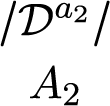 be legitimate derivations. We show: If these derivations can be combined into a legitimate derivation $\mathcal {D}^{\ast }$
, then the
$\mathcal {D}^{\ast }$
, then the $\star ^{c}$
-conversions transform it into a legitimate derivation
$\star ^{c}$
-conversions transform it into a legitimate derivation $\mathcal {D}^{\ast \ast }$
, where
$\mathcal {D}^{\ast \ast }$
, where $i \in \{1, 2\}$
; otherwise, the combination
$i \in \{1, 2\}$
; otherwise, the combination $\mathcal {D}^{\ast }$
is illegitimate and a
$\mathcal {D}^{\ast }$
is illegitimate and a $\star ^{c}$
-conversion precluded:
$\star ^{c}$
-conversion precluded:

We consider for all specific instances of last rules applied in
 ,
,
 their combination into $\mathcal {D}^{\ast }$
. In each case we attempt to derive the instance of the maximum
$\mathcal {D}^{\ast }$
. In each case we attempt to derive the instance of the maximum $A_{1} \star ^{c} A_{2}$
in the aforementioned top-down manner. For reasons of economy, we shall use
$A_{1} \star ^{c} A_{2}$
in the aforementioned top-down manner. For reasons of economy, we shall use $\star ^{c}\text {E}1$
in eliminating the
$\star ^{c}\text {E}1$
in eliminating the $\star ^{c}$
-maximum whenever possible. (A preference for
$\star ^{c}$
-maximum whenever possible. (A preference for $\star ^{c}\text {E}2$
is possible and leads to the same results.) The results of the top-down procedure for the
$\star ^{c}\text {E}2$
is possible and leads to the same results.) The results of the top-down procedure for the $\star ^{c}$
-conversions are collected in Tables B.1–B.9 which summarize Part B of the preservation proof. Anticipating Remark 4.2, B.8 and B.9 are omitted to save space.
$\star ^{c}$
-conversions are collected in Tables B.1–B.9 which summarize Part B of the preservation proof. Anticipating Remark 4.2, B.8 and B.9 are omitted to save space.
Table B.1: In case both $\mathcal {D}^{a_{i}}$
and
$\mathcal {D}^{a_{i}}$
and $\mathcal {D}^{\ast }$
end with
$\mathcal {D}^{\ast }$
end with $\star ^{i}$
I, there are two entries: The first entry in the (a)-cases indicates the result for the construction in which a conjunct of the
$\star ^{i}$
I, there are two entries: The first entry in the (a)-cases indicates the result for the construction in which a conjunct of the $\star ^{c}$
-maximum is introduced by
$\star ^{c}$
-maximum is introduced by $\star ^{i}$
I and depends on an assumption which is discharged by the
$\star ^{i}$
I and depends on an assumption which is discharged by the $\star ^{i}$
I-application which concludes
$\star ^{i}$
I-application which concludes $\mathcal {D}^{\ast }$
. The second entry indicates the result for the construction in which a conjunct of the
$\mathcal {D}^{\ast }$
. The second entry indicates the result for the construction in which a conjunct of the $\star ^{c}$
-maximum depends on an assumption which is discharged by the
$\star ^{c}$
-maximum depends on an assumption which is discharged by the $\star ^{i}$
I-application which concludes
$\star ^{i}$
I-application which concludes $\mathcal {D}^{\ast }$
. (Following the
$\mathcal {D}^{\ast }$
. (Following the $\star ^{c}\text {E}1$
-convention, in the (a1)-cases, the
$\star ^{c}\text {E}1$
-convention, in the (a1)-cases, the $\star ^{c}$
-maximum is eliminated by means of
$\star ^{c}$
-maximum is eliminated by means of $\star ^{c}$
E1 and by
$\star ^{c}$
E1 and by $\star ^{c}$
E2 in the (a2)-cases.) In case
$\star ^{c}$
E2 in the (a2)-cases.) In case $\mathcal {D}^{\ast }$
ends with
$\mathcal {D}^{\ast }$
ends with $\star ^{i}$
E, there are also two entries: The first [second] entry in the (b)- and (d)-cases indicates the result for the construction in which the
$\star ^{i}$
E, there are also two entries: The first [second] entry in the (b)- and (d)-cases indicates the result for the construction in which the $\star ^{c}$
-maximum is eliminated deriving the major [minor] premiss of that
$\star ^{c}$
-maximum is eliminated deriving the major [minor] premiss of that $\star ^{i}$
E-application. (Following the convention, in the (b1)-cases, the
$\star ^{i}$
E-application. (Following the convention, in the (b1)-cases, the $\star ^{c}$
-maximum is eliminated by means of either
$\star ^{c}$
-maximum is eliminated by means of either $\star ^{c}$
E1 or
$\star ^{c}$
E1 or $\star ^{c}$
E2, we therefore distinguish between (b1.1)-cases which apply
$\star ^{c}$
E2, we therefore distinguish between (b1.1)-cases which apply $\star ^{c}$
E1 to the maximum and (b1.2)-cases which apply
$\star ^{c}$
E1 to the maximum and (b1.2)-cases which apply $\star ^{c}$
E2 to it. In the (b2)- and (d)-cases the maximum is eliminated by
$\star ^{c}$
E2 to it. In the (b2)- and (d)-cases the maximum is eliminated by $\star ^{c}$
E1.) In case
$\star ^{c}$
E1.) In case $\mathcal {D}^{a_{i}}$
ends with
$\mathcal {D}^{a_{i}}$
ends with $\star ^{i}$
E and
$\star ^{i}$
E and $\mathcal {D}^{\ast }$
with
$\mathcal {D}^{\ast }$
with $\star ^{i}$
I, there are three entries: The first [second] entry in the (c)-cases indicates the result for the construction in which
$\star ^{i}$
I, there are three entries: The first [second] entry in the (c)-cases indicates the result for the construction in which $\star ^{i}$
I discharges an assumption used to derive the major [minor] premiss of that
$\star ^{i}$
I discharges an assumption used to derive the major [minor] premiss of that $\star ^{i}$
E-application. The third entry indicates the result for the construction in which
$\star ^{i}$
E-application. The third entry indicates the result for the construction in which $\star ^{i}$
I discharges an assumption used to derive the second premiss of the
$\star ^{i}$
I discharges an assumption used to derive the second premiss of the $\star ^{c}$
I-application which introduces the
$\star ^{c}$
I-application which introduces the $\star ^{c}$
-maximum. (In (c1) and (c2)
$\star ^{c}$
-maximum. (In (c1) and (c2) $\star ^{c}$
E1 is used, in (c3)
$\star ^{c}$
E1 is used, in (c3) $\star ^{c}$
E2.)
$\star ^{c}$
E2.)
Tables B.2 and B.3, B.5–B.6, B.8 and B.9: All cases are single entry. B.2 and B.3: In the (b)-cases, the $\star ^{c}$
-maximum is eliminated by means of
$\star ^{c}$
-maximum is eliminated by means of $\star ^{c}$
E2; otherwise, we consider only its eliminations by
$\star ^{c}$
E2; otherwise, we consider only its eliminations by $\star ^{c}$
E1. B.5: For the (b)-cases we have to distinguish (b.1)-cases which apply
$\star ^{c}$
E1. B.5: For the (b)-cases we have to distinguish (b.1)-cases which apply $\star ^{c}$
E1 to the
$\star ^{c}$
E1 to the $\star ^{c}$
-maximum from (b.2)-cases which apply
$\star ^{c}$
-maximum from (b.2)-cases which apply $\star ^{c}$
E2 to it; otherwise, we consider only its eliminations by
$\star ^{c}$
E2 to it; otherwise, we consider only its eliminations by $\star ^{c}$
E1. The results of successful conversions in (b.1)-cases can be reduced further by
$\star ^{c}$
E1. The results of successful conversions in (b.1)-cases can be reduced further by $\star ^{c}$
-conversions. B.6 and B.8: Like B.2 and B.3. B.9: Like B.5; however, the results of successful conversions in (b.1)-cases can be reduced further by
$\star ^{c}$
-conversions. B.6 and B.8: Like B.2 and B.3. B.9: Like B.5; however, the results of successful conversions in (b.1)-cases can be reduced further by $\star ^{d}$
-conversions.
$\star ^{d}$
-conversions.
Table B.4: In case both $\mathcal {D}^{a_{i}}$
and
$\mathcal {D}^{a_{i}}$
and $\mathcal {D}^{\ast }$
end with
$\mathcal {D}^{\ast }$
end with $\star ^{i}$
I, there are two entries: The first entry in the (a)-cases indicates the result for the construction in which a conjunct of the
$\star ^{i}$
I, there are two entries: The first entry in the (a)-cases indicates the result for the construction in which a conjunct of the $\star ^{c}$
-maximum is introduced by
$\star ^{c}$
-maximum is introduced by $\star ^{c}$
I and depends on an assumption which is discharged by the
$\star ^{c}$
I and depends on an assumption which is discharged by the $\star ^{i}$
I-application which concludes
$\star ^{i}$
I-application which concludes $\mathcal {D}^{\ast }$
. The second entry indicates the result for the construction in which a conjunct of the
$\mathcal {D}^{\ast }$
. The second entry indicates the result for the construction in which a conjunct of the $\star ^{c}$
-maximum depends on an assumption which is discharged by the
$\star ^{c}$
-maximum depends on an assumption which is discharged by the $\star ^{i}$
I-application which concludes
$\star ^{i}$
I-application which concludes $\mathcal {D}^{\ast }$
. (Following the
$\mathcal {D}^{\ast }$
. (Following the $\star ^{c}\text {E}1$
-convention, in the (a1)-cases, the
$\star ^{c}\text {E}1$
-convention, in the (a1)-cases, the $\star ^{c}$
-maximum is eliminated by means of
$\star ^{c}$
-maximum is eliminated by means of $\star ^{c}$
E1 and by
$\star ^{c}$
E1 and by $\star ^{c}$
E2 in the (a2)-cases.) Thus, the situation is similar to the (a)-cases in B.1. In case
$\star ^{c}$
E2 in the (a2)-cases.) Thus, the situation is similar to the (a)-cases in B.1. In case $\mathcal {D}^{\ast }$
ends with
$\mathcal {D}^{\ast }$
ends with $\star ^{i}$
E, there are also two entries: The first [second] entry in the (b)- and (d)-cases indicates the result for the construction in which the
$\star ^{i}$
E, there are also two entries: The first [second] entry in the (b)- and (d)-cases indicates the result for the construction in which the $\star ^{c}$
-maximum is eliminated deriving the major [minor] premiss of that
$\star ^{c}$
-maximum is eliminated deriving the major [minor] premiss of that $\star ^{i}$
E-application. (In the (b1)-cases, the maximum is eliminated by means of
$\star ^{i}$
E-application. (In the (b1)-cases, the maximum is eliminated by means of $\star ^{c}$
E2, in the (b2)- and (d)-cases by
$\star ^{c}$
E2, in the (b2)- and (d)-cases by $\star ^{c}$
E1.) In case
$\star ^{c}$
E1.) In case $\mathcal {D}^{a_{i}}$
ends with
$\mathcal {D}^{a_{i}}$
ends with $\star ^{i}$
E and
$\star ^{i}$
E and $\mathcal {D}^{\ast }$
with
$\mathcal {D}^{\ast }$
with $\star ^{i}$
I, the situation is similar to the (a)-cases.
$\star ^{i}$
I, the situation is similar to the (a)-cases.
Table B.7: The situation here is largely analogous to B.4. In case both $\mathcal {D}^{a_{i}}$
and
$\mathcal {D}^{a_{i}}$
and $\mathcal {D}^{\ast }$
end with
$\mathcal {D}^{\ast }$
end with $\star ^{i}$
I, there are two entries: The first entry in the (a)-cases indicates the result for the construction in which a conjunct of the
$\star ^{i}$
I, there are two entries: The first entry in the (a)-cases indicates the result for the construction in which a conjunct of the $\star ^{c}$
-maximum is introduced by
$\star ^{c}$
-maximum is introduced by $\star ^{d}$
I and depends on an assumption which is discharged by the
$\star ^{d}$
I and depends on an assumption which is discharged by the $\star ^{i}$
I-application which concludes
$\star ^{i}$
I-application which concludes $\mathcal {D}^{\ast }$
. The second entry indicates the result for the construction in which a conjunct of the
$\mathcal {D}^{\ast }$
. The second entry indicates the result for the construction in which a conjunct of the $\star ^{c}$
-maximum depends on an assumption which is discharged by the
$\star ^{c}$
-maximum depends on an assumption which is discharged by the $\star ^{i}$
I-application which concludes
$\star ^{i}$
I-application which concludes $\mathcal {D}^{\ast }$
. (In the (a1)-cases, the maximum is eliminated by means of
$\mathcal {D}^{\ast }$
. (In the (a1)-cases, the maximum is eliminated by means of $\star ^{c}$
E1 and by
$\star ^{c}$
E1 and by $\star ^{c}$
E2 in the (a2)-cases.) Thus, the situation here is similar to that of the (a)-cases in B.1 and B.4. In case
$\star ^{c}$
E2 in the (a2)-cases.) Thus, the situation here is similar to that of the (a)-cases in B.1 and B.4. In case $\mathcal {D}^{\ast }$
ends with
$\mathcal {D}^{\ast }$
ends with $\star ^{i}$
E, there are also two entries: The first [second] entry in the (b)- and (d)-cases indicates the result for the construction in which the
$\star ^{i}$
E, there are also two entries: The first [second] entry in the (b)- and (d)-cases indicates the result for the construction in which the $\star ^{c}$
-maximum is eliminated deriving the major [minor] premiss of that
$\star ^{c}$
-maximum is eliminated deriving the major [minor] premiss of that $\star ^{i}$
E-application. (In the (b1)-cases, the maximum is eliminated by means of
$\star ^{i}$
E-application. (In the (b1)-cases, the maximum is eliminated by means of $\star ^{c}$
E2, in the (b2)- and (d)-cases by
$\star ^{c}$
E2, in the (b2)- and (d)-cases by $\star ^{c}$
E1.) Unlike in B.4, there are three entries in (c)-cases. In case
$\star ^{c}$
E1.) Unlike in B.4, there are three entries in (c)-cases. In case $\mathcal {D}^{a_{i}}$
ends with
$\mathcal {D}^{a_{i}}$
ends with $\star ^{d}$
E and
$\star ^{d}$
E and $\mathcal {D}^{\ast }$
with
$\mathcal {D}^{\ast }$
with $\star ^{i}$
I, there are three entries, like in B.1: The first [second] entry in the (c)-cases indicates the result for the construction in which
$\star ^{i}$
I, there are three entries, like in B.1: The first [second] entry in the (c)-cases indicates the result for the construction in which $\star ^{i}$
I discharges an assumption used to derive the major [minor] premiss of that
$\star ^{i}$
I discharges an assumption used to derive the major [minor] premiss of that $\star ^{d}$
E-application. The third entry indicates the result for the construction in which
$\star ^{d}$
E-application. The third entry indicates the result for the construction in which $\star ^{i}$
I discharges an assumption used to derive the second premiss of the
$\star ^{i}$
I discharges an assumption used to derive the second premiss of the $\star ^{c}$
I-application which introduces the maximum. (In (c1) and (c2)
$\star ^{c}$
I-application which introduces the maximum. (In (c1) and (c2) $\star ^{c}$
E1 is used, in (c3)
$\star ^{c}$
E1 is used, in (c3) $\star ^{c}$
E2.)
$\star ^{c}$
E2.)
Example 4.2.
-
1. Case B.3.4.a.
$\gamma $
:
$\mathcal {D}^{a_{i}}$
ends with
$\supset _{c}$
I,
$\mathcal {D}^{\ast }$
ends with
$\vee _{f}$
I:
$\bullet $
(11)


-
2. Case B.3.4.c.
$\gamma $
:
$\mathcal {D}^{a_{i}}$
ends with
$\supset _{c}$
E,
$\mathcal {D}^{\ast }$
ends with
$\vee _{f}$
I:
$\circ ^{10}$
(12) -
3. Case B.4.2.a2.
$\gamma $
:
$\mathcal {D}^{a_{i}}$
ends with
$\&_{f}$
I,
$\mathcal {D}^{\ast }$
ends with
$\supset _{c}$
I:
$\circ ^{9}$
(13) -
4. Case B.7.3.a.
$\beta $
:
$\mathcal {D}^{a_{i}}$
ends with
$\vee _{f}$
I,
$\mathcal {D}^{\ast }$
ends with
$\supset _{\ast }$
I: (a1), (a2):
$\circ ^{8}$
(14)


Special cases (Part B). Let
 be
be $/A_{1}/$
and let
$/A_{1}/$
and let
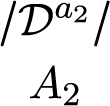 be
be $/A_{2}/$
in
$/A_{2}/$
in $\mathcal {D}^{\ast }$
. Then:
$\mathcal {D}^{\ast }$
. Then:

If the I/E-rule in $\mathcal {D}^{\ast }$
is
$\mathcal {D}^{\ast }$
is $\supset _{\ast }$
I,
$\supset _{\ast }$
I, $\mathcal {D}^{\ast }$
is legitimate and eligible for
$\mathcal {D}^{\ast }$
is legitimate and eligible for $\star ^{c}$
-conversion. If the I/E-rule in
$\star ^{c}$
-conversion. If the I/E-rule in $\mathcal {D}^{\ast }$
is
$\mathcal {D}^{\ast }$
is $\supset _{f}$
I [
$\supset _{f}$
I [ $\supset _{c}$
I],
$\supset _{c}$
I], $\mathcal {D}^{\ast }$
is illegitimate, due to a violation of sc1.b [sc2.b] (
$\mathcal {D}^{\ast }$
is illegitimate, due to a violation of sc1.b [sc2.b] ( $V5b$
), and not eligible for
$V5b$
), and not eligible for $\star ^{c}$
-conversion. Again, we cannot presuppose, as we did in the cases covered by the B-tables, that the
$\star ^{c}$
-conversion. Again, we cannot presuppose, as we did in the cases covered by the B-tables, that the $\star ^{i}$
I-rule is applied legitimately in these two special cases.
$\star ^{i}$
I-rule is applied legitimately in these two special cases.
Proof (Part C): Preservation for $\star ^{d}$
-detour conversions. Let
$\star ^{d}$
-detour conversions. Let
 be legitimate derivations. We show: If these derivations can be combined into a legitimate derivation $\mathcal {D}^{\ast }$
, then the
$\mathcal {D}^{\ast }$
, then the $\star ^{d}$
-conversions transform it into a legitimate derivation
$\star ^{d}$
-conversions transform it into a legitimate derivation $\mathcal {D}^{\ast \ast }$
, where
$\mathcal {D}^{\ast \ast }$
, where $i \in \{1, 2\}$
; otherwise, the combination is illegitimate and a
$i \in \{1, 2\}$
; otherwise, the combination is illegitimate and a $\star ^{d}$
-conversion precluded:
$\star ^{d}$
-conversion precluded:

We consider for all specific instances of last rules applied in
 the combination of these derivations into $\mathcal {D}^{\ast }$
. We attempt to derive the instance of the maximum
$\mathcal {D}^{\ast }$
. We attempt to derive the instance of the maximum $A_{1} \star ^{d} A_{2}$
and the minor premisses of
$A_{1} \star ^{d} A_{2}$
and the minor premisses of $\star ^{d}$
E proceeding in the top-down manner. For reasons of simplicity, we assume that it is the first disjunct of the maximum which has the status required by the side condition of the
$\star ^{d}$
E proceeding in the top-down manner. For reasons of simplicity, we assume that it is the first disjunct of the maximum which has the status required by the side condition of the $\star ^{d}$
E-rule in question. Moreover, we may confine attention to the derivation of one of the minor premisses, the first one, as the situation for the other one is exactly analogous. The results of the top-down procedure for the
$\star ^{d}$
E-rule in question. Moreover, we may confine attention to the derivation of one of the minor premisses, the first one, as the situation for the other one is exactly analogous. The results of the top-down procedure for the $\star ^{d}$
-conversions are collected in Tables C.1–C.9 which summarize Part C of the preservation proof. Anticipating the observations in Remark 4.2, Tables C.7–C.9 are not displayed for reasons of space.
$\star ^{d}$
-conversions are collected in Tables C.1–C.9 which summarize Part C of the preservation proof. Anticipating the observations in Remark 4.2, Tables C.7–C.9 are not displayed for reasons of space.
Tables C.1, C.4, and C.7: In case $\mathcal {D}^{c_{i}}$
ends with
$\mathcal {D}^{c_{i}}$
ends with $\star ^{i}$
E, there are two entries: The first [second] entry in the (b)- and (d)-cases indicates the result for the construction in which the
$\star ^{i}$
E, there are two entries: The first [second] entry in the (b)- and (d)-cases indicates the result for the construction in which the $\star ^{d}$
-maximum is eliminated by discharging an assumption (appealing to the first-disjunct convention) which is used to derive the major [minor] premiss of that
$\star ^{d}$
-maximum is eliminated by discharging an assumption (appealing to the first-disjunct convention) which is used to derive the major [minor] premiss of that $\star ^{i}$
E-application.
$\star ^{i}$
E-application.
Tables C.2, C.5, and C.8: All cases are single entry.
Tables C.3, C.6, and C.9: The description is like that for tables C.1, C.4, C.7, except that ‘ $\star ^{i}$
E’ is replaced by ‘
$\star ^{i}$
E’ is replaced by ‘ $\star ^{d}$
E’.
$\star ^{d}$
E’.


Example 4.3.
-
1. Case C.4.1.a.
$\beta $
:
$\mathcal {D}^{a}$
ends with
$\&_{f}$
I,
$\mathcal {D}^{c_{i}}$
ends with
$\supset _{f}$
I:
$\circ ^{1, 2b, 11}$
(17) -
3. Case C.4.1.d.
$\beta $
:
$\mathcal {D}^{a}$
ends with
$\&_{f}$
E,
$\mathcal {D}^{c_{i}}$
ends with
$\supset _{f}$
E. (d1):
$\bullet $
(18)(d2):
$\circ ^{3}$
(19)


Special cases (Part C). Consider the following special case of $\mathcal {D}^{\ast }$
:
$\mathcal {D}^{\ast }$
:

In case $\star ^{i}$ $=$
$=$ $\supset _{\ast }$
,
$\supset _{\ast }$
, $\mathcal {D}^{\ast }$
can be continued by
$\mathcal {D}^{\ast }$
can be continued by $\supset _{\ast }$
I discharging
$\supset _{\ast }$
I discharging $/ B/$
. The resulting derivation is eligible for
$/ B/$
. The resulting derivation is eligible for $\star ^{d}$
-conversion. In case
$\star ^{d}$
-conversion. In case $\star ^{i}$ $=$
$=$ $\supset _{f}$
[
$\supset _{f}$
[ $\star ^{i}$ $=$
$=$ $\supset _{c}$
], a continuation of
$\supset _{c}$
], a continuation of $\mathcal {D}^{\ast }$
by
$\mathcal {D}^{\ast }$
by $\supset _{f}$
I [
$\supset _{f}$
I [ $\supset _{c}$
I] discharging
$\supset _{c}$
I] discharging $/ B/$
will give us
$/ B/$
will give us $V5c$
; for these two special cases a remark analogous to those at the end of Part A and B applies.
$V5c$
; for these two special cases a remark analogous to those at the end of Part A and B applies.
Remark 4.1. The preservation tables do not only present the preservation proof in a condensed form, they also facilitate the comparison of the preservation behaviour for each kind of conversion. (For example, there are no violations $V8$
,
$V8$
, $V11$
in Part A, no
$V11$
in Part A, no $V1$
,
$V1$
, $V2a/b$
in Part B, and no
$V2a/b$
in Part B, and no $V4$
,
$V4$
, $V6$
,
$V6$
, $V8$
in Part C; the
$V8$
in Part C; the $\supset _{\ast }$
/
$\supset _{\ast }$
/ $\vee _{\ast }$
-rules are never violated; and
$\vee _{\ast }$
-rules are never violated; and $V5a/b/c$
never show up in the preservation tables.) Moreover, the tables allow us to study the effects of dropping side conditions, or to locate changes to which additional restrictions on the rules for the operators might give rise. In this way, these tables may serve as a useful tool for the introduction of various kinds of modal natural deduction system.
$V5a/b/c$
never show up in the preservation tables.) Moreover, the tables allow us to study the effects of dropping side conditions, or to locate changes to which additional restrictions on the rules for the operators might give rise. In this way, these tables may serve as a useful tool for the introduction of various kinds of modal natural deduction system.
Types of preservation table.

Remark 4.2. There are exactly eleven types of preservation table: see Figure 2. We say (i) that two tables coincide numerically ( $=_{n}$
), in case they display the same sequence of I-numbers, (ii) that they coincide weakly (
$=_{n}$
), in case they display the same sequence of I-numbers, (ii) that they coincide weakly ( $=_{w}$
), in case they coincide numerically and display the same
$=_{w}$
), in case they coincide numerically and display the same $\bullet $
-pattern, (iii) that they coincide strongly (
$\bullet $
-pattern, (iii) that they coincide strongly ( $=_{s}$
), in case they coincide weakly and display the same V-codes, and (iv) that they coincide exactly (
$=_{s}$
), in case they coincide weakly and display the same V-codes, and (iv) that they coincide exactly ( $=_{e}$
), in case they coincide strongly and display the same rule entries in the
$=_{e}$
), in case they coincide strongly and display the same rule entries in the $\mathcal {D}$
-columns and the same
$\mathcal {D}$
-columns and the same $\alpha \beta \gamma $
-entries. Since there is no exact coincidence, the number of cases cannot be, strictly speaking, reduced. However, on the basis of the other kinds of coincidence the number can be “reduced by analogy”. If we drop the (c2)-cases from B.7, we get B.4
$\alpha \beta \gamma $
-entries. Since there is no exact coincidence, the number of cases cannot be, strictly speaking, reduced. However, on the basis of the other kinds of coincidence the number can be “reduced by analogy”. If we drop the (c2)-cases from B.7, we get B.4 $=_{w}$
B.7 and analogy-reduce the number of types to ten. In general, we may reduce the number of cases further in this way by considering only one entry for each multiple-entry case, if the multiple entries do not differ in any respect.
$=_{w}$
B.7 and analogy-reduce the number of types to ten. In general, we may reduce the number of cases further in this way by considering only one entry for each multiple-entry case, if the multiple entries do not differ in any respect.
4.2 Preservation for permutation and simplification conversions
Theorem 4.2. Permutation and simplification conversions of $\textsf {M}$
-systems do not transform legitimate into illegitimate derivations.
$\textsf {M}$
-systems do not transform legitimate into illegitimate derivations.
Proof The proof is by exhaustion. Permutation: Consider

We assume that $\mathcal {D}^{\ast }$
is legitimate and inspect, in each possible case, whether
$\mathcal {D}^{\ast }$
is legitimate and inspect, in each possible case, whether $\mathcal {D}^{\ast \ast }$
remains legitimate after permutation. The P-table below lists the results for all the possible cases.
$\mathcal {D}^{\ast \ast }$
remains legitimate after permutation. The P-table below lists the results for all the possible cases.

We pick two cases. Case P. $\alpha $
.1: Let
$\alpha $
.1: Let $\varphi _{0}(\alpha _{i}) =_{def} \varphi _{0}\alpha _{1} ... \alpha _{n}$
, where
$\varphi _{0}(\alpha _{i}) =_{def} \varphi _{0}\alpha _{1} ... \alpha _{n}$
, where $i \in \{1, ..., n\}$
, and let
$i \in \{1, ..., n\}$
, and let $j \in \{0, ..., n\}$
:
$j \in \{0, ..., n\}$
:

Case P. $\beta $
.8:
$\beta $
.8:

Simplification: We consider

and proceed in an analogous way obtaining the results recorded in the S-table below.

4.3 Normalization
Due to the preservation theorems we know that the conversions of $\textsf {M}$
-systems never lead us from legitimate derivations to illegitimate ones.
$\textsf {M}$
-systems never lead us from legitimate derivations to illegitimate ones.
Example 4.4. The following derivation is illegitimate, because of $V5a$
. It cannot be reduced:
$V5a$
. It cannot be reduced:

Example 4.5. Consider the following derivation which contains the segments (a),(b) and (a $^{\prime }$
),(b) which are both of length 2:
$^{\prime }$
),(b) which are both of length 2:

By permutation:

By detour conversion for $as$
:
$as$
:

By simplification conversion ( $i \in \{2, 3\}$
):
$i \in \{2, 3\}$
):

Example 4.6. Consider:

By permutation:

where

By conversion:

Note that distinct single occurrences of the same formula in a derivation may differ with respect to modal status. Here, e.g., the C-nodes: (a), (a $^{\prime }$
) counterfactual, (b), (b
$^{\prime }$
) counterfactual, (b), (b $^{\prime }$
) factual, (c) independent, (d), (d
$^{\prime }$
) factual, (c) independent, (d), (d $^{\prime }$
) counterfactual.
$^{\prime }$
) counterfactual.
Theorem 4.3 (Normalization (
$\textsf {M}$
-systems))

Any derivation $/\mathcal {D}/$
in an
$/\mathcal {D}/$
in an $\textsf {M}$
-system can be transformed into a normal
$\textsf {M}$
-system can be transformed into a normal $\textsf {M}$
-derivation.
$\textsf {M}$
-derivation.
Proof In view of Theorems 4.1-2, the conversions of $\textsf {M}$
-systems are safe. Proceeding top-down in
$\textsf {M}$
-systems are safe. Proceeding top-down in $/\mathcal {D}/$
, we combine, in the familiar way (cf. [Reference Troelstra and Schwichtenberg33, p. 182]), a main induction on d with a subinduction on n to obtain
$/\mathcal {D}/$
, we combine, in the familiar way (cf. [Reference Troelstra and Schwichtenberg33, p. 182]), a main induction on d with a subinduction on n to obtain $cr(/\mathcal {D}/) = \langle 0, 0\rangle $
by applying the conversions.
$cr(/\mathcal {D}/) = \langle 0, 0\rangle $
by applying the conversions.
Remark 4.3. Due to the normalization theorem for $\textsf {M}$
-systems, we may conclude that, ultimately, only normal derivations matter. Obviously, in such derivations assumption principles ap2 and ap3 can be ignored.
$\textsf {M}$
-systems, we may conclude that, ultimately, only normal derivations matter. Obviously, in such derivations assumption principles ap2 and ap3 can be ignored.
5 The structure of normal modal derivations
5.1 The subexpression property
Normal derivations in $\textsf {M}$
-systems enjoy the subexpression property (and the subformula property as a special case of it). We now repeat the relevant definitions for
$\textsf {M}$
-systems enjoy the subexpression property (and the subformula property as a special case of it). We now repeat the relevant definitions for $\textsf {M}$
-systems and establish these results.
$\textsf {M}$
-systems and establish these results.
Definition 5.1. Let $/\mathcal {D}/$
be a derivation in an
$/\mathcal {D}/$
be a derivation in an $\textsf {M}$
-system.
$\textsf {M}$
-system.
-
1. A unit in
$/\mathcal {D}/$
is either an occurrence of (i) a term assumption
$\tau \Gamma $
, or (ii) a segment
$\sigma _{\textsf {M}}$
in
$/\mathcal {D}/$
. (Any
$L1$
-formula is a special case of a segment.) We use
$U, U^{\prime }$
(possibly subscripted) for units of
$\textsf {M}$
-systems. -
2. In case U is a term assumption
$\tau \Gamma $
in
$/\mathcal {D}/$
,
$\tau $
is the expression in U.


Definition 5.2. A track of a derivation $/\mathcal {D}/$
in an
$/\mathcal {D}/$
in an $\textsf {M}$
-system is a sequence of occurrences of units
$\textsf {M}$
-system is a sequence of occurrences of units $U_{0}, ..., U_{n}$
such that:
$U_{0}, ..., U_{n}$
such that:
-
1.
$U_{0}$
is either-
(a) a top formula occurrence
$/A_{0}/$
in
$/\mathcal {D}/$
not discharged by an application
of
$\star ^{d}$
E, or -
(b) a top occurrence of a term assumption
$\tau \Gamma _{0}$
;
-
-
2.
$U_{i}$
for
$i < n$
is either-
(a) a formula occurrence
$A_{i}$
which is not the minor premiss of an instance of
$\star ^{i}$
E, and either-
(i).
$A_{i}$
is not the major premiss of an instance
of
$\star ^{d}$
E and
$A_{i+1}$
is directly below
$A_{i}$
, or -
(ii).
$A_{i}$
is the major premiss of an instance
of
$\star ^{d}$
E and
$/A_{i+1}/$
is an assumption discharged by
; or
-
-
(b)
$U_{i}$
is an occurrence of a term assumption
$\tau \Gamma _{i}$
;
-
-
3.
$U_{n}$
is either-
(a) a formula occurrence
$A_{n}$
which is either-
(i). the minor premiss of an instance of
$\star ^{i}$
E, or -
(ii). the conclusion of
$/\mathcal {D}/$
, or -
(iii). the major premiss of an instance
of
$\star ^{d}$
E, in case there is no assumption discharged by
; or
-
-
(b)
$U_{n}$
is an occurrence of a term assumption
$\tau \Gamma _{n}$
.
-


Example 5.1. Consider:

Structure tree:

Tracks: 1–3, 5 (Track 1); 1, 12 (Track 2); 4 and 5 (Track 3); 6–11 (Track 4); 13–15, 9–11 (Track 5).
Theorem 5.1. Let $/\mathcal {D}/$
be a normal derivation in an
$/\mathcal {D}/$
be a normal derivation in an $\textsf {M}$
-system, and let
$\textsf {M}$
-system, and let $\pi $
be a track
$\pi $
be a track $U_{0}, ..., U_{n}$
in
$U_{0}, ..., U_{n}$
in $/\mathcal {D}/$
. There is a single unit
$/\mathcal {D}/$
. There is a single unit $U_{i}$
in
$U_{i}$
in $\pi $
, the minimum part of
$\pi $
, the minimum part of $\pi $
, which separates the possibly empty parts of
$\pi $
, which separates the possibly empty parts of $\pi $
, called the elimination (or E-)part and the introduction (or I-)part of
$\pi $
, called the elimination (or E-)part and the introduction (or I-)part of $\pi $
, such that:
$\pi $
, such that:
-
1. for each
$U_{j}$
in the E-part we have
$j < i$
,
$U_{j}$
is a major premiss of an E-rule, and
$U_{j+1}$
is a subexpression of
$U_{j}$
, and so each
$U_{j}$
is a subexpression of
$U_{0}$
; -
2. for each
$U_{j}$
in the I-part we have
$i < j$
, and if
$j < n$
, then
$U_{j}$
is a premiss of an I-rule and a subexpression of
$U_{j+1}$
, thus, each
$U_{j}$
is a subexpression of
$U_{n}$
; -
3. in case
$i \not = n$
,
$U_{i}$
is a premiss of an I-rule or of
$\bot _{\ast }$
i (so
$U_{i}= \bot $
) and a subexpression of
$U_{0}$
.


Proof We use the fact that $/\mathcal {D}/$
is normal and inspect the rules of
$/\mathcal {D}/$
is normal and inspect the rules of $\textsf {M}$
-systems to verify that clauses 1-3 are satisfied.
$\textsf {M}$
-systems to verify that clauses 1-3 are satisfied.
In case $U_{i}$
is the first occurrence of a unit in
$U_{i}$
is the first occurrence of a unit in $\pi $
which is a premiss of an E-rule, all unit occurrences in
$\pi $
which is a premiss of an E-rule, all unit occurrences in $\pi $
which are major premisses of E-rules precede all unit occurrences in
$\pi $
which are major premisses of E-rules precede all unit occurrences in $\pi $
which are premisses of I-rules or
$\pi $
which are premisses of I-rules or $\bot_{\ast}$
i. Otherwise,
$\bot_{\ast}$
i. Otherwise, $/\mathcal {D}/$
would not be a normal derivation.
$/\mathcal {D}/$
would not be a normal derivation.
Next, let $U_{i}$
be the first occurrence of a unit in
$U_{i}$
be the first occurrence of a unit in $\pi $
which is a premiss of an I-rule or of
$\pi $
which is a premiss of an I-rule or of $\bot_{\ast}$
i. Put
$\bot_{\ast}$
i. Put $U_{i} = U_{n}$
, in case there is no such unit. In these cases,
$U_{i} = U_{n}$
, in case there is no such unit. In these cases, $U_{i}$
belongs to the minimum part of
$U_{i}$
belongs to the minimum part of $\pi $
.
$\pi $
.
Since, given these observations, $U_{i}$
satisfies clauses 1 and 3, every unit occurrence
$U_{i}$
satisfies clauses 1 and 3, every unit occurrence $U_{j}$
(
$U_{j}$
( $i < j < n$
) is a premiss of an I-rule or of
$i < j < n$
) is a premiss of an I-rule or of $\bot_{\ast}$
i. However, the case of
$\bot_{\ast}$
i. However, the case of $\bot_{\ast}$
i is excluded, as the premiss of this rule is
$\bot_{\ast}$
i is excluded, as the premiss of this rule is $\bot $
, a formula that can only be derived by an E-rule. Hence, clause 2 is satisfied as well.
$\bot $
, a formula that can only be derived by an E-rule. Hence, clause 2 is satisfied as well.
Hence, all expressions in $\pi $
are subexpressions of
$\pi $
are subexpressions of $U_{0}$
or
$U_{0}$
or $U_{n}$
. An order can be imposed on tracks.
$U_{n}$
. An order can be imposed on tracks.
Definition 5.3. Let $/\mathcal {D}/$
be a normal derivation in an
$/\mathcal {D}/$
be a normal derivation in an $\textsf {M}$
-system.
$\textsf {M}$
-system.
-
1. A track of order 0 (main track) in
$/\mathcal {D}/$
is a track ending in a conclusion of
$/\mathcal {D}/$
; -
2. A track of order
$n+1$
in
$/\mathcal {D}/$
is a track ending in the minor premiss of
$\star ^{i}$
E, with the major premiss belonging to a track of order n.


A main branch of a derivation in an $\textsf {M}$
-system is a branch
$\textsf {M}$
-system is a branch $\pi $
which passes only through premisses of I-rules and major premisses of E-rules beginning at a top-unit and ending in the conclusion of the derivation.
$\pi $
which passes only through premisses of I-rules and major premisses of E-rules beginning at a top-unit and ending in the conclusion of the derivation.
Remark 5.1. Applications of $as_{\ast }$
I and
$as_{\ast }$
I and $\star ^{c}$
I undermine the uniqueness of main branches.
$\star ^{c}$
I undermine the uniqueness of main branches.
Example 5.2. Tracks 4 and 5 in Example 5.1 are main tracks and main branches, Tracks 1, 2 and 3 are tracks of order $1$
.
$1$
.
Theorem 5.2. In a normal derivation in an $\textsf {M}$
-system each occurrence of a unit belongs to a track.
$\textsf {M}$
-system each occurrence of a unit belongs to a track.
Proof Proof omitted.
Theorem 5.3 (Subexpression property (
$\textsf {M}$
-systems))

If $/\mathcal {D}/$
is a normal
$/\mathcal {D}/$
is a normal $\textsf {M}$
-derivation of a unit U from a set of units
$\textsf {M}$
-derivation of a unit U from a set of units $\Gamma $
, then each unit in
$\Gamma $
, then each unit in $/\mathcal {D}/$
is a subexpression of an expression in
$/\mathcal {D}/$
is a subexpression of an expression in $\Gamma \cup \{U\}$
.
$\Gamma \cup \{U\}$
.
Proof Let $/\mathcal {D}/$
be a normal derivation of U from
$/\mathcal {D}/$
be a normal derivation of U from $\Gamma $
. The proof relies on Theorem 5.2 and proceeds by induction on the order of tracks n using Theorem 5.1.
$\Gamma $
. The proof relies on Theorem 5.2 and proceeds by induction on the order of tracks n using Theorem 5.1.
Assume that the result holds for unit occurrences in tracks of order $< n$
, let
$< n$
, let $\pi = U_{0}, ..., U_{n}$
, and let
$\pi = U_{0}, ..., U_{n}$
, and let $U_{i}$
belong to the minimum part in
$U_{i}$
belong to the minimum part in $\pi $
. There are two cases to consider.
$\pi $
. There are two cases to consider.
Case 1. For $U_{n}$
either
$U_{n}$
either $U_{n} = U$
or
$U_{n} = U$
or $U_{n}$
is a minor premiss of
$U_{n}$
is a minor premiss of $\star ^{i}$
E with the major premiss of the form
$\star ^{i}$
E with the major premiss of the form $U_{n} \star ^{i} B$
which appears in a track of order
$U_{n} \star ^{i} B$
which appears in a track of order $n-1$
. Hence, the result follows for all
$n-1$
. Hence, the result follows for all $U_{j}$
(
$U_{j}$
( $i < j <n$
) by Theorem 5.1.
$i < j <n$
) by Theorem 5.1.
Case 2. For $U_{0}$
either
$U_{0}$
either $U_{0} \in \Gamma $
, or
$U_{0} \in \Gamma $
, or $U_{0}$
is discharged by an application
$U_{0}$
is discharged by an application
 of
of $\star ^{i}$
I such that the conclusion of
$\star ^{i}$
I such that the conclusion of
 has the form $U_{0} \star ^{i} B$
, is contained in the I-part of
$U_{0} \star ^{i} B$
, is contained in the I-part of $\pi $
, or in some track of order
$\pi $
, or in some track of order $< n$
, and
$< n$
, and $U_{0}$
is a subformula of the conditional. Hence, the result follows for all
$U_{0}$
is a subformula of the conditional. Hence, the result follows for all $U_{j}$
(
$U_{j}$
( $j \leq i$
) by Theorem 5.1.
$j \leq i$
) by Theorem 5.1.
Corollary 5.1 (Subformula property (
$\textsf {M}$
-systems))

If $/\mathcal {D}/$
is a normal
$/\mathcal {D}/$
is a normal $\textsf {M}$
-derivation of formula A from a set of formulae
$\textsf {M}$
-derivation of formula A from a set of formulae $\Gamma $
, then each formula in
$\Gamma $
, then each formula in $/\mathcal {D}/$
is a subformula of a formula in
$/\mathcal {D}/$
is a subformula of a formula in $\Gamma \cup \{A\}$
.
$\Gamma \cup \{A\}$
.
Remark 5.2. In view of this result, we know that $\textsf {M}$
-systems are consistent and that all theorems of
$\textsf {M}$
-systems are consistent and that all theorems of $\textsf {M}$
-systems can be established by means of normal canonical proofs.
$\textsf {M}$
-systems can be established by means of normal canonical proofs.
Definition 5.4 (Canonical derivation, canonical proof, thesis, and theorem (
$\textsf {M}$
-systems))

The definitions of these notions for $\textsf {M}$
-systems are analogous to those for
$\textsf {M}$
-systems are analogous to those for $\textsf {R}$
-systems (Definition 2.13).
$\textsf {R}$
-systems (Definition 2.13).
5.2 The method of counter-derivations
Due to the subformula property, we may formulate a simple decision procedure for theoremhood.
Definition 5.5 (Method of counter-derivations (cf. [Reference Więckowski41, Reference Więckowski, Piecha and Wehmeier43]))
Construct a candidate for a normal canonical M-proof of formula A by proceeding bottom-up using the rules for the operators ignoring the side conditions on them. In case (i) the construction has been successful, check whether the candidate violates a side condition. If this is the case, (ia) we obtain a counter-derivation for A, otherwise (ib) we obtain a normal M-proof of A. In case (ii) the construction of a candidate has not been successful, we may conclude that A cannot be derived as a theorem. Consequently, we get a decision concerning the M-derivability of A as a theorem. It is derivable as a theorem in case (ib), and underivable in cases (ia) and (ii).
Remark 5.3. The method can be used for the analysis of counterfactual fallacies. It essentially carves out counter-derivations from intuitionistic natural deduction proofs. Transitivity fails: $V6$
.
$V6$
.

Contraposition fails: $V6$
.
$V6$
.

Also the modus tolens version of contraposition $((A \supset _{c} B) \&_{\ast } \neg _{\ast } B) \supset _{\ast } \neg _{\ast } A$
is not a theorem due to
$((A \supset _{c} B) \&_{\ast } \neg _{\ast } B) \supset _{\ast } \neg _{\ast } A$
is not a theorem due to $V6$
. The converse of contraposition fails for
$V6$
. The converse of contraposition fails for $\textsf {M}$
-systems, since case (ii) of the method applies. Also the following does not work for
$\textsf {M}$
-systems, since case (ii) of the method applies. Also the following does not work for $\textsf {M}$
-systems, given the fact that they are intuitionistic:
$\textsf {M}$
-systems, given the fact that they are intuitionistic:

Strengthening of the antecedent fails: $V5b$
.
$V5b$
.

Monotonicity fails for $\supset _{c}$
:
$\supset _{c}$
: $V5a$
.
$V5a$
.

Monotonicity would be blocked also for derivations with detours, as Example 4.4 and what follows suggest:


Remark 5.4. $\textsf {M}$
-systems do justice to the fallacy of transitivity for
$\textsf {M}$
-systems do justice to the fallacy of transitivity for $\supset _{c}$
by imposing sc3 on
$\supset _{c}$
by imposing sc3 on $\supset _{c}$
E. This way of blocking transitivity is strong. It blocks the derivation of the transitivity formula
$\supset _{c}$
E. This way of blocking transitivity is strong. It blocks the derivation of the transitivity formula $((A \supset _{c} B) \&_{\ast } (B \supset _{c} C)) \supset _{\ast } (A \supset _{c} C)$
as a theorem by blocking the transitive reasoning which gives rise to
$((A \supset _{c} B) \&_{\ast } (B \supset _{c} C)) \supset _{\ast } (A \supset _{c} C)$
as a theorem by blocking the transitive reasoning which gives rise to $V6$
. A weaker way of blocking the derivation of the transitivity formula would be to impose a side condition on
$V6$
. A weaker way of blocking the derivation of the transitivity formula would be to impose a side condition on $\supset _{c}$
I which requires that the premiss to which
$\supset _{c}$
I which requires that the premiss to which $\supset _{c}$
I is applied must not have been derived by means of a break formula. We also mention that
$\supset _{c}$
I is applied must not have been derived by means of a break formula. We also mention that $\textsf {M}$
-systems allow for subatomic transitive reasoning from counterfactual assumptions. This possibility may be interesting for a fine-grained assessment of specific cases.
$\textsf {M}$
-systems allow for subatomic transitive reasoning from counterfactual assumptions. This possibility may be interesting for a fine-grained assessment of specific cases.

These derivations derive theses which are not theorems. In neither of them $Ga$
is a break formula; note that it is a maximum formula in the first derivation.
$Ga$
is a break formula; note that it is a maximum formula in the first derivation.
Assessment of some axioms.

Remark 5.5. Another application of the method is to the assessment of some axioms of model-theoretically defined conditional logics (e.g., Lewisian similarity-based conditional logics) from our proof-centered perspective on counterfactual inference (Figure 3; $\textsf {M}$
-
$\textsf {M}$
- $Th$
abbreviates ‘
$Th$
abbreviates ‘ $\textsf {M}$
-theorem’). We consider CEM and CDA. CEM: Let
$\textsf {M}$
-theorem’). We consider CEM and CDA. CEM: Let $X = \neg _{\ast }((A \supset _{c} B) \vee _{\ast } (A \supset _{c} \neg _{\ast } B))$
.
$X = \neg _{\ast }((A \supset _{c} B) \vee _{\ast } (A \supset _{c} \neg _{\ast } B))$
.

CDA (cf. [Reference Goldstein13, p. 196]):

This derivation is not available for minimal $\textsf {M}$
-systems, since it makes crucial use of the intuitionistic absurdity rule.
$\textsf {M}$
-systems, since it makes crucial use of the intuitionistic absurdity rule.
5.3 Internal completeness $\textsf {M}$
-systems can be classified as internally complete in the sense of Girard ([Reference Girard10, pp. 139–140]), mentioned in the Introduction, where internal completeness is equated with the subformula property. We shall express this as follows.
$\textsf {M}$
-systems can be classified as internally complete in the sense of Girard ([Reference Girard10, pp. 139–140]), mentioned in the Introduction, where internal completeness is equated with the subformula property. We shall express this as follows.
Definition 5.6. A proof system is internally complete in case it enjoys the subformula property.
In order to adapt Girard’s remarks that precede his equation to the present setting, we sharpen them as follows: we take “cut-free proof” to mean “normal canonical proof” and “calculus” to mean “ $\textsf {M}$
-system”, thereby insisting on proofs in intuitionistic systems. Using the above definition, we obtain, by way of rephrasing Corollary 5.1:
$\textsf {M}$
-system”, thereby insisting on proofs in intuitionistic systems. Using the above definition, we obtain, by way of rephrasing Corollary 5.1:
Corollary 5.2. $\textsf {M}$
-systems are internally complete.
$\textsf {M}$
-systems are internally complete.
Remark 5.6. 1. We may thus regard completeness as an internal property of $\textsf {M}$
-systems. Their completeness does not need to be relativized to external structures—it is absolute in this sense.
$\textsf {M}$
-systems. Their completeness does not need to be relativized to external structures—it is absolute in this sense.
2. Internal completeness in the sense of Definition 5.6 cannot be taken for granted, of course. In the present context, it is worth noting that labelled proof systems for counterfactual logics (e.g., [Reference Negri and Sbardolini19, Reference Poggiolesi24]) are not internally complete in this sense, since they do not possess the subformula property. For such systems a weaker form of internal completeness seems available, one that equates it with normalization (resp. cut-elimination) without insisting on the subformula property.
3. We mention that $\textsf {M}$
-systems are also internally complete in the sense of [Reference Więckowski42, Theorem 3.47].
$\textsf {M}$
-systems are also internally complete in the sense of [Reference Więckowski42, Theorem 3.47].
6 Proof-theoretic semantics
6.1 Meaning and truth
The semantics of $L1$
is defined proof-theoretically.
$L1$
is defined proof-theoretically.
Definition 6.1. Let S be an $\textsf {M}$
-system. The meaning of
$\textsf {M}$
-system. The meaning of
-
1. a non-logical constant
$\tau $
is given by the term assumptions
$\tau \Gamma $
determined by the subatomic base of S for
$\tau $
; -
2. an
$L1$
-formula A is given by the set of canonical derivations of A in S (Definition 2.13).


Remark 6.1. 1. Unlike for $\supset _{f}$
and
$\supset _{f}$
and $\supset _{c}$
, there seems to be no obvious natural language counterpart for
$\supset _{c}$
, there seems to be no obvious natural language counterpart for $\&_{f}$
,
$\&_{f}$
, $\&_{c}$
,
$\&_{c}$
, $\vee _{f}$
, and
$\vee _{f}$
, and $\vee _{c}$
. The rules for the latter can be seen as devices for sharpening our perception of the structure of inferences from factual and counterfactual assumptions. For the proof-theoretic modeling of most aspects of the meaning of natural language conjunction and disjunction the rules for
$\vee _{c}$
. The rules for the latter can be seen as devices for sharpening our perception of the structure of inferences from factual and counterfactual assumptions. For the proof-theoretic modeling of most aspects of the meaning of natural language conjunction and disjunction the rules for $\&_{\ast }$
and
$\&_{\ast }$
and $\vee _{\ast }$
are, presumably, sufficient.
$\vee _{\ast }$
are, presumably, sufficient.
2. It can be conjectured that an addition of factual, counterfactual, and independent existential [universal] quantifiers to $\textsf {M}$
-systems will exploit the general analogy between the existential [universal] quantifier with disjunction [conjunction].
$\textsf {M}$
-systems will exploit the general analogy between the existential [universal] quantifier with disjunction [conjunction].
Definition 6.2. A formula A of $L1$
is a truth [logical truth], in case A is the conclusion of a canonical derivation [proof] in an
$L1$
is a truth [logical truth], in case A is the conclusion of a canonical derivation [proof] in an $\textsf {M}$
-system (cf. [Reference Więckowski, Piecha and Wehmeier43, p. 417]).
$\textsf {M}$
-system (cf. [Reference Więckowski, Piecha and Wehmeier43, p. 417]).
Remark 6.2. The explanations of meaning and truth given above are distinctively intuitionistic, since they rest on the notion of a canonical derivation. They would not be available for $\textsf {M}$
-systems, if we were to replace
$\textsf {M}$
-systems, if we were to replace $\bot _{\ast }$
i by the classical absurdity rule
$\bot _{\ast }$
i by the classical absurdity rule $\bot _{\ast }$
c. If we were to do this and to drop the violated side conditions, we would consider, e.g., MOD and CEM theorems. Note, however, that, by Definition 2.13, their derivations (e.g., that of CEM above) would not be canonical; and this lack of canonicity would preclude an intuitionistically acceptable proof-theoretic semantics. Obviously, also the subformula property, as given by Corollary 5.1, would be lost—and with it internal completeness as based on that corollary.
$\bot _{\ast }$
c. If we were to do this and to drop the violated side conditions, we would consider, e.g., MOD and CEM theorems. Note, however, that, by Definition 2.13, their derivations (e.g., that of CEM above) would not be canonical; and this lack of canonicity would preclude an intuitionistically acceptable proof-theoretic semantics. Obviously, also the subformula property, as given by Corollary 5.1, would be lost—and with it internal completeness as based on that corollary.
6.2 Expansions
Our definition of a proof-theoretic semantics for $L1$
in terms of canonical derivations is based entirely on the normalization result for intuitionistic
$L1$
in terms of canonical derivations is based entirely on the normalization result for intuitionistic $\textsf {M}$
-systems. It does not insist on the availability of expansions (e.g., [Reference Francez7]) which, roughly, transform a derivation of A into one which first decomposes A by an E-rule in order to recompose it by the corresponding I-rule in the next step. Below, we formulate expansions and discuss their preservation behaviour.
$\textsf {M}$
-systems. It does not insist on the availability of expansions (e.g., [Reference Francez7]) which, roughly, transform a derivation of A into one which first decomposes A by an E-rule in order to recompose it by the corresponding I-rule in the next step. Below, we formulate expansions and discuss their preservation behaviour.
Definition 6.3. Let A be a formula of $L1$
. An expansion of a derivation
$L1$
. An expansion of a derivation
 in an
in an $\textsf {M}$
-system is a derivation
$\textsf {M}$
-system is a derivation
 in that system in which A first occurs as major premiss of an application of an E-rule and immediately afterwards as a conclusion of an application an I-rule. The expansions of derivations in $\textsf {M}$
-systems are:
$\textsf {M}$
-systems are:
-
1.
$as_{\ast }$
-Expansion: Let A be
$\varphi ^{n}\alpha _{1} ... \alpha _{n}$
. -
2. Expansions for
$\star ^{i}$
[
$\star ^{c}$
,
$\star ^{d}$
]: We present only the expansions for the factual operators; those for the counterfactual [mode-sensitive] operators are similar. Call the expansions for
$\&_{f}$
[
$\&_{c}$
] restricted, as
$/\mathcal {D}/$
,
$/\mathcal {D}^{\prime }/$
are restricted to
$|\mathcal {D}|$
,
$|\mathcal {D}^{\prime }|$
[
$\wr \mathcal {D}\wr $
,
$\wr \mathcal {D}^{\prime }\wr $
].


Theorem 6.1. The expansions do not transform legitimate into illegitimate derivations.
Proof Assume, in each case, that the derivation to be expanded is legitimate. The result follows immediately. Note, however, that it fails for unrestricted expansions for $\&_{f}$
[
$\&_{f}$
[ $\&_{c}$
].
$\&_{c}$
].
Remark 6.3. The failure of preservation for the unrestricted expansions for $\&_{f}$
[
$\&_{f}$
[ $\&_{c}$
] suggests that we may claim only a weak form of “local completeness” (cf. [Reference Francez7, p. 93]) for the rules for
$\&_{c}$
] suggests that we may claim only a weak form of “local completeness” (cf. [Reference Francez7, p. 93]) for the rules for $\&_{f}$
[
$\&_{f}$
[ $\&_{c}$
], since we cannot claim that every derivation of
$\&_{c}$
], since we cannot claim that every derivation of $A \&_{f} B$
[
$A \&_{f} B$
[ $A \&_{c} B$
] can be expanded. It may be interesting to consider modified rules for these operators for which this claim can be made; e.g., ones which require factual [counterfactual] status for the premisses of
$A \&_{c} B$
] can be expanded. It may be interesting to consider modified rules for these operators for which this claim can be made; e.g., ones which require factual [counterfactual] status for the premisses of $\&_{f}$
E [
$\&_{f}$
E [ $\&_{c}$
E]. The preservation tables should be helpful here.
$\&_{c}$
E]. The preservation tables should be helpful here.
6.3 Refinements
In the literature, might-counterfactuals ( $A>_{m} B$
; cf. [Reference Bennett2, p. 189]) are usually defined in terms of would-counterfactuals (
$A>_{m} B$
; cf. [Reference Bennett2, p. 189]) are usually defined in terms of would-counterfactuals ( $A> B$
) on the basis of a model-theoretic semantics. Prominent definitions of this kind (
$A> B$
) on the basis of a model-theoretic semantics. Prominent definitions of this kind ( $\Diamond _{[e]}$
means [epistemic] possibility) are:
$\Diamond _{[e]}$
means [epistemic] possibility) are:
-
(L)
$A>_{m} B =_{def} \neg (A > \neg B)$
(cf. Lewis [Reference Lewis17, p. 21]) -
(S)
$A>_{m} B =_{def} \Diamond _{e}(A > B)$
(cf. Stalnaker [Reference Stalnaker, Harper, Stalnaker and Pearce29, p. 101], [Reference Stalnaker30]) -
(B)
$A>_{m} B =_{def} A > \Diamond B$
(cf. Bennett [Reference Bennett2, p. 191])



According to (L), $>_{m}$
is a dual of
$>_{m}$
is a dual of $>$
; and in (S) and (B)
$>$
; and in (S) and (B) $\Diamond $
is a dual of
$\Diamond $
is a dual of $\Box $
(necessity). (Digression: Lewis has shown ([Reference Lewis17, p. 80]) that an endorsement of (L) leads to a loss of the difference between
$\Box $
(necessity). (Digression: Lewis has shown ([Reference Lewis17, p. 80]) that an endorsement of (L) leads to a loss of the difference between $>_{m}$
and
$>_{m}$
and $>$
, in case the logic governing the latter contains CEM which is validated in Stalnaker’s preferred system (whose similarity truth conditions allow only for exactly one A-world closest to w). Due to this conflict with CEM, (L) is not an option for Stalnaker. It is essentially for this reason that he prefers (S), with an epistemic reading of
$>$
, in case the logic governing the latter contains CEM which is validated in Stalnaker’s preferred system (whose similarity truth conditions allow only for exactly one A-world closest to w). Due to this conflict with CEM, (L) is not an option for Stalnaker. It is essentially for this reason that he prefers (S), with an epistemic reading of $\Diamond $
.) In each case, the duality rests on the interdefinability of the existential and the universal quantifiers (over worlds) in the context of classical logic. Since in an intuitionistic setting there is no such interdefinability (e.g., [Reference Weiss40, p. 468]), we have to look for an alternative account of the might-counterfactual.
$\Diamond $
.) In each case, the duality rests on the interdefinability of the existential and the universal quantifiers (over worlds) in the context of classical logic. Since in an intuitionistic setting there is no such interdefinability (e.g., [Reference Weiss40, p. 468]), we have to look for an alternative account of the might-counterfactual.
In a specific sense, such an account is implicit in our intuitionistic modal proof systems for counterfactual inference. It is, perhaps, noteworthy that this account does not require an introduction of possibility operators which draw on modes of assumption. Similarly, concerning the would-counterfactual, no use needs to be made of a necessity operator or the idea of the (variable) strictness of implication. Recall, the meaning of implications (cf. Definition 6.1(2)) has been explained in terms of canonical derivations. Their general form is:

These rules “listen”, so to speak, only to the status of the assumed formula A, they do not listen to the status of the premiss B (i.e., the consequent-node) to which $\star ^{i}$
I is applied; in this sense, these rules are “mono”. What matters on the mono conception of
$\star ^{i}$
I is applied; in this sense, these rules are “mono”. What matters on the mono conception of $\star ^{i}$
I-rules, is the mere fact that B has been derived—irrespective of its status—from A that has been assumed in a given mode. For example, if the status of A is counterfactual, the formula introduced by
$\star ^{i}$
I-rules, is the mere fact that B has been derived—irrespective of its status—from A that has been assumed in a given mode. For example, if the status of A is counterfactual, the formula introduced by $\star ^{i}$
I is a counterfactual, a would-counterfactual, irrespective of the status of B, provided that the side conditions have been respected.
$\star ^{i}$
I is a counterfactual, a would-counterfactual, irrespective of the status of B, provided that the side conditions have been respected.
In what follows, we shall define $\star ^{i}$
I-rules which may listen not only to the status of A, but also to that of B; these rules are “stereo”. This refinement enlarges the range of application of
$\star ^{i}$
I-rules which may listen not only to the status of A, but also to that of B; these rules are “stereo”. This refinement enlarges the range of application of $\textsf {M}$
-systems, as they may be used for the analysis of constructions other than (1.1) and (1.8). Consider the following constructions (with proposed readings):
$\textsf {M}$
-systems, as they may be used for the analysis of constructions other than (1.1) and (1.8). Consider the following constructions (with proposed readings):
Factuals:
-
(f1) Since A is the case, B is the case. (1.8)
(read: Since A is the case, B is factually the case)
-
(f2) Since A is the case, B might be the case. (1.11)
(read: Since A is the case, B is counterfactually the case)
-
(f3) Since A is the case, B.
Counterfactuals:
-
(c1) If A were the case, B would be the case. (1.1)
(read: If A were the case, B is factually the case)
-
(c2) If A were the case, B might be the case. (1.10)
(read: If A were the case, B is counterfactually the case)
-
(c3) If A were the case, B.
Mode-sensitives:
-
(m1) If A, B is factually the case.
-
(m2) If A, B is counterfactually the case.
-
(m3) If A, B.
The proposed readings indicate that we use ‘would’ in a factual sense, presupposing that B has factual status, and ‘might’ in a counterfactual sense, presupposing that B has counterfactual status.
We refine $L1$
and the rules of
$L1$
and the rules of $\textsf {M}$
-systems so as to explain the meaning of (f1)–(m3) from a stereo perspective. To this end, we extend
$\textsf {M}$
-systems so as to explain the meaning of (f1)–(m3) from a stereo perspective. To this end, we extend $L1$
with implication operators (with two subscripts) which indicate the status of the antecedent (first subscript) and the status of the consequent (second subscript).
$L1$
with implication operators (with two subscripts) which indicate the status of the antecedent (first subscript) and the status of the consequent (second subscript).
Definition 6.4 (Stereo implications)

The rules for these implications are special cases of the rules for the “mono” $\star ^{i}$
-operators of Definition 3.11.
$\star ^{i}$
-operators of Definition 3.11.
Definition 6.5 (Rules for stereo implications)
I-rules:

E-rules: Mutatis mutandis, like those for mono implications. Side conditions: Like for mono implications.
Remark 6.4. 1. The I/E-rules for $\supset _{f, \ast }$
[
$\supset _{f, \ast }$
[ $\supset _{c, \ast }$
,
$\supset _{c, \ast }$
, $\supset _{\ast , \ast }$
] are equivalent to those for
$\supset _{\ast , \ast }$
] are equivalent to those for $\supset _{f}$
[
$\supset _{f}$
[ $\supset _{c}$
,
$\supset _{c}$
, $\supset _{\ast }$
]. The rules
$\supset _{\ast }$
]. The rules $\supset _{f, f}$
I and
$\supset _{f, f}$
I and $\supset _{f, c}$
I are special cases of
$\supset _{f, c}$
I are special cases of $\supset _{f, \ast }$
I. Similarly,
$\supset _{f, \ast }$
I. Similarly, $\supset _{c, f}$
I and
$\supset _{c, f}$
I and $\supset _{c, c}$
I are special cases of
$\supset _{c, c}$
I are special cases of $\supset _{c, \ast }$
I. And
$\supset _{c, \ast }$
I. And $\supset _{\ast , f}$
I and
$\supset _{\ast , f}$
I and $\supset _{\ast , c}$
I are special cases of
$\supset _{\ast , c}$
I are special cases of $\supset _{\ast , \ast }$
I.
$\supset _{\ast , \ast }$
I.
2. In the I-rules for stereo implications the status of B after the discharge matters. As a consequence, there can be only canonical derivations, but no canonical proofs (and so no proofs at all) of formulae of the forms $A \supset _{f, c} B$
and
$A \supset _{f, c} B$
and $A \supset _{c, f} B$
(including the case in which B = A).
$A \supset _{c, f} B$
(including the case in which B = A).
3. Let the subscript ‘i’ stand for ‘independent’. In $\supset _{f, \ast }$
I: If
$\supset _{f, \ast }$
I: If $/\not (\mathcal {D}_{1}\not )/$
=
$/\not (\mathcal {D}_{1}\not )/$
= $(|\mathcal {D}_{1}|)$
, then
$(|\mathcal {D}_{1}|)$
, then $\supset _{f, \ast }$
is
$\supset _{f, \ast }$
is $\supset _{f, i}$
. In
$\supset _{f, i}$
. In $\supset _{c, \ast }$
: If
$\supset _{c, \ast }$
: If $/\wr \mathcal {D}_{1}\wr /$
=
$/\wr \mathcal {D}_{1}\wr /$
= $(\wr \mathcal {D}_{1}\wr )$
, then
$(\wr \mathcal {D}_{1}\wr )$
, then $\supset _{c, \ast }$
is
$\supset _{c, \ast }$
is $\supset _{c, i}$
. In
$\supset _{c, i}$
. In $\supset _{\ast , \ast }$
: If
$\supset _{\ast , \ast }$
: If $/\mathcal {D}_{1}/$
=
$/\mathcal {D}_{1}/$
= $(\mathcal {D}_{1})$
, then
$(\mathcal {D}_{1})$
, then $\supset _{\ast , \ast }$
is
$\supset _{\ast , \ast }$
is $\supset _{\ast , i}$
. If
$\supset _{\ast , i}$
. If $[/ A/]^{(u)}$
=
$[/ A/]^{(u)}$
= $[( A)]^{(u)}$
, then
$[( A)]^{(u)}$
, then $\supset _{\ast , f}$
is
$\supset _{\ast , f}$
is $\supset _{i, f}$
in
$\supset _{i, f}$
in $\supset _{\ast , f}$
I,
$\supset _{\ast , f}$
I, $\supset _{\ast , c}$
is
$\supset _{\ast , c}$
is $\supset _{i, c}$
in
$\supset _{i, c}$
in $\supset _{\ast , c}$
I, and
$\supset _{\ast , c}$
I, and $\supset _{\ast , \ast }$
is
$\supset _{\ast , \ast }$
is $\supset _{i, \ast }$
in
$\supset _{i, \ast }$
in $\supset _{\ast , \ast }$
I. The shape of canonical derivations of formulae of the form
$\supset _{\ast , \ast }$
I. The shape of canonical derivations of formulae of the form $A \supset _{i, i} B$
is, thus, obvious, as is the fact that the
$A \supset _{i, i} B$
is, thus, obvious, as is the fact that the $\supset $
-operator used in
$\supset $
-operator used in $\textsf {R}$
-systems is a special case of the
$\textsf {R}$
-systems is a special case of the $\supset _{i, i}$
-operator used in
$\supset _{i, i}$
-operator used in $\textsf {M}$
-systems.
$\textsf {M}$
-systems.
4. The shape of the I-rules for the $\star ^{c}$
- and the
$\star ^{c}$
- and the $\star ^{d}$
-operators precludes stereo-versions of them. It also seems less obvious than in the case of
$\star ^{d}$
-operators precludes stereo-versions of them. It also seems less obvious than in the case of $\star ^{i}$
that there might be a natural language rationale for considering such versions.
$\star ^{i}$
that there might be a natural language rationale for considering such versions.
Definition 6.6 (Conversions for stereo implications)
The conversions for $\supset _{f, f}$
[
$\supset _{f, f}$
[ $\supset _{f, c}$
,
$\supset _{f, c}$
, $\supset _{f, \ast }$
],
$\supset _{f, \ast }$
], $\supset _{c, f}$
[
$\supset _{c, f}$
[ $\supset _{c, c}$
,
$\supset _{c, c}$
, $\supset _{c, \ast }$
], and
$\supset _{c, \ast }$
], and $\supset _{\ast , f}$
[
$\supset _{\ast , f}$
[ $\supset _{\ast , c}$
,
$\supset _{\ast , c}$
, $\supset _{\ast , \ast }$
] take the expected shapes.
$\supset _{\ast , \ast }$
] take the expected shapes.
Remark 6.5. The results of conversions (i.e., the conversa; [Reference Troelstra and Schwichtenberg33, p. 12]) for stereo factuals differ in shape, while there is only one form of conversum for stereo counterfactuals, and two for stereo mode-sensitives. Preservation for stereo implications is a special case of preservation for mono implications.
Remark 6.6. As the rules for stereo implications are set up, (f1) [(c1), (m1)] does not imply (f2) [(c2), (m2)], and vice versa. This is due to the factual understanding of the consequents of (f/c/m1) and to the counterfactual understanding of the consequents of (f/c/m2). The rules can be altered. For example, we may want (f1) [(c1), (m1)] to imply (f2) [(c2), (m2)], but not vice versa. To achieve this, we may espouse the following relaxed readings of (f/c/m2), on which the consequents can have either counterfactual or independent status:
-
(f2′) Since A is the case, B might be the case.
(read: Since A is the case, B is counterfactually/independently the case)
-
(c2′) If A were the case, B might be the case.
(read: If A were the case, B is counterfactually/independently the case)
-
(m2′) If A, B is counterfactually/independently the case.
The I-rules for these relaxed might-implications take the forms displayed below, whereas the E-rules are, mutatis mutandis, like those for the unrelaxed stereo implications:

The conversions for $\supset _{f, c/i}$
,
$\supset _{f, c/i}$
, $\supset _{c, c/i}$
,
$\supset _{c, c/i}$
, $\supset _{\ast , c/i}$
should be obvious. On the relaxed reading, e.g., (f1) [(c1), (m1)] implies (f2
$\supset _{\ast , c/i}$
should be obvious. On the relaxed reading, e.g., (f1) [(c1), (m1)] implies (f2 $^{\prime }$
) [(c2
$^{\prime }$
) [(c2 $^{\prime }$
), (m2
$^{\prime }$
), (m2 $^{\prime }$
)], but not conversely. We note that relaxed operators of the forms
$^{\prime }$
)], but not conversely. We note that relaxed operators of the forms $\supset _{f, f/i}$
,
$\supset _{f, f/i}$
, $\supset _{c, f/i}$
, and
$\supset _{c, f/i}$
, and $\supset _{\ast , f/i}$
can be introduced in a similar way.
$\supset _{\ast , f/i}$
can be introduced in a similar way.
Remark 6.7. In general, the exact shape of a modal proof system will depend upon decisions concerning, e.g., the choice of the reference proof system, the conception of an established fact, the modes in which formulae of a given form can be legitimately assumed, the shape of the rules, or the side conditions imposed on them (cf. [Reference Więckowski, Piecha and Wehmeier43, p. 415]).
Acknowledgments
Versions of this material have been presented at the Carl Friedrich von Weizsäcker Center of the University of Tübingen (in April of 2023), at the University of Milan (Logic Colloquium 2023), at the Institute of History and Philosophy of Science and Technology (IHPST) of the University of Paris 1 Panthéon-Sorbonne (in June of 2023), at the Department of Mathematics of the University of Genoa (in October of 2023), at the Department of Philosophy of the University of Łódź (in November of 2023), and at the University of Zagreb (Zagreb Logic Conference 2024). I wish to thank the audiences for very helpful feedback. I am particularly grateful to Francesca Poggiolesi, Sara Negri, and Andrzej Indrzejczak for substantial discussions during my visits, and to the anonymous referee for this journal for valuable comments and suggestions.
Funding
This research was supported by the Deutsche Forschungsgemeinschaft (grant number WI 3456/5-1).


 Open access

