We partner with a secure submission system to handle manuscript submissions.
Please note:
You will need an account for the submission system, which is separate to your Cambridge Core account. For login and submission support, please visit the
submission and support pages.
Please review this journal's author instructions, particularly the
preparing your materials
page, before submitting your manuscript.
Click Proceed to submission system to continue to our partner's website.
To save this undefined to your undefined account, please select one or more formats and confirm that you agree to abide by our usage policies. If this is the first time you used this feature, you will be asked to authorise Cambridge Core to connect with your undefined account.
Find out more about saving content to .
To send this article to your Kindle, first ensure no-reply@cambridge.org is added to your Approved Personal Document E-mail List under your Personal Document Settings on the Manage Your Content and Devices page of your Amazon account. Then enter the ‘name’ part of your Kindle email address below. Find out more about sending to your Kindle.
Find out more about saving to your Kindle.
Note you can select to save to either the @free.kindle.com or @kindle.com variations. ‘@free.kindle.com’ emails are free but can only be saved to your device when it is connected to wi-fi. ‘@kindle.com’ emails can be delivered even when you are not connected to wi-fi, but note that service fees apply.
This study aimed to identify the amount of discretionary foods and drinks consumed by Norwegian children and adolescents, describe how such products contribute to the intake of total energy and nutrients, and study the distribution in intake of discretionary foods and drinks across different meals. Secondly, the aim was to explore factors associated with those children and adolescents having the highest consumption of discretionary foods and drinks.
Design:
Secondary analysis of data from a national survey of dietary intake among Norwegian children and adolescents.
Setting:
Schools in fifty randomly selected municipalities in Norway.
Participants:
The study population included 636 pupils in 4th grade (9–11 years) and 687 pupils in 8th grade (12–14 years).
Results:
Discretionary foods and drinks contributed to about 20 % of the children and adolescents’ total energy intake. These products contributed to about two-thirds of the participants’ intake of added sugar, and limited amounts of dietary fibre, vitamins and minerals. The quartile which had the lowest proportion of their energy intake from discretionary foods and drinks seemed to have a higher intake of whole grains, and fish and seafood.
Conclusions:
Almost all 4th and 8th graders in Norway consumed discretionary foods and drinks, and these products contributed to a substantial proportion of the total energy intake and limited amounts of nutrients. Those children and adolescents consuming the least discretionary foods and drinks had a higher intake of whole grains, fish and seafood, indicating healthier and more sustainable food habits.
To nutritionally analyse lunches provided for 3–4-year-old children attending school nurseries. Energy and nutrient content are compared with nutrient frameworks underpinning voluntary guidelines for early years settings (EYS) and mandatory standards for infant schools (4–7-year-olds).
Design:
A cross-sectional study, recording all main meals, vegetarian meals, jacket potato options, sandwich options and all desserts and accompaniments provided over 5 consecutive days in each school. Two portions of each meal were collected each day and weighed. Recipe and portion weight data were entered into nutrient analysis software.
Setting:
School nurseries where lunch was provided by the school.
Subjects:
Nine schools, providing a total of 161 meals.
Results:
Lunches contained more energy (1881 kJ/450 kcal), fat (15·5 g), free sugars (10·5 g) and Na (424 mg) than suggested by the nutrient framework for EYS. Carbohydrate (60·6 g), protein (16·8 g), fibre (6·7 g), Fe (2·4 mg), Zn (2·0 mg), Ca (202 mg), vitamin A (304 µg) and vitamin C (19 mg) also exceeded minimum recommendations. Compared with a revised nutrient framework for infant schools, energy was within range, whilst saturated fat, free sugars and Na were above maximum recommendations for this age group, and Zn was below. Sandwich meals were lower in vitamin C (P < 0·001–P = 0·05) and Fe (P = 0·012–P = 0·017) and higher in Na (P < 0·001–P = 0·003) and Ca (P < 0·001–P = 0·05).
Conclusion:
Lunches provided for children attending school nurseries are more in line with the framework for 4–7-year-olds. Free sugars, saturated fat and Na are areas of concern consistent with previous studies. Protein is three times more than recommended. Large portions of cakes and biscuits contribute to excess energy provision.
The WHO has urged member states to develop preparedness plans for infant and young child feeding (IYCF) during emergencies. Ireland has no such plan. We aimed to identify the needs of caregivers in Ireland with regards IYCF during the COVID-19 pandemic.
Design:
Online survey conducted in May–June 2020.
Setting:
Ireland, during the first period of severely restricted movement due to COVID-19 (lockdown).
Participants:
Respondents (n 745) were primary caregivers of a child under 2 years; they were primarily well educated and likely of higher socio-economic status.
Results:
Among those who breastfed, being unable to access breast-feeding support groups and being unable to access in-person, one-to-one breast-feeding assistance were the biggest challenges reported. Nearly three quarters of those who had their babies during lockdown reported these challenges: 72·8 % and 68·8 %, respectively. For those using formula, the main challenges were structural in nature; approximately two-thirds of those who had their baby prior to lockdown feared there would be formula shortages and a third were unable to purchase formula due to shortages.
Conclusions:
Regardless of how their babies were fed, parents in Ireland experienced multiple challenges with infant feeding during the COVID-19 crisis. Breast-feeding should be protected, supported and promoted, particularly during an infectious disease pandemic. Additionally, assurances around supply of infant formula could reduce parental stress during a pandemic or emergency. An IYCF in emergencies plan would clearly set out how we could best support and protect the nutrition of the most vulnerable members of our population.
Scalable methods are required for population dietary monitoring. The Supermarket Transaction Records In Dietary Evaluation (STRIDE) study compares dietary estimates from supermarket transactions with an online FFQ.
Design:
Participants were recruited in four waves, accounting for seasonal dietary variation. Purchases were collected for 1 year during and 1 year prior to the study. Bland–Altman agreement and limits of agreement (LoA) were calculated for energy, sugar, fat, saturated fat, protein and sodium (absolute and relative).
Setting:
This study was partnered with a large UK retailer.
Participants:
Totally, 1788 participants from four UK regions were recruited from the retailer’s loyalty card customer database, according to breadth and frequency of purchases. Six hundred and eighty-six participants were included for analysis.
Results:
The analysis sample were mostly female (72 %), with a mean age of 56 years (sd 13). The ratio of purchases to intakes varied depending on amounts purchased and consumed; purchases under-estimated intakes for smaller amounts on average, but over-estimated for larger amounts. For absolute measures, the LoA across households were wide, for example, for energy intake of 2000 kcal, purchases could under- or over-estimate intake by a factor of 5; values could be between 400 kcal and 10000 kcal. LoA for relative (energy-adjusted) estimates were smaller, for example, for 14 % of total energy from saturated fat, purchase estimates may be between 7 % and 27 %.
Conclusions:
Agreement between purchases and intake was highly variable, strongest for smaller loyal households and for relative values. For some customers, relative nutrient purchases are a reasonable proxy for dietary composition indicating utility in population-level dietary research.
Corporate sustainability assessment tools are increasingly used to evaluate company performance on environmental, social and governance (ESG) criteria. Given the growing burden of diet-related disease and nutrition-related business risks, it is important to understand the scope of nutrition-related ESG data currently available. This study aimed to compare the nutrition-related assessment criteria and associated food company performance across three prominent assessment tools.
Design:
Key attributes and assessment criteria of two civil society-led and one commercially available corporate sustainability assessment tools were extracted and compared for the year 2021. Company performance scores for twenty-five major food and beverage manufacturers using these three tools were analysed by nutrition domain: ‘Product Portfolio’, ‘Labelling’, ‘Marketing’, ‘Accessibility and Affordability’, ‘Governance and Reporting’, ‘Stakeholder Engagement’ and ‘Employee Health’. To enable comparison between tools, company performance scores were assigned to categories of low (score = 0–25 % score or D), moderately low (25–50 % or C), moderately high (50–75 % or B) and high (75–100 % or A).
Setting:
Global.
Participants:
N/A.
Results:
The tools covered similar nutrition domains; however, there was heterogeneity in the assessment criteria used to evaluate each domain. When applied to assess the performance of twenty-five major food and beverage manufacturers, a median nutrition-related performance score of moderately low or low was observed across all tools. The highest scoring domain was ‘Governance and Reporting’, and the lowest scoring domains were ‘Product Portfolio’ and ‘Accessibility and Affordability’.
Conclusions:
Greater standardisation of the nutrition-related criteria against which food companies are assessed is needed as part of efforts to drive improvements in food company practices.
To develop and internally validate a Free Sugars Screener (FSS) for Australian children aged 2 and 5 years.
Design:
Using data collected from a ninety-nine-item (2-year-olds) and ninety-eight-item (5-year-olds) FFQ in the Study of Mothers’ and Infants’ Life Events affecting oral health (SMILE-FFQ), a regression-based prediction modelling approach was employed to identify a subset of items that accurately estimate total free sugars intake (FSI). The predictors were grams of free sugars (FSg) for individual items in the SMILE-FFQ and child’s age and sex. The outcome variable was total FSI per person. To internally validate the SMILE-FSS items, the estimated FSg was converted to percent energy from free sugars (%EFS) for comparison to the WHO free sugars guideline categories (< 5 %, 5–< 10 % and ≥ 10 %EFS) using cross-classification analysis.
Setting:
Australia.
Participants:
858 and 652 2- and 5-year-old children, respectively, with complete dietary (< 5 % missing) and sociodemographic data.
Results:
Twenty-two and twenty-six items were important in predicting FSI at 2 and 5 years, respectively. Items were similar between ages with more discretionary beverage items (e.g. sugar-sweetened beverages) at 5 years. %EFS was overestimated by 4·4 % and 2·6 %. Most children (75 % and 82 %) were categorised into the same WHO free sugars category with most (87 % and 95 %) correctly identified as having < 10 %EFS in line with the WHO recommendation.
Conclusions:
The SMILE-FSS has good internal validity and can be used in research and practice to estimate young Australian children’s FSI and compare to the WHO free sugars guidelines to identify those ‘at risk’.
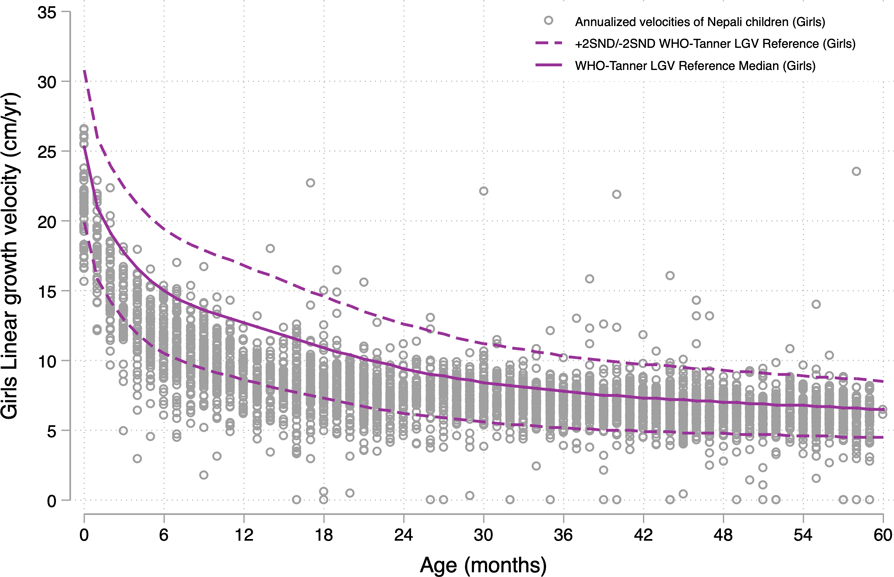
An annualised linear growth velocity (LGV) reference can identify groups of children at risk of growing poorly. As a single velocity reference for all preschool ages does not exist, we present an interim tool, derived from published, normative growth studies, for detecting growth faltering, illustrating its use in Nepali preschoolers.
Design:
The WHO Child Growth Velocity Standard was adapted to derive 12-month increments and conjoined to the Tanner-Whitehouse Height Velocity Reference data yielding contiguous preschool linear growth annualised velocities. Linear restricted cubic spline regressions were fit to generate sex-specific median and standard normal deviate velocities for ages 0 through 59 months. LGV Z-scores (LGVZ) were constructed, and growth faltering was defined as LGVZ < –2.
Setting:
Use of the reference was illustrated with data from Nepal’s Tarai region.
Participants:
Children contributing the existing growth references and a cohort of 4276 Nepali children assessed from 2013 to 2016.
Results:
Fitted, smoothed LGV reference curves displayed monotonically decreasing 12-month LGV, exemplified by male/female annual medians of 26·4/25·3, 12·1/12·7, 9·1/9·4, 7·7/7·8 and 7/7 cm/years, starting at 0, 12, 24, 36 and 48 months, respectively. Applying the referent, 31·1 %, 28·6 % and 29·3 % of Nepali children <6, 6–11 and 12–23 months of age, and ∼6 % of children 24–59 months, exhibited growth faltering. Under 24 months, faltering velocities were more prevalent in girls (34·4 %) than boys (25·3 %) (P < 0·05) but comparable (∼6 %) in older preschoolers.
Conclusions:
A LGV reference, concatenated from extant data, can identify preschool groups at-risk of growth faltering. Application and limitations are discussed.
Food advertising is an important determinant of unhealthy eating. However, analysing a large number of advertisements (ads) to distinguish between food and non-food content is a challenging task. This study aims to develop a machine learning-based method to automatically identify and classify food and non-food ad videos.
Design:
Methodological study to develop an algorithm model that prioritises both accuracy and efficiency in monitoring and classifying advertising videos.
Setting:
From a collection of Brazilian television (TV) ads data, we created a database and split it into three sub-databases (i.e. training, validation and test) by extracting frames from ads. Subsequently, the training database was classified using the EfficientNet neural network. The best models and data-balancing strategies were investigated using the validation database. Finally, the test database was used to apply the best model and strategy, and results were verified with field experts.
Participants:
The study used 2124 recorded Brazilian TV programming hours from 2018 to 2020. It included 703 food ads and over 20 000 non-food ads, following the protocol developed by the INFORMAS network for monitoring food marketing on TV.
Results:
The results showed that the EfficientNet neural network associated with the balanced batches strategy achieved an overall accuracy of 90·5 % on the test database, which represents a reduction of 99·9 % of the time spent on identifying and classifying ads.
Conclusions:
The method studied represents a promising approach for differentiating food and non-food-related video within monitoring food marketing, which has significant practical implications for researchers, public health policymakers, and regulatory bodies.
To compare ultra-processing markers and nutrient composition in plant-based meat products (PBMP) with equivalent meat-based products (MBP).
Design:
A total of 282 PBMP and 149 MBP within 18 product categories were assessed. Based on the NOVA classification, 33 ultra-processing markers were identified and six ultra-processing bullet categories were defined, that is flavour, flavour enhancer, sweetener, colour, other cosmetic additives and non-culinary ingredients. The ingredient lists were analysed concerning these ultra-processing markers and ultra-processing bullet categories, as well as nutrient composition, for all PBMP and MBP. Differences between PBMP and MBP were assessed using chi-square and Mann-Whitney U tests, respectively.
Setting:
Cross-sectional analysis.
Participants:
282 PBMP and 149 MBP.
Results:
The percentage of ultra-processed food (UPF) items was significantly higher in PBMP (88 %) as compared to MBP (52 %) (P < 0·0001). The proportion of UPF items was numerically higher in 15 out of 18 product categories with differences in six categories reaching statistical significance (P < 0·05). Flavour, flavour enhancer, colour, other cosmetic additives and non-culinary ingredients were significantly more prevalent in PBMP as compared to MBP (P < 0·0001). Concerning nutrient composition, median energy, total fat, saturated fat and protein content were significantly lower, whereas the amounts of carbohydrate, sugar, fibre and salt were significantly higher in PBMP (P < 0·05).
Conclusions:
Ultra-processing markers are significantly more prevalent in PBMP as compared to MBP. Since UPF intake has been convincingly linked to metabolic and CVD, substituting MBP with PBMP might have negative net health effects.
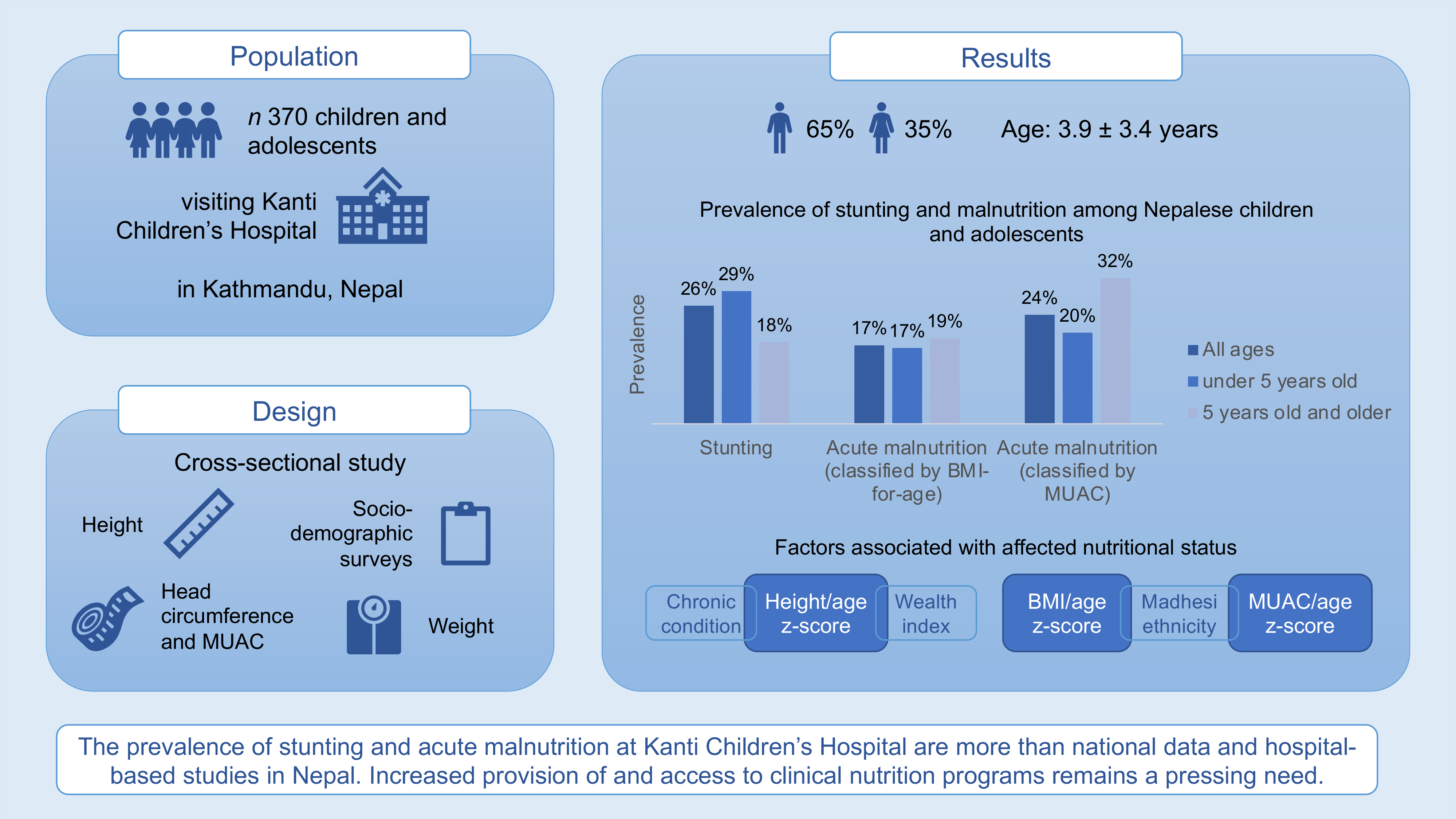
To examine the prevalence of malnutrition among children and adolescents visiting Kanti Children’s Hospital (KCH) and identify predictors associated with malnutrition. Results will guide the development of a newly established nutrition programme at KCH.
Design:
This cross-sectional pilot study recruited children and adolescents over a 1-month period. Nutritional anthropometrics (height, weight and mid-upper arm circumference (MUAC)) and socio-demographic questionnaires were administered. Clinical data were abstracted from the medical chart.
Setting:
KCH in Kathmandu, Nepal.
Participants:
370 children and adolescents.
Results:
Most participants were male (65·1 %); mean age was 3·9 years (±3·4 years). The prevalence of stunting was 25·9 %, wasting was 17·3 % and 24·0 % when classified by BMI-for-age Z-score or MUAC, respectively. Two percent of participants were overweight. Notably, 32·1 % of children ≥5 years were classified with wasting based on MUAC-for-age Z-score, which is higher than that observed in children <5 (20·2 %). Food insecurity was reported among 58·2 % of children with stunting and 34·0 % with wasting. Chronic medical conditions predicted stunting and wasting. The lowest level of wealth predicted stunting, while ethnicity predicted wasting. Ethnicity and education level predicted food insecurity.
Conclusions:
We found that the prevalence of stunting and wasting at KCH are higher than previously published studies in Nepal. Malnutrition persists beyond 5 years, and we identified several predictors of malnutrition. Increased provision of and access to clinical nutrition programmes is an essential need for KCH. Twinning programs that provide local clinicians with increased opportunities for education and mentorship of local staff remains a pressing need in Nepal.
To determine the prevalence and associated factors of the coexistence of overweight or obesity (OWOB) and anaemia among non-pregnant Guinean women aged 15–49 years.
Design:
The analysis was performed using data from the 2018 Guinean Demographic and Health Survey. Multivariate logistic regression was used to identify factors associated with the coexistence of OWOB and anaemia (OWOB + anaemia) among non-pregnant Guinean women.
Setting:
Guinea
Participants:
A total of 4783 non-pregnant women aged 15–49 years with valid data on the nutritional status (BMI and Hb level) were included in the analysis.
Results:
The prevalence of coexistence of OWOB and anaemia among non-pregnant women was 11·16 % (95% CI: 10·05, 12·37). The following variables were associated with OWOB + anaemia in multivariate models (adjusted OR (AOR) 95% CI): higher wealth index (AOR = 4·69; 95% CI: 2·62, 8·39), middle wealth index (AOR = 1·96; 95% CI: 1·31, 2·93), four or more antenatal visits (AOR = 1·62; CI: 1·16, 2·28), having four or more children (AOR = 2·47; 95% CI: 1·37, 4·43) and the rural areas (AOR = 0·59; 95% CI: 0·37, 0·95).
Conclusion:
The current study’s findings reveal that OWOB + anaemia concerned one-tenth of non-pregnant women. Associated factors were household wealth index, multiparity, antenatal visits and rural areas. Thus, there is a need to design specific interventions to prevent the double burden of malnutrition among women of reproductive age. Interventions should include promoting physical exercise, family planning, healthy eating and raising awareness of behavioural change.
To examine the height-for-age z-score (HAZ) of 0–35 months’ children along with stunting prevalence to identify trends, changes and available nutrition-sensitive and specific determinants that could help explain the long-term variation in child linear growth using successive Bangladesh Demographic and Health Surveys (BDHS) data from 1996 to 2018.
Design:
The BDHS pooled data are used for determining the key outcome variables HAZ, stunting and severe stunting. Trends, kernel-weighted local polynomial smoothing illustrations, pooled multivariable linear probability model (LPM), ordinary least squares method (OLS) and regression decomposition were used.
Participants:
Mothers having 0–35 months’ children, the most critical age range for growth faltering.
Results:
The mean HAZ increased by 0·91(±1·53) with 0·041 annual average change, while the percentages of stunting (–26·63 ± 0·54) and severe stunting (–21·12 ± 0·48) showed a reduction with 1·21 and 0·96 average annual changes, respectively. The average HAZ improvement (0·42 ± 1·56) in urban areas was less than the rural areas (1·16 ± 1·44). Similar patterns followed for stunting and severe stunting. The prenatal doctor visits (3064·65 %), birth in a medical facility (1054·32 %), breastfeeding initiation (153·18 %) and asset index (144·73 %) demonstrated a huge change. The findings of OLS, LPM and regression decomposition identified asset index, birth order, paternal and maternal education, bottle-fed, prenatal doctor visit, birth in a medical facility, vaccination, maternal BMI and ever-breastfed as influencing factors to predict the long-term changes of stunting and severe stunting.
Conclusion:
The nutrition-sensitive and specific factors identified through regression decomposition describing long-term variation in child linear growth should be focused further to attain the sustainable development goals.
The cardioprotective effects of nuts are well established. However, the positive impacts of nuts in preventing CVD at a younger age, a condition known as premature coronary artery disease (PCAD), is still debated. Therefore, we aim to determine the association between nuts and PCAD occurrence and its severity in different Iranian ethnicities.
Design:
This case–control study was conducted within the framework of the Iran-premature coronary artery disease (I-PAD) study, an ongoing multi-centric study on Iranian patients of different ethnicities.
Setting:
This multi-centric case–control study was conducted in among 3253 persons under the age of 70 years in women and 60 years in men from different ethnicities in Iran.
Participants:
Information on nut consumption was collected using a validated FFQ. Subjects were selected from among the candidates for angiography. Cases were those whose coronary angiography showed stenosis of more than 75 % in at least one vessel or more than 50 % of the left main artery, while the control group participants had normal angiography results.
Results:
In the crude model, compared to the first quartile, the highest quartile of nut consumption was significantly associated with a lower risk of PCAD (OR = 0·26, 95 % CI (0·21, 0·32); Pfor trend = 0·001). In the top quartile of nut intake, a substantial decrease in PCAD was observed after controlling for putative confounders (OR = 0·32; 95 % CI (0·24, 0·43); Pfor trend = 0·001). Additionally, a 75 % decrease in the risk of severe PCAD was observed in the participants in the highest quartile of nut intake.
Conclusion:
A significant inverse association was observed between nut intake and the risk and severity of PCAD in the Iranian population. Large-scale clinical trials are required to confirm these findings.
This systematic review aimed to investigate the association between dietary inflammatory potential and liver cancer to provide evidence regarding scientific dietary health education.
Design:
Systematic review and meta-analysis.
Setting:
A comprehensive literature review was conducted to identify case–control or cohort studies that involved dietary inflammation index (DII)/empirical dietary inflammation pattern (EDIP) and liver cancer in PubMed, EMBASE, Cochrane, and Web of Science databases. Using a combination of DII/EDIP and liver cancer as the search terms, the associations between DII/EDIP and liver cancer were then assessed.
Participants:
Three case–control studies and two cohort studies were brought into the meta-analysis, with 225 713 enrolled participants.
Results:
Meta-analysis of categorical variables showed that DII/EDIP in the highest category increased the risk of liver cancer compared to DII/EDIP in the lowest category (relative risk (RR) = 2·35; 95 % CI 1·77, 3·13; P = 0·000) and with low heterogeneity across studies (I2 = 40·8 %, P = 0·119). Meta-analysis of continuous variables showed that significant positive association between liver cancer and DII/EDIP scores (RR = 1·24; 95 % CI 1·09, 1·40; P = 0·001), and no heterogeneity (I² = 0·0 %, P = 0·471). Stratified according to the study design, there was a significant positive association between liver cancer and DII/EDIP scores in both cohort studies (RR = 2·16; 95 % CI 1·51, 3·07; P = 0·000) and case–control studies (RR = 2·75; 95 % CI 1·71, 4·41; P = 0·000).
Conclusion:
The higher the DII/EDIP score, the higher the risk of liver cancer. This finding may have prominent implications for the general population.
Test effects of a standardised front-of-package (FOP) disclosure statement (indicating added sugar, non-nutritive sweetener (NNS) and juice content) on accuracy in assessing ingredients and perceived healthfulness of children’s drinks.
Design:
In two randomised controlled experiments, the same participants viewed drink packages and indicated if products contained added sugar or NNS and percent juice and rated drink healthfulness. Experiment 1 (E1) included novel (non-US) children’s drinks with a) product claims only (control), b) claims and disclosure, or c) disclosure only. Experiment 2 (E2) included existing children’s drinks (with claims) with a) no disclosure (control) or b) disclosure. Both experiments evaluated sweetened (fruit drink and flavoured water) and unsweetened (100 % juice and juice/water blend) drinks. Potential individual differences (education level and race/ethnicity) in effects were explored.
Setting:
Online survey
Participants:
Six hundred and forty-eight US caregivers of young children (1–5 years)
Results:
FOP disclosures significantly increased accuracy for most ingredients and drink types, including identifying presence or absence of NNS in sweetened drinks, no added sugar in juice/water blends, and actual percent juice in fruit drinks and juice/water blends in both experiments. Disclosures also increased recognition that the novel 100 % juice and juice/water blend did not contain NNS or added sugar (E1) and existing sweetened drinks contained added sugar (E2). Disclosures reduced perceived healthfulness of sweetened drinks but did not increase unsweetened drink healthfulness ratings. Some differences by participant socio-demographic characteristics require additional research.
Conclusions:
FOP disclosures on children’s drink packages can increase caregivers’ understanding of product ingredients and aid in selecting healthier children’s drinks.
This study aimed to fill the current gap in the understanding of the knowledge, attitudes and behaviours (KAB) related to dietary Na among adult residents in Singapore.
Design:
A cross-sectional online survey was conducted between October and December 2020 on 955 participants selected through random sampling.
Setting:
The survey was conducted in Singapore.
Participants:
Participants were recruited from the Singapore Population Health Study Online Panel.
Results:
Participants’ mean age was 46·6 ± 14·1 years old and 58 % of them were females. Most of the participants were Chinese (82·1 %), 10·5 % were Indian and 4·5 % were Malay. Findings from the weighted data showed that most participants were aware of the health impact of high Na consumption. However, many participants were unaware of the recommended intake for salt (68%) and Na (83%), had misconceptions, and were unable to correctly use food labels to assess NA content (69%). Findings also alluded to the presence of knowledge gaps in the sources of Na in their diet. While 59 % of the participants reported to be limiting their consumption of Na, many reported facing barriers such as not knowing how to limit their Na intake. Participants also felt that there were limited options for low-Na foods when eating out and were lacking awareness of low-Na products.
Conclusions:
Findings highlighted substantial gaps in participants’ knowledge and skills in managing their Na consumption. This suggests the need for more public education and improvements in the food environment.
To describe and compare the references cited in popular books about diet and health between the USA and Japan.
Design:
Books were selected based on their best-seller rankings in the diet and health category of online bookstores. We identified references throughout all pages of the books and examined the number of references, reference format (identifiable or not) and presence of specific types of references, such as systematic reviews of human research. We compared the characteristics of references between the two countries and examined related factors to citation.
Setting:
Cross-sectional study.
Participants:
Books (n 100 in each country).
Results:
Among 100 books from each country, sixty-five US and sixty-six Japanese books had references. Forty-five US books cited more than 100 references, against only five Japanese books. The number of books that cited systematic reviews of human research differed between the USA (n 49) and Japan (n 9). Additionally, the number of books that provided identifiable information for all references was significantly higher in the USA (n 63) than in Japan (n 42). Books whose first authors have licences of medical doctors were more likely to cite references than those without in both countries.
Conclusions:
Two-thirds of books about diet and health cited references in both the USA and Japan, but Japanese books cited fewer references and were less likely to cite systematic reviews and provide identifiable references than US books. Further research into the scientific reliability of information in books about diet and health is warranted.
To explore how fathers with young children contributed to healthy home food provisioning and the factors enabling or inhibiting their involvement in family food tasks.
Design:
Cross-sectional study using purpose-designed online survey. The survey assessed the level of responsibilities and practices in family food tasks, food agency (Cooking and Food Provisioning Action Scale), and use of resources to support involvement in family food tasks. Data collection took place over 3 weeks in November–December 2020 when various COVID-19-related restrictions were in place. Descriptive and regression analyses were used to assess psychosocial factors influencing responsibilities in family food tasks and food agency.
Setting:
Online survey.
Participants:
Included in the analysis were 435 Australian fathers with children aged under 5 years.
Results:
Between 75 and 77 % of fathers in this study reported having at least half of the responsibilities in meal planning, shopping, and cooking. Health was frequently considered when deciding what to eat, but few used nutrition or food labels when shopping, tried new recipes or modified recipes to make them healthier. Involvement in family food tasks was promoted by a higher food agency, but time spent in employment was a significant barrier to reported food agency and greater involvement in food tasks. There was a high interest in resources to support healthy home food provisioning.
Conclusions:
The findings suggest the need to consider father-specific strategies to overcome time barriers and opportunities to enhance their capabilities for healthy home food provisioning.
Aligning with the United Nations Convention on the Rights of the Child, amplification of children’s voice in food practice research aims to inform initiatives that cater to children’s needs and thus improve nutritional outcomes. The aim of this study was to describe children’s (aged 6–11 years) involvement across qualitative research investigating their food practice perspectives.
Design:
A scoping review was conducted according to Preferred Reporting Items for Systematic Reviews and Meta-Analyses for Scoping Reviews (PRISMA-ScR). Six electronic databases were searched up until March 2023 (Cochrane, CINAHL, Embase, ERIC, Medline and PsychInfo). The Wellcome Framework for young people’s involvement in health research guided data extraction. Data were described according to inclusiveness, geography, food-related study topic, research stage and method, and child involvement.
Results:
The search identified 120 peer-reviewed studies (134 papers). Active participation was only seen within research implementation stages (i.e. data collection (n 134), analysis (n 31), dissemination (n 9) and re-design (n 7)). More passive forms of participation were identified in research design stages (i.e. agenda setting, resourcing and design). Studies that utilised participatory research methodologies and developmentally appropriate and engaging methods (e.g. PhotoVoice) saw more active participation by children.
Conclusion:
This review identified a lack of opportunities for children’s active participation in all stages of food practice research. Without a radical shift towards providing these opportunities, food and nutrition initiatives, policies or further research that do not meet the needs of children’s food-related worlds will continue to be developed. Instead, researchers and their institutions need to advocate for and, where possible, provide voluntary opportunities for children to actively participate in food practice research.
This study assessed diet diversity and consumption of ultra-processed foods and explored its impact on macronutrient intake and risk of micronutrient inadequacy.
Nutrient intake was assessed using 24-h dietary recall method and diet diversity through FAO-diet diversity score (DDS). Mann–Whitney U test was used to assess differences in risk of inadequacy across gender. Spearman’s rank correlation assessed associations between energy contributed by ultra-processed food and risk of nutrient inadequacy.
Participants:
A total of 589 adults (20–40 years) belonging to upper-middle and high-income groups.
Results:
The average individual DDS was 4·4 ± 0·6. Most of the participants (>80 %) had intakes less than national recommendations of pulses/eggs/flesh foods, milk/milk products, fruits, vegetables and nuts. Ultra-processed foods contributed to 17 % of total energy intake, 12 % of protein, 17 % of carbohydrate, 29 % of added sugar, 20 % of total fat and 33 % of Na intake. The average risk of nutrient inadequacies for Zn (98 % v. 75 %), folate (67 % v. 22 %) and niacin (83 % v. 44 %) was higher among males than females (P < 0·001). The average risk of nutrient inadequacies for Fe (58 % v. 7 %), vitamin B6 (95 % v. 90 %) and vitamin A (68 % v. 44 %) was higher among females than males (P < 0·001). There was a positive correlation between energy contributed by ultra-processed food and risk of niacin (ρ = 0·136, P = 0·001) and folate (ρ = 0·089, P = 0·049) inadequacy.
Conclusion:
Reformulating ultra-processed food to reduce fat, sugar and salt and increase micronutrients and behaviour change communication strategies that promote dietary diversity will improve micronutrient adequacy and diet quality.