Book contents
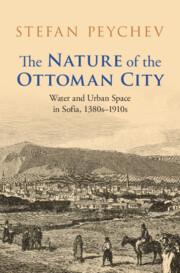
- The Nature of the Ottoman City
- Studies in Environment and History
- The Nature of the Ottoman City
- Copyright page
- Dedication
- Contents
- Figures
- Maps
- Acknowledgments
- Maps
- Introduction
- 1 Water Supply and the Making of Early Modern Ottoman Sofia
- 2 Thermal Springs, Public Baths, and Ottoman Sofia’s Culture of Water
- 3 Coping with Disaster
- Epilogue
- Bibliography
- Index
- Studies in Environment and History ()
- References
Book contents
- The Nature of the Ottoman City
- Studies in Environment and History
- The Nature of the Ottoman City
- Copyright page
- Dedication
- Contents
- Figures
- Maps
- Acknowledgments
- Maps
- Introduction
- 1 Water Supply and the Making of Early Modern Ottoman Sofia
- 2 Thermal Springs, Public Baths, and Ottoman Sofia’s Culture of Water
- 3 Coping with Disaster
- Epilogue
- Bibliography
- Index
- Studies in Environment and History ()
- References
Information
- Type
- Chapter
- Information
- The Nature of the Ottoman CityWater and Urban Space in Sofia, 1380s–1910s, pp. 179 - 198Publisher: Cambridge University PressPrint publication year: 2025
References
Primary Sources
Secondary Sources
370 Numaralı Muhasebe-i Vilâyet-i Rum-ili Defteri (937/1530) I. Ankara: T.C. Başbakanlık Devlet Arşivleri Genel Müdürlüğü, Osmanlı Arşivi Daire Başkanlığı, 2001.Google Scholar
Aktüre, Sevgi. 19. Yüzyıl sonunda Anadolu kenti mekânsal yapı çözümlemesi. Ankara: ODTÜ, 1978.Google Scholar
Ambraseys, Nicholas. Earthquakes in the Mediterranean and the Middle East: A Multidisciplinary Study of Seismicity up to 1900. Cambridge: Cambridge University Press, 2009.CrossRefGoogle Scholar
Ambraseys, N. N., and Finkel, C. F.. The Seismicity of Turkey and Adjacent Areas: A Historical Review, 1500–1800. Istanbul: EREN, 1995.Google Scholar
Anderson, Sonia P. An English Consul in Turkey: Paul Rycaut at Smyrna 1667–1678. New York: The Clarendon Press, 1989.Google Scholar
Andonova, Paulina. Osmanskiiat Elit i Blagotvoritelnostta v Tsentura na Provintsiia Rumeliia: Imaretut na Sofu Mehmed Pasha pri Chernata Dzhamiia v Sofiia, XVI–XIX Vek. Sofia: IK “Gutenberg,” 2020.Google Scholar
Andreev, Stefan. Rechnik na selishtni imena i nazvaniia na administrativno-teritorialni edinitsi v bulgarskite zemi prez XV–XIX v. Sofia: Glavno upravlenie na arkhivite pri ministerskiia suvet, 2002.Google Scholar
Angelov, Dimitur. “Sofiia prez Vtoroto bulgarsko tsarstvo (1185–1396),” in Sofiia prez vekovete, Vol. 1, edited by Dinekov, Petur et al., 55–73. Sofia: Izdatelstvo na BAN, 1989.Google Scholar
Arnaud, Jean-Luc. “Modernization of the Cities of the Ottoman Empire (1800–1920),” in The City in the Islamic World, Vol. 2, edited by Jayyusi, Salma K. et al., 953–975. Leiden: Brill, 2008.Google Scholar
Avdev, Stoyan. Razrushitelnite istoricheski zemetreseniia v Sofiia. Sofia: Besike, 2007.Google Scholar
Ayalon, Yaron. Natural Disasters in the Ottoman Empire: Plague, Famine, and Other Misfortunes. New York: Cambridge University Press, 2015.Google Scholar
Ayverdi, Ekrem Hakkı. Avrupa’da Osmanlı Mimari Eserleri IV: Bulgaristan, Yunanistan, Arnavudluk. İstanbul: İstanbul Fetih Cemiyeti, 1982.Google Scholar
Babinger, Franz. Beiträge zur Frühgeschichte der Türkenherrschaft im Rumelien (14–15 Jahrhundert). Munich, 1944.Google Scholar
Bakurdzhieva, Teodora, and Ivanov, Stoian. Ruse. Prostranstvo i istoriia (kraia na XIV v. – 70-te godini na XIX v.). Ruse: Avangardprint, 2001.Google Scholar
Balkanlar’da Osmanlı Vakıfları. Vakfiyeler. Bulgaristan, Vol. 2, edited by Eren, Halit. Istanbul: IRCICA, 2012.Google Scholar
Baram, Uzi, and Carroll, Lynda, “The Future of the Ottoman Past,” in A Historical Archaeology of the Ottoman Empire: Breaking New Ground, edited by Baram, Uzi and Carroll, Lynda, 3–32. New York: Kluwer Academic Publishers, 2000.Google Scholar
Barkan, Ömer L. “Osmanlı İmparatorluğunda bir iskân ve kolonizasyon metodu olarak vakıflar ve temlikler,” Vakıflar Dergisi 2 (1942): 279–365.Google Scholar
Barkan, Ömer L. “Quelques observations sur l’organisation économique et sociale des villes ottomanes des XVIe et XVIIe siècles,” in Recueils de la Société Jean Bodin pour l’histoire comparative des institutions, Vol. 7, La Ville 2: Institutions économiques et sociales, 289–311. Brussels: De Boeck Université, 1955.Google Scholar
Barkan, Ömer L. “Türkiye’de İmparatorluk Devirlerinin Büyük Nüfus ve Arazi Tahrirleri ve Hakana Mahsus İstatistik Defterleri,” İstanbul Üniversitesi İktisat Fakültesi Mecmuası 1 (1940): 20–59; 2 (1940): 214–247.Google Scholar
Barnes, John Robert. An Introduction to Religious Foundations in the Ottoman Empire. Leiden: E. J. Brill, 1987.CrossRefGoogle Scholar
Bayrak, Meral. “Sofya’da XVI. Yüzyıla Ait Bir Vakıf Örneği: Sofu Mehmed Paşa Külliyesi ve Camiden Kiliseye Çevrilmiş Bir Mabedin Hikayesi,” Türk Kültürü İncelemeleri Dergisi 19 (2008): 1–42.Google Scholar
Blanqui, Jérôme-Adolphe. Putuvane iz Bulgariia prez 1841 godina. Sofia: IK “Colibri,” 2005.Google Scholar
Bobchev, S. N. “Pregled na ostankite ot Serdica, otkriti v techenie na petdeset godini,” in Serdica: Arkheologicheski materiali i prouchvaniia, Vol. 2, edited by Velkov, Velizar, Ivanov, Teofil, and Stancheva, Magdalina, 37–57. Sofia: Izdatelstvo na BAN, 1989.Google Scholar
Bonine, Michael E. “Qanats, Field Systems, and Morphology: Rectangularity on the Iranian Plateau,” in Qanat, Kariz and Khattara: Traditional Water Systems in the Middle East and North Africa, edited by Beaumont, Peter, Bonine, Michael E., and McLachlan, Keith, 35–57. Wisbech: Middle East and North African Studies Press Ltd., 1989.Google Scholar
Boškov, Vančo, Epstein, Mark Alan, and Andreev, Stefan, eds. Ottoman Documents on Balkan Jews Sixteenth–Seventeenth Centuries. Sofia: CIBAL, 1990.Google Scholar
Boykov, Grigor. “Balkan City or Ottoman City? A Study of the Models of Urban Development in Ottoman Upper Thrace, from the Fifteenth to the Seventeenth Century,” Proceedings of the Third International Congress on the Islamic Civilization in the Balkans. Istanbul: IRCICA, 2010, 69–85.Google Scholar
Boykov, Grigor. “The Human Cost of Warfare: Population Loss during the Ottoman Conquest and the Demographic History of Bulgaria in the Late Middle Ages and Early Modern Era,” in The Ottoman Conquest of the Balkans, edited by Schmitt, Oliver Jens, 101–164. Vienna: Österreichische Akademie der Wissenschaften, 2016.Google Scholar
Boykov, Grigor. “Karlızâde ‘Ali Bey: An Ottoman Dignitary’s Pious Endowment and the Emergence of the Town of Karlova in Central Bulgaria,” in Festschrift in Honor of Heath Lowry (Journal of Turkish Studies, Vol. 39), edited by Kuru, Selim S. and Tezcan, Baki, 247–267. Cambridge, MA: Department of Near Eastern Languages and Civilizations, Harvard University, 2013.Google Scholar
Brankov, Georgi. “Stroitelstvo i blagoustroystvo (1878–1944),” in Sofiia prez vekovete, Vol. 2, edited by Hadzhinikolov, Veselin et al., 57–70. Sofia: Izdatelstvo na BAN, 1991.Google Scholar
Brown, L. Carl, “The Setting: An Introduction,” in Imperial Legacy: The Ottoman Imprint on the Balkans and the Middle East, edited by Carl Brown, L., 1–12. New York: Columbia University Press, 1996.Google Scholar
Budak, Samet. “The Conquests of Adrianople by the Turks: Reflections on the Ottoman Expansion in Thrace,” Der Islam 99/2 (2022): 552–583.CrossRefGoogle Scholar
Burbury, John. A Relation of a Journey of the Right Honorable My Lord Henry Howard. London, 1671.Google Scholar
Burke, Edmund III. “Pastoralism and the Middle Eastern Environment,” IJMES 42 (2010): 663–665.Google Scholar
Casale, Giancarlo. “The ‘Environmental Turn’: A Teaching Perspective,” IJMES 42 (2010): 669–671.Google Scholar
Cerasi, Maurice. “Open Space, Water and Trees in Ottoman Urban Culture in the XVIIIth–XIXth Centuries,” Environmental Design: Journal of the Islamic Environmental Design Research Centre 2 (1985): 36–49.Google Scholar
Çiçek, Kemal. “Osmanlı Tahrir Defterlerinin Kullanımında Görülen bazı Problemler ve Metod Arayışları,” Türk Dünyası Araştırmaları Dergisi 97 (1995): 93–111.Google Scholar
Cichocki, Nina. “The Life Story of the Çemberlitaş Hamam: From Bath to Tourist Attraction.” PhD Dissertation, University of Minnesota, 2005.Google Scholar
Cohen, Mark. “Monastir: Oasis of Civilization, 1839–63,” Turkish Studies Association Bulletin 24/2 (Fall 2000): 3–22.Google Scholar
Conley, Tanja Damljanović, and Makaš, Emily Gunzburger. “Shaping Central and Southeastern European Capital Cities in the Age of Nationalism,” in Capital Cities in the Aftermath of Empires: Planning in Central and Southeastern Europe, edited by Gunzburger Makaš, Emily and Damljanović Conley, Tanja, 1–28. London: Routledge, 2010.Google Scholar
Coşgel, Metin. “Ottoman Tax Registers (Tahrir Defterleri),” Historical Methods 37/2 (2004): 87–100.CrossRefGoogle Scholar
Cronon, William. Nature’s Metropolis: Chicago and the Great West. New York: W. W. Norton & Co., 1991.Google Scholar
Çadırcı, Musa. Tanzimat döneminde Anadolu kentlerinin sosyal ve ekonomik yapıları. Ankara: TTK, 1991.Google Scholar
Çeçen, Kazım. İstanbul’da Osmanlı Devrindeki Su Tesisleri. İstanbul: İstanbul Teknik Üniversitesi İnşaat Fakültesi Matbaası, 1984.Google Scholar
Çeçen, Kazım. Sinan’s Water Supply System in İstanbul. İstanbul: İSKİ Genel Müdürlüğü, 1992.Google Scholar
Çelik, Zeynep. The Remaking of Istanbul: Portrait of an Ottoman City in the Nineteenth Century. Berkeley, CA: University of California Press, 1986.CrossRefGoogle Scholar
Dankoff, Robert. “The Languages of the World according to Evliya Çelebi,” in From Mahmud Kaşgari to Evliya Çelebi: Studies in Middle Turkic and Ottoman Literatures, edited by Dankoff, Robert, 277–290. Istanbul: ISIS, 2009.CrossRefGoogle Scholar
Dankoff, Robert. An Ottoman Mentality: The World of Evliya Çelebi. Leiden: E. J. Brill, 2004.Google Scholar
Dankoff, Robert, and Kim, Sooyong, translation and commentary. An Ottoman Traveller: Selections from the Book of Travels of Evliya Çelebi. London: Eland, 2010.Google Scholar
Davis, Diana K. “Power, Knowledge, and Environmental History in the Middle East and North Africa,” IJMES 42 (2010): 657–659.Google Scholar
Davis, Diana K., and Burke, Edmund III, eds. Environmental Imaginaries of the Middle East and North Africa. Athens, OH: Ohio University Press, 2011.CrossRefGoogle Scholar
Davison, R. H. “Midhat Pasha,” Encyclopaedia of Islam, 2nd ed. Brill Online Reference Works, 2012, https://referenceworks.brillonline.com/browse/encyclopaedia-of-islam-2/alpha/i.Google Scholar
DeLaine, Janet. “Introduction: Bathing and Society,” in Roman Baths and Bathing: Proceedings of the First International Conference on Roman Baths held at Bath, England, 30 March–4 April 1992: Part 1: Bathing and Society, edited by DeLaine, Janet and Johnston, David E., 7–16. Portsmouth: Journal of Roman Archaeology, 1999.Google Scholar
Deliradev, Pavel. Sofiiskite mineralni bani. Geolozhki i istoricheski belezhki. Sofia: Pechatnitsa “Gladston,” 1937.Google Scholar
Dernschwam, Hans. Tagebuch einer Reise nach Konstantinopel und Kleinasien (1553/55), edited by Babinger, Franz. Munich: Verlag von Duncker & Humblot, 1923.Google Scholar
Dimitrov, Strashimir. “Zanaiati i turgoviia v Sofiia prez XVIII vek,” in Sofiia prez vekovete, Vol. 1, edited by Dinekov, Petur et al., 95–112. Sofia: Izdatelstvo na BAN, 1989.Google Scholar
Dimitrov, Strashimir, and Andreev, Stefan, eds. Turski izvori za bulgarskata istoriia, Vol. 8. Sofia: Glavno upravlenie na arkhivite pri Ministerskiia suvet, 2001.Google Scholar
Dinekov, Petur. Sofiia prez XIX vek do osvobozhdenieto na Bulgariia. Sofia: Bulgarski Arkheologicheski Institut, 1937.Google Scholar
Dintchev, Ventzislav. “Obshtestvenite bani na Serdica,” in Izsledvaniia v Chest na Stefan Boyadzhiev, edited by Stanev, Stanislav, Grigorov, Valeri, and Dimitrov, Vladimir, 101–124. Sofia: NAIM BAN, 2011.Google Scholar
Dolbee, Samuel. Locusts of Power: Borders, Empire, and Environment in the Modern Middle East. Cambridge: Cambridge University Press, 2023.CrossRefGoogle Scholar
Duman, Hasan. Ottoman Year-books. A Bibliography and a Union Catalogue with Reference to Istanbul Libraries. Istanbul: IRCICA, 1982.Google Scholar
Eldem, Edhem, Goffman, Daniel, and Masters, Bruce, eds. The Ottoman City between East and West: Aleppo, Izmir, and Istanbul. Cambridge: Cambridge University Press, 1999.Google Scholar
Elezović, Gliša. “Jahja Pasha,” Jugoslovenski Istoriski Casopis 3/1–4 (1937): 161–179.Google Scholar
Elezović, Gliša. Turski Spomenici, kniga 1, sveska 1 1348–1520. Beograd: Srpska Kraljevska Akademija, 1940.Google Scholar
Eneva, Ivana, and Panova, Silviya. Profesor Stefan Dimitrov: Purviiat Bulgarski Profesor po Keramika. Sofia: National Academy of Art, 2008.Google Scholar
Erdöğru, M. Akif. “Onaltıncı Yüzyılda Sofya Şehri,” Tarih İncelemeleri Dergisi 17/2 (2002): 1–15.Google Scholar
Ergene, Boğaç. Local Court, Provincial Society and Justice in the Ottoman Empire: Legal Practice and Dispute Resolution in Çankırı and Kastamonu (1652–1744). Leiden: Brill, 2003.CrossRefGoogle Scholar
Ergin, Nina. “The Albanian Tellâk Connection: Labor Migration to the Hammams of Eighteenth-Century Istanbul Based on the 1752 İstanbul Hamâmları Defteri,” Turcica 43 (2011): 231–256.Google Scholar
Ergin, Nina. “Bathing Business in Istanbul: A Case Study of the Çemberlitaş Hamamı in the Seventeenth and Eighteenth Centuries,” in Bathing Culture of Anatolian Civilizations: Architecture, History and Imagination, edited by Ergin, Nina, 142–168. Leuven: Peeters, 2011.Google Scholar
Çelebi, Evliya. Evliya Çelebi Seyahatnamesi, Vol. 2, edited by Kurşun, Zekeriya, Kahraman, Seyit Ali, and Dağlı, Yücel. Istanbul: Yapı Kredi Yayınları, 1999.Google Scholar
Çelebi, Evliya. Evliya Çelebi Seyahatnamesi, Vol. 3, edited by Kahraman, Seyit Ali and Dağlı, Yücel. Istanbul: Yapı Kredi Yayınları, 1999.Google Scholar
Eyice, Semavi. “Ayazma,” Türkiye Diyanet Vakfı İslâm Ansiklopedisi, Vol. 4, 229–230. Ankara: TDV, 1991.Google Scholar
Filov, Bogdan. Sofiiskata tsurkva Sv. Sofiia. Sofia: Sofiisko arkheologichesko druzhestvo, 1913.Google Scholar
Finkel, Caroline. Osman’s Dream: The Story of the Ottoman Empire 1300–1922. New York: Basic Books, 2006.Google Scholar
Galabov, Galab. “Dokumenti ot XIV vek i opisaniia ot XVI i XVII vekove,” Serdica 1–2 (1942): 87–96.Google Scholar
Galabov, Galab. “Kakvo kazvat turskite voenachalnitsi za prevzemaneto na Sofiia,” Serdica 5 (1941): 59–61.Google Scholar
Galabov, Galab D., and Duda, Herbert W., eds. Die Protokollbücher des Kadiamtes Sofia. München: Verlag R. Oldenbourg, 1960.Google Scholar
Gamal-Eldin, Mohamed. “Cesspools, Mosquitoes and Fever: An Environmental History of Malaria Prevention in Ismailia and Port Said, 1869–1910,” in Seeds of Power: Explorations in Ottoman Environmental History, edited by İnal, Onur and Köse, Yavuz, 184–207. Winwick, Cambridgeshire: The White Horse Press, 2019.Google Scholar
Gandy, Matthew. Concrete and Clay: Reworking Nature in New York City. Cambridge, MA: The MIT Press, 2002.CrossRefGoogle Scholar
Genchev, Hristo. Sofiia, mislena v prostranstvoto i otvud vremeto. Sofia: ArhLIBRI, 2009.Google Scholar
Genç, Nevin. XVI. Yüzyıl Sofya Mufassal Tahrir Defteri’nde Sofya Kazası. Eskişehir: Anadolu Üniversitesi Yayınları, 1988.Google Scholar
Genov, Tsonko. “Osvobozhdenieto na Sofiia ot osmansko gospodstvo,” in Sofiia prez vekovete, Vol. 1, edited by Dinekov, Petur et al., 223–231. Sofia: Izdatelstvo na BAN, 1989.Google Scholar
Georgiev, Matei. Ikonomicheskoto minalo na gr. Sofiia i Sofiisko (Izsledvaniia). Sofia: Pechatnitsa “Kambana,” 1926.Google Scholar
Georgiev, Matei. Vuzrazhdaneto na grad Sofiia (Istoricheski materiali). Sofia: Pridvorna pechatnitsa, 1920.Google Scholar
Georgieva, Gergana. “Dinamika na teritorialnoto delenie na provintsiia Rumeliia,” Istorichesko budeshte 1–2 (2008–2009): 10–62.Google Scholar
Georgieva, Gergana. “Functions and Prerogatives of the Rumeli Vali in the First Half of the Nineteenth Century,” Études Balkaniques 2 (2003): 57–77.Google Scholar
Georgieva, Gergana. “Gradskoto upravlenie na Sofiia i Bitolia v nachaloto na XIX vek,” in Balkanite mezhdu traditsiiata i modernostta: Administrativni, sotsialno-ikonomicheski i kulturno-prosvetni institutsii v balkanskite provintsii na Osmanskata imperiia (XVIII–XIX vek), 70–99. Sofia: IK “Gutenberg,” 2009.Google Scholar
Georgieva, Gergana. “Saraiat na provintsialnite osmanski upraviteli: miasto za zhiveene – miasto za upravlenie, purvata polovina na XIX vek,” in Chetiva za istoriiata i kulturata na Balkanite, edited by Karamihova, Margarita, 79–102. Sofia: Paradigma, 2010.Google Scholar
Georgieva, Gergana. “Za tsentura na provintsiia Rumeliia (ot kraia na XVIII vek do 1839 g.),” Istorichesko budeshte 8/1–2 (2004): 47–70.Google Scholar
Georgieva, Tsvetana. Prostranstvo i prostranstva na bulgarite XV–XVII vek. Sofia: LIK, 1999.Google Scholar
Gerlach, Stefan. Dnevnik na edno putuvane do Osmanskata porta v Tsarigrad, transl. Maria Kiselincheva. Sofia: Izdatelstvo na Otechestveniia front, 1976.Google Scholar
Giardini, D., et al., Seismic Hazard Harmonization in Europe (SHARE): Online Data Resource, doi: 10.12686/SED-00000001-SHARE, www.share-eu.org, 2013.CrossRefGoogle Scholar
Gökbilgin, M. Tayyib. XV–XVI asırlarda Edirne ve Paşa Livası. Vakıflar – Mülkler – Mukataalar. İstanbul: İstanbul Üniversitesi Yayınları, 1952.Google Scholar
Gradeva, Rossitsa. “Administrative System and Provincial Government in the Central Balkan Territories of the Ottoman Empire, 15th Century,” in Rossitsa Gradeva, Rumeli under the Ottomans, 15th–18th Centuries: Institutions and Communities, 23–51. Istanbul: The Isis Press, 2004.Google Scholar
Gradeva, Rossitsa. “On the Kadıs of Sofia, 16th–17th Centuries,” in Rossitsa Gradeva, Rumeli under the Ottomans, 15th–18th Centuries: Institutions and Communities, 67–106. Istanbul: The Isis Press, 2004.Google Scholar
Gradeva, Rossitsa. “Late Antique Church Buildings in Ottoman Sofia, Fifteenth to Beginning of Nineteenth Century,” in Christian Art under Muslim Rule, edited by Hartmuth, Maximilian, 167–193. Leiden: Nederlands Instituut voor het Nabije Oosten, 2016.Google Scholar
Gradeva, Rossitsa. “Ottoman and Bulgarian Sources on Earthquakes in the Central Balkan Lands (17th–18th Centuries),” in Natural Disasters in the Ottoman Empire, edited by Zachariadou, Elizabeth, 55–65. Rethymnon: Crete University Press, 1999.Google Scholar
Gratien, Chris. The Unsettled Plain: An Environmental History of the Late Ottoman Frontier. Stanford, CA: Stanford University Press, 2022.CrossRefGoogle Scholar
Gratien, Chris. Grutski Izvori za Bulgarskata Istoriia VII. Sofia: Izdatelstvo na BAN, 1968.Google Scholar
Hadzhi Kalfa, Mustafa Ben Abdullah. Rumelia i Bosna, transl. and ed. Argirov, Stoian, in Arkhiv za poselishtni prouchvaniia 2 (1938): 63–110.Google Scholar
Halil, Mükrimin. “Feridun Bey münşeatı,” Tarih-i Osmani encümeni mecmuası 77: 161–168, 78: 37–46, 79: 95–104, 81: 216–226 (1923–1924).Google Scholar
Halman, Talat S. A Millennium of Turkish Literature: A Concise History. Syracuse, NY: Syracuse University Press, 2011.Google Scholar
Hamadeh, Shirine. The City’s Pleasures: Istanbul in the Eighteenth Century. Seattle, WA: University of Washington Press, 2007.Google Scholar
Harbova, Margarita. Gradoustroistvo i arkhitektura po bulgarskite zemi prez XV–XVIII vek. Sofia: Izdatelstvo na BAN, 1991.Google Scholar
Hartmuth, Maximilian. “Architecture, Change, and Discontent in the Empire of Mehmed II: The Great Mosque of Sofia, Its Date and Importance Reconsidered,” in Osmanlı Mimarlık Kültürü, haz. Aynur, Hatice ve Hilal Uğurlu, A., 337–350. Istanbul: Kubbealtı, 2017.Google Scholar
Hartmuth, Maximilian. “Negotiating Tradition and Ambition: A Comparative Perspective on the ‘De-Ottomanization’ of Balkan Cityscapes,” Ethnologia Balkanica 10 (2006): 15–33.Google Scholar
Hristodorov, D. Tsurkvata Sv. Sedmochislenitsi v Sofiia. Sofia: Tsurkovno nastoiatelstvo, 1940.Google Scholar
Husain, Faisal H. Rivers of the Sultan: The Tigris and Euphrates in the Ottoman Empire. New York: Oxford University Press, 2021.CrossRefGoogle Scholar
Ikhchiev, Diamandi. “Materiali za istoriiata ni pod turskoto robstvo,” Izvestiia na istoricheskoto druzhestvo 1 (1905): 60–130.Google Scholar
Ikhchiev, Diamandi. “Materiali za istoriiata ni pod turskoto robstvo,” Izvestiia na istoricheskoto druzhestvo 2 (1906): 91–208.Google Scholar
Ikhchiev, Diamandi. “Ilıdja,” Encyclopaedia of Islam, 2nd ed. Brill Online Reference Works, 2012.Google Scholar
Iliev, Georgi. “Svedeniia za grad Sofiia prez XVI vek,” Izvestiia na seminarite pri Istoriko-filologicheskiia fakultet na universiteta “Sv. Kliment Okhridski” 1 (1942): 181–266.Google Scholar
Ionov, Mikhail, ed. Nemski i avstriiski putepisi za Balkanite XV–XVI v. Sofia: Nauka i izkustvo, 1979.Google Scholar
Ionov, Mikhail, Nemski i avstriiski putepisi za Balkanite XVII – sredata na XVIII v. Sofia: Nauka i izkustvo, 1986.Google Scholar
Ishirkov, Anastas. Grad Sofiia prez XVII vek. Sofia: Tsarska pridvorna pechatnitsa, 1912.Google Scholar
Ishirkov, Anastas. “Sofiia po vreme na Osvobozhdenieto,” in Iubileina kniga na grad Sofiia (1878–1928), 56–64. Sofia: Pechatnitsa “Knipegraf,” 1928.Google Scholar
Ivanov, Iordan. “Sofiia prez tursko vreme,” in Iubileina kniga na grad Sofiia (1878–1928), 39–45. Sofia: Pechatnitsa “Knipegraf,” 1928.Google Scholar
Ivanov, Mario. “Kusnoantichnata Banya Pri Mineralniia Kaptazh na Serdika,” Bulgarian e-Journal of Archaeology 13/1 (2023): 67–97.Google Scholar
Ivanov, V. “Banite v stariia Shumen,” Izvestiia na Narodniia muzei Kolarovgrad 2 (1963): 59–74.Google Scholar
Ivanova, Klimentina, ed. Stara bulgarska literatura, Vol. 4, Zhitiepisni tvorbi. Sofia: Bulgarski pisatel, 1986.Google Scholar
Ivanova, Svetlana. “Sofya,” Encyclopaedia of Islam, 2nd ed. Brill Online Reference Works, 2012, https://referenceworks.brillonline.com/browse/encyclopaedia-of-islam-2/alpha/i.Google Scholar
İnal, Onur. “Environmental History as an Emerging Field in Ottoman Studies: An Historiographical Overview,” Osmanlı Araştırmaları 38 (2011): 1–25.Google Scholar
İnal, Onur. “A Port and Its Hinterland: An Environmental History of Izmir in the Late-Ottoman Period.” PhD Dissertation, University of Arizona, 2015.Google Scholar
İnal, Onur, and Köse, Yavuz, eds. Seeds of Power: Explorations in Ottoman Environmental History. Winwick, Cambridgeshire: The White Horse Press, 2019.Google Scholar
İnalcık, Halil. The Ottoman Empire: The Classical Age 1300–1600. London: Weidenfeld & Nicolson, 1973.Google Scholar
İnalcık, Halil. “Ottoman Methods of Conquest,” Studia Islamica 2 (1954): 103–129.CrossRefGoogle Scholar
İnalcık, Halil, Radushev, Evgeni, and Altuğ, Uğur, eds. 1445 Tarihli Paşa Livası İcmal Defteri. Ankara: TTK, 2013.Google Scholar
Jennings, Ronald C. “Women in Early 17th Century Ottoman Judicial Records – The Sharia Court of Anatolian Kayseri,” JESHO 18/1 (1975): 53–114.Google Scholar
Jennings, Ronald C. “Zimmis (Non-Muslims) in Early Seventeenth Century Ottoman Judicial Records: The Sharia Court of Anatolian Kayseri,” JESHO 21/3 (1978): 225–293.Google Scholar
Jireček, Konstantin. Putuvaniia po Bulgariia. Sofia: Izdatelstvo “Nauka i izkustvo,” 1974.Google Scholar
Johnes, Thomas, transl. The Travels of Bertrandon de la Brocquiere. Hafod Press, 1807.Google Scholar
Jovanović, Miloš. “Bourgeois Balkans: World-building in Belgrade and Sofia, 1830–1912.” PhD Dissertation, University of Illinois at Urbana-Champaign, 2016.Google Scholar
Kafesçioğlu, Çiğdem. “The Ottoman Capital in the Making: The Reconstruction of Constantinople in the Fifteenth Century.” PhD Dissertation, Harvard University, 1996.Google Scholar
Kalicin, Maria, and Mutafova, Krassimira, “Historical Accounts of the Halveti Shaykh Bali Efendi of Sofia in a Newly Discovered Vita Dating from the Nineteenth Century,” Islam and Christian-Muslim Relations 12/3 (2001): 339–353.CrossRefGoogle Scholar
Kanitz, Felix. Donau-Bulgarien und der Balkan. Historisch-Geographisch-Ethnographische Reisestudien aus den Jahren 1860–1879, Vol. 2. Leipzig: Gebhardt & Wilisch, 1882.Google Scholar
Karakaya, Enis. “Kaplıca,” Türkiye Diyanet Vakfı İslâm Ansiklopedisi, Vol. 24, 351–353. Ankara: TDV, 2001.Google Scholar
Kelman, Ari. A River and Its City: The Nature of Landscape in New Orleans. Berkeley, CA: University of California Press, 2003.CrossRefGoogle Scholar
Kennedy, Hugh. “From Polis to Madina: Urban Change in Late Antique and Early Islamic Syria,” Past and Present 106 (1985): 3–27.CrossRefGoogle Scholar
Kentel, K. Mehmet. “Nature’s ‘Cosmopolis’: Villagers, Engineers and Animals along Terkos Waterworks in Late Nineteenth-Century Istanbul,” in Seeds of Power: Explorations in Ottoman Environmental History, edited by İnal, Onur and Köse, Yavuz, 155–183. Winwick, Cambridgeshire: The White Horse Press, 2019.Google Scholar
Kiel, Machiel. “H’razgrad – Hezargrad – Razgrad, The Vicissitudes of a Turkish Town in Bulgaria (Historical, Demographical, Economic and Art Historical Notes),” Turcica 21–23 (1991): 495–563.CrossRefGoogle Scholar
Kiel, Machiel. Khora i selishta v Bulgariia prez osmanskiia period. Sofia: Amicitia, 2005.Google Scholar
Kiel, Machiel. “The Ottoman Hammam and the Balkans,” Art and Archaeology Research Papers 9 (1976): 87–96.Google Scholar
Kiel, Machiel. Studies on the Ottoman Architecture of the Balkans. Aldershot: Variorum, 1990.Google Scholar
Kiel, Machiel. “Urban Development in Bulgaria in the Turkish Period: The Place of Turkish Architecture in the Process,” in The Turks of Bulgaria: The History, Culture and Political Fate of a Minority, edited by Karpat, Kemal, 79–158. Istanbul: Isis Press, 1990.Google Scholar
Kline, Galen R. The “Voyage d’Outremer” by Bertrandon de la Broquière. New York: Peter Lang, 1988.Google Scholar
Klingle, Matthew. Emerald City: An Environmental History of Seattle. New Haven, CT: Yale University Press, 2007.CrossRefGoogle Scholar
Kostova, Zara. “Dzhamiiata Sofu Mehmed Pasha i prevrushtaneto i v tsurkva,” in Balkanlar’da kültürel etkileşim ve türk mimarisi uluslararası sempozyumu. Bildirileri (17–19 Mayıs 2000, Şumnu – Bulgaristan), edited by Yasa, Azize Aktaş and Zafer, Zeynep, 427–438. Ankara: Atatürk Kültür Merkezi, 2001.Google Scholar
Kotsev, Georgi, et al. Avstriiski arkhitekturni vliianiia v Sofiia v kraia na XIX – nachaloto na XX vek. Sofia: Muzei za istoriia na Sofiia, 1998.Google Scholar
Kotsev, Georgi, “Triumfalnite arki v Sofiia sled Osvobozhdenieto,” in Serdica-Sredets-Sofia, Vol. 4, edited by Vurbanova, Valentina and Kirova, Nadezhda, 131–144. Sofia: Izdatelstvo za teritorialno ustroistvo i stroitelstvo, 2008.Google Scholar
Koumaridis, Yorgos. “Urban Transformation and De-Ottomanization in Greece,” East Central Europe 33/1–2 (2006): 213–241.CrossRefGoogle Scholar
Koyuncu, Aşkın. “Bulgaristan’da Osmanlı Maddi Kültür Mirasının Tasfiyesi (1878–1908),” Ankara Üniversitesi Osmanlı Tarihi Araştırma ve Uygulama Merkezi Dergisi 20 (2006): 197–234.Google Scholar
Koyuncu, Aşkın. “Sofya’da Osmanlı Mimari Mirasının Tasfiyesi (1878–1908),” XVI. Türk Tarih Kongresi, 20–24 Eylül 2010, Ankara, Kongreye Sunulan Bildiriler, 113–144. Ankara: Türk Tarih Kurumu, 2015.Google Scholar
Koyuncu, Aşkın. “Sofya’daki Sofu Mehmed Paşa Camisi (Kara Cami)’nin Kiliseye Dönüştürülmesi,” in Uluslararası Balkanlarda Türk Varlığı Sempozyumu. Bildiriler II. Cilt, edited by Şenel, Ünal, 129–146. Manisa: Celal Bayar Üniversitesi, 2010.Google Scholar
Kozhuharov, Georgi. “Arkhitektura i stroitelstvo prez Vuzrazhdaneto,” in Sofiia prez vekovete, Vol. 1, edited by Dinekov, Petur et al., 113–139. Sofia: Izdatelstvo na BAN, 1989.Google Scholar
Köylüoğlu, Neriman Meriç. Edirne’de Osmanlıdan Günümüze Su Yapıları. Edirne: Türk Kütüphaneciler Derneği Edirne Şubesi, 2001.Google Scholar
Kraelitz, Friedrich von. “İlk Osmanlı padişahlarının isdar etmiş oldukları bazı beratlar,” Tarih-i Osmani encümeni mecmuası 28 (1914): 242–250.Google Scholar
Kraelitz, Friedrich von. Kratka Istoriia na Bulgarskata Arkhitektura. Sofia: Izdatelstvo na BAN, 1965.Google Scholar
Kreiser, K. “Sal-Name,” Encyclopaedia of Islam, 2nd ed. Brill Online Reference Works, 2012.Google Scholar
Kritovoulos, , History of Mehmed the Conqueror, transl. by C. T. Riggs. Princeton, NJ: Princeton University Press, 1954.Google Scholar
Kunt, Metin. The Sultan’s Servants: The Transformation of Ottoman Provincial Government, 1550–1650. New York: Columbia University Press, 1983.Google Scholar
Lindenberg, Paul. “Bulgarische Eindrücke und Erinnerungen,” in Jubiläums-Almanach Königreich Bulgarien, edited by Parlapanoff, Iwan, 129–135. Leipzig: Max Beck Verlag, 1928.Google Scholar
Lory, Bernard. Le sort de l’héritage ottoman en Bulgariez; l’exemple des villes bulgares 1878–1900. Istanbul: Isis Press, 1985.Google Scholar
Lory, Bernard. La ville balkanissime: Bitola 1800–1918. Istanbul: Les Éditions ISIS, 2011.Google Scholar
Lory, Bernard. Sudbata na osmanskoto nasledstvo v Bulgariia: Bulgarskata gradska kultura 1878–1900 g. Sofia: AMICITIA, 2002.Google Scholar
Low, Michael Christopher. Imperial Mecca: Ottoman Arabia and the Indian Ocean Hajj. New York: Columbia University Press, 2020.CrossRefGoogle Scholar
Lowry, Heath W. “The Ottoman Tahrir Defterleri as a Source for Social and Economic History: Pitfalls and Limitations,” in Lowry, Heath W., Studies in Defterology. Ottoman Society in the Fifteenth and Sixteenth Centuries, 3–18. Istanbul: The Isis Press, 1992.Google Scholar
Macauley, David. Elemental Philosophy: Earth, Air, Fire, and Water as Environmental Ideas. Albany, NY: State University of New York Press, 2010.CrossRefGoogle Scholar
Mandaville, Jon E. “Usurious Piety: The Cash Waqf Controversy in the Ottoman Empire,” IJMES 10 (1979): 289–308.Google Scholar
Markov, Nikolai. “Buyuk dzhamiia v Sofiia. Belezhki za neinoto minalo,” in Serdica-Sredets-Sofiia, Vol. 3, edited by Stancheva, Magdalina, Miteva, Zhanet, and Mladenova, Todorka, 51–66. Sofia: Muzei za istoriia na Sofiia, 1997.Google Scholar
Martal, Abdullah. “Suyolcu,” Türkiye Diyanet Vakfı İslâm Ansiklopedisi, Vol. 38, 1–2. Ankara: TDV, 2010.Google Scholar
Martal, Abdullah. “XVI. Yüzyılda Osmanlı İmparatorluğunda Su-Yolculuk,” TTK Belleten LII/205 (1989): 1585–1653.Google Scholar
Matanov, Hristo, and Mikhneva, Rumiana. Ot Galipoli do Lepanto. Sofia: Nauka i izkustvo, 1988.Google Scholar
Mauch, Christof. “Introduction,” in Natural Disasters, Cultural Responses: Case Studies toward a Global Environmental History, edited by Mauch, Christof and Pfister, Christian, 1–16. Lanham, MD: Lexington Books, 2009.CrossRefGoogle Scholar
Mauch, Christof, and Pfister, Christian, eds. Natural Disasters, Cultural Responses: Case Studies toward a Global Environmental History. Lanham, MD: Lexington Books, 2009.CrossRefGoogle Scholar
Menage, V. L. “Beglerbegi,” Encyclopaedia of Islam, 2nd ed. Brill Online Reference Works, 2012.Google Scholar
McChesney, R. D. Waqf in Central Asia: Four Hundred Years in the History of a Muslim Shrine, 1480–1889. Princeton, NJ: Princeton University Press, 1991.CrossRefGoogle Scholar
McNeill, J. R. “Observations on the Nature and Culture of Environmental History,” History and Theory 42 (2003): 5–43.CrossRefGoogle Scholar
Meier, Astrid. “Waqf Only in Name, Not in Essence: Early Tanzimat Waqf Reforms in the Province of Damascus,” in The Empire in the City: Arab Provincial Capitals in the Late Ottoman Empire, edited by Hanssen, Jens, Philipp, Thomas, and Weber, Stefan, 202–218. Beirut: Ergon Verlag Würzburg, 2002.Google Scholar
Melosi, Martin V. “The Place of the City in Environmental History,” Environmental History Review 17/1 (1993): 1–23.CrossRefGoogle Scholar
Melosi, Martin V. The Sanitary City: Urban Infrastructure in America from Colonial Times to the Present. Baltimore, MD: Johns Hopkins University Press, 2000.Google Scholar
Miiatev, Krustiu. “Petnadeset godini bulgarska arkheologiia,” Arkheologiia 3–4 (1959): 3–11.Google Scholar
Mikhail, Alan. “An Irrigated Empire: The View from Ottoman Fayyum,” IJMES 42 (2010): 569–590.Google Scholar
Mikhail, Alan. Nature and Empire in Ottoman Egypt: An Environmental History. New York: Cambridge University Press, 2011.CrossRefGoogle Scholar
Mikhail, Alan. Under Osman’s Tree: The Ottoman Empire, Egypt, and Environmental History. Chicago: The University of Chicago Press, 2017.CrossRefGoogle Scholar
Mikhail, Alan, ed. Water on Sand: Environmental Histories of the Middle East and North Africa. New York: Oxford University Press, 2013.Google Scholar
Mikhailov, Stoian. “Ostanki ot turska Sofiia, otkriti pri postroikata na tsentralniia universalen magazin,” in Serdica: Arkheologicheski materiali i prouchvaniia, Vol. 1, edited by Gerasimov, T., 195–210. Sofia: Izdatelstvo na BAN, 1964.Google Scholar
Mikov, Lyubomir. “Osmanski obshtestveni bani po bulgarskite zemi,” in Mikov, Lyubomir, Osmanska arkhitektura i izkustvo v Bulgariia. Izbrani studii, Vol. 1, 213–259. Sofia: Akademichno izdatelstvo “Prof. Marin Drinov,” 2012.Google Scholar
Mikov, Lyubomir. “Osmanski pametnitsi v Sofiia (sgradi s promenena i zapazena funktsiia),” in Mikov, Lyubomir, Osmanska arkhitektura i izkustvo v Bulgariia. Izbrani studii, Vol. 1, 9–33. Sofia: Akademichno izdatelstvo “Prof. Marin Drinov,” 2012.Google Scholar
Minorsky, V.“Shaykh Bali-efendi on the Safavids,” Bulletin of the School of Oriental and African Studies 20, 1/3 (1957): 437–450.CrossRefGoogle Scholar
Miteva, Zhanet. “Haralambi Tachev i bulgarskiiat setsesion. Svidetelstva za edno tvorchestvo,” in Serdica-Sredets-Sofiia, Vol. 3, edited by Stancheva, Magdalina, Miteva, Zhanet, and Mladenova, Todorka, 121–182. Sofia: Muzei za istoriia na Sofiia, 1997.Google Scholar
Montalbano, Calogero. “Dar-Al Ma: The Architecture of Water in the Islamic Countries,” in The City in the Islamic World, Vol. 2, edited by Jayyusi, Salma K. et al., 679–729. Leiden: Brill, 2008.Google Scholar
Mosolov, Alexander. Bulgariia 1878–83: Spomeni. Sofia: Pechatnitsa na Voenno-izdatelskiia fond, 1936.Google Scholar
Nachev, Ventseslav, and Fermandzhiev, Nikola, eds. Pisahme da se znae. Pripiski i letopisi. Sofia: Izdatelstvo na Otechestveniia front, 1984.Google Scholar
Nikolova, Malena. “Svedeniia za grad Sofiia prez XVIII vek,” Izvestiia na seminarite pri Istoriko-filologicheskiia fakultet na universiteta “Sv. Kliment Okhridski” 2 (1943): 41–103.Google Scholar
Nikov, Petur. “Turskoto zavoevanie na Bulgariia i sudbata na poslednite Shishmanovtsi,” Bulgarska istoricheska biblioteka 1/1 (1928): 113–159.Google Scholar
Ninov, Vulo. Mineralnite izvori v Sofiia i sofiisko. Sofia: Meditsina i fizkultura, 1979.Google Scholar
Orhonlu, Cengiz. “Kaplıdja,” Encyclopaedia of Islam, 2nd ed. Brill Online Reference Works, 2012.Google Scholar
Orhonlu, Cengiz. “XVI Yüzyılda Osmanlı İmparatorluğunda Su-Yolcu Kuruluşu,” in Orhonlu, Cengiz, Osmanlı İmparatorluğunda Şehircilik ve Ulaşım Üzerine Araştırmalar, der. Salih Özbaran, 78–82. İzmir: Ege Üniversitesi Edebiyat Fakültesi Yayınları No: 31, 1984.Google Scholar
Önge, Yılmaz. “Eski Türk Hamamlarında Su Tesisatı İle İlgili Bazı Detaylar,” in I. Uluslararası Türk-İslam Bilim ve Teknoloji Tarihi Kongresi 14–18 Eylül 1981. Bildiriler. Cilt V. Istanbul: İstanbul Teknik Üniversitesi Bilim ve Teknoloji Tarihi Enstitüsü, 1981, 213–223.Google Scholar
Pamuk, Şevket. İstanbul ve Diğer Kentlerde 500 Yıllık Fiyatlar ve Ücretler (1469–1998). Ankara: T.C. Başbakanlık Devlet İstatistik Enstitüsü, 2000.Google Scholar
Paunova-Murdzheva, Svetlana. (Pre)Suzdavane na stolitsata: Sotsiokulturno izsledvane vurhu gradoustroistvenite praktiki na Sofiia sled Osvobozhdenieto. Sofia: Universitetsko izdatelstvo “Sv. Kliment Okhridski,” 2011.Google Scholar
Peirce, Leslie. Morality Tales: Law and Gender in the Ottoman Court of Aintab. Berkeley, CA: University of California Press, 2003.CrossRefGoogle Scholar
Penchev, Pavel, and Velichkov, Velichko. Nahodishtata na mineralni vodi v rayona na Sofiia. Sofia: Stolichna Obshtina, OP “Turistichesko obsluzhvane,” 2011.Google Scholar
Petrov, Petur, and Giuzelev, Vasil, eds. Hristomatiia po istoriia na Bulgariia, Vol. 2. Sofia: Nauka i izkustvo, 1978.Google Scholar
Peychev, Stefan. “The Image of the City: Public Baths and Urban Space in Western Travellers’ Descriptions of Ottoman Sofia,” in The City in the Muslim World: Depictions by Western Travel Writers, edited by Gharipour, Mohammad and Özlü, Nilay, 101–120. London: Routledge, 2015.Google Scholar
Peychev, Stefan. “Sofia as an ‘Oriental City’: The Making of a Stereotype,” in Re-Imagining the Balkans: How to Think and Teach a Region, edited by Dimou, Augusta, Dragostinova, Theodora, and Ivanova, Veneta, 47–57. Berlin: DeGruyter, 2023.Google Scholar
Pfister, Christian. “Learning from Nature-Induced Disasters,” in Natural Disasters, Cultural Responses: Case Studies toward a Global Environmental History, edited by Mausch, Christof and Pfister, Christian, 17–40. Lanham, MD: Lexington Books, 2009.Google Scholar
Pinon, Pierre. “The Ottoman Cities of the Balkans,” in The City in the Islamic World, Vol. 1, edited by Jayyusi, Salma K., 143–158. Leiden: Brill, 2008.Google Scholar
Popkonstantinov, Hr. “Pametni belezhki iz Sredets,” Periodichesko spisanie na Bulgarskoto knizhovno druzhestvo 8 (1884): 127–129.Google Scholar
Plack, Noelle. “Environmental Issues during the French Revolution: Peasants, Politics and Village Common Land,” Australian Journal of French Studies 47 (2010): 290–303.CrossRefGoogle Scholar
Proshansky, Harold M., Fabian, Abbe K., and Kaminoff, Robert. “Place-Identity: Physical World Socialization of the Self,” Journal of Environmental Psychology 3 (1983): 57–83.CrossRefGoogle Scholar
Protich, Andrei. Arkhitektonicheskata forma na Sofiiskata tsurkva Sv. Sofiia: khudozhestveno-istorichesko izsledvane. Sofia: Tsarska pridvorna pechatnitsa, 1912.Google Scholar
Protich, Andrei. “Buyuk dzhamiia v Sofiia i neinoto miasto vsred iztochnata khristiianska i miusiulmanska arkhitektura,” in Vodach na Narodniia muzei, 21–49. Sofia: Naroden muzei, 1923.Google Scholar
Radushev, Evgeni, Ivanova, Svetlana, and Kovachev, Rumen, eds. Inventory of Ottoman Turkish Documents about Waqf Preserved in the Oriental Department at the St Cyril and Methodius National Library. Sofia: IMIR, 2003.Google Scholar
Raichevska, Tsv. “Nov prochit na storitelniia nadpis na Imaret dzhamiia v Sofiia,” in Obshtestveni i religiozni sgradi XV–XIX vek, edited by Kovachev, Rumen, Todorova, Penka, and Tsoleva-Ivanova, Petya, 85–93. Karlovo: Istoricheski muzei, 2006.Google Scholar
Reindl, Hedda. Männer um Bayezid: Eine prosopographische Studie über die Epoche Sultan Bayezids II. (1481–1512). Berlin: Klaus Schwarz Verlag, 1983.Google Scholar
Rotenberg, Robert, and McDonogh, Gary, eds. The Cultural Meaning of Urban Space. Westport, CN: Bergin & Garvey, 1993.Google Scholar
Rycaut, Paul. The Present State of the Greek and Armenian Churches, Anno Christi 1678. London, 1679.Google Scholar
Schmitt, Oliver Jens. “Introduction: The Ottoman Conquest of the Balkans. Research Questions and Interpretations,” in The Ottoman Conquest of the Balkans: Interpretations and Research Debates, edited by Schmitt, Oliver Jens, 7–45. Vienna: Österreichische Akademie der Wissenschaften, 2016.CrossRefGoogle Scholar
Shakow, Aaron. “‘Oriental Plague’ in the Middle Eastern Landscape: A Cautionary Tale,” IJMES 42 (2010): 660–662.Google Scholar
Shanov, Hristo. “Oshte neshto za miusiulmanskite kultovi i obshtestveni sgradi v Sofiia i sofiisko,” in Serdica-Sredets-Sofia, Vol. 5, ed. Stoilova, Lyubinka, 257–268. Sofia: Izdatelstvo za teritorialno ustroistvo i stroitelstvo, 2010.Google Scholar
Shishmanov, Ivan. “Znachenieto i zadachite na nashata etnografiia,” SbNU 1 (1889): 1–64.Google Scholar
Shopov, Aleksandar. “Cities of Rice: Risiculture and Environmental Change in the Early Modern Ottoman Balkans,” Levant: The Journal of the Council for British Research in the Levant 51/2 (2019): 169–183.CrossRefGoogle Scholar
Shopov, Aleksandar. “When Istanbul Was a City of Bostāns: Urban Agriculture and Agriculturists,” in A Companion to Early Modern Istanbul, edited by Hamadeh, Shirine and Kafesçioğlu, Çiğdem, 279–308. Leiden: Brill, 2021.CrossRefGoogle Scholar
Silberman, Neil Asher. “Sultans, Merchants, and Minorities: The Challenge of Historical Archaeology in the Modern Middle East,” in A Historical Archaeology of the Ottoman Empire: Breaking New Ground, edited by Baram, Uzi and Carroll, Lynda, 243–251. New York: Kluwer Academic Publishers, 2000.Google Scholar
Simeonova, Gatia. “Prilozhenie I: Programa ‘Bulgarska Gradska Kultura,’” in Simeonova, Gatia, Problemi na bulgarskata gradska kultura. Vol. 5. V tursene na etnografski podkhod pri izuchavaneto na grada po bulgarskite zemi, 315–336. Sofia: AI “Prof. Marin Drinov,” 2009.Google Scholar
Simeonova, Gatia. “Prostranstva na drugostta (po materiali ot Ruse),” in Problemi na bulgarskata gradska kultura. Vol. 7. Obzhiviavane na prostranstvoto, edited by Simeonova, Gatia, 35–105. Sofia: AI “Prof. Marin Drinov”, 2012.Google Scholar
Simeonova, Gatia. “Sustoianie na etnografskite prouchvaniia po temite ‘bulgarski grad’ i ‘bulgarska gradska kultura’,” in Gatia Simeonova, Problemi na bulgarskata gradska kultura. Vol. 5. V tursene na etnografski podkhod pri izuchavaneto na grada po bulgarskite zemi, 274–314. Sofia: AI “Prof. Marin Drinov,” 2009.Google Scholar
Simeonova, Gatia. “Vuzrozhdenskiiat grad (Opit za tipologiia spored vuzrozhdenskite avtori),” in Simeonova, Gatia, Problemi na bulgarskata gradska kultura. Vol 5. V tursene na etnografski podkhod pri izuchavaneto na grada po bulgarskite zemi, 169–211. Sofia: AI “Prof. Marin Drinov,” 2009.Google Scholar
Sirkarov, A. “Bani ot epokhata na turskoto vladichestvo v Burgaskiia krai,” Izvestiia na Narodniia muzei Burgas 2 (1965): 127–148.Google Scholar
Sofiia – 120 godini stolitsa/Sofia: 120 Years as Capital of Bulgaria. Sofia: AI “Prof. Marin Drinov,” 2003.Google Scholar
Sofiiskoto obshtinsko upravlenie 1878–1879. Sofia: Glavno upravlenie na arkhivite pri Ministerski suvet, 2000.Google Scholar
Sprostranov, E. “Belezhki i pripiski po Sofiiskite cherkvi,” SbNU 22–23/3 (1906–1907): 1–30.Google Scholar
Stagl, Justin. A History of Curiosity: The Theory of Travel 1550–1800. Chur: Harwood Academic Publishers, 1995.Google Scholar
Staikov, S. Gradivo za seizmografiiata na Bulgariia, Trakiia i Makedoniia. Sofia: Pechatnitsa P. Glushkov, 1930.Google Scholar
Stainova, Mikhaela. Osmanski izkustva na Balkanite XV–XVIII vek. Sofia: Universitetsko isdatelstvo “Sv. Kliment Okhridski,” 1995.Google Scholar
Stancheva, Magdalina. “Arkheologicheskoto nasledstvo na Sofiia. Formirane, sustoianie, problemi,” in Serdica: Arkheologicheski materiali i prouchvaniia, Vol. 2, edited by Velkov, Velizar, Ivanov, Teofil, and Stancheva, Magdalina, 6–36. Sofia: Izdatelstvo na BAN, 1989.Google Scholar
Stancheva, Magdalina. “Formirane na gradoustroystvenite traditsii na Serdica,” in Sofiia prez vekovete, Vol. 1, edited by Dinekov, Petur et al., 27–41. Sofia: Izdatelstvo na BAN, 1989.Google Scholar
Stancheva, Magdalina. “Postizheniia i problemi na arkheologicheskoto prouchvane na kusnoto srednovekovie (XV–XVII v.),” Arkheologiia 16 (1974): 73–81.Google Scholar
Stancheva, Magdalina. “Problemi i zadachi na arkheologiiata u nas za epokhata XV–XVIII v.,” Izvestiia na bulgarskoto istorichesko druzhestvo 31 (1977): 248–250.Google Scholar
Stancheva, Magdalina. Sofiia ot drevnostta do novi vremena. Sofia: Izdatelstvo na Nov bulgarski universitet, 1999.Google Scholar
Stancheva, Magdalina. Sofiia v otdavna minalo vreme. Sofia: Universitetsko izdatelstvo “Sv. Kliment Ohridski,” 1999.Google Scholar
Stancheva, Magdalina. “Sofiiskata krepost prez srednovekovieto (Po arkheologicheski danni),” Voennoistoricheski sbornik 6 (1988): 86–99.Google Scholar
Stancheva, Magdalina. Sreshti s arkheologiiata na sofiiska zemia. Sofia: Bulgarski hudozhnik, 1985.Google Scholar
Stancheva, Magdalina. “Usvoiavane na antichnoto nasledstvo na Serdika ot srednovekovniia Sredets (Po arkheologicheski danni),” Izvestiia na bulgarskoto istorichesko druzhestvo 29 (1974): 200–221.Google Scholar
Stancheva, Magdalina. “Za nyakoi drevni gradoustroystveni traditsii na Sofiia,” Tehnicheska misul 24/5 (1987): 99–103.Google Scholar
Stancheva, Magdalina, and Medarova, Stefka. “Vodosnabdiavaneto na Sofiia prez epokhata na turskoto vladichestvo,” Izvestiia na etnografskiia institut i muzei 11 (1968): 99–117.Google Scholar
Stancheva, Magdalina, and Nikolova, Tatiana, “Novi prouchvaniia vurhu glinenite luli ot Serdica,” in Serdica: Arkheologicheski materiali i prouchvaniia, Vol. 2, edited by Velkov, Velizar, Ivanov, Teofil, and Stancheva, Magdalina, 133–142. Sofia: Izdatelstvo na BAN, 1989.Google Scholar
Stancheva, Magdalina, and Shalganova, Tatiana. “Arkheologicheski danni za vnos na zapaden portselan v Sofiia prez XVIII–XIX v.,” in Serdica: Arkheologicheski materiali i prouchvaniia, Vol. 2, edited by Velkov, Velizar, Ivanov, Teofil, and Stancheva, Magdalina, 125–132. Sofia: Izdatelstvo na BAN, 1989.Google Scholar
Stoilova, Lyubinka et al. Khronika na edno zabelezhitelno suzidanie: Tsentralnite Obshtinski mineralni bani v Sofiia – khronologiia na proektirane i stroitelstvo. Sofia: Izdatelstvo za teritorialno ustroistvo i stroitelstvo, 2014.Google Scholar
Stoinev, Anani, ed., Bulgarska mitologiia. Entsiklopedichen rechnik. Sofia: 7M+Logis, 1994.Google Scholar
Şahin, İlhan. “XV. ve XVI. Yüzyılda Sofya-Filibe-Eski Zağra ve Tatar Pazarı’nın Nüfus ve İskan Durumu,” Türk Dünyası Araştırmaları 48 (1987): 249–256.Google Scholar
Tafrova, Milena. Tanzimatut, vilaetskata reforma i bulgarite: Administratsiiata na Dunavskiia vilaet (1864–1876). Sofia: IK “Gutenberg,” 2010.Google Scholar
Tashev, Petur. Sofiia: arkhitekturno-gradoustroistveno razvitie. Sofia: DI “Tekhnika,” 1972.Google Scholar
Tiutiundzhiev, Ivan, and Pavlov, Plamen. Bulgarskata durzhava i osmanskata ekspanziia 1369–1422. Veliko Turnovo, 1992.Google Scholar
Todorov, Nikolai. Balkanskiiat grad XV–XIX vek: sotsialno-ikonomichesko i demografsko razvitie. Sofia: Nauka i izkustvo, 1972.Google Scholar
Todorov, Nikolai. “Po niakoi vuprosi na balkanskiia grad prez XV–XVII v.,” Istoricheski Pregled 1 (1962): 32–58.Google Scholar
Todorov, Nikolai. Polozhenieto na bulgarskiia narod pod tursko robstvo. Dokumenti i materiali. Sofia: Bulgarska akademiia na naukite, 1953.Google Scholar
Todorov, Nikolai, and Nedkov, Boris, eds. Turski izvori za bulgarskata istoriia. Seriia XV–XVI. Sofia: Bulgarska akademiia na naukite, 1966.Google Scholar
Todorov, Nikolai, and Kalitsin, Maria, eds. Turski izvori za bulgarskata istoriia, Vol. 6. Sofia: Bulgarska akademiia na naukite, 1977.Google Scholar
Todorova, Maria. “Midhat Paşa’s Governorship of the Danube Province,” in Decision Making and Change in the Ottoman Empire, edited by Farah, Caesar E., 115–128. Kirksville, MO: The Thomas Jefferson University Press, 1993.Google Scholar
Tsvetkova, Bistra. “Early Ottoman Tahrir Defters as a Source for Studies on the History of Bulgaria and the Balkans,” Archivum Ottomanicum 8 (1983): 133–213.Google Scholar
Tsvetkova, Bistra. “Edin frenski putepis za bulgarskite i balkanskite zemi ot XVII v.,” Bulgarska akademiia na naukite. Izvestiia na nauchniia arkhiv 4 (1968): 127–142.Google Scholar
Tsvetkova, Bistra. “Sofiia prez XV–XVIII vek,” in Sofiia prez vekovete, Vol. 1, edited by Dinekov, Petur et al., 74–94. Sofia: Izdatelstvo na BAN, 1989.Google Scholar
Tsvetkova, Bistra, ed. Frenski putepisi za Balkanite XV–XVIII v. Sofia: Nauka i izkustvo, 1975.Google Scholar
Tsvetkova, Bistra, Turski izvori za istoriiata na pravoto v bulgarskite zemi, Vol. 2. Sofia: Izdatelstvo na BAN, 1971.Google Scholar
Tuan, Yi-Fu. “Language and the Making of Place: A Narrative-Descriptive Approach,” Annals of the Association of American Geographers 81/4 (1991): 684–696.CrossRefGoogle Scholar
Tuan, Yi-Fu. Space and Place: The Perspective of Experience. Minneapolis, MN: The University of Minnesota Press, 1977.Google Scholar
Ursinus, Michael. “Manastir,” Encyclopaedia of Islam, 2nd ed. Brill Online Reference Works, 2012.Google Scholar
Ursinus, Michael. “Razdavane na pravosudie ot edno provintsialno upravlenie: Rumeliiskiiat divan v kraia na XVII – nachaloto na XVIII vek,” in Istoriia na miusiulmanskata kultura po bulgarskite zemi, edited by Gradeva, Rossitsa, 15–38. Sofia: IMIR, 2001.Google Scholar
Ursinus, Michael. Regionale Reformen im Osmanischen Reich am Voravend der Tanzimat. Reformen der rumelischen Provinzialgoverneure im Gerichtssprengel von Manastir (Bitola) zur zeit der Herrschaft Sultan Mahmuds II (1808–1839). Berlin: Klaus Schwarz Verlag, 1982.Google Scholar
Ursinus, Michael. “Sarajevo, an Ottoman City of Many Names and Disputed History,” Pera-Blätter 30 (2015): 1–29.Google Scholar
Ünver, Ahmet Süheyl. “İstanbul Yedinci Tepe Hamamları’na Dair Bazı Notlar,” Vakıflar Dergisi 2 (1942): 245–251.Google Scholar
Varlık, Nükhet. Plague and Empire in the Early Modern Mediterranean World: The Ottoman Experience, 1347–1600. New York: Cambridge University Press, 2015.CrossRefGoogle Scholar
Varner, Gary R. Sacred Wells: A Study in the History, Meaning, and Mythology of Holy Wells & Waters. New York: Algora Publishing, 2009.Google Scholar
Vasilchina, Violeta. “Predizvikatelstvata na ornamentalniia proekt (Haralampi Tachev i keramikata na Sofiiskite mineralni bani),” in Serdica-Sredets-Sofia, Vol. 5., ed. Stoilova, Lyubinka, 124–130. Sofia: Izdatelstvo za teritorialno ustroistvo i stroitelstvo, 2010.Google Scholar
Vasilev, Vasil At. “Vodosnabdiavaneto na Sofiia (1878–1944),” in Sofiia prez vekovete, Vol. 2, edited by Hadzhinikolov, Veselin et al., 71–80. Sofia: Izdatelstvo na BAN, 1991.Google Scholar
Vatsov, Sp. “Gradivo za seizmografiiata na Bulgariia,” Spisanie na BAN 2/1 (1912): 225–228.Google Scholar
Velkov, Velizar. “Serdica – I hil. pr. n. e. – IV hil. pr. n. e. (V svetlinata na pismenite izvori),” in Sofiia prez vekovete, Vol. 1, edited by Kosev, Dimitur et al., 14–26. Sofia: Izdatelstvo na BAN, 1989.Google Scholar
Vezenkov, Alexander. “Entangled Geographies of the Balkans: The Boundaries of the Region and the Limits of the Discipline,” in Entangled Histories of the Balkans, Vol. 4, Concepts, Approaches and (Self-)Representations, edited by Daskalov, Roumen, Mishkova, Diana, Marinov, Tchavdar, and Vezenkov, Alexander, 115–256. Leiden: Brill, 2017.CrossRefGoogle Scholar
Vuzvuzova-Karateodorova, Kirila, and Dragolova, Lidiia Vasileva, eds. Sofiia prez Vuzrazhdaneto. Sofia: Durzhavno izdatelstvo “Narodna prosveta,” 1988.Google Scholar
Wescoat, James, and Muhammad, Abubakr. “Irrigated Gardens of the Indus River Basin: Toward a Cultural Model for Water Resource Management,” in Hydrohumanities: Water Discourse and Environmental Futures, edited by De Wolff, Kim, Faletti, Rina C., and López-Calvo, Ignacio, 190–214. Oakland, CA: University of California Press, 2022.Google Scholar
White, Sam. The Climate of Rebellion in the Early Modern Ottoman Empire. New York: Cambridge University Press, 2011.CrossRefGoogle Scholar
Williams, Elizabeth. States of Cultivation: Imperial Transition and Scientific Agriculture in the Eastern Mediterranean. Stanford, CA: Stanford University Press, 2023.CrossRefGoogle Scholar
Worster, Donald. “Appendix: Doing Environmental History,” in The Ends of the Earth: Perspectives on Modern Environmental History, edited by Worster, Donald, 289–307. New York: Cambridge University Press, 1988.Google Scholar
Yegül, Fikret. Baths and Bathing in Classical Antiquity. Cambridge, MA: MIT Press, 1992.Google Scholar
Yerolympos, Alexandra. Urban Transformations in the Balkans (1820–1920): Aspects of Balkan Town Planning and the Remaking of Thessaloniki. Thessaloniki: University Studio Press, 1996.Google Scholar
Zachariadou, Elizabeth, ed. Natural Disasters in the Ottoman Empire. Rethymnon: Crete University Press, 1999.Google Scholar
Zachariadou, Elizabeth A. “Natural Disasters: Moments of Opportunity,” in Natural Disasters in the Ottoman Empire, edited by Zachariadou, Elizabeth, 55–65. Rethymnon: Crete University Press, 1999.Google Scholar
Zlatev, Todor. Bulgarskiiat grad prez epokhata na Vuzrazhdaneto. Sofia: Nauka i izkustvo, 1955.Google Scholar
Accessibility standard: Inaccessible, or known limited accessibility
Why this information is here
This section outlines the accessibility features of this content - including support for screen readers, full keyboard navigation and high-contrast display options. This may not be relevant for you.Accessibility Information
The HTML of this chapter is known to have missing or limited accessibility features.
We may be reviewing its accessibility for future improvement, but final compliance is
not yet assured and may be subject to legal exceptions. If you have any questions,
please contact
accessibility@cambridge.org.
Content Navigation
Table of contents navigation
Allows you to navigate directly to chapters, sections, or non‐text items through a linked table of contents, reducing the need for extensive scrolling.
Allows you to navigate directly to chapters, sections, or non‐text items through a linked table of contents, reducing the need for extensive scrolling.
Index navigation
Provides an interactive index, letting you go straight to where a term or subject appears in the text without manual searching.
Provides an interactive index, letting you go straight to where a term or subject appears in the text without manual searching.
Reading Order & Textual Equivalents
Single logical reading order
You will encounter all content (including footnotes, captions, etc.) in a clear, sequential flow, making it easier to follow with assistive tools like screen readers.
You will encounter all content (including footnotes, captions, etc.) in a clear, sequential flow, making it easier to follow with assistive tools like screen readers.
Visualised data also available as non-graphical data
You can access graphs or charts in a text or tabular format, so you are not excluded if you cannot process visual displays.
You can access graphs or charts in a text or tabular format, so you are not excluded if you cannot process visual displays.
Visual Accessibility
Use of colour is not sole means of conveying information
You will still understand key ideas or prompts without relying solely on colour, which is especially helpful if you have colour vision deficiencies.
You will still understand key ideas or prompts without relying solely on colour, which is especially helpful if you have colour vision deficiencies.
Use of high contrast between text and background colour
You benefit from high‐contrast text, which improves legibility if you have low vision or if you are reading in less‐than‐ideal lighting conditions.
You benefit from high‐contrast text, which improves legibility if you have low vision or if you are reading in less‐than‐ideal lighting conditions.