

1. Introduction
Linguists have traditionally thought about linguistic variation in terms of relatively stable sets of linguistic rules or conventions called ‘varieties’ that can be mapped onto physical or social spaces. A person who employs features of a particular variety can, in this way of thinking, be identified with the place or group the dialect maps onto. But sociolinguists’ work over the past decade or two has productively complicated this picture. We now ask questions about why people use features of one variety or another rather than assuming that people inevitably speak the way they first learned to speak, and the answers we arrive at have to do with identity and agency, rather than with geography and demography. And we ask how linguistic features get linked with varieties in the first place. How do particular words, ways of pronouncing words, grammatical patterns and patterns of intonation come to point to particular identities and activities?
One way of answering this question comes from linguistic anthropologists in the semiotic tradition. Drawing on the work of Roman Jakobson and Charles S. Peirce, anthropologists Michael Silverstein (Reference Silverstein, Auer and Di Luzio1992, Reference Silverstein and Lucy1993, Reference Silverstein2003) and Asif Agha (Reference Agha2003, Reference Agha2007) have developed a framework that helps us see how ‘social meanings’ and linguistic choices can come to be linked, and how sets of linguistic choices can come to be understood as varieties. Two of the key concepts in this framework are indexicality and enregisterment. A sign is indexical if it is related to its meaning by virtue of co-occurring with the thing it is taken to mean. When we hear thunder, we often experience lightning, rain and a darkening sky, so the sound of thunder may lead us to expect a storm. Because the sound of thunder evokes storminess in this way, thunder noise can be used to evoke a storm in a staged play. Likewise, if hearing a particular word or structure used, or a word pronounced a particular way, is experienced in connection with a particular style of dress or grooming, a particular set of social alignments, or a particular social activity, that pronunciation may evoke and/or create a social identity, eventually even in the absence of other cues.
Indexical links are created in the context of already-available models of what meanings are possible and what kinds of forms can index them. For example, people often hear the difference between two variants as meaning ‘correct’ in the case of one and ‘incorrect’ in the case of the other, or as meaning ‘us’ in the case of one and ‘them’ in the case of the other. To talk about this, it is useful to use Agha’s (Reference Agha2003, Reference Agha2007) concept of enregisterment. According to Agha (Reference Agha2007: 81), enregisterment refers to ‘processes and practices whereby performable signs become recognized (and regrouped) as belonging to distinct, differentially valorized semiotic registers by a population.’ Registers (which Agha also calls ‘semiotic registers’ or ‘register formations’) are ‘cultural models of action that link diverse behavioral signs to enactable effects, including images of persona, interpersonal relationship and type of conduct’ (Agha Reference Agha2007: 145). A register emerges when a number of indexical relationships begin to be seen as related; a particular linguistic form (or nonlinguistic sign) is enregistered when it becomes included in a register. A register, in Agha’s sense may be a way of speaking linked with a ‘social situation.’ This is, of course, how the term is traditionally used in linguistics (Biber and Finegan Reference Biber, Finegan, Biber and Finegan1994). But registers can be associated with any sort of social meaning.
In keeping with his social constructivist, emergentist stance, however, Agha calls attention to the difficulty of using a count noun, register, to talk about a process. Registers appear to stabilize into nameable, describable objects only when people orient to them, and people orient to particular sets of forms in certain contexts, for certain reasons. As Agha (Reference Agha2007: 168) puts it, ‘A register exists as a bounded object only to a degree set by sociohistorical processes of enregisterment, processes whereby its forms and values become differentiable from the rest of language … for a given population of speakers’. Registers, as countable, bounded entities, only come into existence when there is some reason for people to reflect on them; they are, in other words, ‘reflexive’.
For variationist sociolinguists, the concept of enregisterment can be of use in the exploration of linguistic variation linked with contextual variation of any kind. Much of the sociolinguistic research about enregisterment has had to do with linguistic forms or set of linguistic forms that are linked, by linguists and/or by laypeople, with places (Johnstone et al. Reference Johnstone, Andrus and Danielson2006; Johnstone and Kiesling Reference Johnstone and Kiesling2008; Beal Reference Beal2009, Reference Beal2012; Remlinger Reference Remlinger2009; Johnstone Reference Johnstone2011a, Reference Johnstone2011b, Reference Johnstone, Auer, Hilpert, Stukenbrock and Szmrecsanyi2013a; Campbell-Kibler Reference Campbell-Kibler2012; Slotta Reference Slotta2012; Cramer Reference Cramer2013), but the idea has also been fruitful in the study of ‘standard’ varieties (Agha Reference Agha2003; Frekko Reference Frekko2009; Dong Reference Dong2010; Managan Reference Managan2011; Romero Reference Romero2012; Jaspers and Van Hoof Reference Jaspers and Van Hoof2013), genres and situational varieties (Wilce Reference Wilce2008; Squires Reference Squires2010; Babel Reference Babel2011; Williams Reference Williams2012; Donaldson Reference Donaldson2013; Madsen Reference Madsen2013), social groups (Henry Reference Henry2010; Eberhardt Reference Eberhardt2012) and social relations (Goebel Reference Goebel2007, Reference Goebel2008).
In this chapter, I join a number of sociolinguists who have explored how linguistic variation can be enregistered with styles, personas or identities (Newell, Reference Newell2009; Gibson Reference Gibson2011; Marzo and Ceuleers Reference Marzo and Ceuleers2011; Podesva Reference Podesva2011; Bennett Reference Bennett2012). I develop Asif Agha’s (Reference Agha2007) idea of the ‘characterological figure’ as a focus of register-formation. Although he does not discuss the concept in any detail, Agha suggests that a linguistic feature or a set of features can be ideologically linked via enregisterment with a way of being and acting associated not just with a social identity in an abstract sense, but with its embodiment in a character, imagined or actually performed. Agha defines a characterological figure as an ‘image of personhood that is performable through a semiotic display or enactment’ (Agha Reference Agha2007: 177). The chapter illustrates the utility of this notion through an analysis of two talking dolls. I show how the dolls both presuppose (point to) and entail (help to create) the characterological figure of the Yinzer, a persona with a certain kind of social identity strongly linked with the city of Pittsburgh. I focus on the appearance of the dolls and some of the visual material related to them, what the dolls say, how they talk, and how their social identities are represented in their fictional biographies. I show that artifacts like these dolls invite their consumers to re-enregister a set of forms that are already enregistered with place and known as ‘Pittsburghese’ with a particular communicative style and stance associated with a post-industrial stereotype of the working class.
2. Pittsburghese
My research site is Pittsburgh, Pennsylvania, where local identity has been tightly tied since the 1960s to ‘Pittsburghese’ (Johnstone Reference Johnstone2013b). Pittsburghese is Pittsburgh speech as it is locally imagined. In other words, it is a set of linguistic forms that, over the course of the twentieth century, were enregistered with the city of Pittsburgh in popular discourse. While the set of linguistic features that is represented when people talk about, perform or otherwise invoke Pittsburghese overlaps with the set of features (many traceable to the English of the earliest colonial settlers of the area) that a linguist might describe as characteristic of the area, it is not the same.Footnote 1 This is because Pittsburghese results from a different set of ideas, processes and practices than does the set of forms a linguist might describe. The set of linguistic features included in descriptions or uses of Pittsburghese is continually evolving. People continue to suggest and to use new Pittsburghese items and to argue about what should be included and why, and the visibility of particular Pittsburghese items waxes and wanes. For example, yinz, ‘you, pl.’, and various forms of the verb jag have long been included in glossaries of Pittsburghese, but yinz and jagoff, ‘a stupid or annoying person’, have become much more visible since around 2005; grinnie, ‘chipmunk’, used to show up on such lists but no longer does.
Before around 2000, representations of Pittsburghese typically arose from and reflected nostalgia for the remembered past. Dictionaries of Pittsburghese included local place names and words and phrases that the consumers of the dictionaries actually used or that they associated with things people actually remembered doing during the 1950s and 1960s. Pittsburghese was described as how Pittsburghers talk, or at least how they used to talk, and the people who talked about Pittsburghese often claimed to speak it themselves and certainly knew and regularly heard people who did.
During the first two decades of the twenty-first century, however, Pittsburghese has increasingly come to be reimagined not just as how lifelong Pittsburghers talk but as how a certain kind of Pittsburgher talks, the type known as a ‘Yinzer’. The term Yinzer is derived from a local speech form, the pronoun yinz. It appears to have emerged sometime in the 1960s, possibly in high-school slang, but it was not in common use until around 2000. Yinzer can be used disparagingly or fondly, depending on who uses it to label whom, but it is increasingly used in the latter way, as a claim to localness. In 2003–4, in the course of sociolinguistic interviews, I asked Pittsburghers whether they were familiar with the term Yinzer. Older people tended not to recognize the word, while younger people did. A folk dictionary of Pittsburghese (McCool Reference McCool1982) published in 1982 does not include Yinzer, and Yinzer does not appear in a corpus of print representations of Pittsburgh speech I assembled between 1997 and 2000 (Johnstone et al. Reference Johnstone, Bhasin and Wittkofski2002). Over the course of the 2000s, the word Yinzer has become more and more visible, and its appearance in the final volume of the Dictionary of Regional American English (Hall Reference Hall2012) has given it an official seal of approval, in some people’s eyes. Like the earlier processes that enregistered Pittsburghese with the remembered past, the processes that are now re-enregistering Pittsburghese with the characterological figure of the Yinzer have been driven by people who live in Pittsburgh, or are former Pittsburghers. But the development and circulation of the Yinzer persona seems to be linked to the influx in the 2000s of young, well-educated, middle- or upper-middle-class people to whom Pittsburgh appeals because of its ‘gritty’ industrial past together with jobs in the technology, medical and educational sectors, appealing cultural amenities, and desirable, affordable living spaces. These new residents are much less likely than older, longer-term residents to actually interact with working-class Pittsburghers on a regular basis, and their encounters with Pittsburghese are as much or more in the form of written representations of it than by talking to people who speak with local accents. It is this population, together with native Pittsburghers who likewise tend not to have local accents themselves, who constitute the primary social domain for the enregisterment of features of Pittsburghese with the characterological figure of the Yinzer.
In what follows, I explore this development by means of an analysis of two talking plush dolls called ‘Yappin’ Yinzers’. I ask what can be read from the way the characterological figure of the Yinzer is embodied in these plush dolls about what a Yinzer is and about the relationship between Yinzerness and Pittsburghese. I show that, as represented via artifacts like the Yappin’ Yinzers, Pittsburghese is not just a set of words and phrases, but an expressive stance whose roots in the material conditions of working-class life have been for the most part erased.
3. The Yappin’ Yinzers
There are two Yappin’ Yinzers, one representing an adult male and called ‘Chipped Ham Sam’, and the other, ‘Nebby Debbie’, representing an adult female. Figure 13.1 shows the home page of the website advertising them.
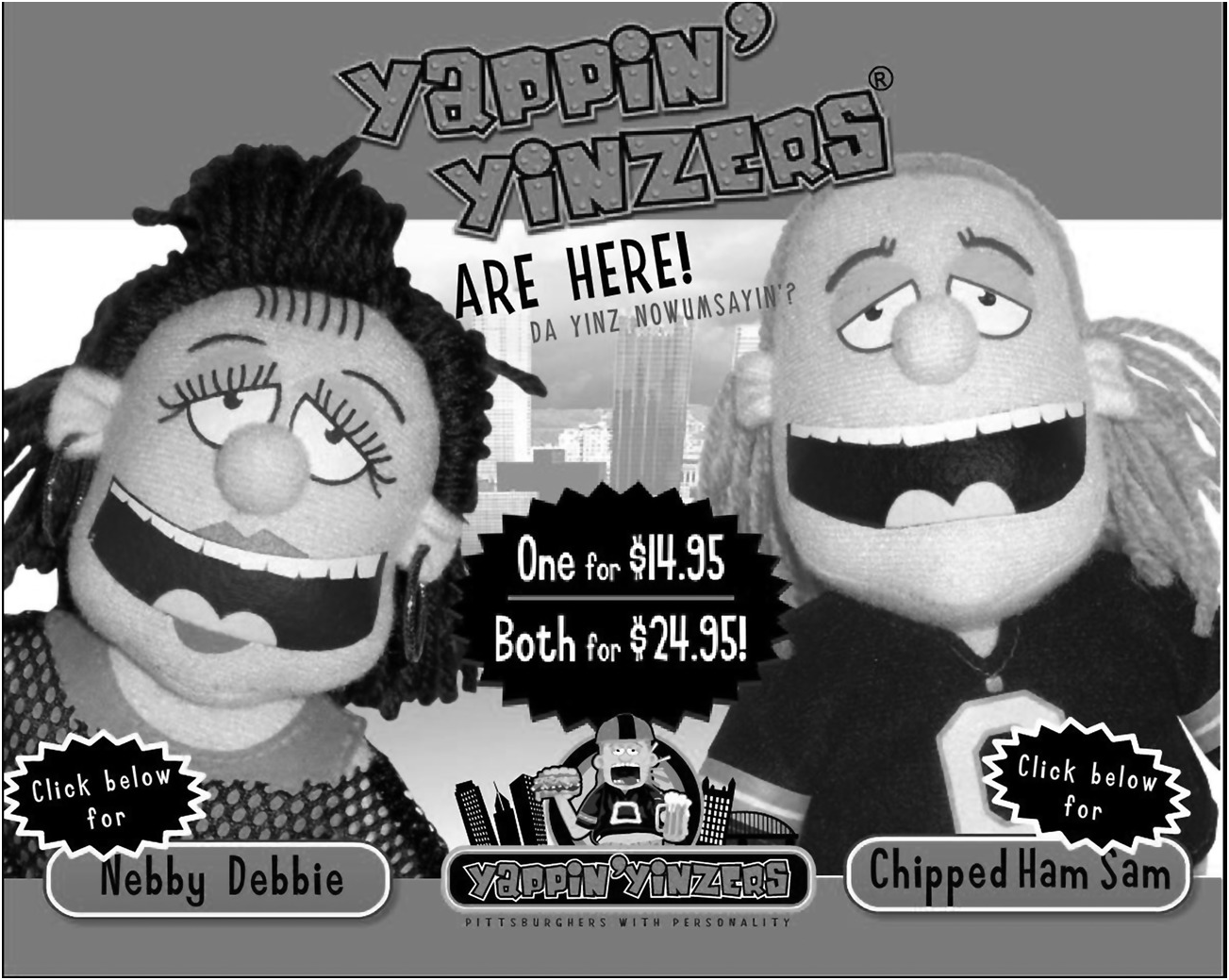
Figure 13.1: The Yappin’ Yinzers.Footnote 2
At 10 inches (25.4 cm) and 9 inches (23 cm), respectively, they are smaller than most dolls that are meant for children, and the battery-powered plastic sound module accessible through an opening in their backs adds to their unsuitability as toys. Each time one of the dolls is squeezed in the middle, the sound module plays a sentence uttered by someone using a Pittsburghese accent, highlighting one or more Pittsburghese words or phrases. The dolls are produced and sold by Colloquial Enterprises, LLC, which is based in a suburb of Pittsburgh. (They are manufactured in China.) The male doll, Chipped Ham Sam, went on sale in 2007, the female one, Nebby Debbie, a year or two later.
4. How the Yappin’ Yinzers Link Pittsburghese with Class
The design of the website where the dolls are for sale links the dolls with place and local practice in many ways. The primary colors on the page are black and gold, the colors of Pittsburgh’s professional sports teams and the city’s official seal, and the dolls are superimposed on a photograph of part of Pittsburgh’s downtown skyline. A stylized version of the skyline can also be seen around the small image at the bottom center, which can be read as a cartoon representation of Chipped Ham Sam holding a cheeseburger and a mug of beer, and wearing a Pittsburgh Steelers football jersey and helmet. The dolls are also linked with Pittsburghese via their designation as ‘Yappin’ Yinzers’, via the phrase on the homepage, ‘Da yinz nowumsayin’?’ (Do you know what I’m saying?), and via their names. ‘Chipped ham’ (a kind of sandwich meat that was invented and sold by a Pittsburgh-area dairy-store chain) is often on lists of Pittsburghese words and phrases. Pittsburghers sometimes report not knowing that it was a regional item until they ordered it or looked for it somewhere else, an experience that often causes people to enregister words with places. ‘Nebby’ is an adjective of northern English and Scotch-Irish origin meaning nosy. The link between Pittsburghese and the dolls’ identity is made even tighter through the rhyming of ‘chipped ham’ and ‘Sam’ and ‘nebby’ and ‘Debbie’.
Chipped Ham Sam and Nebby Debbie represent imaginary people, and they talk. Because they have bodies, clothes, facial features, hairstyles, voices and even personal histories in the form of biographies on small cards that come with them, the dolls package Pittsburghese with particular lifestyles and biographies in ways that other artifacts do not, or do less. For one thing, the way the dolls are designed puts the connection between Pittsburghese and social class front and center, forcing us to consider what social class is, how it intersects with ethnicity, gender and other aspects of Pittsburghers’ identity, and how it is linked to Pittsburgh’s identity as a collective. For another thing, what Sam and Debbie’s voices sound like and what they say lead us to consider how a particular rhetorical stance towards the world is implicated in how the people who buy them understand Pittsburghese.
It would be hard to miss the way in which Chipped Ham Sam and Nebby Debbie link Pittsburghese with the characterological figure of the Yinzer. Sam and Debbie are not just dolls that happen to speak in Pittsburghese. They are ‘Yappin’ Yinzers’. The Pittsburghese they speak is part and parcel of the fact that they are Yinzers. Their Pittsburgese presupposes their Yinzer identity (the Pittsburghese that emerges from the sound module when the dolls are squeezed is one of the things that identifies the dolls as Yinzers), and the Yinzerishness of their voices, their appearances, and the life stories they come with helps to identify their speech as Pittsburghese.
For one thing, the dolls’ appearance links them to the characterological figure of the Yinzer and the Yinzer figure to them. Both dolls look like white people. Chipped Ham Sam has blond hair in the style popular in the 1980s known as a ‘mullet’. Nebby Debbie’s hair is brown, pulled back from her face except for a few bangs on her forehead. Both dolls have large, open mouths, extending almost from ear to ear. Sam’s abdomen is exposed, attention drawn to it with a sewn-on plush ball representing his navel. Debbie wears gold hoop earrings and makeup: mascara, yellow eyeshadow, bright red lipstick and rust-colored finger- and toenail polish. She is wearing a black mesh top over a sleeveless gold t-shirt, tracksuit trousers with orange stripes and black mules with heels. Sam has on a Steelers jersey with the number 0 and, on the back, where a player’s name usually goes, ‘Yinzer’ is printed. He is wearing blue cut-off shorts, gold and black socks and shoes that might be taken to be construction boots. To the Pittsburghers and ex-Pittsburghers who buy them for themselves or as gifts, Sam and Debbie are likely to be taken as unsophisticated and somewhat backward in style.
The front of the card that comes attached to each doll’s arm identifies the doll as a Pittsburgher. The top two thirds of the page have the words (in gold) ‘yappin’ Yinzers’ superimposed on a photo of the Pittsburgh downtown skyline. Under this is ‘Pittsburghers with personality’ and the doll’s name. The claim that the dolls have ‘personality’ suggests that they are to be seen as larger than life in some ways, but it also points to how they are meant to evoke personas. Inside each card on the left-hand page is a set of three bulleted ‘quick facts’ about each doll. On the right-hand page is the heading ‘9 Hilarious Pittsburgh Sayings’ with three of the doll’s utterances reproduced in speech balloons emanating from skyline building windows. We return to the ‘sayings’ shortly.
The ‘quick facts’ about Chipped Ham Sam are these, as they appear in the card:
1. Born of Polish and Ukrainian parents (with whom he will most likely always reside) on 12 October 1975 – exactly 9 months to the day from the Lombardi trophy’s first arrival in the ‘burgh’.
2. Given the nickname ‘Chipped Ham’ because of his insatiable desire for barbequed chipped ham sandwiches, a local delicacy.
3. A fanatical supporter of Pittsburgh sports, Sam can usually be found screaming at a television at one of his favorite South Side watering holes.
Sam is identified in ethnic terms, as having Eastern European parents. He is identified as a fan of Pittsburgh sports and implicitly as the child of sports fans, conceived right after the Steelers’ first national championship. (The Lombardi trophy is held by the winners of the year’s Super Bowl.) He is identified as being in younger middle age (born in 1975, which means that he would have been 32 in 2007 when he was created). He lives with his parents. He is identified by what he eats (chipped ham sandwiches) and where he drinks (South Side watering holes or bars). ‘South Side’ links him with an older working-class neighborhood and with its transformation into an area where people now go to drink. And he is identified as someone who ‘screams at a television’.
The quick facts about Nebby Debbie are the following:
1. A life-long resident of the Pittsburgh borough of McKees Rocks and almost a graduate of the local High School, Debbie has found recent fame as the top nail stylist in the area. Her signature rhinestone-leopard nail art is most requested by her loyal customers, followed by black-and-gold zebra stripes.
2. You can find Debbie trolling for love on most Friday and Saturday nights at various Station Square, Strip District and Mt. Washington hot spots, as well as anywhere the city puts on fireworks or is giving away bobble heads.
3. Boy is Debbie nebby. She seems to know interesting little tidbits about everyone in town, and if she feels she is missing any of the scoop, believe me, she’ll ask.
Debbie is not identified in ethnic terms, but instead in terms of the working-class neighborhood she is from (McKees Rocks), her education (‘almost’ a high-school graduate), her profession (fingernail stylist), and the tastes of her professional clients (rhinestone-leopard and black-and-gold nail designs). Like Sam, Debbie is linked with social practices and consumption, but these involve sex (trolling for love), spectacle (fireworks), and the consumption of things (bobble head dolls), rather than sports and the consumption of food. Both dolls are identified in ways that evoke a style of communication, Sam by ‘screaming at [the] TV’ and Debbie by being nosy (‘nebby’), gossiping (‘seems to know interesting little tidbits about everyone in town’), and being unafraid to dig for information (‘believe me, she’ll ask’).
The communicative style that is both evoked and suggested by the Yappin’ Yinzers is also enacted in their actual speech, in the form of the pre-recorded utterances that play when the sound module is activated with a squeeze. Although both are advertised as coming with nine ‘hilarious Pittsburgh sayings’, Debbie actually comes with eleven. Figure 13.2 lists and glosses the dolls’ utterances. (For non-standard pronunciation, I use conventional respellings where available, International Phonetic Alphabet elsewhere.)
1. Jeat yet? ‘Did you eat yet?’ 2. You ain’t gonna believe this, I just saw whutsername with whutsisface. ‘You aren’t going to believe this, I just saw what’s-her-name with what’s-his-name.’ 3. How ‘bout yinz redd up them rooms [ru<mz] before comp’ny comes over [o<vr]? ‘How about if you (pl.) clean up those rooms before company comes over?’ 4. Yinz better settle down [da:n]! ‘You (pl.) had better settle down!’ 5. Watch out when yinz go outside, it’s col’ out there today. ‘Watch out when you (pl.) go outside. It’s cold out there today.’ 6. I hafta go da the bafroom. ‘I have to go to the bathroom.’ 7. Yinz ain’t ‘upposed to be out [a:t], yinz are grounded [gra:ndəd]! ‘You (pl.) aren’t supposed to be out. You (pl.) are grounded (confined to the house).’ 8. You’re ‘upposed to put a gumband around [əra:nd] it. ‘You’re supposed to put a rubber band around it.’ 9. I ain’t payin’ no hundert dollars [dɔwɛrz] fer ‘at! ‘I will not pay a hundred dollars for that.’ 10. What’s goin’ [go<ɪn] on? ‘What’s going on?’ 11. Get [gɪt] out of [a:tɔ] town [ta:n]! ‘Get out of town!’ Nebby Debbie
1. What yinz doin’ over [o<vr] dere? ‘What are you (pl.) doing over there?’ 2. Come off it, fer cryin’ out [a:t] loud [la:d]! ‘Come off it, for crying out loud!’ 3. Hows come yinz ain’t watchin’ the [ə] game? Pixburgh’s on. ‘How come you (pl.) aren’t watching the game? Pittsburgh’s on.’ 4. Jeez oh [o<] man! ‘Jeez oh man!’ 5. Nuh-uh! ‘No!’ 6. Quit jaggin’ around [əra:nd]! ‘Quit fooling around!’ 7. Jinz eat jet? I’m gettin’ hungry fer a sammich. ‘Did you (pl.) eat yet? I’m getting hungry for a sandwich.’ 8. I’m going down [da:n] the Southside [sa:said] to drink some Irons n’at. ‘I’m going down to the Southside to drink some Iron City beer, and things like that.’ 9. I’m taking the trolley [trɔwi] downtown [da:nta:n]. ‘I’m taking the trolley downtown.’ Chipped Ham Sam
The Pittsburghese word represented most often in both Sam and Debbie’s speech is yinz, ‘you pl.’, which is heard eight times in the twenty utterances. Versions of Jeat jet? ‘Did you eat yet?, Have you eaten yet?’ appear in both dolls’ repertoires. Other lexical items often associated with Pittsburghese are Irons ‘Iron City beer’, n’at ‘and things like that’, redd up ‘tidy up’, and gumbands ‘rubber bands’. How’s come ‘why, how come’ and nuh-uh [nʌˈɁʌ:], an emphatic ‘no!’, are also sometimes found on lists of Pittsburghese (Johnstone et al. Reference Johnstone, Bhasin and Wittkofski2002; Johnstone Reference Johnstone2013b: 3–40). Both dolls use ain’t, and there is one instance of negative concord in Nebby Debbie’s speech (‘I ain’t payin’ no hundert dowers fer ‘at!’). Phonologically, the dolls’ speech sounds casual, with numerous elided syllables and sounds. Both voices use Pittsburgh accents, though somewhat inconsistently. Of the many words in the utterances that could showcase the area’s characteristic monophthongal /aw/ (down, out, outside, grounded, around, loud and downtown), not all are actually monophthongized every time. Both speakers use fronted versions of the vowel in words such as over, going and oh, and Debbie’s voice fronts the /u/ in rooms. Each script includes a word that showcases /l/-vocalization, trolley for Sam and dollars for Debbie, and both voices strongly vocalize these /l/s. In bafroom, Debbie is represented as using /f/ for /ɵ/.
The speech acts performed by these utterances lean heavily toward the directive. The bold-faced items in the lists in Figure 13.2 are all things a person could say to get someone else to do something. These include ‘Come off it’, ‘Quit jaggin’ around’, ‘Yinz better settle down’ and so on. Of the twenty utterances by the two dolls, eight (arguably nine, if ‘What’s going on?’ is taken as a suggestion that the addressees stop what they are doing) could be used as directives. (‘Get out of town’ and ‘Come off it’ could also be used as exclamatives, of course.) Almost half of the time, then, the Yappin’ Yinzers tell other people what to do or what not to do. Nebby Debbie’s audience is also called up by what she says. Whutsername and whutsisface could suggest that she is accustomed to talking to people she knows well, people who will be able to identify who is being talked about, or that she does not think it is important for her interlocutors to be able to identify them. All but one of her directives represent instructions that adults (especially mothers) address to children, instructions to tidy up, settle down, put on warm clothes before going outside, get back into the house.
Another attribute of the Yinzer speech style, as it is exemplified in the dolls, is a distinctive tone of voice. This occurs only in the male doll’s speech, in the phrases that are italicized in Figure 13.2. In these phrases, the pitch and volume of Chipped Ham Sam’s voice are raised. The effect of this higher, louder voice is to make him sound aggrieved and petulant.
As represented via these dolls, the Yinzer character is highly gendered. Male Yinzers, the dolls suggest, go to bars to eat and drink, females to find romance. Male Yinzers like sports; female Yinzers like the fireworks that sometimes follow sports events, and the souvenir bobble-head dolls that are sometimes given away there. Male Yinzers wear an outdated hairstyle from the 1980s; female Yinzers wear a lot of makeup. Males yell at the Steelers; females yell at their children. But there are also many commonalities, especially in how their speech styles are represented.
Who, then, is the prototypical Yinzer, as this character is figured in the Yappin’ Yinzer dolls? He or she is a white Pittsburgher who does things in Pittsburgh, a sports fan or at least a wearer of the team colors. A Yinzer dresses casually. A Yinzer uses Pittsburghese words and sounds like a Pittsburgher. A Yinzer has a big mouth, and when he or she opens it, the voice that emerges is casual and sometimes non-standard. A Yinzer is uninhibited, not afraid to tell people what to do. A Yinzer yaps.
Judging from what the dolls look like, how they are described, what they say, and how they say it, we might be tempted to say that the Yinzer character is working class. But what would this mean? Neither Chipped Ham Sam nor Nebby Debbie is explicitly identified as working class. Sam is not assigned a job, a trade, or a profession in the biography that accompanies him. Debbie is identified as a nail stylist, which means that she may be an independent operator, not a salaried worker. Neither doll is dressed in work clothes (although Sam wears what might be work boots). The dolls’ income is not specified. Nothing they say has explicitly to do with socio-economic class. And yet there are reasons to claim that consumers are meant to think of the Yinzer figure, as it is represented in the dolls, as working class. One of these reasons is their communicative style.
5. Social Class and Communicative Style
Scholars continue to debate about how to define social class, and this is not the place to rehash the entire debate. The view I take here is similar to that of other ethnographers of the post-industrial ‘working class’ (Weis Reference 300Weis1990; Foley Reference Foley1990; Dunk Reference Dunk1991; Fox Reference Fox, Ching and Creed1997; Lindquist Reference Lindquist2002). According to scholars like these, the social identities associated with class result from the material circumstances of work (one’s relationship to the means of production, whether as hourly wage-earner, on one end of the spectrum, or as owner and/or investor, on the other) as well as the ideology that shapes how a person makes sense of those circumstances. Social class is thus both a material and a cultural phenomenon. People’s understanding of their own place in the economic system – and what that entails when it comes to how to act, talk and think – is shaped by models that circulate as people perform class identity in interaction with others. People have various ways of talking about this aspect of social identity, some of which do not involve using the term ‘working class’ at all, and ‘working-class culture’ can take a wide variety of forms. Still, the concept of class is useful, even if the people we study may not overtly orient to it. In a capitalist economy, the need to work (or not), along with the kind of work one does, shapes how people think and talk about identity just as biology shapes how people understand gender and sexuality, and physical appearance shapes how people understand race. As Julie Lindquist (Reference Lindquist2002: 5) explains it in the introduction to an analysis of working-class rhetorical practices, ‘implicit in my claim to take as my subject “working-class culture” is the assumption that shared cultural experiences (and the narrative processes and products of these experiences) are linked to material conditions’.
One aspect of the working-class experience is opposition. As Thomas W. Dunk (Reference Dunk1991: 27, emphasis mine) puts it in a study of a ‘working man’s town’ in Ontario, Canada, ‘Class happens because of the common experiences of a group of people whose interests are different from and usually opposed to the interests of another group’. This may be opposition rooted in competing economic interests, as in the classical Marxist account. This is the sort of opposition that leads to labor unions, to negotiations over wages, hours, and working conditions and to strikes. Or it may be opposition rooted in struggles against the hegemonic ideology circulated in bourgeois institutions and practices like schooling, as in more recent interpretations of Marxism (Thompson Reference Thompson1966; Gramsci Reference Gramsci1971; Williams Reference Williams1982). This is the sort of opposition that leads working-class teens to reject school culture (Weis Reference 300Weis1990; Eckert Reference Eckert, Guy, Feagin, Schiffrin and Baugh1996, Reference Eckert2000, Reference Eckert and Fought2004) and adults to value low-culture activities like team sports that involve group physical activity over high-culture intellectual ones like theater or ballet (Dunk Reference Dunk1991: 90–1). It is the sort of opposition that leads working-class arguers to value the ‘common sense’ that arises from lived experience over ‘formal, theoretical knowledge that is not immediately applicable to work and to action’ (Lindquist Reference Lindquist2002: 99).
Linguistic anthropologist Douglas Foley (Reference Foley1989) takes this argument a step further, suggesting that class differences in post-industrial settings are fundamentally differences in expressive style. Foley combines Jürgen Habermas’ (Reference Habermas and McCarthy1984) insights about how communication is affected by modern economic life with Erving Goffman’s (Reference Goffman1959, Reference Goffman1981, Reference Goffman1986) analyses of ‘the performance of self’. Goffman claimed to be describing how social interaction always works, everywhere, and was apparently uninterested in how inequality could be created and perpetuated in interaction. Foley, however, sees Goffman as ‘an ethnographer of communication in late capitalist society, despite [Goffman’s] claims to universality’ (Foley Reference Foley1989: 149). Foley points out that ‘Goffman’s empirical descriptions of communication look very like what Habermas calls instrumental action’(152). Habermas’ work critiques modern, bureaucratic, knowledge and service economies, where ways of speaking have become increasingly regimented. What Habermas calls ‘instrumental rationality’, geared toward efficiency, productivity and profit, requires people to perform elaborately constructed identities in highly staged, instrumental interaction, where ‘traditional normative ideals about doing what one says and being sincere and truthful become less of a constraint on communicative action’ (Foley Reference Foley1989: 155) than the ability to manage one’s identity by playing the kinds of language games Goffman describes. For Foley, working-class social identity is ‘stigmatized’, in Goffman’s terms, because traditional working-class expressive norms are different from and opposed to those of the ‘normal’ social actors Goffman focuses on. As Foley (Reference Foley1989: 151) describes it:
Two generalized class roles are routinely enacted in recurring everyday situational speech performances. Bourgeois/petit bourgeois actors typically assume they are leaders with ‘normal’ identities and superior speech, who have the right to speak often and in an official manner. Standard, official speech is authoritative and proper. Proper, polite speech and etiquette become a strategic weapon in their everyday communication. … Conversely, working-class actors assume they are outsiders and subordinates with ‘stigmatized’ identities and inferior speech. … Unofficial speech is often non-standard, informal, and lacking in politeness forms. Impolite speech becomes an unstrategic form of expressiveness that either meekly enacts the subordinate, stigmatized role of outsider, or openly, hostilely rejects it. These more open, dialogic speech practices help preserve the dual role and identity of an uncultured, inferior outsider and rebel.
The communicative style of the ‘working class actor’ Foley describes here maps almost exactly onto that of the Yinzer persona. Located outside the new economy and its regimented modes of speech, the Yinzer can speak freely, using casual, non-standard, regionally marked speech forms, speaking directly, telling people off, gossiping and yelling. But the Yinzer is also frustrated, petulant and sometimes whiny. Her kids misbehave; his team makes idiotic plays on the football field. Yinzers have big mouths and are unafraid to open them, but when they do, they yap powerlessly, like miniature dogs that think they are bigger than they are.
As enregistered in artifacts like these dolls, Pittsburghese is not just a set of words and phrases, but an expressive stance. The dolls embody a stance that is both oppositional and powerless, embedded in a specific set of consumption practices, communicative needs and vocal styles. While Pittsburghese t-shirts and other such artifacts link words and meanings with place and to a certain extent with local practice (Johnstone Reference Johnstone2009), the dolls much more explicitly invite their consumers to enregister Pittsburghese with a specific stance toward the world, the stance of the Yinzer, limiting the possible meanings of speaking Pittsburghese in a way that other artifacts do not. The Yappin’ Yinzers help focus and standardize not only what counts as Pittsburghese but who speaks it, what they say, and how they sound when they say it.
6. Discussion
Why, then, would anybody buy one of these dolls? Foley’s analysis suggests a way to answer this question. As noted, working-class expressive culture is oppositional. According to Foley, working-class actors like the Yappin’ Yinzers resist the expectations of lifestyle and speech style that are tied to the kinds of non-physical labor that are increasingly the only option: the expectations that one finish school, speak properly and politely, and so on. They resist the commodification of speech in the form of the scripts that a call-center employee has to read, the put-on friendliness of mall-store employees, the carefully managed speech style of the well-trained teacher or manager, the untrustworthy identity performance of lawyers. They resist what Foley refers to as the ‘theft of communicative labor’ in ‘an overly administered world of manufactured symbols and identities’ (Foley Reference Foley1989: 156). Working-class expressive style makes a claim to authenticity, to the realness of people who are not putting on elaborate performances of self.
But ‘such expressions of cultural resistance may also become commercialised’ (Foley Reference Foley1989: 156). This happens when the Yinzer persona, once linked causally with the experience of being working class, gets de-linked from the actual conditions of labor and appropriated as a second-order symbol of local authenticity. Once this happens, people start to use the term Yinzer for anyone from or even just living in Pittsburgh. TV reporters and teachers – members of the speech-regimented new economy – now adopt elements of a Yinzer persona when they perform Pittsburghese, leaning forward, raising their voices, speaking in a higher pitch, complaining, giving orders, calling people jagoffs (a Pittsburghese word derived from the verb jag that traditionally meant ‘idiot’ but has come to have obscene overtones). The Yappin’ Yinzer dolls represent a way of life that their consumers, participants in the post-industrial economy, would not choose for themselves. But the dolls also evoke nostalgia for an imagined time when people could speak their minds and sound like whoever they were, an imagined time when there was no need for the kind of persona management that is now required.
However, neither Sam nor Debby is represented as having a traditional working-class job, and this leads to another way of interpreting the Yinzer figure’s meaning. Sam’s work, if any, is not specified, and Debby is an independent entrepreneur at the bottom of the cline of prestige when it comes to careers. The dolls act working class in some ways, but their actual work is not the skilled labor, protected by union contracts and paid a comfortable wage, that people think of when they think of the American working class of the twentieth century. They are ‘working-class without work’ to use Lois Weis’s (Reference 300Weis1990) term, exemplars of a post-industrial stereotype that exists not only in Pittsburgh, but also in other places where people whose forebears were proud of their labor are now marginal and often struggling. This means that the dolls can be seen not just as representations of former working-class Pittsburghers – ideologically linked with ‘us’, even by people whose forbears were not miners or steelworkers – but also as representations of a pathetic, marginalized class of contemporary Pittsburghers, who are ideologically ‘other’.
To summarize, the Yappin’ Yinzers enregister Pittsburghese, along with other modes of action, appearance and taste, with a characterological figure that can be evaluated in at least two ways. The first is as a positively valorized reminder of working-class Pittsburghers of the past, and the second is as an image of the stigmatized post-working-class Pittsburghers of the present. They complicate the semiotic value of Pittsburghese in a way that is more and more typical, as Pittsburghese moves from being a representation of a way of speaking that people remember, to being an icon of a persona linked with a way of life.
1. Introduction
In this chapter, I consider the relationship between regional dialect and identity by focusing on a single salient dialect form, howay, as it is used in the UK print media and in face-to-face interaction. By salient, I mean that howay is ‘in some way perceptually and cognitively prominent’ (Kerswill and Williams Reference Kerswill, Williams, Jones and Esch2002: 81). This prominence is attributable to at least two factors. First, howay is unique to the north-east of England and is widely recognised as a marker of north-east identity, in particular a working-class identity. Second, howay tends to be foregrounded in interaction because of the important functions it fulfils. Referentially, it means something like ‘come on’ and it is used generally as a directive (e.g. ‘Howay, let’s go’), but the precise social and pragmatic meanings associated with howay are context dependent and, thus, variable. This flexibility in meaning first became apparent to me during a linguistic ethnographic study I conducted in two socially differentiated primary schools in Teesside, north-east England (Snell Reference Snell2009). In Section 5 of this chapter, I present some examples of the children’s spontaneous use of howay. However, I begin my analysis by investigating the ways in which howay has been used in the UK print media (Section 4). The newspaper data allows me to broaden the scope of my analysis beyond the urban conurbation of Teesside to the north-east region as a whole. This is important because the identity of Teesside is very much bound up with a wider north-east regional identity. By comparing these two datasets I will show that howay is tied to geographical location and to social class, but in no straightforward or fixed way. I begin with an account of the developing perceptual prominence and ‘enregistration’ of the north-east dialect.
2. Enregistration and Commodification of the North-East Dialect
Joan Beal and colleagues have pointed out that, to outsiders, ‘the north-east is perceived as a single, homogeneous entity dominated by Newcastle and the figure of the “GeordieFootnote 1”’ (Beal et al. Reference Beal, Burbano-Elizondo and Llamas2012: 10; see also Wales Reference Wales2006: 205). Newcastle is a city in the urban conurbation of Tyneside, which is around 60 kilometres north of Teesside (see Figure 14.1). While there are important differences between the dialects of Teesside and Tyneside (or ‘Geordie’), they do share a repertoire of regional dialect forms, including the feature that is the focus of this chapter, howay (for a full description of the Teesside and Tyneside dialects, see Beal et al. [Reference Beal, Burbano-Elizondo and Llamas2012]). Moreover, outside the north-east, dialect differences are often erased in public consciousness. Recent perceptual dialectological studies have shown that Geordie is one of the most recognisable dialects in the United Kingdom, but that people associate it with the north-east region as a whole, not specifically with Newcastle (Montgomery Reference Montgomery2007).
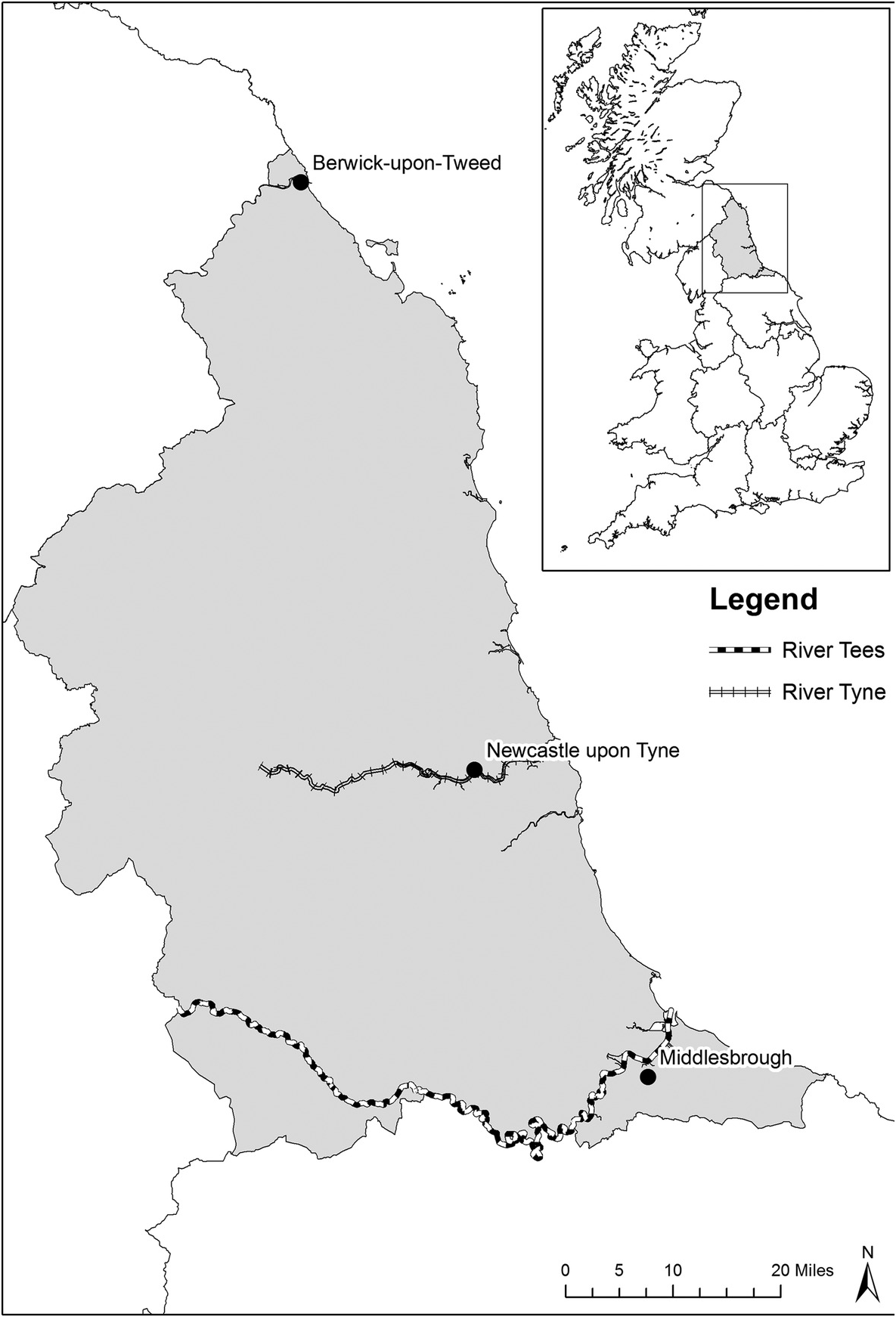
Figure 14.1: Map of the north-east.Footnote 3
Joan Beal’s work (e.g. Beal Reference Beal1999, Reference Beal2000, Reference Beal2009, forthcoming) allows us to better understand the perceptual prominence of Geordie from an historical perspective. She points to evidence beginning in the nineteenth century of a growing awareness of urban dialects, such as Geordie, and the association of these dialects with the industrial working class and iconic local identities which, for Geordie, include the miner and the ‘unemployed Geordie with his flat cap and whippet’Footnote 2 (Beal Reference Beal1999: 44). This linking of linguistic forms with social personae is evocative of the processes described by Agha (Reference Agha and Duranti2004: 37) as enregisterment, that is, the processes through which a repertoire of linguistic forms (a ‘register’) ‘become differentiable from the rest of the language (i.e. recognizable as distinct, linked to typifiable social personae or practices) for a given population of speakers’. These processes of differentiation work through ‘appeal to metapragmatic models of speech, that is, culture-internal models of actor (role), activity (conduct) and interactant relationship (social relations) associated with speech differences’ (Agha Reference Agha and Duranti2004: 25). In order to find samples of a register, a scholar must be able to observe and document as data ‘regular patterns of metapragmatic typification’ (Agha Reference Agha and Duranti2004: 29). An act of metapragmatic typification occurs when a language user makes evaluative judgements about different linguistic forms in a way that points to the metapragmatic models of speech they associate with those forms. Such evaluative behaviour may be explicit, as when an individual assigns an evaluative label to a register (e.g. describing someone’s speech as ‘posh’ or ‘slang’), or implicit, as when an individual’s semiotic behaviour (such as utterances, facial expressions and bodily movements) implicitly evaluate the indexical effects of co-occurring forms in interaction (Agha Reference Agha and Duranti2004: 26). Social and cultural information about a register is transmitted across space and time when similar acts of metapragmatic typification are repeated by multiple language users and linked together into a ‘speech chain’ (Agha Reference Agha2003: 246–7).
Beal’s (Reference Beal2000, Reference Beal2009) account of the enregistration of ‘Geordie’ focuses on explicit metapragmatic discourse, as expressed in proscriptions on language use, dialect dictionaries, songs and cartoons. She shows how features of Geordie were enregistered in the nineteenth century and later ‘commodified’ in products sold as part of an emerging tourist industry (e.g. folk dictionaries, mugs, tea towels and cookbooks) (see also Johnstone et al. [Reference Johnstone, Andrus and Danielson2006] and Johnstone [Chapter 13 in this volume], on ‘Pittsburghese’, and Cooper [Chapter 16 in this volume] on Yorkshire). She concludes that ‘Geordie’ has now become a recognisable brand, one which can be exploited in the marketing of the north-east region.
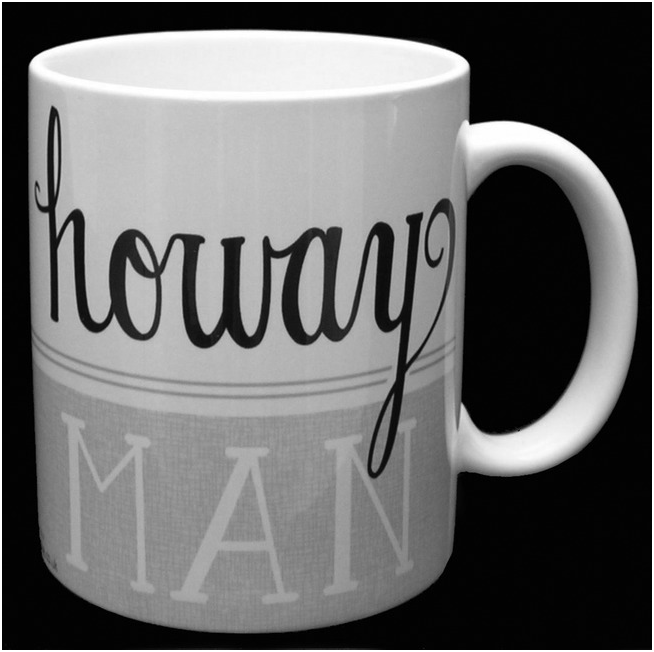
In this chapter, I narrow the focus to just one feature of the north-east dialect and suggest that it has become an ‘enregistered emblem’ (Agha Reference Agha2007: 235) of north-east working-class identity. To say that howay is an enregistered emblem is to claim that it is widely recognised as marking a particular social persona (Agha Reference Agha2007: 235). That it is widely recognised can be seen in the way this form has been commodified in novelty items like mugs and greetings cards (Figure 14.2). Evidence that howay is linked to a particular social persona can be found in UK newspapers, where it is used to evoke images and figures related to the north-east and to working-class culture. I explore these media images in Section 4. The introduction of interactional data in Section 5 complicates this account, however, by introducing an alternative set of meanings for howay. I end the chapter by drawing upon linguistic anthropological approaches to indexicality in order to understand the relationship between the media representations of howay and its use in interaction. I introduce the notion of indexicality in the next section.

3. Indexicality and Stance
In using the term indexicality, I am drawing upon Ochs’ (Reference Ochs, Duranti and Goodwin1992, Reference Ochs, Gumperz and Levinson1996) model of direct and indirect indexicality, and Silverstein’s (Reference Silverstein2003) ‘orders of indexicality’. Ochs (Reference Ochs, Duranti and Goodwin1992, Reference Ochs, Gumperz and Levinson1996) describes how language has the capacity to index (i.e. ‘evoke’) a range of sociocultural information, such as affective and epistemic stances, social acts (e.g. commands) and social identities (including roles, relationships and group identities). These different ‘situational dimensions’ are related to one another, Ochs argues, through a network of cultural associations, norms and expectations, which are shared by members of a community. She refers to these as ‘culturally constructed valences’ (Ochs Reference Ochs, Gumperz and Levinson1996: 417). It is via these links or ‘valences’ that, in theory, any situational dimension can help to constitute the meaning of any other situational dimension.
‘Stance’ is a central component of Ochs’ model and has become an important concept in much recent sociolinguistic work (see, e.g., Jaffe Reference Jaffe2009). It refers to the processes through which speakers use language (along with other semiotic resources) to position themselves and others, draw social boundaries and lay claim to particular statuses, knowledge and authority in ongoing interaction (see Du Bois Reference Du Bois and Englebretson2007: 163). Meanings indexed by interactional stances may be fleeting, but these local social meanings may help to constitute more enduring social identity meanings. For example, tag questions in English have been associated with a feminine linguistic style. But the link between tag questions and the social category of gender is not direct; it occurs only through a series of ideological conventions which associate a stance of hesitancy with female identity (Ochs Reference Ochs, Duranti and Goodwin1992, see also Moore and Podesva Reference Moore and Podesva2009). So we can say that tag questions directly index a stance of hesitancy and only indirectly index a female identity, and ‘[i]t is in this sense that the relation between language and gender is mediated and constituted through a web of socially organized pragmatic meanings’ (Ochs Reference Ochs, Duranti and Goodwin1992: 341–2). Ochs illustrates her argument in relation to gender, but the model can be applied to social identity categories more generally (including, e.g. class identity).
Whilst Ochs focuses on two levels of indexicality (direct and indirect), Silverstein refers to multiple levels or ‘orders’ of indexicality. Silverstein’s approach makes it possible to conceptualise extended chains of indirect indexicality. The process begins when a particular linguistic form or ‘n-th order indexical’ becomes associated with social values (e.g. through correlation between the linguistic form and some social characteristic of the users or contexts of use of that form), such that it acquires social meaning. Johnstone et al. (Reference Johnstone, Andrus and Danielson2006) use Silverstein’s model in their account of the enregisterment of ‘Pittsburghese’. They trace how first-order (i.e. n-th order) correlations between the monophthongisation of the diphthong /aw/ (in words like down) and demographic identities (such as being from Pittsburgh, being male and being working class) become available for further construal. They map the historical processes by which monophthongal /aw/ becomes a second order (i.e. n+1st) index available for stylistic manipulation, such that individual speakers who use this form variably may ‘use it less when they are trying harder to sound educated or cosmopolitan, or more when they are trying harder to sound like working-class men or like other Pittsburghers’ (Reference Johnstone, Andrus and Danielson2006: 83). Johnstone et al. (Reference Johnstone, Andrus and Danielson2006: 94) go on to suggest that, in addition to doing second-order indexical work, some regional forms become ‘available for self conscious, performed identity work’. They argue that this constitutes a third order (i.e. n+1+1) of indexicality in which variants such as monophthongal /aw/ become even more ideologically laden and are used in self-conscious performances of a person’s knowledge about the features that stereotypically constitute a variety such as Pittsburghese (Johnstone et al. Reference Johnstone, Andrus and Danielson2006: 99).
Johnstone and colleagues assign actual values to Silverstein’s variable n in order to elaborate the historical process through which Pittsburghese has come to be enregistered, but it is not necessarily the case that this process is linear. As Eckert (Reference Eckert2008: 464) points out, Silverstein’s n-th order index is always available for reinterpretation because the link between form and meaning is made within ‘a fluid and ever-changing ideological field’. This means that n + 1st order indexicality is ‘always already immanent as a competing structure of values potentially indexed in-and-by a communicative form of the n-th order, depending on the degree of intensity of ideologization’ (Silverstein Reference Silverstein2003: 194). The point that the social meaning of a linguistic form is open to continual reinterpretation is significant for the analysis of howay, which takes up the remainder of this chapter.
4. Howay and Media Representations of North-East Identity
I have suggested that howay is an enregistered emblem of north-east working-class identity. Evidence for this can be found in UK newspapers, where it acts as ‘a shorthand’ for indexing images of person and place (Wales Reference Wales2006: 29–30). I investigated these images by using LexisNexis to search all UK newspapers for occurrences of howay. I focused initially on the fifteen-month period between November 2005 and February 2007, because this is the period during which I conducted the primary school fieldwork discussed in Section 5 and I wanted to explore the kinds of images that were circulating at that time. I then decided to extend my search to include the fifteen-month period immediately prior to my analysis (January 2012–April 2013). Generating two corpora meant that I could compare the use of howay over time and, in particular, look for evidence of an increase in the salience of howay and the north-east region during this period. I coded each occurrence of howay for the main topic of the news article (or section thereof) within which it occurred, the title of the newspaper, and whether it was a regional or national publication (and if national, whether it was tabloid or broadsheet), and whether each token occurred in the headline, photo caption or main body of the text. Summary results for topic can be seen in Tables 14.1 and 14.2.
Table 14.1: Corpus 1 (2005–7) – Distribution of howay across topic in national and regional newspapers.
| National | Regional NE | Regional (other) | Total | ||||
|---|---|---|---|---|---|---|---|
| Football | 8 | 33% | 6 | 19% | 2 | 25% | 16 |
| Celebrity | 5 | 21% | 0 | 0% | 2 | 25% | 7 |
| Newcastle/NE | 5 | 21% | 1 | 3% | 2 | 25% | 8 |
| Language | 4 | 17% | 12 | 38% | 1 | 13% | 17 |
| Other sport | 1 | 4% | 0 | 0% | 1 | 13% | 2 |
| Literary | 1 | 4% | 3 | 9% | 0 | 0% | 4 |
| Other | 0 | 0% | 10 | 31% | 0 | 0% | 10 |
| 24 | 32 | 8 | 64 | ||||
Table 14.2: Corpus 2 (2012–13) – Distribution of howay across topic in national and regional newspapers.
| National | Regional NE | Regional (other) | Total | ||||
|---|---|---|---|---|---|---|---|
| Celebrity | 20 | 42% | 2 | 6% | 4 | 50% | 26 |
| Football | 19 | 40% | 13 | 38% | 2 | 25% | 34 |
| Newcastle/NE | 4 | 8% | 1 | 3% | 1 | 13% | 6 |
| Language | 2 | 4% | 2 | 6% | 0 | 0% | 4 |
| Other sport | 2 | 4% | 0 | 0% | 1 | 13% | 3 |
| Literary | 0 | 0% | 2 | 6% | 0 | 0% | 2 |
| Other | 1 | 2% | 14 | 41% | 0 | 0% | 15 |
| 48 | 34 | 8 | 90 | ||||
In the regional newspapers, howay occurred frequently in local news stories, which ranged in topic and often included direct quotations from local residents (who used howay as part of their quoted speech). There were no equivalent examples in the national press and thus such instances are categorised as ‘other’ in Tables 14.1 and 14.2. Whilst there was no change over time in the frequency of occurrence of howay in the regional newspapers, the number of tokens doubled in the national press from twenty-four in the first corpus (2005–7) to forty-eight in the second (2012–13). This increase occurred in the topic categories of ‘football’, where references usually involved Newcastle United (e.g. ‘Howay the lads!’), and ‘celebrity’, which in this case meant north-east celebrities (e.g. ‘Howay, Cheryl [Cole] is back at last’). In particular, there were many more references in the second corpus to television and popular music stars from the north-east, including the singer Cheryl Cole, television presenters Ant and Dec, the comedian Sarah Millican and the ‘reality TV’ stars from MTV show Geordie Shore.Footnote 4 There were no references at all to Cheryl Cole or the stars of Geordie Shore in the earlier corpus, but multiple references in the later corpus.
The rise in popularity of north-east celebrities and football teams goes hand in hand with a rise in prominence of the north-east region and dialect. In Montgomery’s (Reference Montgomery2012) terms, the north-east dialect has increasing ‘cultural prominence’. In two perceptual studies, one of the north of England and one of the Scottish-English border, Montgomery found that Geordie was the dialect area most commonly recognised by his research participants. It was also the most well-regarded dialect area based on an analysis of the labels and evaluative comments participants used. Montgomery interprets these findings in relation to the cultural prominence of the north-east, which he measures by using the relative exposure of the area in the print media. He searched The Times and Sunday Times for all mentions of Newcastle-upon-Tyne between 1989 and 2004 (the date of the first study) and then from 2004 to 2008 (the date of the second study). Mentions per head of population were already high in 1989 (0.00404, the highest figure of the ten locations Montgomery investigated), but increased by 128 per cent between 1989 and 2004 and by 222 per cent by 2008 (Montgomery Reference Montgomery2012: 659). Montgomery’s study provides further evidence for Beal’s (Reference Beal2009) point that the north-east region and dialect has become a recognisable brand imprinted in the national consciousness, and it helps to explain the increase in use of howay in the national press.
In the regional newspapers, most tokens occurred in the main body of the news articles (88 per cent in Corpus 1 and 74 per cent in Corpus 2), but in the national press just over half of all occurrences were in headlines. Here it was often the case that even the broad referential meaning of howay (i.e. ‘come on’) was lost, being replaced with a splash of north-east colour amidst familiar tabloid wordplay, as when it was used as an alternative for standard English ‘away’ (e.g. ‘Anchor’s howay’, ‘A weekend howay’, ‘Up, up and howay’). In such examples, howay is bleached of its referential meaning (‘come on’), leaving indexical meanings related to the north-east region and its associated figures.
Overall, then, howay was used in the national press to index the north-east or persons associated with the north-east. As well as indexing regional identity, however, it also seemed to be linked to social class. First, it occurred most frequently in tabloid newspapers (67 per cent in Corpus 1 and 88 per cent in Corpus 2, see Table 14.3), such as The Mirror and The Sun, which are read by a predominantly working-class audience. The latest figures from the National Readership Survey report that 32 per cent of those who read The Sun fall into the category ABC1 and 68 per cent fall into the category C2DE (which equate to middle-class and working-class respectively, based on occupation.) Compare this with the broadsheet newspaper, The Guardian, whose readership is 85 per cent ABC1 (NRS October 13–September 14). Drawing upon a different dataset (the British Household Panel Survey), Chan and Goldthorpe (Reference 322Chan and Goldthorpe2007: 1109) find that broadsheets, taken as representing ‘highbrow’ cultural taste, are read more frequently by individuals in higher-status occupational categories, while the reverse is true for ‘lowbrow’ tabloids. Second, the topics that prompted the use of howay in both corpora were evocative of working-class culture. Football is traditionally associated with the working classes (though this association has recently been challenged, see e.g. Crompton [Reference Crompton2008: 4]), as are the other sports that occasioned the use of howay in the corpora, darts and pigeon racing (which also have ‘a “northern” feel about them’ [Townson 1997, reproduced in Dobre-Laza Reference Dobre-Laza2003: 2]). Celebrity culture, particularly in relation to reality TV stars, is also perceived stereotypically to be a working-class preoccupation. As Tyler and Bennett (Reference Tyler and Bennett2009: 389) point out, ‘“celebrity preferences” are now regularly invoked alongside other social cues, such as accent … as a way of making class judgements’ (see also Bourdieu Reference Bourdieu1984).
Table 14.3: Occurrences of howay in tabloid and broadsheet newspapers.
| Corpus 1 (2005–7) | Corpus 2 (2012–13) | |||
|---|---|---|---|---|
| Tabloid | 16 | 67% | 41 | 85% |
| Broadsheet | 8 | 33% | 7 | 15% |
| TOTAL | 24 | 48 | ||
Based on this broad analysis of the frequency of occurrence of howay in the newspaper corpora and the topics associated with its use, it is possible to hypothesise that an n-th order indexical model linking howay with regional and class identity circulates through the ‘mass mediated speech chains and networks’ of which these newspapers are a part (Agha Reference Agha2007: 132). Further evidence for this emerges in the close analysis of specific examples from the newspapers. One example in particular stood out because it did not fit neatly into any of the main topic categories that were part of my coding scheme. (It is categorised as ‘other’ in Table 14.2). This was a mock letter published by the tabloid newspaper The Daily Mirror in February 2012.
The background to the letter is that the Director General of the BBC, Mark Thompson, is preparing to step down. A cartoon character who appears in the newspaper, Andy Capp, applies to replace him. Andy is a working-class figure from Hartlepool, a town in the urban conurbation of Teesside. He was created by cartoonist Reg Smythe (also from Hartlepool) in 1957 and has appeared regularly in a comic strip in the The Daily Mirror and The Sunday Mirror since that time. By the time of Smythe’s death in 1998, the comic had been syndicated to newspapers across the world. As a result of this popularity, Andy has become, to quote Russell (Reference Russell2004: 270), ‘one of the great universal figures of amiably dissolute working-class masculinity’. His iconic status has been commemorated in a public statue in Hartlepool, which was erected in 2007 (see Figure 14.3). Andy’s application to the BBC is imagined thus by The Daily Mirror (this is an abbreviated form of the letter – see the online version of the newspaper [Reade Reference Reade2012] for the full form):
Extract 1: Excerpts from Andy Capp’s letter to the BBC printed in The Daily Mirror

Figure 14.3: Statue of Andy Capp.Footnote 5
In this mock letter howay appears together with other enregistered north-east forms, such as the vocative man (line 19, ‘howay man’ being a very common collocation), youse for second person plural (lines 7 and 13), possessive me (which is used here categorically and thus does not reflect real life use – see Snell Reference Snell2010) and some features of pronunciation represented through non-standard orthography (e.g. ‘aboot’, ‘gettin’). This repertoire of forms is linked with particular social practices and with the kind of person who engages in such practices: a north-eastern man who is interested in drinking beer, eating pies and playing darts, and ultimately hiding all of this from his long-suffering wife Flo. Andy presents himself as a ‘real’ man, one who enjoys fights, but does not like art or other cultural (and stereotypically feminine) pursuits like dancing, and who stands in stark opposition to soft ‘Southern Jessies’Footnote 6 (line 1). This news item presents a very overt, distinctive (and arguably negative) metapragmatic stereotype of north-eastern working-class masculinity.Footnote 7 Non-linguistic features, such as Andy’s flat cap, are part of this stereotype. A picture of Andy accompanies the letter in the online version of the newspaper and this visual image further reinforces the link between linguistic forms like howay and a particular social persona (www.mirror.co.uk/news/uk-news/andy-capps-job-application-to-run-680072).
I searched the corpora for other spoofs of this kind, in which a stylised north-east dialect was used for humour. I found one other example, this time in the earlier corpus. The example comes from the London Evening Standard, a London-based regional newspaper. It was categorised under ‘football’ in my original coding scheme because the news item relates to a BBC documentary on corruption in football. In this news item, a columnist parodies the responses of key football figures to the documentary. Amongst these is Paul “Gazza” Gascoigne, former England international footballer from Tyneside who is known for his drinking binges and reckless behaviour in addition to (and often instead of) his sporting achievements. His fictional response is repeated in full in Extract 2.
Extract 2: Paul “Gazza” Gascoigne’s imagined response to a question about ‘bungs’ (i.e. bribery) in football (Curtis Reference Curtis2006)
| 1 | Howay man, I cannet see what the problem is, like. I was regularly offered one |
| 2 | before a match, and sometimes at halftime, like. Then, after the match, me and |
| 3 | Jimmy Five Bellies, we’d be offered four or five more, like. Then we’d have a |
| 4 | few borrels of the broon, purron a pair of plastic breasts, take wor kecks off and |
| 5 | run through the toon before hoying it all up in a kebab shop. What's that? |
| 6 | Bungs? Why aye, man, I thought yer said BUNS. |
As with the previous example, the writer uses howay together with other salient features of the north-east dialect to develop the caricature (e.g. sentence final ‘like’ [lines 1, 2 and 3] and ‘wor’ for first person plural possessive pronoun [line 4]). This repertoire of linguistic forms is linked with particular social practices – drinking copious amounts of Newcastle Brown Ale (i.e. ‘the broon’) and engaging in disorderly behavior, like removing one’s trousers (‘kecks’) and being sick (‘hoying’) in a kebab shop. The result is a negative caricature of Gazza as unintelligent and uncouth.
Analysis of the newspaper corpora suggested the existence of an n-th order indexical model linking howay with regional and class-based identities. As discussed earlier, n-th order values are always available for reinterpretation. In Extracts 1 and 2, this reinterpretation appears to be based on cultural values and beliefs (i.e. ideologies) that associate north-east working-class identity with a lack of education and/or intelligence, anti-social behaviour, poor eating and drinking habits, sexism and physical masculinity (Connell Reference Connell1995). In both cases, then, howay comes to index a particular gendered persona – the work-shy sexist or drunken lout. In the Teesside school data, however, there is evidence for a different kind of reinterpretation. I turn to this data next.
5. Howay in Face-to-Face Interaction
Between November 2005 and January 2007, I conducted ethnographic fieldwork in two primary schools in Teesside. These schools were chosen deliberately to highlight a social contrast. Ironstone Primary was situated in a lower working-class area of Teesside, and Murrayfield Primary in a lower middle-class area (all names used in this chapter are pseudonyms). These class designations were based on 2001 Census statistics (taking into account factors such as housing and levels of employment) and government measures of deprivation. Since the pupils were living in the areas immediately surrounding their schools, the two groups of children were broadly classified as ‘lower working-class’ and ‘lower middle-class’. Through ethnographic fieldwork, I began to understand how these demographic differences translated into actual experience (see Snell Reference Snell2009 for detail).
I made weekly visits to the Year 4 (aged 8–9 years) classroom in both schools and participated in school life as a classroom helper. I followed the same children into Year 5 (aged 9–10 years). Throughout, I spent time with the children in the playground, chatting and playing games. As a result, I was able to develop some knowledge of the children’s personalities, interests and friendships, and engage with their activities both inside and outside of the classroom. After seven months, I began recording the children using a radio-microphone. This method produced a rich repository of children’s spontaneous speech. The quantitative and interactional analyses presented in this chapter are based on 50 hours of radio-microphone recordings (25 hours from each school), collected when ten pupils from each school wore the radio-microphone for half a day. These recordings were supported by the observations and field notes I made throughout fifteen months of ethnographic fieldwork and informal interviews with the class teachers.
I drew upon the data to investigate grammatical and discoursal variation in the children’s speech. Quantitative analyses of the distribution of linguistic variants across the two groups of children revealed familiar class-based differences: the working-class participants used more ‘non-standard’ and locally marked linguistic forms than their middle-class counterparts (Labov Reference 323Labov1966; Wolfram Reference Wolfram1969; Trudgill Reference Trudgill1974; Macaulay Reference Macaulay1977; Reid Reference Reid and Trudgill1978 – see Snell Reference 324Snell, Östman and Verschueren2014 for a review). For example, there were only seven tokens of howay in the Murrayfield data, three of which were attributable to a single speaker, Craig. In the Ironstone data, there were forty-two tokens from ten different speakers (see Snell [Reference Snell2009] for full analysis). Howay was thus linked to class identity in the sense of marking differences in frequencies of use between class-differentiated groups, but analyses of the children’s language use in context revealed a more complex picture.
Interactional analyses indicated that howay had a range of potential meanings (an ‘indexical field’ in Eckert’s [Reference Eckert2008] terms) related broadly to issues of authority, fair play and egalitarianism. These general meanings become more specific in local contexts of use. By way of illustration, I share below an extract from my analysis of one episode involving the repeated use of howay (for more detailed analysis, see Snell [Reference Snell2012]). It was recorded when 9-year old Robert was wearing the radio-microphone during a game of ‘bulldog’ in the Ironstone Primary playground. Bulldog is a ‘tag-based’ game common across England in which one or two players are selected to be the ‘bulldogs’ and must stand in the middle of the playground. The other players stand at one end of the playground and try to run to the other end without being caught by the bulldogs. If they are caught, then they must also become bulldogs. Robert used howay seven times during the 15-minute game (a much higher rate than any other speaker in the dataset). I present short episodes from this game in Extracts 3 and 4. As Extract 3 begins, Robert is involved in an argument with Sam about whether Sam has been ‘tug’ (i.e. caught) and should thus ‘go on’ (i.e. become a bull dog).
Extract 3Footnote 8
| 1 | Robert: | go on |
| 2 | you’re on | |
| 3 | Sam: | I’m not |
| 4 | Robert: | yea::h |
| 5 | Sam: | I didn’t know |
| 6 | Robert: | yeah you did |
| 7 | Sam: | no I never |
| 8 | Robert: | [yeah you did |
| 9 | Sam: | [(xxxxxxxxxxx) |
| 10 | Robert: | she said |
| 11 | Sam: | everybody told me [Gemma was on |
| 12 | Robert: | [she said |
| 13 | Sam: | nobody said- |
| 14 | nobody said Clare | |
| 15 | Robert: | just go on |
| 16 | (1.4) | |
| 17 | I’ll get tug in a minute anyway | |
| 18 | Sam: | so |
| 19 | Robert: | howa::y |
| 20 | (2.1) | |
| 21 | Robert: | howay you have to take it |
| 22 | (2.3) | |
| 23 | Robert: | Chris has taken it |
| 24 | he hasn’t been tug yet though | |
| 25 | Sam: | yea:h |
| 26 | he doesn’t know that | |
| 27 | (1.5) | |
| 28 | it’s because I didn’t- | |
| 29 | I didn’t even know she was on | |
| 30 | Robert: | yeah but he- |
| 31 | he soon goes on | |
| 32 | ((Background noise – 5.2 seconds)) | |
| 33 | Robert: | Sam won’t take it |
| 34 | Sam: | I wasn’t even- |
| 35 | Robert: | because he got tugged by Clare |
| 36 | (0.8) | |
| 37 | he should take that though |
In line 1, Robert directs Sam to go on, but Sam does not accept this (line 3). Over the next six turns disagreement between the two boys is signalled through a series of opposing polarity markers (yea::h / no), broken only by Sam’s attempt to account for his position in lines 11–14 (see Goodwin Reference Goodwin1990, Reference Goodwin2006: 128–9). Sam explains that he did not know that Clare was a bulldog and thus cannot legitimately have been tug by her. In line 17, Robert changes tactic and tries to cajole Sam into accepting his fate by projecting a stance of camaraderie (I’ll get tug in a minute, anyway), thus suggesting that the two boys are in it together, but this stance is rejected by Sam (line 18). Robert responds with howa::y (line 19), which he articulates with an extended vowel sound in the second syllable and a distinctive fall-rise intonation, a pattern that according to Ladd (Reference Ladd1980: 150) may be used to ‘do something like a holistic “contradiction” or questioning of [a speaker’s] assumptions’. This is exactly what Robert is doing. Moreover, the assumptions being questioned extend much further than the immediate interaction. Howay enables Robert to take a stance of authority with regard to the local social and moral order. Fair play and equity are important aspects of these playground games: Sam has been tug and therefore should go on just like Chris has done (lines 23, 30–1), and his resistance to do so is deemed unacceptable by Robert. Sam is thus negatively evaluated as someone who flouts the rules of the game and is not a team player. Robert continues with howay, you have to take it (line 21, that is, ‘you have to accept that you have been caught’). Sam appears to acknowledge the validity of Robert’s stance when he offers further explanation for his behaviour (in lines 28–9), claiming again that he did not know that Clare was a bulldog.
Extract 4 occurs around five minutes later. Robert finds himself in a tricky situation because both he and Sam are now being unfairly marked by the bulldog (i.e. the bulldog is standing very close to Robert and Sam with outstretched arms, ready to catch them if they try to run). Robert attempts to negotiate his way out of this situation, again using howay to assert his authority with regard to the social order.
Extract 4:
| 1 | Robert: | howay you need to let u::s |
| 2 | Sam: | you need to let us out |
| 3 | (1.7) | |
| 4 5 | Sam: | if I did that- Hannah you’re on |
| 6 | Hannah: | I know I am |
| 7 | Sam: | so you have to let us out |
| 8 | Robert: | you can’t just stand there |
| 9 | (1.2) | |
| 10 | you need to actu- | |
| 11 | see what I mean | |
| 12 | Nathan’s just ran | |
| 13 | (2.7) | |
| 14 | Robert: | no if you get me here then it doesn’t count |
| 15 | coz you’re just letting everyone go except for me | |
| . | ||
| ((1 minute 55 seconds later)) | ||
| . | ||
| 16 | Robert: | howay you can’t guard |
| 17 | ((Background noise – 3.7 seconds)) | |
| 18 | Robert: | someone at least- |
Robert’s utterance on line 1 means something like ‘come on, you need to move out of the way and at least let us try’. Sam builds on Robert’s utterance, repeating you need to let us out (line 2) and then you have to let us out (line 7); thus Sam, who was previously at odds with Robert, now demonstrates alignment with him. Together they take a collaborative stance against their interlocutor, who is negatively evaluated as flouting the implicit rules and ‘spirit’ of the game. Robert goes on to explicate these rules in lines 8–15, and makes the authoritative judgement, no if you get me here then it doesn’t count coz you’re just letting everyone go except for me (lines 14–15).
Around two minutes later, the same situation arises again, and Robert again takes action: howay you can’t guard (line 16, meaning ‘you can’t stand in front of us’). The use of howay here (and elsewhere) marks a change in footing, defined as ‘a change in the alignment we take up to ourselves and the others present as expressed in the way we manage the production or reception of an utterance’ (Goffman Reference Goffman1981: 128). There is a subtle change in ‘production format’ in these utterances: Robert remains ‘animator’ and ‘author’ of his words, using Goffman’s terms, but now speaks on behalf of a wider moral authority (a change in the ‘principal’ of the utterance), in the name of ‘we’ not merely ‘I’. Robert is appealing to a shared sense of what is considered right, fair and acceptable within this game, and within the local community more generally, and howay encapsulates this appeal. So the meaning of howay you can’t guard (line 16) is actually something like ‘come on, don’t stand guard over us; it’s not fair, and you know it’.
This was typical of the way howay was used during the rest of this game of bulldog, and also in the data more generally. It indexed meanings related to authority, fair play and egalitarianism, and was often used in situations in which the speaker felt that their interlocutor had somehow infringed upon their rights. The following examples are taken from the data collected across both schools:
1) ‘What you eating now then, howay’ (Clare, Ironstone Primary, during a lunch-time dispute)
2) ‘Aw howay Andrew, you’re going to hit me’ (Danielle, Ironstone Primary, trying to discourage unwanted attention from a boy in the playground)
3) ‘Howay, I haven’t put any bit in’ (Holly, Murrayfield Primary, who feels she is not being allowed to contribute to a group task)
4) ‘Howay, where’s Matty man? He supposed to be going in goal’ (Daniel, Murrayfield Primary, complaining when his team concedes a goal because they do not have a goalkeeper)
Robert was the most prolific user of howay in the dataset. Indeed, across both schools, it was the confident outgoing children who used this feature most frequently. The status of these children likely contributed to the indexical meanings of howay. At the same time, the use of howay also helped to constitute their peer-group status. Although fleeting, the stances taken by Robert in Extracts 3 and 4, and the way that others align with him, reinforce his identity as a confident peer-group leader.
6. Discussion
Drawing upon my analysis of the newspaper corpora I suggested that an n-th order model linking howay with region and class is circulating in public discourse (or at least within the print media) and thus is available for n+1st order reinterpretation. I then presented two different types of metapragmatic data: comedic spoofs appearing in newspapers, which explicitly link howay with regional, class and gender-based stereotypes on the one hand, and interactional utterances which implicitly evaluate the indexical effects of this form on the other. These two data points highlight the existence of alternative schemes of value. This should not necessarily surprise us. As Agha (Reference Agha2003: 242) points out:
[t]here is no necessity … that … evaluations [of a register] always be consistent with each other society-internally; in fact their mutual inconsistency often provides crucial evidence for the co-existence of distinct, socially positioned ideologies of language within a language community.
In this case the data suggests the co-existence of two different ideologies related to language, region and class. The comedic spoofs of the Andy Capp job application and Gazza’s testimonial reinterpret the n-th order link in terms of an ideology that ties north-east working-class identity to characteristics and practices such as laziness, toughness, propensity to drink and fight and sexism. This ideology likely has most currency for those outside the north-east whose exposure to the north-east register is fragmented, occurring mostly through popular media and fiction rather than face-to-face interaction (see Agha Reference Agha2003: 242; Reference Agha2007: 166). The children’s interactions, on the other hand, involve reinterpretation based in a local ideology about what it means to be working-class in the north-east of England (Eckert Reference Eckert2008: 462). Going back to Ochs’ model of indexicality (set out in Section 3), it is possible that components of the meaning of ‘north-eastern working-class identity’, such as toughness and egalitarianism, help to constitute Robert’s authority in relation to the local social and moral order and his appeal to fair play in taking corrective action. Robert’s stance in Extracts 3 and 4 is confrontational, but some more general sense of solidarity attached to howay (derived from the association with working-class culture) may serve to mitigate the potential face-threat and thus retain the spirit of camaraderie in the playground game.Footnote 9 The highly localised dialect form has acquired this ‘indexical potential’ through the ‘history of usage and cultural expectations surrounding that form’ (Ochs Reference Ochs, Gumperz and Levinson1996: 418). Included in this history are its prominence in the media, its association with Newcastle United Football club and north-east celebrities, and its appearance in novelty items that celebrate the north-east dialect and culture, in particular working-class culture. Meanings related to region and class are thus part of the wider indexical valence of howay even though more immediate indexicalities of stance and act may be most relevant for speakers/hearers when they use/interpret this form in interaction (as in Extracts 3 and 4).
The two sets of data appear to evoke contrasting personae: a sexist lout who lacks regard for social decorum versus a reliable peer-group leader who values fair play. It is possible to see these personae as two sides of the same coin, however. Wales (Reference Wales2006: 28) points out that it has historically always been the case that against the negative images of the industrial north of England and northern speakers ‘there are the more positive stereotypes … of the resilient northerners, hard-working and humorous in the face of adversity, blunt speaking and straight-forward, friendly to strangers … they have “no side”: they are what they seem’ (see also Beal Reference Beal1999: 44). Andy Capp might be a work-shy sexist, but he is also straight-forward, down to earth, honest with his views, and humorous – the ‘amiable’ as well as ‘dissolute’ of Russell’s (Reference Russell2004: 270) description (quoted earlier). This more positive evaluation of Andy and north-east identity helps to explain why working-class north-easterners are able to enjoy the Andy Capp cartoon strips (for a similar argument in relation to the cartoon ‘Sid the Sexist’ in Newcastle-based satirical magazine Viz, see Wales [Reference Wales2006: 31] and Beal [Reference Beal2000]).
7. Conclusion
In this chapter, I have shown that it can be illuminating to focus on a single salient dialect form in order to explore more general linguistic and social processes. I used my analysis of howay to investigate the relationship between language, regional identity and class in the north-east of England, focusing on different kinds of data and different levels of social meaning. Throughout I have described the link between howay and regional and class identity as an n-th order indexical link and explored its relationship with other levels of social meaning by considering how different ideologies bring about different n+1st order reinterpretations. This is not to suggest, however, that the link between howay and region/class necessarily temporally precedes the link between howay and other levels of social meaning, such as the interactional stances described in my analyses of the Teesside school data. Social meanings associated with region and class may help to constitute social acts and stances related to fair play and egalitarianism in interaction, but at the same time, working-class speakers who repeatedly take such stances are constructing a particular kind of working-class identity (Snell Reference Snell2010: 649; Ochs Reference Ochs, Duranti and Goodwin1992). In other words, the children’s language use informs ideologies of region and class at the same time as it is shaped by them (Bucholtz and Hall Reference Bucholtz and Hall2005: 591). The result is a circular chain of indexicality in which meaning flows from local interactional stances to styles, personae and macro-level identity categories, and then back to local interactional use. Certain types of metapragmatic data may highlight particular points in the chain as being most salient, but it is difficult (if not impossible) to see where the chain begins and ends (Moore and Podesva Reference Moore and Podesva2009: 479; Snell Reference Snell2010: 650). As Silverstein (Reference Silverstein, Schieffelin, Woolard and Kroskrity1998: 128–9; Reference Silverstein2003: 196–7) points out, the dialectic nature of indexicality means that ‘there is no possible absolutely preideological – that is – zero-order, social semiotic’.
There remain some question marks over my account, however. I have posited the existence of an n-th order model linking howay with regional and class-based identities and suggested this may inform speakers’ use of howay on the ground, but I have not provided direct evidence of uptake of this model by the children who participated in my research. Describing the local interactional meanings of howay does not in and of itself tell us about the images of person or place that the children themselves associated with this form. Additional data is needed. It would be useful, for example, to elicit explicit metapragmatic commentary from the children and other Teesside speakers via interviews, focus groups and questionnaires; matched-guise techniques and other tests of perception would also be valuable. Unfortunately, none of these methods were included in my original Teesside study. I end therefore with a call for future studies of language variation and identity to include multiple data points and an extended analytic tool kit for, as Bucholtz and Hall (Reference Bucholtz and Hall2005: 607) point out, ‘identity in all its complexity can never be contained within a single analysis’.
1. Background
Acadie is the original name for what is now the peninsular part of the Canadian province of Nova Scotia. Settlement dates from seventeenth-century immigration from the centre-west of France (Massignon Reference Massignon1962). The early settlers were mainly of rural background and members of the lower class, in contrast to settlers of Nouvelle France (latterly the province of Quebec), who were of more mixed origins, both geographically (Charbonneau and Guillemette Reference Charbonneau, Guillemette, Mougeon and Beniak1994) and socially (Choquette Reference Choquette1997). As Flikeid (Reference Flikeid and Valdman1997) has argued, even more important for the distinctiveness of Acadian French than geographical origins, are the relatively low levels of normative pressure which have been obtained in most Acadian communities over the course of more than three centuries due to isolation from supralocal varieties. This has led to Acadian French providing linguists with a window on the history of the language (King Reference King2013). Additionally, this low normative pressure has allowed for changes nascent in colloquial French to become advanced in some Acadian varieties, such as use of a default singular form of the verb in subject relatives (for instance, les pecheurs qui va à la côte, ‘fishers who goes (sic) to the shore’) instead of matching the number of the subject (King Reference King1994, Reference 346King, Cornips and Corrigan2005). A further source of innovation is contact with English, as shown in the development of English locative back into a French aspectual adverb in several varieties spoken in close contact with English (e.g. il l’a back fait ‘he did it again’).
An important source of variation in Acadian French involves contact with a variety of Francophone groups, which stemmed mainly from the forced removal of the Acadian people from their lands during the British Expulsion of 1755–8. Of those who escaped the Expulsion, many fled into the wilderness of what is now New Brunswick and Prince Edward Island while others went to the Gaspé peninsula of present-day Quebec. The post-Expulsion dispersal of the Acadian people and subsequent years in exile involved dialect (and language) contact of various sorts, with the return from exile beginning in the 1760s and lasting over a quarter of a century. Ross and Deveau (Reference Ross and Alphonse Deveau1992) document the fact that south-west Nova Scotia saw the return of a significant proportion of former inhabitants of the original Acadian colony at Port-Royal, along with a few other pre-Expulsion settlements, to the Baie Sainte-Marie area of Nova Scotia. This area of Nova Scotia has remained the most homogenous of Acadian regions to the present day. On the other hand, the Acadian settlement of New Brunswick, Prince Edward Island, eastern Nova Scotia, Newfoundland and eastern Quebec (including the Îles de la Madeleine in the Gulf of St. Lawrence), all involved complex migration patterns and population movements (Comeau et al. Reference Comeau, King and LeBlanc2014). Of no particular importance prior to the Expulsion, the area which is now north-east New Brunswick became home to a heterogeneous group of Acadians whose descendants comprise more than a third of the population of that province and fully 80 per cent of the north-east. Figure 15.1 shows the areas of Acadian settlement in 1750 while Figure 15.2 shows the four Atlantic Provinces and part of neighbouring Quebec today. While the early Acadian colony had taken hold in present-day Nova Scotia by the late seventeenth century, a distinct Acadian identity arguably emerged only in the eighteenth century (Griffiths Reference Griffiths1992).

Figure 15.1: The areas of Acadian settlement in 1750.

Figure 15.2: The four Atlantic Provinces and part of neighbouring Quebec today.
The early years following British takeover were ones in which the Acadian people were concerned with the essentials of survival. Many writers of the time remarked on the extreme poverty in which many Acadians lived. Even so, as devout Roman Catholics, they regarded the lack of clergy, particularly Francophone clergy, as their most pressing concern. Francophone clergy would prove instrumental in the fight for French education, and thus in the fight against assimilation to English culture, whereas Anglophone clergy were not necessarily supportive of the cause. In contrast to the situation in Quebec, there were no schools in New Brunswick, Nova Scotia or Prince Edward Island until the early nineteenth century, and most of the population was illiterate.
One result of widespread illiteracy among the population was its effect on the historical record for Acadian French, since there are very few vernacular texts such as personal letters and journals that date before the late nineteenth century (Philip Comeau, personal communication). The bulk of early texts is correspondence involving members of the clergy and political elites.
The late nineteenth century saw a growth of interest in Acadian culture, with concomitant growth in Acadian nationalism in New Brunswick, Nova Scotia, and Prince Edward Island in spite of being surrounded by an Anglophone majority. This period was marked by the founding of French-language newspapers, such as Le Moniteur acadien (Shédiac, New Brunswick) and L’Évangéline (Weymouth, Nova Scotia), private colleges such as the Collège Sainte-Anne in Pointe de l’Église, Nova Scotia, and Acadian societies such as the Société Saint-Thomas d’Aquin. Acadian National Conventions (held in Memramcook, New Brunswick in 1881, Miscouche, Prince Edward Island in 1884, and Pointe de l’Église, Nova Scotia in 1890) brought together Acadians from all three Maritime Provinces and forged a spirit of nationalism which still resonates. At the Miscouche convention in 1884, the delegation adopted an Acadian flag, a red, white and blue tricolor with a gold star representing the Virgin Mary in its upper left-hand corner. With the coming of Confederation in 1867, article 133 of the Canadian constitution proclaimed French a national language, not just the language of the new province of Quebec. However, the Acadian cause suffered a serious setback with the passing of school acts which established a uniform school system and a uniform curriculum, with English as the language of instruction regardless of native language or religion. Only in privately funded institutions, for which resources were scarce, could French be the language of instruction. French-language instruction would only come to many Acadian regions in the late twentieth (and in some cases early twenty-first) century. As for the Acadian presence in Newfoundland, this former British colony did not join Canada until 1948. Although there was considerable population migration between its west coast and the islands of Cape Breton, Nova Scotia, and the Iles de la Madeleine in the eighteenth and nineteenth centuries, French Newfoundlanders did not become actively involved in Acadian political and sociocultural interests until the late twentieth century (Labelle Reference Labelle2002).
As we will see next, this rich and complex history provides the background for understanding the linguistic indexing of the complex sense of Acadian-ness which has developed in late modernity.
2. Traditional and Innovative Language Use
The set of linguistic features typically cited in discussions of the variety include: for phonology, palatalisation of /k/ and /g/ before non-low front vowels, as in guerre [žɛr] ‘war’, and ouisme (realisation of [u] where Standard French has [ɔ] or [o]), as in connaître [kunet] ‘to know’ (Lucci Reference Lucci1972; Flikeid Reference Flikeid, Mougeon and Beniak1994) and first-person pronoun je metathesis ([ǝž]); for morphosyntax, preservation of comparatively rich verbal paradigms, including first-person plural je+verb+-ons and third person plural il+verb+-ont along with use of point (instead of pas) as the general negator. Also strongly identified with conservative Acadian French is use of the imperfect subjunctive and the homophonous preterite, both of which fell out of use in most varieties of spoken French by the nineteenth century but remain highly productive in the south-west Nova Scotia variety (Comeau et al. Reference Comeau, King and Butler2012). The lexicon of Acadian French varieties has typically included, amongst numerous archaisms (itou ‘too’, astheure ‘now’), semantic extension of nautical vocabulary such as les hardes ‘everything contained in a sailor’s trunk’ to use as the general term for clothing (Massignon Reference Massignon1962). As well as being mentioned in the Acadian linguistic literature as far back as the nineteenth century, these features have been enregistered in face-to-face interaction, including the induced natural contexts of sociolinguistic interviews, and in native speaker orthographic choices in personal letters from the late nineteenth century and online language use from the late twentieth century on.
Many twentieth century innovations in Acadian French have their origin in English, such as the borrowing of back, mentioned earlier. We also find use of discourse markers but, so, and well in varieties of Acadian spoken in close contact with English (example from Roy [Reference Roy1979:118] for Moncton, New Brunswick):
So si qu’on fait notre petit party, notre petite soirée, ben on va tous se mettre ensemble.
‘So if we have our little party, our little party, well we are going to all get together’.
Roy’s work is particularly important because she documents the fact that linguistic features which today are often viewed as recent developments in adolescent Moncton-area speech have a history dating back at least to the mid-twentieth century. We also find code switches involving evidential verbs used with first-person pronominal subjects in matrix clauses, such as I guess que … (King and Nadasdi Reference King and Nadasdi1999).
In recent decades, much attention has been focussed on Chiac, an urban variety spoken in the greater Moncton, New Brunswick metropolitan area, where only a third of the population is Francophone, a situation of long-standing language contact. Features typically discussed in the Chiac literature include those instances of English influence mentioned earlier, along with use of English-origin prepositions such as about, phrasal verbs such as slower down (-er is the French infinitival marker), intensifying adverbs such as right, and English cardinal numbers and non-numeric quantifiers such as last, own and anything (Perrot Reference Perrot1995; Young Reference Young2002; along with several papers contained in Brasseur and Falkert Reference Pavel, Brasseur and Falkert2005). As Gérin (Reference Gérin1984) and Pavel (Reference Pavel, Brasseur and Falkert2005) emphasise, such innovations co-occur with traditional features of the sort noted earlier. In a meta-analysis of the burgeoning Chiac linguistic literature, King (Reference King, Meyerhoff and Nagy2008) shows that usage identified as Chiac is common to young people’s Acadian in both Nova Scotia and Prince Edward Island as well and that some of its ‘innovations’ have long histories in the language. Still, it is important to keep in mind that in the public imaginary such features are strongly linked to the urban Moncton variety.
Today there is considerable interest in those features of Acadian French varieties which have been lost in most modern varieties, such as the preterite-present perfect distinction noted earlier (this particular example is retained fully only in Nova Scotia varieties today), both for the fact that they shed light on changes which happened in other varieties centuries ago and for what they tell us about Acadian identity/ies in the present day. In the latter regard, Beaulieu and Cichocki (Reference Beaulieu and Cichocki2008, Reference Beaulieu and Cichocki2014) have shown that the north-east New Brunswick variety, on the one hand strongly influenced by long-standing contact with Quebec French, also retains traditional variants, such as il+verb+-ont, particularly in the speech of individuals with strong local ties. Beaulieu and Cichocki (Reference Beaulieu and Cichocki2014) show that some such local features are actually on the rise, contrary to what one would expect given their absence from Quebec French and supralocal French generally. Furthermore, Noël (Reference Noël2010) argues that while the je+verb+-ons variant is entirely absent from extant sociolinguistic corpora for the same north-east variety, including the speech samples of his own adolescent consultants, it still has discursive value for young north-east Acadians indexing quaintness and/or Acadian French as spoken in other areas.
The previous discussion has presented a number of linguistic forms documented by dialectologists and variationist sociolinguists for Acadian varieties past and present, some highly conservative in terms of their long history in the language and others innovative. We assume that such forms take on social meaning not only in face-to-face interaction (and more recently, in computer-mediated discourse involving Facebook posts and texting, amongst other things), but that social meaning is also constructed in artistic (or, in Coupland’s Reference Coupland2007 term, high) performance. As Johnstone (Reference Johnstone2011) observes, dialect enregisterment in artistic performance involves highly self-conscious linguistic choices. In studying such texts, she argues that the analyst should attend not only to the idealised culturally literate audience member, but to the meaning potential of linguistic forms for diverse audience members. In a similar vein, Coupland (Reference Coupland2009: 288) suggests that ‘with [mass] mediated acts of identity, analysts need to take their place along with many other interested parties and among a potential welter of interpretive voices’. In the following section, I will consider in detail the use of a number of such features in artistic representations of Acadian French from the late nineteenth and mid-twentieth centuries, and in particular how they have contributed to the stereotypical understanding of the variety. I will then move onto reflecting on the influence such historical representation in examples from the early twenty-first century.
3. Historical Representations of Acadian French
Historical representations of Acadian French have portrayed it as conservative, as in one of the earliest data sources which is a set of satirical texts, sixteen letters said to have been written by a (stereotypical) late nineteenth-century Acadian housewife named Marichette. The letters were published in the Weymouth, Nova Scotia newspaper L’Évangéline between 1895 and 1898. Gérin and Gérin’s (Reference Gérin and Gérin1982) annotated edition, Marichette: Lettres acadiennes, provides excellent contextualisation of these letters, the community in which ‘Marichette’ lived, and that particular period in Acadian society. Among the particular linguistic features which figure in these letters, il+verb+-ont is near categorical while je+verb+-ons is quite robust, occurring in almost 50 per cent of tokens with first-person plural definite pronominal reference (Martineau Reference Martineau2005). Both of these variants are attested for the Old French (ninth to twelfth century) period, undergoing stigmatisation in higher-class speech in the sixteenth century, but surviving in urban European vernaculars until the turn of the nineteenth century and in many rural varieties a century later. Instances of the two variables are presented in bold in the extract below.
J’tenons, moi et mon vieux, une p’tite shop de groceries. Pite est pas content après ceuse qui nous apportons des oeufs. Il a envoyé un bill pour faire passer à la chambre, à Halifax, pour finder les femmes qui apportions à vendre des oeufs pas lavés. Ah les gambines! On veut des oeufs de poules pas mattachés pour le marché de Boston.Footnote 1 (March 18, 1897 letter)
‘We keep, me and my old man, a little grocery shop. Pete isn’t happy with the people who bring us eggs. He sent a bill to be presented at the legislature, in Halifax, to find the women who brought unwashed eggs to sell. Gambines!Footnote 2 We want clean eggs for the Boston market’ (my translation).
The text is written in eye dialect, with frequent ellipsis of unstressed syllables. Note as well presence of the competing first-person plural colloquial variant on (used with definite reference) in the same extract along with an English-origin noun (bill) and verb (finder, with French infinitival inflection).
Gérin and Gérin’s detective work suggests that the ‘real’ Marichette was in fact school teacher Émilie LeBlanc, born in Memramcook in south-east New Brunswick, that she was educated in a convent school there followed by (English-language) teacher’s college in Fredericton, and only then spent several years as a teacher in Nova Scotia. She writes as a poor, uneducated woman who documents, in humorous fashion, the social injustices of the day concerning the treatment of Acadians and other minorities, along with the limited rights of women in society.
A similar text is Pascal Poirier’s Causerie memramcookienne, also published as a series of (anonymous) satirical letters, in this case in the Moniteur acadien between 1885 and 1886. An amateur linguist and historian, Poirier was a career politician who fully embraced the Acadian cause. The first-person plural variant is likewise robust in his letters, and the third-personal plural variant near categorical, as was the case with Marichette. Both LeBlanc and Poirier clearly view language as a site of ideological struggle and valorise local language use. Marichette refers to Acadian French as ‘note belle langue que j’parlons danpis que j’sont sortis du bois ousque les Anglais nous avions chasé’ (‘our beautiful language that we have been speaking since we came out of the woods where the English had chased us’, my translation). In a similar vein, Pierrichon, one of the rural Acadian characters of Poirier’s Causerie, describes the variety as ‘le point de départ du progrès intellectuel et national des Acadjens, pour lequel j’pouvons sans crainte remercier en grande partie nos bounnes et saintes maisons d’éducation’ (‘the point of departure for intellectual and nationalist progress for Acadians, for which we can without fear largely thank our good and sacred houses of education (Roman Catholic schools)’, my translation), cited by Martineau (Reference Martineau2005: 189).
Along with his political and historical writings, Poirier was the author of a treatise on the language entitled Le parler acadien et ses origines (1928) and an Acadian dictionary published in instalments in the Moniteur acadien, an annotated, full edition of which only appeared several decades later (Gérin Reference Gérin1993). Consider the entry for je+verb+-ons (cited by Noël Reference Noël2010: 28):
[l]e latin unus avait aussi quelquefois un sens pluriel: uni suevi, unae litterae. On trouve également en vieux français: un espérons, unes estoiles, unes lettres. Ceci donne la genèse de j’avons et de tous les je pluriels.
‘Latin unus also occasionally was used with plural reference uni suevi, unae litterae. One also finds in Old French: un espérons, unes estoiles, unes lettres. This is the origin of j’avons [‘we have’] and all the other je plurals’ (my translation).
Flikeid (Reference Flikeid, Mougeon and Beniak1994: 314) describes Poirier as setting for himself the task of connecting Acadian words and expressions with their origins ‘en les rattachant à l’arbre géneologique de la langue française’, indeed as Flikeid herself comments ‘le plus près du tronc possible’ (‘by attaching them to the French language genealogical tree … as close to the trunk as possible’, my translation). Indeed, the linguistic features of this renowned language crusader’s Causerie are quite similar to those of Marichette, with the exception that Poirier deliberately excludes English loanwords (Bonnard Reference Bonnard1993: 893).
By the mid-twentieth century the writings of Antonine Maillet put Acadians and their language on the literary map, largely through her celebrated 1971 play, La Sagouine, constructed as a series of monologues performed by the titular elderly Acadian cleaning woman. Acadian theatre only dates from the mid-twentieth century and La Sagouine remains to this day its most celebrated work. Born in Bouctouche, New Brunswick in 1929, Maillet was educated at the Université de Moncton and at the Université Laval. Her work, spanning more than fifty years, has won critical acclaim in Canada and in France and much popular acclaim as well.Footnote 3 Her plays, in particular La Sagouine, are widely presented. An entertainment park in Bouctouche is named simply Au Pays de la Sagouine; visitors to the park’s website are invited to visit and explore Acadian culture.
While Marichette is clearly not a literary masterpiece, its central character and its use of language find clear resemblances in the language of La Sagouine several decades later:
Pis les femmes s’avont amenées avec des laizes de rideaux et elles vous avont doublés la dôré tout en picoté rouge et blanc que ça sentait quasiment pus le poisson pantoute là -dedans. J’y avons fait un couvert avec la table de la cuisine et j’avons accroché de chaque bord les pognées du poêle. Y avait rien qu’une chouse, c’est que j’étions point sûrs que ça prendrait point de l’eau, cette affaire-là, par rapport que je savions toutes que le pauvre Jos passait la motché de ses nuits à bêler sa dôré.
“n the women came over with strips of curtains an’ they upholstered the boat all ‘n red’n white polka dots so it almost didn’ smell of fish at all in there. With the table we made a lid fer it ‘n we hooked on each side the stove’s handles. Only one thing, we wasn’ too sure that ol’ boat wouldn’ leak, cause we all knew poor Jos use to spen’ half his nights bailin’ out the water’
As a source for conservative Acadian French, the short extract given above shows many of the features discussed so far: the first- and third-person traditional variants in bold, palatalisation (moitié > motché), ouisme (chose > chouse), semantic extension (bord de la table, from bord meaning ‘side of a ship’), and use of long-established words of English origin (dôré < dory). We also see point as the general negator, where most French varieties would have (ne) … pas, and use of the auxiliary avoir with pronominal verbs (King Reference King2013). We find a wealth of vocabulary that make La Sagouine a near-essential source for lexicographers wishing to illustrate Acadian usage, including Cormier (Reference Cormier1999) and Brasseur (Reference Brasseur2001). Interestingly, for the north-east New Brunswick adolescents interviewed by Noël (Reference Noël2010: 104–6), traditional Acadian French, including the je+verb+ons variant, is linked closely to Antonine Maillet and La Sagouine.
The text itself is ‘loaded’ with Acadian features, with little variation in use. Almost 450 tokens with first-person plural definite reference all have je+verb+-ons and almost 550 tokens with third-person definite reference all have il+verb+-ont (including subject relative clauses, a context which shows at least some instances of default singular usage in all Acadian varieties for which I have data). As for those cases of indefinite reference, most have tu or vous subject pronouns as is common in colloquial French, with only thirteen instances of indefinite on. This listing is not meant as an evaluation of the ‘authenticity’ of the text, but rather a commentary on the style of its author. La Sagouine has resonated with generations of Acadians for the traditional life and times it creates as well as its artistry.
The earlier examples clearly demonstrate the conservative nature of Acadian French that has been part of popular (as well as academic) discourse on the variety for more than a century. However, by the mid-twentieth century, a second stereotype regarding Acadian French was clearly in play, that the variety is moitié anglais, moitié français (‘half English, half French’). The texts cited earlier also show long-standing English loanwords such as traileux (from English ‘trailers’, also known as recreational vehicles (RVs) in North America) and bodrer (from the English verb ‘to bother’), Most of the loanwords found in the nineteenth and twentieth century texts are nouns (e.g. fun) or morphologically incorporated verbs (for instance, finder) but there is also occasional use of English discourse markers but and so. Since discourse markers typically occur at the edges of utterances and are less integrated syntactically than, say, nouns or verbs, they would be expected to be among the first functional items to be borrowed.
The moitié anglais, moitié français stereotype is the major theme of Michel Brault’s largely sympathetic 1969 documentary Éloge du chiac, in which Moncton, New Brunswick Francophone high school students debate the use of that variety. Some of the students align themselves passionately with supralocal varieties of French (viewed as more ‘pure’ forms of French) and others, just as passionately, embrace local language use. The film ends with the students leaving the school grounds, with one young woman crying out, ‘Vive le chiac!’. Brault’s documentary dealt with a time of social upheaval in both Quebec and in New Brunswick, when local language varieties, Joual in Montreal and Chiac in New Brunswick, were being celebrated by some as a source of pride and decried by others, in the latter case as inferior French. Of course, quantitative sociolinguistic studies such as Flikeid and Péronnet’s (Reference Flikeid and Péronnet1989) study of loanwords in Nova Scotia Acadian varieties and King’s (Reference King2000) study of Prince Edward Island varieties show that the influence of English tends to be vastly overblown, although the perceptual salience of many words of English origin (apart from very old borrowings) make them seem to be more prevalent than they in fact are in discourse.
Language debates were far less intense in most Acadian locales outside of New Brunswick, where the Francophone population was smaller and, in many cases, lack of access to services in any variety of French was still a problem (but see Boudreau and Dubois [Reference Boudreau, Dubois, Duchêne and Heller2007] for a discussion of recent debates in south-west Nova Scotia). However, over the past decades, more has changed in Atlantic Canada than improved French services. Across Atlantic Canada, traditional employment, centring on the fishery, has been in decline for twenty-five years. Today many residents, including Acadians, seek employment in the western Canadian province of Alberta’s oil and gas industries. Some become expatriates, while others commute to their home communities, with several weeks away rotating with weeks at home. While Moncton, New Brunswick has long been an urban centre serving much of Atlantic Canada, traditional employers, such as the national railway, have pulled out or decreased their operations, giving way to a ubiquitous new employer, the call centre industry. French has become a valuable commodity, a workplace skill in Acadian communities where workers are more willing to work for low wages than they would be in larger urban centres in central Canada. Smaller locales have also benefited financially from heritage tourism, which packages rural Atlantic Canada as a nostalgic place out of time (see Heller Reference Heller2003; King and Wicks Reference King and Wicks2009 for discussion). Twenty-first century artistic representations, as we will see later, speak to this new reality.
Language debates have continued under a number of guises across the decades, most recently (at the time of writing) in controversy surrounding ‘2 Faces’, an anti-bullying documentary short produced by students of the École Abbey-Landry, Memramcook, New Brunswick. In the fall of 2013, the local Francophone school board refused to have the film shown in other schools in the district (despite support for the film from the Association des enseignants francophones du Nouveau-Brunswick) on the grounds that the young actors spoke Chiac, as opposed to Standard French. The young film makers provided responses such as this one (2 Faces Facebook post, 17 October 2013):
Mon point de vue: un message de Gabrièle Zerb. Moi et mes amis nous ne comprenons pas le point de vue du district et nous sommes totalement en désaccord. Notre but n’était pas de promouvoir le français standard, mais bien de sensibiliser les jeunes contre l’intimidation. C’est vraiment décourageant la reaction du district, car je suis sûre que cela a beaucoup insulté les gens de la région et ce n’est pas une bonne solution. Le Chiaque n’est pas une mauvaise chose, au contraire nous sommes fière d’être acadiens et une grande partie de la population le sont.
‘My point of view: a message from Gabrièle Zerb. My friends and I don’t understand the district’s point of view and we totally disagree. Our goal wasn’t to promote Standard French but to educate young people against bullying. The district’s reaction is really discouraging since I am sure that [their decision] really insulted local people and it’s not a good solution. Chiac isn’t a bad thing, on the contrary we are proud to be Acadians as are a large proportion of the population’ (my translation).
Perhaps to the chagrin of those opposing its dissemination, the film went on to win awards at New Brunswick film festivals and receive considerable media attention. This is but one of a number of recent incidents which shine a light on language politics in present-day Acadia. These debates often take place in the context of twenty-first century mass media representations of Acadian language use, which draw upon the two stereotypes of the variety: that it is conservative, and that it is ‘half English, half French’.
4. Twenty-First Century Representations
Until quite recently, on national TV and radio, and on regional affiliates in Canada, one did not often hear regional French varieties associated with minority (non-Québécois) Francophone groups. However, late 2005 marked the appearance on cable TV of Acadieman, billed as le first superhéro acadien, sort of (“the first Acadian superhero, sort of”) from the comic book Acadieman: Ses origines (2007), the creation of Moncton native Dano LeBlanc.Footnote 4 The show aired for three seasons and soon engendered an official Acadieman website,Footnote 5 which includes episode summaries, photos, a Chiac lexicon, video clips, cartoons taken from Acadieman bandes dessinnées, along with fan postings. While the official diffusion of the TV show was geographically limited, Acadieman is embedded in other media: numerous clips are featured on YouTube and there are still Facebook groups devoted to the show and its central character. The Acadieman character is a GenX slacker who speaks only in Chiac, whether conversing with his peers, older Acadians, Francophones from other areas, including Quebec and France, as well as unilingual Anglophones. He lives in Moncton and is a call centre worker. The following description of the show’s title character is taken from the 2008 Acadieman website.
Le First Superhero acadien (ouèlle sort of …), le café é à Acadieman ce que le spinach é à Popeye. Un lover of the great indoors, y aime pas prendre dés grandes marches pis y aime pas skier non plus. Y aime hanger out aux cafés pis s’moquer du monde pis de s’faire gâter. Acadieman est l’official Pirate de la langue française. Sa favorite show à la TV cé « Passions » pis y écoute any musique qu’a dés tchuilléres dedans. Cé favorite foods sont dés tétines de souris, la posse-pierre, dés pètes de sœurs, dés poutines à trou, dés poutines (acadiennes), dés fried piss-clams, du houmard, pis du chiar.
‘The First Acadian Superhero (well, sort of … ), coffee is to Acadieman as spinach is to Popeye. A lover of the great indoors, he doesn’t like to take long walks and he doesn’t like to ski either. He likes hanging out in coffee shops, making fun of people, and indulging himself. Acadieman is the official pirate of the French language. His favourite TV show is ‘Passions’ and he likes to listen to any music that uses spoons. His favourite foods are samphire, Goose Tongue, Nun’s Farts, des poutines à trou, des poutines (acadiennes), fried soft-shell clams, lobster, and rappie pie.’ [my translation]
Acadieman, then, draws on a variety of semiotic resources in its presentation of the main character. He is a fan of traditional Acadian dishes (dés tétines à souris, also, incidentally a favourite of La Sagouine) and traditional Acadian music (any musique qu’a dés tchuilléres dedans). However, he is also a fan of a daytime (English) TV soap opera, Passions, and, as we see in the show, American horror movies. Not athletic, he spends his free time hanging out with his friends in coffee shops when he is not working at a local call centre. Thus Acadieman is linked to tradition (e.g. his traditional food and some of his music choices) and to present-day youth (Acadian) lifestyles (his pastimes, the modified Acadian flag on his t-shirt which bears a skull and crossbones rather than the Acadian star) (Figure 15.3).
Figure 15.3: Acadieman (LeBlanc Reference LeBlanc2007), Rogers TV 2007 and Productions Mudworld 2007.
The narrative commentary found in Figure 15.4, taken from the first issue of the comic book, Acadieman: Ses origines (LeBlanc Reference LeBlanc2007: 15) gives further information on the styling of Acadieman. This extract comes from a conversation with a new friend, Coquille, another Moncton resident and Chiac speaker, when Acadieman first moves to Moncton.
Narrative Commentary: Yes, Acadieman is a superhero (sort of) but the only problem is that there isn’t much for a superhero to do in Acadie.
Acadieman: I guess I have to find a job now!?
Narrative Commentary: The difference between Acadieman and other superheroes is the fact that he has no money and no powers as such.
Coquille: Me, I work in the call centre of the universe. Them, they change personnel all the time. They are always looking for someone. You will be able to support your superhero stuff with that money … and pay your rent, too.
Figure 15.4: Acadieman: Ses origines (LeBlanc Reference LeBlanc2007), Rogers TV 2009 and Productions Mudworld 2009.
Once again we see traditional Acadian features represented at the phonological level: they include the opening of /ɛ/ before /r/ (charchont), palatalisation of /k/ before non-low front vowels (tchequ’un ‘someone’), and traditional pronunciations involving metathesis (je > ej) and epenthesis of an initial consonant (eux > zeux). At the morphological level, il+verb+-ont is in robust use. Traditional lexicon is represented by astheure (‘now’) and itou (‘also’). The text in Figure 15.4 also includes established borrowings from English (for instance, la rent), code switches such as le call centre of the universe, and an example of code switching involving a main clause first-person singular evidential verb (I guess …). Particularly interesting is the juxtaposition of the traditional (archaic) features with English borrowing and code switching: traditional features are recontextualised in the late modern context which the TV show and comic books represent. The mere fact of speaking Chiac on TV makes Acadieman a superhero: it has value in Acadieman’s world and communicates this same value to those in non-fictional Acadian society. Although online discussion makes it clear that Acadieman has Francophone fans outside its target audience (and Anglophone fans as well), it is clear that the show was made by and for Acadians. Each episode opens with the Acadian saying Il fait beau dans la cabane! (literally, ‘It’s nice in the cabin!’ which would be rendered in English by ‘Everything’s great here!’). As Comeau and King (Reference Comeau and King2011) note, this opening line would be opaque to non-Acadians, at least on initial hearing. We suggest that Il fait beau dans la cabane! serves as a contextualisation cue (Gumperz Reference Gumperz, Duranti and Goodwin1992), indexing group membership. It bears keeping in mind, though, that the show has fans who simply find it entertaining, without necessarily understanding, or agreeing with, the linkages between language use and social meaning(s) that enculturated audience members may hold.
Acadieman was wildly successful from the outset, reaching well beyond its initial target audience of young adults to a wide age range of Atlantic Canada residents and to the Acadian diaspora as well. It became a powerful resource for re/creating a sense of the local for Acadians, an imagined community in the sense of Anderson (Reference Anderson1983). However, it was and still is not without its detractors. In 2008, Comeau and King surveyed attitudes towards the show expressed on approximately thirty-five websites, including online newspapers, personal blogs and Facebook discussion groups, finding a range of opinions from the overwhelmingly positive (e.g. that Acadieman represented the ‘true’ voice of Acadia) to the quite negative (that the show presented a ‘bastardised’ version of French due to its inclusion of English loanwords and code switches, along with non-standard French morphology and lexicon). For a time, Acadieman became the centre of language debates as discussed earlier in Section 5.
Boudreau (Reference Boudreau, Dubois and Boudreau1996: 152) has suggested, in the New Brunswick context, that there has been a shift from chiac mépris (‘chiac scorn’) to chiac fierté (‘chiac pride’). Gammel and Boudreau (Reference Gammel and Paul Boudreau1998) also highlight this, discussing the role of Chiac in discourses of resistance in recent Acadian poetry. Further, Boudreau and Dubois (Reference Boudreau, Dubois, Heller and Labrie2003) consider a re-evaluation of Chiac, an urban variety, to be part of a modernist discourse of Acadian identity, at odds with an older discourse centring on a rural, ‘folkloric’ identity associated with conservative language use and other aspects of traditional culture. However, Acadieman does not entirely fit this characterisation, as it does not so much reject tradition as inject it with modern sensibilities.
Acadieman arguably opened the door for new representations of Acadian identity in mainstream media, such as the TV sketch comedy show Méchante soirée, airing since 2013 on the national public network’s New Brunswick affiliate (sketches may also be viewed on the show’s Facebook page and on YouTube). An October 2013 sketch parodied the 2 Faces controversy aforementioned by having a scene from the documentary enacted by the show’s adult actors speaking in highly formal, European French, with subtitling in Chiac. The incongruity of the Standard French dialogue with Chiac subtitles is the source of the sketch’s humour; it also presents a strong political stance. Also relevant for new discourses of Acadian identity is Moncton indie band Les jeunes d’asteure, whose debut album appeared in 2012 and whose name includes the traditional lexical item asteure ‘now’. The band’s web page states that their work is informed by a contemporary Acadian aesthetic. A rather different aesthetic is found in the music of Acadian rappers Radio Radio, active since 2007, which will be the focus of the remainder of this section, since language use is typically front and centre in discussion of the group’s appeal (or lack thereof).
The genesis for Radio Radio was the duo Jacobus (Jacques Doucet) and Maleco (Marc Comeau), two south-west Nova Scotia natives, who began recording under the name Radio Radio in late 2007. They were joined by Moncton natives Gabriel Malenfant and ‘Timo’ Richard. Radio Radio’s first full album, 2008’s Cliché Hot, met with immediate success throughout French Canada and subsequent albums have been successful in Louisiana and in Europe as well. I concentrate here on the first album since it was made by the group’s original line-up before they began playing to international audiences; it was made for Acadian audiences although it soon received wide airplay and fan following in Quebec. As music writer Paul-Emile Comeau (Reference 345Comeau2014: 91) puts it:
Radio Radio is a nationally known rap band whose rappings are at least as much acadjonne [label for the south-west Nova Scotia variety] as they are chiac. The group has no qualms about putting the Baie Sainte-Marie way of speaking on full display. It is an unusual and bold move because most apostles of non-standard expression have only a local platform.
Comeau characterises their language use as ‘contentious’, noting the publication of a negative article in 2012 in Montreal’s newspaper Le Devoir which engendered huge debate among the readership. Radio Radio were not the first Acadian musicians to use local language in their music, but they are arguably the first to consistently use English loanwords and code switches in line with young people’s Acadian in south-east New Brunswick and Nova Scotia (see King Reference King, Meyerhoff and Nagy2008 for a discussion of commonalities between the varieties). The following excerpt from one of their early successes, Dekshoo, gives a flavour of their lyrical style:
| 1 | Avec mes penny loafer | With my penny loafers |
| 2 | Avec mes dekshoo | With my deck shoes |
| 3 | Le jour je [ǝž] faisons rien trop gros [gru] | During the day we don’t do a lot |
| 4 | Je [ǝž] marchons pour des causes | We march for causes |
| 5 | Mais je croyons rien du tout | But we don’t believe in anything at all |
| 6 | C’est la new edition | It’s the new edition |
| 7 | Television | Television |
This short excerpt shows a number of traditional features, je epenthesis, ouisme, and the first-person plural traditional variant. Loafer and dekshoo do not show English plural morphology and thus fulfil one criterion for having the status of borrowings (versus code switches). Lines 6 and 7 show an unambiguous code switch to English, frequent in their music. A comparison of language use in Acadieman comic strips and TV shows and Radio Radio lyrics shows considerable overlap for the linguistic features considered in the present study, with the exception that the first-person plural traditional variant and use of point as the general negator is absent from the former. This is understandable since Acadieman’s creator is a Moncton, New Brunswick, native and both variants are almost entirely absent from sociolinguistic corpora for that region. Even in the 1970s, for the oldest sociolinguistic corpora, je+verb+-ons is restricted to the speech of very old consultants (Roy Reference Roy1979).
While mid- to late twentieth-century traditional Acadian musicians, such as singer-songwriters Angèle Arsenault, Edith Butler and Donat Lacroix, have enjoyed large audiences in Acadia and in Francophone contexts more generally, their music does not contain the kind of linguistic innovation we find in Radio Radio. While other contemporary performers such as Marie-Jo Thério do use some of the English-origin forms found in Radio Radio’s music, they are less prominent. Still, Acadieman and Radio Radio also have much in common with the nineteenth- and twentieth-century artistic representations discussed earlier. Table 15.1 summarises presence or absence of particular linguistic features from Marichette, La Sagouine, Acadieman and Radio Radio, showing both linguistic continuity and a certain degree of linguistic discontinuity.
Table 15.1: Linguistic features by source.
| Linguistic Features | Marichette | La Sagouine | Acadieman | Radio Radio |
|---|---|---|---|---|
| /k/ /g/ palatalization | + | + | + | + |
| ouisme | + | + | + | + |
| ej metathesis | + | + | + | + |
| Point general negator | − | + | − | + |
| je+verb+-ons | + | + | − | + |
| il+verb+-ont | + | + | + | + |
| Traditional lexicon | + | + | + | + |
| Old English borrowings | + | + | + | + |
| English-origin discourse markers | + | + | + | + |
| English-origin intensifiers | − | − | + | + |
| English evidentials | + | − | + | + |
| English (based) phrasal verbs | − | − | + | + |
| English cardinal numbers and non-numeric quantifiers | − | − | + | + |
5. Conclusion
Traditionally, representations of Acadian language and identity have celebrated the history of the Acadian people, such as the nineteenth-century parodic texts, the widely performed La Sagouine, as well as local summer theatre and festivals which typically centre on aspects of traditional culture. To a certain extent, Acadieman, Radio Radio, and their contemporaries are quite removed from these earlier representations. For instance, while La Sagouine was a retired cleaning woman, Acadieman is a call centre worker. However, all of the artistic representations discussed here present local language use in a positive light, although what exactly comprises ‘the local’ has changed over time. A recurring theme throughout all these artistic representations is the treatment of Acadian people as a linguistic minority. In the case of Acadieman, this is referenced in part by Acadieman’s refusal to speak anything but Chiac to his interlocutors, regardless of their own language use. For an Acadian not to switch to more standard French with a non-Acadian Francophone, and not to switch to English when speaking with an Anglophone, is easily read by encultured audience members as an act of rebellion.
Despite the hand-wringing about the decline of the language, it is clear that for many Acadians (and other young Francophones in Canada) Acadieman and Radio Radio are cool. However, they are not entirely at odds with an older discourse centred around a rural ‘folkloric’ Acadian identity: the new representations reconfigure those older identities, including local language use, in a changing world. Today, the situation is not unlike that described by Beal (Reference Beal2009) for northern British English, where a variety that only a few decades ago typically appeared in media as the butt of comedy, if at all, has now come to index an edgy urbanity.
Some aspects of local language use described here may no longer be part of the everyday discourse of some of its proponents. This is the case of linguistic features found in Radio Radio’s repertoire which have disappeared from the Acadian spoken in urban areas of New Brunswick, such as use of first-person plural je+verb+-ons and use of point as the general negator. Another instance is when, as a part of Arts et Culture du Grand Rassemblement Jeunesse (an Acadian youth congress bringing together delegates from all over Acadia in 2009), fifteen teenagers aged 12–16 made a documentary short on what it means to be an Acadian today. Watching the film it is clear that in this documentary the young participants do not pepper their speech with many of the vernacular variants discussed in this chapter. Yet, the title they chose for their film is the somewhat surprising J’avons note [sic] place et j’la gardons chaude (‘We have our place and we are keeping it warm’). Thus even a traditional feature which has all but disappeared from New Brunswick Acadian varieties, je+verb+-ons still has discursive value for these young Acadians. Perhaps this is because its perceptual salience contributes to its availability for linkage to a variety of social meanings, even when it has arguably all but disappeared from language use in face-to-face interaction.Footnote 6
In summary, the present chapter has shown that the identity values of this particular North American French variety have never been entirely uniform: they have been contested across the time periods under study. However, the stereotypical associations of the variety as exhibiting ‘old’ linguistic features alongside numerous English borrowings have been demonstrated to be important in the popular representations of the variety in twenty-first century mass media. Such stereotypical understandings of what might index Acadian-ness have therefore been recontextualised in these representations with ‘new’ features added to the set. This further demonstrates the importance of artistic performance when attempting to understand the social meanings attached to minority language varieties.
1. Introduction
In this chapter, I discuss the enregisterment of the Yorkshire dialect. Agha (Reference Agha2003: 231) defines enregisterment as the ‘processes through which a linguistic repertoire becomes differentiable within a language as a socially recognized register of forms’. Johnstone et al. (Reference Johnstone, Andrus and Danielson2006: 82; see also Johnstone, Chapter 13 in this volume) expand upon this definition, stating that a feature has become enregistered when it has ‘become associated with a style of speech and can be used to create a context for that style’. Enregistered features can be associated with particular social values, including social class or geographical region, but also more abstract concepts like ‘authenticity’ or ‘friendliness’. My focus in this chapter is on the enregisterment of Yorkshire dialect and how a new feature seems to be becoming part of the enregistered repertoire.
The county of Yorkshire is located in the north of England, as shown in Figure 16.1. It is organised into four major administrative areas: North Yorkshire, West Yorkshire, South Yorkshire and the East Riding of Yorkshire.Footnote 1 Most of modern North Yorkshire once belonged to the North Riding, whereas West and South Yorkshire were in the West Riding (Kellett Reference Kellett2002: xxi). As discussed later, North Yorkshire and the East Riding are largely more rural and sparsely populated than the urban areas of West and South Yorkshire.Footnote 2 The former region includes areas like the Yorkshire Dales, and cities like York and, as discussed below Hull. The latter includes larger cities like Sheffield, Leeds, Halifax, Huddesfield, Bradford, Wakefield, Rotherham and Barnsley.

Figure 16.1: Geographical location of Yorkshire showing historic country boundary
Following Beal (Reference Beal2009) and Johnstone et al. (Reference Johnstone, Andrus and Danielson2006), I discuss the fact that speaker awareness of language variation is reflected in the production of dialect dictionaries and glossaries. Consequently, as Beal (Reference Beal2009: 142) states, these kinds of texts can highlight ‘progressive enregisterment and reification’ of dialects (Beal Reference Beal2009: 142). In many cases these texts provide overt commentary on language use, which creates and reinforces links between language features and social values. In their study of a variety of U.S. English, ‘Pittsburghese’, Johnstone et al. (Reference Johnstone, Andrus and Danielson2006) highlight how these kinds of sources can contribute to features’ enregisterment. They state that:
People … link the regional variants they are most likely to hear with Pittsburgh identity, drawing on the increasingly widely circulating idea that places and dialects are essentially linked (every place has a dialect). These people, who include Pittsburghers and non-Pittsburghers, use regional forms drawn from highly codified lists to perform local identity, often in ironic, semiserious ways.
Therefore, I consider data from Yorkshire dialect dictionaries and examine the correlation between textual representation of ‘Yorkshire’ features and speakers’ perceptions of them. Features which are frequently and consistently represented in dialect literature, defined by Shorrocks (Reference Shorrocks, Klemola, Kytö and Rissanen1996: 386) as ‘works composed wholly (sometimes partly) in a non-standard dialect’ and literary dialect, which is ‘the representation of non-standard speech in literature that is otherwise written in standard English’, are strongly indicative of the enregistered repertoire of Yorkshire dialect . I discuss the comparison of these features with metapragmatic judgments about Yorkshire dialect features elicited from speakers who are both from and not from Yorkshire in an online survey, following Johnstone et al. (Reference Johnstone, Andrus and Danielson2006: 99), who elicited similar judgements from Pittsburgh speakers about ‘Pittsburghese’. They conducted interviews in order to ascertain speakers’ perceptions of the variety with specific regard to certain language features. Their results highlighted that there is a repertoire of features enregistered as ‘Pittsburghese’.
Finally, I consider written representations of Yorkshire features which appear on commodities. Beal (Reference Beal2009: 148) has noted that commodified features can also be seen as evidence for their enregisterment, because the social value of the language features is illustrated by their being available for purchase. I present examples here of commodified Yorkshire features including definite article reduction [henceforth DAR], which is the tendency for Yorkshire speakers to reduce the definite article to either a glottal stop or, more rarely, a [t] (see Tagliamonte and Roeder Reference Tagliamonte and Roeder2009), as in the examples [ɪ ʔ ʊvən] and [ɪ t ʊvən] for ‘in the oven’ respectively (Jones Reference Jones2007: 61). DAR is also very strongly associated with Yorkshire (Wales Reference Wales2006: 187) and can be stereotypical of the county ‘in spite of its more widespread distribution in other Northern regions such as Lancashire and parts of the North-Midlands’ (Richards Reference Richards2008: 87–8). I also discuss the lexical items owt ‘anything’, and nowt ‘nothing’, and compare these examples with the results of the aforementioned online survey (see also Cooper Reference Cooper2013) which investigates speakers’ perceptions of which features index Yorkshire dialect. This illustrates the extent to which speakers are aware of these features and associate them with Yorkshire. As I discuss elsewhere (see Cooper Reference Cooper2013, Reference Cooper, Barysevich, D’Arcy and Heap2014), DAR, owt and nowt have been enregistered as Yorkshire since at least the nineteenth century, so it is perhaps unsurprising to see them represented on commodities. However, we can also see evidence for a relatively recent feature becoming part of the enregistered ‘Yorkshire’ repertoire. This takes the form of a Yorkshire t-shirt which displays the non-standard spelling of the word ‘totally’ as turtlely. This appears to be an allusion to a specific variety of Yorkshire English spoken in Kingston upon Hull (hereafter Hull), which is a port city situated in the East Riding of Yorkshire.
The Hull dialect was included in the BBC Voices dialect survey (2004–5). This survey aimed to capture ‘the variety and richness of accent and dialect’ throughout the United Kingdom. It also involved recordings of speaker interviews, an accent recognition survey, and an online survey where informants were asked to submit examples of regional dialect lexis.Footnote 3 As part of its ‘Guide to Hull dialect’, the Voices survey states that it is ‘impossible to live in Hull and not hear words such as err nerr meaning “oh no”’. They go on to present a word list designed as a guide to some of the most ‘commonly used words’ in Hull, and list the example curlslur for ‘coleslaw’.Footnote 4 These examples suggest a pronunciation of [ɜː], known as GOAT fronting (Watt and Tillotson Reference Watt and Tillotson2001). This relates to the GOAT lexical set (Wells Reference Wells1982) in English English, which in many southern varieties has a pronunciation of [əʊ]. This is not the case in some northern varieties where the pronunciation can be [oː] (Watson Reference Watson, Culpeper, Katamba, Kerswill, Wodak and McEnery2009: 350). This pronunciation is extremely salient in representing Hull dialect and Hull speakers are aware that it is associated with them (as noted by Watt Reference Watt, Ball and Gibson2013: 217), almost to the point that the feature distinguishes Hull dialect from the rest of Yorkshire. However, as I shall discuss later, there is evidence to suggest that the phenomenon of GOAT fronting is spreading out of Hull into other areas of Yorkshire. What is particularly interesting about this feature is that it seems to be in the process of becoming enregistered as Yorkshire dialect, despite its occurrence in a limited area within the county.
2. The Enregisterment of Yorkshire Dialect
2.1 Textual Data: Dialect Commentary
There are many dialect dictionaries and folk texts which discuss Yorkshire and provide overt commentary on features of the dialect. These texts (listed in Table 16.1) mostly take the form of popular books aimed at a non-specialist audience and give an insight into how the Yorkshire dialect is portrayed and viewed in the late twentieth and early twenty-first centuries. They are predominantly word lists, which in some cases include general descriptions of the Yorkshire accent and dialect.
| Author | Year | Title |
|---|---|---|
| Markham | 2010 | Ee Up Lad! A Salute to the Yorkshire Dialect |
| Collins | 2009 | The Northern Monkey Survival Guide |
| McMillan | 2007 | Chelp and Chunter How to Talk Tyke |
| Battye | 2007 | Sheffield Dialect and Folklore since the Second World War: A Dying Tradition |
| Johnson | 2006 | Yorkshire-English |
| Kellett | 2002 | The Yorkshire Dictionary of Dialect, Tradition and Folklore |
| Whomersley | 1981 | Sheffieldish a Beginners Phrase-Book |
There are several features which are frequently and consistently discussed in these texts. These include: DAR, orthographical representations suggesting alternate pronunciations of certain diphthongs, and Yorkshire lexical items including owt, nowt and summat.
According to Johnstone et al. (Reference Johnstone, Andrus and Danielson2006: 96), practices like this enable features of varieties ‘to acquire legitimacy’, as the same features are consistently used in similar constructions and with similar representations time and again. For instance, DAR is discussed frequently; there are comments like ‘You’ll also hear t’definite article begin to contract as you head for the Yorkshire border’ (Collins Reference Collins2009: 135) and ‘t’ (the) which is not actually sounded, but replaced by a brisk opening and shutting of the glottis at the top of the windpipe’ (Kellett Reference Kellett2002: xxviii). The orthographical rendering of DAR as <t> is also especially consistent. In addition, we can observe frequent discussion of word-initial /h/-dropping. Battye (Reference Battye2007: 29), for instance, states that all of the words listed in the ‘H’ section of his glossary would ‘almost always’ be pronounced without the initial /h/.
Two variant pronunciations of PRICE words are also represented consistently in these texts. A suggested pronunciation of /εɪ/ can be seen in reight (Whomersley Reference Whomersley1981; Kellett Reference Kellett2002; Battye Reference Battye2007; McMillan Reference McMillan2007), and /i:/ is indicated in reet (Johnson Reference Johnson2006; Markham Reference Markham2010). The former variant is more common, and can also be seen in words like feight (Whomersley Reference Whomersley1981, Battye Reference Battye2007) or feyt (Kellett Reference Kellett2002: 59) for ‘fight’. However, the latter vowel can be also be seen represented in words like leet for ‘light’ (Kellett Reference Kellett2002; Battye Reference Battye2007; McMillan Reference McMillan2007), and toneet for ‘tonight’ (Whomersley Reference Whomersley1981: 24) – even though these writers give reight or reyt for ‘right’. This suggests that the use of this variant diphthong is perceived to be restricted to a small number of words, and that its use is not presented as consistent across every PRICE word.
Finally, owt, nowt and summat (‘something’) appear in every commentary text considered here. Most texts, as those cited above, simply give the definitions for these words; some give etymologies which date back to Old English, such as Kellett (Reference Kellett2002: 125), for instance, who states that nowt derives from OE ‘na-wiht’. The OED also gives this etymology, stating that nowt represents ‘a variety of English regional, Scots, and Irish English pronunciations of nought’,Footnote 5 and that ‘nought’ derives from the Old English form also given by Kellett. The majority of these texts give the orthographical forms <owt>, <nowt> and <summat> for these words, highlighting a consistency in their written representations.
2.2 Textual Data: Dialect Literature and Literary Dialect
The majority of the dialect literature texts discussed here (listed in Table 16.2) take the form of dialect poetry. The works of Hirst, Greensmith and Alden come from the website www.yorkshire-dialect.org, which states that it is dedicated to ‘Yorkshire verse’. This site also contains glossaries and word lists, as well as examples of Yorkshire recipes. In addition, the site also encourages contributors to submit their own Yorkshire poetry. Tom Hague’s Totley Tom: Tales of a Yorkshire Miner (1976) is also a collection of poetry written in Yorkshire dialect, but published as a book rather than online. Kellett (Reference Kellett2007) describes his text as a ‘retelling’ of the gospels in Yorkshire dialect and is essentially a ‘translation’ of them written entirely using non-standard orthography.
Table 16.2: Corpus of Yorkshire Dialect Literature and Literary Dialect texts sampled for quantitative analysis.
| Author | Date | Title |
|---|---|---|
| Dialect Literature | ||
| Kellett | 2007 | Ee By Gum, Lord! The Gospels in Broad Yorkshire |
| Hague | 1976 | Totley Tom: Tales of a Yorkshire Miner |
| Hirst | (2011) | A Coil Fire; Adam An’ Eve An’ T’ Apple; A Deep Grave; A Mucky November Neet; A Pain I’ T’ NeckFootnote 6 |
| Greensmith | (2011) | Christmas Party; Len Wilde; Mi Secret Luv; Robin Hood Wor a YorkshiremanFootnote 7 |
| Alden | (1933) 2011 | T’ Concert Party RideFootnote 8 |
| Literary Dialect | ||
| Smith | 1998 | Plaintiffs, Plonkers and Pleas |
| Taylor-Bradford | 1981 | A Woman of Substance |
| Herriot | 1977 | Vet in a Spin |
| Hines | (1967) 2000 | A Kestrel for a Knave |
| Holtby | (1935) 2011 | South Riding |
The literary dialect texts listed in Table 16.2 all feature dialogue from Yorkshire characters. Some even have parts of the story which take place in Yorkshire. For example, some of Smith’s Plaintiffs, Plonkers and Pleas takes place in Rotherham and features characters who speak in Yorkshire dialect; these characters’ speech is represented using non-standard orthography. A similar case can be observed in A Kestrel for a Knave, which features Barnsley as a location.
As with the commentary material discussed earlier, similar features of Yorkshire dialect were frequently and consistently represented in the dialect literature and literary dialect. For instance, definite article reduction is extremely common. In the dialect literature we see constructions like (1)–(5) below:
(1) thru t’door ‘through the door’ (Greensmith Reference Greensmith2011)
(2) For t’thing was mare an horf full then ‘For the thing was more than half full then’ (Alden Reference Alden2011)
(3) Its wahrm glow penetrated all t’corners o’ t’room ‘Its warm glow penetrated all the corners of the room’ (Hirst Reference Hirst2011)
(4) All t’ pleasure went frum aht o’ t’ day ‘All the pleasure went from out of the day’ (Hague Reference Hague1976)
(5) T’ Babby Born in a Mistal ‘The baby born in a mistal’ (Kellett Reference Kellett2007)
Wales (Reference Wales2006: 187) discusses the use of <t> for the reduction of the definite article, stating that it is one of the most ‘salient features of traditional Northern English … conventionally represented in writing and stereotypes as <t>’. The orthographic form <t> is also frequently and consistently employed in literary dialect. For instance, we can see constructions like:
Well me mother ‘ad a big pot a stew ont’ cooker like, ready to cook for tea. It must ‘ave been some bugger wi’ a grudge ‘cos the dirty bastard did ‘is business int’ pot.
In the example above we can clearly see <t’> used to represent a reduced definite article, although the reduced form is not exclusively used for every instance of the definite article, as we can see the full un-reduced form the in ‘the dirty bastard’.
Several examples of Yorkshire lexical items occur frequently in the dialect literature. These include sen meaning ‘self’; owt, nowt and summat; and the use of archaic pronouns such as thee and tha in the second person. These words are also consistently discussed in the commentary material, as mentioned earlier. We can see examples like: An wy dint a gu an luk fer missen, meaning ‘And why didn’t I go and look for myself’ (Greensmith Reference Greensmith2011), Ah dooan’t suppooase the’ thowt ‘at this lad wor owt aht o’ t’ ordinary, meaning ‘I don’t suppose they thought that this lad was anything out of the ordinary’ (Kellett Reference Kellett2007), Why, nowt ti fuss aboot, meaning ‘Why, nothing to fuss about’ (Alden Reference Alden2011), and A coil fire wor a must, summat that ivvrybody 'ad, meaning ‘a coal fire was a must, something that everybody had’ (Hirst Reference Hirst2011). These lexical items can also be seen in several of the literary dialect texts. Holtby, for instance, gives ‘D’ye hear owt, lad?’ ([1935] Reference Holtby2011: 146), and Hines has ‘I’ve never taken owt o’ yours, have I?’ ([1967] Reference Hines2000: 8). Taylor-Bradford also makes use of this item in character dialogue such as ‘Yer can’t stop me if I runs away and run away I will, out of this godforsaken hole, here there’s nowt but misery and poverty and dying’ (Reference Taylor-Bradford1981: 101–2). With regards to summat, Herriot has his characters employing constructions like ‘Yes ah thought ah’d better take ‘im to somebody as knows summat about dogs. He’s a vallible dog is that’ (Reference Herriot1977: 61).
It should also be noted that the features discussed above have been observed in Yorkshire dialect in the late twentieth and early twenty-first centuries. The SED records DAR, /εɪ/ and /ι:/ in certain PRICE words, and the lexical items owt, nowt and summat in Yorkshire (see Orton and Dieth Reference Orton and Dieth1962, Reference Orton and Dieth1963). These features were similarly recorded by Hedevind (Reference Hedevind1967), Tidholm (Reference Tidholm1979) and Glauser (Reference Glauser1984) in Dentdale (Yorkshire Dales), Egton and Grassington (both North Yorkshire) respectively. More recently, Roeder (Reference 367Roeder2009: 117) records DAR in York and notes that it is being used to maintain local identity. The representations of these features in textual data therefore index Yorkshire dialect in part due to their presence in the dialect in reality.
2.3 Elicited Metapragmatic Judgements
Johnstone et al. (Reference Johnstone, Andrus and Danielson2006: 99) note that awareness of the Pittsburgh accent on the part of the non-Pittsburghers is evidence of the enregisterment of certain features as ‘Pittsburghese’. As I have discussed elsewhere (Cooper Reference Cooper2015, Reference Cooper2016), I conducted an online survey of speakers in order to investigate similar awareness of Yorkshire dialect over the period of a month. For the purpose of illustrating the efficacy of this methodology in highlighting enregistered “Yorkshire” features including GOAT fronting, I will also briefly recount the details of this survey here. There were 410 respondents; 56% of the respondents stated that they were from Yorkshire (230), 44% said they were not from Yorkshire (180). Overall, 33% of respondents were male (135) against 67% female (275). Respondents were categorised according to the age groups 18–29, 30–39, 40–49, 50–59 and 60+. Of the 410 respondents, the group with the smallest number was female Yorkshire speakers aged 60 and over, six of whom completed the survey. As a result, twelve respondents were chosen from each age group for analysis (six male and six female), giving a total of 120 respondents that were analysed. The non-Yorkshire respondents from each age group were chosen to represent as broad a geographical range as possible across the whole country (see Cooper [Reference Cooper2013] for a full list of locations). The responses to the survey questions did not vary significantly according to gender, hence, one respondent from each location was deemed to be representative thereof. The respondents from Yorkshire were also chosen to represent as broad a range as possible across the county, however, there was a notable bias towards South Yorkshire. This is likely due to the fact that, according to the 2011 census, the combined population of South and West Yorkshire is almost 2.5 times larger than the combined population of North Yorkshire and the East Riding.Footnote 9 The survey asked respondents to list language features they thought of as ‘Yorkshire’ dialect. They were also asked to rate features that were frequent and consistent in the textual data on the strength of their association of those features with Yorkshire.
Table 16.3 shows that there are thirteen Yorkshire features that were commonly listed by both groups of respondents. Furthermore, the lexical items owt and nowt were both frequently listed and showed a strong association with the region. This illustrates a consistency in the results for the textual data versus the survey, insofar as features which are frequent and consistent in written representations of Yorkshire dialect were similarly frequently and consistently listed as, and strongly associated with, ‘Yorkshire’ dialect by the survey respondents.
Table 16.3: Common Yorkshire features provided by both Yorkshire and non-Yorkshire respondents (arranged in decreasing order of frequency for Yorkshire respondents).
| Yorkshire Feature | Definition | Non-Yorkshire Respondents | Yorkshire Respondents | ||
|---|---|---|---|---|---|
| n | % | N | % | ||
| DAR | Definite article | 32 | 53 | 27 | 45 |
| Reight | Really | 26 | 43 | 19 | 32 |
| Thee | You/your | 25 | 42 | 39 | 65 |
| Terms of endearment | For example ‘love’, ‘duck’ | 20 | 33 | 8 | 13 |
| /a/ and /Y/ | Northern BATH and STRUT vowels | 16 | 27 | 9 | 15 |
| h-dropping | Lack word-initial of [h] | 15 | 25 | 16 | 27 |
| Nesh | Susceptible to cold | 14 | 23 | 8 | 13 |
| Gennel | Alleyway between houses | 14 | 23 | 14 | 23 |
| Nowt | Nothing | 13 | 22 | 24 | 40 |
| Ey up | Hello | 10 | 17 | 18 | 30 |
| Aye | Yes | 9 | 15 | 8 | 13 |
| Owt | Anything | 8 | 13 | 16 | 27 |
| Sen | Self | 7 | 12 | 14 | 23 |
Comparison of the survey results with the textual data highlights a repertoire of Yorkshire features, set out in Table 16.4 (see Cooper Reference Cooper2013 for a full account of this comparison). This repertoire can be seen frequently and consistently in the textual data listed above. These features were also among the most commonly listed and those most strongly associated with Yorkshire in the online survey. We can therefore see that there is a correlation between written representations of Yorkshire dialect and speakers’ perception of it. Thus, written representations give a strong indication of the features which index Yorkshire dialect.
Table 16.4: Enregistered Repertoire of Yorkshire dialect.
| Feature | Definition | Examples |
|---|---|---|
| DAR | Definite article | Watch out for’t boggarts in’t snug o’t Red Lion |
| Nowt | Nothing | Nowt o’t’ sooart |
| Owt | Anything | Doin’ owt this evening? |
| Summat | Something | Tha nesh or summat? |
| h-dropping | Lack of word-initial [h] | Nah lad, put t’ wood in t’ oil |
| Reight | Really/right | Ah’m reight glad |
| Sen | Self | Missen, thissen |
| Tha/thee | You/your | Can’t tha fit us in somewheeare? |
As I discuss in the following section, several of the features in Table 16.4 appear on Yorkshire commodities. These commodities also display written representations of Yorkshire dialect and represent, as Johnstone (Reference 366Johnstone2009: 159) states, ‘naturally occurring evidence of dialect awareness’. Therefore, following Beal (Reference Beal2009) we can use commodities as evidence for the enregisterment of Yorkshire features.
2.4 Commodification of Yorkshire Dialect
Johnstone (Reference 366Johnstone2009: 161) states that a ‘linguistic variety or set of varieties is commodified when it is available for purchase and people will pay for it’. This has the effect of directly linking linguistic features to a non-linguistic quality, in this case, regional location. The commodities then serve to maintain the enregistered status of the language features they display, as their social value is illustrated by their availability for purchase. Indeed, there is a limited amount of commodification to be observed with Yorkshire dialect features. For example, the website of the pottery manufacturers Moorland Pottery features a section called ‘Yorkie Ware’, www.moorlandpottery.co.uk/moorland-pottery-ranges/yorkie-ware-mugs, where one can buy coffee mugs, coasters, teapots and also a small selection of bags and aprons. The majority of these products feature examples of Yorkshire dialect, such as the use of definite article reduction (in slogans such as ‘t’ best place in t’world’). DAR, owt and nowt, as discussed earlier, are three of the most frequently occurring dialect features in written representations of Yorkshire dialect. They were also frequently listed as ‘Yorkshire’ dialect by respondents to the online survey.
Further examples of the ‘Yorkie Ware’ range feature such slogans as Yorkshire born and bred, wi’ nowt teken out, displaying parallels with the GeordieFootnote 10 Borth Sortificat ‘birth certificate’ discussed by Beal (Reference Beal2009: 147), who states that ‘these artefacts are selling “authenticity”’. The “authenticity” here is to by the statement that the owner was ‘born and bred’ in Yorkshire and has not had any of that ‘breeding’ removed over time (wi’ nowt teken out – ‘with nothing taken out’). The latter half of this logo seems to refer to the advertising slogan for Allinson’s bread, which, since the 1980s, has declared their bread to be made with 100 per cent wholemeal flour: bread wi’ nowt taken out, and has appeared in several television commercials.Footnote 11 Wales (Reference Wales2006: 28) discusses the above slogan, but incorrectly states that it appeared in an advertisement for Hovis bread; she is possibly here referring to a 1994 advert for Hovis which features a voice-over in a Yorkshire accent telling the story of a young boy in a flat cap on the screen.Footnote 12 Wales goes on to state that the use of phrases like this in advertising also demonstrates the exploitation of ‘positive stereotypes’ of Northerners. These stereotypes can include qualities such as ‘resilient Northerners, hard-working and humorous in the face of adversity, blunt speaking and straight-forward, friendly to strangers … they are what they seem’ (Wales Reference Wales2006: 28). As a result, the phrase wi’ nowt teken out on Yorkshire commodities also indexes the more general ‘northern’ qualities described by Wales above, as well as simply ‘authentic Yorkshire’. This illustrates that notions of a Yorkshire identity are also embedded in a broader northern one, similar to Beal’s (Reference Beal2009: 153) discussion of Sheffield and Yorkshire, and Wales’ (Reference Wales2006: 30–1) discussion of ‘different ‘types’ of Northerners’ such as ‘Yorkshire tykes,Footnote 13 ScousersFootnote 14 and GeordiesFootnote 15’.
A further method of linking language and place is to include the name of the region in question on the commodities. Johnstone (Reference 366Johnstone2009: 169) discusses examples of ‘Pittsburghese’ on t-shirts, where orthographic representations of Pittsburgh lexis and pronunciation are presented, often alongside the words ‘Pittsburghese’, or ‘Pittsburgh’; in some instances, images of the Pittsburgh skyline appear also. This has the effect of directly linking linguistic features to a non-linguistic quality, in this case, regional location. This occurs in Figure 16.1 and other items of ware that see dialect features appear with the term ‘Yorkshire’. Johnstone (Reference 366Johnstone2009: 170) goes on to states that commodities like these ‘link dialect and place by juxtaposing local words on images of the city, sometimes directly, as when local words are enclosed in speech balloons emanating from downtown windows’. This occurs in a similar manner with Yorkshire t-shirts. For instance, the website www.cafepress.co.uk features a shirt with the phrase Tha can allus tell a Yorkshireman on the front below an image of the white rose of Yorkshire, and but tha can’t tell him much! on the back.Footnote 16 This slogan is also similar to one noted by Beal (Reference Beal2009: 147) on a ‘Geordie’ coffee mug, which bears the slogan: How to tell a genuine original Geordie. Divvint. He canna be telt. The intended joke here being the dual meaning of the word ‘tell’ in both the Yorkshire shirt example and in Beal’s; in the first instance, tell is used in the sense of ‘discover’, whereas in the second instance, tell means ‘inform’ or ‘instruct’, and ‘alludes to the stereotypical intransigence of the ‘“Geordie”’ (Beal Reference Beal2009: 147), which also appears to extend to the stereotypical ‘Yorkshireman’.
The previous discussion illustrates that the social values associated with particular language features (such as the geographical location of Yorkshire), and with particular speakers (such as ‘intransigence’) can be highlighted by their appearance on commodities. In the next section, I will turn to the case of one specific commodity, which, if we continue to assume that commodities serve to enregister language features and then to reinforce their enregistered status, we can take as evidence for the enregisterment of an additional feature of Yorkshire dialect in the form of GOAT fronting. Speaker awareness of this feature is reflected primarily in the feature’s appearance on a t-shirt and, as with the rest of the Yorkshire repertoire discussed earlier, we can see a correspondence between the appearance of written representations of this feature and its perception and use by certain speakers. Therefore, I suggest that this commodity is indicative of GOAT fronting becoming part of the enregistered Yorkshire repertoire.
3. GOAT fronting and Yorkshire
Figure 16.2 shows a representation of a fronted GOAT pronunciation in the word turtlely (‘totally’) printed on a t-shirt, available from the website www.balconytshirts.co.uk. The t-shirt highlights an explicit link between pronunciation and Yorkshire. The pronunciation of ‘totally’ as turtlely appears to be an allusion to ‘Hull English, in which GOAT is characteristically [ɜ:] (as in RP bird)’ and is a stereotypically ‘Hull’ pronunciation (Watt and Smith Reference Watt, Smith and Ball2005: 109). Further examples of this feature can be seen on a guide to the area, produced for students studying at the University of Hull. On the back cover of this guide there is a page entitled ‘How to Speak “Hullish”’, which contains a short list of dialect features, most of which are lexical items. The phrases ‘I need to make a phone call’ and ‘I’m going shopping on the high street’ are ‘translated’ as ‘A need t’ mekka fern curl’ and ‘Gurn on rerd’. Both of these ‘translations’ suggest a fronted GOAT pronunciation; ‘phone’ as fern in the former case and ‘high street’ (or ‘road’) as rerd in the latter. Indeed, Watt (Reference Watt, Ball and Gibson2013: 217) states that in Hull itself, GOAT fronting is ‘sufficiently far above the level of conscious awareness that it is overtly commented upon and represented in joke spellings’.

Figure 16.2: ‘Yorkshire It’s Turtlely Amazing’ t-shirt.
Evidence for the association of this feature with ‘Hullish’ can also be seen on some internet sites, notably www.thehullshop.co.uk, which states that it is ‘promoting Hull to the world’. Interest in such promotion appears to be a reaction to Hull being named the UK City of Culture 2017.Footnote 17 Many of the items for sale at www.thehullshop.co.uk include examples of Hull dialect, and shoppers may purchase the Hull Dialect Pack, which includes a t-shirt, mug, fridge magnet and postcard. Three of these four items includes Err nerr ‘oh no’, and two of them feature Goin on rerd.Footnote 18 Additionally, the website www.codalmighty.com presents a ‘Hull to GrimsbyFootnote 19 dictionary’, which lists Nerth perl as ‘the most northerly point on Earth’ (the North Pole) and Perler as a ‘small white mint with a herl’;Footnote 20 the latter example describing the Polo mints – which are famous for having a hole in the centre of them.
Examples of this feature being associated with a Yorkshire variety outside of Hull are somewhat less common, although evidence of this can still be seen. For instance, the discussion forum www.utdforum.com dedicated to Manchester United includes a discussion entitled ‘Stupid Words Said in a Leeds Accent’. One post gives ‘I don't know’ as I duuuuuuuuurrrrnttttttttt knnnnnneeeeeeeeer although this is contested later in the discussion and is stated to be specifically a ‘Hull’ pronunciation rather than Leeds.Footnote 21 The earlier post does suggest that some speakers associate GOAT fronting with other areas of Yorkshire, though. This was also highlighted in the online survey, discussed further below.
We can also see sociolinguistic evidence which suggests GOAT fronting is not confined to Hull. For example, Watt and Smith (Reference Watt, Smith and Ball2005: 109) state that this feature is also found in West Yorkshire English, and that this can be linked to pronunciations found in Hull. Watt and Tillotson (Reference Watt and Tillotson2001) record this feature in the speech of younger speakers of Bradford English. Khattab (Reference Khattab2007: 398) states that GOAT fronting has been ‘informally observed in Leeds and York, which indicates a change in progress’, and that this fronted GOAT pronunciation is a relatively new feature of Yorkshire dialects. Furthermore, Finnegan (Reference Finnegan2011: 239) states that there is evidence of ‘early stages of a change towards the central GOAT monophthong [ɵː]’ in Sheffield.
Additionally, respondents to the online survey displayed some evidence of an association of GOAT fronting with Yorkshire dialect. When compared with the data for features like DAR, owt, or nowt, though, the numbers of respondents who listed fronted GOAT pronunciations were considerably smaller. Only four respondents in the whole survey listed this feature as Yorkshire dialect and, of those four, three were not from Yorkshire. There was also a tendency for these respondents to state specifically in Yorkshire where they thought this feature occurred. For instance, a female respondent aged 30–39 from Rochdale, Greater Manchester listed fern curl for ‘phone call’ as being a ‘Hull’ pronunciation, but also listed can er kirk for ‘can of coke’ as ‘Leeds’, which tallies with Khattab’s (Reference Khattab2007) data and the post in the ‘Stupid Words Said In a Leeds Accent’ online discussion, noted earlier. Furthermore, a female respondent in the 60 and over age group from Bradford in West Yorkshire listed there’s nerh snerh on the frehm rehrd for ‘there’s no snow on the Frome Road’ and stated that this pronunciation was ‘specific to Hull’. The final two respondents to list this feature were somewhat less specific in their geographical locations. The first, a male respondent in the 40–49 age group from Wilmslow in Cheshire listed ‘oh no (both pronounced to rhyme with ‘her’)’ as being used in the East Riding of Yorkshire, and also the Wakefield area. The former location is consistent with Hull as the city is contiguous with the East Riding; the latter is consistent with Leeds as Wakefield is also in West Yorkshire. Finally, a female respondent in the 30–39 age group from Sutton in Surrey was no more specific than ‘Yorkshire’ in listing a location for GOAT fronting, as she simply gave ‘O sounds more drawn out to “errrrr” e.g. Roses becomes Rerrrrrrses’. These perceptions, combined with the linguistic data, provide some explanation as to why the t-shirt in Figure 16.2 associates GOAT fronting with ‘Yorkshire’ more broadly, rather than Hull specifically.
An additional explanation for the apparent inconsistency in the association of GOAT fronting with either Hull or Yorkshire may be found in Beal’s (Reference Beal2009) discussion of ‘Sheffieldish’. She states that the stereotypical identity of a Yorkshire speaker is shared with many towns and cities in the county. In the case of Sheffield, she goes on to state that ‘the identity of Sheffield and the Sheffielder seem at all times to be interchangeable with those of Yorkshire and the Yorkshireman’ (Beal Reference Beal2009: 149–50). A similar scenario was noted by Montgomery (Reference Montgomery, Lameli, Kehrein and Rabanus2010: 594) in his study of the perceptions of northern English dialect areas. He discusses how informants from Hull also identified a ‘Hull’ dialect area, embedded within a larger ‘Yorkshire’ area. This corresponds with Watt’s data discussed earlier, which suggests that Hull speakers see themselves as having their own distinct variety. The GOAT fronting data presented here indicates that the term ‘Yorkshire’ dialect is indeed interchangeable with the dialect of Hull.
However, despite indications from the above sources, which suggest some speakers are aware of GOAT fronting and associate it with Yorkshire, there is little evidence of this association in dialect dictionaries or other textual data. Indeed, some writers refer to alternate pronunciations of GOAT words that do not include a fronted variant. For instance, Kellett (Reference Kellett2002: xxvii) discusses the Yorkshire pronunciation of words like ‘bone’ and ‘stone’ and states that these words would be pronounced as booane and stooane, suggesting that the diphthong in these words would be [ʊə]. He goes on to discuss the differences between pronunciation in the historical West Riding and the North and East Ridings (which, as noted earlier, roughly equate to modern West and South Yorkshire, North Yorkshire and the East Riding of Yorkshire respectively). With regards to ‘don’t’, he lists the pronunciation above for the West Riding, but for the North and East Ridings, he gives deeant, suggesting [ɪə]. No reference to a fronted GOAT pronunciation is made throughout Kellett’s text. This is similarly the case with the other texts listed in Table 16.1.
4. Conclusions
In this chapter I have illustrated that the study of written representations of language features, specifically those which occur frequently and consistently, highlight an enregistered repertoire of Yorkshire dialect. Moreover, the consistency between the textual data and the results of the online survey shows that there is a correspondence between speakers’ perceptions of ‘Yorkshire’ dialect and representations of it in writing. Thus, the textual material discussed here reflects speaker awareness of this repertoire. In addition, the consistency and repetition of orthographic representations allows them to be marketed on commodities. These artefacts therefore highlight overt links between language and place. However, as Johnstone (Reference 366Johnstone2009: 160) states, the ‘same feature can be enregistered in multiple ways’, and so we can see that Yorkshire dialect on commodities also indexes more abstract social values such as ‘authenticity’, ‘intransigence’, ‘humorous’ and ‘friendliness’, as discussed earlier.
I have also shown that we can use commodities to discuss the enregisterment of language features which are not necessarily frequent and consistent in written representations. This is illustrated by the case of GOAT fronting and Yorkshire dialect. This particular pronunciation is stereotypically associated with Hull, as noted by Watt and Smith (Reference Watt, Smith and Ball2005); however, the t-shirt in Figure 16.2 illustrates that this feature is also associated with Yorkshire. Following Johnstone (Reference 366Johnstone2009), I argue that this t-shirt is evidence for GOAT fronting becoming enregistered as Yorkshire dialect in addition to its existing association with Hull. The locations given for this feature by respondents to the online survey are consistent with areas where linguistic research highlights sound change in progress. This suggests that speakers are aware of this feature and are beginning to associate it with the wider area of Yorkshire as well as Hull specifically. The relatively small number of speakers who listed this feature in the survey, combined with the lack of frequent and consistent evidence for this feature in textual data regarding Yorkshire dialect, also implies that GOAT fronting is in the early stages of being enregistered. It therefore appears that, if the sound change recorded by Khattab (Reference Khattab2007) and Finnegan (Reference Finnegan2011) continues, we will see GOAT fronting more widely recognised as a Yorkshire feature. As Beal (Reference Beal2009: 151) states, ‘awareness of dialectal differences’ can lead to enregisterment, meaning that the addition of GOAT fronting to the enregistered Yorkshire repertoire may occur in the near future.
Finally, Beal (Reference Beal2009: 154) has observed that the commodification of the Yorkshire variety ‘Sheffieldish’ is not as advanced as with ‘Geordie’. I argue that this is also the case more broadly with ‘Yorkshire’ dialect. But, due to the strong correlation between the limited examples of Yorkshire commodification, the frequent and consistent dialect representations in textual data, and speakers’ perceptions of what ‘Yorkshire’ dialect is, we can conclude that where a ‘Yorkshire’ feature is commodified, it represents a wider awareness of that feature. Similarly, we can state that such a feature is enregistered due to its appearance on the commodity itself. I have shown here that the potential for increasing awareness of one particular Yorkshire feature as a result of ongoing language change may be reflected in its appearance on commodities. As in the case of GOAT fronting in Yorkshire dialect, this illustrates two things: firstly, that enregistered repertoires change over time as a result of changes in progress. Secondly, that the social values indexed by individual features alter because of the same processes of language change. Thus, the Yorkshire repertoire appears to be gaining a new feature in the form of GOAT fronting, and GOAT fronting appears to be gaining a new indexical link with Yorkshire. Agha (Reference Agha and Duranti2004: 25) states that registers are ‘historical formations caught up in in-group relative processes of valorization and counter-valorization, exhibiting change in both form and value over time’. The Yorkshire data I have discussed in this chapter is an example of what appears to be the early stages of such a change in both form and value, highlighted in the commodified description of “Yorkshire” as turtlely amazing.


