

Part II complements the strategy and business perspectives toward organizational project management (OPM) presented in Part I. It does this by addressing some key organizational, structural, and governance aspects of OPM.
Part II addresses some implications for organizing and structuring, as well as processes and tasks in OPM, such as those required to enable organizations to undertake the right projects and to support them organizationally. Through this, Part II goes beyond the management of single projects and considers the governance and management of groups and networks of projects, internal and external to the organization.
Part II starts with governance of organizational interfaces in projects. This addresses some of the often neglected interfaces between the governance of the project-based parts of the organization and the permanent organization. Governance of OPM acts, among other things, as the structure to link the organizational entities needed for managing the multiproject organization.
These organizational entities are addressed in the middle of Part II in the form of portfolio and program management. The organizational design of such entities is exemplified by a chapter on project management offices.
Toward the end of Part II, the chapters return to the theme of governance, this time addressing organizational risk management as a governance function in OPM.
Part II starts with Chapter 6, in which Rodney Turner and Ralf Müller describe some of the governance-related implications of OPM in terms of governing the interfaces between organizations involved in projects. These include the investor, the contractor, and the project organization. The chapter also describes the governance of the portfolios and project networks to which the projects of these organizations belong. This addresses some new and specific aspects of governance in the context of OPM and its implementation in organizations.
In Chapter 7, Julian Kopmann, Alexander Kock, and Catherine Killen move the focus from governance to management of portfolios. Here, the role of portfolio management in the interplay between strategy formulation and strategy implementation through project portfolios is explored. The chapter extends the existing literature, which mostly focuses on the implementation issues of portfolio management, by describing crucial processes and tasks that allow for linking the formulation and implementation of strategy, and hence provides for an organization-wide understanding of portfolio management.
In Chapter 8, Peerasit Patanakul and Jeff Pinto address program management as a function of OPM. The chapter positions the management of programs against that of projects, portfolios, and other multiproject settings. It describes how program management fits into a corporate-wide or OPM perspective. This paves the way for an integrated view of project, program, and portfolio management. A specific takeaway for readers are the examples from government programs, the recommendations for improving program performance, as well as some future directions for program management in OPM.
In Chapter 9, Monique Aubry and Mélanie Lavoie-Tremblay address organizational design for OPM. By using the example of project management offices, this chapter outlines the ways to address the design issues stemming from the individuality and specificity of organizational entities, which is necessary for them to be successful. The example used to illustrate this shows the wide variety of possible organizational designs, and that there is no “one size fits all.” The chapter provides an initial design framework for project management offices and its implementation process, and shows research results from applying this framework in the healthcare industry. It helps decision-makers in OPM settings to understand the importance of sense-making of their unique organizational circumstances, and the need to consider more than only technical issues for designing their organization.
In Chapter 10, Stephane Tywoniak and Christophe Bredillet address uncertainty adaptation in managing risk in OPM settings. Drawing from approaches in entrepreneurship (effectuation, design thinking) and high reliability organizations, a second-order complex thinking approach is suggested. For this, a required shift from risk management to uncertainty reduction and management is presented, which entails a change of focus from project governance to project governability.
The themes in Part II address the organizational design and setup for OPM. The chapters extend some already established concepts, but also provide new or complementary perspectives to existing theories of organizing for OPM. Thus, Part II reflects on and broadens the current set of theories, concepts, and knowledge discussed in recent years in the literature on organizing and governing for OPM.
Introduction
Graham Winch (Reference Winch2014) suggests that there are three organizations involved in the management of projects (see Figure 6.1):
1. The investor: The organization that initiates the project. It is a permanent organization. Its aim is to make an investment; that is to invest in making some change which will be operated to deliver benefit to repay the investment. The change is often a physical asset, but may be a new product, a computer system, or a new organization structure.
2. The project: This is a temporary organization through which the investor makes the investment. We (Turner & Müller, Reference Turner and Müller2003) define a project as a temporary organization to which resources are assigned to do work to deliver beneficial change. The investor creates the projects and assigns resources, in the form of money, people, and materials to deliver the change. Associated with the change are three levels of results (see Figure 6.2). The output is the change, the new asset, or other items suggested above. The output will provide the investor, or some third party to whom it sells the investment, with new competencies, which are called the outcome. The operation of the outcome provides a benefit that is expected to repay the investment. With time, the outcomes may lead to the achievement of higher level strategic goals.
3. The contractor: The investor usually does not have the competencies to undertake the project. Its business is in the operation of the project’s output, not in doing the work of the project. They therefore draw on the services of a contractor to provide the people to do the work of the project. In this chapter, we focus on contractors providing services, usually in the form of labor to do the work of the project. We will not be talking about the suppliers of materials or plant and equipment.
All three organizations require governance. However, there are three interfaces between the three organizations (see Figure 6.1). These three interfaces also require governance. Indeed, the very early work on project governance done by Rodney Turner and Anne Keegan (Reference Turner and Keegan1999, Reference Turner and Keegan2001) focused on the interfaces between the contractor and the investor. In the sections that follow we discuss the governance of the project, but we do not discuss the governance of the investor and contractor as companies, which is well discussed in the literature (Clarke, Reference Clarke2004). We focus on the governance of the three interfaces. The interface between the project and each of the investor and contractor is also clearly a temporary organization which lasts as long as the project. The interface between the investor and the contractor may be a temporary organization, created for one project. Or it may be a permanent organization, associated with a portfolio of projects the contractor does for the investor.
The project is part of three other organizations (see Figure 6.3).
1. The investor’s investment portfolio: At any time, the investor will be making several investments, and the project will be just one of several projects it will be undertaking (see Figure 6.4). On the one hand the investment portfolio is a permanent organization, in that the investor is making a rolling wave of investments, and many of the projects will last more than a year. But most organizations align the investment portfolio with the annual budgeting cycle, and so each year’s investment portfolio is treated as a separate entity.
Figure 6.4 shows that the investment portfolio may be made up of projects, programs, and portfolios of smaller projects. Program and portfolio management are key governance structures for the linking of project objectives to corporate objectives, and we will discuss their role when discussing the governance of the investment portfolio.
2. The contractor’s portfolio of work: The contractor will be undertaking several projects for several clients, and so will need governance of its portfolio of projects. (This is the interface between the project and the contractor in Figure 6.1.)
3. A network of projects: The project may also be part of a larger network of projects. The investor may be in strategic alliances with other organizations, or the project may be part of a larger initiative to which several organizations are contributing projects.

Figure 6.1. Three organizations involved in the management of projects.

Figure 6.2. Three levels of results on projects.

Figure 6.3. Three portfolios of which the project is a part.

Figure 6.4. The investment portfolio of the investor organization.
We will also discuss the governance of these three types of organization, but not the interfaces between them.
Definition of Governance
We use a simple definition of governance. The Organization for Economic and Cooperative Development (2015) defines the governance of a company as follows:
Corporate governance involves a set of relationships between a company’s management, its board, its shareholders, and other stakeholders. Corporate governance also provides the structure through which the objectives of the company are set, and the means of attaining those objectives and monitoring performance are determined.
There are two essential parts to this definition. The second sentence defines what governance does, and the first the stakeholders in the relationship. The OECD is writing about corporate governance, but we can adapt the definition to refer to the governance of all organizations.
Thus, the functions of governance are to:
define the objectives of the organization
define how those objectives will be achieved
define how performance will be monitored
the principal: the person (natural or legal), which initiates the work of the organization and receives the benefit from its operation
the agent: the person (natural or legal), which manages the organization on behalf of the principal
the staff: the people who do the work of the organization
consumers: who buy the outputs or outcomes of the organization, and so pay the money from which the principal receives its benefit
the local community
There are three views of governance (Müller, Shao, & Pemsel Reference Müller, Shao and Pemsel2016):
1. Governance as a control system: for directing and controlling organizations, for balancing economic and social goals, and for balancing individual and communal goals
2. Governance as a process: for directing and controlling the organization and for defining the rights and responsibilities of stakeholders
3. Governance as a set of relationships: between internal and external parties, defining their rights and responsibilities
You will see that these three views overlap. They talk about different stakeholders internal and external to the organization, with different rights and responsibilities. We list many of the stakeholders above. Within the field of corporate governance, there are two schools of thought (Clarke, Reference Clarke2004): the shareholder school, which suggests that the agent’s (board’s) sole responsibility is to serve the principal (the shareholders in the case of a company); and the stakeholder school, which suggests that the agent (board) must take account of all the stakeholders, including the principal (shareholders). There is substantial evidence that on projects the stakeholder school is associated with best performance (Eweje, Turner, & Müller, Reference Eweje, Turner, Müller and Martinsuo2012; Müller & Turner, Reference Müller and Turner2007; Turner & Zolin, Reference Turner and Zolin2012).
There are also two streams of governance research (Müller, Reference Müller2016):
1. The design stream: defines how governance approaches at different levels of the organization should be designed, and how they influence each other
2. The consequences stream: studies the results of different governance structures, and how they influence different stakeholders and their expectations
Finally, we will talk about governance and the governance structure. Governance refers to the governance approaches adopted. The governance structure is the set of rules, practices, and processes adopted to govern the organizations, and the set of rights, roles, and responsibilities of the various stakeholders.
Governance of the Investor-Project Interface
We do not plan to write about the governance of the investor as a company, which is well covered (Clarke, Reference Clarke2004; OECD, 2015). We describe instead the interface between the investor and the projects and programs it undertakes. The United Kingdom’s Association of Project Management (APM) calls this the Governance of Project Management (APM, 2004). The APM guide suggests there are four purposes of governance: to ensure the effectiveness of portfolio management; to ensure the efficiency and effectiveness of project sponsorship; to ensure efficiency and effectiveness of the management of projects and programs; and to ensure proper disclosure and reporting is in place to meet legal requirements and the needs of stakeholders. They also suggest that good governance will result in the linking of projects and programs to corporate strategy, senior management support and engagement with other stakeholders, the development of organizational project management capability, the breakdown of the projects into manageable steps, and a focus on value for money rather than price.
APM identifies eleven principles for the good governance of project management. The first is a general principle. Then there are principles relating to the definition of objectives, the definition of methods, and the definition of control:
1. The board of directors has the overall responsibility for the governance of projects. If you go back to the 1990s, boards of directors often took little interest in projects. What they were most interested in was the management of operations. That was what was generating the income of the business. They didn’t seem to appreciate that the current operations were the sum total of all the previous projects. Projects were assigned to the skunkworks; the project team was housed in a portacabin at the bottom of the carpark, and told to come back when they had something to deliver. The US Sarbanes-Oxley Act in 2002 put an end to that. Boards of directors had to be able to predict future cash flows, and so had to take an interest in the likely out-turn cost and forecast revenues of at least the larger projects for disclosure and reporting purposes. So the first principle is that the board of directors should take overall responsibility for the governance of projects within the organization.
Setting Objectives, What Is to Be Done, Doing the Right Projects
2. There should be a coherent relationship between the business strategy and the investment portfolio. The investment portfolio is a key governance structure, which ensures that the projects and programs undertaken are linked to corporate strategy. Often, the corporate strategy will be deliberate; that is, it will define what projects and programs are to be done. But the organization must remain flexible and be responsive to emergent strategies; that is, recognize good ideas being suggested by projects and programs, and be willing to adapt corporate strategy, but the portfolio will remain the vehicle for that as well.
3. For all projects and programs, there should be a business case supported by realistic and relevant information. The business case should clearly define the benefit the project or program will deliver, and how it is linked to corporate strategy. The business case must be valid, based on valid information. A key step of portfolio management is to hold the initiators and sponsors of projects accountable for the accuracy of the business case of projects and programs by doing postcompletion reviews.
Defining the Means, How Will Projects Be Done, Doing Projects in the Right Way
4. There should be disciplined arrangements, supported by appropriate methods and controls throughout the life cycle. The organization needs to define how it manages projects; that is, it should define the rules and processes for managing projects, which as we mentioned above is part of the governance structure. It may need different methodologies for different types and sizes of project (Payne & Turner, Reference Payne and Turner1999).
5. Individuals must have clearly defined roles, responsibilities, and performance criteria. As we also said, defining roles and responsibilities is part of the governance structure, but people must also know how they will be judged.
6. Responsible managers need sufficient representation, authority, competence and resources to make decisions. Not only do you need to define people’s roles and responsibilities, you need to give them the wherewithal to enact the decisions for which they are responsible.
7. Stakeholders need to be engaged at an appropriate level and in a way that fosters trust. As we said above, you need to take a stakeholder, not a shareholder, approach to the governance of projects.
Defining the Means of Control, Doing the Right Project in the Right Way Every Time
8. Projects should have an approved plan with stage-gates. Decisions taken at stage-gates should be clearly recorded and communicated. There must be an audit trail for key decisions on each project. If a problem occurs later on in a project, where the weak decision was taken must be identifiable. The objective is not to apportion blame (see the final principle) but to avoid it from happening again. Rodney Turner and Anne Keegan (Reference Turner and Keegan1999) showed that, in projects, the governance structure must be aligned with the transaction, the project, both for internal and external projects. This is different from routine supply where, for external transactions (the market, Williamson, Reference Williamson1983) the governance structure is the contract aligned with the transaction, but for internal supply, the governance structure is the functional hierarchy, perpendicular to the transaction (the hierarchy, Williamson, Reference Williamson1983). Projects require functional managers to release control to project managers for internal transactions, and functional managers don’t like that. So functional managers can be allowed to take back control at stage-gate reviews.
9. There should be clearly defined criteria for reporting project status and escalating risks and issues. Criteria for reporting status is an essential part of control. PRINCE2 (OGC, 2009), has a clearly defined escalation procedure. The overall project budget has a tolerance, typically between ±5 percent and ±10 percent. The project is divided into stages and the stages into work packages. The tolerance is divided between the stages and the stage tolerance between the work packages. A riskier stage may have a higher tolerance, and a less risky stage a lower tolerance; similarly with work packages. If a work package goes outside its tolerance, the work package manager must escalate to the project manager, and together they try to solve the problem. If the stage goes outside its tolerance, the stage stops, and the project manager must escalate to the project’s board. If the project goes outside its tolerance, the project’s board must escalate to senior management.
10. The board should decide when independent scrutiny of the project is required and implement such scrutiny. This means sending in the auditors. There may two reasons why the board sends in the auditors: the project may be failing; or it may be so important it must not fail. In either case, it is important that the auditors adopt the attitude of being there to provide a service to help the project team succeed, not act like the police. If the auditors act like the police the project team will resist them. Unfortunately, auditors will often act like the police, especially in the public sector.
11. Organizations must foster a culture of improvement and frank disclosure; and solve problems to improve performance, not to apportion blame.
Consequences of the Governance Structure
Ralf Müller (Reference Müller2009) developed four paradigms for the governance of project management, based on whether the organization has a shareholder or stakeholder focus (see above) and whether it controls by behaviors or by results, that is, it defines how people should do their jobs, or what outcomes they should achieve. We have shown (Müller, Turner, Shao, Andersen, & Kvalnes, Reference Müller, Turner, Shao, Andersen and Kvalnes2014), that the governance paradigm influences the behavior of people working on projects:
Organizations adopting stakeholder orientation with outcome control are more likely to empower project managers, whereas organizations adopting the shareholder/behavior control approach are least likely, but the consequence is that project managers in the former case face the most temptations, whereas project managers in the latter the fewest.
Similarly, project managers in the stakeholder orientation with outcome control approach are least likely to seek help, but if they do seek help it is from the project board (for whom they are producing the project’s results). Project managers in the shareholder/behavior control approach are most likely to seek help and will seek help from their supervisor (the representative of the shareholders).
Project managers in organizations that control by outputs suffer the greatest temptation to overstate what has been achieved, whereas project managers in organizations that control by behaviors are most likely to overstate what has been done.
In organizations with a shareholder orientation, the sponsor (who represents the shareholders) is the key stakeholder, whereas in organizations with a stakeholder orientation, the end users are the key stakeholder.
There is greater trust between the project manager and stakeholders in organizations with a stakeholder orientation than with a shareholder orientation.
Governance of the Project
The project is a temporary organization, but as an organization it requires governance. Above we stated there are three functions of governance: define the objectives; define the means of obtaining those objectives, and to define the means of monitoring progress. Governance also involves a set of relationships between key stakeholders. We are particularly interested in the relationship between the project manager and project board, the board consisting of the sponsor (representing the principal), the senior user, and the senior supplier. Figure 6.2 suggests that there are three levels of results in projects: the output, the outcome, and the goal. Figure 6.5 shows that the three functions of governance and the three levels of objectives suggest four governance roles: sponsor, senior supplier, project manager, and senior user.
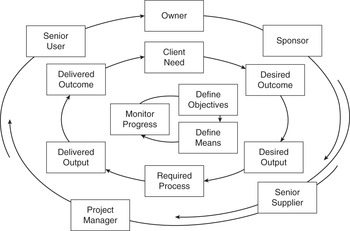
Figure 6.5. Four roles in the governance of projects.
We illustrate what follows with two examples. The Chinese government had the goal of achieving economic development on the north side of the Yangtze River, just north of Shanghai. Shanghai is the most economically developed part of mainland China, but Jiangsu Province, just north of the river, was not so economically developed. What was stopping economic development was the poor traffic flow across the river. People were not building their factories on the north side of the river, because it was difficult to get their products to Shanghai for shipment. In the second example, the board of a company believes it can improve the company’s profits if it improves marketing.
Defining objectives starts with the goal. In the first example, the goal is economic development on the north side of the river; in the second, it is improved company profits. What is the means to achieving the goal? This defines the project’s outcome, the new competencies the investor requires to achieve the goal. In the first case, it is better traffic flow across the Yangtze River; in the second case, it is improved marketing. The outcome now becomes an objective, a desired result. What is the means of achieving the outcome? This is the project’s output, the desired change or new asset. In the first case, it is a bridge across the river; in the second case, it is a customer requirements management system. The output is the means of achieving the outcome, but it now becomes an objective. What is the means of achieving the output? That is the project process.
The client is the ultimate principal for the project, the lead investor. But they appoint the sponsor as their representative. The sponsor is an agent of the client. The sponsor has the initial responsibility of working up the ideas for the project. Indeed, the project may the sponsor’s idea initially, and they persuade the client to take an interest. In the case of the bridge across the Yangtze River, the sponsor may be somebody from the economics department. They will investigate ideas for bridges and perhaps alternatives such as a tunnel or improved ferries. In the case of the customer requirements management system, the sponsor will be a member of the marketing department who will start to investigate what the computer systems are available. However, the sponsor is not a technical expert, and so quite early on will need to engage a senior manager from the technical department to help work up the ideas. Rodney Turner and Anne Keegan (Reference Turner and Keegan2001) called this role the “steward”, but PRINCE2 (OGC, 2009), calls it the “senior supplier,” and we use that terminology here. During the feasibility study, the sponsor will investigate the technical and financial feasibility of the project. They may engage the project manager to advice on the feasibility of building the project output. At the end of the feasibility study, they will choose an option for implementation. The project manager will then be responsible for defining and managing the project process to deliver the output. The project manager is the agent of the principal to manage the delivery of the project.
The sponsor also has an important additional role of sourcing the finance for the project. So the sponsor needs to persuade the investor to provide the money for the feasibility study, front-end design, detail design, and execution of the project (Turner, Reference Turner2014). Some people suggest that the sponsor actually provides the money. The owner or investor provides the money; the sponsor is responsible for persuading them to provide the money and to ensure the continuation of the revenue stream throughout the project. The sponsor is the owner’s or investor’s agent for that purpose, as mentioned above.
During delivery of the project, the process needs to be monitored and controlled. As the project is completed, the achievement of the output needs to be monitored. Does it deliver the desired functionality so that it works as required? Then, the achievement of the outcome and ultimately the goal needs to be monitored and controlled. We have shown that it is the responsibility of the senior user to monitor and control the delivery of the outcome and ultimately the impact. PRINCE2 (OGC, 2009) calls this role the “senior user,” but Managing Successful Programmes (Sowden & The Cabinet Office, Reference Sowden2011) calls it the “business change manager.” The two roles are, however, related. The senior user works for the business change manager. In a program, there will be a senior user for each project, responsible for achieving the benefit from that project, whereas the business change manager will be responsible for achieving the overall benefit of the program. In the case of Yangtze River bridge, the senior user will be responsible for achieving better traffic flows, whereas the business change manager will be responsible for achieving economic development. In the case of the customer requirements management system, the senior user will be responsible for improving marketing, whereas the business change manager will be responsible for improving profits.
Figure 6.5 shows four roles. In the very simplest of projects, such as decorating your home, there will be just one person. In smaller projects there may be just two people, but in most projects there will be four people. PRINCE2 requires there to be four people.
Unfortunately, within the project management community there is not a commonly agreed vocabulary. In Austria, they call the sponsor the project owner (Gareis, Reference Gareis2005). However, we like to use the word owner for the person or organization that ultimately owns and operates the project’s output to achieve the benefit, the investor. The Austrian usage may represent a mistranslation from German. Other people also call the senior user the sponsor. However, we like to clearly differentiate between the pre- and during-project role of championing the project and obtaining the revenue stream, and the postproject role of ensuring the outcome and goal is achieved. (They may be the same person, though PRINCE2 insists the two roles are separate.) PRINCE2 calls the sponsor the project executive. In the 1980s, people used to call the sponsor the project champion. Some people still use the word champion for a narrower role of promoting the project and wining support for it.
To summarize, the four roles are:
Sponsor: First identifies the potential for performance improvement in the business, and possible ways of achieving that need. Performs the feasibility of the project, showing its technical, financial, and commercial feasibility. Persuades the investor that the project is a good commercial proposition, and to provide financing for it, through all the project stages: feasibility, front-end design, detail design, and execution. Represents the investor on the project board.
Senior supplier: Provides technical input to all the project stages.
Project manager: Designs, manages, monitors, and controls the process to deliver the project output, and is responsible for delivering an output that works according to the desired functionality.
Senior user or business change manager: Responsible for achieving the desired performance improvement by ensuring the project’s output is used to achieve the outcome and ultimate goal.
Governance of the Contractor-Client and Contractor-Project Interfaces
Governance of the contractor as a company is also covered by the literature (Clarke, Reference Clarke2004; OECD, 2015). Here, we focus on the management of the interfaces between the contractor and the investor, and the contractor and the project. As we said above, for routine supply, there are two types of governance structure, depending on whether the client is an external body or another department within the same organization. These two governance structures are called markets and hierarchies respectively (Williamson, Reference Williamson1983). In the former case, the governance structure is the contract, which is aligned with the transaction. In the latter case, the governance structure is the hierarchy, which is perpendicular to the transaction. Rodney Turner and Anne Keegan (Reference Turner and Keegan2001) showed that in the case of projects, regardless of whether it is internal or external supply, the governance structure is always the project, which is the transaction. In the case of external supply, the governance structure will also include the contract, which will be aligned with the project. In this section, we will talk as if the contractor is an external supplier, but very similar structures are adopted for one department supplying another in the same organization (Turner & Keegan, Reference Turner and Keegan2001).
We identified four roles for the governance of projects: the sponsor, the senior supplier, the project manager, and the senior user or business change manager. Rodney Turner and Anne Keegan (Reference Turner and Keegan2001) identified that the first three of these roles are mirrored in the contractor, which they labeled the broker, steward, and project manager.
Broker: This role mirrors the sponsor within the contractor organization. He or she manages the client account, and helps the client define the business need, and identify the possible project outcome and output. He or she negotiates the contract with the client, and persuades the contract organization that this is business they want, and makes resources available for the contract. The role also carries names like account manager, sales manager, marketing manager.
Steward: This role mirrors the senior supplier in the client organization and may even fulfil that role for the client organization. He or she manages the front-end design of the project outputs and the initial definition of the project process, and so works with the broker in preparing the tender for the contract and preparing the contract. He or she will then identify a project manager and project team to deliver the project and will fulfil the program or portfolio management role within the contract organization. The role also carries names like solutions manager, network coach, or project director.
Project manager: The project manager manages the detail design and delivery of the project. He or she fulfils this role within the contract organization. The client may have a project manager overseeing the contractor’s project manager but, in this case, the client project manager mirrors the contractor project manager.
In Chapter 23, Rodney Turner and Laurence Lecoeuvre describe project marketing. They identify that contact between the client and contractor starts before there is a project. The broker will make early contact with the client when the client first identifies that they have a business need and are thinking about potential solutions to it. The broker will help the client define the goals and outcome of the project. But as they move into defining the project’s output and the potential project process, the broker will need to involve the steward and, eventually, the project manager.
Rodney Turner and Anne Keegan (Reference Turner and Keegan2001) identified that the governance structure varies slightly depending on the size of the client organization and the size of the project (see Figure 6.6).

Figure 6.6. Four governance structures for projects.
Some contractors will work for a small number of large, dominant clients. This tends to be the case in the heavy process plant industry. Other contractors work for a large number of small clients. This tends to be the case in the building and software industries. In the former case, the contractor dare not upset the client because if they do, they will lose a large proportion of their potential business. But the client also dares not upset the contractor, because in these industries there tends to be just a small number of potential suppliers, and so if the client loses one, they lose contact with a large proportion of the potential competency for doing their projects. In the latter case, there are a large number of potential clients and a large number of potential suppliers, and so relationships tend to be much less respectful. Some contractors do large projects for their clients and some do smaller ones. Rodney Turner and Anne Keegan (Reference Turner and Keegan2001) defined “large” and “small” as relative to the contractor’s total turnover, so contractors doing large projects were necessarily doing a small number, and those doing small projects were necessarily doing many. Contractors doing large projects for large clients were doing large, stand-alone projects. Contractors doing small projects for large clients were doing a program of projects for that client. Contractors doing small projects for small clients were doing a portfolio of projects for different clients. And contractors doing large projects for small clients were also doing a portfolio of projects.
In three of the four cases, the governance relationships were similar. The project manager worked for the steward, who responded to the broker, who was the interface with the client. The one exception was large projects for large clients. The steward would be a project director interfacing directly with the client. The broker would be a sales manager who would create the relationship, but stand aside during project delivery. Deputy project managers would work for the project director. Rodney Turner and Anne Keegan (Reference Turner and Keegan2001) suggested the reason for this difference was a transaction cost issue. The idea is to reduce the number of interfaces. Where there are a large number of competence pools and a large number of clients, there are a large number of potential interfaces. There is a transaction cost associated with each interface. So the brokers deal with the clients to source the business, and the stewards deal with the competence pools to assemble the projects. When a broker identifies a potential contract, he or she works with the relevant steward to assemble the project team. There is a cost associated with employing the brokers and stewards, but the number of interfaces is reduced to the sum of the number of competence pools and clients rather than their product. When there is a smaller number of clients and competence pools, it is cheaper to have a direct relationship between the steward and client and not employ the broker.
Governance of the Investor’s Investment Portfolio
Within any organization doing projects, there are (at least) three primary levels of governance, two of which we have already discussed. There is governance at the level of the company and, as far as that relates to projects, it is the interest that the board of directors takes in the projects, programs and portfolios taking place within the organization. We called this the governance of project management. Then there is the governance of the individual project. The third level is the governance of the investment portfolio, linking the projects and programs taking place within the organization to corporate strategy (see Figures 6.4 and 6.8). Figure 6.7 illustrates that portfolio and program management are key governance structures to roll out corporate strategy to the projects the company is doing.

Figure 6.7. The cascade from corporate strategy to project strategy
When we were describing the governance of project management above, we said that efficiency and effectiveness of the investment portfolio was one of the key aims. Principle 2 stated that there should be a coherent relationship between the investment portfolio and corporate strategy. One of the three functions of governance is to define the objectives, and it is through its investment portfolio that the investor translates its corporate strategy into the objectives, or desired results, for its projects and programs.
Rodney Turner (Reference Turner2014) suggests that there are five elements of portfolio management:
1. maintain an inventory of all the projects and programs taking place within the organization
2. track progress on all the projects and programs
3. select which new projects will be added to the portfolio
4. share resources between the projects in the portfolio
5. undertake a post-completion review of all projects and programs to ensure they achieved their business objectives
Elements 1 and 2; they are self-explanatory. We will discuss element 4 in the next section, because it is more of a problem for a contracting company. Here, we will discuss elements 3 and 5 in the reverse order.
Unfortunately, people are encouraged to be economical with the truth at element 3, if they want their pet projects adopted into the portfolio; they are encouraged to inflate the potential benefit, and understate the cost and potential risk. If postcompletion reviews are not undertaken, there is no check. Several years ago, Rodney Turner worked with a UK bank, visiting them twice, nine months apart. At the first visit, they were not conducting postcompletion reviews, and projects were repeatedly failing to achieve their business objectives; they were costing more than planned and not delivering their desired benefit. When he returned nine months later, there was a new CEO, and he had implemented postcompletion reviews. People were held accountable if their projects did not deliver the business objectives, and woe betide anybody for whom it happened twice. (Once is a mistake, twice a trend, and three times a habit.)
Organizations should maintain a portfolio committee to manage the adoption of new projects into the project portfolio. The committee will meet regularly, typically once in three months. Projects will be incorporated into the portfolio at their third stage-gate. Stage-gate 1 is the concept, where the sponsor first moots the idea that there is something the organization can do to achieve business performance. The economics department of the Chinese government floats the idea that if the traffic flowing across the Yangtze River can be improved, it will encourage people to build their factories on the north side of the river, leading to economic development. The marketing department suggests that if some marketing issues can be resolved it could improve profitability. Stage-gate 2 is completion of the feasibility study where the sponsor and senior supplier show that the preferred option is likely to produce the desired output, outcome, and performance improvement. The economics department and ministry of works show that a bridge can produce the desired increase in traffic flows at a reasonable cost; the marketing department and IT department show that a customer requirements management system can lead to the desired improvements. Stage-gate 3 is completion of the front-end design. Sufficient design is done to perform rigorous investment appraisal, to show that the benefits can be achieved at reasonable cost, with manageable risk. A business plan is produced for the project. A business case is produced for the project, and principle 3 above was that this should be based on relevant and realistic data. The business case should show how the project will deliver corporate objectives.
There will usually be more project proposals than money and resources available, so a selection has to be made. That will be done at the regular meeting of the portfolio committee. Each project needs to be awarded a score on how well its business objectives match corporate strategy. Then, based on the scores, projects will be added to the portfolio until all the available money and resources have been assigned to projects. Several years ago, Rodney Turner worked with Reuters. They would actually look at the next couple of projects on the list, and decide whether they were higher priority than projects already underway. If so, the projects underway could get canceled, and the new projects added to the portfolio. For the remaining projects, it may not be the end of the road. The projects’ promotors may have the opportunity to take the project away and try to improve the business case, getting greater alignment to the corporate strategy. For other projects, it just may not be the right time. A better time may be six or twelve months later. But for many projects, they will now be stopped.
There is one more issue of importance at the level of the investment portfolio. One function of governance is defining the means of achieving the objectives, and part of the means is ensuring that the organization has the competencies it needs to do the projects it wants to do. This is called developing organizational project management capability. This is dealt with in Chapter 11.
Governance of the Contractor’s Portfolio of Projects
Element 4 of portfolio management above is balancing the available resources between the chosen projects. This is of particular importance to contractors, especially contractors doing medium-duration projects of three to nine months, for whom the resource demands can fluctuate heavily. The projects in the portfolio will be managed in a similar way as above, except that the decision to add projects to the portfolio will be taken at a decision-to-tender meeting.
Criteria will include issues such as:
The job is expected to make a profit.
Do we want the business?
Does it offer development opportunities?
The job matches the firm’s competence and capability.
The firm has the capacity to do the work.
The client is pleasant to work for.
The contractual conditions are fair.
The risk is acceptable.
Three types of manager are involved in balancing the resource requirements: portfolio managers, project managers, and resource managers. Portfolio managers accept new projects into the portfolio. They ask project managers to plan them and predict the resource demands. Resource managers tell the portfolio manager what the resource availability is. The project managers and portfolio managers create a rough-cut capacity plan where they balance the resource availability versus the resource demands. Each project is given a time and resource window within which it can take place. There are a couple of points for the rough-cut capacity plan:
1. We suggest you maintain separate plans for small, medium and large projects. John Payne and Rodney Turner (Reference Payne and Turner1999) suggest that for a given company, large projects will be ten times the size of medium projects, and medium projects ten times the size of small projects. PRINCE2 (OGC, 2009) suggests each project has a tolerance on its cost of between ±5 percent and ±10 percent. That means the error on large projects is equal to the size of medium projects and ten times the size of small projects. Small projects cannot compete alongside medium-sized projects, and medium-sized projects can’t compete alongside large projects. Therefore, you need to create separate resource pools for small, medium, and large projects, and manage them in separate portfolios (as shown in Figure 6.4).
2. The rough-cut capacity plan should contain just a summary of each project, not the full work breakdown. That is what “rough-cut” means. Rodney Turner (Reference Turner2014) suggests that each project is added to the rough-cut capacity plan as a single activity. We suggest that this is what you do for small and medium-sized projects. For large projects, you may do the same, or add them at the work-package level.
Rodney Turner (Reference Turner2014) first observed portfolios being managed in this way in the ship-repair industry. There it worked very easily. However, there were two features of the projects which made it easy. First, the workload was predictable years into the future, so the dockyards knew what resources they needed. Second, the projects all had the same resource profile. So if you needed to move one project to solve an overload in one resource, you were solving an overload in all resources. Contractors doing medium-sized projects, three to nine months long, do not know what projects they will be doing in six months’ time. Further, clients want their job done now, so you cannot delay the start of a project to solve a resource overload. In addition, the resource profiles of different projects can be quite different, so moving a project to solve an overload in one resource may create a bigger problem for another resource. Against this background, contractors do not want to make people redundant if there is a temporary downturn in the number of projects being undertaken. It is expensive to make people redundant just to re-recruit them in six months’ time. For this reason, contractors tend to use a large contingent of temporary staff. Anne Keegan and Rodney Turner (2003) identified that contractors can have between 20 percent and 40 percent of their staff as temporary workers, and sometimes as high as 80 percent.
Project managers are responsible for managing projects within the time and resource window they are given. If things change, and they need more time or resources, they must return to the rough-cut capacity plan to negotiate more resources. As projects progress, the project managers will make demands on resources for the people. There are two ways this can be done. Packages of work can be transferred to the resource managers; then the resource managers will be responsible for assigning people to complete the packages of work by the deadline. Or people are seconded from the department onto the project, and the project manager is responsible for coordinating the work of different resources to complete the packages of work by the deadline. Because of the magnification of errors as elements are broken down into smaller units, the balance in the rough-cut capacity plan may be accurate to, say, ±5 percent, but the demands the project managers are making on the resource managers can still be out of balance to, say, ±50 percent. The resource managers have to balance the demands.
Governance of the Network of Projects
The final organization that a project can be part of is a network of projects. Governance through networks differs from that of markets and hierarchies because, here, projects and relationships are coordinated through social mechanisms, such as trust, reciprocity, and partnership, which increase in intensity with the extent of interaction in the network (Jones, Hesterly, & Bogatti Reference Jones, Hesterly and Borgatti1997; Powell, Reference Powell1990). This differs from arms-length, price-driven and often anonymous governance, as in markets; or authority and control-driven governance, as in hierarchies. The social mechanisms provide for reduction of transaction costs by restricting access to those actors relevant for a project and safeguarding of the exchange of members by establishing sanctions for those who do not obey the culture of the network (Jones et al., Reference Jones, Hesterly and Borgatti1997).
Three forms of network governance are typically found (Provan & Kenis, Reference Provan and Kenis2008):
Shared network governance, where either all or a significant number of the network members are responsible for managing internal and external relationships and coordinate actions. This is most often found in networks with few members of equal status, with high mutual trust and consensus about the goals of the network.
Lead organization-governed networks, where one member of the network assumes a leadership role, maybe because of a special skill set or experience, or mandated from outside. This form of governance is most effective in networks of medium size, with high levels of trust in the leading member, as well as moderate levels of consensus about the network goals.
Network administrative organization, where a separate organization governs the network, including the relationships and activities of its members. This approach reduces the complexities stemming from the internal tension in the two other network governance approaches and is most effective in large networks, where the need for coordination is high, the governance entity is trusted, and a moderate consensus about the network goals prevails.
As in the other governance approaches described above, network governance can be internal or external to an organization. Internal networks may emerge in larger organizations, when they deliver similar projects to the same customer, but in different countries. The individual projects are governed by the respective country organizations of both buyer and supplier organization, but the projects as such are networked because of similarities in resource and/or technical requirements.
In a related study on the governance of PMO networks (where each PMO member can be seen as a representative of the project he or she worked on) Monique Aubry, Ralf Müller, and Johannes Glückler (Reference Aubry, Müller and Glückler2012) identified three different relationships between the network members:
controlling relationship, where one member executes management authority over another member; for example, if the project manager of one project audits the project manager of another project
partnership relationship, which is characterized by collegial equality, such as when a member of one project jointly works with colleagues from another project to solve a shared issue
serving relationship, where the member of one project is contracted for or provides a service to another project.
Each network member can take on a mix of these roles, and thus appear differently to different members of the network at different points in time. The study showed that the partnering role provides for the needed slack to explore new knowledge and contribute to the learning within the network, whereas both the controlling and serving role exploit existing knowledge and contribute little to the network-wide learning.
Through Social Network Analysis, Aubry, Müller, and Glückler (Reference Aubry, Müller and Glückler2012) identified the communication structures among and between project managers in a network of internal projects in a pharmaceutical company. Their study showed that project managers prefer to communicate with those colleagues they had worked with before, who are not necessarily the most knowledgeable resource on a subject. It also showed that project managers tend to communicate in small clusters of preferred communication partners, and that only those project managers who work on many projects and developed an innovation in their way of managing projects took the liberty to communicate with peers in other clusters. Hence, information flows in project networks are limited largely to subnetworks of mutually trusted colleagues with a history of joint work.
These two issues (little knowledge exploration and limited communication) need to be addressed through adequate governance measures, such as fostering of knowledge exploration through provision of “slack times,” and workshops for mutual learning and development of shared mental models about the particular skills and experiences of network members. This provides for more efficiency in information flow and effectiveness in communication with colleagues who are most knowledgeable about a subject, who are not necessarily those known the longest time (Müller, Glückler, Aubry, & Shao, Reference Müller, Glückler, Aubry and Shao2013).
Governance of networks of projects can also be external. For instance, when the European Space Agency is preparing a satellite, there may be a number of experiments on board, so there will be several projects developing each experiment. Or when a city becomes the European city of culture for a year, there may be a number of initiatives to prepare different events. Karlos Artto and Jaakko Kajula (Reference Artto and Kajula2008) identify four types of project business against two dimensions. The first dimension is one project-many projects, and the second dimension is one firm-many firms. One firm-many projects is the project-based organization we considered first above. One firm-one project is the single project we considered second. One project-many firms is a joint venture where many firms contribute to one project. Here we consider many firms-many projects.
Karlos Artto and Jaakko Kujala (Reference Artto and Kajula2008) identify several issues with the management of a network of projects:
(a) The participants may have competing objectives; they can be partners on one project, and competitors on another.
(b) There can be different operating models between business participants and non-business participants.
(c) Participants from the public sector may be more politically motivated.
(d) Firms can participate in different projects in different roles, being the lead on one, and supplier on a second.
Karlos Artto and Jaakko Kujala (Reference Artto and Kajula2008) say that the key governance challenges are to maintain efficiency and innovativeness in the network, and to position each firm in the value network. They say it is important to define the appropriate governance mechanisms.
Conclusion
We have seen that a project is an organization within many other organizations:
1. the investor: a permanent organization that identifies the opportunity for making a change to achieve business objectives, and initiates the project to make that change
2. the investor’s portfolio of projects: a rolling, annual, temporary organization through which the investor makes all its business changes
3. the contractor: a permanent organization which provides the investor with competencies it lacks to enable it to undertake its projects
4. the contractor’s portfolio of projects: a permanent organization through which the contractor manages the work it does for all its clients
5. a network of projects: usually a temporary organization of several projects with a common objective.
All of these organizations and the interfaces between them require governance.
Governance can be viewed as a control system, a process or a set of relationships. These three views overlap. According to the OECD’s definition of governance, which we have adopted, there are four functions of governance: to define the objectives of the organization (or interface); to define the means of achieving those objectives; to define the means of monitoring progress; and to manage the relationships between significant stakeholders;
1. In projects, we identified that the four functions imply the four roles suggested by PRINCE2: the sponsor, the senior supplier, the project manager, and the senior user.
2. In the interface between them we described the eleven principles of good governance suggested by the Association for Project Management, and the responsibility boards of directors have to assume for projects, programs, and portfolios being undertaken by their organization.
3. One of the principles is the coherence of the investment portfolio, and we showed how this can be used to create a clear link between corporate objectives and project objectives, so the organization does the right projects to achieve its corporate strategy.
4. To manage the interface with its client, the contractor needs to mirror three of the four governance roles on the project: the account manager or broker mirrors the sponsor; the solutions manager or steward mirrors the senior supplier (or perhaps is the senior supplier); and the contractor’s project manager mirrors the client’s project manager.
5. In governing its project portfolio, the contractor needs to ensure it has adequate resources to do the contracted work for its clients, and to manage that work to achieve the efficient and effective completion of its clients’ work.
6. The project may be part of a larger network of projects, and the relationships between the parties involved in the network needs to be defined for the efficient and effective achievement of the objectives of the project network.
This chapter showed that governance is not limited to individual organizations, but is also required for governing the interface between them.
Introduction
Project portfolio management (PPM) is a central component of organizational project management (OPM), especially through its role in both the formulation and the delivery of organizational strategy. Corporate activities are increasingly carried out in the form of projects, in a trend that has been called “projectification” (Midler, Reference Midler1995). In particular, for the implementation of complex innovations, it is not enough for organizations to focus on the successful management of individual innovation projects; they must also manage a large number of interdependent projects from a portfolio perspective. In today’s dynamic environment, organizing by projects has become the rule rather than the exception, and organizations face challenges in managing these large project landscapes (programs and portfolios).
The management of project portfolios is closely linked to the implementation of strategies. As strategies are ultimately implemented by projects, PPM – as a link between corporate strategy and projects – plays a central role (Meskendahl, Reference Meskendahl2010). In most research and practice this role is considered from a top-down perspective: strategies are considered to be a given yardstick for the prioritization and selection of projects and the allocation of resources. From such perspectives, PPM acts as the recipient of strategic goals and requirements that need only to be operationalized.
However, the strategic management literature has long recognized the importance of emergent strategy; and that the realized strategy (the strategy that is actually implemented) often strays from the intended strategy (Mintzberg, Reference Mintzberg1978). Surprisingly, this is hardly considered in existing research models and standards for PPM (PMI, 2013). While there is some empirical evidence to suggest that hierarchical, formal, top-down approaches are not the actual practice of PPM (Christiansen & Varnes, Reference Christiansen and Varnes2009; Jerbrant & Gustavsson, Reference Jerbrant and Gustavsson2013; Martinsuo, Reference Martinsuo2013), a much broader debate is needed to fully explore the role of PPM in the context of emergent strategies. The goal of this chapter is therefore to explore the role of PPM in the relationship between the formulation and implementation of strategy and consider both the top-down approach as well as the bottom-up strategy emergence. We first discuss emergence in the context of strategy implementation and the role of different phases in the PPM process that affect strategy implementation. After a discussion of the current empirical evidence on emergence in the context of portfolio management, we suggest ways in which PPM can act as a strategy “linchpin”; an essential organizational process to connect and integrate both top-down and bottom-up approaches in strategy implementation.
Strategy Formation and Emergence
Organizational strategy aims to underpin success through the development and maintenance of competitive advantages. In pursuit of such advantages, strategic processes are used to determine objectives and goals and to develop plans for their achievement. The strategy formation process is often represented in two stages in strategic management literature. The first stage, strategy formulation, receives the large majority of the attention and research – this is the stage where organizations weigh up the options and challenges and set goals and objectives aimed to lead the organization to success. The second stage, strategy implementation, refers to the ways the strategy becomes a reality; without effective strategy implementation, the planned strategies will not be realized. Although the importance of strategy implementation is well recognized, it is often treated as an afterthought to strategy formulation (Noble, Reference Noble1999).
The theme of emergence has made a strong impact on the field of strategic management ever since Mintzberg’s seminal work on strategy formation (Mintzberg, Reference Mintzberg1978). More generally, emergence refers to the appearance of new, coherent, and unexpected structures, patterns and characteristics at the macro-level of complex systems that are caused by the interaction of components at the micro-level (Goldstein, Reference Goldstein1999). Emergent phenomena have features that are not observable in the individual parts of the system (Akgün, Keskin, & Byrne, Reference Akgün, Keskin and Byrne2014; Beeson & Davis, Reference Beeson and Davis2000; Goldstein, Reference Goldstein1999). Therefore, they are neither predictable nor deducible. They are based on self-organized behaviors through which simple behavioral rules at the local level can lead to very complex behaviors at the global level (Goldstein, Reference Goldstein1999). Emergence can occur in physical, biological, technical, or social systems.
Organizations today face strategic challenges as environments are increasingly characterized by high levels of change; strategic evolution, often led by emergent elements, is required to effectively respond to this change. Emphasizing emergence in organizations in the context of strategy formation, Mintzberg and Waters (Reference Mintzberg and Waters1985) address the discrepancy between strategic plans and intentions on the one hand (strategy formulation) and what organizations actually do on the other hand (strategy implementation). These two aspects of implemented strategy are referred to as the deliberate strategy (implemented as intended), and emergent strategy (realized despite planning or even in the absence of plans). In addition, some of the intended strategy may not be implemented – referred to as unrealized strategy. Figure 7.1. illustrates these relationships. While strategy formulation is a purely mental, planning activity, implementation reflects the process of realization. Emergence, by definition, only occurs in the context of implementation, since it is an unexpected outcome.

Figure 7.1. The relationship between intended and realized strategy.
Although strategic plans are often made with an assumption that the strategy will be fully and deliberately implemented, this is very unlikely to occur in reality. A perfectly deliberate strategy implementation requires that strategic intentions are fully developed and communicated, all organizational actors are fully committed to implementing the strategy, and there is no interference from external forces. In today’s increasingly turbulent environment, external change is especially likely to affect the implementation of strategic plans. Similarly, a purely emergent strategy is also highly unlikely to occur, as that would indicate that intention had no role to play at all. Instead, it is the combination of the two (deliberate and emergent strategy) that is observed in practice. Mintzberg and Waters (Reference Mintzberg and Waters1985, p. 271) state it this way: strategy formation “walks on two feet, one deliberate, the other emergent.” This suggests that management needs an ability to provide direction while simultaneously responding to change and emergence. Other researchers use different terms for similar concepts – for example, a commanding/directing mode of top-down strategy implementation combined with a generative/responding mode of bottom-up strategy implementation is proposed to lead to better outcomes than either mode on its own (Hart, Reference Hart1992).
To explore the concept of emergence, we now turn our attention to strategy implementation in a project environment. In organizations, strategies are typically implemented by projects; as the project portfolio represents the sum of all projects, it therefore also represents the currently implemented strategy (Morgan, Levitt, & Malek, Reference Morgan, Levitt and Malek2007). Strategic implementation through portfolio mechanisms is characterized by high complexity and multiple inter-element interactions – conditions that suggest an environment ripe for the occurrence of emergence. Individual projects and actors represent the main elements or components of this system at the micro-level (Goldstein (Reference Goldstein1999), and their interaction may result in emergence on a higher portfolio and strategy level. It should be noted that not every such interaction leads to emergence; the interactions must also have coherent structures. These structures, however, are only visible from a higher level; a portfolio perspective can reveal how such micro-level elements form higher-level structures from the bottom-up. Therefore, the concerted management of these elements is best done from the portfolio level through PPM mechanisms (see Figure 7.2.).
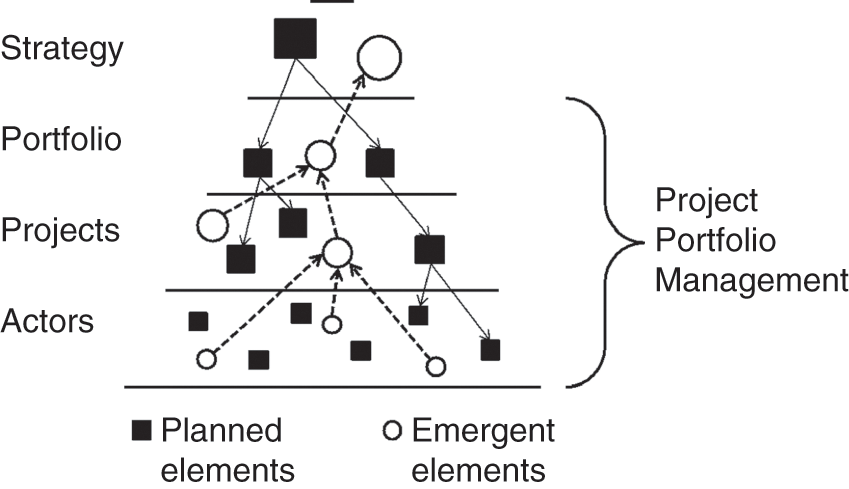
Figure 7.2. A project portfolio perspective of planned and emergent strategic elements.
PPM is therefore often viewed as a bridge between strategy formulation and its implementation (Meskendahl, Reference Meskendahl2010). The challenge of PPM lies not only in the implementation of deliberate strategy but also in the adequate handling, and indeed enabling, of emergence. While planned strategies are cascaded down through the hierarchy for implementation, emergent strategy is realized by the bottom-up interplay of different portfolio elements (people and projects).
The project prioritization and selection phase of PPM receives strong attention for its impact on strategy (Archer & Ghasemzadeh, Reference Archer, Ghasemzadeh, Morris and Pinto2004; Blichfeldt & Eskerod, Reference Blichfeldt and Eskerod2008; Dietrich & Lehtonen, Reference Dietrich and Lehtonen2005; Englund & Graham, Reference Englund and Graham1999; Müller, Martinsuo, & Blomquist, Reference Müller, Martinsuo and Blomquist2008). The cascade model of strategy implementation is often portrayed as the mechanism through which projects are selected to fit with strategy through a traditional top-down approach (see Figure 7.3.). This perspective focuses on the realization of deliberate strategies, ignoring the potential existence and impact from emergent strategies.

The top-down cascade model is reflected in much of the extant OPM research. Empirical studies confirm a positive relationship between strategically aligned project selection and portfolio success (Müller et al., Reference Müller, Martinsuo and Blomquist2008). Other studies have shown that a formalized portfolio management process, which is based on strategic planning, is also associated with success, as it provides transparency, facilitates coordination, and enables strategy to guide project selection (Schultz, Salomo, de Brentani, & Kleinschmidt, Reference Schultz, Salomo, de Brentani and Kleinschmidt2013; Teller, Unger, Kock, & Gemünden, Reference Teller, Unger, Kock and Gemünden2012). Finally, successful portfolios are also characterized by clear objectives for projects and formalized decision processes (Martinsuo & Lehtonen, Reference Martinsuo and Lehtonen2007).
The dominant view on PPM as represented by these and other studies is driven from the top down and ignores that strategy can also be emergent (Mintzberg, Reference Mintzberg1978). In the next section we discuss the PPM process and how it works with strategy formulation and implementation in both a top-down and a bottom-up manner.
Project Portfolio Management Process
A project portfolio describes a set of projects that are executed by a particular organization and compete for its limited resources in terms of budget, personnel, and time (Archer & Ghasemzadeh, Reference Archer, Ghasemzadeh, Morris and Pinto2004). It can be said that the project portfolio represents the organization’s strategy (Benko & McFarlan, Reference Benko and McFarlan2003; Morgan et al., Reference Morgan, Levitt and Malek2007) as it is a collection of the projects and programs that embody strategy realization. The project portfolio processes also guide the future implementation of strategy through projects (Cooper, Edgett, & Kleinschmidt, Reference Cooper, Edgett and Kleinschmidt1999). Therefore, the dedicated management of a project portfolio is responsible for the prioritization of projects and the respective allocation of scarce resources in order to realize the most favorable selection of projects for an organization (Blichfeldt & Eskerod, Reference Blichfeldt and Eskerod2008). In addition, PPM refers to the continuous and overarching coordination and steering of the project portfolio. In that regard, the management of a project portfolio can provide benefits (e.g., exploitation of synergies between projects and management of portfolio risks) that would not occur in the case of independently managed projects (Teller & Kock, Reference Teller and Kock2013).
Scholars often adapt a process model for describing portfolio-related management activities (e.g., Blichfeldt & Eskerod, Reference Blichfeldt and Eskerod2008; Thiry & Deguire, Reference Thiry and Deguire2007). Such process models typically highlight the role of project prioritization and selection and the ongoing coordination of the portfolio of projects. In this chapter, we follow the model by Jonas (Reference Jonas2010) that comprises four phases (see also Beringer, Jonas, & Kock, Reference Beringer, Jonas and Kock2013; Jonas, Kock, & Gemünden, Reference Jonas, Kock and Gemünden2013; Meskendahl, Reference Meskendahl2010): (1) Project portfolio structuring; (2) Resource allocation; (3) Project portfolio steering; and (4) Project portfolio exploitation. This varies from other models by including a fourth phase, which comprises the post-project activities and emphasizes the exploitation of project results (Jonas, Reference Jonas2010). One weakness of phase-based process models is that they tend to suggest a static view of the life cycle of projects; however, project portfolios are highly dynamic entities (Floricel & Ibanescu, Reference Floricel and Ibanescu2008; Petit, Reference Petit2012). New project opportunities and proposals are constantly popping up while the scope and urgency of ongoing projects may change at any time. Changing strategic objectives and the impact of a volatile environment can alter the priority and purpose of projects while other projects may become obsolete. As a consequence, aspects of PPM referring to the inflow of projects, to the continuous management of the stock of projects, and to the outflow of projects, need to be performed simultaneously and constantly. In the following sections, we highlight the main activities, challenges, and contributions of the four phases of PPM on strategy implementation.
Portfolio structuring comprises activities that precede the execution of projects. The main challenge of this phase is to define a portfolio of project investments that in its entirety optimally reflects the strategic objectives while also considering the constraints of the funding organization.
This requires:
management of the inflow of project ideas and proposals (Heising, Reference Heising2012; Kock, Heising, & Gemünden, Reference Kock, Heising and Gemünden2015; Kock, Heising, & Gemünden, Reference Kock, Heising and Gemünden2016)
prioritization and balancing between multiple potentially contradicting goals, aiming for strategic alignment, maximal revenues, and a balanced portfolio of risks (Cooper, Edgett, & Kleinschmidt, Reference Cooper, Edgett and Kleinschmidt2001; Meskendahl, Reference Meskendahl2010)
management of dependencies on the internal and external environment and between projects (Archer & Ghasemzadeh, Reference Archer and Ghasemzadeh1999; Killen, Reference Killen2013; Killen & Kjaer, Reference Killen and Kjaer2012; Platje, Seidel, & Wadman, Reference Platje, Seidel and Wadman1994)
integration of input from relevant stakeholders such as the project customers (Voss, Reference Voss2012; Voss & Kock, Reference Voss and Kock2013)
As a result, a portfolio of preferred project investments is selected from a wide range of project ideas that have gone through a comprehensive evaluation and prioritization. In sum, this selected portfolio represents an interpretation of a top-level strategy that is used to derive project initiatives and to challenge and evaluate upcoming project ideas. Thus, from a strategic management perspective the selected portfolio represents the nexus between strategy formulation and implementation. On the one hand, it drives strategy formulation by interpreting the strategy, concretizing it to project evaluation criteria or by defining strategic bucket. On the other, the actual selection of projects represents the first step of the implementation of the intended strategy. However, it is not all top-down, and in this phase we also observe the influence of bottom-up elements (e.g., due to operational problems that require solutions or new project ideas that are not in line with the overall strategic direction).
Resource allocation refers to the distribution of the organization’s resources across the projects in a way that reflects the organization’s priorities. The main challenge of this phase stems from the tension between the line organization that provides the resources and the project organization that requires the resources (Arvidsson, Reference Arvidsson2009). The optimal utilization of resources requires the transparency of their availability and competences, a clear strategic focus, and a commitment to organizational goals that prevent opportunistic behavior (Elonen & Artto, Reference Elonen and Artto2003; Engwall & Jerbrant, Reference Engwall and Jerbrant2003). Another challenge is indicated by issues at the individual level. Project members often lack the long-term perspectives and career systems that a single project environment cannot provide while their allocation to multiple projects often leads to an overload of project work (Huemann, Reference Huemann2010; Zika-Viktorsson, Sundström, & Engwall, Reference Zika-Viktorsson, Sundström and Engwall2006). Organizations that successfully address these challenges provide the basis for the efficient implementation of the portfolio of project ideas.
The impact of the resource allocation phase on the strategy formation process is twofold. First, it provides the basis for the efficient implementation of the entire portfolio of project ideas according to the organization’s priorities and thereby concretizes the intended strategy that is inherent to the project ideas in funded and staffed projects. It paves the way and defines the frame for strategy implementation. Second, in the resource allocation phase, the commitment of the (resource-owning) middle management (typically in the line organization) to the strategy is revealed. In some cases, the lack of resource commitments to support strategic decisions have been seen as a major source of emergent strategies (Burgelman, Reference Burgelman1994).
Portfolio steering comprises all activities that are related to ongoing projects. Through continuous coordination and control activities, PPM provides mechanisms for response to changing organizational priorities, project plan deviations, and/or risks and opportunities (Korhonen, Laine, & Martinsuo, Reference Korhonen, Laine and Martinsuo2014; Müller et al., Reference Müller, Martinsuo and Blomquist2008; Teller & Kock, Reference Teller and Kock2013). In doing so, this phase addresses challenges that stem from a dynamic external and internal environment and enables an organization to adapt to changing conditions. Scholars also emphasize the importance of the exploitation of synergies among projects regarding the availability of information, or the mutual utilization of tangible or intangible assets (Canonico & Söderlung, Reference Canonico and Söderlung2010; Platje et al., Reference Platje, Seidel and Wadman1994).
The strategic relevance of this phase is, again, twofold. First, portfolio steering can provide strategic control functions to ensure alignment with strategy and to manage uncertainty (Korhonen et al., Reference Korhonen, Laine and Martinsuo2014). Second, a portfolio perspective of current projects can create and reveal strategic opportunities that emerge within the strategy implementation (Kopmann, Kock, Killen, & Gemünden, Reference Kopmann, Kock, Killen and Gemünden2017).
Portfolio exploitation activities refer to the project closure and the post-project phase. The scarce literature on PPM regarding this phase particularly highlights the relevance of organizational learning through “lessons learned” and the evaluation of project results (Kopmann, Kock, Killen, & Gemünden, Reference Kopmann, Kock, Killen and Gemünden2015; Prencipe & Tell, Reference Prencipe and Tell2001; von Zedtwitz, Reference von Zedtwitz2002). This phase is also highly relevant, from a single-project perspective, on benefits realization (Winter & Szczepanek, Reference Winter and Szczepanek2009). Scholars distinguish three stages in the process of value realization: output, outcome, and benefit (Turner & Zolin, Reference Turner and Zolin2012; Winter & Szczepanek, Reference Winter and Szczepanek2009; Zwikael & Smyrk, Reference Zwikael and Smyrk2012). Accordingly, the immediate results of a project (i.e., artifacts produced by the project) are defined as output. Projects are typically concluded when these outputs are delivered. However, the utilization and exploitation of these outputs is required to realize an outcome. Finally, benefits are described as the “flow of value that is triggered by the realization of a target outcome” (Zwikael & Smyrk, Reference Zwikael and Smyrk2012, p. 11). Following this rationale, the actual realization of a strategy takes place in the exploitation phase, after the delivery of outputs.
Thus, the main challenge in this phase is to bring together the puzzle pieces that are represented by the single project (selected in the portfolio structuring phase), from the perspectives of both deliberate and emergent strategies to fully understand and manage portfolio exploitation.
Deliberate strategies are based on the one intended strategy concept, formulated in the beginning of the strategy formation process. As shown in Figure 7.2, the strategy cascades down into many micro-level elements. In the portfolio exploitation phase, these elements need to be brought together so that, from a “big picture,” portfolio-level perspective, the strategy implementation can best be recognized (and validated). However, emergent strategies also stem from multiple micro-level elements and realized strategy can only be fully recognized from an ex-post perspective, when patterns across these elements can be observed. The interplay between the top-down and bottom-up strategy processes contributes to a feedback loop where the formulated intended strategy evolves in response to emergence (Mintzberg & Waters, Reference Mintzberg and Waters1985). It is at the portfolio perspective, and through PPM processes, that patterns of emergence come to light, and influence the ongoing (re)formulation of intended strategy.
Each of the four phases that have been discussed represents an essential and necessary part of PPM. Even though the phases overlap in practice, with activities often performed simultaneously, they are logically consecutive from a strategy perspective following the classical concept of deliberate strategy. This perspective also leads to a limited view of PPM as largely focused on the selection of the right projects.
This notion is also reflected in the widely acknowledged definition of project portfolio success, in which success is equated with the expected value of a portfolio of project investment options. As a consequence, scholars in PPM tend to focus on activities that are related to the operationalization and implementation of intended strategies, while its actual contribution to the bottom-up/emergent strategy formation is widely neglected. Thus, when revisiting the role of PPM in the strategy formation process, the understanding of portfolio success also needs to be challenged.
The strategic aspect of project portfolio success is traditionally seen in the implementation of the firm’s strategy through portfolio structuring, resource allocation, and steering processes (Morris & Jamieson, Reference Morris and Jamieson2005). This view focuses on ensuring that project selection and resource allocation are aligned with the firm’s strategic objectives and priorities in a top-down manner. Beyond that, successful PPM reconfigures the project portfolio through project reprioritization and termination to enforce strategic fit (Unger, Kock, Gemünden, & Jonas, Reference Unger, Kock, Gemünden and Jonas2012).
However, although strategic fit is one of the most prevalent success criteria for PPM, it only represents one side and ignores PPM’s wider influence on strategy. In the end, it is the realized strategy that determines organizational success regardless of the degree to which it stems from intended top-down strategy or from emergent elements. To better understand the importance of emergence and the ways that PPM enables recognition of bottom-up emergence, we review the concept of emergence and emergent strategies from a PPM perspective in the following section.
Evidence of Emergence in Project Portfolios
Although the planning-based perspective dominates the literature on PPM, some qualitative studies give first indications of the importance of emergent phenomena:
Burgelman (Reference Burgelman1983) identified autonomous strategic behavior as a source for strategic projects that are out of the organization’s current strategic scope when initiated. Further, he proposes that strategy may follow autonomous strategic behavior when the middle managers make sense out of these initiatives and manipulate the strategic context accordingly. More explicitly, Mirabeau and Maguire (Reference Mirabeau and Maguire2014) explored several autonomous strategic projects that have led to emergent strategies and identified three aspects that foster the transition from autonomous strategic projects to emergent strategies: (1) Mobilizing wider support for impetus; (2) manipulating strategic context for consonance; and (3) altering structural context for embeddedness.
Loch (Reference Loch2000) and Blichfeldt and Eskerod (Reference Blichfeldt and Eskerod2008) found that formal PPM is often only applied to specific projects, while many projects are executed outside formal decision-making processes. These unrecognized projects consume important resources and have a large impact on other projects. This suggests that emergent projects can present unresolved challenges to established management systems.
The investigations of Petit and Hobbs (Reference Petit and Hobbs2010) and Petit (Reference Petit2012) show that project portfolios are – due to high project interdependence – greatly affected by variations in project objectives, customer requirements, and target customers during the course of individual projects. Similarly, managers are often unaware that risks of individual projects may aggregate at the portfolio level or that risks of individual projects may represent opportunities for other projects (Olsson, Reference Olsson2008; Teller, Reference Teller2013). Many changes and unexpected events lead to unavoidable unpredictability, which is generally not well catered for in current portfolio management approaches.
In a case study of a pharmaceutical company, Aaltonen (Reference Aaltonen2010) identified evolutionary processes of variation, selection, and retention in project portfolios. These evolutionary processes can lead to path dependencies in portfolio decisions, resulting in co-selection where project selection according to certain criteria also results in unwanted aspects at the same time. Such evolutionary and unplanned developments (i.e., emergent strategy) are therefore shown to have strong implications for the entire portfolio.
Bootlegging describes secretly organized innovation projects that ignore management directives. Hence, they are not under the control of portfolio management and do not follow the top-down defined selection process. Augsdorfer (Reference Augsdorfer2005) defines bootlegging as an activity that usually emerges bottom-up and might be beneficial for the firm. Augsdorfer’s empirical study revealed that bootlegging takes place in R&D departments across multiple industries and primarily involves incremental innovations, which are eventually aligned with the corporate strategy and support the organization’s goals. Hence, he argues that bootlegging is not only valuable commercially, but also in terms of strategic success.
Midler’s study of the development of the Renault Logan (Reference Midler2013) reveals the high relevance of emergent strategies for firm success in a multiproject environment. The case describes how an extremely successful strategy can develop evolutionarily through complex learning relationships among a series of interdependent projects. This strategy formation called “Lineage Management” describes a dialectic interplay between strategy formulation and implementation through a sequence of projects (Midler & Silberzahn, Reference Midler and Silberzahn2008).
Other case studies also remind us that idealized project portfolio processes may not be in accordance with actual practice. Christiansen and Varnes (Reference Christiansen and Varnes2009) observe that portfolio decisions are not necessarily made according to established rules and criteria, but instead rely strongly on negotiating, bargaining and intuition. Similarly, Jerbrant and Gustavsson (Reference Jerbrant and Gustavsson2013) demonstrate that the behavior of managers in PPM is often characterized by improvisation and does not necessarily reflect rational decision making. Kester, Griffin, Hultink, and Lauche (Reference Kester, Griffin, Hultink and Lauche2011) identify that strong power-based and opinion-based decision-making processes are used in portfolio management, instead of the expected (and usually stipulated) evidence-based decision-making processes. Mosavi (Reference Mosavi2014) shows that portfolio management steering committees not only include a decision-making function as part of the established PPM approaches, but that they also include a communication and negotiation function that is not often formally recognized. A case study in the public sector (Young, Young, Jordan, & O’Connor, Reference Young, Young, Jordan and O’Connor2012) shows that despite adoption of “best practice” PPM approaches, the majority of projects contributed little to achieving strategic objectives, casting doubt on the suitability of current PPM approaches.
Discussion and Suggestions for Managing Emergence through PPM
We have shown how PPM is influenced by, and influences, both deliberate and emergent strategies. We have analyzed this relationship from a process perspective and have summarized empirical findings. Drawing upon our analysis of the findings, we now turn to the future to discuss how organizations might deal with emergent strategy implementation.
We offer three suggestions on how PPM can be adapted to recognize, allow, and foster emergence. We propose that managers: (1) recognize the value of emergence and consider adopting mechanisms for “planned emergence” via strategic control; (2) manage the grassroots of strategy and foster bottom-up initiatives to allow for emergent elements; and (3) consider the wider role of PPM in two-way strategy processes and the need to adapt PPM success measures accordingly. We then explore each of these suggestions on how organizations can best build on and manage emergence through PPM.
Implementation of Mechanisms for “Planned Emergence” via Strategic Control
In recognition of the importance of emergent strategy for organizational response to change, we turn to mechanisms within PPM that can help to manage emergence. The concept of “managing emergence” may seem counterintuitive, as one of the defining features of emergence is that it is not planned. However, as highlighted by Mintzberg and Waters (Reference Mintzberg and Waters1985, p. 271), “[i]t is important to remember that emergent strategy means, not chaos, but, in essence, unintended order.” This suggests that emergence itself can be guided or steered, in a process sometimes called “planned emergence” (Grant, Reference Grant2003; Levina & Su, Reference Levina and Su2008). A study of portfolio-level managerial controls reveals how such controls aid in the management of uncertainty and suggests that they can improve organizational ability to meet strategic objectives (Korhonen et al., Reference Korhonen, Laine and Martinsuo2014). We propose that strategic control mechanisms implemented at the portfolio level can play a role in managing emergence.
Strategic controls can take the form of diagnostic controls or interactive controls (Simons, Reference Simons1995). While diagnostic controls have a role in motivating and rewarding strategic achievements, it is the interactive controls that are most relevant to managing emergence. Interactive controls provide a framework that allows for incremental and emergent strategy formation, facilitates learning, and addresses uncertainties that could affect the basis of competitive advantage (van Veen-Dirks & Wijn, Reference van Veen-Dirks and Wijn2002). Such interactive controls can provide a “means for surfacing and acting upon emerging strategies” (Osborn, Reference Osborn1998, p. 488).
Schreyögg and Steinmann (Reference Schreyögg and Steinmann1987) propose three steps for strategic control: premise control refers to the ongoing verification of assumptions; implementation control monitors the actuality of strategy via currently implemented and pursued strategic directions; and strategic surveillance scans the environment to “sense” elements (Schreyögg & Steinmann, Reference Schreyögg and Steinmann1987, p. 97; Teece, Reference Teece2009). In contrast to approaches that see strategy formulation, implementation, and evaluation as distinct sequential activities, Schreyögg and Steinmann show how mechanisms can simultaneously provide strategic control while also acting as a countervailing force to strategic planning (Band & Scanlan, Reference Band and Scanlan1995; Goold & Quinn, Reference Goold and Quinn1990; Preble, Reference Preble1992; Schreyögg & Steinmann, Reference Schreyögg and Steinmann1987). They promote a feed-forward concept where the ongoing monitoring of environmental change is used to anticipate the appearance of emergence (Schreyögg & Steinmann, Reference Schreyögg and Steinmann1987), and to anticipate their effect on the intended strategy (Preble, Reference Preble1992).
Management may find benefits and support for emergence from implementing strategic controls at the PPM level to review strategy while also supporting and promoting reformulation of strategy. The goal is to provide a mechanism for monitoring change to enable the identification of situations that may call for emergent strategies, help steer the emergence, and finally, from a portfolio perspective, to recognize patterns of emergence as they occur.
Managing Emergence from Bottom-Up Initiatives
Emergence stems from the unplanned behavior of actors on an operational level. Coordinating emergence can take the form of an active role in attempting to channel emergence, or a slightly less proactive approach that accepts emergent elements while providing leeway and empowerment to foster emergent strategies. Examples of initiatives that seek to gain benefits from bottom-up emergence demonstrate a combination of acceptance and fostering of emergence along with approaches to channel or guide the emergence to achieve success:
Decentralized project selection accepts emergence by instituting, for example, idea markets for project prioritization that attempts to channel this emergence by adopting a stock exchange logic (Soukhoroukova, Spann, & Skiera, Reference Soukhoroukova, Spann and Skiera2012), where project ideas are treated like virtual stocks employees can invest in. In the end, the market value of the virtual stock creates a form of “channeling” to determine the priority of a project idea. Microsoft is using such techniques (Dahan, Soukhoroukova, & Spann, Reference Dahan, Soukhoroukova and Spann2010).
Decentralized resource management that allows employees to self-allocate to projects also provides a way to accept and channel emergence. In this way, the most attractive project will attract the best resource pool and will have a better chance of success – the emergence is accepted by the creation of such structures, and the channeling is based on the employee’s perspectives, which can evolve to represent organizational goals.
In order to simultaneously allow for emerging elements while also channeling and exercising control, a combination of open and closed action strategies may be useful (Gebert, Boerner, & Kearney, Reference Gebert, Boerner and Kearney2010). Open action strategies promote knowledge and idea generation (increased variability), whereas closed action strategies enhance knowledge integration (increasing alignment). For example, in a PPM context, Kock et al. (Reference Kock, Heising and Gemünden2015) showed that organizations that foster a climate of creative encouragement (open action strategy) and simultaneously formulate a clear ideation strategy and install clearly specified evaluation processes (closed action strategies) perform better than organizations that only follow either an open or a closed action strategy.
Emergence may be fostered and accepted by strengthening the autonomy and power of middle managers and project managers by giving them more voice (Hirschman, Reference Hirschman1970). Voice behavior is defined as “discretionary communication of ideas, suggestions, concerns, or opinions about work-related issues with the intent to improve organizational or unit functioning” (Morrison, Reference Morrison2011, p. 375). Promoting voice behavior of project managers could enhance organizational effectiveness by fostering constructive emergence of issues regarding opportunities and threats alike. Ekrot, Rank, and Gemünden (Reference Ekrot, Rank and Gemünden2016) show that project manager’s voice behavior is positively affected by idea encouragement, career perspectives, qualification opportunities, and peer collaboration, but only if project managers have a high level of self-perceived competence and importance for the organization (i.e., organization-based self-esteem).
Institutionalized bootlegging promotes emergence by allowing employees to freely choose how to spend 10 percent to 20 percent of their work time (e.g., Google or 3M) for innovative projects. Promising projects can then be channeled through additional encouragement or funding.
Management of OPM may be enhanced through the use of these types of combinations of approaches to accept, empower, and channel emergence.
Adjust Project Portfolio Success Metrics
Commonly used measures of PPM success largely stem from the traditional top-down view of strategy implementation. In recognition of the role of emergence in strategy processes, we propose that there is a need to review and adjust PPM success measures to ensure they reflect the wider role of PPM in the strategy process.
According to the traditional definition of Cooper et al. (Reference Cooper, Edgett and Kleinschmidt2001) that is still widely used (e.g., Kester, Hultink, & Griffin, Reference Kester, Hultink and Griffin2014), project portfolio success is based on three elements: maximizing the project portfolio’s value; linking the portfolio to the firm’s strategy; and balancing the portfolio. Based on this definition, Kester et al. (Reference Kester, Hultink and Griffin2014) empirically investigated the impact of portfolio success on market performance. The only element of portfolio success that was found to contribute to market performance in terms of profit and market effectiveness was maximal value, while strategic alignment contributed only to customer satisfaction and portfolio balance had no direct effect on market performance at all (Kester et al., Reference Kester, Hultink and Griffin2014). These results suggest that Cooper et al.’s definition of project portfolio success may not provide a sufficient perspective to determine how strategy realization translates to the bottom line.
However, in the field of PPM research, several additional elements of portfolio success have been developed. For example, Jonas et al. (Reference Jonas, Kock and Gemünden2013) augment traditional project success measures (time, cost, scope) with measures of customer satisfaction and the level of exploitation of synergies between projects. Heising (Reference Heising2012) and Voss (Reference Voss2012) applied a comprehensive definition of portfolio success by including a measure of future preparedness (building on the work of Shenhar, Dvir, Levy, & Maltz, Reference Shenhar, Dvir, Levy and Maltz2001), to evaluate the long-term benefits and opportunities offered by projects.
These evolutions in the ways that PPM success can be conceptualized have widened the view of the role of PPM; however, there remains room for improvement. The examples of emergence in OPM show that emergence is not merely a deviation from the plan (which is generally considered as negative), but that, if properly managed, emergence can have a positive impact on a firm’s success (Midler, Reference Midler2013). We propose two approaches for considering ways to adjust PPM success measures to reflect the fact that strategies are both deliberate and emergent. One approach is to measure the actual quality and success of the realized strategy, recognizing that success may take many forms, and that the achievement of success is not dependent on whether the strategy is emergent or deliberate. The second approach is to separately evaluate the degree of successful implementation of intended strategies (through measuring strategic fit) and the degree of success in managing emergent strategies (i.e., recognizing emergent patterns and fostering their grassroots). The two approaches can work together and complement each other. While the first approach aims to provide a direct measure of strategic success, it depends on the reliable measurement of the actual quality and success of the strategy. The second approach offers a more detailed understanding of the nature of the strategy implementation and the degree to which the realized strategy reflects emergent and deliberate processes but does not attempt to measure the actual quality and success of the strategy. An empirical analysis of the two approaches may also reveal under which circumstances a deliberate or an emergent strategy leads to more success.
This is an area of evolution and ongoing improvement; the development of adjusted PPM success measures will assist managers and academics in continuing to learn more about the management of emergent strategy processes.
Conclusions and Future Research
In this chapter, we have shown that emergence is unavoidable in strategy implementation and thus should be considered in OPM. The question is not whether we need to manage emergence, but rather how to do it: fight it or embrace it. Modern organizations have established less hierarchical structures, more participative decision processes, and a culture of open discussions across all management levels. Why have they done so if not for the sake of bottom-up initiatives? The success of these organizations indicates that they were right to do so. However, the main challenge is to find the right balance between a strict and potentially more efficient top-down approach for strategy implementation and a more open and emergent approach where constant change could undermine the decision process. One avenue for future research could be to address this challenge and provide further guidance on the right balance through in-depth studies in a variety of environments. Such research could investigate whether and how PPM and portfolio-level mechanisms foster emergence, and whether particular contexts influence the effect.
By proposing PPM as the linchpin between top-down and bottom-up strategy processes, we demonstrate that this challenge can be addressed by a dedicated organizational function. Further, we have highlighted measures that complement the traditional approaches to managing project portfolios that focus on the implementation of intended strategies. Finally, we have called for a rethinking of project portfolio success measures – advocating that current approaches are extended to incorporate both the deliberate and emergent elements of successful strategies.
The importance of emergence is beginning to be recognized in OPM research. While the relevance of emergent strategies is widely acknowledged, there is a need for further research to provide clear managerial recommendations. By highlighting PPM’s central role in managing emergence, we promote a discussion that will pave the way for further research as well as practitioner-relevant insights. Improving the ways that PPM can better support, and perhaps even guide, emergence is especially important due to the role of emergence in organizational responsiveness to meet changing conditions.
1 Introduction
Programs, within public and private organizations, are commonly viewed as a critical means for instituting organizational change, developing new products, processes, and services, and allowing firms to maintain a technological or innovative edge in the marketplace. Programs may be used to support broad societal initiatives, including critical electronic and physical infrastructure development, energy exploration and conservation, sustainability activities, and logistics and transportation, as well as narrower (but no less relevant) efforts within a host of project-oriented industries, including pharmaceuticals, aerospace and automotive, oil and gas, and so forth. In fact, the use of programs is typically viewed as a critical element in organizational success. Organizations that are especially adept at program management often can leverage these abilities to enjoy real, sustained competitive advantage over their rivals.
The critical nature of effective program management is illustrated by the budgets being devoted to supporting these initiatives. Hexter and Mischke (Reference Hexter and Mischke2013) report that a worldwide demand for more than $57 trillion to be spent on infrastructure from 2013 to the 2030s. Further, 41 percent of the world’s capital investments is in projects (Morris, Reference Morris2013). Massive programs continue to capture the public’s attention. The coordinated efforts to map the Human Genome, travel to Mars, search for Zika virus treatments, and even develop Lockheed Martin’s Joint Strike Fighter (at a current budgeted cost of $400 billion, with replacement parts and future development, some critics suggest it will become the first trillion dollar defense program) are all examples of the types of high-visibility programs that capture the public’s attention, pointing directly to our almost limitless capacity to find new ways to change our world and alter the manner in which we live our lives.
At the same time, while it is being acknowledged just how important project, program, and portfolio management are to organizational success, independent measures suggest that the wider set of international organizations themselves engaged in project-based work are often behind the expertise curve when it comes to managing their projects. The Project Management Institute’s “Pulse of the Profession” (PMI, 2016) reports that less than 17 percent of the organizations surveyed had high project management maturity levels. Only 12 percent reported high maturity in portfolio management, as well. The net effect, as the PMI report suggests, is that it puts significant project investment dollars at risk with each new project or program undertaken. Its research suggests that due to outright project failures (budget dollars lost), combined with “completed” projects that fail to reach their original goals, for every billion dollars invested in projects, $122 million is at risk. Similarly, the Chaos Report (Reference Chaos2014) notes that the success rates for IT projects remain depressingly low (around 16 percent), with fully 84 percent of the projects sampled reporting either severe challenges (overbudget or behind schedule and suboptimal functionality) or outright failure. Tellingly, the broader industry has maintained those failures rates for nearly twenty years. These data naturally beg the question that will be addressed in this chapter: what is the nature of program management, why is it so critical to project management success, and what are some of the important challenges and best-practice guidelines that researchers and practitioners alike can glean from the current state of the field in order to better manage their projects?
2 Program: Definition and Conceptual Clarity
2.1 What Is a Program?
In the context of project, program, and project portfolio management, the International Project Management Association (IPMA) defines a program as “a set of related projects and required organizational changes to reach a strategic goal and to achieve the defined business benefits” (IPMA, 2006). Similarly, the Project Management Institute (PMI) refers to a program as a group of related projects, subprograms, and program activities that must be managed in a coordinated way in order to achieve benefits that may not be obtained if they are managed individually (PMI, 2013). Similar to projects, programs are a means of achieving goals and objectives of an organization. The accomplishment of the stated business objectives or goals is the overriding objective of a program. While the benefits from the program often comes at the end of the program development cycle, multiple discrete projects within a program can incrementally deliver benefits prior to the end of the program. For example, the large infrastructure program that developed Hong Kong’s international airport involved reclamation of land on Chek Lap Kok island, a rail spur for passenger travel, bridges, and a small-scale city adjacent to the island, to house the airport’s employees and families. Each of the subelements of this massive program contained one or more projects that had its own benefit to the population at large.
Within an organizational setting, programs can themselves be parts of a larger project portfolio (see Figure 8.1). In essence, a project portfolio is a collection of projects and programs that are grouped together to facilitate their effective management in order to meet strategic business objectives. Within a broad strategic portfolio, projects or programs may not necessarily have interdependency or direct relationships.

Figure 8.1. A possible management setting in an organization.
Similar to a project, a program has a life cycle. A typical program goes through an initiation effort, a development effort, and an end. After a program begins, marked by either funding approval or when the program manager is assigned, projects within the program can begin at any time (PMI, 2013). The development effort of the program starts when these projects go through their execution phase. The projects themselves typically end prior to the formal ending of the larger program, which may involve more sign-offs or political closure gates. The product of these projects is integrated into the final product being developed by the program. Often, a significant amount of program work occurs during the integration effort when multiple deliverables from multiple projects are tied together into a final integrated product (PMI, 2013). Integration testing must then be done to ensure that different program components work together as a unified system to deliver program benefit. For example, in large avionics programs, such as development of airborne stealth technology, multiple electronic systems are developed by a broad array of subcontractors and one of the critical duties of the primary contractor is to ensure the farmed-out projects work together when fully integrated. Consider the US Navy’s abortive, multibillion dollar Expeditionary Fighting Vehicle program, finally shut down in 2011. Oversight committees cited its inability to integrate and fully support the myriad new systems developed to accomplish its role.
PMI suggests that a program typically go through three phases in its life cycle. They are: program definition, program benefits delivery, and program closure (PMI, 2008). Program definition emphasizes the analysis and understanding of the strategic benefits of the program, the development of a plan for program initiation, the identification of the program objectives and their alignment with the organization’s goals, and the development of a high-level business case demonstrating an understanding of the needs, business benefits, feasibility, and justification of the program. The program definition phase also includes the development of a way to structure and manage the program to deliver the desired outcomes. The program plan is developed and key program deliverables are defined in this phase. Program benefits delivery focuses on the management of the development of the discrete program benefits from subprograms, projects, or program activities to achieve overall program benefits. Program closure emphasizes the consolidation of program benefits to transition to sustained benefits and the execution of a controlled closedown of the program.
2.2 Developing Conceptual Clarity
Definitionally, links between projects and programs have been well-established. As we noted earlier, programs are typically defined in terms of a collective set of linked or related projects. At the same time, program management theory suffers from a simultaneous pull toward these unions and a push against the notion of linking projects and programs too closely. That is, while our understanding of programs is predicated on the idea that they represent “the coordination of projects and related non-project activities” (Pellegrinelli, Reference Pellegrinelli2011, p. 233), many within the field have advocated for a distinct program management discipline that distinguishes it from the perception that it is simply project management writ large (c.f. Thiry, Reference Thiry2002; Lycett, Rassau, and Danson, Reference Lycett, Rassau and Danson2004; Pellegrinelli, Reference Pellegrinelli2011). The PMI and the Association of Project Management (APM) have entered this controversy, through their accreditation and standards assessments. PMI now offers its PMP certification for project managers, as well as PgMP certification “for those who manage multiple, complex projects to achieve strategic and organizational results,” and even a PfMP certification for portfolio managers. Further, while there is between-group variance in distinguishing between projects and programs, it is also important to point out that as our understanding of programs has evolved, so too has the within-group variance associated with alternative forms of programs. For example, the Global Alliance for Project Performance Standards (GAPPS, n.d.) has developed a typology of programs, including strategic, operational, multiproject, and megaproject, suggesting that within the broad context, several key features of programs may vary considerably. As a result, while definitional linkages continue to point to the commonalties existing among projects, programs, and portfolios, both academic and practitioner organizations have initiated standards challenges that seek to create greater conceptual differentiation among these roles (Martinsuo, Reference Marinsuo2013; Young and Conboy, Reference Young and Conboy2013; Teller et al., Reference Teller, Unger, Kock and Gemunden2012).
Pellegrinelli’s (Reference Pellegrinelli2011) role in helping differentiate and shape our understanding of the unique nature of programs as distinct from projects and project management has been invaluable. He argues that while program management initially emerged from project management, it has since drawn insights, techniques, and theories from other complementary fields. Because they offer a more holistic and broader context for understanding, programs are better at addressing change conditions characterized by organizational uncertainty, complexity, ambiguity, and sheer scale. Particularly, when projects and programs are treated as substitutes, we run the risk of making implicit trade-offs between focus, efficiency of delivery, and control (goals of projects) and flexibility, emergent technologies, and benefits realization (the focus of programs). That is, projects, in this context, are tacitly viewed as having a more discrete “being” ontology (Chia, Reference Chia1995), that defines them in terms of a concrete or ex-ante set of deliverables and methods for achieving goals. On the other hand (and with a view toward establishing better definitional distinction), it is argued that a “becoming” ontology provides the appropriate lens to view programs, when they are viewed as a means for embracing ambiguity within the change process – either ambiguity of final deliverables or ambiguity of means to achieve these ends.
The view of programs as a suitable vehicle for wider organizational change helps create a distinct conceptual categorization for programs and their defined purposes and methodology within the broader context of project management theory (Gray, Reference Gray1997). Although work will continue to highlight the development of separate standards and bodies of knowledge among projects, programs, and portfolios, for our purposes, it is sufficient to touch on this emerging movement as another piece of evidence on how our understanding of programs and program management will continue to be predicated on recognizing that the broader conceptualization of programs is still evolving. Ultimately, the controversy regarding the interplay and relationships among projects, programs, and portfolios is far from settled. Conceptual clarity regarding each methodology is important, but it raises a larger point as to the benefits and drawbacks of moving toward greater differentiation. It is certainly useful to understand these concepts (projects, programs, and portfolios) in terms of their own unique properties, but it is equally critical that we develop an appreciation for both their joint and differential properties, as this latter point emphasizes how we can better coordinate top management actions.
3 Program Management
3.1 What Is Program Management?
Program management typically refers to the centralized coordinated management of a program by applying knowledge, skills, tools, and techniques to achieve the program strategic objectives, requirements, and benefits (IPMA, 2013). By this definition, program management is strategic in nature. Program management provides a linkage between execution and strategy as it integrates the deliverables and work flows of multiple interdependent projects to develop and deliver an integrated product, services, or capability (Milosevic et al., Reference Milosevic, Martinelli and Wadell2007). Program management also provides a focal point for ownership and accountability for business results. Without program management, the ownership and accountability of the product, services, or capability may be shared by the functional managers of the business as the product moves through its development life cycle (Milosevic et al., Reference Milosevic, Martinelli and Wadell2007). PMI suggests nine supporting processes for program management including integration management, scope management, schedule management, financial management, resource management, risk management, quality management, procurement management, and communications management (PMI, 2013).
Integration management focuses on the processes and activities needed to initiate a program, develop a program management plan and program infrastructure, direct and manage program execution, manage program resources, monitor and control program performance, conduct program transition and benefit sustainment, and close the program.
Scope management emphasizes the processes and activities for scope planning and scope control that include defining program scope, goals, and objectives; developing program requirements, architecture, and Work Breakdown Structure; managing program architecture and interfaces among projects; and monitoring and controlling program scope.
Schedule management involves processes and activities for schedule planning and schedule control, including determining the sequence of projects to be executed, identifying program critical path, and establishing milestones to ensure the proper progression of the program within the predetermined constraints.
Financial management includes the process and activities for cost estimation both at the program and project levels, identifying the sources and resources of program’s finance, integrating budget of the individual projects, developing overall program budget, and monitoring and controlling cost both at the project and program levels.
Resource management involves processes and activities for resource planning, resource prioritization, and resource interdependency management.
Risk management consists of the processes and activities for identifying and assessing program risks; developing risk response plans; and monitoring and controlling program risks.
Quality management involves processes and activities for quality planning, quality assurance, and quality control to ensure the quality of program products.
Procurement management describes the processes and activities for planning, conducting, administering, and closing program procurements.
Communications management includes the processes and activities for ensuring the timely collection, record, distribution, and disposition of program information to stakeholders.
In addition to these processes, PMI suggests five performance domains of program management consisting of program strategy alignment, program life cycle management, program governance, program stakeholder engagement, and program benefits management (PMI, 2013). Undeniably, effective program management requires the understanding of program strategy alignment and stakeholder engagement. It also requires a structured governance framework that involves the management of multiple projects to achieve the program goals while monitoring and controlling integrated cost, schedule, and effort. As projects within the program are related through a common outcome or a collective capability, effective program management also includes the management of interactions and interdependencies among these projects, addressing escalated issues among projects, and tracking the contribution of each project to the consolidated program benefits (IPMA, 2013).
3.2 Interactions with Portfolio Management and Management of Multiple Projects
As part of project portfolio management, the interactions between program management and project portfolio management can be found throughout the program life cycle. During the initiation phase, program management receives inputs from the portfolio domain in terms of strategic goals and benefits, funding allocations, requirements, timelines, and constraints that the program team translates into the program scope, deliverables, budget, and schedule (PMI, 2013). The program management team usually receives the direction of control from the project portfolio management committee. During the execution phase, inputs from program management are necessary for project portfolio management. These inputs include status information, program performance reports, budget and schedule updates, and escalated risks and issues.
In addition to program management, another setting of the management of multiple projects exists in an organization. It is referred to as the management of a group of multiple projects (MGMP) (see Figure 8.1). A project manager who operates in this setting is referred to as a multiple project manager. Different from program management, MGMP is a management condition that a project manager leads multiple, simultaneous projects (Patanakul, Reference Patanakul2013). These projects may not share the same goals and may not be related but are managed by a project manager to achieve better resource utilization, and synergy, or to leverage technological and resource interactions and interdependencies. Even though this management setting is not referred to as program management, some of the projects managed in this setting can be parts of a program.
3.3 Program Manager
Program management requires a capable business leader, a program manager, who generally has two primary roles (Milosevic et al., Reference Milosevic, Martinelli and Wadell2007). The first role of the program manager is to manage the business on their programs with the ultimate responsibility for accomplishing the program objective, contributing to the business objectives or goals. The program manager can be considered a primary business strategist who continually focuses on the strategic business objectives in order to drive the need for the program for its output – products, services, and capabilities (Thiry, Reference Thiry2004). This can be done through the development and management of the program business case throughout the program life cycle. Part of the business case involves developing a robust set of critical success factors and metrics that are used to determine the viability and the success of the program. The program manager is also responsible for managing program finances, cash flow, and cost. Once the program is approved or awarded, funds are transferred to the charge of the program manager. In the case that phase/gate development processes are utilized, funds may be released in association with the accomplishment of key gate activities. The program manager has to monitor the income and program expenditures with an attempt to maintain positive program cash flow. The program manager also has to monitor business risks and must be aware that the failure of any one project within a program can jeopardize the success of the entire program. In addition, the program manager must focus on the market and continual monitoring of market conditions. The program manager needs to understand who the competitors are and what they have to offer (Milosevic et al., Reference Milosevic, Martinelli and Wadell2007).
The second role of a program manager is to lead a set of highly interdependent project teams throughout all phases of the program life cycle (Thiry, Reference Thiry2004). From a structural/hierarchical perspective, the program manager’s direct reports include the project managers tasked with accomplishing each of the incremental projects that collectively make up the program. Within this role, the program manager must establish the program vision indicating the end state that the program is attempting to achieve as well as the differential contribution of each of the projects toward that higher goal. The program vision should drive the creation of cohesive and high-performing teams. The program manager has to carefully select the program core team members and empower them by giving away a portion of his or her power to the project managers. Critically, the program manager does not manage the projects but coordinates efforts between them. The program manager oversees and provides direction and guidance to the project managers. To promote the creation of innovative solutions, the program manager must create a climate that supports risk-taking.
The roles of the program manager mentioned above fit into the program management life-cycle phases suggested by Thiry (Reference Thiry2004). The formation phase requires sense-making, seeking of alternatives, evaluation of options, and choice. Strategy planning and selection of actions are needed in the organization phase. The deployment phase involves the execution of projects and support operational activities, and control. Assessment of benefits, review of purpose and capability, and making adjustment if required are the roles of the program manager in the appraisal phase. Reallocation of people and funds, knowledge management, and feedback are needed from the program manager in the dissolution phase.
To be able to perform various roles, some of the key attributes of successful program managers include: possessing a sense of vision, trustworthiness, credibility, and competence (Milosevic et al., Reference Milosevic, Martinelli and Wadell2007). The program manager should be a visionary who creates and communicates a clear, compelling, and achievable vision to be able to influence the program teams to follow the direction and work in a collaborative manner. The program manager must continuously demonstrate that they are trustworthy and that they expect the same from all members of the program team (Milosevic et al., Reference Milosevic, Martinelli and Wadell2007). The program manager must be credible and have a strong commitment to the success of the program. In addition, the program manager must be competent in leading the program team to achieve the program goals.
3.4 Program Management Office
Administratively, it is common that a Program Management Office (PMO) be set up as an important program resource. In large programs, the PMO can function as a suborganization within the larger program structure. The PMO serves as a home base of the program manager with the primary objective to promote consistent, repeatable program management practices resulting in the efficient use of resources (Milosevic et al., Reference Milosevic, Martinelli and Wadell2007). In particular, the PMO provides support to the program manager in terms of defining and enforcing processes used in program management, managing schedule and cost at the program level, defining quality standards, providing centralized support for managing changes and tracking risks and issues (PMI, 2013).
The PMO can be considered as the focal point for program management information and knowledge management within an organization (Milosevic et al., Reference Milosevic, Martinelli and Wadell2007). This central repository allows the accessibility and opportunity for wide distribution of information, including postprogram review information and lessons learned. In some cases, the PMO may be responsible for providing consultation and mentoring for program management issues and problems and establishing an escalation procedure up to senior management for decision-making and resolution of the issues that are outside the responsibility and control of a program manager (Milosevic et al., Reference Milosevic, Martinelli and Wadell2007). Most importantly, effective PMOs must serve as the conduit or linking mechanism among the variety of projects being undertaken on behalf of the program. For example, the PMO may contain a pool of technical experts who can be loaned to individual project teams that are facing technical problems. PMOs are also the best place to locate compliance officers, reporting metrics, and other control and governance devices for the program at large. For example, in the case of a large government-sponsored program, an organization’s PMO staff may include those responsible for collecting and updating critical status information, such as earned value, exception reports, or other required documentation.
3.5 Program Governance
Program governance activities span the program life cycle. The focus of program governance is on overseeing the progress of the program and the delivery of the coordinated program benefits. The critical difference between many governance methods at the project versus the program level is that they recognize the higher-order challenges program governance faces. Thus, rather than employing important but relatively discrete project governance techniques such as technical risk management, a program-level governance system may provide a strategic-level oversight process that allows the program sponsor and key organizational executives full performance information and the ability to reshape the emergent program. A common governance approach is a phase-gate review (PMI, 2013). Decision gates can be put at the end of each phase of the program life cycle to review the progress of the program, risks (including effectiveness of responses to identified risks and the recognition of new ones), resources (their availability and/or current burn rate), quality, and status of deliverables. If the program was initiated as part of a project portfolio, these reviews can be carried out within the context of project portfolio management.
These assessments can be tricky. For example, cost/benefit analysis frequently changes during a program as a result of changing market conditions, political leadership changes, and other critical environmental shifts. Constantly running new cost-benefit analyses is problematic because it requires continuous monitoring and adjustments, but to what end? Does the assessment include some form of trigger that will halt a program in midstream and, if so, is it likely that top management, heavily embedded in a program or fully committed to its realization, will initiate a “kill” command? The work of Flybjerg and Kahneman (on “delusional optimism”) on the behavioral nature of project development and execution would suggest this is not likely (Flyvbjerg, Reference Flyvbjerg, Morris, Pinto and Soderlund2011). This problem has been exacerbated by social and political pressures to justify, often ex post, the results of expensive programs that have failed to realize their originally intended benefits (typically the fulcrum on which initial funding was first agreed). Political economists like Albert Hirschman (who coined the term “Hiding Hand”) sought to justify these expenditures by arguing that ignorance is good in planning; indeed, if stakeholders knew programs’ true costs, they would never sanction them in the first place (Hirschman, Reference Hirschman1967; Flyvbjerg, Reference Flyvbjerg2016). The frequent result has been deliberate strategic misrepresentation that makes effective governance extremely difficult; that is, how does one govern that which deceptive practices first authorized (Jones and Euske, Reference Jones and Euske1991)? Thus, the better that governance can specify formal gates, formal reviews, and objective criteria, the better able governance can maintain control of a potentially runaway program.
3.6 Benefits Management
Programs can deliver incremental benefits along the program life cycle as well as overall benefits at the end of the program. The attainment of the program benefits requires the establishment of processes and measures for tracking and assessing benefits throughout the program life cycle. Program benefits management starts with the assessment of the value of the program’s benefits, identification of the interdependencies of the benefits being delivered among various projects within the program, and assignment of responsibilities and accountability for the actual realization of benefits from the program (PMI, 2013). During program initiation, a program management team should perform benefit realization planning, consisting of the identification of intended interdependencies among benefits, alignment of program benefits with strategic goals of the organization, benefit delivery scheduling, metrics and measurement for assessing benefits, responsibility for delivery of the intermediate and final benefits within the program, and the benefit realization (PMI, 2013).
Although logical in its orientation, benefits realization is often quite hard to accomplish in practice. There are a number of reasons why program benefits management continues to prove elusive. A recent informal poll of nearly one hundred members of PMOs on the nature of benefits management revealed some intriguing findings. When asked why benefits management is so hard to accomplish, the top five reasons given were (Santiago, Reference Santiago2012):
(1) There is often no defined governance around benefits. That is, project and program managers are trained to view governance as a process for project or program control – executing programs and delivering outputs – rather than viewing their job as one of benefits realization and delivery. When the initial orientation is misdirected toward outputs, instead of benefits, it is hardly surprising that the net result is the continual mishandling of these benefits.
(2) Benefits are not standard or comparable. Because programs differ in magnitude and purpose so dramatically, it is often difficult to parse out a unified or repeatedly methodology for managing and delivering benefits. Different stakeholders have different expectations and program goals vary widely. As a result, it is not clear how to convey benefits from a program to the customers.
(3) Accountability for benefits is misplaced. It is not always clear who is responsible for delivering what aspects of the projects that, collectively, build the program. When program heads or project managers are unclear as to who has responsibility for benefits realization and management, the program runs the risk of everyone focusing exclusively on their own concerns without regard to the need for collective responsibility. As a simple rule of thumb, Santiago (Reference Santiago2012) noted:
(4) Unrealistic business cases. It is critical that the program promise only what it is capable of delivering and, then, deliver on its promises. The lack of realism in business case development (the promises we make to our customers) may have a short-term salutary effect on the program’s approval and funding, but it creates a myriad of downstream problems, when the newly completed program is greeted with indifference or outright disdain by customers who have no interest in using it.
(5) Benefits are not verifiable. When a program’s benefits are phrased in broad or unclear language (e.g., “the program’s result will be an improvement on the current method”), they become instantly unverifiable. Thus, attempts at measuring these benefits are equally impossible and each party to the program is left with the need to interpret the benefits for themselves, in the narrowest sense.
The above five issues related to program benefits management offer some insight into the thinking of those currently working in PMOs. Though perhaps not definitive themselves, they do point toward the need for both researchers and practitioners to develop a better understanding of program benefits management. Unless we frame “benefits” in a manner that is as definable, measureble, and consistent as possible, we will not be able to construct a useful benefits management system.
4 Managing Programs in Practices
Programs require significant efforts of planning, coordination, and collaboration through established processes, strong team efforts, and the involvement of multiple stakeholders. Even with significant resource commitment and undertaking, many programs, both in public and private sectors, fail. Managing programs in the public sector is reviewed in this section. Problems and issues in managing public and government programs have long been indicated in the literature; including, the complexity of the programs, political environment, multiple stakeholders, benefit management, product life cycle, and processes (Patanakul et al., Reference Patanakul, Kwak, Zwikael and Liu2016).
4.1 Managing Complexity
We have noted that a program is typically complex. It involves a large system scope consisting of various elements and a range of ambiguous and uncertain external and internal factors (Marrewijk et al., Reference Marrewijk, Clegg, Pitsis and Veenswijk2008; Davies and Mackenzie, Reference Davies and Mackenzie2014). The high level of program complexity leads to many challenges faced by the program team, resulting in stakeholder displeasure and additional program cost. To address program complexity, front-end planning coupled with proper managerial processes is required. One efficient way to plan and manage a program is by modularizing it into smaller projects based on, for example, characteristics of technology applied to the deliverables. Utilizing the program management office to coordinate the effort can also help. Planning and coordination of suppliers and subcontractors are equally important and critical to the overall program performance (Patanakul et al., Reference Patanakul, Kwak, Zwikael and Liu2016).
4.2 Navigating through Political Landscapes
In the public sector, programs typically operate in a political environment, which has significant impact on program performance and places many challenges on the program team. Government programs are affected by political risks (Flyvbjerg, Reference Flyvbjerg2006). Many programs are thus ruled by political agendas reflecting the relatively short-term views of legislators and ministers. In addition, government programs are susceptible to the changes in government policies and law, budget allocation, and grants and permits (Bueno, Reference Bueno2010). Large public programs are often planned and built in complicated and changing political environments. It is important to ensure that proposed ideas are in line with current legislation and the strategy of the government agency before moving the program forward. In addition, in government programs involving several political stakeholders with various agendas, providing more authority to the program manager may increase program performance (Patanakul et al., Reference Patanakul, Kwak, Zwikael and Liu2016).
4.3 Program Management is Stakeholder Management
Programs typically consist of several stakeholders with various objectives and expectations, who may affect the progress of the project in political, social, or financial ways. Considering the political environment and related issues, planning for and management of stakeholders becomes a crucial factor in government programs and requires careful risk and stakeholder management consideration during the planning and execution processes (Zwikael et al., Reference Zwikael, Pathak, Singh and Ahmed2014). Program stakeholders must be recognized. The potential purpose and impact of each involved party must be distinguished as they are vital to the program performance. Stakeholder engagement is a useful “process of identifying key stakeholders, analyzing their influence on the project, and managing their influence and impact–including winning their support where possible” (DPAC, 2011). Although it may be difficult to identify agendas of multiple stakeholders, it can be advantageous to understand who is for or against the performance of the project. Alignment, collaboration, and communication among the stakeholders are issues to be addressed in every program (OGC, 2003). Program progress is dictated by not only alignment under political agendas but also formalized communication and collaboration channels. When government projects involve multiple agencies, forming cross-agency cooperation and establishing interagency agreements are of utmost importance (Patanakul et al., Reference Patanakul, Kwak, Zwikael and Liu2016).
4.4 Managing Benefits
We noted previously that benefit management is vital in program management. Despite its importance, benefit management can be challenging, especially when managing programs in the public sector. It is typical that government programs often focus on nonfinancial benefits as they are undertaken in the service of the public (for the public good), rather than being driven by revenue or profit. Thus, building a standard business case for some programs may be problematic (Pellegrinelli et al., Reference Pellegrinelli, Partington, Hemingway, Mohdzain and Shah2007). However, the performance of government programs is typically evaluated based on the traditional measurement of time, cost, and scope, rather than realization of target benefits (Pellegrinelli et al., Reference Pellegrinelli, Partington, Hemingway, Mohdzain and Shah2007). Without assessing the benefits, the program may not deliver products, services or capabilities, and intended outcomes. Performance criteria such as organizational and program benefits should be used to supplement the conventional model (Zwikael & Smyrk, Reference Zwikael and Smyrk2011). Target benefits should be defined in a unique, specific and measurable way to allow managers determine whether they have been realized. Methodology for evaluating target benefits should be established and agreed upon (OGC, 2003; Patanakul et al., Reference Patanakul, Kwak, Zwikael and Liu2016).
4.5 The Role of Technology and Design for Solutions
A long product/deliverable service life can place another challenge in managing programs. The deliverable/outcome of government programs are expected to be operational for many years after being launched. With the expectation that the product will have a long life, product design and planning can become very challenging. To enhance the service life, the product should be designed with the focus on quality and product utilization time in mind. In addition to product quality, the anticipation of future needs in order to extend the time of product utilization can lead to a high level of technological uncertainty involved in product design that the project team must pay attention to. With a high level of technological uncertainty, decisions to adopt certain technologies become extremely challenging. If there are conventional technologies ready for adoption, the project team has to justify whether or not those technologies will become obsolete in the near future and whether or not the existing technologies are flexible enough to incorporate future changes. In many cases, advanced technologies required by the program do not exist at the beginning of the program. The team has to develop technologies along with the product; however, the technologies may not mature enough to be adopted. To enhance program performance, if possible, the project team could reduce the occasions of using unapproved (e.g., too advanced) technologies. To alleviate the issue of technology obsolescence, the project team may consider flexible design to accommodate the integration of future advanced technologies. Consultation with technology experts about the technological trend and long-term technology changes is beneficial (Patanakul et al., Reference Patanakul, Kwak, Zwikael and Liu2016).
4.6 Processes and Governance
The mandatory use of a formal process makes the management of government programs unique. This includes the formality and intensity of processes for budgeting, project planning and execution, project monitoring and control, project governance, and internal audits and reviews. Government projects and programs must follow government standard processes for specific activities related to project management, e.g., acquisition activities, program review, and auditing. While a certain set of standard formal processes should be practiced, ineffective use of processes has been found (Pellegrinelli et al., Reference Pellegrinelli, Partington, Hemingway, Mohdzain and Shah2007). To successfully manage government programs, the understanding of the process is necessary. In general, government agencies must pay attention to the development of their project and program management capabilities. This includes the development of project and program management processes. Government-specific processes must be developed, and each government agency should be able to adapt its processes contingently to its projects and programs (Patanakul et al., Reference Patanakul, Kwak, Zwikael and Liu2016).
5 Conclusion
Programs and program management are a complex challenge but an important role for the project-based organization. The ontology of the goals of a program relative to the more sharply defined goals of projects, one of “becoming” versus “being,” in Pellegrinelli’s (Reference Pellegrinelli2011) words, place a stronger focus on the simultaneous linkages and divergences between project and program management. The observation that programs are simply a collection of related projects may be denotatively correct but it poses far larger questions in the practical implications of these words. Programs thrive in ambiguity and uncertainty; they are most at home in circumstances where needs exist but methods are still in flux. Programs give managers and organizations the broadest potential remit to realize benefits, find creative solutions, and operate as an emerging (and far more interesting) phenomenon and method for organizing work, resources, and collective action. As we noted at the outset, programs, in both public and private settings, truly offer the public the principle means by which we change our world (Pinto, 2007).
6 Summary
This chapter discusses program management in relation to project management and project portfolio management. The clear understanding of such relationships should lead to an opportunity to integrate project, program, and portfolio management standards and certification. The chapter also summarizes some major elements of program management such as program manager, program management office, program governance, and benefit management. Further, the chapter discusses program management in practice by highlighting issues and recommendations from research on government programs. They are managing complexity, navigating through political landscapes; program management is stakeholder management, managing benefits, the role of technology and design for solutions, and process and governance.
This chapter looks at a specific activity undertaken within organizational project management: organizational design in the context of the Project Management Office (PMO). At the moment, this notion of organizational design has not yet entered the field of project management. However, this is exactly what decision-makers in organizations do when they put in place or renew a PMO or several PMOs. Clearly, they deal with challenges of delivering multiple competing projects in complex and pluralistic contexts. We contribute to the definition of organizational project management by identifying what people really do when they are organizing for projects.
1 Introduction
Following the latest reform of health and social services, almost all healthcare entities have been merged. I am the deputy CEO of one of these merged institutions. One of my main roles is to organize the internal functioning of our organization. In this approach, I have set up a coordination structure at the top level of the organization. I have dissociated on one hand the coordination of current operations (i.e., clinical activities) in an integrated services with the reform context, and on the other hand, the performance and improvement, of which one component is the monitoring and control of “all” projects (strategic, lean, accreditation, and so forth).
The excerpt presented above translates in a vivid way the challenges facing decision-makers in how to organize activities in a changing context, while being asked to reach high level-performance objectives. Not only does this represent a challenge for keeping operations ongoing, but facing the management of multiple projects makes this situation even more problematic. At the heart of these challenges is organizational design using strategic thinking. The PMO is only one part of this global thinking.
Organizational design is defined as “the structures of accountabilities and responsibilities used to develop and implement strategies, and the human resource practices and information and business processes that activate those structures” (Greenwood & Miller, Reference Greenwood and Miller2010, p. 78).
What we are interested in is the particular problematic that relates to the management of multiple projects in large organizations. Contrary to the situation prevailing in management and organization theory, scholars in project management have been interested in this problematic through a diversity of perspectives, while not associating their work with the organizational design stream. The following research relates directly to the organizational design, including, among others: project-based organization (Bakker, Reference Bakker2010), project portfolio (Kopmann, Kock, Killen, & Gemunden, Reference Kopmann, Kock, Killen and Gemunden2015; Unger, Kock, Gemünden, & Jonas, Reference Unger, Kock, Gemünden and Jonas2012), megaprojects (Miller & Hobbs, Reference Miller and Hobbs2005), governance (Müller & Lecoeuvre, Reference Müller and Lecoeuvre2015), project management offices (Artto, Kulvik, Poskela, & Turkulainen, Reference Artto, Kulvik, Poskela and Turkulainen2011; Aubry, Hobbs, & Thuillier, Reference Aubry, Hobbs and Thuillier2007). However, very little has been proposed to build a coherent, integrative theory of the different facets of organizational design from the field of project management, with the exception of scholars within the organizational project management area (Aubry, Sicotte, Drouin, Vidot-Delerue, & Besner, Reference Aubry, Sicotte, Drouin, Vidot-Delerue and Besner2012). Moreover, very little has been done to bring answers to managers facing the challenges of organizing projects as a whole.
Changing the focus of research from individual components (i.e., portfolio, governance, PMO) to organizational design has an important implication for project management theory. What is suggested is to turn to the organizational design to draw an initial theoretical framework and then, from empirical evidence, confirm the relevance of such a framework and contributions to project management professionals. When we refer to organizational design, we refer to the seminal work of Galbraith (Reference Galbraith1977, Reference Galbraith1995), Mintzberg (Reference Mintzberg1979), Miller and Friesen (Reference Miller and Friesen1984), and, more recently, of Pettigrew (Pettigrew & Fenton, Reference Pettigrew and Fenton2000; Pettigrew et al., Reference Pettigrew, Whittington, Melin, Sanchez-Runde, Van den Bosch, Ruigrok and Numagami2003). While these foundations are still relevant for organizational design, a fresh look at this field has to be undertaken. Project management scholars are in the best position to do so as mentioned by Greenwood and Miller (Reference Greenwood and Miller2010): “… we restate the importance of organization design highlighting the relatively recent emergence of highly complex organizational forms and the intimidating challenges confronting the would-be researcher” (p. 78).
We will examine a research program that took place in three university hospitals where major investments have been authorized for the redeployment of their services. The entry point in this research program – PMOs dedicated to organizational transformation (the human side) – allows for observing how decisions on organizational design occur in this context and how they are implemented. Results presented here are interesting: each hospital implements a unique organizational design (including a PMO) to deliver a similar project. Moreover, outcomes from the three projects are comparable. These results emphasize the interest in a better understanding of the organizational design to account for organizational project management.
The chapter is organized as follows. A literature review covers organizational design in the management and organization literature followed by the literature in the project management field. A research question is then presented followed by a theoretical framework elaborated from a combination of three perspectives. The methodology presents the mixed-methods approach to provide a rich account of the three case studies. Findings from intracase and intercase analyses are then presented. These findings are then discussed and concluding remarks provided.
2 What Do We Know About Organizational Design?
Origins of modern organizations can be situated at the end of the nineteenth century along with profound structural changes in society and organizations – mainly from family to public ownership (Chandler, Reference Chandler1962). Since then, organizations have evolved, and scholars have developed theories to account for their structure and their social interfaces. The objective of this section is to present a synthetic view of the state of the knowledge on organizational design, first, from the theory of organization perspective and, second, more specifically, from the project management perspective.
2.1 Organizational Design in Theory of Organization
In the theory of organization, scholars have used almost synonymously a diversity of terms to refer to organizational design such as structure (i.e., Chandler, Reference Chandler1962; Galbraith, Reference Galbraith1995) or architecture (i.e., Nadler & Tushman, Reference Nadler and Tushman2003). More recently, under the influence of the research stream concerned with the constant transformation of organizations, the action verb has been preferred to the noun, giving rise to a process view centered on organizing and structuring (Pettigrew et al., Reference Pettigrew, Whittington, Melin, Sanchez-Runde, Van den Bosch, Ruigrok and Numagami2003; Weick, Reference Weick2009).
Within this literature, organization design can be classified into four groups (see Fenton and Pettigrew, Reference Fenton, Pettigrew, Pettigrew and Fenton2000, for a detailed review from 1950 to 2000).
1. Universal form, including bureaucracy and multidimensional designs. Bureaucracy is associated with Weber’s (Reference Weber1947) early writings, which saw in bureaucracy the central component of large-scale administration. In the same group of universal organizational forms is Chandler’s (Reference Chandler1962) multidivisional subset. An important contribution from scholars in this group is that they have situated the firm’s structure in a business strategy logic. The main criticisms addressed to Chandler relate to the subordination of structure to strategy not recognizing the per se value of structure, which is similar to the “one best way” in bureaucracy.
2. Contingency. A second group is the contingency theorists, which is important in terms of the numbers of scholars presented here in four different streams: early developments, matrix form, configurational approach, and industrial economics. The early development is represented by scholars who moved away from the one best way of organizing. They recognized the diversity of organizational forms, and their goal was to explain this diversity with dimensions and contextual factors. Some scholars developed ideal types (Burns & Stalker, Reference Burns and Stalker1961), while others rejected the idea of ideal types to work on the multidimensional analysis of structural variables (Pugh et al., Reference Pugh, Hickson and Hinings1969). An important contribution of the contingency school is the work of Lawrence and Lorsch (Reference Lawrence and Lorsch1967) on the design principle of differentiation and integration, developed further by Scott (Reference Scott1973). Still in the contingency group, we find the work done on the matrix form of organization, mainly by Galbraith (1973), providing some understanding of the emergence of more complex structural arrangements of organizational forms in large organizations. The configuration approach also looked at some ideal types of forms but emphasized the internal coherence among all elements of both strategy and structure (Miller & Friesen, Reference Miller and Friesen1984; Mintzberg, Reference Mintzberg1979). Finally, the transaction cost theory adopted a very different approach to contingency theory within an industrial economic perspective, where an organization is seen as an internal capital market (Williamson, Reference Williamson1975).
3. Network analysis approach. Not surprisingly, these scholars have emphasized the relations between individuals rather than the formal hierarchy between organizational entities (Burt, Reference Burt1978). The concept of organizational relational and structural embeddedness was developed within this network approach (Granovetter, Reference Granovetter, Nohria and Eccles1992).
4. New forms of organizing. The last group refers to more recent and promising developments on organizational design in an economic context that has changed dramatically since the end of the twentieth century. We have identified four emerging research streams to support theorization of what we now observed in complex organizations. First, is the strategizing/structuring dynamic approach developed by Pettigrew and colleagues (Pettigrew, Whittington, Melin, Sanchez-Runde, Van den Bosch, Ruigrok, & Numaami, Reference Pettigrew, Whittington, Melin, Sanchez-Runde, Van den Bosch, Ruigrok and Numagami2003; Pettigrew & Fenton, Reference Pettigrew and Fenton2000). In this perspective, organizational design goes hand in hand with innovation. The second contribution is the recent development of organizational sociological theories to understand complex organizations such as actor-network theory (Callon, Reference Callon and Law1986; Latour, Reference Latour2005). Third are knowledge theories as a potential foundation for the organization design and very complementary to networks structures, where the issue is to make islands of knowledge within networks connected in archipelagos (Hedlund, Reference Hedlund1994). Finally, comes the work on postbureaucracy, where the power system is clearly taken into account in organization design (Clegg, Reference Clegg and Diefenbach2012).
What can be first observed is the evolution of theoretical approaches from rigid and universal toward dynamic and pluralistic forms of organizing. The second element of analysis is that almost all of these approaches are still in use to understand current organizational phenomena. Contingency theory in particular within its different aspects is mobilized to take into account the contextual dimension of organizational phenomenon. Finally, the last group refers to the most recent development of organizational sociological theories to understand complex organizations. Actor-network theory, for example, has good potential to explain the construction of internal/external networks forming a structural organizational design around controversies (Callon, Reference Callon and Law1986; Latour, Reference Latour2005).
2.2 Organizing for Projects
In this section, we address the literature dealing with organizing for multiple projects, excluding the organization of a single project (i.e., Bakker, Reference Bakker2010; Lundin & Söderholm, Reference Lundin and Söderholm1995). As a starting point, the seminal work of Midler (Reference Midler1995) on projectification offers the general idea that projects have a major impact on the organization. This research has positioned project management as a research field concerned with specific organizational problematics not really covered in the organization studies at that time or not within a project perspective (Aubry & Lenfle, Reference Aubry and Lenfle2012). The literature on innovation has nurtured the emergence of project management, in particular in organizational design (Burns & Stalker, Reference Burns and Stalker1961). Structure and structuring have been of interest for scholars over the past decades. However, we face a situation of confusion with the use of multiple terms to refer to organizational design: project-based organization (-organizing) (Cattani, Ferriani, Frederiksen, & Täube, Reference Cattani, Ferriani, Frederiksen and Täube2011), project-oriented organization (Huemann, Reference Huemann2010), project organizing (Winch, Reference Winch2014), multiproject firms (Geraldi, 2008), project management structures (Larson, Reference Larson, Morris and Pinto2004), project-orientation (Lampel & Jha, Reference Lampel, Jha, Morris and Pinto2004), and PMO (Hobbs & Aubry, Reference Hobbs and Aubry2010). Moreover, the literature on governance also refers often to the question of structure. The question of fragmentation on this particular topic of organizational design is a real challenge (Söderlund, Reference Söderlund2011) and the concept of organizational design may be a good candidate for integration.
Most of the scholars of organizational design in project management can be related to one of the contingency approaches. Scholars have focused on the matrix-type organization with the objective of providing the best coordination mechanisms for projects (Hobbs & Ménard, Reference Hobbs, Ménard and Dinsmore1993; Larson, Reference Larson, Morris and Pinto2004). Research has mainly focused on the diversity of dimensions and not much on ideal types (Hobday, Reference Hobday2000). A particular interest in the matrix-type organization is the relation between projects as temporary organizations and the parent organization (Lampel & Jha, Reference Lampel, Jha, Morris and Pinto2004). Context in structuring is an important area of focus for scholars. Engwall (Reference Engwall2003) is emblematic of the stance “No project is an island,” where he posits that different contexts call for different structures. In this vein, research on PMOs has mainly been done within the contingency approach, with a stream of research looking for ideal types (Hobbs & Aubry, Reference Hobbs and Aubry2008). Other scholars have adopted the economic perspective of transaction cost theory (Turner & Keegan, Reference Turner and Keegan1998). Expanding from the steward and broker role, they have emphasized and differentiated the role of the sponsor and project manager. Also within the economic perspective of transaction costs, the recent work of Winch (Reference Winch2014) directly addresses the question of organizational design by proposing a conceptual model articulated in three domains of project organizing, moving away from the search for ideal typology. He situates the interfaces between the temporary and the permanent in a coherent framework. This contribution is a good example of how the field of project management can enrich organization theory by addressing organizational problems facing most large organizations today.
Other recent developments in organizational design in project management can be found in the following themes: internal networks (Müller, Glückler, Aubry, & Shao, Reference Müller, Glückler, Aubry and Shao2013), knowledge (Bresnen, Goussevskaia, & Swan, Reference Bresnen, Goussevskaia and Swan2004; DeFillippi, 2001), and postbureaucratic (including governance and megaprojects) (Clegg, Courpasson, & Phillips, Reference Clegg, Courpasson and Phillips2006; Flyvbjerg, Reference Flyvbjerg2001; Miller & Lessard, Reference Miller and Lessard2000). Finally, what can be observed from the latest research is the acknowledgment of pluralistic organizations where tensions and paradoxes exist within complex organizational structures (Aubry, Richer, & Lavoie-Tremblay, Reference Aubry, Richer and Lavoie-Tremblay2014; DeFillippi & Arthur, Reference DeFillippi and Arthur1998; Smith & Lewis, Reference Smith and Lewis2011).
What is of great interest in recent years is the development of research on organizational design in new forms of organizing in the field of project management, while also acknowledging some disinterest on the part of scholars in management and organization theory (Fenton & Pettigrew, Reference Fenton, Pettigrew, Pettigrew and Fenton2000; Greenwood & Miller, Reference Greenwood and Miller2010; Pettigrew & Fenton, Reference Pettigrew and Fenton2000).
Our literature review on organizational design, from both the theory of organization and the project management field, revealed the persistence of contingency theory on the one hand and the move toward social theories to explain new forms of organizations on the other. It also emphasized the active role of the decision-maker to create and experiment with a design embedded in a more global and dynamic context. It is now accepted that the resulting structure will be temporary.
2.3 Research Question
When we admit that there is no ideal model to cut and paste in pluralistic organizations and that the organization keeps changing, the question of “how to organize?” emerges for both scholars and decision-makers. Here, we focus on understanding the process of organizing (performing the design) and the resulting organizational design. Therefore, the research question is: “How to organize for the management of multiple projects?”
3 Theoretical Background: Toward a Process Theory Approach
In this study, we offer a theoretical approach particularly well adapted to the case of organizational design for the management of projects; namely, process theory (Hernes, Reference Hernes2014). In process thinking, “process is constitutive of the world” (Hernes, Reference Hernes2014, p. 44, emphasis in original text). Adopting process thinking requires turning to a different philosophy (Nayak & Chia, Reference Nayak, Chia, Tsoukas and Chia2011) and set of assumptions than in management and organization theory (Hernes, Reference Hernes2014). In this study, we did not adopt the full perspective of process thinking; rather, it inspires our approach. We focus here on three perspectives within a process approach: contingencies, historicities, and social interactions (see Figure 9.1).

Figure 9.1. Theoretical background within a process approach.
Contingencies. We agree with Greenwood and Miller (Reference Greenwood and Miller2010) on the relevance of contingency theory for capturing the context. Contingency theory explains how certain organizational forms or dimensions are more likely to be associated with superior performance than others, and it takes strongly into account the context of the organization (Donaldson, Reference Donaldson2001; Engwall, Reference Engwall2003). In this study, contingencies are not limited to variables and defined framework (Hernes, Reference Hernes2014), but they also take into account the context relevant to the organizational design. This context should cover all facets of organizational life such as power, conflicts, and tensions (Smith & Lewis, Reference Smith and Lewis2011) that lead to dynamic transformation of organizations. These social interactions of organizational life are outside mainstream contingency theory.
Historicities. In process thinking, there is an ongoing view of temporality. Is goes over a longitudinal perspective of “viewing things like a linear duration of time and plotting the relationships between events and actors over that duration (Hernes, Reference Hernes2014, p. 44). Historicities entangle the actual history and the possible future of organizations. The historicities approach takes as a premise that changes constantly happen in impermanent organizations (Weick, Reference Weick2009). A particular phenomenon is best explained by taking into account the history of the global context (Zeitlin, Reference Zeitlin, Jones and Zeitlin2008). In this regard, the history of iconic projects is very relevant to understanding the evolution and the context of decision-making (i.e., Hughes, Reference Hughes1998; Lenfle, Reference Lenfle2011). Historicities put the notions of time and temporality at the core of organizational design, which is so important in the context of the project defined as a temporary organization (Bakker, Reference Bakker2010).
Social interactions. There is a need to include social aspects in the study of organizational design as the power system is embedded in structures (Clegg et al., Reference Clegg, Courpasson and Phillips2006; Flyvbjerg, Reference Flyvbjerg2001). In this vein, we turn toward a sociology of organizations (Floricel, Bonneau, Aubry, & Sergi, Reference Floricel, Bonneau, Aubry and Sergi2014). Several theoretical social approaches have the potential to help us understand organizational design, such as actor-network theory or postbureaucracy (Clegg & Pitsis, Reference Clegg, Pitsis, Flyvbjerg, Landman and Schram2012). However, we have chosen to adopt sense-making (Weick, Reference Weick1995) as the basis of the social view of organizational design. The sense-making approach puts emphasis on how people go through a collective organizing process of enactment, selection, and retention in a context of ecological change (Weick, Sutcliffe, & Obstfeld, Reference Weick, Sutcliffe and Obstfeld2005). Interestingly, this theoretical approach fits well with the thinking of new forms of organizing where networks, knowledge, and the power system are taken into consideration (Fenton & Pettigrew, Reference Fenton, Pettigrew, Pettigrew and Fenton2000).
Hernes (Reference Hernes2014) suggested a process perspective on organizational structure: “[structure] belongs to process, much as process belongs to structure” (p. 67). The main point is that structure is a one-off representation of social interactions. He defined organizing as the articulation of organizational meaning structures, where, “The meaning structure is the closest we come to the noun-like character of organizations, as their elements may include concepts, physical objects, or human or social actors” (Hernes, Reference Hernes2014, p. 115).
These three perspectives form the basis of our process theory approach to organizational design. The three facets retain the plurality of perspectives to capture the complexity found in such organizational phenomena.
4 Methodology
The overall research design is based on three in-depth case studies in the health care sector, all university hospitals where major transformation projects were going on at the time of the research. They have all implemented a PMO as a coordinating entity for the overall transformation project. It is an opportunistic choice of cases (Patton, Reference Patton2002) but has a high level of relevance regarding the organizational issue of how to organize for projects in pluralistic contexts (Denis et al., Reference Denis, Dompierre, Langley and Rouleau2011). Multiple case studies offer the possibility of comparison (Yin, Reference Yin2013) between the different contexts which is at the core of this research. The cases are anonymized for reasons of privacy and confidentiality.
Data were collected from different sources and was mainly qualitative, with a total of sixty-four interviews with a variety of respondents. Questionnaires were completed by 54 of the respondents. Data analysis was performed progressively. First, qualitative and quantitative data were analyzed individually. Then intracase analyses were undertaken for each of the three university hospitals, for both qualitative and quantitative data (Miles & Huberman, Reference Miles and Huberman1994). Common formats adopted in individual case analyses facilitated intercase analysis. Several iterations were necessary to make sense of the richness (and volume) of data from different sources.
5 Description of the cases
The three case studies – A, B, and C – presented here all had a long history before arriving at this point of seeing the project finally realized. Decisions on investments in one or the other of these three hospitals have kept changing in relation to events in the political environment and the political party in government, as is often the case in public project management (Flyvbjerg, Reference Flyvbjerg2001). Table 9.1. presents an overall description of the three cases at the time of the interviews. As can be observed, the size of the organization as well as the budget for the project is larger in A and B than in C. It is worth mentioning that each case was at a different phase in the realization of this major project, and this has to be considered in relation to the age of the PMO.
Table 9.1 Description of the Cases
| Actual Size of the Organization | Estimated Budget (CAD) | PMO Staff | PMO Steering Committee | Age of PMO (years) | Situation of the Transformation Project | |||
|---|---|---|---|---|---|---|---|---|
| Number of Employees and Physicians | Number of Sites | Number of Beds | ||||||
| Case A | 10,000 | 6 | 1,000 | 2,355 B | 26 | CEO and all department directors | 7 | Last phase |
| Case B | 12,000 | 3 | , | 2,439 B | 19 | Associate CEO and all department managers | 2 | Early phase |
| Case C | 6,000 | 2 | 430 | 995 M | 14 | Some department directors | 6 | Middle phase |
Each university hospitals had put in place a PMO and a steering committee at a very early stage of its project (See Figures 9.2 to 9.4 at the time of interview).
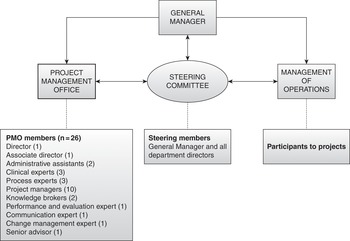
Figure 9.2. Case A: Organizational design.
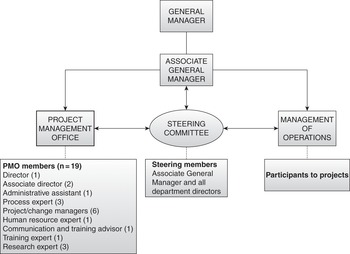
Figure 9.3. Case B: Organizational design.
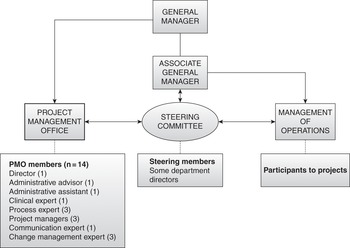
Figure 9.4. Case C: Organizational design.
In all three cases, changes took place in the size and functions of the PMO and the steering committee. These changes must be considered in relation to events in the political sphere (e.g., elections), construction evolution (e.g., signing of contracts), and hospital management (e.g., change in the management team).
We also wanted to take into account the project portfolio and the degree of innovation in the three case studies (See Table 9.2.). The number of projects in case B is higher than the other two as they had split their projects into smaller parts. The innovative nature of projects is a dimension often used in project typology to make a decision about organizing (Shenhar & Dvir, Reference Shenhar and Dvir1996). Innovation is described here based on three parameters as part of a social innovation system (Aubry et al., Reference Aubry, Hobbs and Thuillier2007): the type of innovation built upon Schumpeter classification (Drejer, 2004); the level of risk or uncertainty; and the differentiation between incremental and radical innovation. The nature of the global transformation project is about the same in the three hospitals. However, there are nuances between them as shown in Table 9.2.
Table 9.2 Projects Portfolio/Case
| Number of Projects | Innovation | ||||||||||
|---|---|---|---|---|---|---|---|---|---|---|---|
| Type | Risk or Uncertainty | Degree | |||||||||
| Product/Service | Process | Market | Input | Organizations | None/low | Medium | High | Incremental | Radical | ||
| Case A | 43 | 16 | 31 | 4 | 5 | 23 | 8 | 23 | 11 | 20 | 22 |
| Case B | 81 | 25 | 19 | 9 | 7 | 50 | 27 | 20 | 11 | 36 | 22 |
| Case C | 39 | 8 | 33 | 1 | 2 | 21 | 28 | 7 | 4 | 22 | 15 |
Note: the total is sometimes higher or lower that the number of projects because some projects fit into two types, or other information may be unknown at the time of data collection
In cases A and B, the transformation project includes the construction of new sites for multiple clinical missions, while for case C, there is no moving as such. The construction for C is more like an extension to the existing buildings. The nature of the transformation project may have an impact on the types of projects. For instance, in the case of C, most of the projects are concerned with processes and do represent proportionately less risk and more incremental innovation than in the two other cases.
6 Findings
In this section, are presented three main findings from the analysis of these three cases: the diversity of organizational designs; reflectivity in the dynamic process of organizational design; and similarity of outcomes.
6.1 Diversity of Organizational Design
Organizational chart. We analyze the organizational design along two dimensions. First, we examine the organizational charts as a material representation of the formal structure. Two main points can be drawn from this analysis. First, deliberate mimetism occurs among all three university hospitals in two ways (DiMaggio & Powell, Reference DiMaggio and Powell1983). The three PMO directors met several times to help each other and share their approaches, processes, and tools. The research project also provides opportunities for sharing by means of transfer activities.
Second, following the above point, in all three university hospitals, there was a strong conviction of the need to take care of the people-transition process as an organizational strategy. This situation can be observed in the preparation period. The reflection during the preparation period is the starting point of the organizational design process. How to do this project? In all three cases, three common mechanisms have been put in place. First is the creation of an entity responsible for supporting the whole organization to succeed in their transformation; this supporting entity is the one associated with the generic term PMO. In all three cases, the PMO reports at a high level, either to the general manager or the associate general manager. Second, a coordination committee with various levels of decision-making is formed with the department directors. Third, all three cases have adopted a matrix-type project structure, making the project participants deal with both operations and projects.
6.2 Sense-Making in the Dynamic Process of Organization Design
In our perspective, organizational design is not a static state of a structure as shown in the organizational chart. We argue that organizational design is better understood as a process. Time and temporality (ies) are major dimensions to take into account in the study of the organizational design (Langley, Smallman, Tsoukas, & Van De Ven, Reference Langley, Smallman, Tsoukas and Van De Ven2013). In this analysis, each case has been structured in comparable time periods to allow for intercase analysis (see Table 9.3.). In all three cases, we found organizational design activities in preparation for the launch of the project. We have considered the PMO start-up as the formal signal of the starting point of the project. Then, three periods have been identified, namely, the initiation, cruising speed and the last sprint. Only the first case was at the last period at the time of data collection.
Table 9.3 Trajectory of the PMO
| Preparation | PMO Start-up | 1st Period: Initiation | 2nd Period: Cruising Speed | 3rd Period: Last Sprint | |||
|---|---|---|---|---|---|---|---|
| Taming Period | PMO/nomination | Lag Period | |||||
| Case A | Visits to international sites | 2007 | 1 year | 2008 | Organizational Turbulence | Hard [Adverse] control | Making it happen! |
| Case B | Conflicting period – site | 2011 | Very short | 2011 | Organizational Turbulence | Organizational Turbulence | |
| Case C | Unformal preparation | 2009 | 1 year | 2012 | Smooth transitioning | Keep moving | |
Overall, from Table 9.3, we can observe that these three projects did not have the same story even if they all happened in the same sector, are all situated in the same geographic area, and were all realized in about the same decade.
What is interesting in cases A and C is the time taken in searching for a way to get organized for a major project. For example, in the first case, the managerial team went out to visit hospitals in Europe and the United States. Hospitals are complex organizations; they are pluralistic (Denis, Langley, & Rouleau, Reference Denis, Langley and Rouleau2007). As there is no model to copy from one organization to another (Hobbs & Aubry, Reference Hobbs and Aubry2010), there is no choice but to make sense of the situation (Weick, Reference Weick2009). It seems that it is exactly what these organizations did.
As illustrated in Table 9.3., cases A and B went through turbulences in their external or internal environment. These turbulences translated into changes to the organizational design, such as changes in the mandate of the PMO or in the number of employees in the PMO or new liaisons to be put in place with other units (Aubry et al., Reference Aubry, Richer and Lavoie-Tremblay2014). During these periods of turbulence, we found sense-making activities to adapt to brutal changes in the environment. Case C was the most stable of the three cases regarding the organizational design. In this case, there has been no organizational turbulence as such, but sense-making activities took place regularly among PMO members to adapt their processes constantly to their changing environment. In this situation, it requires the whole team to be attentive of weak signals in the environment and to adapt.
6.3 Similarities in the Outcomes
The diversity of PMO designs is not surprising as it is what is found in organizations. This situation is exactly what has been found in the three case studies presented here. But, what is interesting in our findings is that the outcomes are quite similar regarding the PMO performance and readiness for change.
Performance. Globally, the data show only a few differences in perception of the PMO performance between the three cases. There are no significant differences in the rational goal and output from the projects, and there are four differences in the HR dimension, internal processes, and open system.
Readiness for change. There is no clear pattern of significant differences among the three hospitals.
Overall, what the data provide is an account of three cases, each facing the realization of a major project of transformation within a professional bureaucracy in a university hospital. The nature of the projects is about the same with a difference of scope regarding the budget. All three are situated in the same geographical area and political system. However, they have approached the organizational design differently while they still reached about the same outcomes regarding the contribution of their PMO to the organizational performance and the readiness for change.
7 Discussion
This chapter aims at exploring how organizations handle challenges for the delivery of multiple projects. We had the opportunity to study similar transformation projects in three university hospitals from the same region and in about the same time frame. This unique research situation offers the possibility to observe three different dynamic mixtures of social, political, and technological context, and organization cultures resulting in three specific organizational designs. Our aim is to understand better how organizational design as a theoretical concept explains, at least partially, decisions regarding the management of multiple projects, and how this can contribute to the development of theory in the field of project management.
7.1 The Relevance of Organizational Project Management
The three cases presented in this chapter illustrate decisions that have to be made to put in place coordination mechanisms and structure for the management of multiple projects. All three have adopted a unique organizational design; included different resource profiles for the management of projects; and adopted a variety of governance mechanisms. It points to the fact that mimetism has occurred in a limited way (DiMaggio & Powell, Reference DiMaggio and Powell1983). Social connections existed at different levels among the three organizations, with the objective of sharing practices. However, each case adopted a unique organizational design for the management of projects. This highlights the existence of activities at the organization level regarding the management of projects, which is differentiated from the management of the current activities. These activities differ from project, program, or portfolio management but have relevance for the field of project management. An initial definition has already been offered for organizational project management (Aubry et al., Reference Aubry, Hobbs and Thuillier2007). Findings from this research convincingly describe the work done through organizational design within organizational project management.
7.2 A Pluralistic Theoretical Approach on Organizational Design
There is some consensus among scholars in the field of organization and management research that new forms of highly complex organizations forms are emerging (Clegg, Reference Clegg and Diefenbach2012; Greenwood & Miller, Reference Greenwood and Miller2010; Pettigrew et al., Reference Pettigrew, Whittington, Melin, Sanchez-Runde, Van den Bosch, Ruigrok and Numagami2003). The cases in this study highlight this complexity. Not only do the three hospitals face major challenges to respond to their normal clinical operations related to their health care mission (more demands and fewer resources), but they also have to go through a major organizational transformation. In all three hospitals, the general manager had to answer the question: how do we do that? In other words, how do we orchestrate the collective efforts to bring the transformation project to success (for the different meanings of success) while at the same time keep the quality of our day-to-day operations? This situation relates to the concept of ambidexterity as suggested by March (Reference March1991), where organizations need to engage in both innovation (exploration) and operations (exploitation). In the context of organizations dealing with projects, ambidexterity is a real challenge as illustrated in the three cases.
In this chapter, we have described several facets of the organizational design mainly around the PMOs. We have shown that organizational design represents pluralistic contexts, and as suggested by Denis and colleagues (Reference Denis, Langley and Rouleau2007), it calls for pluralistic theoretical frameworks. In this vein, we suggested a process theory approach combining three perspectives as described above: contingencies, historicities, and social interactions.
7.3 Diversity of Organizational Designs: Similarity in Outcomes
One benefit from adopting a mixed-methods approach is that it is possible to provide different perspectives on a unique organizational phenomenon (Cameron, Sankaran, & Scales, Reference Cameron, Sankaran and Scales2015). In this case, this approach provides a relationship between organizational design dimensions and outcomes. The findings show the uniqueness of organizational design, confirming the specificities of organizations in their identity, historicities, and meanings (Hernes, Reference Hernes2014). The findings also show the absence of important differences between the three cases when considering the outcomes in terms of performance and readiness for change. This is a significant finding, as rarely does research in project management cover organizational design as well as outcomes. emphasizes the diversity of paths that can be taken regarding organizational design. It confirms that there is “no one way” to reach goals. The diversity found in PMOs and their frequent changes (Aubry, Hobbs, Müller, & Blomquist, Reference Aubry, Hobbs, Müller and Blomquist2011) is just a signal for organizations to work on their organizational meaning structures (Hernes, Reference Hernes2014).
8 Conclusion
The introductory excerpt denoted the need for decision-makers to make sense of their organization in a pluralistic context. It illustrated how organizing for projects could not be realized around a single PMO but needs to consider the overall organization. This chapter brings some insights to answer the question: “How can a decision-maker organize for the management of multiple projects?” From a theoretical perspective, the findings can be synthesized into four major points:
1. First, we have brought the notion of organizational design into the field of project management to provide a name to what is really done when working on structuring an organization to deliver projects. To do this, we have put efforts to bridge the research from the fields of management and organization theory to the project management field on organizational design.
2. Second, the initial theoretical framework proposed in this chapter is a first attempt to theorize organizational design as a crucial component in the management of projects. The framework is built on three complementary theoretical perspectives: contingencies, historicities, and social interactions.
3. It is also an attempt to integrate multiple terms (forms, structure, project-based, project-oriented, matrix-type, and so forth) under a coherent theory of organizing for projects. Fragmentation of the field was noted at the project level (Bakker, Reference Bakker2010; Söderlund, Reference Söderlund2011). The same situation exists at the organization level. Our theoretical framework offers an alternative to the economic view of transaction cost theory (Winch, Reference Winch2014) and other contingency approaches.
4. Regarding methodology, this chapter offers an example of the mixed-methods approach for the study of complex phenomena. More analyses have yet to be done, but the combination of qualitative and quantitative approaches was relevant to provide insight into the problem at hand.
From a practical perspective, the main contributions for the project management profession concern decision-makers who are engaged in organizational design. The key message for them is slow organizational design. What is meant here is that there is no unique, ideal model to copy. So, there is a need to make sense of the particular context of the organization, its unique history, and identity, and to engage in a collective effort to enact what is found outside and inside the organization. This takes time. And finally, it requires the decision-makers to take an active role in the organizational design.
This research has limitations and offers opportunities for future research. The main limitation of this research relates to the exploration of the organizational design within a process theory approach. Process theory is mainly associated with interpretative methodology with a strong focus on discourse. In this research, we have adopted a rich mixed-methods approach based mainly on interviews and questionnaires. While it offers rich description, it falls short in engaging in a real interpretative approach. A discursive approach will certainly provide a complementary account of the process of organizational design. Process theory opens up several avenues for future theoretical and professional developments.
Introduction
Until recently, the scholarship of project management has been dominated by a traditional approach reflective of foundational views about how to conduct successful projects (Morris, Reference Morris, Morris, Pinto and Söderlund2011). This traditional approach assumes a reductionist, positivist stance (Jackson, Reference Jackson2003; O’Leary, Reference O’Leary, Williams and Samset2012), which follows neoclassical economics and the rationalist model of decision-making (Goode, Reference Goode1997; Simon, Reference Simon1979), in which analysis and action are cleanly separated in a logical sequence (Koskela & Howell, Reference Koskela and Howell2002; Ryle, Reference Ryle1984). Many of the contributions to the emergent project governance literature (Ahola, Ruuska, Artto, & Kujala, Reference Ahola, Ruuska, Artto and Kujala2014) refer back to rational economic theories that theorize the firm as a nexus of contracts (Foss, Reference Foss1993). Such approaches conceive of governance as a choice of form, which then drives incentives, decision rights, and accountability. In this traditional view, risk management is conceived of as a rational, linear process of identification, analysis, evaluation, and treatment (ISO, 2009) within a defined organizational context.
However, the burden of calculative rationality (Levinthal & March, Reference Levinthal and March1993) bestowed by the traditional approaches appears to be unbearable in practice (Guo, Chang-Richards, Wilkinson, & Li, Reference Guo, Chang-Richards, Wilkinson and Li2014; O’Leary, Reference O’Leary, Williams and Samset2012; Ward & Chapman, Reference Ward and Chapman2008; Winch & Maytorena, Reference Winch, Maytorena, Morris, Pinto and Söderlund2011). In this chapter, we argue that a “Third Wave” approach (Morris, Pinto, & Söderlund, Reference Morris, Pinto, Söderlund, Morris, Pinto and Söderlund2011) to project governance and risk management is required in order to address issues of process (rather than form) and uncertainty (rather than risk).
We begin with a review of how project risk management is shaped by governance. We then examine contemporary theories of risk and uncertainty and discuss their implications for governance. The chapter concludes with implications for practice.
Project Governance for Risk Management: The “First-Order Economizing” Logic
Two longstanding issues in the management of organizations have been to ensure that managers act in a manner satisfactory to those they are accountable to (Berle & Means, Reference Berle and Means1991), within efficiency constraints (Knight, Reference Knight1921; Smith, Reference Smith1776). A contemporary expression of these issues is as follows: an organization is defined as “a multiagent system with identifiable boundaries and system-level goals toward which the constituent agent’s efforts are expected to make a contribution” (Puranam, Alexy, & Reitzig, Reference Puranam, Alexy and Reitzig2014, p. 166). Corporate governance is concerned with providing agents with rules and safeguards to guide how the organization is managed: “the governance system defines the structures used by the organization, allocates rights and responsibilities within those structures and requires assurance that management is operating effectively and properly within the defined structures” (Too & Weaver, Reference Too and Weaver2014, p. 1385). Recent reviews of the project governance literature (e.g., Ahola, et al., Reference Ahola, Ruuska, Artto and Kujala2014; Biesenthal & Wilden, Reference Biesenthal and Wilden2014; Müller, Reference Müller, Morris, Pinto and Söderlund2011) note that two theories have been identified as dominant influences: agency theory (AT) and transaction cost economics (TCE).
AT and TCE Governance as First-Order Economizing
AT informs how the governance system is shaped: in order to avoid moral hazard and adverse selection (Akerlof, Reference Akerlof1970), appropriate incentives and rules and procedures must be implemented (Jensen & Meckling, Reference Jensen and Meckling1976). TCE addresses the issues of shirking and opportunism. Williamson (Reference Williamson1975) argues that several forms are available to govern economic transactions: markets, hierarchies, and hybrids. “Transactions, which differ in their attributes, align with governance structures, which differ in their cost and competence, so as to effect a transaction cost economizing outcome” (Williamson, Reference Williamson1996, p. 136). In other words, “economic actors will choose that form of governance … that reduces any potential problems created by bounded rationality, on the one hand, and by the threat of opportunism, on the other, at the lowest cost” (Barney & Hesterly, Reference Barney, Hesterly, Clegg, Hardy, Lawrence and Nord2006, p. 114). Williamson (Reference Williamson1991) calls this choice “first order economizing,” which he argues provides the foundation for economic performance. Both AT and TCE involve a form of calculative rationality (Foss, Reference Foss1999) that enables economic actors to maximize outcomes (Jensen & Meckling, Reference Jensen and Meckling1976) and identify the best choice (Williamson, Reference Williamson1975).
Both AT and TCE view contracts as the prime structuring mechanisms of governance: “contractual relations are the essence of the firm, not only with employees but with suppliers, customers, creditors, and so on” (Jensen & Meckling, Reference Jensen and Meckling1976, p. 8). Economic actors are assumed to be rational and foresighted so they can select the appropriate form of governance ex ante even in the presence of uncertainty (Barney & Hesterly, Reference Barney, Hesterly, Clegg, Hardy, Lawrence and Nord2006). First-order economizing is an optimal choice of form, based on an ex-ante rational calculation: the selection of the appropriate contract determines the governance. It follows that governance is top-down, and cascading or nested models assume that enterprise-level choices determine or constrain determinations at lower levels: portfolios, programs, projects (e.g., PMI, 2013, 2016; Too & Weaver, Reference Too and Weaver2014). Therefore, the governance of projects is dependent on overarching corporate governance choices, rules, and processes.
First-Order Economizing, Governance and Risk Management
Risk management is conceived as integral to the corporate governance system (Arena, Arnaboldi, & Azzone, Reference Arena, Arnaboldi and Azzone2010; Bhimani, Reference Bhimani2009). The recurrence of large-scale corporate failures has justified the institutionalization of risk management (Brown, et al., Reference Brown, Steen and Foreman2009; Power, Reference Power2004): good corporate governance assumes that following due processes and installing appropriate risk controls is necessary in order to avoid costly mistakes.
This is reflected in recommended “best practice” on risk management, as captured by ISO 31000 (2009, p. v):
Organizations manage risk by identifying it, analyzing it and then evaluating whether the risk should be modified by risk treatment in order to satisfy their risk criteria.
Throughout this process, they communicate and consult with stakeholders and monitor and review the risk and the controls that are modifying the risk in order to ensure that no further risk treatment is required.
The calculative rationality that governs risk management is similar to that which drives governance: economic actors select the optimal risk treatment after an ex-ante exercise of risk identification and evaluation. The ISO 31000 standard further elaborates (p. 10) that the design of a risk management system is subordinate to the form of corporate governance.
This double cascade from corporate governance to project governance on the one hand and to risk management and project risk management on the other is reflected in the project governance literature grounded in governance theory (Müller, Reference Müller, Morris, Pinto and Söderlund2011; Too & Weaver, Reference Too and Weaver2014), project risk management (Pich, Loch, & Meyer, Reference Pich, Loch and Meyer2002; Winch & Maytorena, Reference Winch, Maytorena, Morris, Pinto and Söderlund2011; Zwikael & Smyrk, Reference Zwikael and Smyrk2015) and professional standards (OGC, 2013; PMI, 2013).
Overall, the “first-order economizing” logic offers a rational, comprehensive, and hierarchically ordered set of decision-making heuristics, contractual forms, principles to allocate decision rights and accountability, risk management best practices, and controls through due process. Arguably, organizations that conform to this model should perform better. In the face of recurrent failure, it could be tempting to blame the inability of (project) managers to perform in accordance with the model. We suggest that a more fruitful avenue of investigation would be to challenge the model itself (Power, Reference Power2009).
Issues with the “First-Order Economizing” Logic in Governance
As noted by Too and Weaver (Reference Too and Weaver2014, p. 1391): “systemic project failure is a failure of organizational governance.” They later argue that good project governance aims to achieve an optimal balance within and between: portfolio management, project sponsorship, project management offices, and projects and programs. But that argument is just a displacement of logic to a more detailed level. The challenges faced by organizations do not stem from the relevance or ambitions of “best practice” standards but from their modalities of implementation (Bredillet, Tywoniak, & Dwivedula, Reference Bredillet, Tywoniak and Dwivedula2015). Theories and standards can help managers ask pertinent questions, but they may be poor guides to action in themselves as they are often “ideal types”: abstract conceptualizations that describe how things would be and work in a perfect world (Weber, Reference Weber1978; Weick, Reference Weick1979).
Both AT and TCE have been critiqued as “bad for practice” (Foss, Reference Foss1993; Ghoshal & Moran, Reference Ghoshal and Moran1996; Nilakant & Rao, Reference Nilakant and Rao1994) as they rely on assumptions that do not reflect how human beings behave in practice: managers do not have perfect foresight (Foss, Reference Foss2003), people do not always follow their self-interest with guile – some behaviors are driven by altruism and ethics (McGregor, Reference McGregor1960). Similarly, there is insufficient empirical evidence that “managers really make use of a transaction cost-economizing calculus in making contracting decisions” (Tsang, Reference Tsang2006, p. 1009). Such arguments lead Donaldson (Reference Donaldson2012) to argue there is an “epistemic fault line” in theories of governance built on first-order economizing.
It is unlikely that, on its own, the ex-ante selection of a contractual form, based on a transaction cost-economizing calculus, would lead to the successful governance and management of an individual project. Indeed, there is increasing empirical evidence that projects governed by logic alternative to AT and TCE perform better (Joslin & Müller, Reference Joslin and Müller2016; Miller & Hobbs, Reference Miller, Hobbs, Williams, Samset and Sunnevåg2009; Samset & Volden, Reference Samset and Volden2013).
Issues with the “First-Order Economizing” Logic in Risk Management
The assumptions that guide the calculative rationality of traditional risk management models have also been challenged (ARPI, 2012; Barber, Reference Barber2005; Zinn, Reference Zinn2008). Following Knight (Reference Knight1921), scholars have highlighted the need to distinguish between knowable and unknowable futuresFootnote 1. Only those risks that can be identified and analyzed based on known probabilities can be effectively treated, and make it to the risk manager’s register (Winch & Maytorena, Reference Winch, Maytorena, Morris, Pinto and Söderlund2011). All other uncertainties are ignored or, at best, assigned a contingency (Ramasesh & Browning, Reference Ramasesh and Browning2014; Winch & Maytorena, Reference Winch, Maytorena, Morris, Pinto and Söderlund2011; Zinn, Reference Zinn2008). Pich, Loch, and De Meyer (Reference Pich, Loch and Meyer2002) highlight that traditional project management models assume adequate information and near-deterministic environments promote rational risk management strategies sufficient for success. However, they also note “the reality is that we live in an ambiguous and complex world” (p. 1010) where decision-makers face probabilistically known risks, but also “unknown unknowns” which escape traditional models and are consequently often poorly dealt with. Empirical evidence suggests that traditional project risk management techniques on their own are not sufficient (de Bakker, Boonstra, & Wortmann, Reference de Bakker, Boonstra and Wortmann2010; Loch, DeMeyer, & Pich, Reference Loch, DeMeyer and Pich2011).
In sum, traditional risk management tools and models are increasingly ill-fitted, due to their restrictive assumptions (ARPI, 2012, p. 32):
The core assumption of modern risk management is no longer adequate:
(a) risk is not about balancing probabilities and costs on the basis that if something is improbable we shouldn’t spend too much; and
(b) some risks are so unthinkable the question is not cost but how to spend to reduce vulnerability.
In the next section, we discuss how thinking about complexity leads to conceptualizations of risk alternative to traditional approaches and their implications for project risk management.
Toward a Second-Order Complexity Approach to Project Risk Management
Knightian risks comprise only a fraction of the uncertainty factors that project managers need to consider. It has become customary to classify these factors as follows (Ramasesh & Browning, Reference Ramasesh and Browning2014; Winch & Maytorena, Reference Winch, Maytorena, Morris, Pinto and Söderlund2011):
– Known unknowns: possible threats and opportunities can be identified, but their impact is unclear and no reliable data is available regarding the probability of their incidence.
– Unknown unknowns: threats and opportunities have not been identified and the cognitive state is therefore ignorance.
– Unknown knowns: threats and opportunities have been identified by others, but that information is not disclosed to the decision-maker for one reason or another.
As a consequence of these “unknowns,” project managers face emergent issues, ambiguous cause-effect relationships, and nonlinear effects. That is to say, they face complexity (Érdi, Reference Érdi2007, p. 7; Padalkar & Gopinath, Reference Padalkar and Gopinath2016; Pich, et al., Reference Pich, Loch and Meyer2002).
Over the past two decades, the theme of complexity has received an increasing amount of attention among project management scholars (Baccarini, Reference Baccarini1996; Cicmil, Williams, Thomas, & Hodgson, Reference Cicmil, Williams, Thomas and Hodgson2006; Cooke-Davies, Cicmil, Crawford, & Richardson, Reference Cooke-Davies, Cicmil, Crawford and Richardson2008; Jaafari, Reference Jaafari2003; Pich, et al., Reference Pich, Loch and Meyer2002) and practitioners (PMI, 2014; ICCPM, 2011). It is possible to categorize most scholarly contributions about complexity and project management into one of two categories:
(1) Complexity is either conceived as a property of the world experienced by practitioners, which can then be categorized, measured, and possibly managed (Baccarini, Reference Baccarini1996; Geraldi, Maylor, & Williams, Reference Geraldi, Maylor and Williams2011; Jaafari, Reference Jaafari2003),
(2) It is conceived as a way of thinking about the world (Checkland, Reference Checkland2000; Chia, Reference Chia2011; Cooke-Davies, et al., Reference Cooke-Davies, Cicmil, Crawford and Richardson2008).
Complexity as a Property of the World: First-Order Complexity
The view of complexity as a property of the world is associated with realist/reductionist epistemologies (Richardson, Reference Richardson, Allen, Maguire and McKelvey2011). This approach, through detailed analysis, sophisticated models, and computer simulations can yield valuable insights as the models enable to understand situations where cause and effect relationships are not direct or obvious, or capture the influences of large numbers of items (Morecroft, Reference Morecroft2015; Senge, Reference Senge1990). Following Bateson (Reference Bateson1972), we use the label of “first-order” complexity for this approach as it considers complexity as a property of the external environment. The logic of first-order complexity is akin to that of first-order economizing. Following Richardson’s (Reference Richardson, Allen, Maguire and McKelvey2011, p. 373) arguments, first-order complexity may substitute nonlinear models for the linear models of traditional risk management and provide progress in terms of analytical power, but offers little that is truly different from the traditional approach.
Complexity as a Way of Thinking About the World: Second-Order Complexity
The alternative view begins from the assumption that complexity resides in the environment being considered, and also in the cognition of the human actor/observer. Tsoukas and Hatch (Reference Tsoukas and Hatch2001) argue: “one way of viewing organizations as complex systems is to explore complex ways of thinking about organizations-as-complex-systems, … this view … we call second order complexity” (Tsoukas & Hatch, Reference Tsoukas and Hatch2001, p. 980, our emphasis). Second-order complexity is associated with interpretive/holistic epistemologies (Richardson, Reference Richardson, Allen, Maguire and McKelvey2011; Weick, Reference Weick1995). It shifts our attention from a perception of a world that is, to a perception of a world that is becoming (Tsoukas & Chia, Reference Tsoukas and Chia2002), and draws our attention to the emergent and ever-changing nature of a complex reality. Jackson (Reference Jackson2003, p. 10) sums up the difference between first-order and second-order thinking: “If the only change that can be contemplated takes place in the context of an existing mental model, then you are limited to bringing about first-order learning. If, however, the mental model itself can be changed, and purposes radically altered, then second-order change is possible.”
Shifting to a second-order complexity approach to risk management entails moving to conceptualizations of risk as socially mediated, constructed, and transformed, treated through institutional and discursive processes that assign meaning to technical analysis (Zinn, Reference Zinn2008, pp. 6–7). The difference between the two approaches is illustrated by O’Leary (Reference O’Leary, Williams and Samset2012), who distinguishes between two models of project management: the systems control model and the social trajectory model. In the systems control model, the “project is a top-down controlled system with a predictable path, which moves through sequential lifecycle stages” and “risks are managed through reducing uncertainty and improving the plan”; while in the social trajectory model, the “project is [the] outcome of ongoing negotiation to agree [to] coordinated collective action, and the project’s path is intrinsically unpredictable and iterative” and “perception of risk varies and reflects [the] interests of [the] most powerful” (O’Leary, Reference O’Leary, Williams and Samset2012, p. 197).
Alternatives to Risk: Opportunity and Resilience
As noted before, in traditional project management the treatment of risk is primarily concerned with avoidance and mitigation of negative outcomes (Parnell, Reference Parnell, Williams, Samset and Sunnevåg2009; Pich, et al., Reference Pich, Loch and Meyer2002; Sanderson, Reference Sanderson2012; Williams & Samset, Reference Williams and Samset2012). But risk and risk-taking are also associated with positive outcomes (Jaafari, Reference Jaafari2001; Zinn, Reference Zinn2008), and it has been regularly advocated that risk management should make way to uncertainty management, which encompasses risks as well as opportunities (Atkinson, Crawford, & Ward, Reference Atkinson, Crawford and Ward2006; Hillson, Reference Hillson2002; Ward & Chapman, Reference Ward and Chapman2003).
Two separate disciplines in business and management research hold the potential to enrich our approach to risk, opportunity, and uncertainty management.
Entrepreneurship, which has long drawn attention to the “individual-opportunity nexus” (Shane & Venkataraman, Reference Shane and Venkataraman2000), suggests that entrepreneurial opportunities are developed through processes of effectuation (Baker & Nelson, Reference Baker and Nelson2005; Sarasvathy, Reference Sarasvathy2001) where anticipation makes way for resourcefulness and processes of design thinking, where uncertainty and ambiguity are iteratively explored to tackle challenges of ignorance (Aulet, Reference Aulet2013; Blank, Reference Blank2013; Ries, Reference Ries2011).
The second is high reliability organizations (Bierly & Spender, Reference Bierly and Spender1995; La Porte, Reference La Porte1996; Roberts, Reference Roberts1990; Weick & Sutcliffe, Reference Weick and Sutcliffe2011), which exhibit long-term high performance in contexts of tight coupling where the risk of “normal accidents” (Perrow, Reference Perrow1984) is high. They do so by implementing an approach to risk management that is focused on resilience, rather than anticipation: “where risks are highly uncertain and speculative, and remedies do harm, however, resilience makes more sense because we cannot know which possible risks become manifest” (Wildavsky, Reference Wildavsky1988, p. 221). We discuss in turn the potential contribution of each to project risk management.
Uncertainty Management as Effectuation
Entrepreneurship has long embraced calculated risk-taking as a positive factor in the success of new venture projects (Mitton, Reference Mitton and Hornaday1984). Entrepreneurs are not thrill-seeking risk-takers, but rather aim for a level of risk they can live with (Lyng, Reference Lyng and Zinn2009; Sarasvathy, Reference Sarasvathy2001). In situations of uncertainty, it is to the advantage of the entrepreneur to control what they can influence, for instance the level of loss they can afford. This logic has been called “effectuation” (Dew, Read, Sarasvathy, & Wiltbank, Reference Dew, Read, Sarasvathy and Wiltbank2009; Wiltbank, Dew, Read, & Sarasvathy, Reference Wiltbank, Dew, Read and Sarasvathy2006). The affordable risk principle of effectuation reverses the traditional, prediction-based process of risk management: entrepreneurs set a given level of risk for their ventures, and then seek to discover a path to success by acting in a creative fashion (Sarasvathy, Reference Sarasvathy2001). Successful entrepreneurs also tend to exhibit an internal locus of control (Rotter, Reference Rotter1966), leading them to focus on what they can control or influence, rather than try to predict with precision how the environment will change.
The logic of effectuation attempts to embrace the uncertainty and emergence faced by entrepreneurs by reversing the logic of prediction. While this may be appropriate for self-directed entrepreneurs, it may have limited application on the whole in the goal-oriented context of project management, except in “soft” projects where goals are able to be evolved or are fuzzy (Atkinson, et al., Reference Atkinson, Crawford and Ward2006), or when “agile” project management (Fowler & Highsmith, Reference Fowler and Highsmith2001; Highsmith, Reference Highsmith2009) methods are used. The logic of effectuation has the potential to assist in the direction of such projects as it focuses on limited resources, affordable risk, changing goals, and collaboration with stakeholders.
For “hard” projects, where goals are more clearly defined, the logic of effectuation has a different contribution to make: it invites us to reverse the thinking process about risk by defining the level of affordable loss before asking about the level of risk entailed by the chosen solution. The inception of the commercial SpaceX program is an example of how this principle can be mobilized in the context of a large complex space exploration project (Anderson, Reference Anderson2013).
By asking project managers and sponsors what amount they are comfortable losing in case of failure, rather than how much they prepared to set aside for contingencies, the logic of effectuation triggers probing conversations about the project that can assist in addressing the optimism bias and strategic misrepresentation (Flyvbjerg, Reference Flyvbjerg, Morris, Pinto and Söderlund2011; Sanderson, Reference Sanderson2012) that have been identified as major root causes of project failures.
Uncertainty Reduction as Design Thinking
The introduction of design thinking in entrepreneurship was triggered by the failure of traditional business plans for new ventures and challenging “[t]he assumption … that it’s possible to figure out most of the unknowns of a business in advance, before you raise money and actually execute the idea” (Blank, Reference Blank2013, p. 67). Design thinking substitutes a logic of discovery to the logic of prediction, and suggests that the unknowns associated with ignorance can be learned about in this process. The logic of learning and discovery from design thinking has the potential to balance out the logic of analysis and prediction.
The possible contribution of design thinking to agile project management has been identified (Bosch & Bosch-Sijtsema, Reference Bosch and Bosch-Sijtsema2011) as providing a methodology to structure the development process.
Design thinking also has a contribution to make to the management of risk in “hard” projects: the logic echoes with the concerns raised about the need to invest at the front end in order to improve the chances of project success (Miller, Lessard, Michaud, & Floricel, Reference Miller, Lessard, Michaud and Floricel2001; Samset & Volden, Reference Samset and Volden2013; Williams, Samset, & Sunnevåg, Reference Williams, Samset and Sunnevåg2009). Design thinking is different from traditional stage-gate models where the robustness of plans and assumptions are probed through expert questioning. Instead, it helps confirm the project plan through a series of feedback iterations with stakeholders. Another appeal of design logic is its nimbleness: the approach of fast prototyping enables the gathering of quick feedback on incomplete/unfinished plans and adjust accordingly. Design thinking as a learning cycle is open-minded: unlike traditional project planning techniques such as the waterfall or V-models (Hass, Reference Hass2009), the methodology does not assume that success criteria are known at the outset, but accepts that they are discovered through dialogue with stakeholders. Therefore, design thinking provides a potentially powerful remedy to project failure caused by the “normalization of deviance” (Pinto, Reference Pinto2014).
Managing Uncertainty through Resilience
High reliability organizations (HROs) are characterized by error-free operations over extended time periods in hazardous environments (Roberts, Reference Roberts1990). HROs face high uncertainty and complexity, while working in a tightly coupled system characterized by: “time dependent processes,” “invariant sequence of operations,” “one way to reach a goal,” and “little slack” (Roberts, Reference Roberts1990, pp. 108–109). The similarity between the tightly coupled systems of HROs and the constraints of projects captured by master schedules, work breakdown structures, and the “iron triangle” of time, cost and quality, is striking.
Weick and Sutcliffe (Reference Weick and Sutcliffe2011, p. 10) argue that HROs exhibit the following characteristics: “preoccupation with failure, reluctance to simplify interpretations, sensitivity to operations, commitment to resilience, deference to expertise.” We examine each in turn.
Preoccupation with failure. HROs are seeking to learn from their failures, large and small, in a systematic way. They do not wait to investigate root causes and lessons learned, in a climate where transparency is rewarded more than absence of failure.
Reluctance to simplify interpretations. HROs’ control systems conform to Ashby’s law of requisite variety (Ashby, Reference Ashby and Buckley1968). When the information is simplified, it is more difficult to notice unexpected events.
Sensitivity to operations. HROs are mindful of “latent failures” (Reason, Reference Reason1990), loopholes in the fine-grained details of plans, procedures, briefings and procedures.
Commitment to resilience. HROs accept that, in an uncertain world, failures will occur, but instead of investing in foresight and anticipation, they invest in capabilities to detect, contain, and learn from errors. Resilience also involves a degree of redundancy, in order to loosen up the tight coupling in the system (Roberts, Reference Roberts1990).
Deference to expertise. HROs are mindful of context: in normal times, decisions follow hierarchy, but migrate to decentralized expertise in high tempo, and to a predetermined emergency structure in times of crisis. They combine flexibility and orderliness.
The HRO model resonates well with the lessons learned about managing risks in megaprojects noted by Priemus, Bosch-Rekveldt and Giezen (Reference Priemus, Bosch-Rekveldt, Giezen, Priemus and van Wee2013), who highlight issues of redundancy, resilience, and adaptation. HROs provide a practical template for thinking in a complex way about complex environments, characterized by uncertainty and surprises. HROs achieve mindfulness by balancing foresight and resilience through an attention to failures, rich interpretations sensitive to operational detail, by responding to errors quickly, and by building a degree of redundancy so that the system does not break down if a small failure occurs. HROs provide a template to manage risk through rapid effective response, rather than extensive anticipation.
Second-Order Complexity Project Risk Management
The three approaches discussed above provide templates to manage risk in a novel way, consistent with second-order complex thinking. The logic of effectuation invites project managers and sponsors to focus on what they can control and to determine the level of risk they are comfortable with (affordable loss principle). The logic of design thinking provides a process of learning and discovery for the objectives, specifications, and success criteria for the project, in collaboration with stakeholders: it enables dissolving uncertainty-as-ignorance in a synthetic manner, as expressed by Ackoff (Reference Ackoff2001, p. 344): “problem dissolution consists of redesign of the system that has the problem or its environment in such a way as to eliminate the problem, precluding the possibility of its reappearance. Design is to synthetic thinking what scientific research is to analytic thinking.” Finally, the template of HROs provides an approach that emphasizes curing errors as they happen, through continuous learning and improvement.
The arguments discussed here are mapped out in Figure 10.1 below, where we contrast first-order and second-order challenges (risk v. uncertainty) and first-order and second-order response strategies (management v. reduction). The matrix in Figure 10.1 illustrates how the second-order approach enriches and broadens that of the first-order.

Figure 10.1. First-order v. second-order risk approaches.
The approaches of effectuation, design thinking, and HROs entail a shift in thinking about risk management from foresight, anticipation, and prevention to discovery, learning, and resilient problem solving. They suggest different governance choices, which we turn to in the next section.
Second-Order Complexity Project Risk Governance: Toward Governability
Defining Governability
Second-order complexity logic shifts the focus from the form of governance to the governability of the form: “Building governability relies on second-order strategic thinking, in which sponsors think through each relationship and organizational device for its ability to trigger appropriate responses should turbulence arise” (Floricel & Miller, Reference Floricel and Miller2001, p. 138). Miller and Hobbs (Reference Miller, Hobbs, Williams, Samset and Sunnevåg2009, p. 386) define governability as: “the capacity of project participants to steer through unexpected turbulence when projects face changing conditions.”
A number of recent publications have highlighted approaches to governance that underline issues of process and strategic choice (Child, Reference Child1972) to achieve governability. Governance is no longer a choice of form matching an environmental context through a contingent process of rational choice (Too & Weaver, Reference Too and Weaver2014; Williamson, Reference Williamson1975, Reference Williamson1991) but a process of design to customize form to a preferred purpose and process (Narayanan & DeFillippi, Reference Narayanan, DeFillippi, Williams and Samset2012). This perspective is exemplified by Samset and Volden (Reference Samset and Volden2013, p. 17), for whom project governance “refers to the processes, systems and regulations that society (the financing party) must have in place to ensure that projects are successful.” Attention is directed toward purposeful processes, rather than entities; toward organizing, rather than organization (“Think ‘ing’”, Weick, Reference Weick1979, p. 42).
The transition to governability highlights a process of learning in order to design the appropriate form: “we look not only at a project but at how the project governance framework is constructed to fit the organisation and its environment” (Williams & Samset, Reference Williams and Samset2012, p. 2). The choice of contracts and sign-offs, which were the starting point of the first-order economizing logic, become the outcome of the second-order complexity logic.
Governability in Practice
This logic is exemplified by recent cases of large complex projects including the delivery of Terminal Five at Heathrow Airport by BAA, and the 2012 London Olympics. Brady and Davies (Reference Brady and Davies2014) describe how the sponsors of both projects sought to avoid the failures of the past and embarked on learning journeys to shift the mindsets that directed how they would go about managing projects, in a way that is consistent with second-order thinking:
The T5 Agreement was designed to encourage collaboration and the creation of innovative solutions to problems that would inevitably arise on such a complex and uncertain project and avoid the practice of seeking additional payments and/or entering into legal disputes over changes in scope, which were found in the more adversarial relationships that typified construction practice in the United Kingdom.
The contractual arrangements that BAA designed fully acknowledged the limitations of foresight and the inevitability of errors consistent with the HRO model, and sought to promote problem-solving collaborative relationships in ways that were consistent with design thinking principles.
The latest report on the Norwegian State Project Model and the progressive implementation of its quality assurance scheme (Samset & Volden, Reference Samset and Volden2013) further supports the arguments presented here. Since 2000, the Norwegian government has implemented a quality assurance scheme for all major public investment projects, which require approval at two decision gates: QA1 (conceptual approval by the Cabinet) and QA2 (approval of detailed plans by Parliament) – see Figure 10.2 below:

Figure 10.2. The Norwegian State Project Model – Stage Gate Approval process.
The innovation of the Norwegian State Project Model is to complement a traditional stage-gate decision model with a process of quality assurance involving external expert auditors. During this process, auditors probe the assumptions of plans with a level of attention to process and detail comparable to the HRO model: “there is also an emphasis on exchange of information, sharing of expertise and development of expertise among civil servants involved in the scheme. An important incentive mechanism is that the government may refuse to consider the proposed project if it is not analyzed and documented well enough” (Samset & Volden, Reference Samset and Volden2013, p. 18).
Samset and Volden (Reference Samset and Volden2013, p. 31) note that implementing the scheme led to significant improvements: “total net saving for the projects taken as a whole was more than 3 billion NOK, or about 7% of the total investment.”
The authors conclude: “The QA scheme in its current configuration appears to be suitable for the purpose for which it was designed. However, governance regimes should not be static. They need to be flexible so that they can be altered if they do not work as intended or if changes in operating conditions and characteristics of the projects should necessitate change” (Samset & Volden, Reference Samset and Volden2013, p. 48).
Consistent with the contributions reviewed above, Miller and Hobbs (Reference Miller, Hobbs, Williams, Samset and Sunnevåg2009) highlight the shortcomings of “rational choice” logic compared with the benefits of “evolutionary project shaping” logic: “the perspective of rational planning fosters the idea that changes are not only bad, but are signs of bad management” (Miller & Hobbs, Reference Miller, Hobbs, Williams, Samset and Sunnevåg2009, p. 383). On the other hand, in the evolutionary project shaping logic: “sponsors start with initial concepts that have the possibility of becoming viable. They then embark on shaping efforts and debates to refine, reconfigure, and eventually decide on a concept that will yield value while countering risks. The seeds of success or failure are thus planted early and nurtured as choices are made” (Miller & Hobbs, Reference Miller, Hobbs, Williams, Samset and Sunnevåg2009, p. 384). Again, this is consistent with the principles of effectuation and HROs as efforts to reduce uncertainty through learning and discovery are highlighted.
In conclusion, Miller and Hobbs (Reference Miller, Hobbs, Williams, Samset and Sunnevåg2009, pp. 387–388) provide seven examples of governability devices that can be used to steer a project through risk, uncertainty, and ambiguity:
1. Ownership arrangements and incentives that induce partners to respond in ways to protect their investments …
2. The building of coalitions and the inclusion of parties that have an interest in taking actions to ensure the success of the project …
3. The presence of slack, callable or deep-pocket financial resources to face needs as they arise …
4. Access to a rich array of possible strategic responses to emergent threats and opportunities …
5. Broad functional specifications that make it possible for owners or contractors to propose innovative solutions …
6. Contracts with governments, clients, or investors that specify actions to be taken in the case of difficulties …
7. Flexible project design and modularity that make it possible to reduce the scope and size of projects, should difficulties arise.
From Governance to Governability
In relation to project governance, adopting the perspective of second-order thinking suggests a transition from form to process, organization to organizing, and governance to governability. Project governance is no longer the rational determination of the most appropriate form ex ante, but the managerial process of learning about the best governable structure for the project. This challenges traditional thinking about project governance: it suggests that project governance, rather than being a rational choice of form to minimize transaction costs, can also be a contested terrain between stakeholders attempting to influence each other (Clegg, Reference Clegg2008), a process of learning (Pemsel et al., 2012), or a problem-solving mechanism (Ahern, Leavy, & Byrne, Reference Ahern, Leavy and Byrne2014).
Conclusion: From The Governance of Risks in Projects to How Uncertainty Management and Reduction Shape Project Governability
This chapter has argued that the first-order economizing logic assumes a foresight capability and a calculative rationality that fails to reflect the challenges that leaders of projects and project-based organizations face in practice. The chapter suggests that concepts from entrepreneurship (effectuation and design thinking) and high reliability organizations, can help overcome the epistemological fault line (Donaldson, Reference Donaldson2012) of traditional models of governance and risk management in projects. Doing so requires a transition along two axes: in terms of the challenges faced by managers, we need to move away from a narrow conceptualization that only considers known and calculable risks to all unknowns; and from a strategic standpoint; we need to open up our range from the narrow view that risks are given and need to be treated to the broader perspective that risks are socially constructed (Sarasvathy, Reference Sarasvathy2001; Winch & Maytorena, Reference Winch, Maytorena, Morris, Pinto and Söderlund2011; Zinn, Reference Zinn2008) and need to be reduced/dissolved (Ackoff, Reference Ackoff2001; Jackson, Reference Jackson2003). Second-order complexity draws our attention to the level of risk that managers can afford, the processes of learning how to define goals and success factors, and how to design resilient project organizations capable of addressing failures as they occur and learn in fast cycles to match the contingencies of their environments.
The perspective outlined in this chapter offers a framework to integrate (Figure 10.1) the perspectives on risk management and governance that were identified in previous reviews of the literature as falling outside the first-order economizing mainstream (Ahola, et al., Reference Ahola, Ruuska, Artto and Kujala2014; Müller, Reference Müller, Morris, Pinto and Söderlund2011; Too & Weaver, Reference Too and Weaver2014) into a holistic framework.
The arguments provided here enable us to connect governance and risk management to other emerging themes of organizational project management research, including project-based organizations as problem-solving organizations (Ahern, et al., Reference Ahern, Leavy and Byrne2014), institutional challenges (Scott, Levitt, & Orr, Reference Scott, Levitt and Orr2011), and projects-as-practice (Hällgren & Söderholm, Reference Hällgren, Söderholm, Morris, Pinto and Söderlund2011). Second-order complexity provides a platform to accommodate new business models in project-based organizations, including CoPS (Miller, Hobday, Leroux-Demers, & Olleros, Reference Miller, Hobday, Leroux-Demers and Olleros1995), and the transition from product-led outcomes to service-led outcomes and client-contractor relationships to joined-up business partnerships, where contractors need to deliver to the changing business needs of a client, rather than a defined outcome (Alderman, Ivory, McLoughlin, & Vaughan, Reference Alderman, Ivory, McLoughlin and Vaughan2014).
This chapter investigated the issues from a scholarly perspective and reviewed a broad range of academic (and practitioner) publications from the perspective of the interactions between project governance and risk management. Some of the conclusions put forward go beyond this narrow remit and we would welcome complementary perspectives on governance other than risk management to inform the second-order complexity perspective outlined here. Beyond the studies reviewed, we would welcome the opportunity to further explore the issues from the perspective of practitioners.


